28 Faded Beard Styles That Blend Perfectly: No Hard Lines

A faded beard fixes one of the most common grooming problems: the hard step where a short haircut suddenly meets a full beard. Instead of a sharp jump at the sideburn, the hair gets gradually shorter from the beard up into the haircut, so the two blend into one smooth shape.
That small change makes a big difference. It makes the face look sharper, the beard look neater, and the haircut look fresh for longer. Below are 28 faded beard styles, from a subtle low taper and short stubble to a long faded beard and a bald fade with a line up, with the guard numbers, face shapes, and upkeep for each.
Short on Time? Pick Your Path
Table of Contents
- 01The Classic Taper Fade Into a Full Beard
- 02The Short Faded Beard
- 03The Faded Stubble Beard
- 04The Skin Fade Into a Beard
- 05The Low Beard Blend
- 06The Mid Skin Fade With a Beard
- 07The Bald Fade With a Beard and Line Up
- 08The Double Fade Beard
- 09The Medium Faded Beard
- 10The Long Faded Beard
- 11The Thick Faded Beard
- 12The Faded Beard With Long Hair
- 13The Faded Beard With an Undercut
- 14The Faded Goatee
- 15The Long Goatee With a Short Faded Beard
- 16The Disconnected Faded Beard
- 17The Faded Beard With a Spartan Buzz
- 18The Faded Beard With a Bald Head
- 19The Faded Grey Beard
- 20The Faded Beard With 360 Waves
- 21The Faded Afro Beard
- 22The Drop Fade With a Lined-Up Beard
- 23The Faded Curly Beard
- 24The Faded Beard for Round Faces
- 25The Faded Beard for Oblong Faces
- 26The Dense Dark Faded Beard
- 27The Faded Beard With a Side Part
- 28The Light Faded Beard for Teens
01
OF 28
The Classic Taper Fade Into a Full Beard
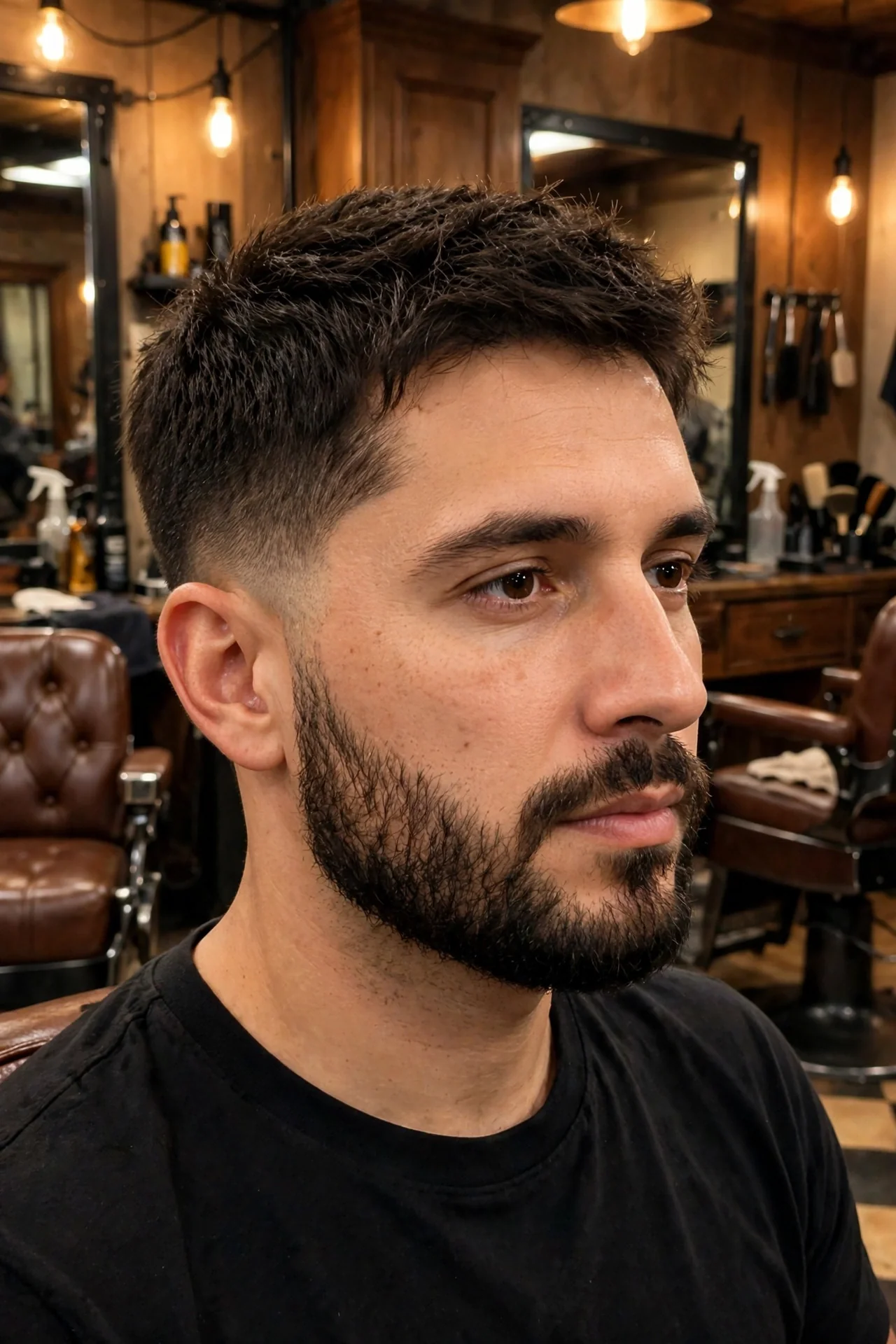
This is the beard fade most barbers start with. The hair on the sides gets shorter just above the ear, then gradually gets longer again down the sideburn until it reaches the full length of the beard.
The result is a clean transition with no visible step. The haircut and beard look like one connected style rather than two separate decisions.
💈 Your Taper Request, Word for Word
“A low taper on the sides, faded down through the sideburns into my beard, with the beard kept at about 2 cm.” Ask them to take the fade only as short as a number 1 at the temple, so it stays soft and grows out gracefully.
A taper fade like this grows out more slowly than a skin fade. Most men can go three to four weeks between barber visits and still look tidy.
If you want to try a beard fade at home, Live Bearded’s guide sets out the usual method. Start with your shortest guard (a 0 or 2) at the sideburn, then work down the face with a 4, 6 and 8, taking each guard a little higher than the last.
The most common problem is a visible line where one guard meets the next. Instead of running the trimmer straight up and down, flick it outward in a scooping motion by turning your wrist, or tap lightly over the line with no guard at all.
If you take too much off one side, you’ve got two choices: match the other side to it, or wait a week or two for it to grow back. There’s no third option, so go slowly.
02
OF 28
The Short Faded Beard
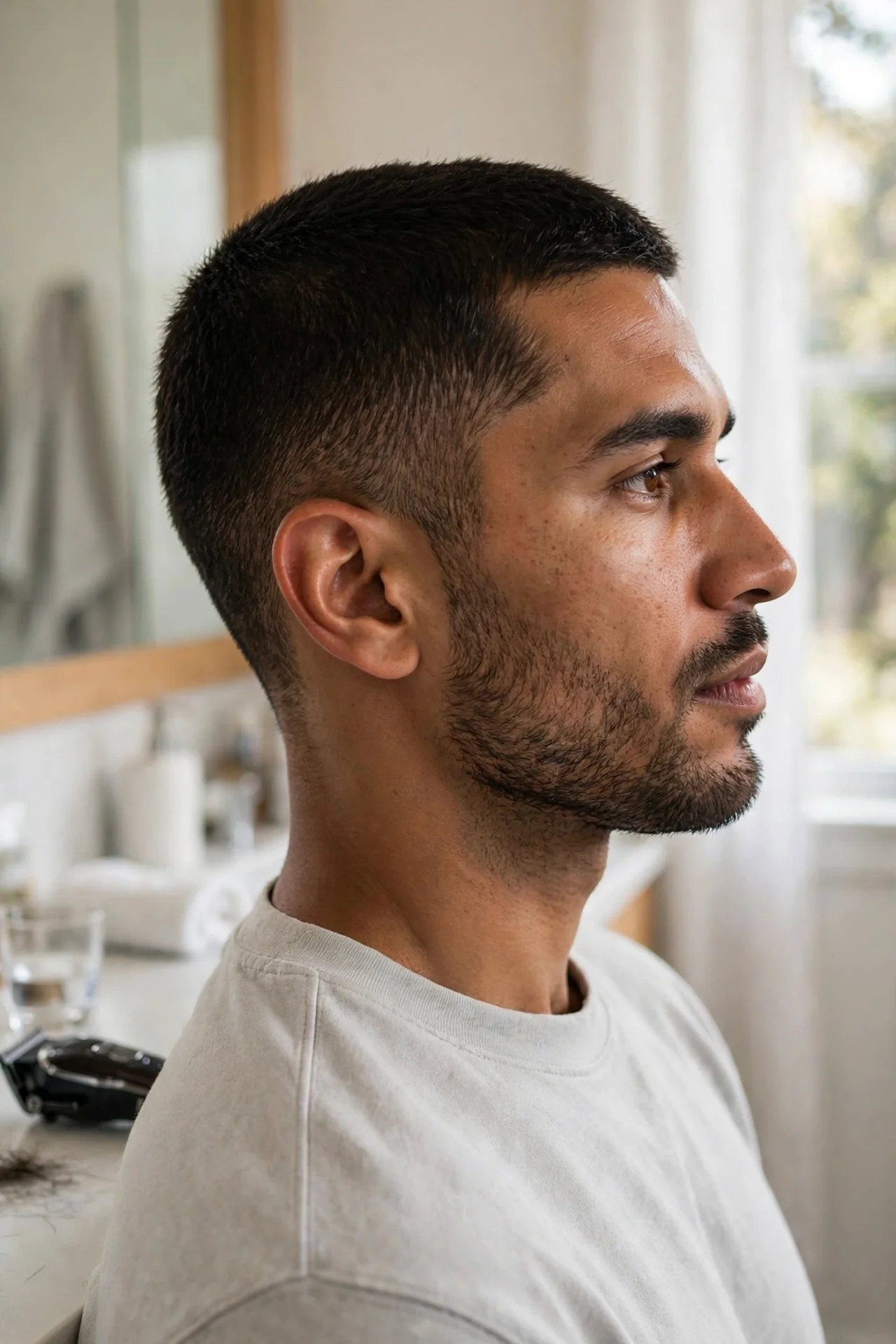
A short faded beard keeps the main beard around 1 cm and fades it up into the haircut. It’s neat, sharp, and one of the easiest fades to keep up at home with a good trimmer.
Short beards show the fade clearly, because there’s less length to hide the blend. That makes them a good choice if you want the fade to be the feature, not just a hidden detail.
How to Fade a Short Beard at Home
Fading a short beard yourself takes a few guard sizes and a bit of patience.
Trim the whole beard to its main length, for example a number 3 guard.
Switch to a number 2 guard and trim the sideburns from the cheekbone up to about the middle of the ear.
Use a number 1 guard on the top half of the sideburn, up to where the haircut starts.
Flick the trimmer outward at the end of each stroke so the lines between lengths soften.
Check both sides in a mirror to make sure they fade at the same height.
Clean up the cheek line and neckline to finish.
Go slowly with the shorter guards. It’s much easier to take a little more off than to wait for an over-faded sideburn to grow back.
03
OF 28
The Faded Stubble Beard
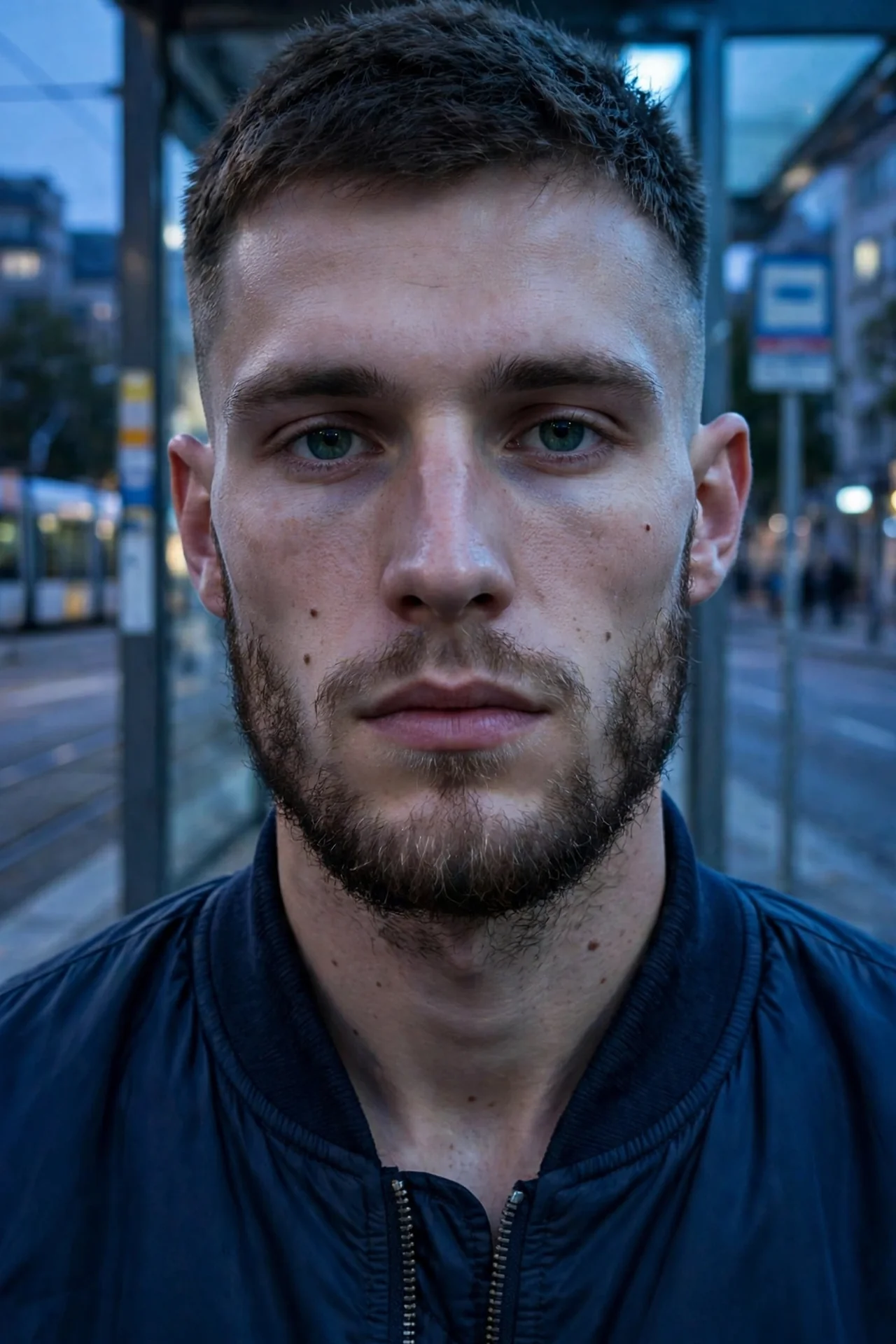
Faded stubble keeps the beard very short, then fades it shorter still at the sideburns. It’s the most subtle beard fade, but it makes stubble look much more deliberate.
On stubble, the fade is mostly about the transition into the haircut. A skin or low fade on the sides blends into the stubble, so the whole head looks freshly cut, even when the beard is only a few days old.
✅ Do This
Fade the stubble at the sideburns with a shorter guard so it blends into the sides of the haircut.
🚫 Skip This
Leaving the sideburns at full stubble length, which creates a block of hair next to a short fade.
Stubble grows out fast, so trim it every two to three days to keep the fade visible. A neckline cleaned up at the same time keeps it looking sharp.
04
OF 28
The Skin Fade Into a Beard
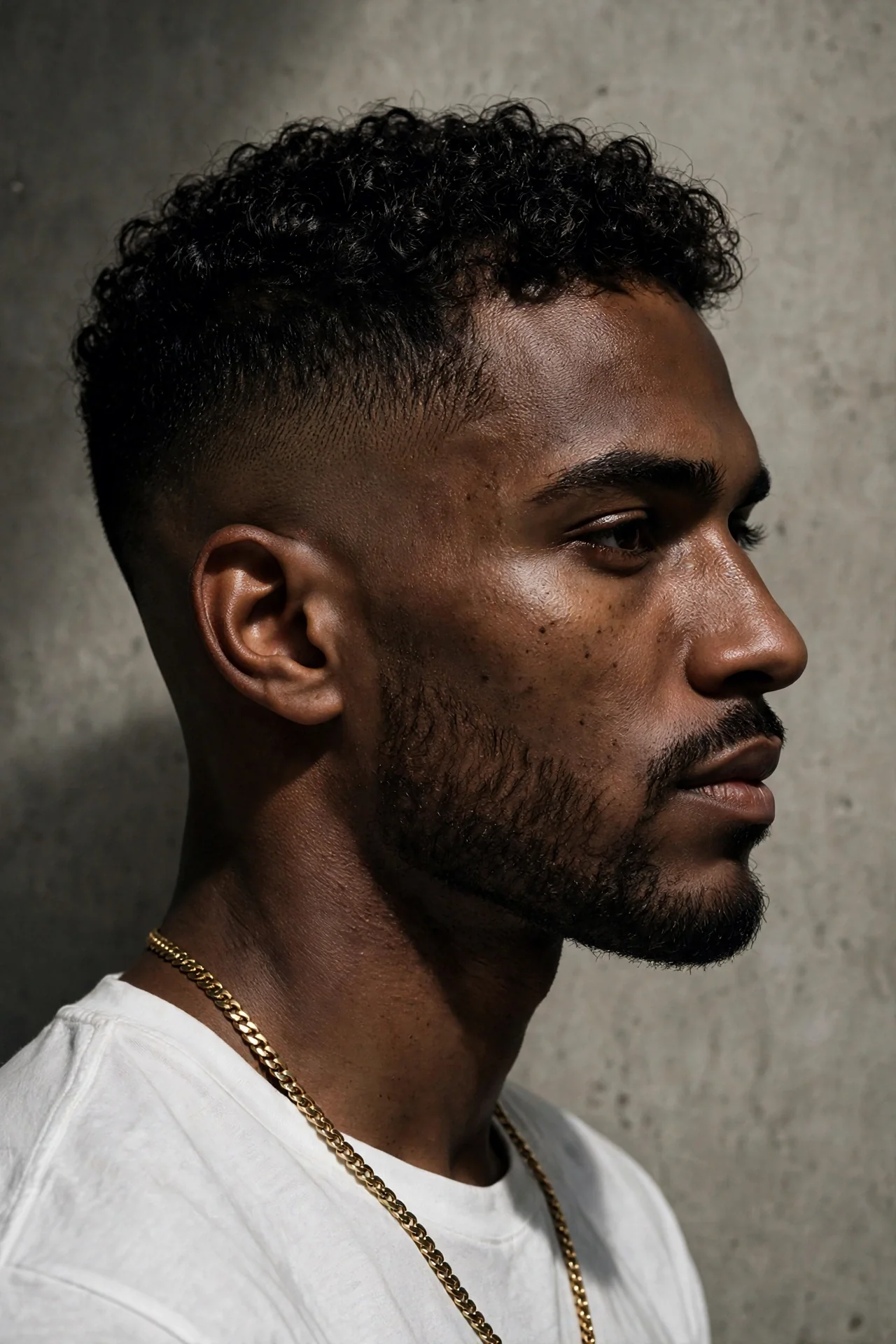
A skin fade takes the hair at the temple all the way down to bare skin, then fades back up in length into the beard. It’s the cleanest, most dramatic beard fade.
The bare skin at the top of the fade gives the strongest contrast. That makes the beard look full and the face look sharp, especially on darker hair and skin.
Different fades create different levels of contrast, so it helps to know what to ask for.
| Fade | Shortest Point | Where It Sits | Look |
|---|---|---|---|
| Taper | #0.5–#1 | Sideburns and neckline only | Subtle and natural |
| Low fade | Skin or #0 | Just above the ear | Clean but understated |
| Mid fade | Skin or #0 | Around the temple | Sharp and balanced |
| High or bald fade | Skin | Near the top of the head | Bold, high contrast |
Keeping a Skin Fade Crisp
Skin fades grow out quickly, usually within one to two weeks. To keep the clean contrast, plan for barber visits every two to three weeks.
05
OF 28
The Low Beard Blend

A low beard blend keeps the fade very subtle. Only the bottom of the sideburn is tapered, so the beard and haircut blend smoothly without any obvious fade showing.
It’s a good option if you want the neat finish of a fade without a noticeable style. From a distance, it just looks like a well-groomed beard and a tidy haircut.
📌 Blend or Fade? The Real Difference
A beard blend and a beard fade are often used to mean the same thing. In general, a “blend” is the softer version, which keeps the transition subtle, while a “fade” usually takes the sideburns much shorter.
This style grows out gracefully. Because the shortest point is only a little shorter than the beard, it can go a month between barber visits without losing its shape.
06
OF 28
The Mid Skin Fade With a Beard

A mid skin fade sits around the temple, so it’s sharper than a low fade but less dramatic than a high one. Blended into a beard, it gives a modern, balanced look that suits most face shapes.
The fade draws attention to the cheekbones and jaw. With a short beard, it makes the face look more defined and angular.
Where the Blend Breaks: Fading the sideburns but leaving the beard’s cheek line too high. The fade then flows into a block of cheek hair, and the transition looks interrupted. Bringing the cheek line down slightly lets the fade blend smoothly into the beard.
Keep the top of the haircut a little longer with a mid fade. The extra height balances the short sides and the beard.
07
OF 28
The Bald Fade With a Beard and Line Up
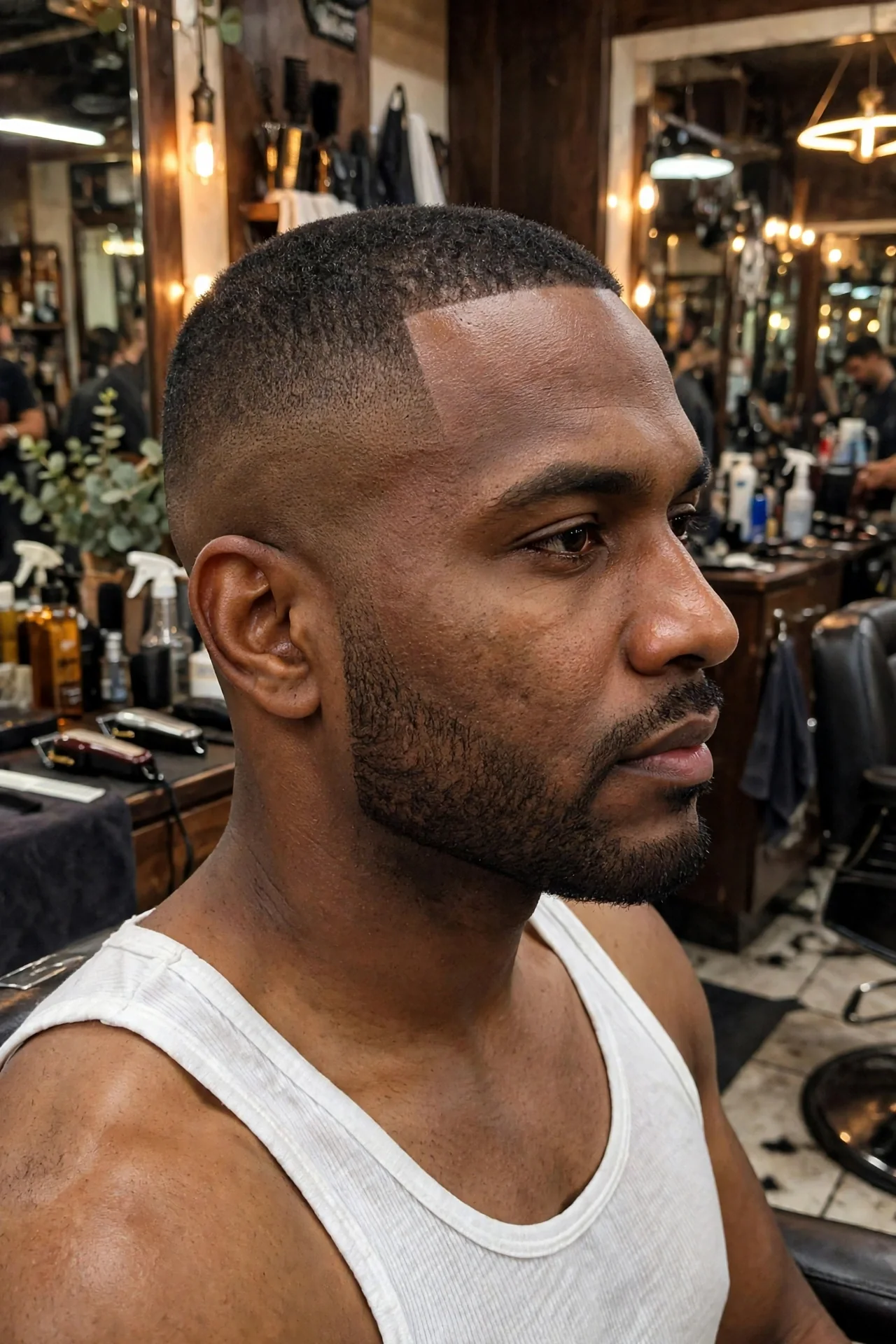
A bald fade takes the sides of the head down to smooth, bare skin, usually with a razor or foil shaver. When the beard fades back up from that point, the contrast is as strong as it gets.
A line up sharpens the edges of the hairline and beard. Together with the bald fade, it gives a precise, crisp finish that looks freshly cut.
How the Fade Moved From Base to Barbershop
The short, graduated sides of the fade are often traced back to military haircuts of the mid-20th century. The style was then developed and refined in Black barbershops in the United States, where it became a defining look of the 1980s and 1990s.
Why Bald Fades Belong in the Barber’s Chair
Bald fades and line ups are best left to a barber. Getting the blend and edges symmetrical takes practice, and a slip near the hairline can take weeks to grow back.
⚠️ Where Bald Fades Go Wrong
Shaving down to bare skin regularly can cause irritation and razor bumps, especially on curly or coily hair. If you notice bumps, ask your barber to use a foil shaver or the shortest clipper setting instead of a razor.
08
OF 28
The Double Fade Beard
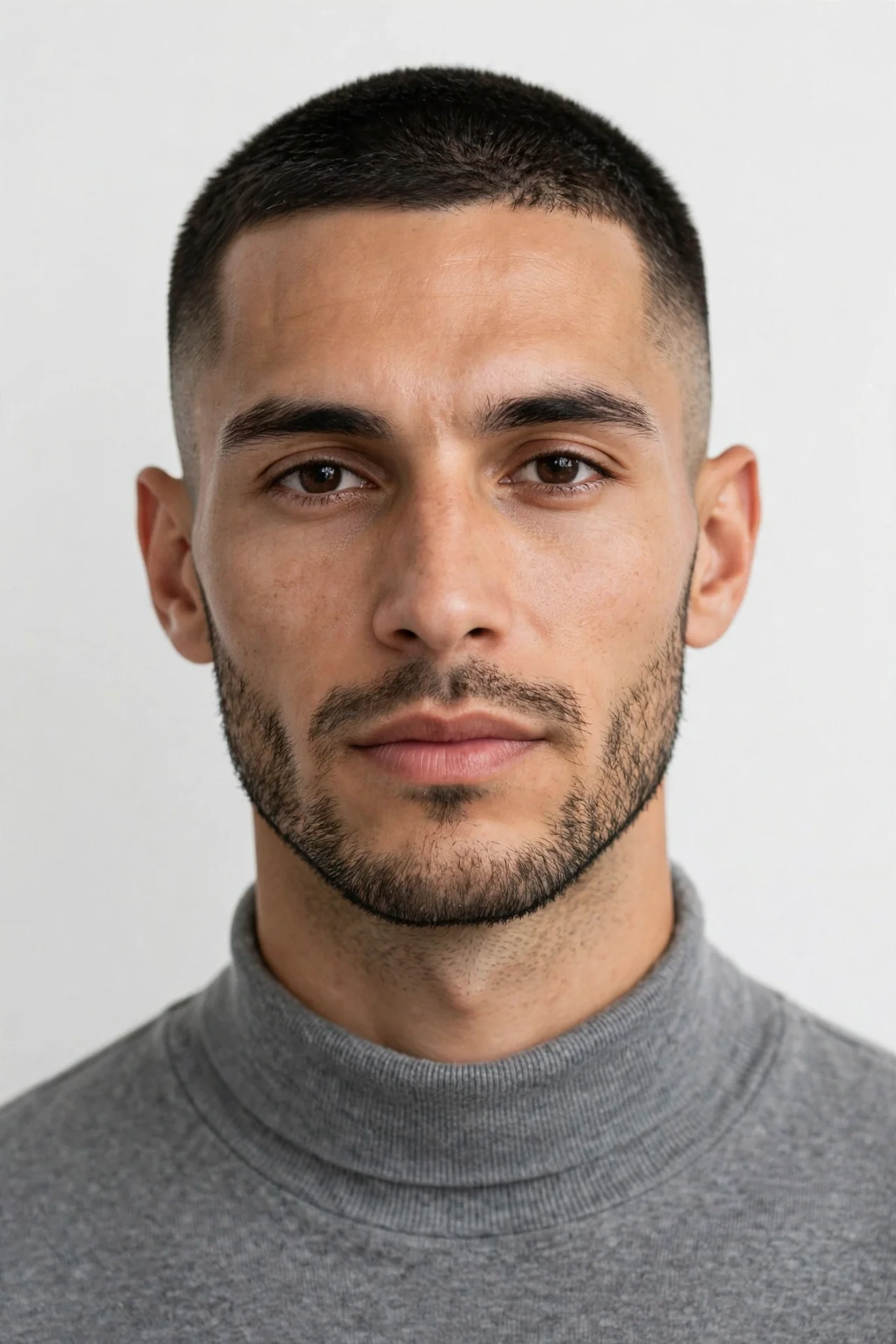
A double fade adds a second fade to the beard. As well as fading up from the sideburns into the haircut, the beard also fades shorter down the neck, instead of ending in a hard neckline.
That second fade makes the beard look softer and more natural from the side. It’s especially useful for men whose beards grow thick down the neck.
Fading the neck takes the same patience as fading the sideburns. Use a shorter guard on the lower neck and blend upward, so the beard gets gradually longer toward the jawline.
09
OF 28
The Medium Faded Beard

A medium faded beard keeps the main beard around 3 cm, long enough to look full but short enough to keep its shape. The fade at the sideburns stops a fuller beard from looking heavy next to a short haircut.
At this length, the fade is less about contrast and more about proportion. It narrows the beard at the top, which makes the face look slimmer and more structured.
Medium beards can look bulky at the cheeks. Trimming the cheeks slightly shorter than the chin keeps the beard from widening the face.
10
OF 28
The Long Faded Beard
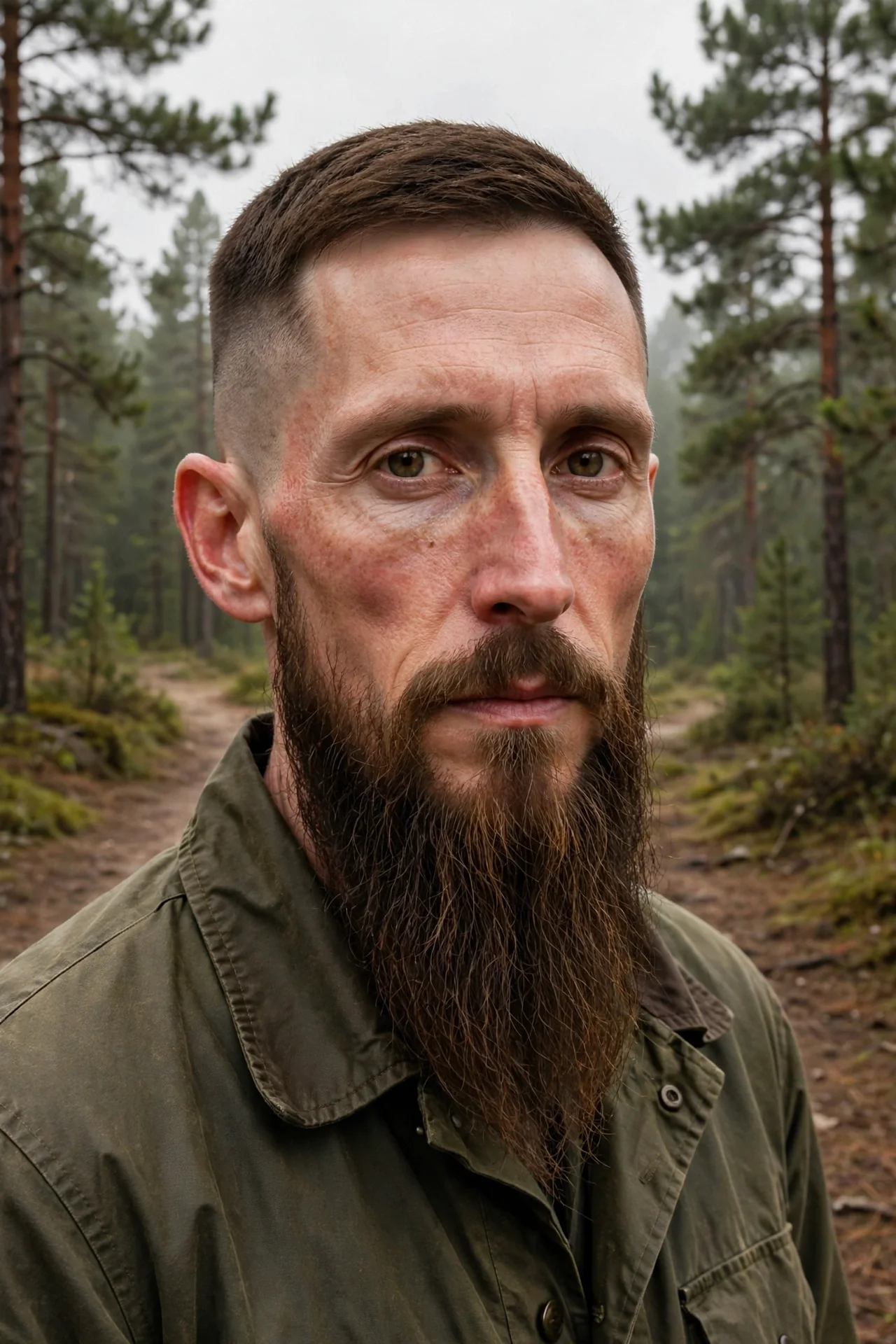
A long faded beard pairs a big beard with a short, faded haircut. The fade at the sideburns gives the beard a clean starting point, so even a very long beard looks groomed rather than wild.
This is one of the most striking short hair and long beard combinations. All of the length is in the beard, while the short sides keep the head looking neat.
💈 The Long-Beard Fade Rule
With a long beard, the fade at the sideburn should be short and quick, finishing around the middle of the ear. A long, slow fade down a big beard can make the cheeks look thin and the bottom look heavy.
Keeping a Heavy Beard Neat Under Short Sides
Long beards need regular washing and conditioning. A boar-bristle brush every morning helps the beard sit neatly and spreads natural oils through the hair.
11
OF 28
The Thick Faded Beard
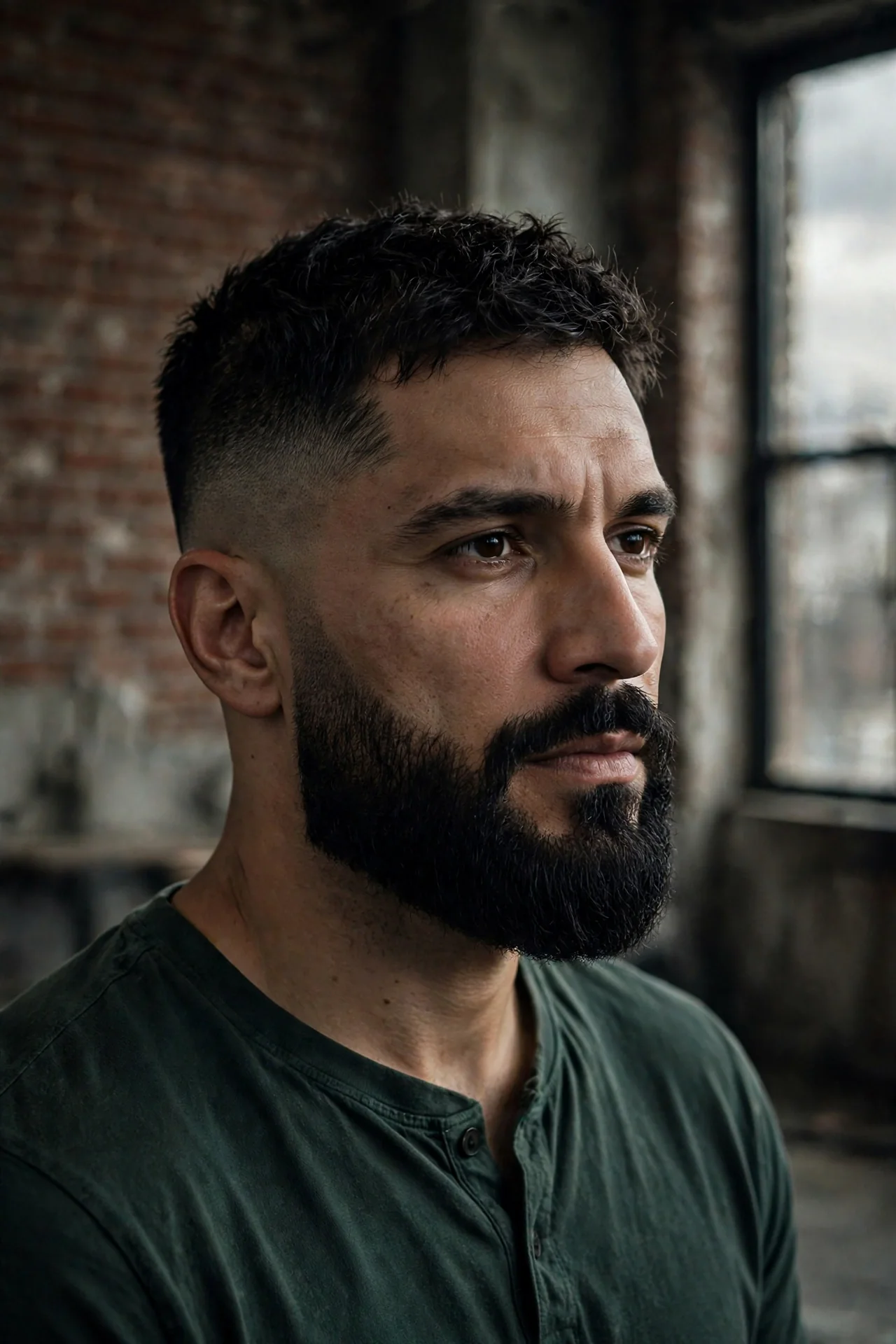
A thick beard benefits from a fade more than almost any other. Without one, dense beards can look heavy and blocky at the sideburns, especially next to a short haircut.
The fade takes some of that bulk away at the top of the beard. It keeps the density at the jaw and chin, where it looks strongest, while slimming the sides.
🧴 The Balm That Tames Thick Beards
A beard balm helps a thick beard keep its shape after a fade. Balms usually contain butters and waxes, which brands say add light hold and help tame flyaways, so the beard stays neat around the faded edge.
Thick beards also need their cheek line kept clean. Dense hair grows in fast, and the line can blur within a few days.
12
OF 28
The Faded Beard With Long Hair
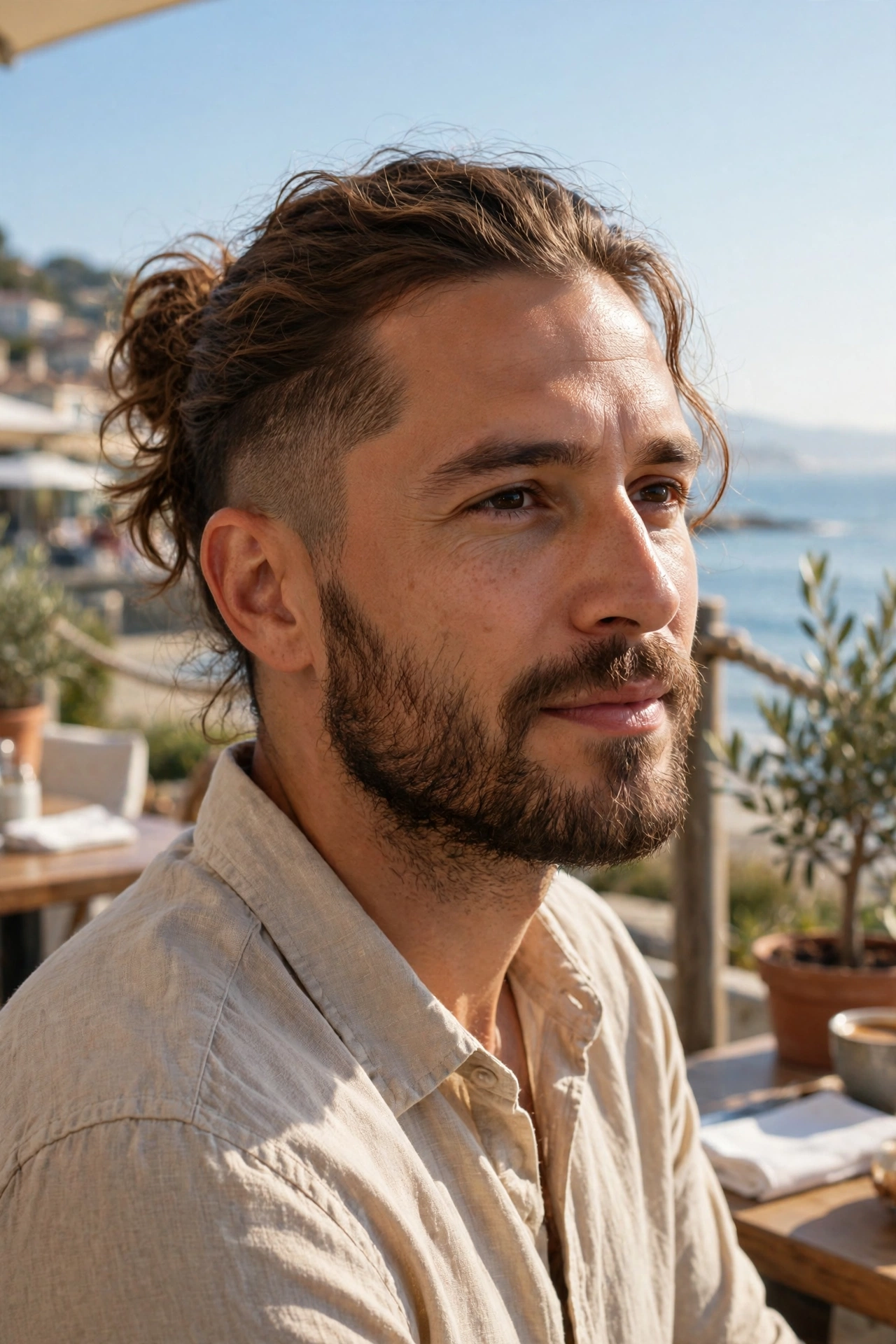
A faded beard works with long hair when the sides are cut short, often as an undercut, and the length is kept on top. The fade then blends from the short sides into the beard.
This gives long hair a clean frame. When the hair is tied up, the faded sides and beard make the look neat and structured, rather than loose and unkempt.
✅ Copy This Man-Bun Fade
- Long hair on top, tied in a bun or top knot
- Short sides and back, faded down from a number 2
- The fade carried through the sideburns into the beard
- A medium beard at 2–3 cm with a natural cheek line
If you wear your hair down, the faded sides are mostly hidden. The beard fade then just keeps the sideburns tidy, which still makes the beard look sharper.
13
OF 28
The Faded Beard With an Undercut
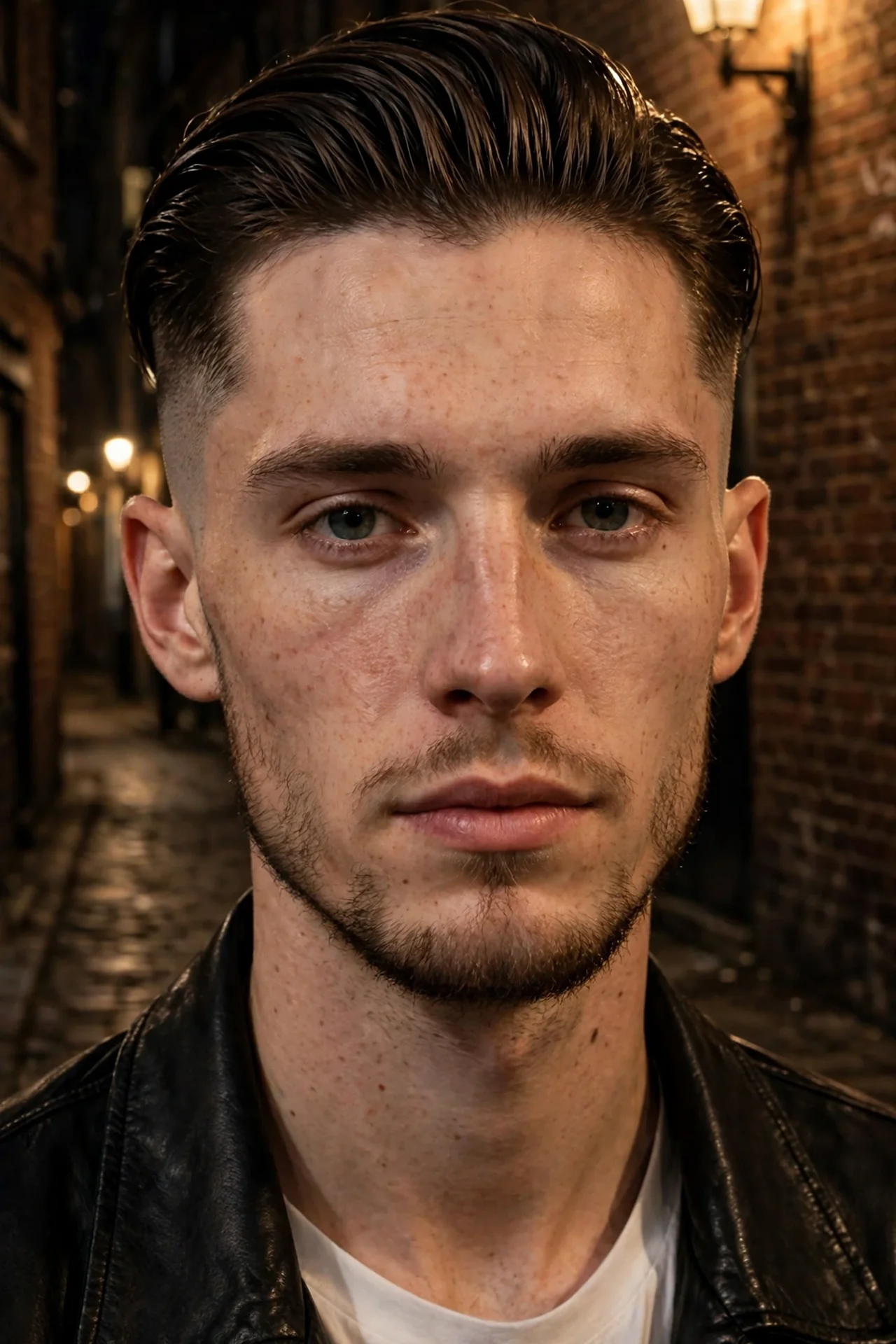
An undercut keeps the top long and the sides very short, with a clear disconnection between the two. With a faded beard, the short sides blend into the beard, which creates a strong outline around the face.
The contrast between the long top and short sides draws attention up, while the beard frames the jaw. It’s a striking look that works well with slicked-back or swept-back hair.
Undercuts need regular trims to keep the sides short. The beard fade should be cleaned up at the same time, so both stay in sync.
14
OF 28
The Faded Goatee
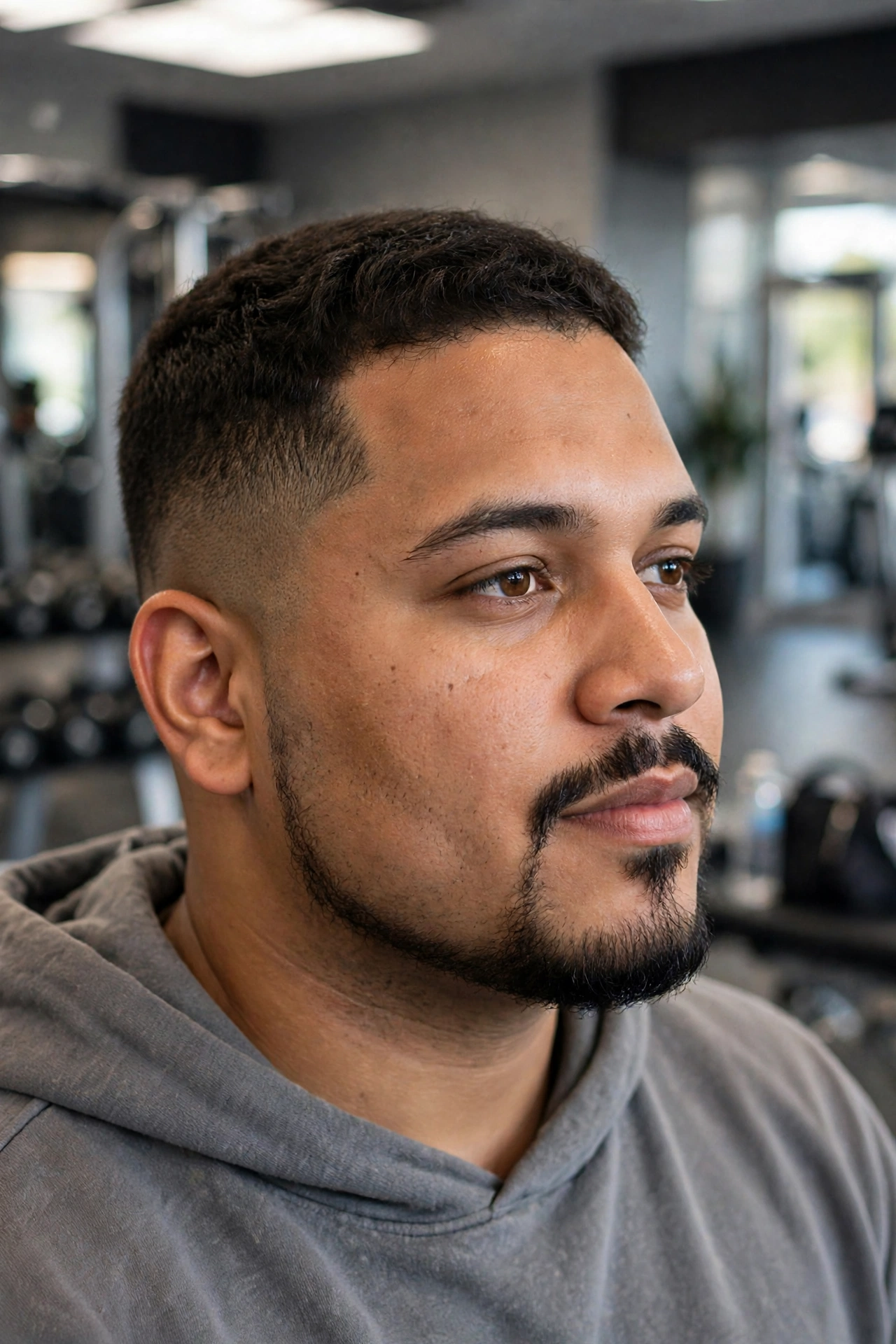
A faded goatee keeps the goatee full around the mouth and chin, but fades its outer edges shorter into the shaved cheeks. Instead of a sharp border, the goatee softens gradually into the skin.
That makes the goatee look more natural and modern. It’s a subtle change, but it removes the “drawn-on” look that some sharply edged goatees have.
Skip It If Your Goatee Is Sparse
Men with very sparse growth around the goatee may find fading the edges makes it look too thin. If the goatee is light to begin with, a crisp edge often gives it more definition.
A faded goatee pairs well with short, faded sides, or even a mohawk for something bolder. Keep the cheeks freshly shaved so the fade at the edges stays visible.
15
OF 28
The Long Goatee With a Short Faded Beard
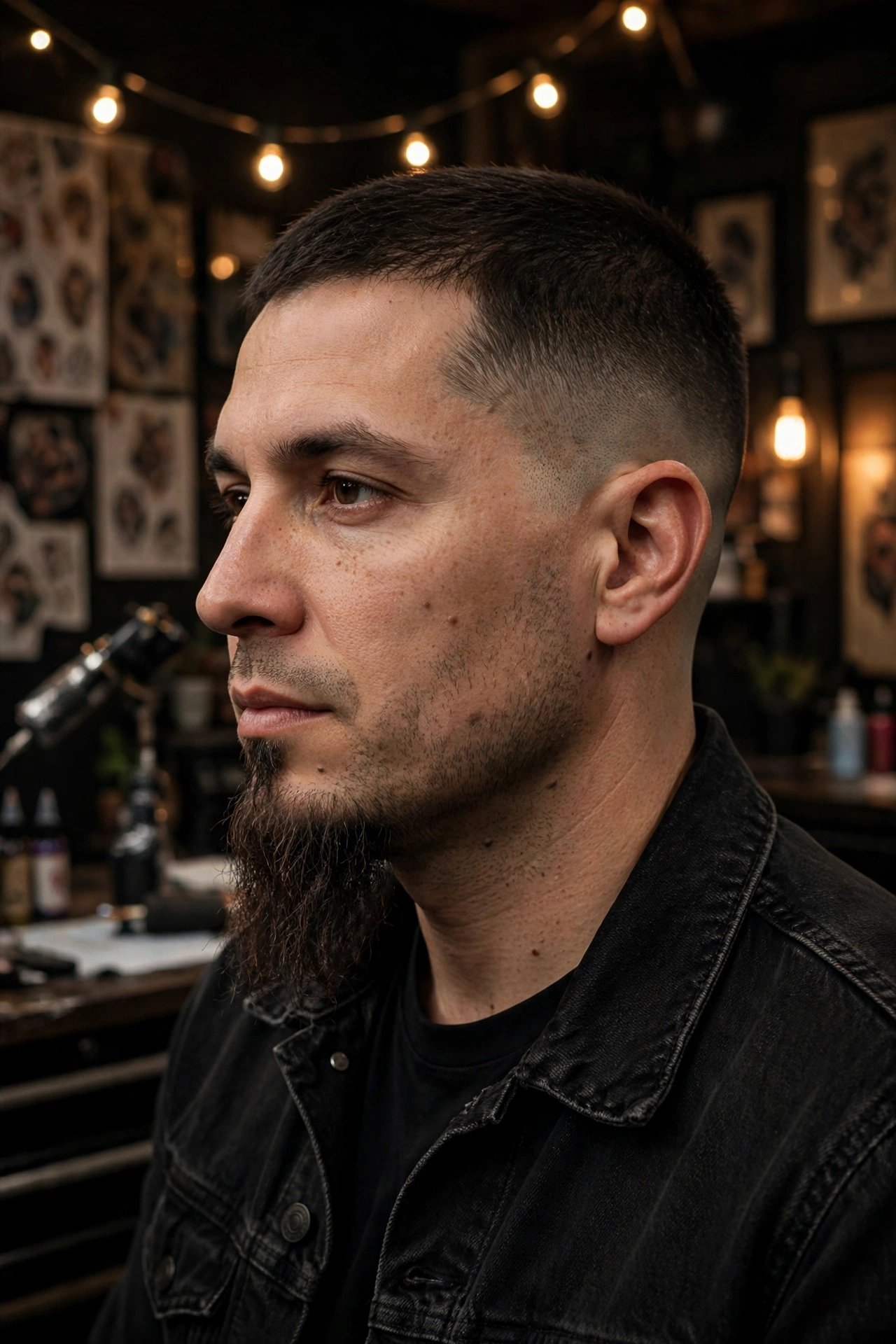
This style keeps the beard short on the cheeks and lets the goatee area grow much longer. The cheeks fade up into the haircut, while the length at the chin draws the eye down.
It’s a strong way to make the face look longer. The short, faded sides slim the face, and the long goatee adds length at the chin.
💡 Keep the Goatee Mouth-Width
Keep the goatee part about the width of your mouth. If it’s too wide, the long chin starts to look like a short full beard, and the contrast is lost.
The longer goatee benefits from a little beard oil and combing. It keeps the hair soft and helps it hang straight instead of curling out.
16
OF 28
The Disconnected Faded Beard
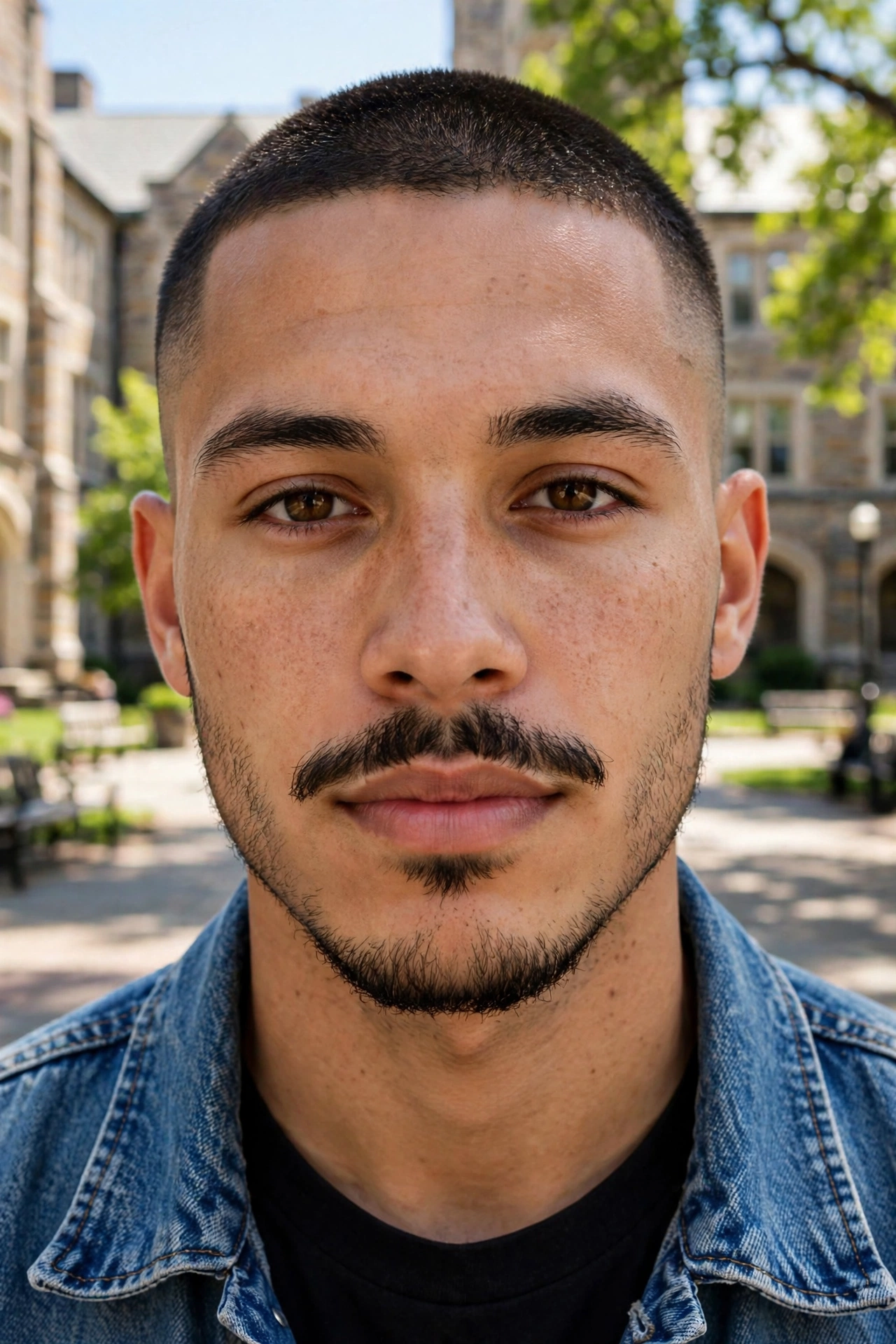
A disconnected faded beard keeps the moustache and chin beard separate, while the cheeks are kept very short and faded up into the haircut. It’s a modern style that turns thin areas into part of the design.
It’s especially useful for men whose beards don’t connect well at the mouth corners or grow thinly on the cheeks. Keeping those areas short makes the patchiness look intentional.
💡 Myth vs Reality
Myth: Buzzing or shaving your hair makes it grow back thicker.
Reality: Cutting hair doesn’t change how thick it grows. Regrowth can feel coarser because the blunt cut ends haven’t been worn down yet, but the number and thickness of hairs stay the same.
Keep the gap at the mouth corners clean and even. Stray hairs there make the disconnection look accidental.
17
OF 28
The Faded Beard With a Spartan Buzz

A Spartan cut is a very short buzz with a high fade, often with a little more length on top. Paired with a short faded beard, it creates a lean, strong look.
The beard adds weight to the lower face, which balances the very short haircut. The fade blends the two, so the whole head looks like one clean shape.
This is a low-effort look day to day. A quick rebuzz every two weeks and a weekly beard trim keep it sharp.
18
OF 28
The Faded Beard With a Bald Head
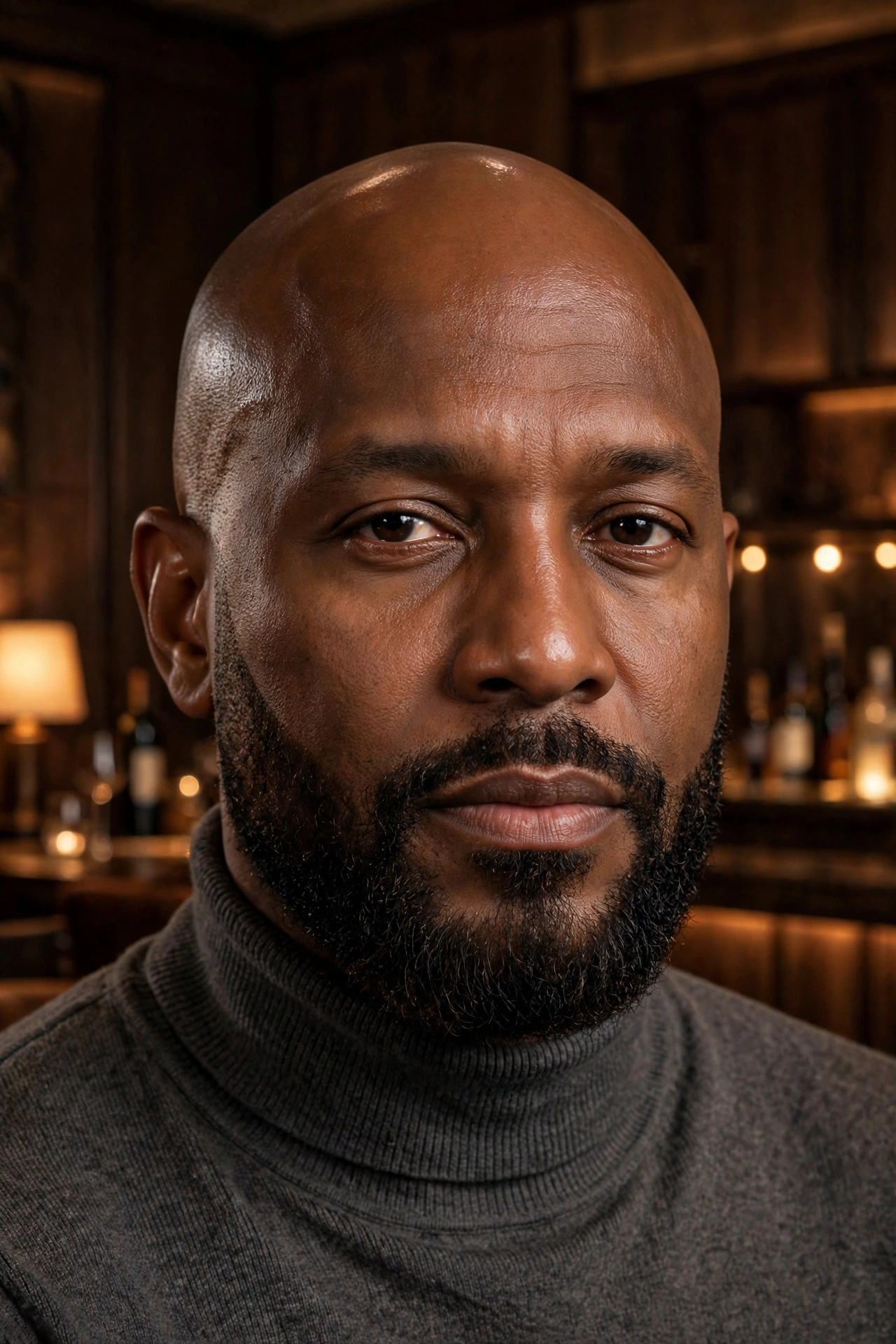
With a shaved or bald head, a beard fade replaces the hard line where the beard ends at the sideburn. The beard gradually fades up into the smooth scalp, which looks much more natural than a beard that stops suddenly.
This is one of the most flattering ways to wear a beard with a bald head. The fade connects the beard to the head, so it doesn’t look like the beard is stuck on.
⚠️ The Sunburn Line Above the Fade
A shaved head has no protection from the sun, and the skin above the fade burns easily. Use a sunscreen on your scalp on sunny days, especially around the temples where the fade starts.
How Often to Shave for a Seamless Blend
Shave your head every one to three days to keep the fade smooth. When the scalp grows in, the fade loses its seamless look.
19
OF 28
The Faded Grey Beard

A faded grey beard makes greying look neat and deliberate. Grey hair can look wiry or uneven, and a clean fade tidies the beard and blends it into the haircut.
Grey beards often look best a little shorter and neater than darker beards. A fade helps keep that tidy look while letting the silver show through.
BEFORE:
A grey beard grown out with no shape, meeting short grey hair with a hard line at the sideburns.
AFTER:
A 2 cm beard faded smoothly into a low taper, so the silver hair and beard look like one polished style.
Grey beard hair can turn slightly yellow from sun or hard water. A purple shampoo once a week helps keep it bright and silvery.
20
OF 28
The Faded Beard With 360 Waves
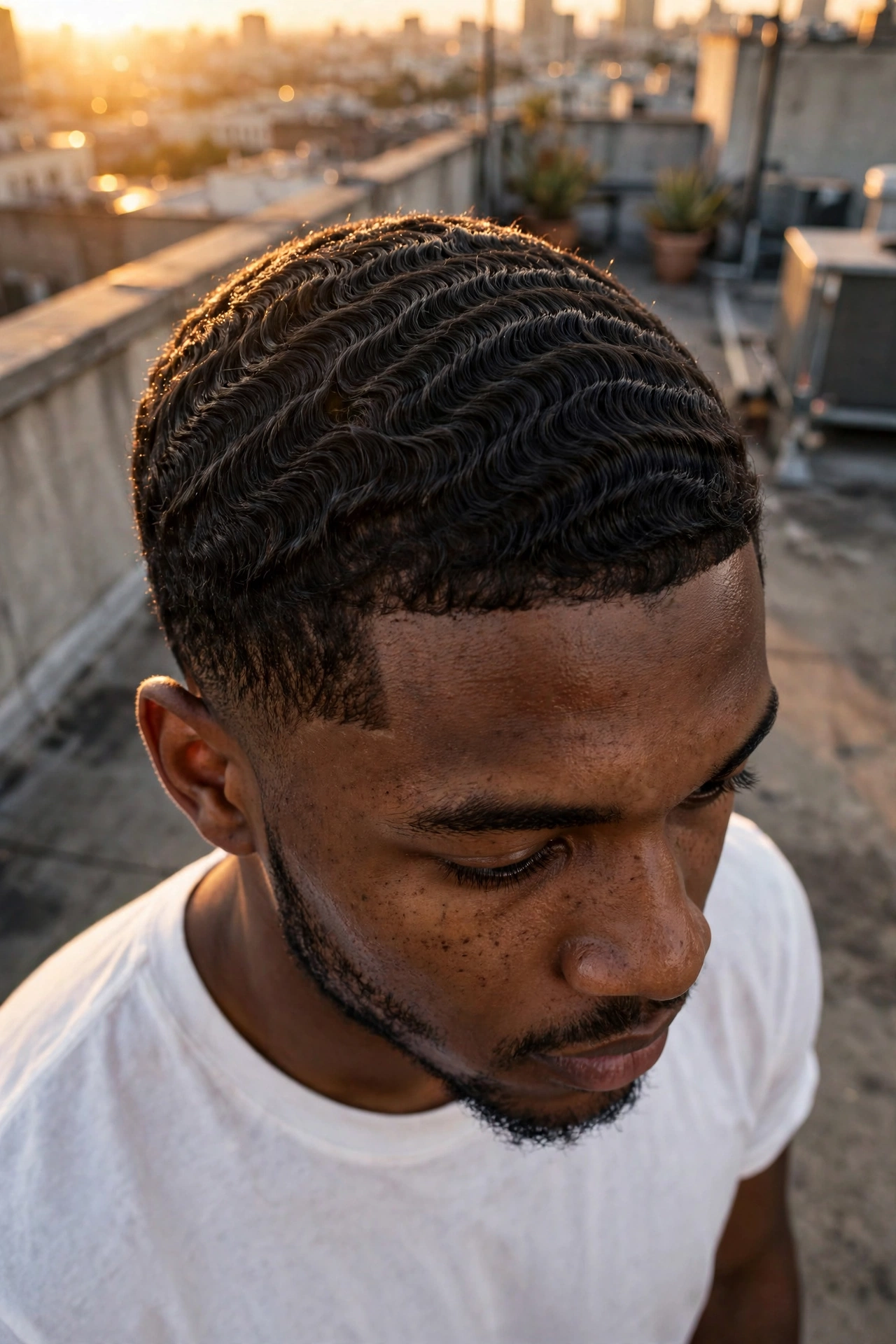
360 waves are ripples that circle the head, created by brushing short, coily hair in the same direction every day. With a low fade and a faded beard, it’s one of the most polished low-cut looks.
The fade frames the waves, and the faded beard continues that frame down the face. Everything looks clean and connected.
📌 Why Wavers Sleep in a Durag
A durag worn overnight helps set the waves and keep them from being flattened while you sleep. Most wave routines combine daily brushing with wearing a durag at night.
Keeping the Fade Below the Waves
Keep the fade low, so it doesn’t cut into the wave pattern. A high fade can remove the outer ring of waves.
21
OF 28
The Faded Afro Beard
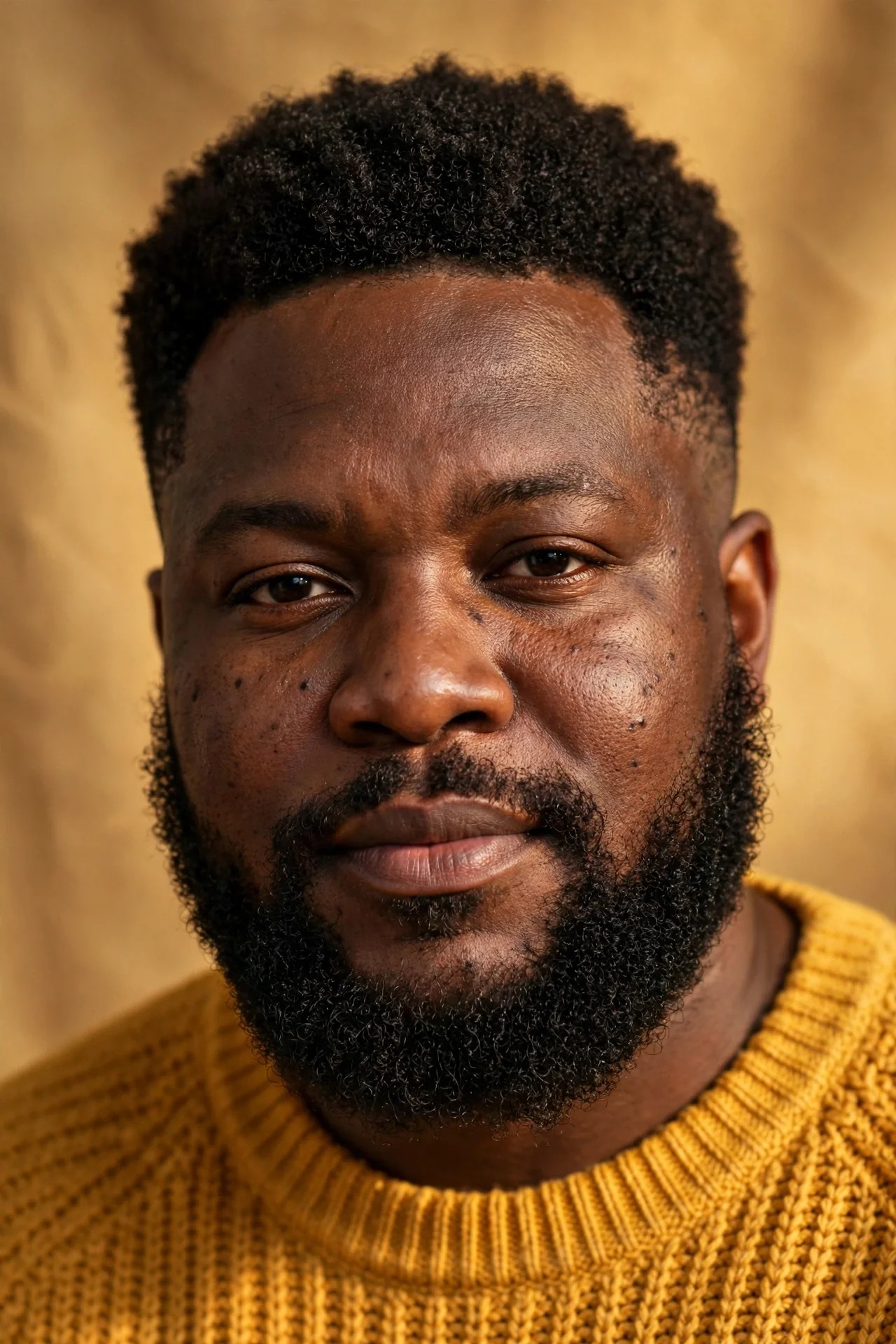
An afro beard is full and naturally coily, and it often looks rounder and fuller than straight beards of the same length. A fade at the sideburns gives that volume a clean edge.
The fade keeps the beard from merging with the hair into one large shape. It separates the beard from the afro and makes both look sharper.
🧴 Moisture First for Coily Beards
Coily beards tend to be dry, so moisture is key. A beard oil or leave-in conditioner, often made with shea butter or jojoba oil, helps keep the beard soft and reduces breakage.
Avoiding Razor Bumps at the Fade Line
Tightly curled beard hair can grow back into the skin after close shaving, causing razor bumps. Using clippers instead of a razor at the fade’s shortest point helps prevent them.
22
OF 28
The Drop Fade With a Lined-Up Beard
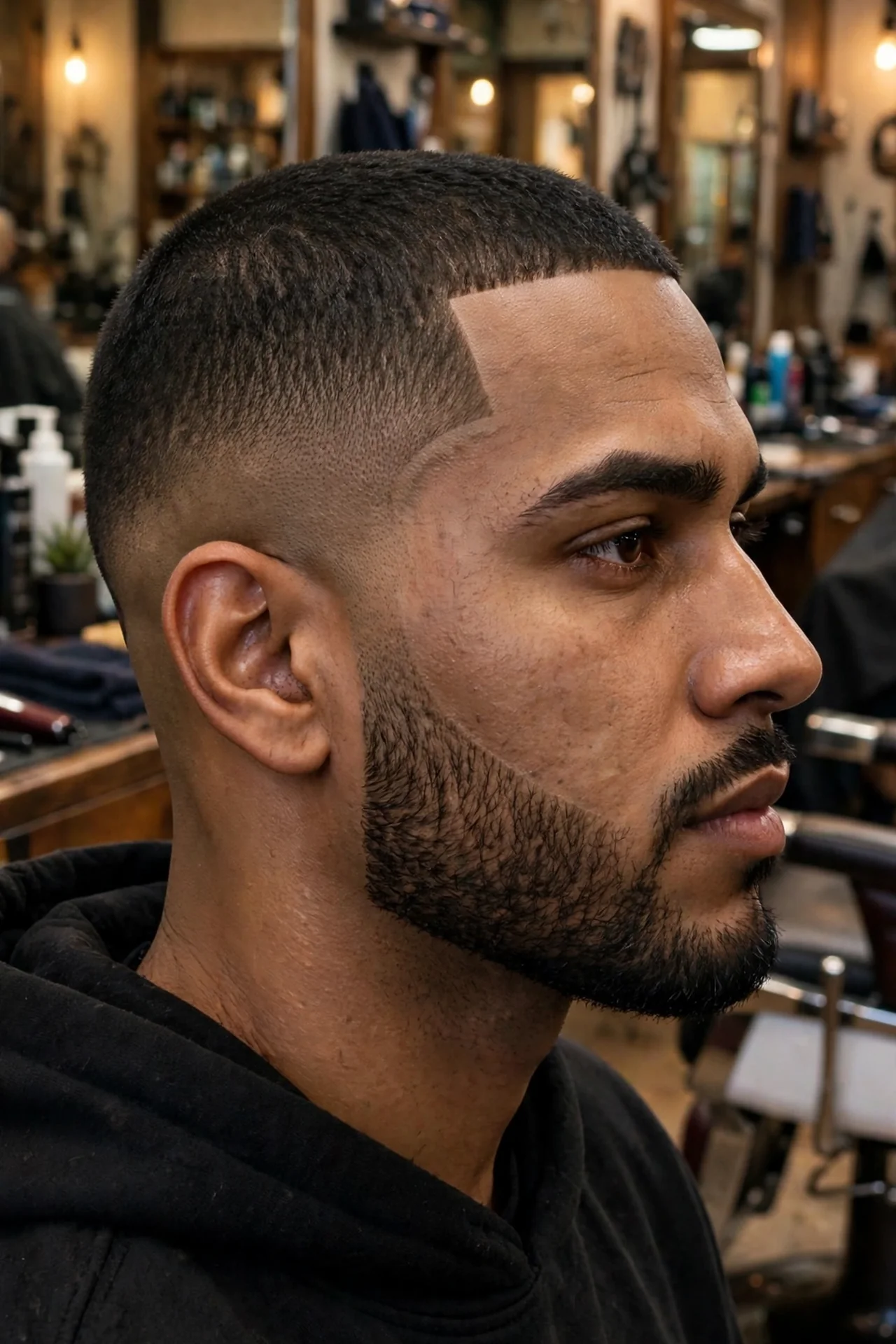
A drop fade curves down behind the ear, rather than running straight around the head. With a lined-up beard, it gives a sharp, modern look that’s a staple in many barbershops.
The line up sharpens the hairline and beard edges. Combined with the curved fade, it makes the whole look precise and well-defined.
💈 Your Drop Fade Request
“A drop fade behind the ears, faded into my beard at the sideburns, with a natural line up at the hairline and beard.” Asking for a natural line up keeps the barber from pushing the hairline back too far.
Line ups grow out quickly, often within a week. A quick touch-up at the barber’s between full cuts keeps the edges sharp.
23
OF 28
The Faded Curly Beard
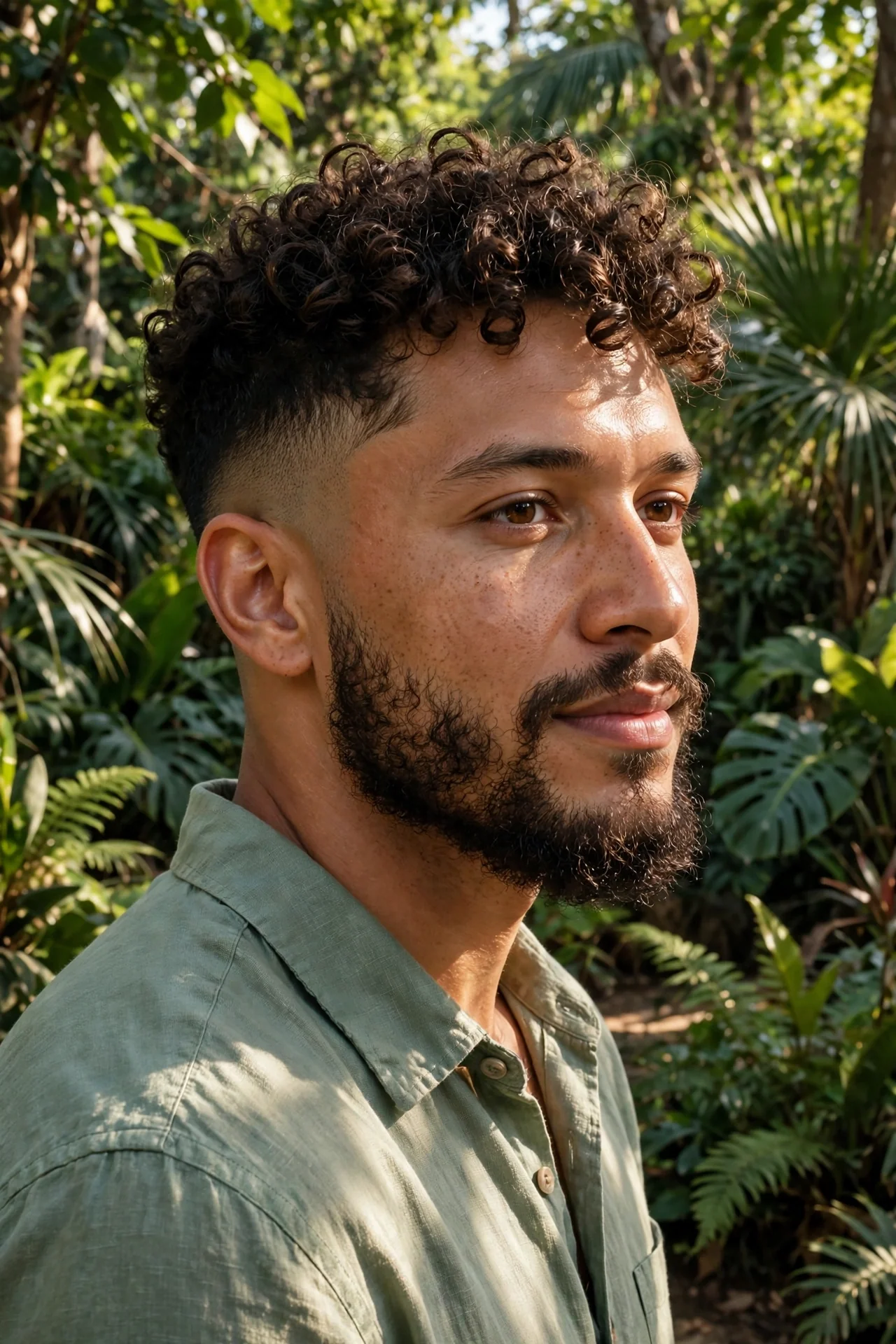
A faded curly beard pairs a curly top with a low taper and a curly beard, faded at the sideburns. It keeps the natural texture of the curls while making the beard look neat.
Curly beards can look bigger and less defined than straight ones. A fade at the sideburns gives the beard a clean edge, so the curls look intentional rather than unruly.
✅ Do This
Trim a curly beard when it’s dry, so you can see how the curls actually sit.
🚫 Skip This
Trimming it wet, which can leave it much shorter once the curls spring back.
A light leave-in conditioner or beard oil helps define the curls. It keeps them soft and reduces frizz, so the beard looks neat next to the faded sides.
24
OF 28
The Faded Beard for Round Faces

A round face is about as wide as it is long, with soft curves at the cheeks and jaw. A faded beard helps by keeping the cheeks short and adding length at the chin.
The fade slims the sides of the face, while the longer chin makes the face look longer. Height on top of the haircut adds to that effect.
🎨
Top
height, mid fade
✂️
Cheeks
short and faded
📐
Chin
2–3 cm, slightly longer
Avoid full, wide cheeks with a round face. They add width exactly where you want less.
25
OF 28
The Faded Beard for Oblong Faces
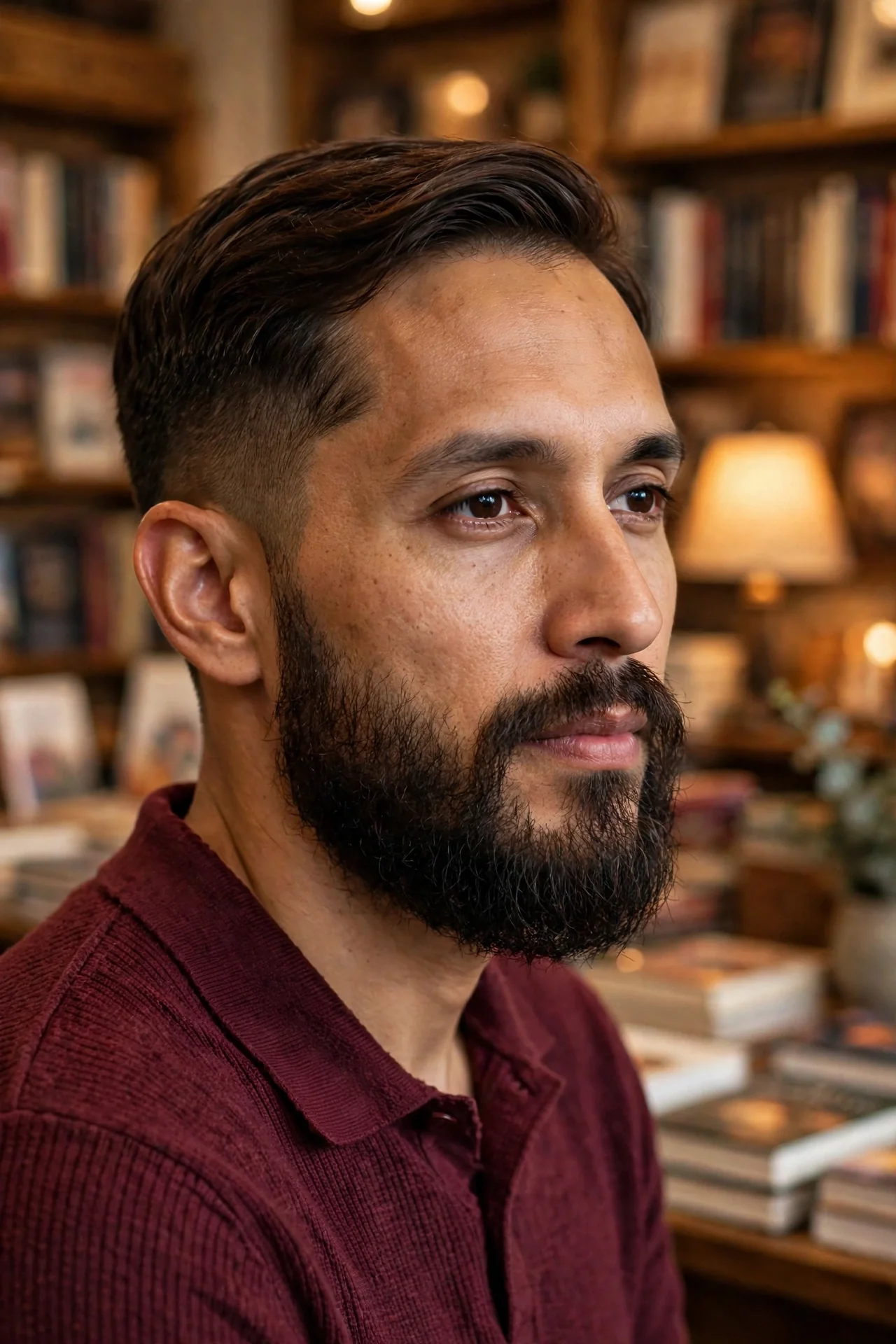
An oblong face is noticeably longer than it is wide. The right faded beard keeps more fullness on the cheeks and less length at the chin, which makes the face look wider and more balanced.
This is the opposite of the round-face approach. The fade should be soft and low, so it doesn’t slim the face further.
💈 Keep Long Faces Low and Wide
With an oblong face, avoid high fades and tall hairstyles. Both add length, and a high fade takes away width at the sides, which makes a long face look even longer.
Keep the chin flat or slightly rounded rather than pointed. A pointed chin beard adds length, which you don’t want here.
26
OF 28
The Dense Dark Faded Beard

Many Italian and Mediterranean men grow thick, dark beards quickly. A tight fade at the sideburns takes away some of that bulk, which keeps a dense beard looking sharp and tailored.
Paired with a slicked-back haircut and a low fade, it’s a polished, classic look. The dark beard and clean fade create a strong contrast against the skin.
💡 Clean the Edges Every Few Days
Dense dark beards blur at the edges fast. Cleaning up the cheek line and neckline every two or three days keeps the shape sharp between barber visits.
Dark, thick hair also shows the fade clearly. Keeping it neatly blended makes a big difference to how polished the whole look appears.
27
OF 28
The Faded Beard With a Side Part

A side part with a low taper and a short faded beard is a classic, grown-up look. It’s neat and professional, and it suits men who want a beard that still looks smart at work.
The fade keeps the beard tidy and connected to the haircut. With a side part, it looks polished without trying too hard.
📅 Wear It For
Keep the beard short and the fade low. A high fade or a long beard can make the look less classic and more fashion-led.
28
OF 28
The Light Faded Beard for Teens

Early beard growth is often uneven, coming in first on the chin and upper lip. A light faded beard keeps the growth short and blends it into the haircut, so it looks neat rather than patchy.
At this stage, the fade is subtle. It mostly tidies the sideburns so they blend into the short sides of the haircut.
💡 Trimmer Over Razor for First Beards
A trimmer with a short guard is gentler on young skin than a razor. Keep the beard very short and even, and fade the sideburns lightly with a slightly shorter guard.
If the growth is very light or patchy, a clean shave can look tidier. Beards usually fill in more with age.
So, which faded beard are you going for?
FAQs
What is a faded beard?
A faded beard gradually gets shorter from the beard up into the haircut, usually at the sideburns. It removes the hard line between the hair and beard, so they blend into one smooth shape.
How do I fade my beard at home?
Trim the beard to its main length, then use shorter guards on the sideburns, working up toward the haircut. Flick the trimmer outward at the end of each stroke to soften the lines between lengths.
What’s the difference between a taper and a fade?
A taper only shortens the hair at the sideburns and neckline, keeping it subtle. A fade usually takes the hair much shorter, sometimes down to bare skin, and covers more of the sides.
How often should I get a beard fade?
Skin and bald fades usually need a touch-up every two to three weeks. Softer tapers and blends can last three to four weeks.
Does a faded beard suit all face shapes?
Yes, but the style should be adjusted. Round faces suit short, faded cheeks with a longer chin, while long faces suit a low fade with fuller cheeks.
Can you fade a beard with a bald head?
Yes. Fading the beard up into a shaved head gives a smooth, natural transition, instead of a beard that stops suddenly at the sideburn.