20 Short Flow Haircuts for Men: Stop Getting the Wrong One

A flow haircut is medium-length on top, swept back or to the side, cut with enough layering that it actually moves. It looks effortless, but it rarely happens by accident.
This is one of the more requested cuts in barbershops right now, and honestly, no two guys need the exact same version. Your hair type decides how much product you’ll need.
Your face shape decides which direction it should move. Here are 20 ways to wear it.
Short on Time? Pick Your Path
Table of Contents
- 01The Classic Short Flow
- 02The Italian Short Flow
- 03The Old Money Short Flow
- 04A Short Flow With Tapered Sides
- 05A Short Flow With No Fade
- 06A Short Flow Paired With a Beard
- 07A Short Flow With a Middle Part
- 08A Short Flow With a Side Part
- 09A Short Flow for Curly Hair
- 10A Short Flow for Straight Hair
- 11A Short Flow for Wavy Hair
- 12A Short Flow for Thick Hair
- 13A Short Flow for an Oval Face
- 14A Short Flow for a Diamond Face Shape
- 15A Short Flow With Curtain Pieces
- 16A Blonde Short Flow
- 17A Short Flow for a Receding Hairline
- 18A Short Flow With a Longer Back
- 19A Messy, Undone Short Flow
- 20A Short Flow for Your Wedding Day
01
OF 20
The Classic Short Flow
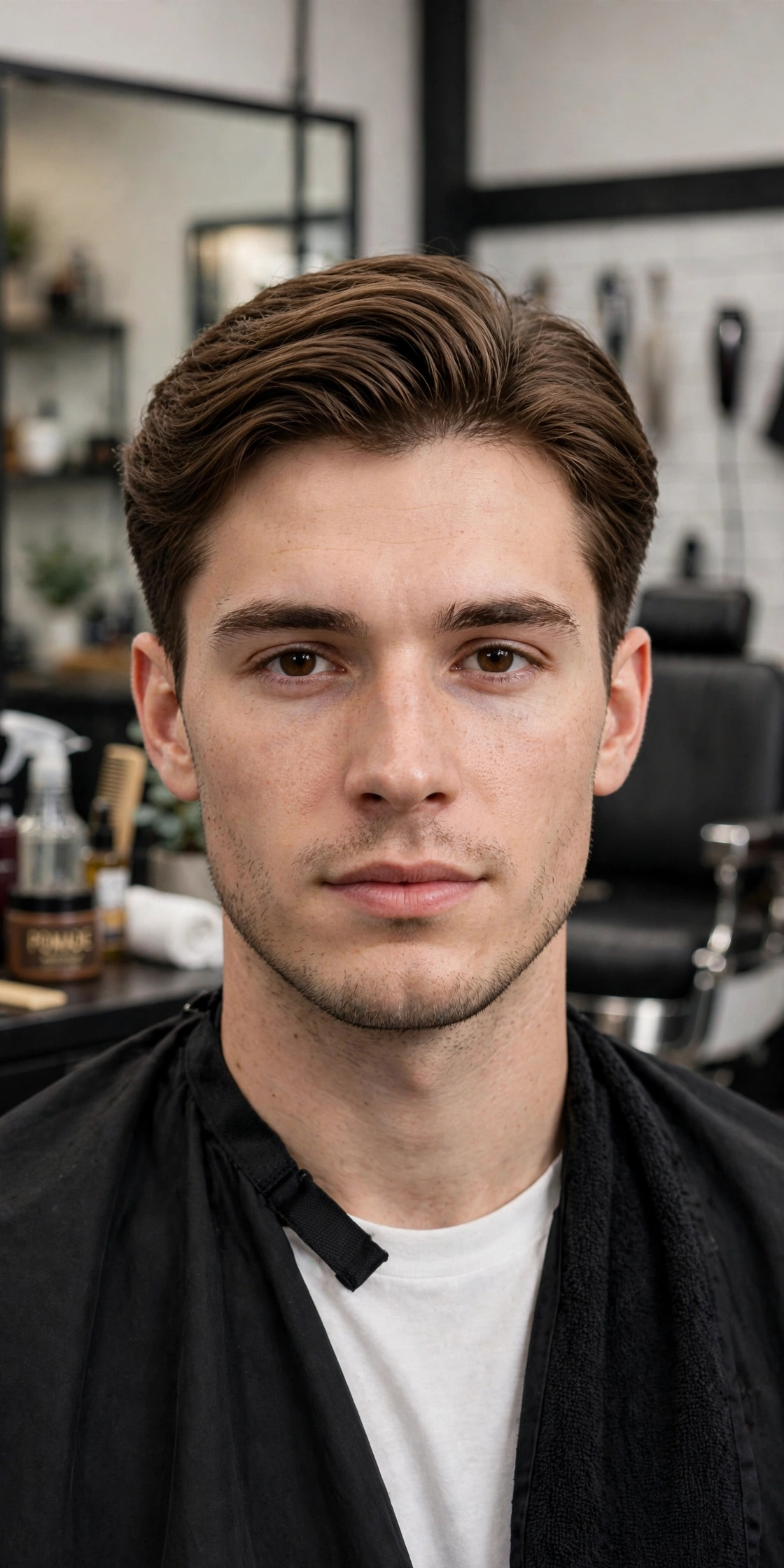
This is the one most guys picture when they say “flow.” Medium length on top, brushed straight back, no fringe in your face. Three to four inches is the sweet spot, long enough to sweep back, short enough that it won’t flop by lunchtime.
Layering underneath is what actually makes it move. Skip that step and your hair just sits there as one heavy chunk, falling forward the second you stop touching it.
Ask for scissors on top, not clippers over a guard. Scissors let your barber taper things gradually, which is what gives you that soft, blended movement instead of a hard edge.
One heads-up if your hair’s on the finer side: this one’s tough to pull off well. There’s not enough density to hold the swept-back shape without piling on product, and too much product on fine hair reads greasy fast.
Where It Actually Came From
Long before barbers had a name for it, surfers and skaters wore their hair this way because the ocean pushed it back for them, no product involved. Barbershop culture eventually gave it a name and started cutting it on purpose instead of letting the wind do the work.
As a barber, I’d say a short flow needs about 2 to 3 inches on top. Hair grows roughly half an inch a month, so getting there from short hair takes a few months, and a full flow takes six months to a year.
The hardest stretch, the awkward stage, usually comes somewhere between three and five months. Get a light trim every six to eight weeks, tell your barber you’re growing out a flow so they don’t take off length, and ask for a light taper around the ears and neck so the shape stays clean.
02
OF 20
The Italian Short Flow
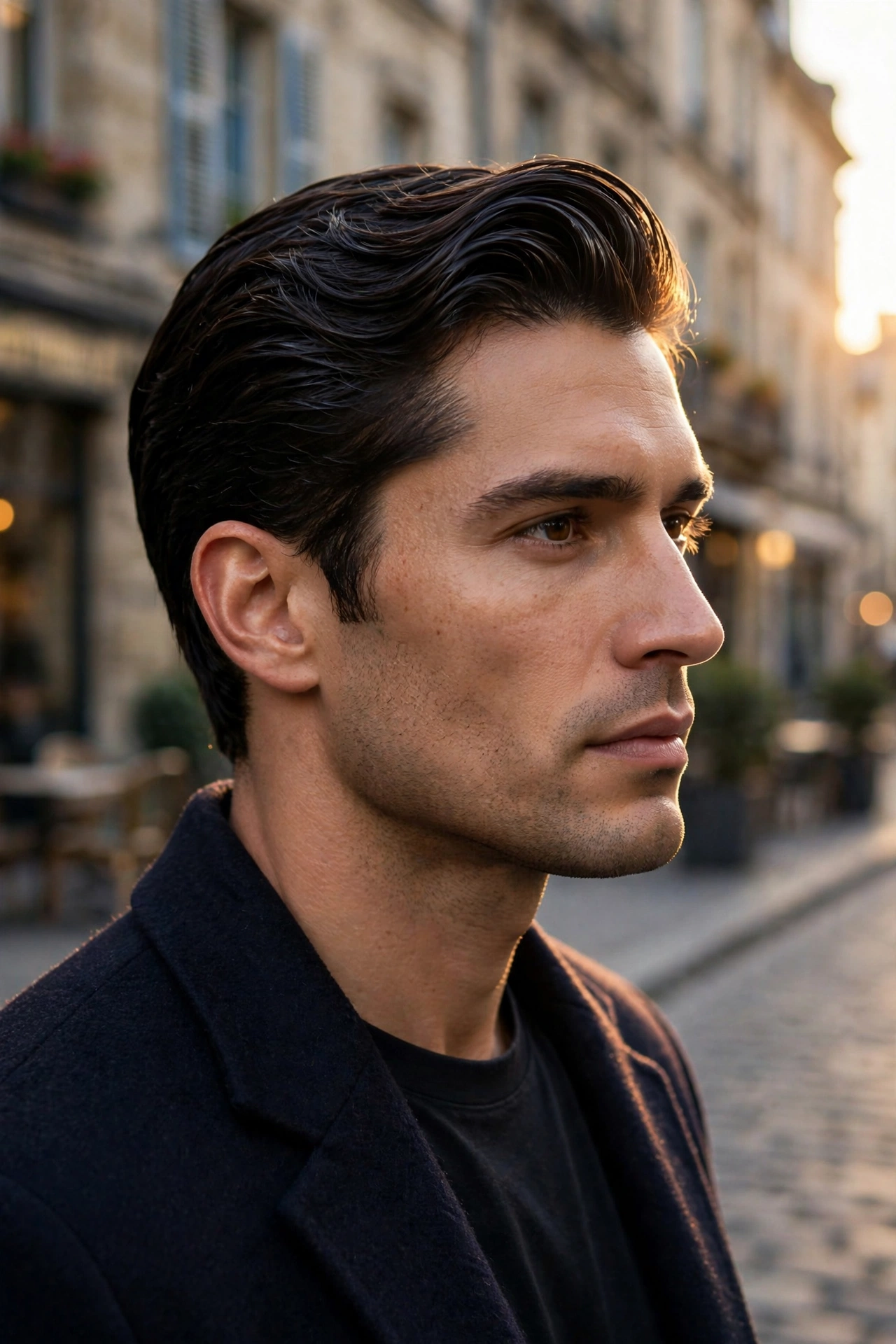
Ask three barbers what an “Italian flow” is and you might get three different answers. Most of the time, though, it’s the same haircut as a bro flow with a shinier finish.
The real difference is product. Swap matte clay for a shine-based pomade, comb it instead of finger-styling it, and suddenly it reads polished instead of casual.
If you’re not sure what to ask for, just bring a reference photo. Saves you the back-and-forth with your barber.
Worth knowing before you commit, though: shine shows fingerprints. If you’re someone who runs a hand through your hair without thinking, it’ll show here more than it would on a matte finish.
| Bro Flow | Italian Flow | |
|---|---|---|
| Finish | Matte | Shiny, polished |
| Styled with | Fingers | Comb |
| Reads as | Casual | Dressed-up |
03
OF 20
The Old Money Short Flow

Where the Italian flow leans into shine, this one strips it back out. Same length and layering, just a quieter finish.
💡 Myth vs Reality:
Myth: this look needs an expensive salon or premium products.
Reality: it’s mostly restraint. A basic matte cream, worked through with a comb instead of fingers, gets you there just as well as a fifty-dollar pomade would.
Stick to natural, unbleached brown tones here. It just fits the whole understated vibe better than anything lightened or high-contrast.
A Quick Look Back
This clean, swept-back look traces back to classic East Coast prep style, worn by guys who weren’t trying to make a statement. It came back a few years ago under the “old money” and “quiet luxury” labels, minus the logos.
Because there’s less texture built into the cut, it also holds up longer between trims than a heavily textured flow does.
04
OF 20
A Short Flow With Tapered Sides

A taper fixes one specific problem. Full-length sides pull focus away from whatever’s happening on top, which defeats the purpose if the top is where you want the attention.
| Taper Height | Starts At | Effect |
|---|---|---|
| Low | Just above the ear | Subtle, more length kept |
| Mid | Temple level | Balanced, the most common pick |
| High | Above the temple | Sharp contrast, top reads fuller |
Point to the exact spot on your own head when you’re describing the height you want. “Low” and “mid” mean different things to different barbers.
Tapers also age better than fades. A fade two weeks overdue looks rough and stubbly, while a taper just looks like slightly longer hair.
BEFORE:
Full-length sides growing out unevenly, fighting the swept-back top for attention instead of framing it.
AFTER:
A clean mid-taper blending into the same top, sides doing their job quietly instead of competing with it.
05
OF 20
A Short Flow With No Fade

Skip the fade, keep the sides one length, just shorter than the top. It’s the simplest version here, and the one least likely to go wrong between cuts.
✅ Do This
Keep a full guard length of difference between the sides and the top.
🚫 Skip This
Cutting the sides too close to the top’s length. Without contrast, it starts looking like it’s just growing out.
Here’s the tradeoff, though: this version is easy to live with, but it’s also the least dramatic option on this list. If you want the cut to do more of the talking, one of the textured versions will serve you better.
06
OF 20
A Short Flow Paired With a Beard

A flow and a beard aren’t really two separate decisions, they’re one. Mismatch the density between the two and the whole thing looks unintentional.
⭐ Best For:
Medium-density beards, somewhere between stubble and a full beard. They match the visual weight of medium-length hair without either one dominating.
A clean-shaven flow and a bearded flow basically read as two different haircuts, even with identical length on top. The beard adds visual weight to the lower face, which balances the volume up top.
Keep both on the same trim schedule. A sharp haircut next to a scraggly beard just reads as neglected, no matter how good the top looks.
07
OF 20
A Short Flow With a Middle Part

Split it down the middle instead of sweeping everything back, and you land closer to curtains than a classic flow. Same length, different attitude.
Rounder or oval faces handle this well since a center part doesn’t fight the face’s natural width. On a long, narrow face it can emphasize the length, so that’s worth knowing upfront.
📌 Good To Know:
The layering has to be built around a middle part from the start. Add one with product to hair cut for a side sweep and it’ll fight you all day.
Most guys trying this for the first time say it reads younger and softer than expected. That’s either exactly what you want or a reason to pick a different version.
08
OF 20
A Short Flow With a Side Part

A side part adds structure and reads dressier than a loose sweep-back. That’s why you’ll see it more in offices than at the beach.
The ratio matters more than people think. An 80/20 split looks deliberate, while an even 50/50 can read accidental.
Comb the part into place while hair is still damp
Let it dry partially before adding any product
Finish with a light-hold cream, applied from the part outward
Fine, flat hair tends to lose this part by afternoon. A texturizing spray before you set it helps more than extra product afterward does.
09
OF 20
A Short Flow for Curly Hair
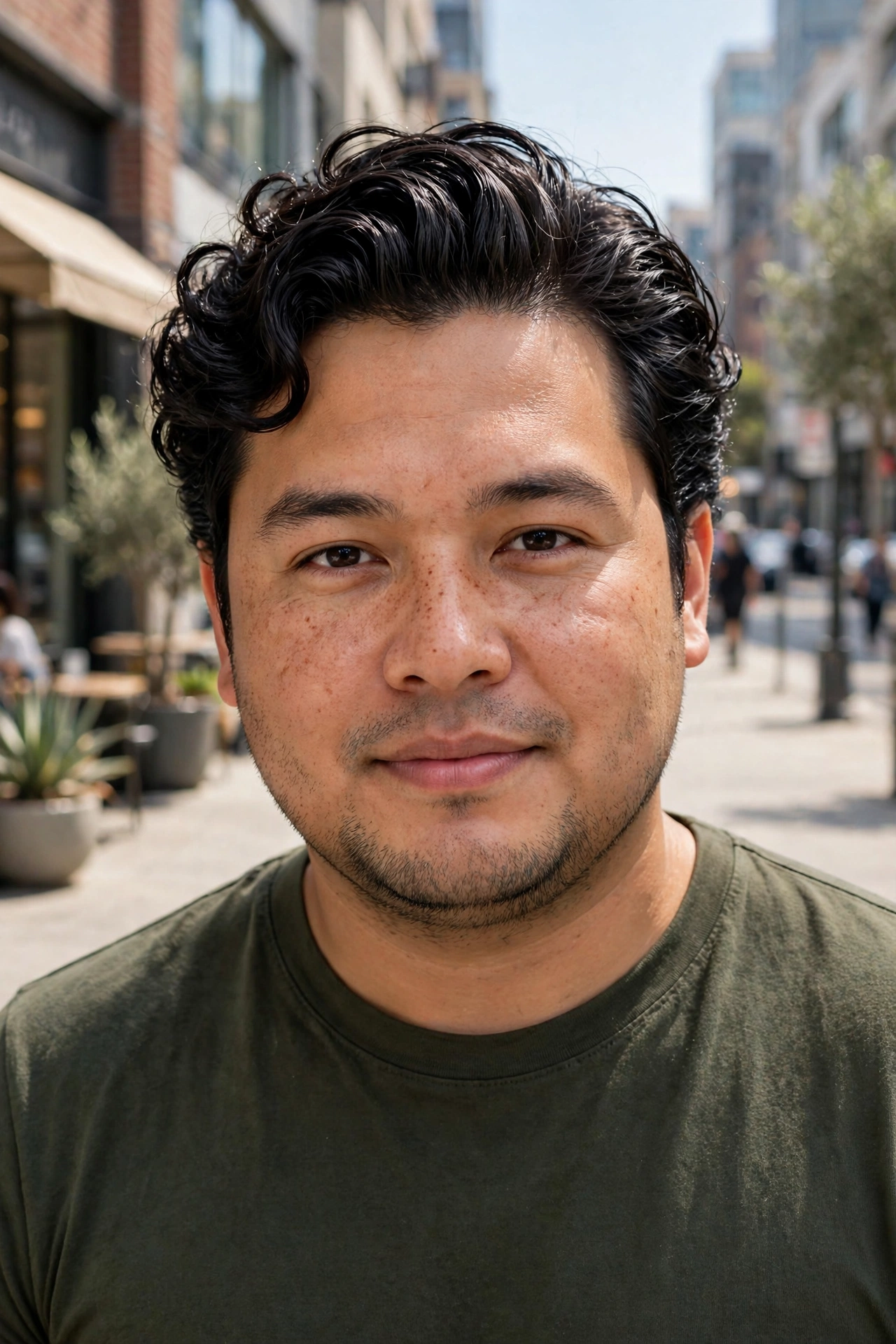
Curly hair changes the math here. Your curl pattern already gives you volume and texture a barber would otherwise have to cut in.
Heavy clay or paste just weighs curls down and kills the pattern. A light curl cream on damp hair holds the shape without flattening it.
Humidity’s the other thing to plan for honestly. Curly flows frizz and expand more than any other texture on this list, so have a plan for the damp months.
⚠️ Watch Out:
Curls shrink noticeably as they dry. A length that looks right wet can look much shorter once it’s fully dry, so cut with the dry length in mind.
10
OF 20
A Short Flow for Straight Hair
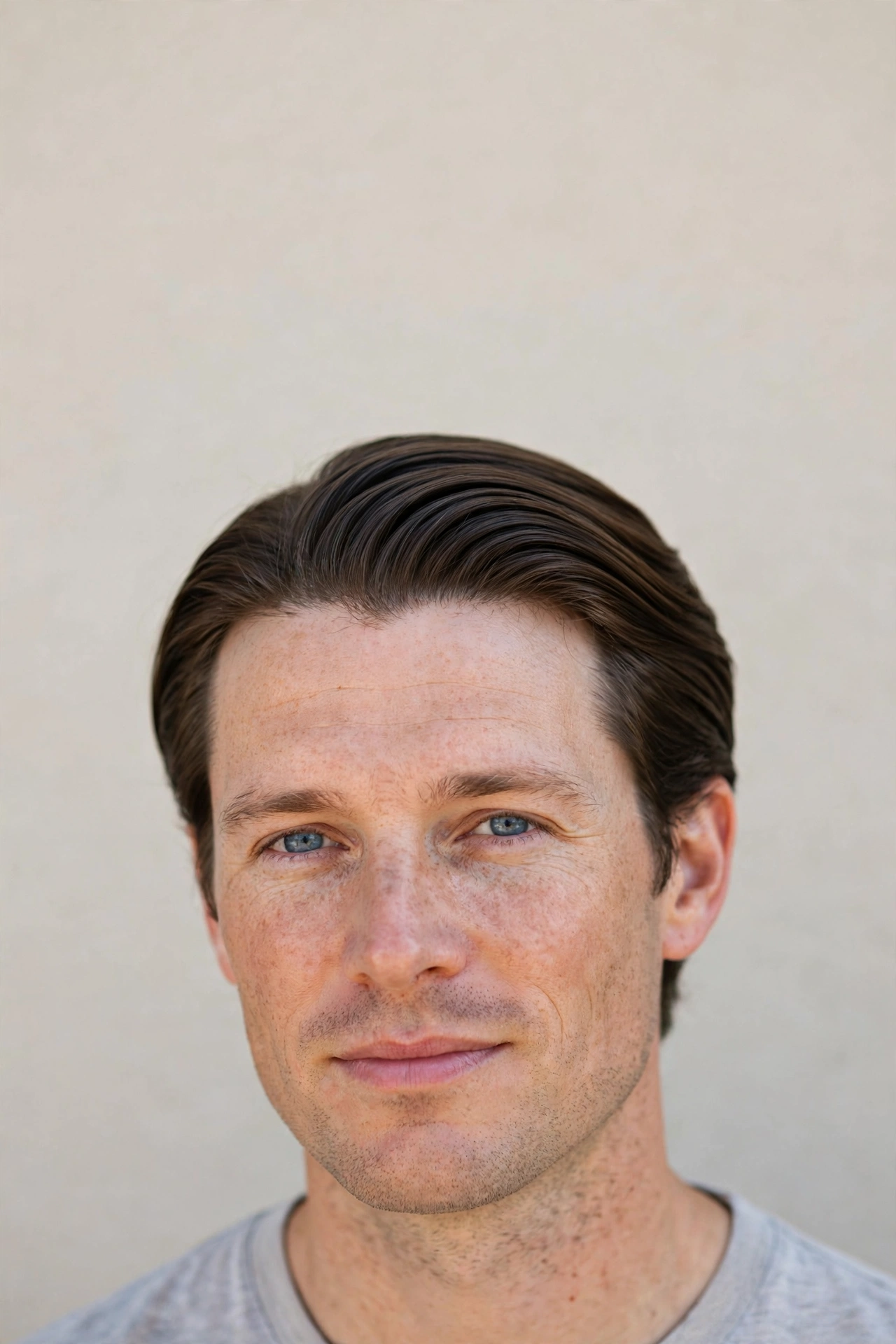
Straight hair has zero natural grip, which makes it the hardest texture to keep looking intentional rather than just long.
Apply a texturizing spray to the roots first
Blow-dry with a round brush, lifting roots away from the scalp
Brush the length back and finish with a light paste
Good product on straight hair should feel slightly dry and gritty, not slick. If it feels slick, you’ve used too much, and that’s exactly what causes the flat, greasy look by evening.
Fine, straight hair does better a bit shorter on top than thick straight hair does. More length without more density just makes the flattening worse.
11
OF 20
A Short Flow for Wavy Hair

Wavy hair might be the easiest texture on this entire list. You’ve already got natural movement, so you don’t need much product or technique to make it work.
A light sea-salt spray, scrunched in rather than combed through, brings out the wave without tipping it into frizz. Comb it too much and you’ll just smooth the wave flat.
Compare that to straight hair, which needs a whole routine just to fake some grip. Wavy hair gets most of that for free, and it still looks good on day two or three.
⭐ Best For:
Guys who want the lowest-effort version on this entire list. If you’re not into daily styling, this is the texture that makes it easiest.
12
OF 20
A Short Flow for Thick Hair
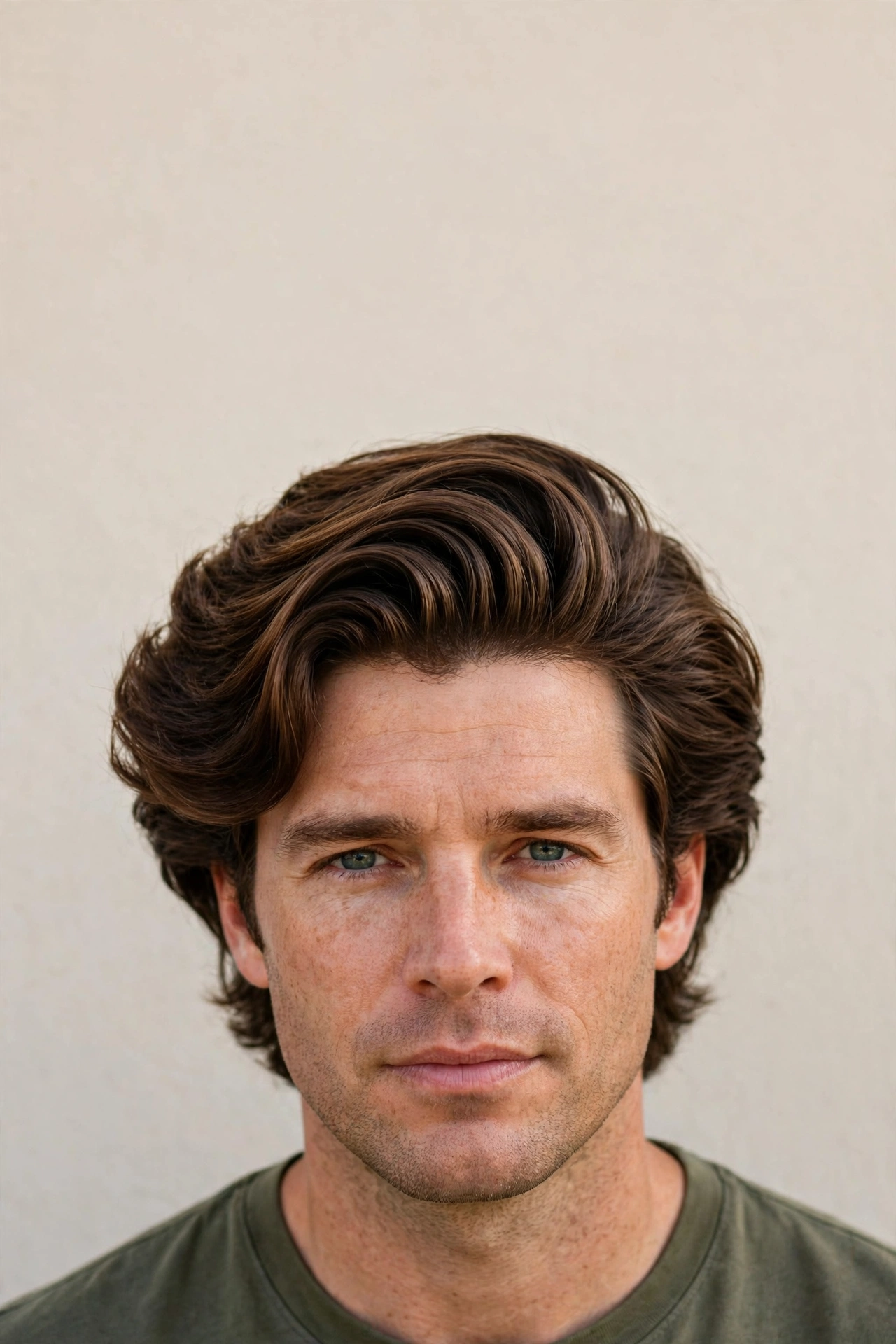
Thick hair gives you natural fullness, which sounds great until it starts working against you. Without proper thinning, this cut turns helmet-like instead of textured.
Thinning shears are the right tool, but only if your barber works them through the mid-lengths, not just the ends. That’s where the actual bulk lives.
BEFORE:
Dense, untextured top sitting heavy and helmet-like, barely moving when you run a hand through it.
AFTER:
Same length, properly thinned through the mid-lengths, moving and sweeping back the way a flow is supposed to.
A lot of guys walk in thinking shorter solves the bulk problem. It doesn’t, thinning the length you’ve got does more than cutting it shorter ever will.
⚠️ Watch Out:
Asking for shorter length as a fix for thickness usually backfires. Shortened thick hair without thinning tends to stick out rather than lie down.
13
OF 20
A Short Flow for an Oval Face
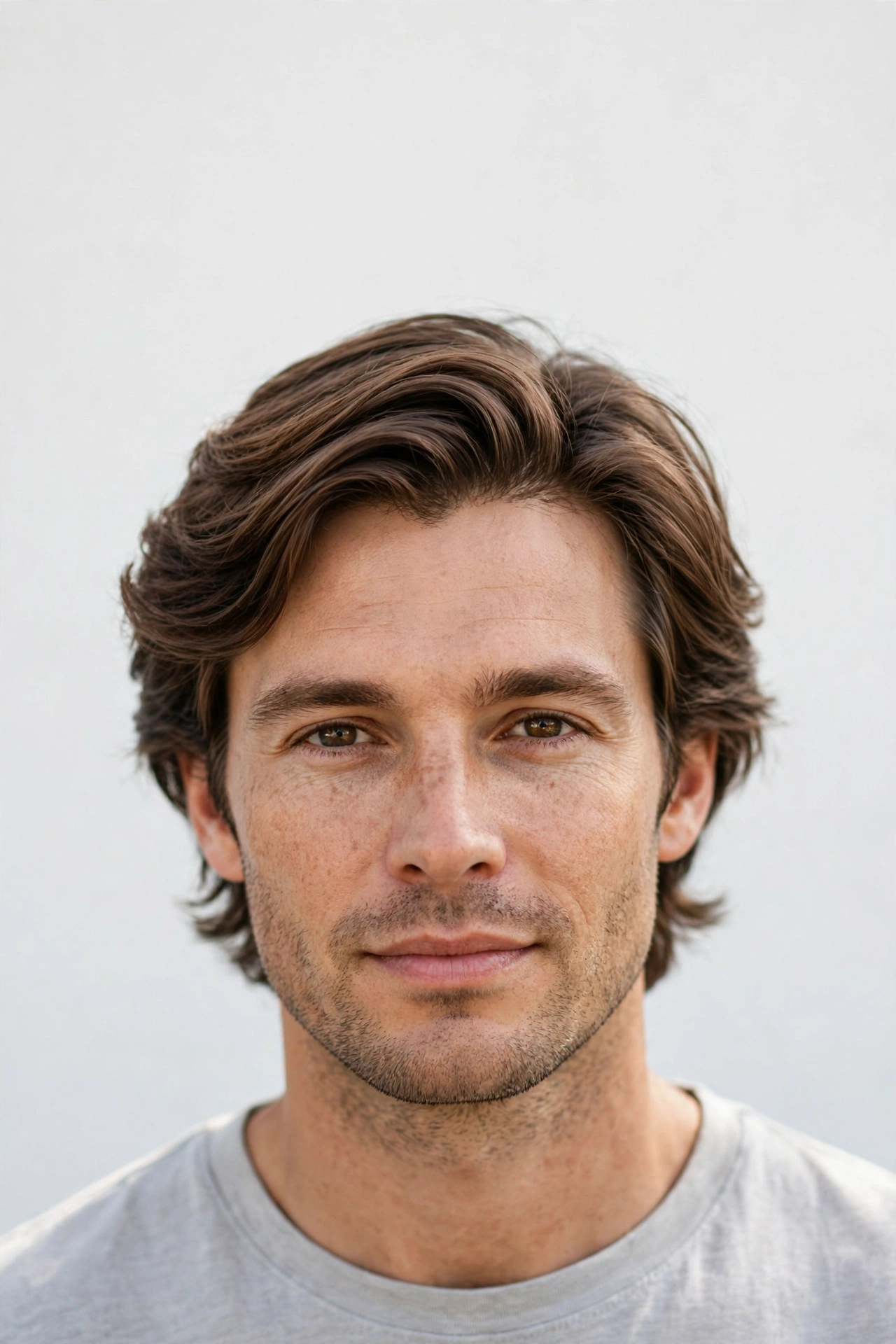
There’s not much to correct with an oval face. The proportions are already balanced, so almost every version on this list works without adjustment.
So the real question isn’t which cut suits your face, it’s which one suits your routine. A middle part needs daily mirror time, while a no-fade version needs almost none.
📌 Good To Know:
Barbers sometimes call the oval face the “universal” shape for exactly this reason. It’s the one time you genuinely get to pick a haircut for fun instead of for damage control.
14
OF 20
A Short Flow for a Diamond Face Shape
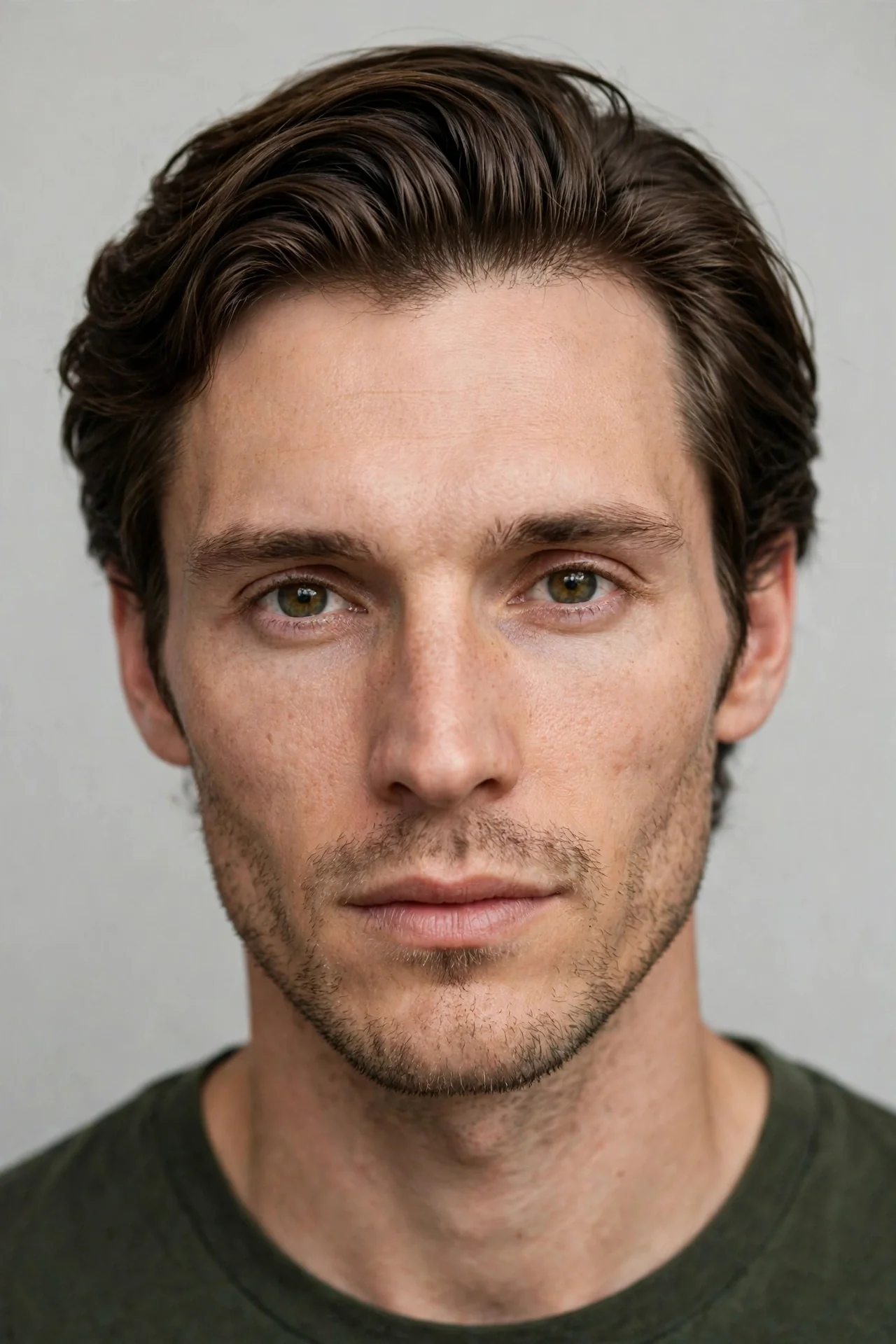
Diamond faces run wider at the cheekbones, narrower at the forehead and jaw. A flow can genuinely help balance that, not just work around it.
🎨
Crown
built up with volume
✂️
Sides
kept closer than usual
📏
Effect
softens cheekbone width
Building volume at the crown widens the narrowest part of your face visually. Keep the sides close so your cheekbones don’t end up dominating everything.
Don’t overdo the volume, though. Push it too far on fine hair and it starts looking puffy instead of lifted.
15
OF 20
A Short Flow With Curtain Pieces

Flows and curtains overlap a lot, but they’re built differently. Curtains use two distinct, center-parted pieces framing your face, while a flow treats the whole top as one sweeping section.
This version borrows the center part from curtains, then adds the fuller layering of a real flow through the crown. Compare that to a full curtain cut, and this one’s lower-maintenance since only the front pieces need precise length.
Those front pieces need trims more often than the rest, though. Let them grow too long and they stop framing your face, they just hang.
💡 Quick Tip:
Ask your barber to cut the front pieces to the point where they just graze your eyebrow. Any longer and you’ll be pushing hair out of your eyes all day.
16
OF 20
A Blonde Short Flow

Lightened hair, whether fully bleached or just a few pieces, makes texture and movement way more visible. A well-cut flow looks more dynamic blonde. A poorly layered one shows every flaw just as clearly.
Bleached hair is also more porous and dries out faster, so your usual gel probably isn’t cutting it anymore. A moisturizing cream or oil-based styler works better here.
Most colorists give similar general advice regardless of brand: expect extra dryness the first few weeks, and deep-condition every week or two to offset it.
Root touch-ups run on their own schedule, separate from the haircut, usually every four to six weeks depending on how much contrast you’re okay seeing.
⚠️ Watch Out:
Repeated bleaching without recovery time between sessions is the fastest way to end up with brittle, breaking ends. If your hair’s already damaged, talk to your colorist about spacing out sessions before going lighter.
17
OF 20
A Short Flow for a Receding Hairline
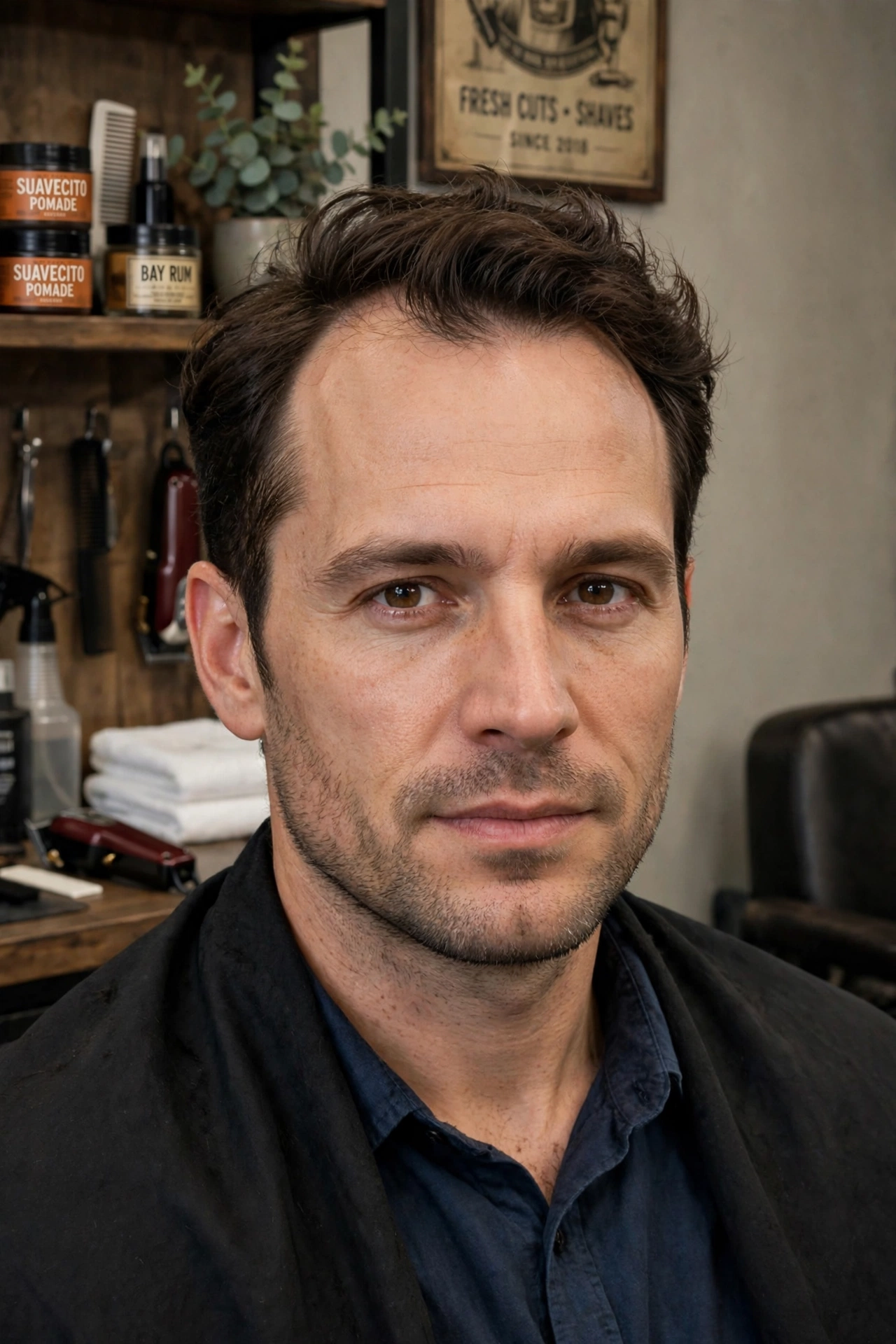
The instinct is to think more length draws more attention to a receding hairline. Most of the time, it’s actually the opposite.
A very short, tight cut leaves nothing to distract from the hairline, so your eye goes straight there. Texture and volume at the crown gives your eye somewhere else to land instead.
⚠️ Watch Out:
Letting the front section grow too long works against you here. It draws a longer, more visible line where hair meets skin.
One honest note: a haircut can change how noticeable your hairline looks, but it can’t slow down or reverse what’s happening underneath it. That’s a dermatologist conversation, not a barber one.
18
OF 20
A Short Flow With a Longer Back
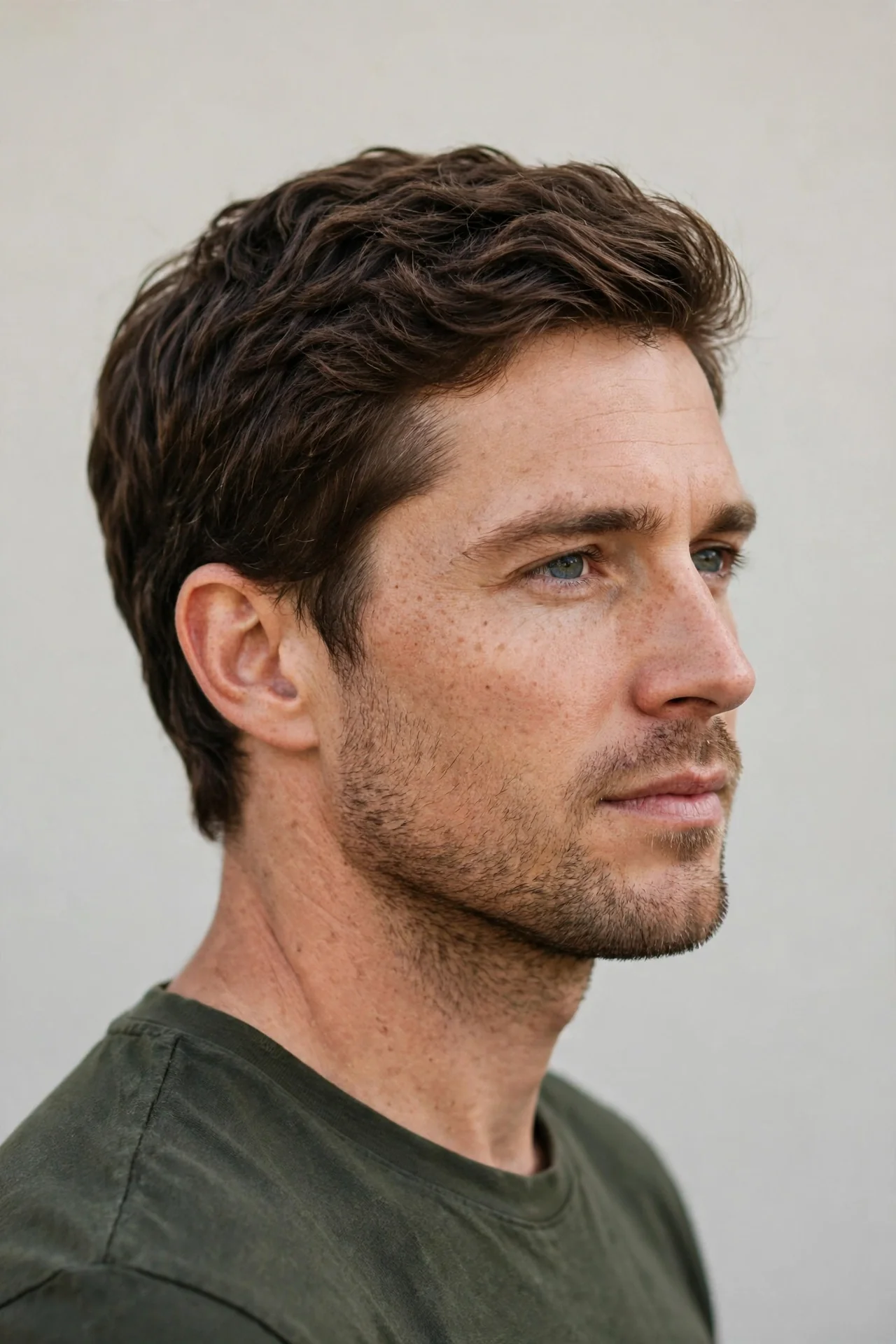
This one keeps a normal flow on top and sides, but leaves more length at the back and nape than a typical taper would. Think mullet-inspired, not full mullet.
There’s no dramatic length jump, no obvious front-versus-back contrast. Just a subtler blend where the back sits a little longer than you’re used to seeing.
How We Got Here
The original mullet, short on top, long in back, with zero blending between the two, was never meant to be subtle. It came back years later as a deliberately retro, often tongue-in-cheek look rather than a serious daily haircut.
💈 What to Ask Your Barber:
Request scissors over comb for the back section instead of clippers. It creates a softer transition instead of a hard clipper line down the neck.
Since the top and back grow at different speeds, this one needs more attention each visit to keep the proportions right.
19
OF 20
A Messy, Undone Short Flow
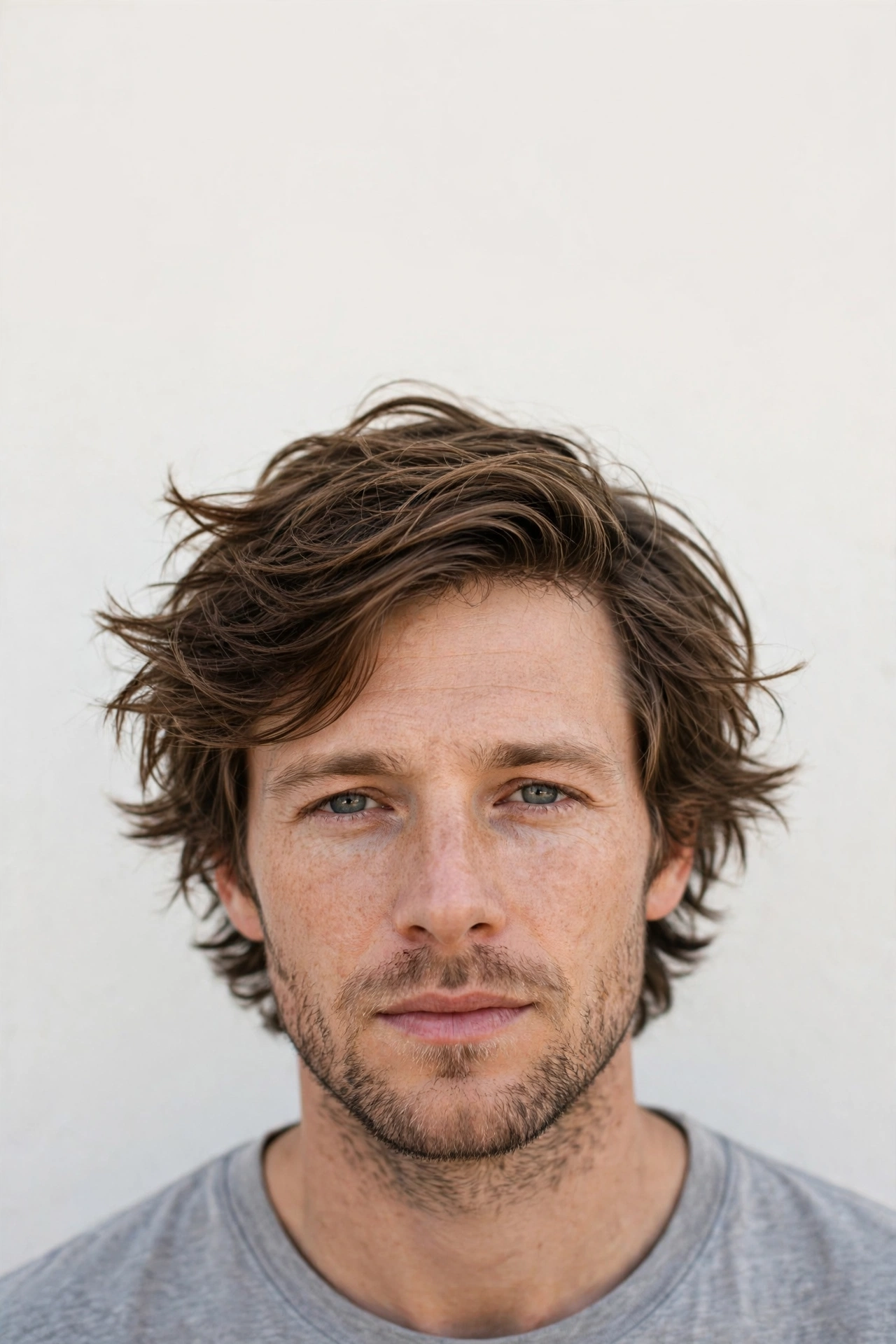
Most of the cuts on this list aim for some level of polish. This one skips that on purpose, with pieces separated and some falling forward instead of back.
✅ Recreate This Look:
- Work a matte texture paste through damp, not dry, hair
- Use your fingers instead of a comb, since combing smooths out the separation you’re going for
- Air-dry partway, then finish with a cool-setting blow-dryer
Quick gut check before this becomes your everyday look: “deliberately undone” and “didn’t get a haircut” sit closer together than you’d think. In a creative office it reads as style, in a client-facing role it might just read as overdue.
The upside is it’s forgiving day to day. A little bedhead or regrowth just blends into the look instead of standing out as a problem.
20
OF 20
A Short Flow for Your Wedding Day
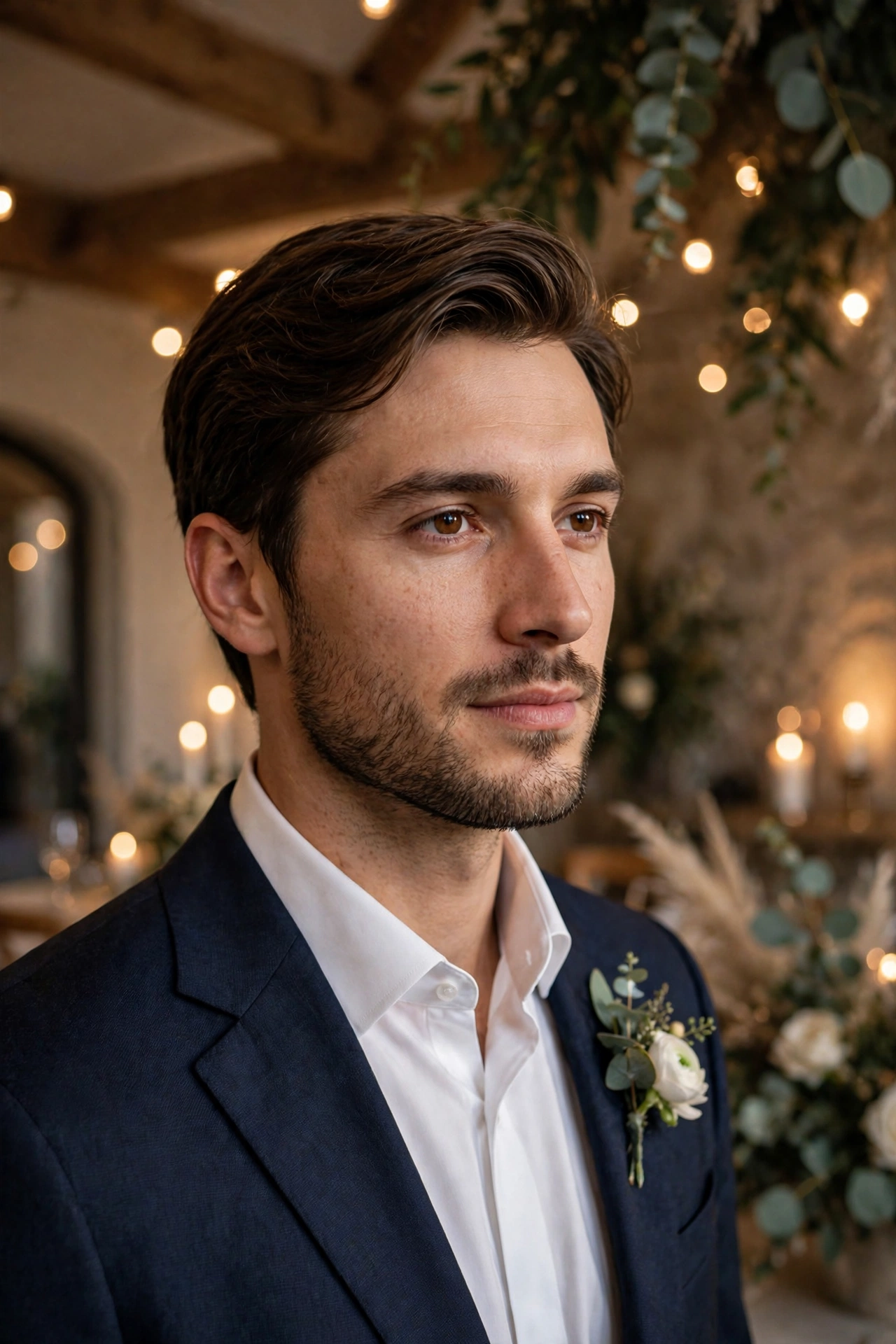
A flow works fine for a wedding, whether you’re the one getting married or just dressing up as a guest. Timing and finish matter more here than on a regular Tuesday.
Book the cut about a week out, not the day before. Fresh-cut hair, especially with a taper, needs a few days to settle before it photographs well.
Go lighter on shine too. Heavy pomade catches glare under flash, and if there’s dancing involved, keep a bit of product on hand for a touch-up later.
📅 Wear It For
Which one are you trying next?
FAQs
What exactly is a flow haircut?
Medium length on top, usually a few inches, cut with layers so it can sweep back or to the side instead of sitting flat.
How long does my hair need to be to get a flow cut?
At least two to three inches on top. Shorter than that, and there’s just not enough length to work with.
What’s the difference between a flow and a curtain haircut?
Curtains use two distinct, center-parted, face-framing pieces. A flow treats the whole top as one continuous sweeping section.
How often do I need to get a flow haircut trimmed?
Every four to six weeks for most versions. A no-fade flow can stretch to six or eight.
What products do I need for a flow haircut?
A texturizing cream, paste, or sea-salt spray covers most of these. Straight hair needs more product, curly or wavy hair usually needs less.
Can a flow haircut work with a receding hairline?
Yes. Textured volume at the crown draws attention away from the hairline, though keeping the front section from growing too long matters more here than elsewhere.