Fade vs Taper: The Real Difference and Which to Ask For

Walk into almost any barbershop and you’ll hear “fade” and “taper” used as if they mean the same thing. They don’t, and mixing them up is how men ask for a soft, office-friendly cut and walk out with bare skin above the ears.
This guide is for any man trying to decide between the two, or trying to explain to a barber what he actually wants. It covers what most comparisons skip: where exactly each cut starts and stops, how low, mid, high, drop and skin versions differ, how each one grows out, which suits coily, straight or thinning hair, why “taper fade” confuses barbers, and the words to use in the chair.
Quick answer: Choose a taper if you want a soft, natural look that only shortens the hair at the sideburns and neckline and grows out gracefully. Choose a fade if you want sharp contrast, with the sides blending down to very short or bare skin, and you’re happy to visit the barber every two to three weeks.
Short on Time? Pick Your Path
Table of Contents
- 01Fade vs Taper at a Glance
- 02What a Taper Haircut Is
- 03What a Fade Haircut Is
- 04Low, Mid, High, Drop and Skin: Where Each Cut Starts
- 05Coily, Straight and Thinning Hair
- 06Haircuts Built on a Taper or a Fade
- 07The “Taper Fade” and Mixing Both
- 08How to Ask Your Barber for a Fade or Taper
- 09Choose a Fade or a Taper
01
OF 09
Fade vs Taper at a Glance

The simplest way to tell them apart is to look at the area around the ears and the back of the neck. A taper leaves hair there, while a fade takes it down to almost nothing.
The barber study guide on Open Exam Prep describes a taper as a gradual transition concentrated at the sideburns and lower neckline. A fade, by contrast, is “a continuous gradient” that erases the natural hairline altogether.
| Feature | Taper | Fade |
|---|---|---|
| Where it shortens | Sideburns and neckline only | Whole sides and back |
| Shortest length | Short hair, usually not skin | Very short or bare skin |
| Natural hairline | Kept | Blended away |
| Contrast with the top | Soft | Strong |
| How it grows out | Gradually, stays neat | Shows regrowth quickly |
| Barber visits | About every 3 to 5 weeks | About every 2 to 3 weeks |
| Best settings | Office, formal, classic | Street, sport, modern |
| Who it suits | Most men, longer styles | Men who want sharp lines |
The visit times are a rule of thumb, not a fixed rule. Hair grows at different speeds, and how sharp you want the cut to look decides how often you go back.
02
OF 09
What a Taper Haircut Is
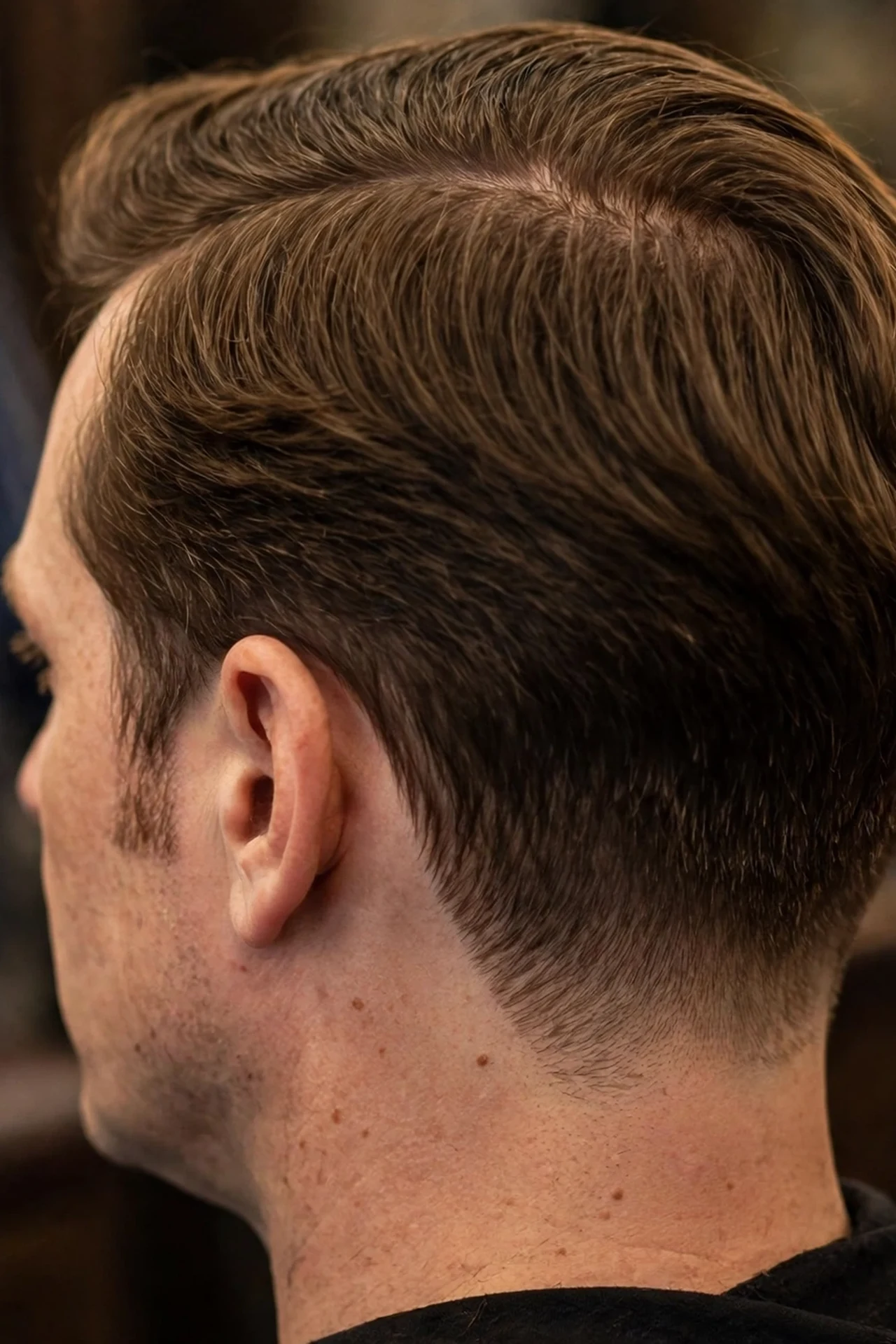
A taper is a haircut where the hair gets gradually shorter as it moves down toward the neck and around the ears. The top, the upper sides and most of the back keep their length.
In an interview with Modern Barber magazine, educator Pete Cranfield explained that a low taper keeps “more hair around the ears and lower portions of the head.” He described it as the choice for clients who want “a softer, less dramatic transition.”
Where a Taper Starts and Stops
Most of the work in a taper happens in the bottom inch or so of the hairline. The barber shortens the sideburns and the nape, then blends upward into the length already there.
Because the natural hairline stays, a taper looks tidy even after a few weeks. That’s why so many classic business cuts, like the side part and the Ivy League, sit on a taper.
📌 Most Haircuts Already Have a Taper
Art of Manliness points out that nearly every men’s haircut includes some taper, apart from buzz cuts and long hair being grown out. If you’ve ever asked for a “short back and sides” and kept a visible neckline, you’ve had one.
03
OF 09
What a Fade Haircut Is
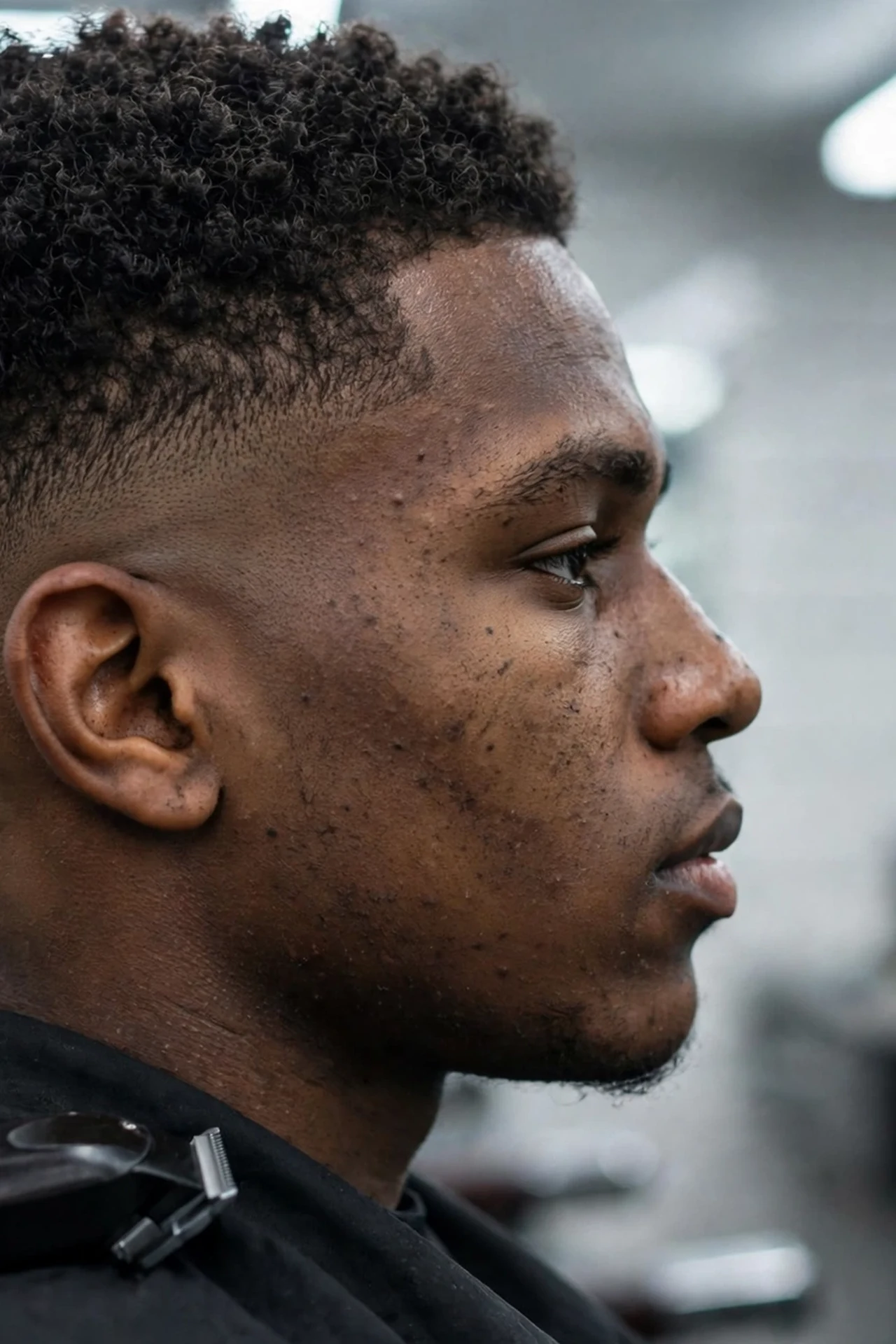
A fade takes the sides and back down to very short hair or bare skin, then blends that length up into the hair on top. The result is a smooth gradient with no visible lines.
Cranfield told Modern Barber that a fade “typically exposes more of the scalp.” He starts by setting a skin line around the middle of the head and blends upward by “gradually decreasing the guard size” until the steps disappear.
Fades come in different heights, depending on where that shortest band starts. A low fade stays near the ears, while a high fade climbs almost to the top of the head.
⚠️ The Skin Fade Shock in the Mirror
The same Modern Barber piece notes that some clients “don’t realise how short a fade or skin fade is.” If you’ve never had one, ask for a fade that stops at a short guard rather than skin for your first try.
04
OF 09
Low, Mid, High, Drop and Skin: Where Each Cut Starts
Height is where most of the confusion around “low taper fade,” “mid fade” and “drop fade” comes from. It simply describes where the shortest part of the cut begins.
The Open Exam Prep guide sets out the standard heights barbers learn. A low fade starts “immediately above the ears,” a mid fade starts around the temples, and a high fade climbs above the widest part of the head, just under the crown.
| Cut | Where It Starts | How Short It Goes | Look |
|---|---|---|---|
| Low taper | Sideburns and neckline only | Short, often not skin | Subtle, classic |
| Mid taper | A little higher at the temples and nape | Short | Neat, a bit sharper |
| Low fade | Just above the ears | Very short or skin | Clean, understated |
| Mid fade | Around the temples | Very short or skin | Balanced, versatile |
| High fade | Near the top of the head | Very short or skin | Bold, dramatic |
| Drop fade | Arcs down behind the ear | Very short or skin | Curved, modern |
Three of these pairs get mixed up more than the rest. Here’s how to tell them apart.
Low Taper Fade vs Skin Fade
A low taper only works on the edges, so the sides above the ears still carry some length. A skin fade takes the lowest band to bare skin with a trimmer, shaver or razor before blending up.
If you want the sharpness of a fade without the scalp showing, a low taper that finishes at a #1 or #0.5 guard sits nicely between the two.
Mid Taper vs Mid Fade and Taper vs Drop Fade
A mid taper raises the blend a little higher than a classic taper but still leaves the hair around the ears. A mid fade takes all of that area down short, starting around the temples.
A drop fade starts level at the temples, then “dips or drops down behind the ear,” as the Open Exam Prep guide puts it. It follows the curve of the back of the head, while a taper keeps the natural neckline straight.
05
OF 09
Coily, Straight and Thinning Hair
Hair type changes how each cut looks once it’s done. The same fade can look razor-sharp on one man and patchy on another.
On dark, coily or curly hair, fades and tapers both blend very smoothly because the short hair sits close to the scalp and hides the steps. That’s part of why both are so popular on coily hair, and why cuts like the temple taper and blowout taper keep the shape soft while still looking crisp.
On fine, straight or light-coloured hair, a skin fade can show more scalp and the blend can look less even. A taper or a fade that stops at a short guard often looks fuller.
🎨
Coily hair
fades and tapers both blend smoothly
✂️
Straight hair
taper or guard-length fade looks fuller
📐
Thinning hair
taper keeps more coverage at the sides
For thinning or receding hair, strong contrast can make the top look thinner by comparison. A taper or a low fade keeps the sides closer in length to the top, so the difference is less obvious.
💡 Razor Bumps and Skin Fades
If your skin is prone to razor bumps or irritation, ask for the fade to finish with a trimmer or a short guard instead of a razor. You keep the gradient without shaving right down to the skin.
06
OF 09
Haircuts Built on a Taper or a Fade
Fades and tapers are bases, not complete haircuts. What happens on top decides the final style, and some tops suit one base better than the other.
Taper: Low Taper With a Textured Fringe

A textured fringe needs some weight at the sides to frame the face, which a low taper keeps. With a high fade, the heavy fringe can look disconnected from the very short sides.
This combination is the softer answer to “textured fringe vs low taper fade.” The taper keeps it neat at the edges while the fringe does the styling.
Taper: The Blowout Taper
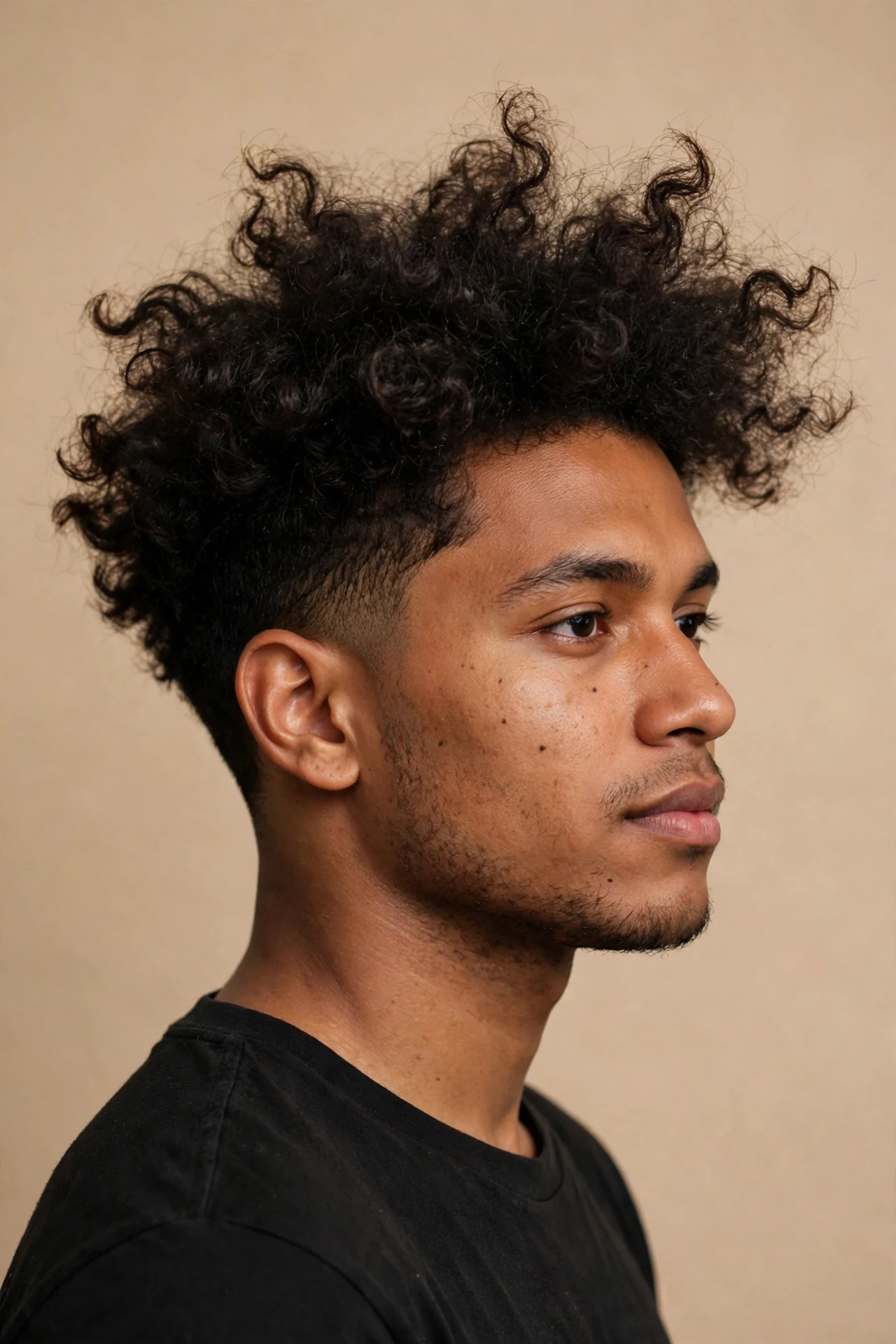
A blowout taper keeps lots of volume on top and around the sides, with the taper only cleaning the temples and neckline. It differs from a low taper fade because the sides stay fuller and the shape is rounder.
Choose it if you want your natural texture to be the focus. It needs a little blow-drying or styling each day to keep the volume.
Taper: Classic Side Part

The side part relies on the natural hairline staying in place, which makes a taper the natural base. It grows out evenly, so it still looks smart four weeks later.
For a slightly sharper version, ask for a mid taper. Avoid a high skin fade here, because the contrast fights the clean, traditional shape.
Fade: Skin Fade Crop
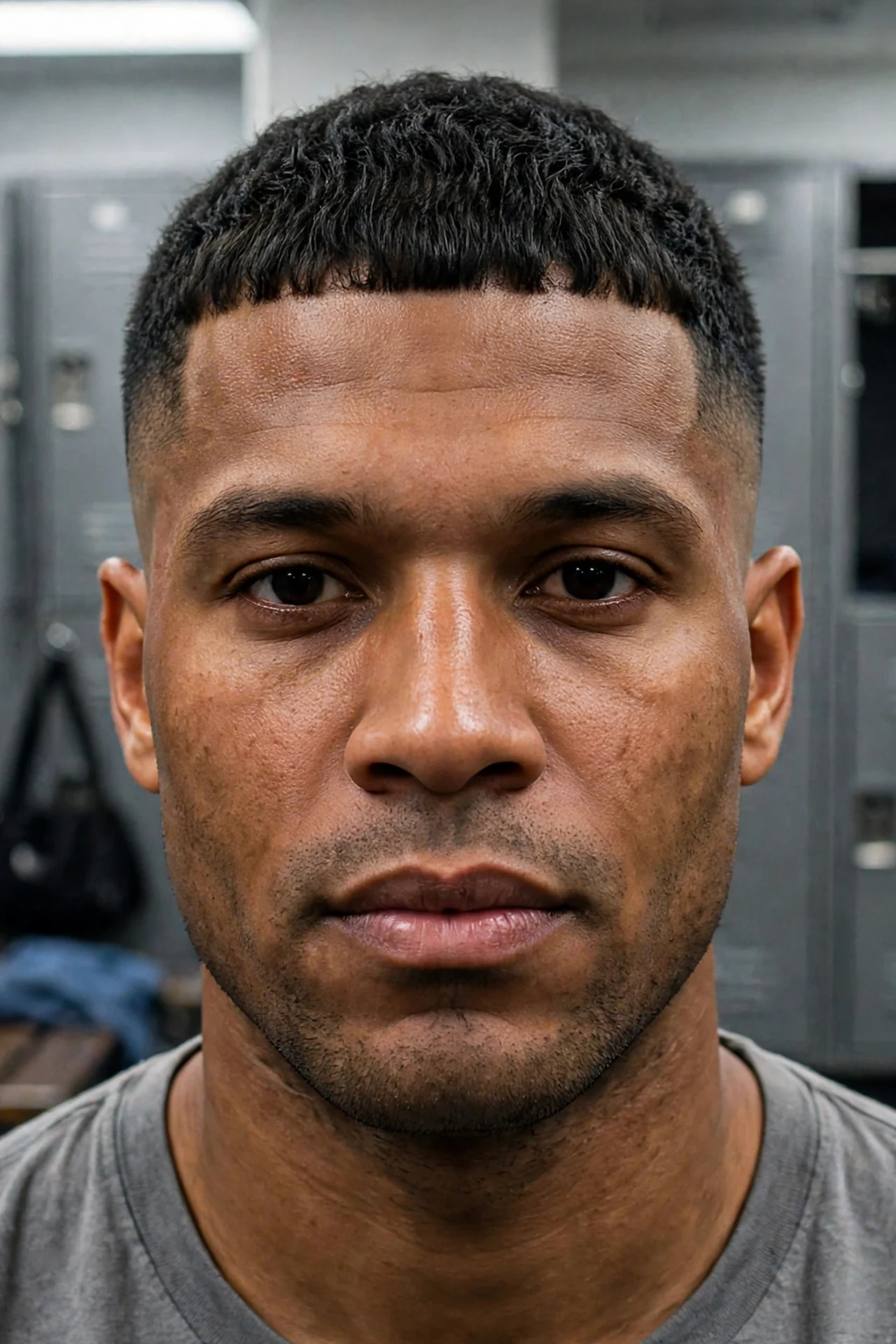
A short crop with a skin fade is about as low-maintenance as styling gets day to day. A little paste on top and you’re done.
The trade-off is upkeep at the barber. The skin band starts to look fuzzy within a couple of weeks, so it suits men who don’t mind regular visits.
Fade: Mid Drop Fade With Waves or Curls
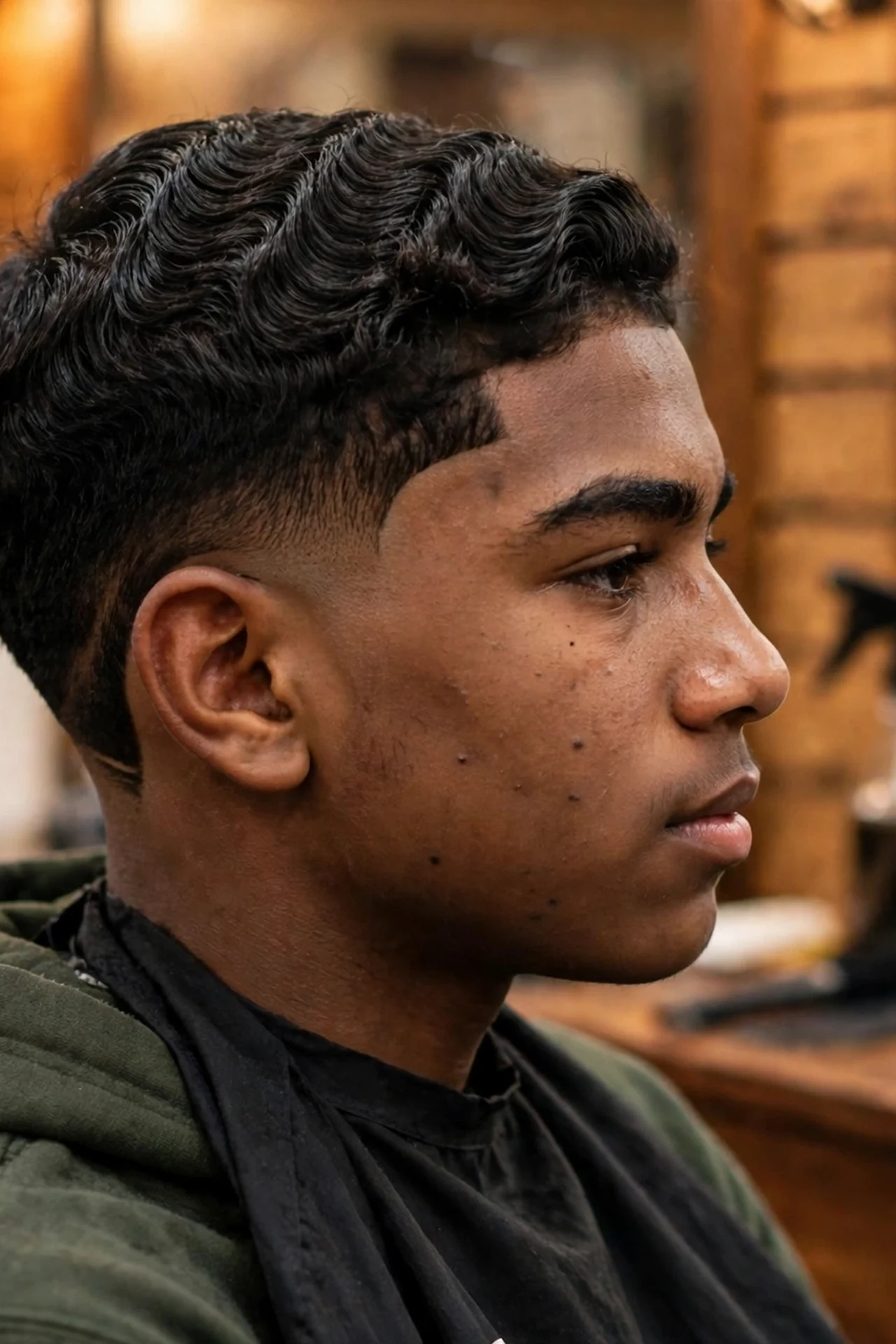
The drop fade curves down behind the ear, following the shape of the head. On waves or short curls, it frames the pattern on top without cutting into it.
It’s more detailed than a straight fade line, so it shows a barber’s skill. It also needs a skilled barber to keep the curve even on both sides.
Fade: High Fade Pompadour

A pompadour needs height and volume on top, and a high fade exaggerates both by making the sides almost disappear. The contrast is what makes the shape stand out.
The Modest Man calls high fades “great for more dramatic or outgoing styles.” On thinning hair or a very long face, though, a mid fade is the safer height.
07
OF 09
The “Taper Fade” and Mixing Both
You’ll see “taper fade” everywhere, but barbers use it to mean different things. Some mean a low fade, some mean a taper that goes very short, and some mean a fade only at the edges.
Both Art of Manliness and The Modest Man advise avoiding the phrase. The Modest Man suggests that “it’s best to just avoid saying ‘taper fade’ and instead specify if you want a taper or a specific type of fade.”
💡 The “A Fade Is Just a Short Taper” Myth
Myth: A fade and a taper are the same cut, just at different lengths.
Reality: A fade does blend lengths like a taper, but it also removes the natural hairline and takes the sides down to skin or near-skin. A taper keeps the hairline and only shortens the edges.
That said, the two do mix well. A common combination is a low fade at the sides with a taper at the neckline, which keeps the back looking natural while the sides look sharp.
08
OF 09
How to Ask Your Barber for a Fade or Taper
Clear words and a photo save more haircuts than anything else. Barbers can only work from what they hear, and “short on the sides” can mean five different cuts.
Bring a photo of the exact cut, ideally from the side and back.
Say “taper” or “fade,” not “taper fade.”
Name the height: low, mid, high or drop.
Say how short the shortest part should go, such as skin, #0.5 or #1.
Say how much length you want left on top, in inches.
Ask whether the neckline should be natural, tapered or squared.
If you’re not sure of guard numbers, describe the look instead, like “no skin showing” or “down to the skin.” A good barber will translate.
💈 The Barber Request That Avoids Surprises
For a taper, try: “Classic low taper at the sideburns and neckline, keep my natural hairline, about two inches on top.” For a fade: “Mid fade down to a #0.5, blended up to about an inch and a half on top.”
One word mix-up causes more disappointing cuts than any other.
Asking for a Fade When You Mean a Taper:
Many men ask for a “fade” because it’s the more common word, then feel the cut is too short. If you want to keep hair around your ears, the word you need is taper.
09
OF 09
Choose a Fade or a Taper
Neither cut is better. They do different jobs, and the right one depends on your hair, your setting and how often you’re willing to visit the barber.
✅ Do This
Choose a fade if you want sharp contrast, short sides, a modern look and low daily styling, and you can see the barber every two to three weeks.
🚫 Skip This
Skip the fade if your hair is fine or thinning, you work somewhere conservative, or you can only get a haircut once a month. A taper suits you better.
A taper is the safer first choice if you’re unsure. It’s easy to go shorter into a fade next time, but growing a skin fade back out takes several weeks.
Which way are you leaning?
FAQs
What is the difference between a fade and a taper?
A taper only shortens the hair at the sideburns and neckline and keeps the natural hairline. A fade takes the whole sides and back down to very short hair or skin and blends it upward.
Is a taper or fade better for the office?
A taper is the safer choice for conservative workplaces because it looks softer and grows out neatly. A low fade can also work.
What is a low taper fade?
It usually means a low fade that only works on the edges, near the sideburns and neckline. Because the term is used loosely, name the height and shortest length instead.
How often should you get a fade or taper touched up?
Fades usually need a touch-up every two to three weeks, because regrowth shows quickly. Tapers can often go three to five weeks.
Do fades suit Black men better than tapers?
Both suit coily hair very well. Fades give sharp contrast, while tapers like the temple or blowout taper keep more volume and shape.
What is a drop fade?
A fade that starts level at the temples, then curves down behind the ear, following the shape of the back of the head.