How to Dress Business Casual on a Budget: A Starter Capsule Plan

Starting a new job, an internship or your first office role usually comes with a dress code you can’t quite afford yet. “Business casual” sounds simple, but it’s easy to spend a lot on random pieces and still have nothing to wear on a Tuesday.
This guide is for men who need a work wardrobe without a big budget. It covers what most business casual guides skip: exactly what counts as business casual for men, the order to buy pieces so your money goes furthest, a 12-piece capsule that makes a full week of outfits, where to find cheap pieces that don’t look cheap, how to dress for each season, and how to make budget clothes last.
Quick answer: To dress business casual on a budget, buy a small set of matching basics in neutral colours: two or three collared shirts, a knit or two, chinos in navy and grey, one navy blazer, a leather belt and brown leather shoes. Shop sales and second-hand, buy in priority order, and mix the same pieces into different outfits.
Short on Time? Pick Your Path
Table of Contents
- 01What Business Casual Means for Men
- 02Set a Budget and Buy in the Right Order
- 03Build a Simple Business Casual Capsule Wardrobe
- 04Where to Buy Cheap Business Casual Clothes
- 05Turn Your Capsule Into a Week of Outfits
- 06Dressing Business Casual for Each Season
- 07Making Budget Clothes Last Longer
- 08Business Casual Mistakes on a Budget
01
OF 08
What Business Casual Means for Men

Business casual sits between a suit and weekend clothes. It means collared shirts, smart trousers and leather shoes, usually without a tie.
Creighton University’s career center describes the core as “a pressed long-sleeved, buttoned solid shirt” with ironed khakis, a leather belt and leather shoes. It adds that clean polo shirts are fine in relaxed or very hot settings, while “athletic shoes are inappropriate.”
| Dress Code | Tops | Trousers | Shoes |
|---|---|---|---|
| Business formal | Suit jacket, dress shirt, tie | Matching suit trousers | Black or dark brown oxfords |
| Business casual | Collared shirt, knit, optional blazer | Chinos or wool trousers | Leather derbies, loafers |
| Smart casual | Polo, knit, overshirt | Chinos or dark jeans | Loafers, suede boots, leather sneakers |
Every office draws the line a little differently. Look at what your manager and colleagues wear in the first week, then adjust.
02
OF 08
Set a Budget and Buy in the Right Order
The biggest budget mistake is buying a little of everything at once. Buying in a set order means you can get dressed for work from day one and add pieces as money allows.
Start with what you’ll wear most and what people notice first. Shirts and trousers get worn every day, so they come before blazers and extras.
Buy two or three collared shirts in white and light blue.
Add two pairs of chinos in navy and grey.
Buy one pair of brown leather shoes and a matching belt.
Add a knit sweater or cardigan for layering.
Add a navy blazer when your budget allows.
Fill gaps with a third trouser colour, more shirts and a second pair of shoes.
Spread these purchases over your first few paychecks if you need to. Not every piece deserves the same share of the money, though.
📌 Spend More on Shoes, Less on Shirts
Shoes last years and are noticed, so put a bigger share of your budget there. Shirts wear out faster, so affordable ones you replace every year or two make sense.
With just the first three steps, you can wear a different shirt-and-trouser combination every day of your first week.
03
OF 08
Build a Simple Business Casual Capsule Wardrobe
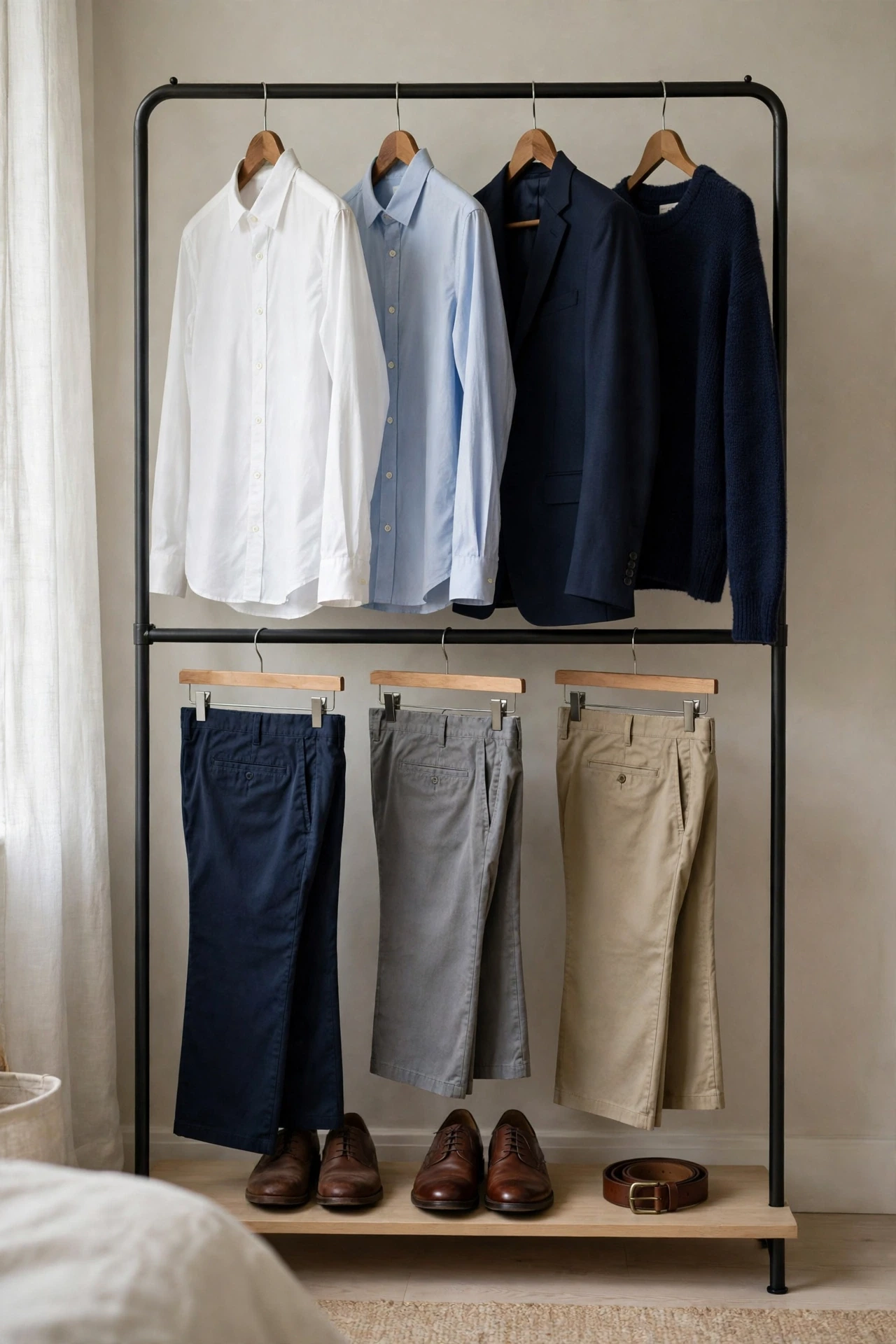
A capsule wardrobe is a small set of pieces that all go together. Because every top matches every bottom, a few items make many outfits.
On a Reddit r/malefashionadvice basic wardrobe thread, one commenter put it simply: buying pieces that work together “turns 3 outfits into 9.” Another noted that “White shirts go with virtually any color sweater.”
✅ A 12-Piece Business Casual Starter Capsule
- White oxford shirt
- Light blue oxford shirt
- Light pink or striped shirt
- Navy knit sweater
- Grey cardigan or quarter-zip
- Navy chinos
- Grey chinos or wool trousers
- Khaki chinos
- Navy unstructured blazer
- Brown leather belt
- Dark brown leather derbies or loafers
- Dark socks in navy and grey
Stick to navy, grey, white, light blue and brown for the first round. Every piece then works with every other piece.
🎨
Tops
5 shirts and knits
✂️
Bottoms
3 trousers
📐
Outfits
15+ combinations
04
OF 08
Where to Buy Cheap Business Casual Clothes
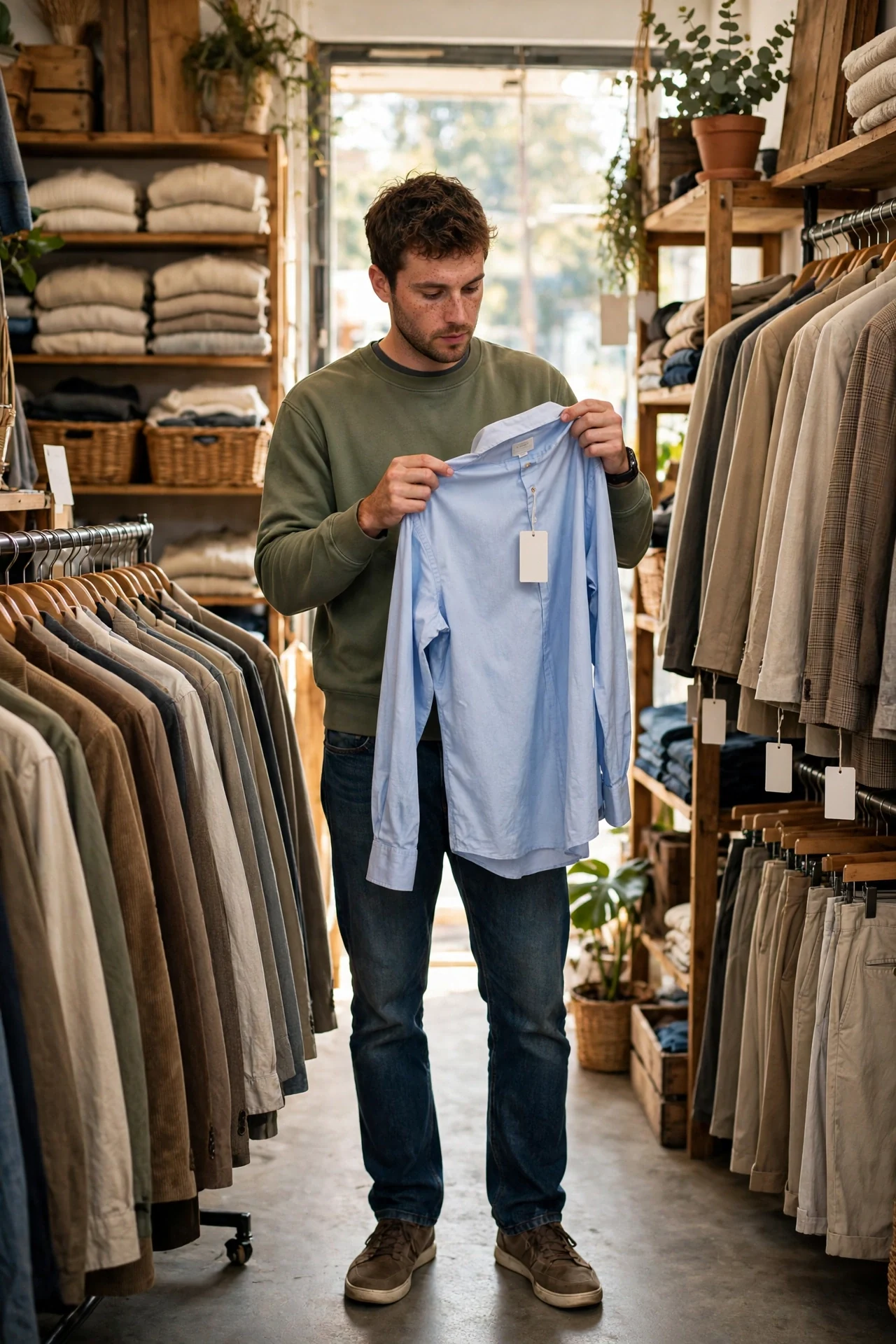
You don’t need expensive shops. Basics from affordable stores, sales and second-hand shops work well if the fabric and fit are right.
The University of Ottawa’s Telfer career centre suggests keeping colours neutral at first, trying thrift shops, using student discounts and to “check the sale racks first” before buying anything at full price.
Checking Quality on a Budget
Cheap clothes vary a lot in quality. A few checks in the shop help you avoid pieces that fall apart after a few washes.
Read the label and choose cotton or mostly cotton for shirts and chinos.
Pull gently at seams to check they don’t gape.
Check buttons are sewn on firmly.
Scrunch the fabric; it should spring back without deep creases.
Try it on and check the shoulders and waist fit.
If a piece fails two of these checks, leave it, however low the price.
⚠️ Where Cheap Business Casual Looks Cheap
Shiny polyester trousers, thin see-through shirts and plastic-looking shoes give away a budget wardrobe instantly. It’s better to buy fewer pieces in decent fabric than more in poor fabric.
Second-hand shops are especially good for wool trousers, blazers and leather shoes. Check for stains, worn elbows and cracked soles.
05
OF 08
Turn Your Capsule Into a Week of Outfits
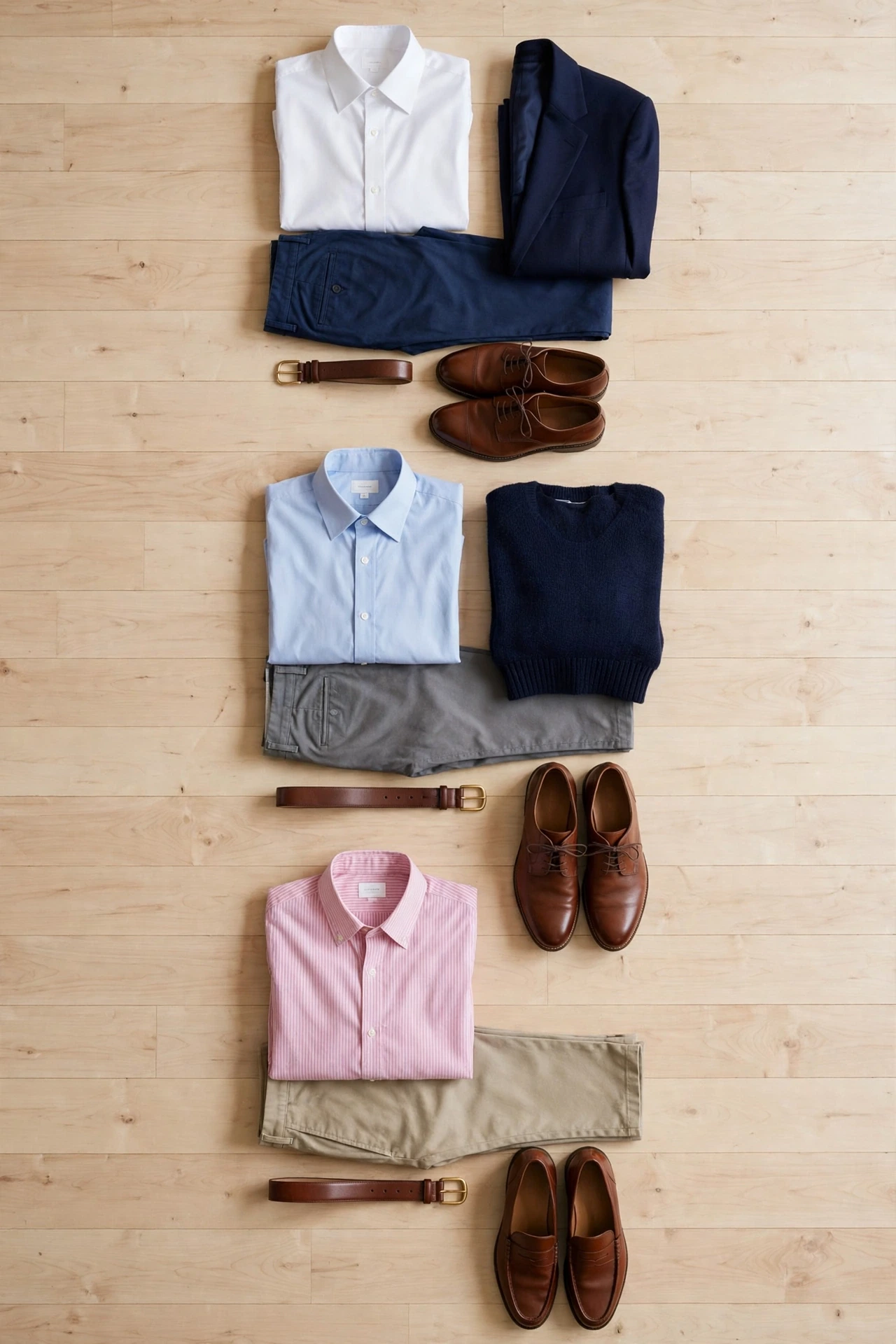
Once you have the basics, plan a week by rotating tops and trousers. You’ll look different every day without buying more.
Here’s one week from the 12-piece capsule.
| Day | Top | Trousers | Layer |
|---|---|---|---|
| Monday | White oxford | Navy chinos | Navy blazer |
| Tuesday | Light blue oxford | Grey chinos | Navy knit |
| Wednesday | Pink or striped shirt | Khaki chinos | None |
| Thursday | White oxford | Grey chinos | Grey cardigan |
| Friday | Light blue oxford | Khaki or dark jeans if allowed | None |
Wear the blazer on days with meetings or presentations. On casual Fridays, dark, plain jeans can replace chinos if your office allows them.
06
OF 08
Dressing Business Casual for Each Season
The same capsule works year-round with a few changes. Swap fabrics and layers as the weather changes rather than buying a whole new wardrobe.
In winter, add a wool or merino sweater under the blazer and switch to wool trousers. A plain wool overcoat looks far smarter over business casual than a puffer jacket.
In summer, choose short-sleeve or lightweight cotton shirts, linen-blend trousers and breathable knit polos if your office allows them. Leave the blazer at work for meetings.
💡 Layers Do the Seasonal Work
A cardigan, quarter-zip or light knit lets the same shirts and chinos work in spring, autumn and winter. Buy one or two good layers before buying seasonal shirts.
In autumn and spring, a light overshirt or cardigan over a shirt is enough. Brown suede shoes add warmth and texture.
07
OF 08
Making Budget Clothes Last Longer
Affordable clothes last much longer with the right care. A few habits keep shirts crisp and colours from fading.
Wash shirts and chinos in cold water and turn dark trousers inside out.
Hang shirts to dry instead of using a hot dryer.
Iron or steam shirts before wearing.
Rotate your shoes so they dry out between wears.
Use cedar shoe trees or stuff shoes with paper.
Fix loose buttons and small tears as soon as you spot them.
The difference shows within a few months of regular wear.
BEFORE:
Shirts washed hot and tumble-dried, with faded colours, shrunk collars and permanent creases after a few months.
AFTER:
The same shirts washed cold, hung to dry and steamed, still crisp and bright a year later.
Have a tailor hem trousers and take in shirts if needed. A cheap shirt that fits well looks more expensive than a pricey one that doesn’t.
08
OF 08
Business Casual Mistakes on a Budget
Most budget mistakes come from buying too much, too fast, or choosing the wrong pieces. A little planning avoids them.
Wearing Sneakers to the Office:
Athletic shoes make even a smart outfit look casual. Leather derbies, loafers or plain leather sneakers in casual offices look far better.
Another mistake is buying trendy colours and patterns first. Bright shirts and bold prints only match a few pieces, so they make fewer outfits.
💡 The “Business Casual Needs a Big Wardrobe” Myth
Myth: You need lots of clothes to dress business casual every day.
Reality: A dozen well-chosen pieces in neutral colours make more than 15 outfits. Matching colours matter more than quantity.
Keep the rule simple when you shop.
✅ Do This
Buy neutral basics in priority order, check fabric and fit, and plan outfits by rotating the same pieces.
🚫 Skip This
Don’t buy shiny, thin or trendy pieces just because they’re cheap, or wear gym shoes, hoodies or ripped jeans to work.
Ill-fitting clothes are another common slip. Hem trousers to just touch your shoes and avoid shirts that billow at the waist.
Skip It If Your Office Is Business Formal
If everyone at your workplace wears suits and ties, business casual will look underdressed. Ask HR or your manager about the dress code before you shop.
Which piece will you buy first?
FAQs
How do men dress business casual on a budget?
Buy a small set of neutral basics like collared shirts, chinos, a knit, a navy blazer and brown leather shoes, shop sales and second-hand, and mix the same pieces into different outfits.
What is business casual for men?
Collared shirts, chinos or wool trousers, a leather belt and leather shoes, usually without a tie. A blazer or knit can be added.
Can you wear jeans for business casual?
Only if your office allows it, often on casual Fridays. Choose dark, plain jeans with a collared shirt and leather shoes.
How many outfits do you need for business casual?
A 12-piece capsule with five tops and three trousers can make more than 15 combinations, enough for several weeks.
What shoes are business casual for men?
Brown or black leather derbies, loafers or brogues. Athletic shoes and sandals aren’t business casual.
Where can I buy cheap business casual clothes?
Sales and clearance racks, second-hand and charity shops, and basic lines from affordable stores, as long as the fabric and fit are good.