
23 Patchy Beard Styles Built Around the Gaps: Stop Fighting It

A patchy beard is one where some areas grow thick and others stay thin or bare, usually the upper cheeks, the area between the mustache and chin, or the jaw below the ears. It’s extremely common, and it’s mostly down to genetics, not anything you’re doing wrong.
The mistake most guys make is growing everything out and hoping the gaps fill in. A better approach is choosing a style that keeps the strong areas and trims away the weak ones, so the beard looks deliberate. Here are 23 patchy beard styles, from short stubble to goatees and faded beards.
Short on Time? Pick Your Path
Table of Contents
- 01Even Light Stubble
- 02Heavy Stubble Kept Short
- 03Short Boxed Beard With Clean Lines
- 04The Faded Beard
- 05The Italian Beard
- 06Goatee With Stubble
- 07The Short Goatee
- 08The Faded Goatee
- 09The Circle Beard
- 10The Balbo With an Extended Goatee
- 11The Royale Beard
- 12The Half Beard
- 13The Chin Beard
- 14A Goatee Without a Mustache
- 15A Thick Mustache With Light Stubble
- 16A Coily Beard With a Natural Line-Up
- 17A Dense Beard Kept Tight at the Cheeks
- 18The Short Full Beard on a Mostly Even Face
- 19A Patchy Beard Style for a Round Face
- 20A Bald Head With a Goatee
- 21Long Hair With a Short Patchy Beard
- 22A First Patchy Beard for Young Guys
- 23Curly Hair With Short Stubble
01
OF 23
Even Light Stubble
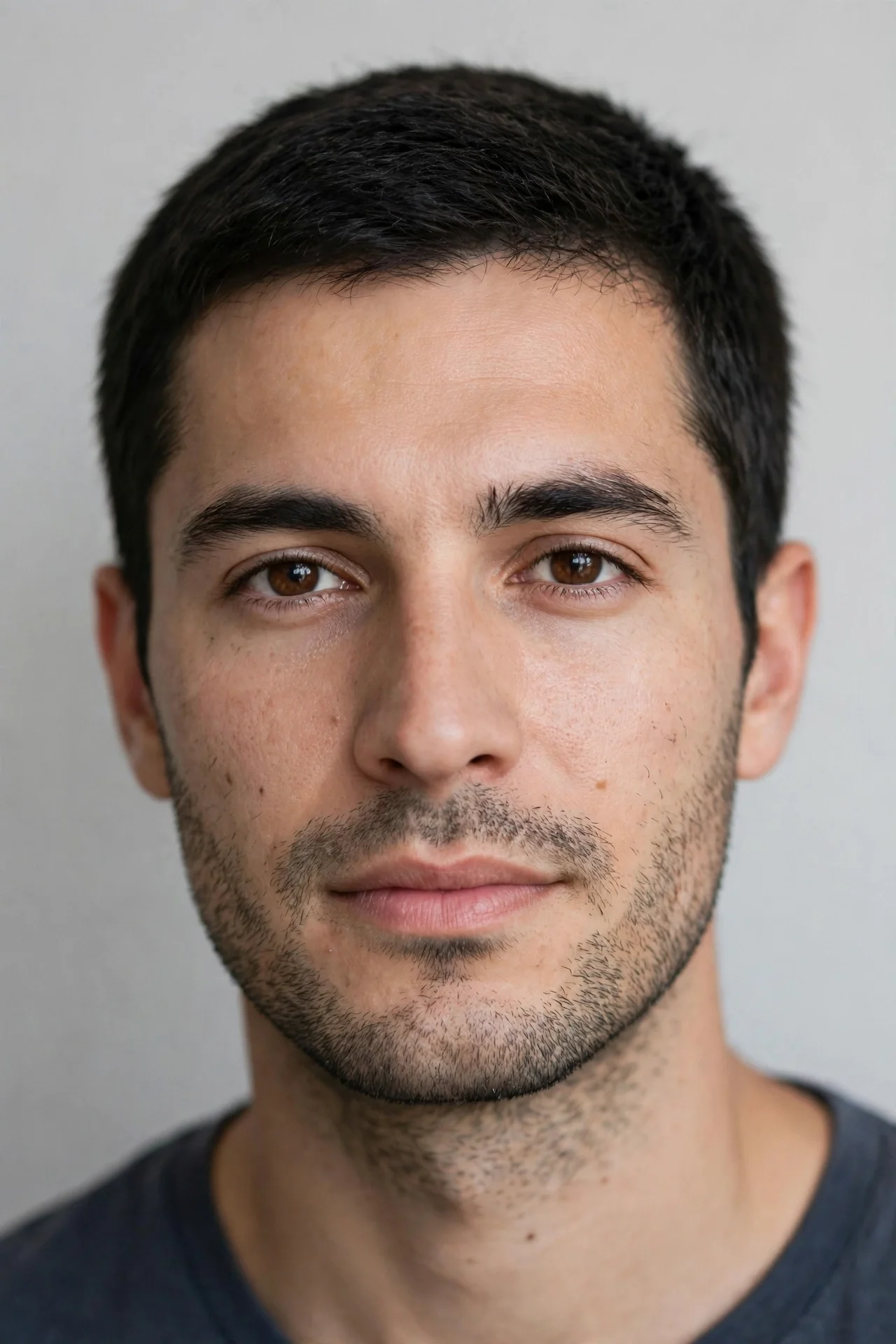
Light stubble is the easiest patchy beard style. At around 1–3 mm, the difference between thick and thin areas is small, so the gaps blend into an even shadow.
Keeping it even matters more than anything else:
Let it grow for three or four days so the slow areas catch up
Trim the whole face with a 1 or 2 mm guard, so thick areas don’t outgrow the thin ones
Clean up the neckline about one finger-width above your Adam’s apple
Repeat every two to three days to keep the same length
Don’t shave a hard cheek line on stubble this short. A soft, natural edge hides the patchy areas better.
02
OF 23
Heavy Stubble Kept Short
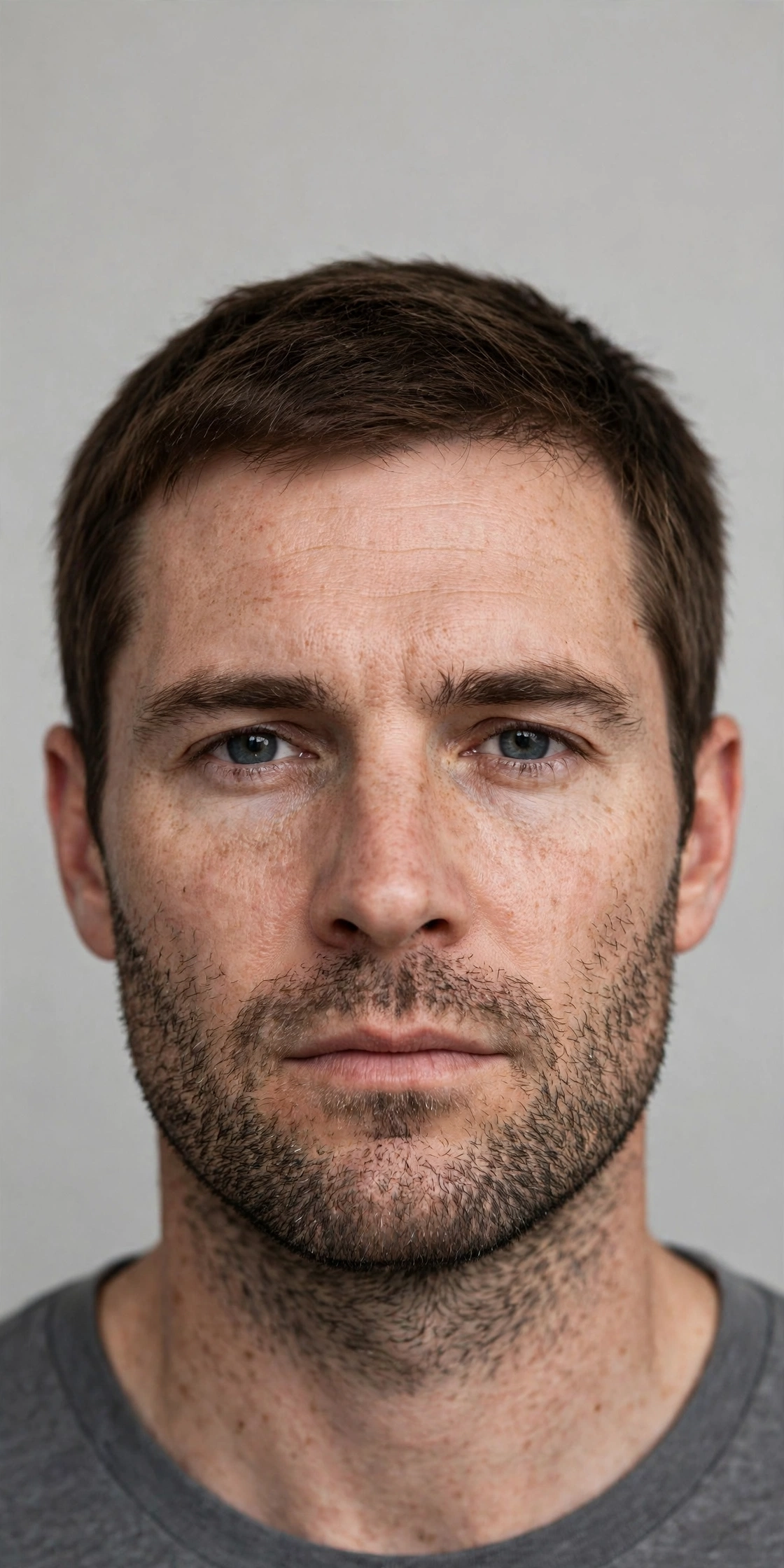
Heavy stubble, around 4–6 mm, gives more definition than light stubble while staying short enough to hide most gaps. It works well if your patches are small rather than large bare areas.
Where your beard is patchy decides which style suits it best, so it’s worth checking in the mirror first.
| Where It’s Patchy | Best Styles | Avoid |
|---|---|---|
| Upper cheeks | Goatee, Italian beard, faded beard | Full beard with high cheek line |
| Between mustache and chin | Light stubble, mustache with stubble | Circle beard or full goatee |
| Jaw below the ears | Goatee, chin beard, Balbo | Chin strap |
| Patchy everywhere | Light or heavy stubble | Anything longer than 6 mm |
Keep the length even across the face. If your chin grows faster, trim it back to match the cheeks.
03
OF 23
Short Boxed Beard With Clean Lines

A short boxed beard keeps the beard short and even, with sharp lines at the cheek and neck. For a patchy beard, the trick is moving the cheek line lower so it starts below the thin areas.
💈 What to Ask Your Barber
“Short boxed beard, about 6 mm, with the cheek line set below the patchy areas and a clean neckline.” Point out where your beard is thin, so the barber can shape the lines around it.
The clean lines draw the eye to the shape rather than the gaps. That’s why a well-lined short beard often looks fuller than a longer, untrimmed one.
📅 Wear It For
04
OF 23
The Faded Beard
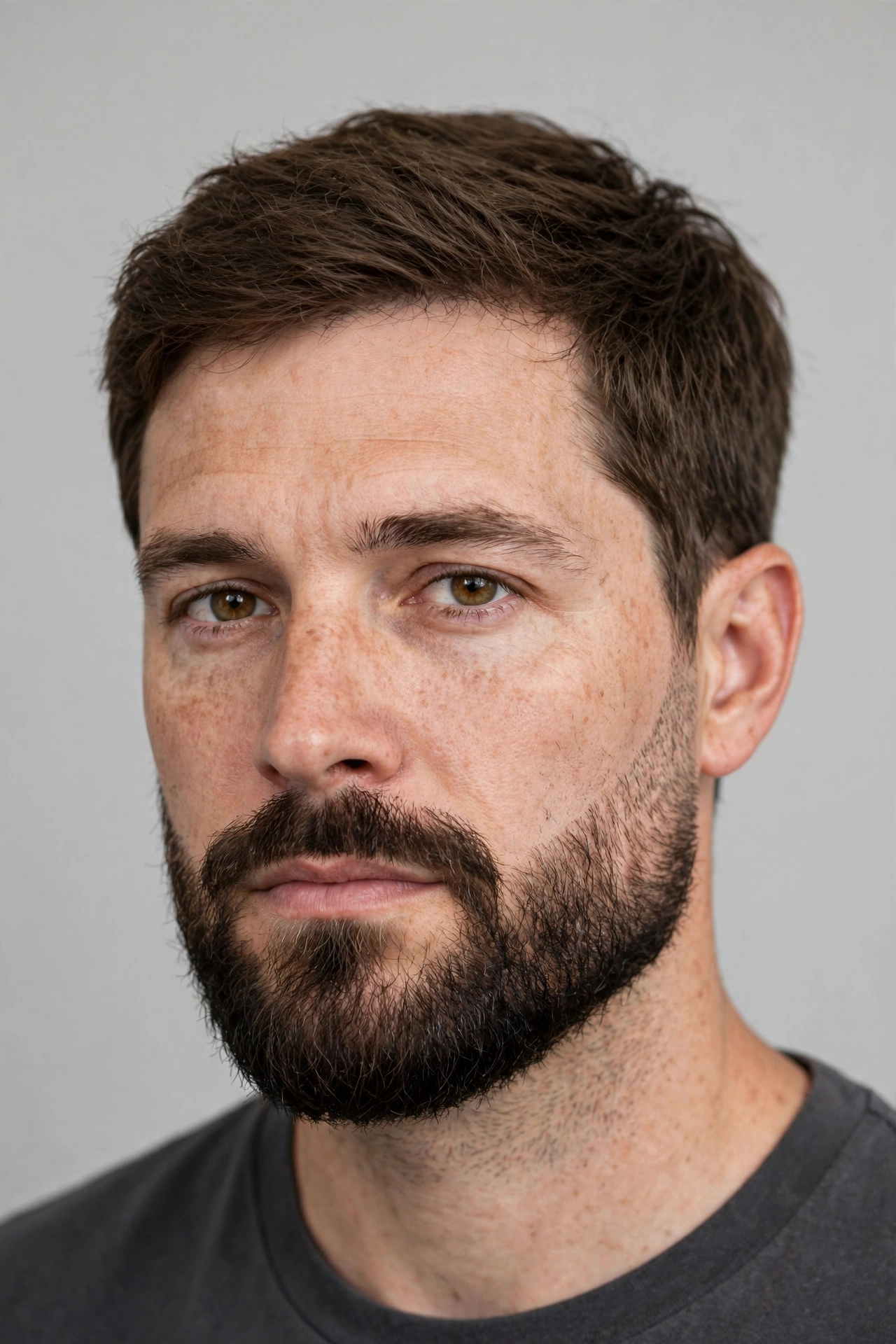
A faded beard gets gradually shorter as it moves up the face, from fuller at the chin to very short at the sideburns. The thin upper areas are cut so short that their patchiness disappears into the fade.
BEFORE:
A beard grown to one length, with the upper cheeks clearly thinner and showing skin through the hair.
AFTER:
The same beard faded short at the cheeks and sideburns, fuller only at the jaw and chin, so the gaps blend into the fade.
The fade also connects the beard to a faded haircut, which makes the whole look feel planned.
05
OF 23
The Italian Beard
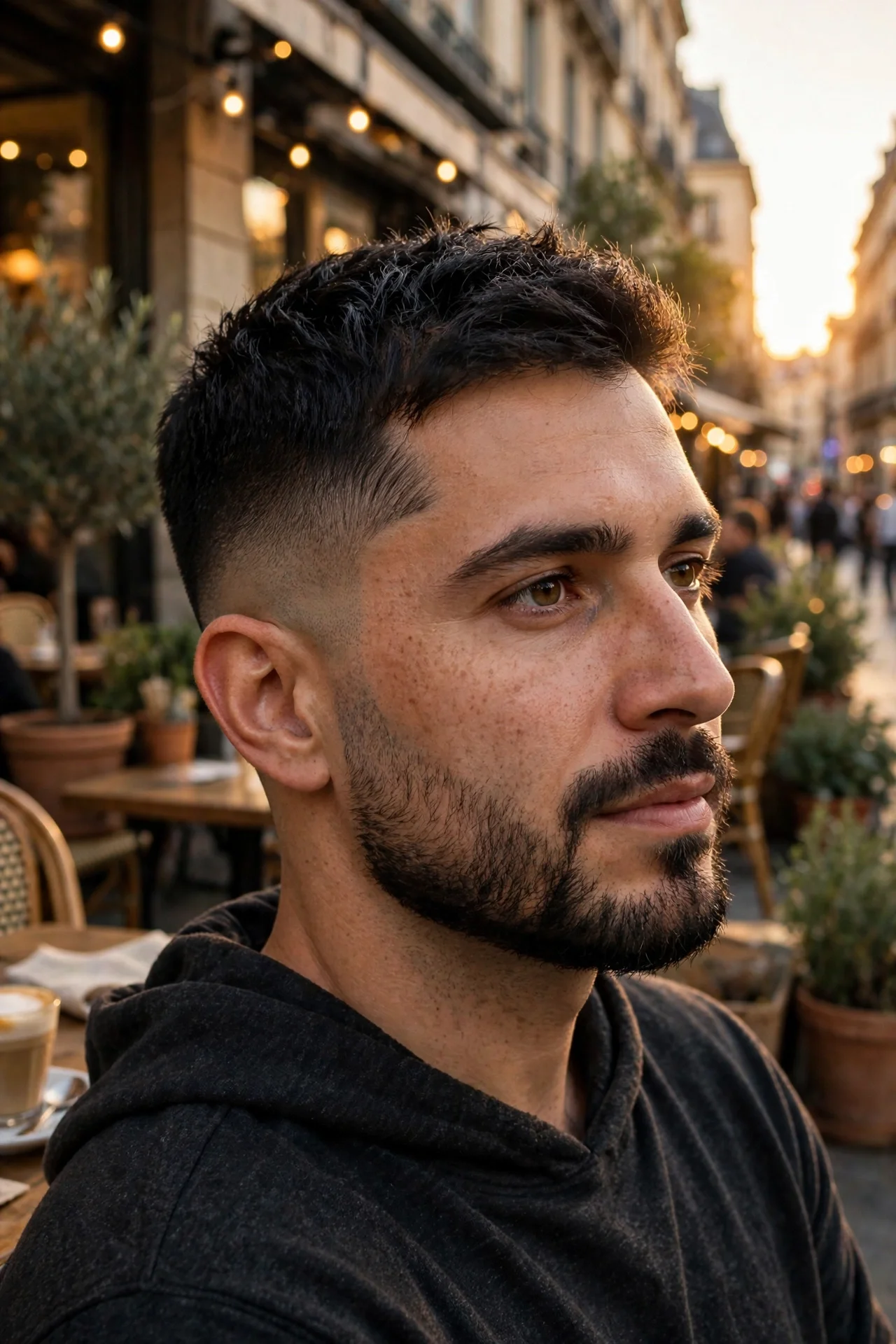
The “Italian beard” is a popular name for a short, sharply lined beard with faded cheeks and a slightly fuller chin. It focuses the beard low on the face, where growth is often strongest.
✅ Recreate This Look
- Short beard, around 3–6 mm, fuller at the chin
- A low, sharp cheek line, trimmed below any thin areas
- Cheeks and sideburns faded short
- A taper or burst fade haircut that blends into the beard
Because the cheek line sits low, this style hides patchy upper cheeks well. It needs a line-up every week or so to keep its sharp shape.
06
OF 23
Goatee With Stubble

A goatee with stubble keeps the goatee slightly longer and the rest of the face as short stubble. The difference in length makes the goatee look intentional, while the stubble hides thin cheek areas.
Keep the stubble very short, around 1–2 mm. If it grows too long, the patchy cheeks start to show again.
This is one of the most forgiving styles on the list, because most men grow their thickest hair around the mouth and chin.
07
OF 23
The Short Goatee

A short goatee keeps hair only around the mouth and chin, with the cheeks completely clean-shaven. If your cheeks barely grow at all, this is one of the cleanest options.
💡 Myth vs Reality
Myth: goatees look dated.
Reality: long, pointy goatees can, but a short, neatly trimmed goatee with soft lines looks modern and is one of the most practical styles for patchy cheeks.
Shave the cheeks every day or two. A goatee only looks deliberate when the skin around it is clean.
08
OF 23
The Faded Goatee
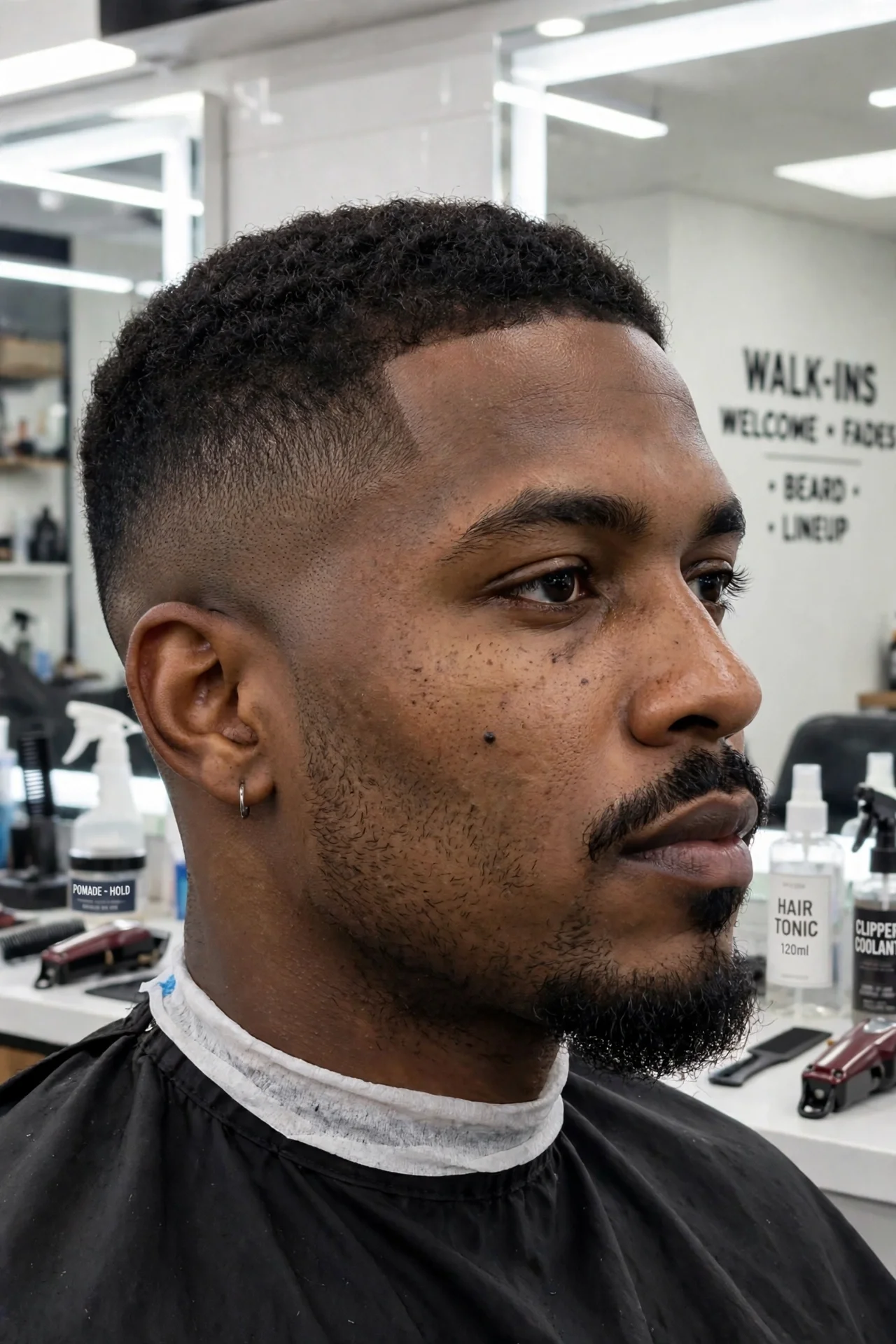
A faded goatee keeps the goatee fullest at the chin and blends it gradually into shorter stubble on the jaw and cheeks. There’s no hard edge, so thin areas fade out naturally.
🎨
Chin
fullest length
✂️
Jaw
short, faded
📐
Cheeks
stubble or clean
It’s a softer, more modern version of a regular goatee. Ask your barber to blend it with a trimmer using different guard lengths.
09
OF 23
The Circle Beard

A circle beard connects the mustache and chin beard into a rounded shape around the mouth. It’s a small, neat beard that skips the cheeks entirely.
📌 Good To Know
This style needs solid growth at the corners of the mouth, where the mustache meets the chin. If that area is patchy, a goatee with stubble or a mustache on its own is a better fit.
Keep the circle short and round. A wide or long circle starts to look heavy and loses the neat effect.
10
OF 23
The Balbo With an Extended Goatee
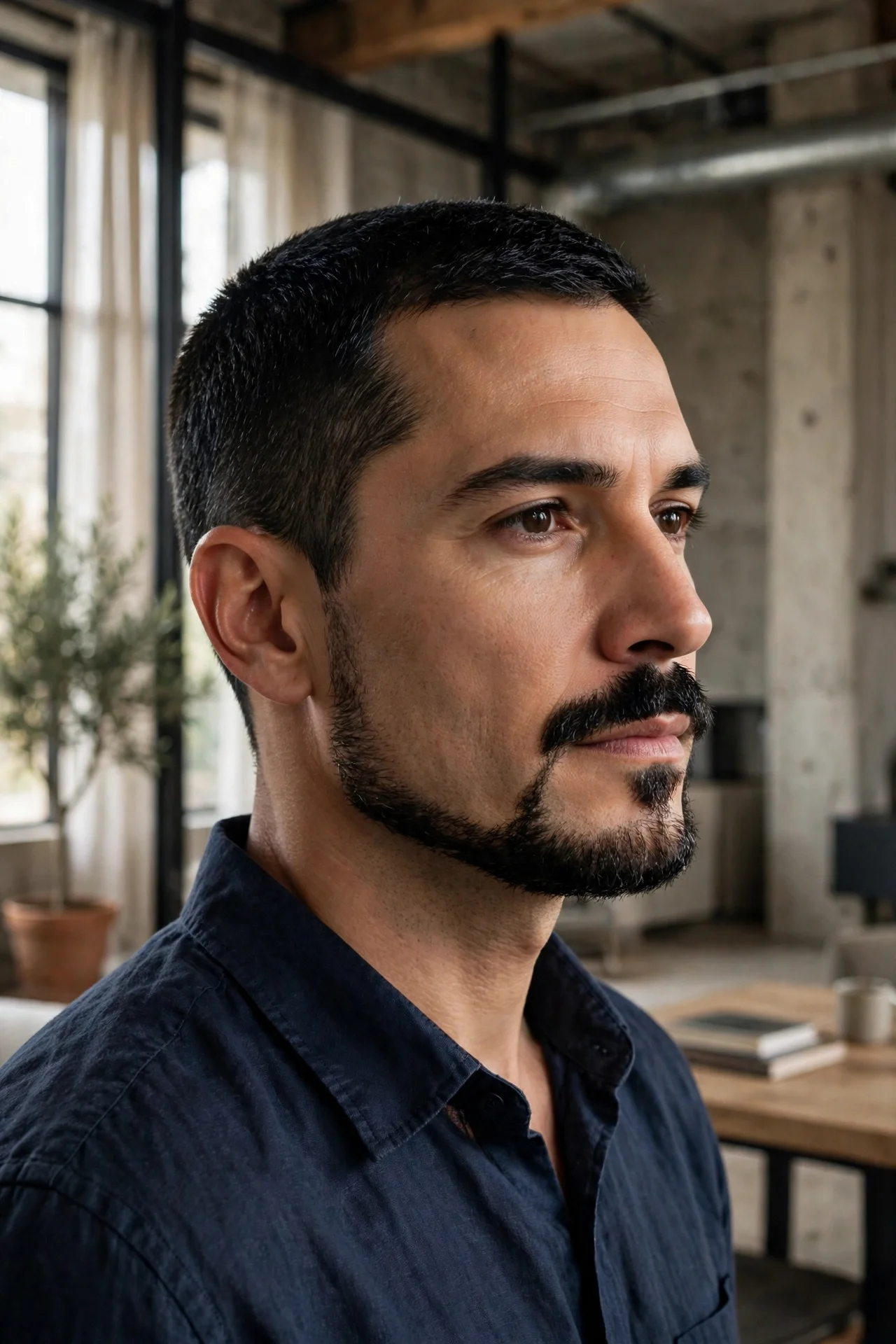
A Balbo has a mustache that doesn’t connect to the beard, plus a chin beard that extends slightly along the jaw. The cheeks are clean, so it works well when cheek growth is weak.
✅ Do This
Keep the extended part along the jaw short and even.
🚫 Skip This
Stretching the extension all the way to the ears if your jaw is patchy.
The gap between the mustache and chin beard is part of the design. That makes it a good choice if the area just below the corners of your mouth grows thin.
11
OF 23
The Royale Beard
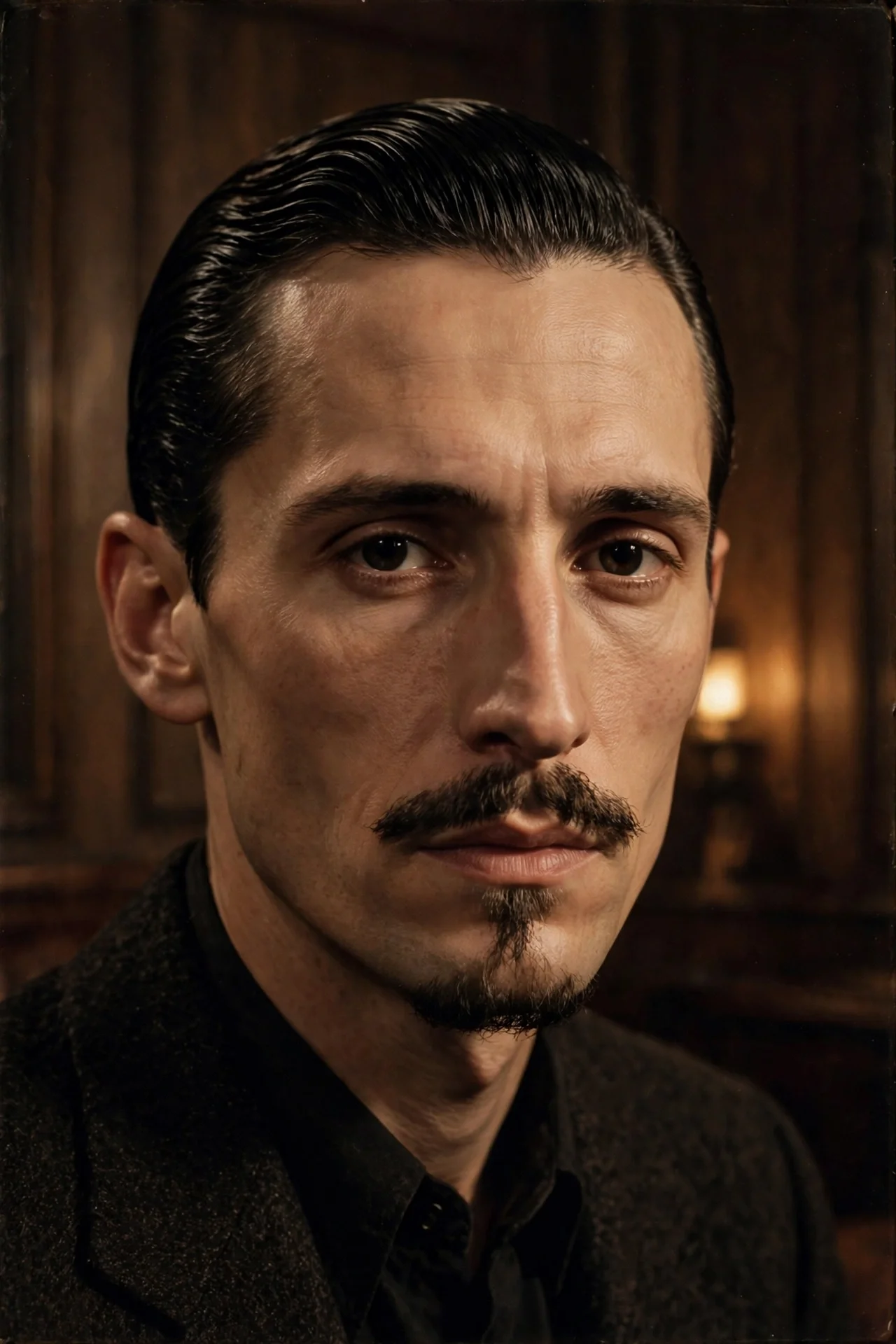
A royale beard combines a mustache with a narrow strip of beard on the chin, and nothing else. It’s a bold, slightly vintage style that only needs growth in two small areas.
Where the Royale Comes From
The royale is closely related to the “imperial,” a pointed chin beard with a mustache made famous by Napoleon III, emperor of France from 1852 to 1870. Over time, shorter and neater versions came to be called the royale.
Keep the chin strip neat and narrow. A wide or messy strip looks unfinished rather than deliberate.
12
OF 23
The Half Beard
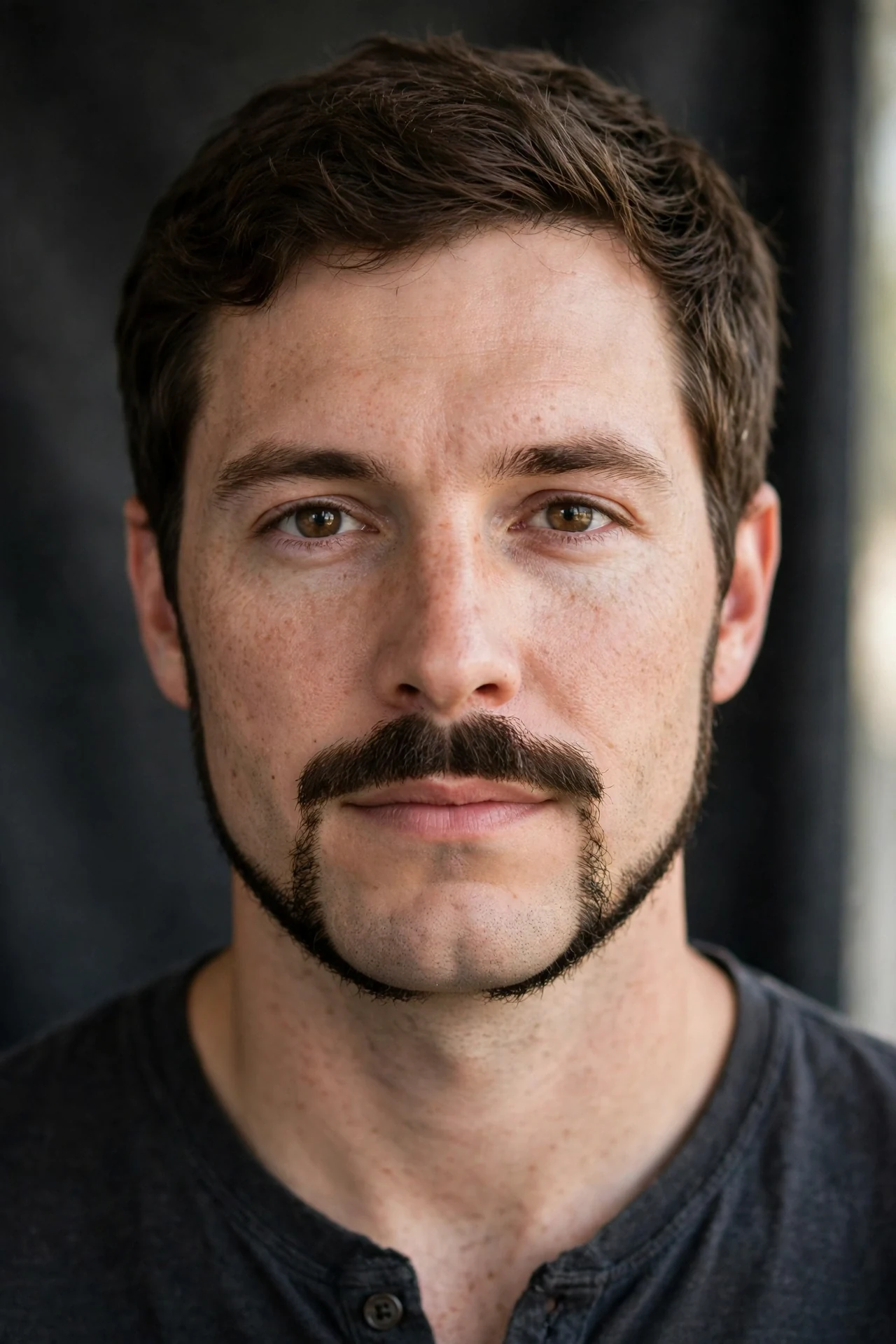
A half beard keeps the mustache and the jaw beard but leaves the gap between them, where hair often doesn’t connect. Instead of trying to fill that space, the style leaves it clean.
⚠️ Common Mistake
Letting both sides grow uneven around the gap. If the mustache and beard ends look ragged, the gap looks accidental; trim both ends cleanly so the gap looks intentional.
This is especially useful for younger men, since the corners of the mouth are often the last area to fill in.
13
OF 23
The Chin Beard

A chin beard keeps hair only on the chin. If that’s the one area where your beard grows thick, it’s a simple way to make use of it.
💡 Quick Tip
Keep the chin beard no wider than the corners of your mouth. Going wider makes it look like an unfinished goatee.
Shape the bottom into a soft curve rather than a point. A rounded edge looks more modern.
14
OF 23
A Goatee Without a Mustache
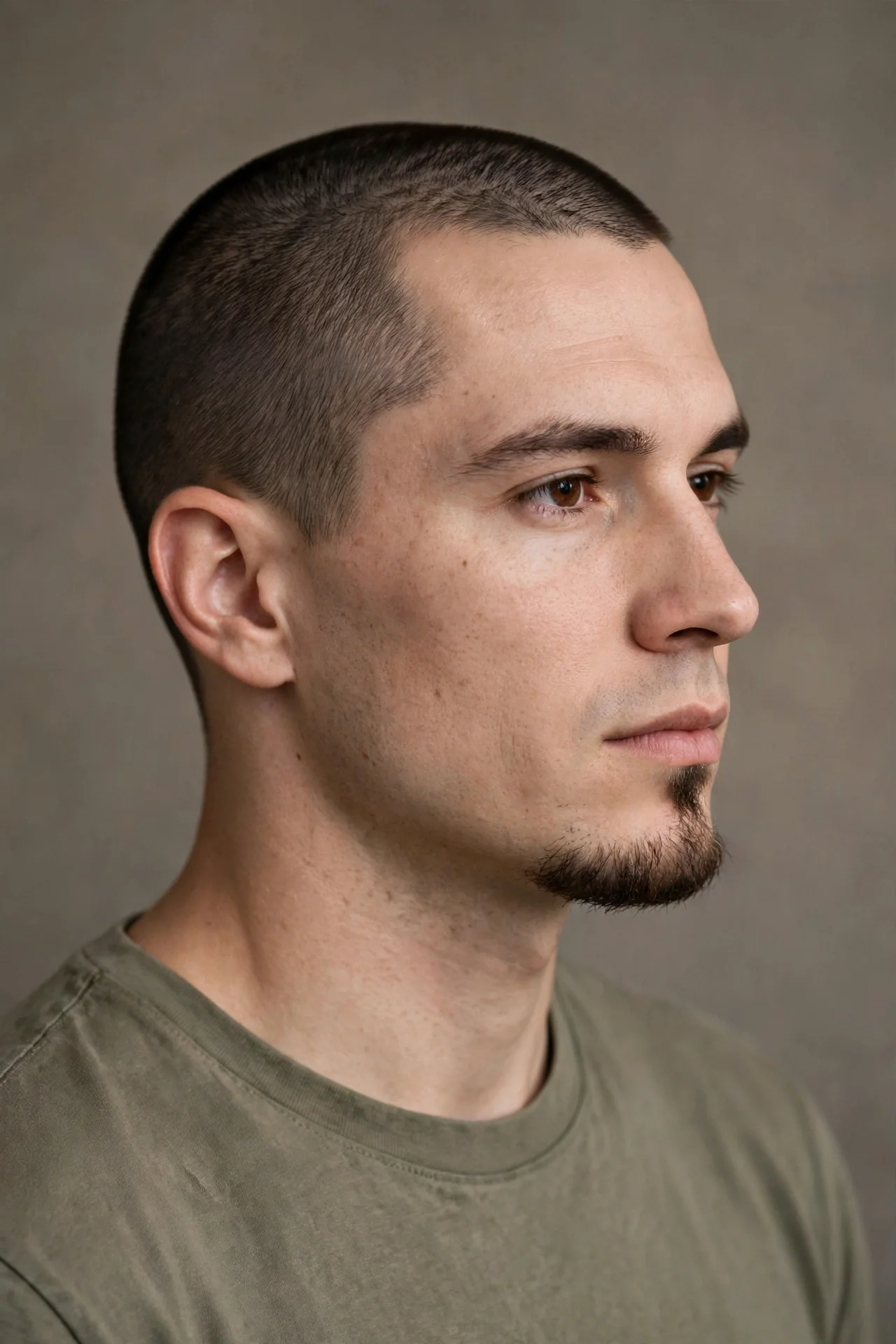
Some men grow a good chin beard but a thin, patchy mustache. A goatee without a mustache keeps the chin and the area under the lower lip, and shaves the upper lip clean.
⚠️ Watch Out
Keep it short. A long goatee without a mustache can look dated quickly, while a short, neat one looks clean and current.
Shave the upper lip every day or two, since even a little regrowth there looks like a failed mustache.
15
OF 23
A Thick Mustache With Light Stubble

If your mustache grows thick but your cheeks don’t, make the mustache the focus. Pair it with very light stubble, and the patchy cheeks barely register.
Who This Isn’t For
If your mustache is the patchy part, this style highlights the problem instead of hiding it. In that case, a goatee without a mustache or a chin beard works better.
Trim the mustache so it sits at the top of the lip. Letting it grow over the lip looks messy.
For patchy beards, I usually suggest either a moustache on its own or a disconnected goatee. Get your barber to clean up the cheek line and neckline, and use a boar-bristle brush to steer longer hairs over the thinner spots.
Whatever style you choose, don’t over-trim while the beard is still filling in. Every millimetre helps cover the gaps.
16
OF 23
A Coily Beard With a Natural Line-Up
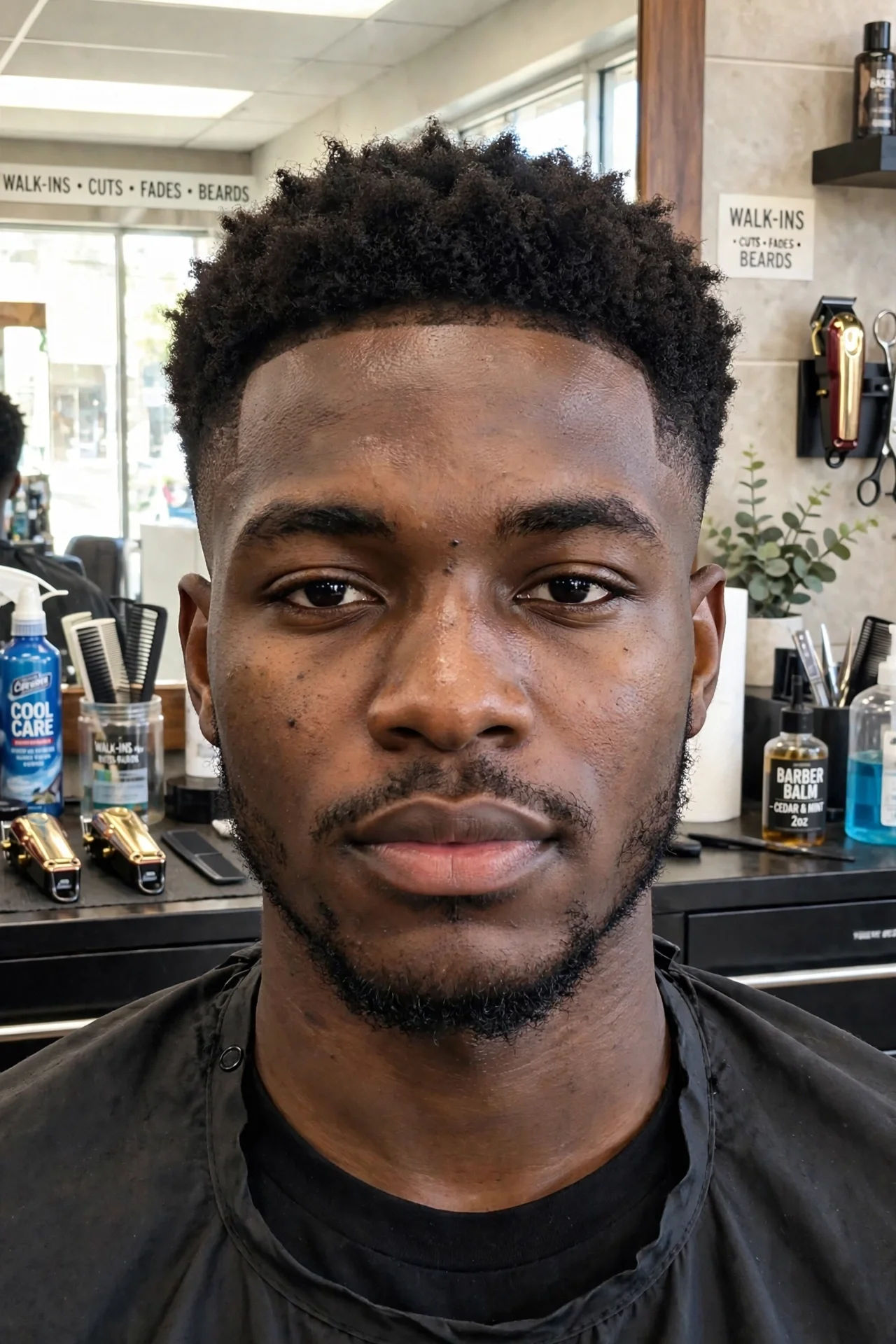
Coily beard hair, common among many Black men, curls tightly and can hide patchiness well once it has some length. A line-up that follows your natural growth keeps it neat without exposing thin areas.
💈 From the Chair
A natural line-up, cut slightly lower than where the growth actually starts, usually looks fuller than a high, sharp one. Pushing the line too high exposes thin areas at the cheeks.
Coily beards also lose moisture quickly, which makes the hair feel rough and look duller and thinner than it is. A daily beard oil or leave-in conditioner keeps the curls soft and helps them clump together, which covers small gaps.
⚠️ Watch Out
Tightly curled hair is more prone to razor bumps, called pseudofolliculitis barbae, when shaved very close. Use a trimmer for the line-up, or shave with the grain using a single-blade razor.
17
OF 23
A Dense Beard Kept Tight at the Cheeks

Some men, including many South Asian and Mediterranean men, grow thick beards on the jaw and chin but have a few thinner spots on the cheeks. Keeping the beard short and the cheek line low hides those spots without giving up the density.
🧴 Product Note
Beard filler pens and pencils are sold to fill in small gaps, and many brands claim they look natural. They can help for photos or events, but the shade has to match your beard closely, or the filled areas look painted on.
Trim the beard to the same length as the thinnest area. That keeps the difference between thick and thin spots small.
18
OF 23
The Short Full Beard on a Mostly Even Face

If your patches are small and scattered, a short full beard can actually hide them better than stubble. Once the hair reaches around 1 cm, it lies flatter and covers the gaps.
It takes patience, though. Many beards look patchiest around weeks two to four, so it’s worth growing for at least four to six weeks before deciding.
A little beard oil helps the hair lie flat and look fuller. Brushing it in one direction can also cover small gaps.
You may have read about minoxidil for beards. There is real research behind it: a randomised, placebo-controlled study of 48 men used a 3% minoxidil lotion twice a day on the chin and jaw for 16 weeks, and the minoxidil group improved noticeably more than the placebo group.
In that study, hair counts went up, but the hairs didn’t get thicker, and the researchers reported the lotion as safe. It isn’t approved for beards, though, it can cause itching, redness or spots, and the effect fades if you stop, so talk to a doctor before you start.
19
OF 23
A Patchy Beard Style for a Round Face
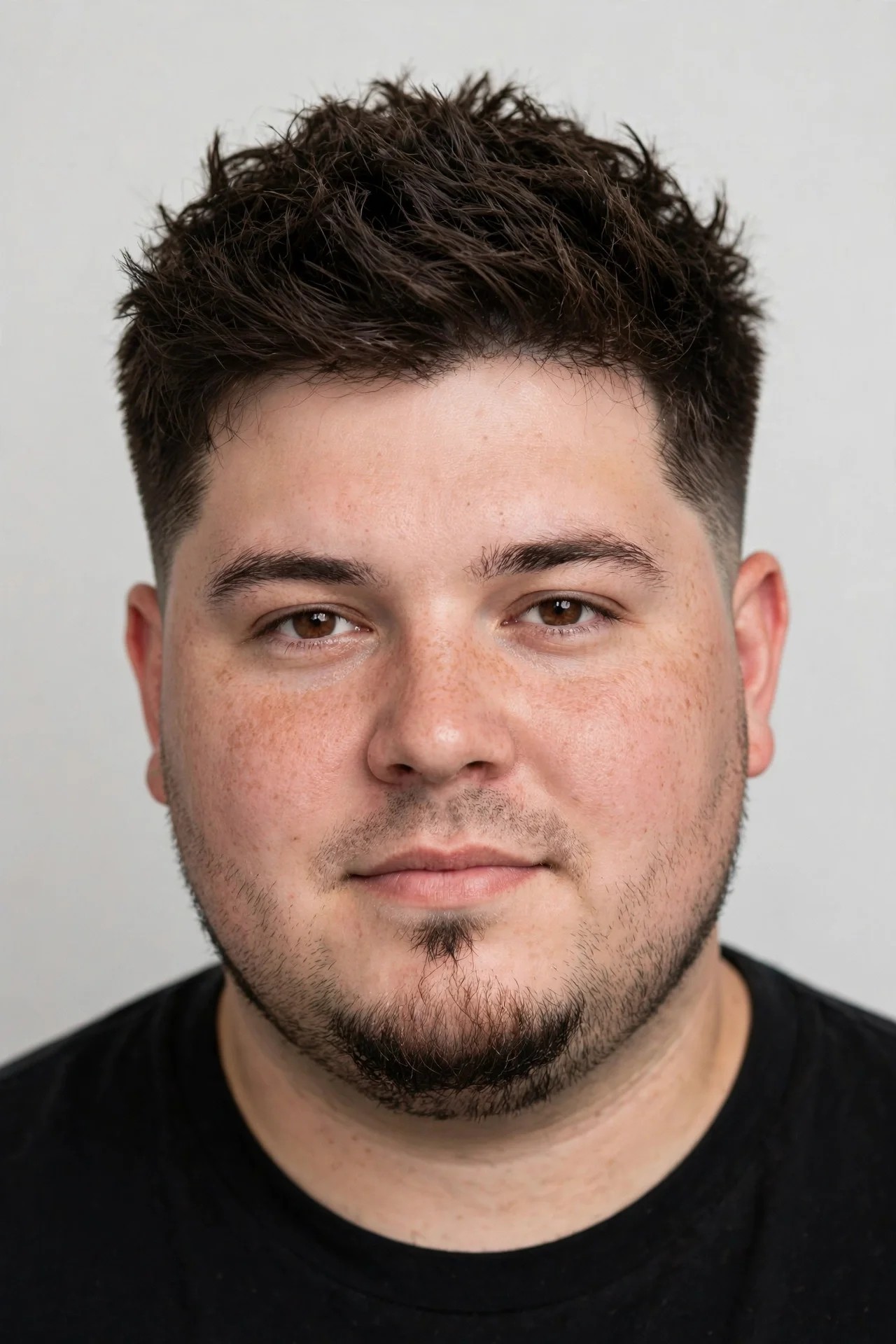
For a round face, the goal is adding a little length at the chin and keeping the cheeks short. That makes the face look longer, and it happens to suit patchy cheeks perfectly.
🎨
Chin
slightly longer
✂️
Cheeks
short or faded
📐
Effect
lengthens a round face
A faded beard or goatee with stubble both follow this shape. Avoid growing the cheeks long, which adds width to the face.
20
OF 23
A Bald Head With a Goatee

A shaved head with a goatee is a strong, clean combination. The goatee adds definition to the lower face, which balances the bare head, without needing full cheek growth.
Keep the goatee neat and short. A long goatee with a bald head can look harsh, while a short one looks sharp.
Moisturise the scalp and use a little beard oil on the goatee, so both look healthy rather than dry.
21
OF 23
Long Hair With a Short Patchy Beard

Long hair draws attention up and away from the beard, so a short, patchy beard is far less noticeable. Short stubble pairs well and keeps the face looking clean.
✅ Do This
Keep the beard short and even, so the hair stays the main feature.
🚫 Skip This
Growing the patchy beard long, which competes with the hair and shows the gaps.
Tying the hair back changes the balance. With hair pulled back, keep the beard especially neat, since more of the face is visible.
22
OF 23
A First Patchy Beard for Young Guys

A first beard is almost always patchy, with more growth on the chin and upper lip than the cheeks. Keeping it very short and neat looks far better than trying to grow it out.
BEFORE:
Uneven early growth left untrimmed, with long hairs on the chin and bare patches on the cheeks.
AFTER:
The same growth trimmed to an even 1–2 mm, the patches blending into a light shadow.
Beards often keep filling in through the twenties and into the thirties, so today’s patchy beard may look very different in a few years. A trimmer with a guard is gentler on young skin than a razor, which helps avoid redness and razor bumps.
Patchiness at this age is normal, and it often fixes itself. Among my own clients, some filled in at around 19 or 20, one at 23, a few only saw their cheeks fill in after 30, and one didn’t get his full beard until he was 45. The cheeks almost always come in last.
Beardbrand says beard growth is usually fastest between 25 and 35, and suggests committing to about 60 days before you judge it. I’d give it longer still: at least 90 to 120 days before you decide your beard is patchy for good.
On beard forums, men with patchy cheeks say the same thing: push through the scruffy phase and resist trimming early. One member trimmed his neckline far too soon and regretted it, and several suggest keeping a circle beard or a longer goatee as a fallback if the cheeks never fill in.
23
OF 23
Curly Hair With Short Stubble

Curly hair adds volume and texture up top, which takes focus away from a patchy beard. Short, even stubble keeps the lower face clean so the curls stay the main feature.
💡 Quick Tip
Keep the stubble shorter than you think. With voluminous curls, very short stubble looks balanced, while a longer patchy beard can make the whole head look messy.
Trim the neckline neatly. With curly hair, a tidy neckline is what keeps the look from feeling unkempt.
Where does your beard grow patchy?
FAQs
Why is my beard patchy?
Beard growth is mostly down to genetics and how your hair follicles respond to hormones. Patchy beards are very common, especially in your teens and twenties.
Will a patchy beard fill in over time?
Often, yes. Many men’s beards keep filling in through their twenties and into their thirties. Growing it for four to six weeks also helps you see its real shape.
What’s the best style for a patchy beard?
Short styles work best: light or heavy stubble, a goatee with stubble, a faded beard, or an Italian beard with a low cheek line.
Does beard oil help a patchy beard grow?
Beard oil softens the hair and helps it lie flat, which can make a beard look fuller. It doesn’t change how much hair grows.
Can I fill in a patchy beard with a beard pen?
Beard filler pens can cover small gaps for events or photos, but the shade must match closely. Used heavily, they can look painted on.
Should I see a doctor about a patchy beard?
If a patchy area appears suddenly, especially as a smooth, round bald spot, it’s worth seeing a dermatologist. For growth questions or treatments, a doctor can explain the options safely.