25 Italian Beard Styles That Look Groomed: Full and Sharp

“Italian beard” isn’t one official cut. It’s the name people use for a certain kind of beard: dense and full, but neatly shaped, with a defined moustache, clean edges, and a finish that looks cared for rather than wild. It’s the beard you picture next to a tailored jacket and a good haircut.
What ties every version together is grooming. Length can be short or long, and the haircut can be a slick back or a bald head, but the lines are always clean and the beard always looks deliberate. Below are 25 Italian beard styles, including the two classic beards with Italian names, with fades, face shapes, and how to keep each one sharp.
Short on Time? Pick Your Path
Table of Contents
- 01The Classic Italian Full Beard
- 02The Short Italian Beard
- 03The Italian Designer Stubble
- 04The Italian Boxed Beard
- 05The Verdi Beard
- 06The Garibaldi Beard
- 07The Italian Beard With a Slick Back
- 08The Italian Beard With a Low Fade
- 09The Half-Faded Italian Beard
- 10The Italian Beard With a Burst Fade
- 11The Italian Beard With a Bald Head
- 12The Italian Beard for Thinning Hair
- 13The Italian Goatee
- 14The Italian Anchor Beard
- 15The Italian Moustache With a Short Beard
- 16The Italian Beard With a Sloped Cheek Line
- 17The Long Italian Beard
- 18The Grey Italian Beard
- 19The Old Money Italian Beard
- 20The Italian Beard With Curly Hair
- 21The Italian Beard With Medium Wavy Hair
- 22The Relaxed Italian Beard With Beach Hair
- 23The Italian Beard for Black Men
- 24The Italian Beard for Indian Men
- 25The Italian Beard for Round Faces
01
OF 25
The Classic Italian Full Beard

The classic Italian beard is a full beard around 2–4 cm, with a fuller moustache, a rounded or slightly squared bottom, and crisp cheek and neck lines. It looks dense and masculine but never messy.
What Makes a Beard Look Italian
Three details give the style its character. The moustache is kept a little fuller than the rest of the beard, the cheek line is sharp, and the beard is brushed so every hair sits in one direction.
It also helps when the haircut matches the beard’s neatness. A slicked-back or neatly side-parted style makes the whole look feel tailored.
Two classic beards actually carry Italian names, and they’re often confused with the general Italian beard.
| Style | Length | Shape | Moustache |
|---|---|---|---|
| Italian full beard | 2–4 cm | Rounded or squared | Fuller, neatly trimmed |
| Verdi | Up to about 10 cm | Rounded bottom | Styled, kept distinct |
| Garibaldi | Up to about 20 cm | Wide, rounded | Blends into the beard |
Most men looking for an “Italian beard” mean the first one. The Verdi and Garibaldi are longer and more dramatic, and they’re covered below at #5 and #6.
02
OF 25
The Short Italian Beard

A short Italian beard keeps the density and clean lines of the full version but at around 1 cm. It’s the most practical way to wear the style day to day, especially at work.
Short beards show their edges clearly. That’s an advantage here, since sharp lines are the heart of the Italian look.
💈 Say “Short, Dense, Sharp Edges”
Ask for “the beard at about 1 cm all over, the moustache left a little fuller, and a crisp cheek line and neckline.” If your sideburns are thick, ask for them to be tapered slightly so the beard doesn’t look heavy at the top.
Trim at the same length once a week. Clean the cheek line and neck every two or three days, since that’s where short beards lose their sharpness first.
03
OF 25
The Italian Designer Stubble
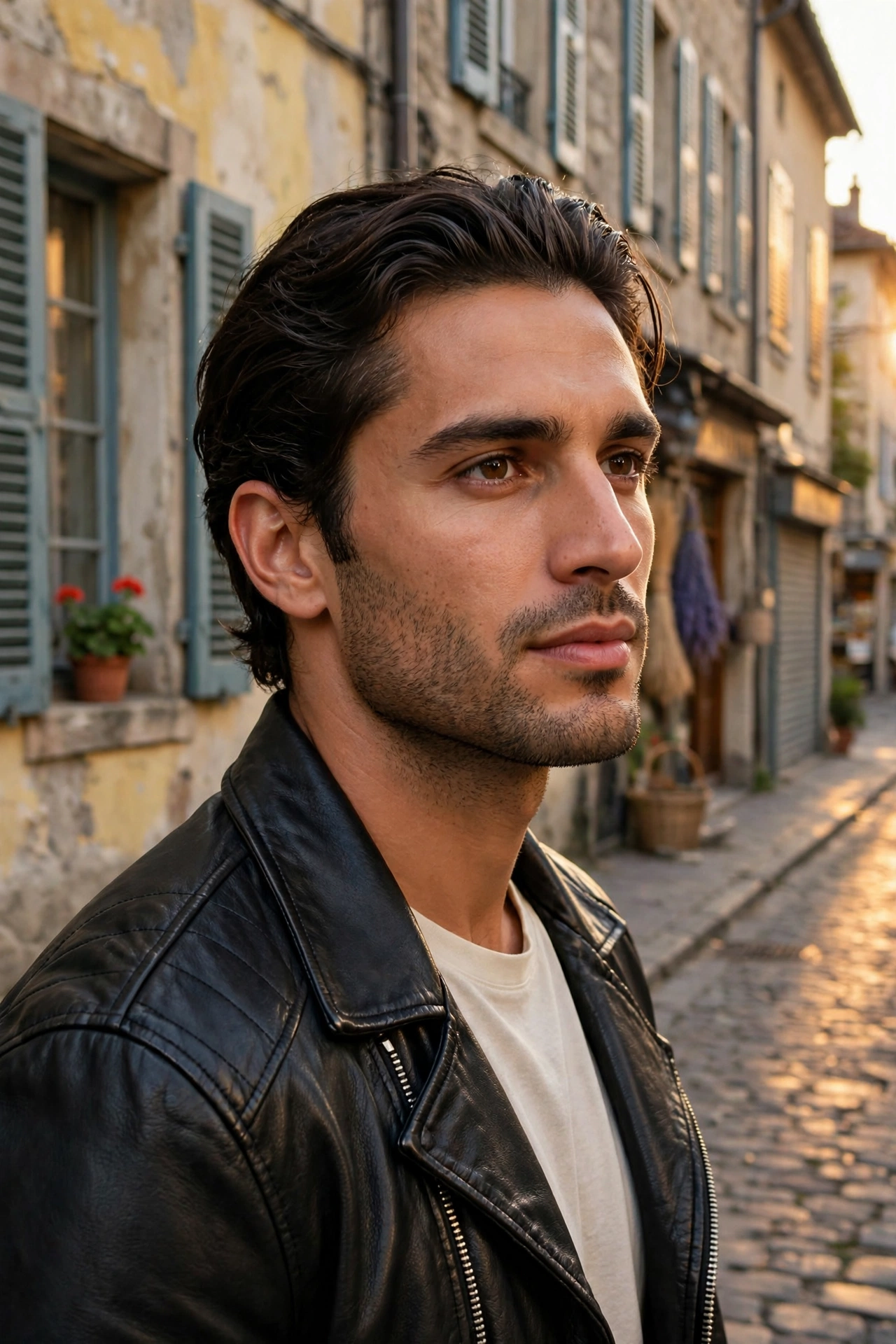
Designer stubble is short, even growth kept at a few millimetres with a trimmer. The Italian version keeps the same neat edges as a full beard, so the stubble looks styled rather than forgotten.
It suits men who want the look without committing to a full beard. It’s also a good test of how your growth fills in before you let it get longer.
✅ Do This
Trim the stubble with a guard every two or three days and keep the neckline shaved.
🚫 Skip This
Leaving the neck and upper cheeks to grow freely, which makes stubble look unkempt.
Textured stubble, slightly longer at the chin and moustache, adds a little shape. It’s a small detail, but it gives the face more definition.
04
OF 25
The Italian Boxed Beard
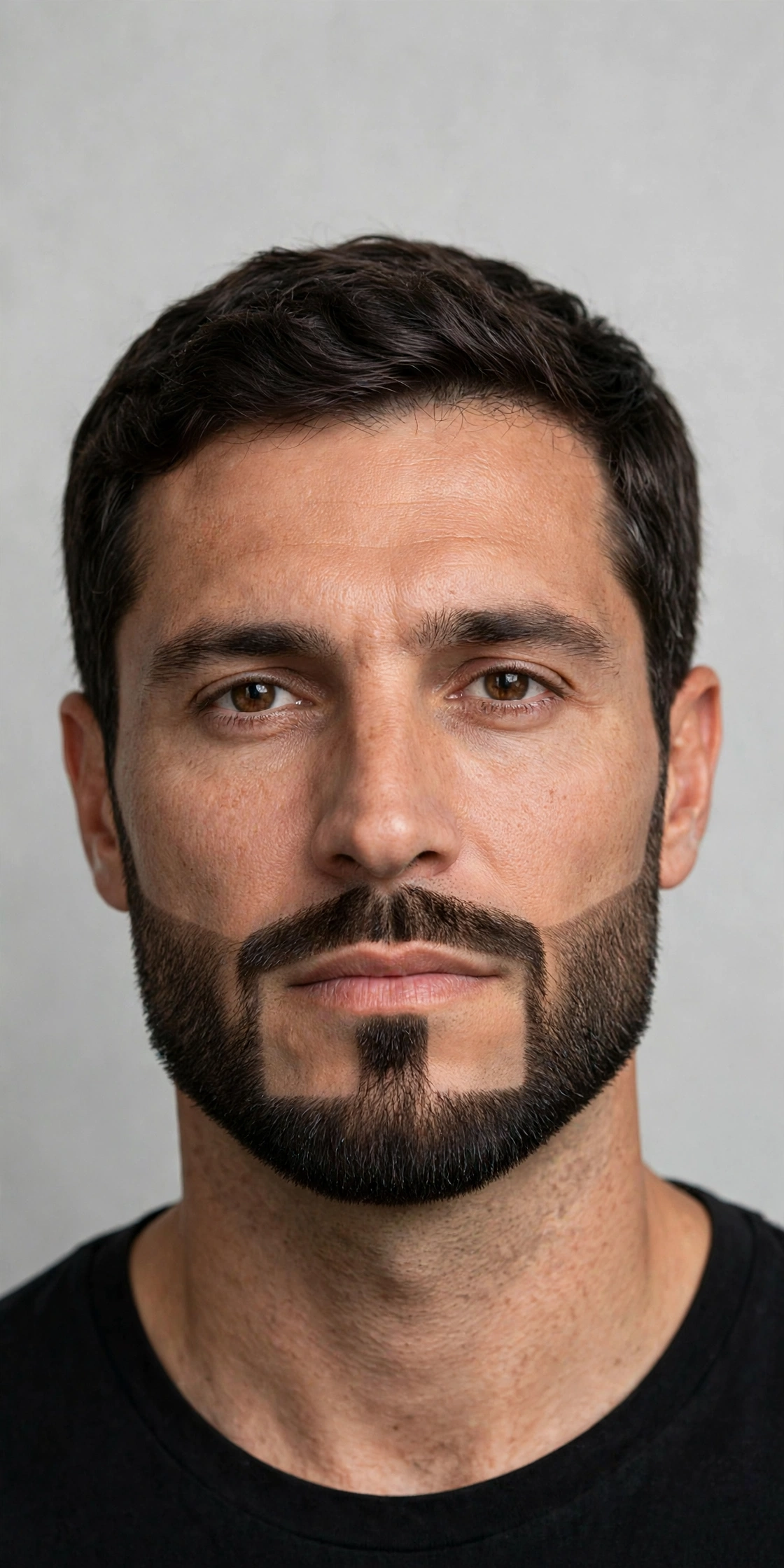
An Italian boxed beard is short and full, trimmed with straight, defined lines on the cheeks and neck. It’s the most structured version of the Italian beard, and it suits men who like a precise, tailored look.
The shape gives the face a stronger jaw. That makes it especially flattering on oval and long faces.
📌 “Boxed” Doesn’t Mean Square
A boxed beard is about the clean outline, not a flat, blocky bottom. Most look best with a gently rounded chin, which stops the beard from looking stiff.
Boxed beards lose their shape quickly. Plan on trimming the lines every few days and the length once a week.
05
OF 25
The Verdi Beard
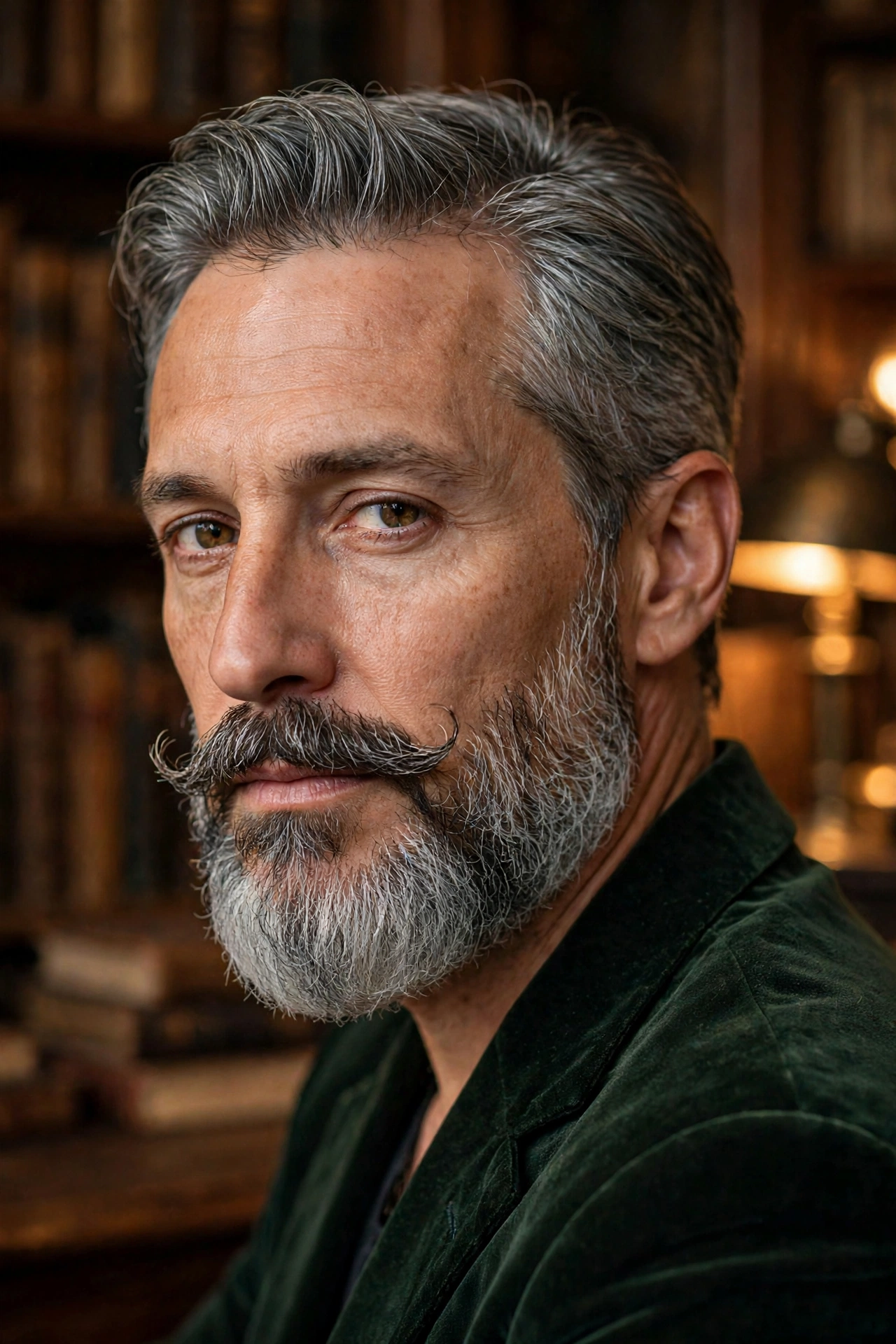
The Verdi is a full beard with a rounded bottom, usually kept to no more than about 10 cm. Its signature is the moustache, which is styled and kept distinct from the beard instead of blending into it.
Where the Verdi Beard Got Its Name
The style is named after Giuseppe Verdi, the 19th-century Italian opera composer behind works such as Rigoletto, La Traviata, and Aida. Portraits from his later life show him with a full, rounded beard and a distinct moustache, which is the shape the name now describes.
Keeping the Moustache Separate
The moustache is what separates a Verdi from an ordinary long beard. Trim it so it doesn’t reach much past the corners of the mouth, and comb it outward so it sits apart from the beard below.
A little moustache wax helps hold the ends in place. Shape it lightly; a Verdi moustache should look tidy, not theatrical.
06
OF 25
The Garibaldi Beard

The Garibaldi is a wide, full beard with a rounded bottom and a moustache that merges into the rest of the beard. It’s named after Giuseppe Garibaldi, the 19th-century general who helped unify Italy, and it’s the most generous of the Italian-named beards.
It looks a little more natural than the Verdi. The moustache isn’t styled separately, and the beard is allowed some volume, as long as the overall shape stays round and controlled.
⚠️ The Width Problem on Round Faces
A wide Garibaldi adds a lot of width to the lower face. On round or wide faces, keep the sides a little shorter than the chin so the beard looks longer rather than broader.
Growing a Garibaldi takes many months. Trim lightly along the way to keep the rounded shape, rather than waiting until it’s long and trying to shape it all at once.
07
OF 25
The Italian Beard With a Slick Back
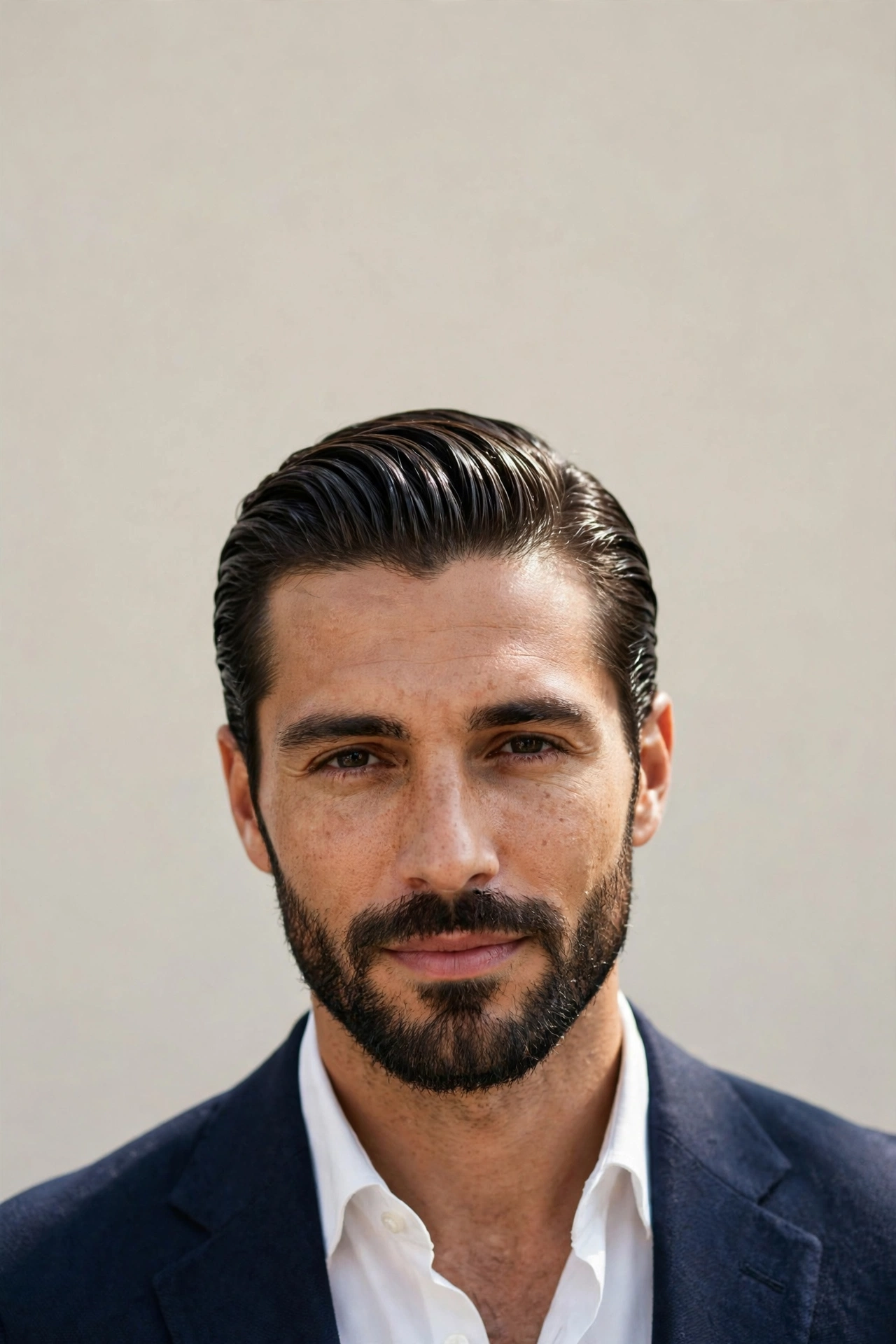
A slicked-back haircut is the hairstyle most often paired with an Italian beard. Combing the hair back keeps the forehead clear and makes the beard the main frame of the face.
Both pieces share the same polished finish. The beard is neat and dense, the hair is smooth and glossy, and together they look tailored.
✅ Copy the Slick-Back Pairing
- Hair at 8–15 cm on top, with shorter tapered sides
- A medium-hold pomade or cream, combed straight back
- A full beard at 2–3 cm with a slightly fuller moustache
- Sharp cheek line and a clean neckline
Choose your product by the finish you want. A pomade gives more shine, while a cream or clay keeps the hair softer and more natural-looking.
08
OF 25
The Italian Beard With a Low Fade
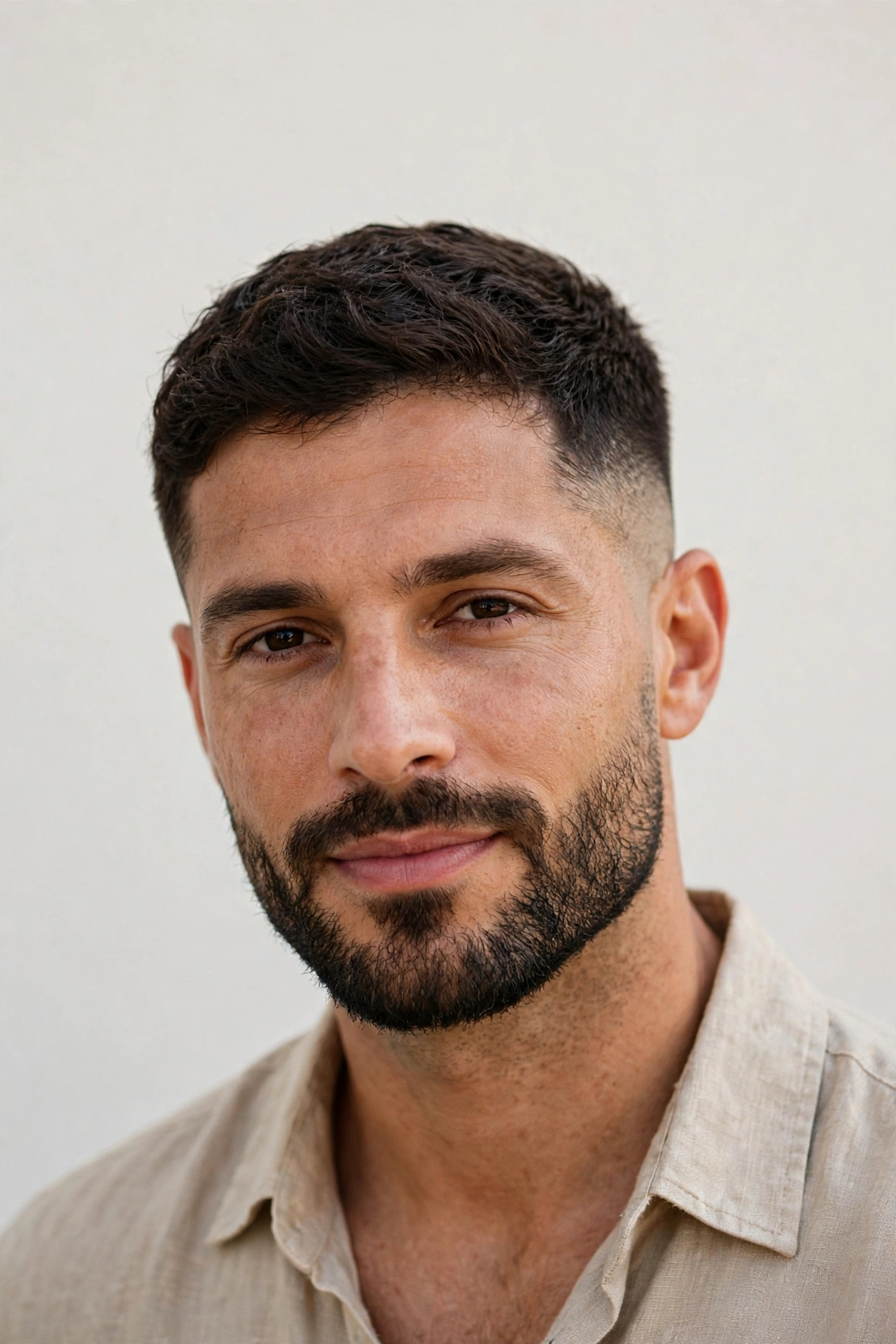
A low fade keeps the sides short just above the ears and blends through the sideburns into the beard. It gives the Italian beard a cleaner, more modern finish without losing its fullness.
The fade stops a dense beard from looking heavy next to a short haircut. It also makes the cheek line look sharper, since it starts from a clean edge.
Ask for the fade to blend into the beard rather than stop at the sideburn. A hard step at the ear breaks the clean flow the style relies on.
09
OF 25
The Half-Faded Italian Beard
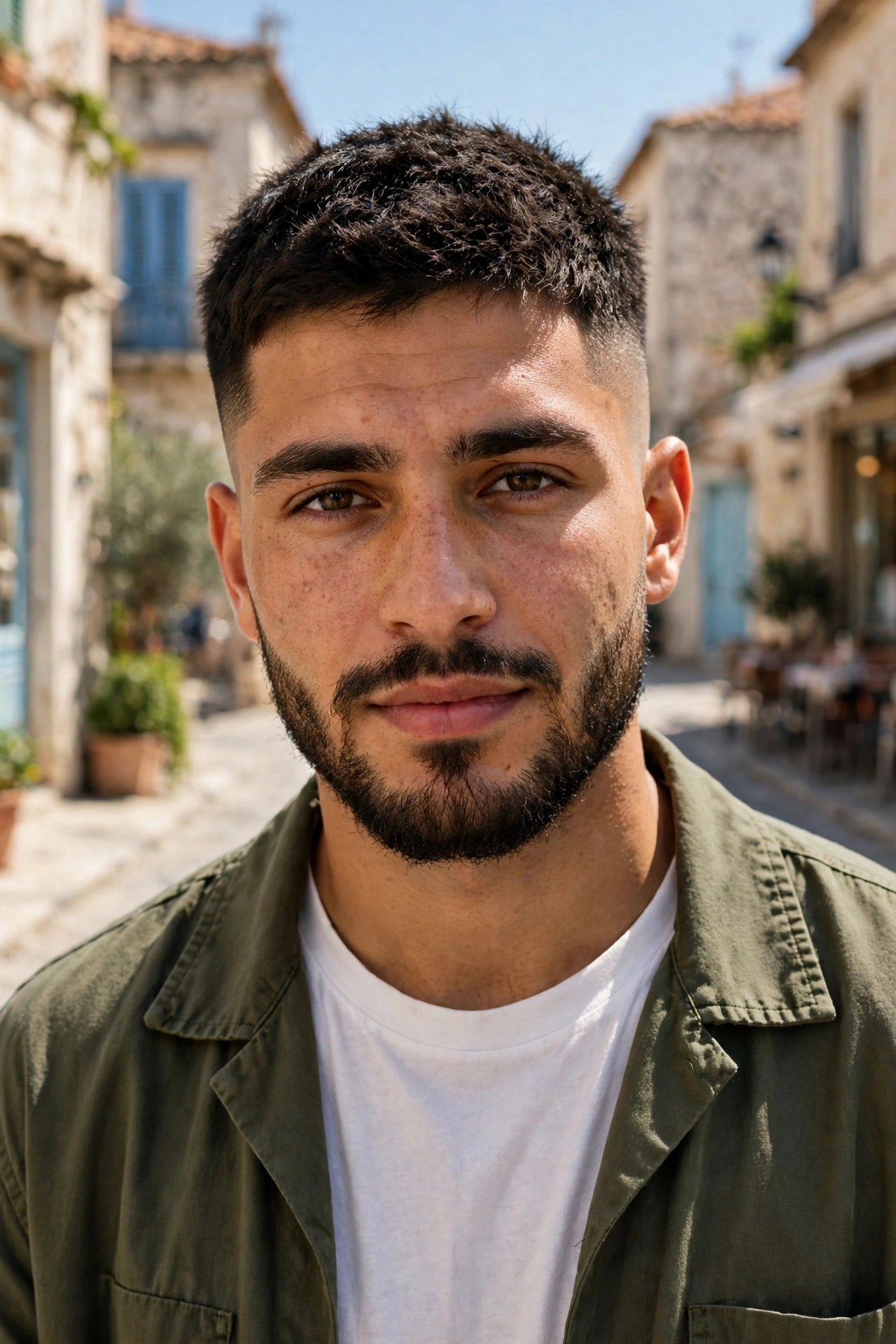
A half-faded beard keeps the upper part of the beard, at the sideburns and cheeks, very short, and leaves the jaw and chin full. It’s a sharper, slimming version of the Italian beard.
It’s especially useful for men with very full cheeks. Fading the top half takes away bulk where the face is already wide.
Where a Half Fade Looks Unfinished: Stopping the fade in a straight horizontal line halfway down the cheek. The fade should get gradually longer toward the jaw, not jump from short to full in one step.
Skin fades like this need a barber every two to three weeks. They grow out fast, and the contrast that makes them look sharp fades with them.
10
OF 25
The Italian Beard With a Burst Fade
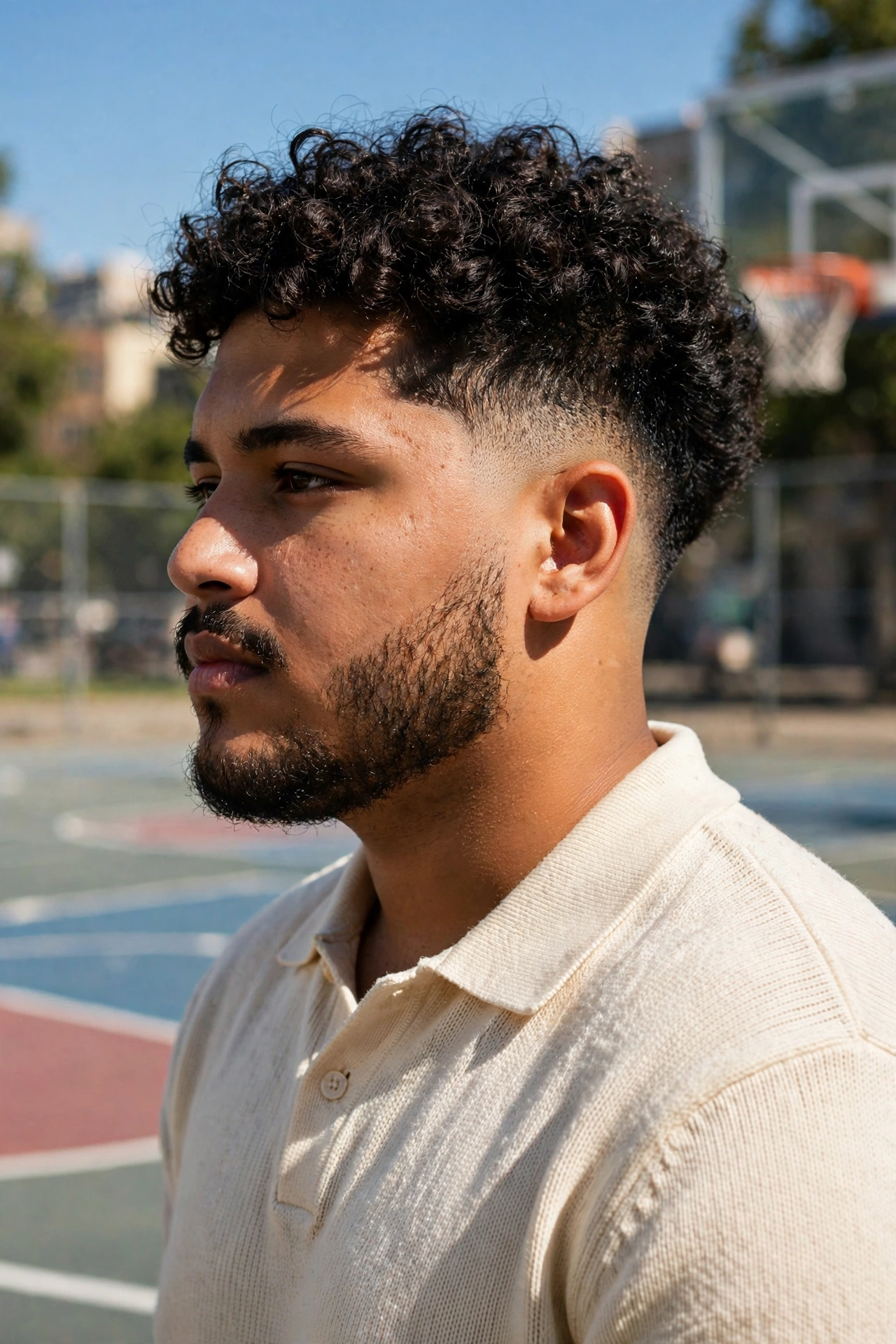
A burst fade curves around the ear in a semicircle, leaving more length at the back of the head than a standard fade. With an Italian beard, it gives a youthful, modern look.
The curve around the ear connects neatly with the beard at the sideburn. It works particularly well with curly or textured hair, since the top stays full.
🎨
Top
curly or textured
✂️
Sides
burst fade
📐
Beard
1–2 cm, fuller moustache
Keep the beard short with a burst fade. A long beard can overpower the rounded fade and make the look feel unbalanced.
11
OF 25
The Italian Beard With a Bald Head
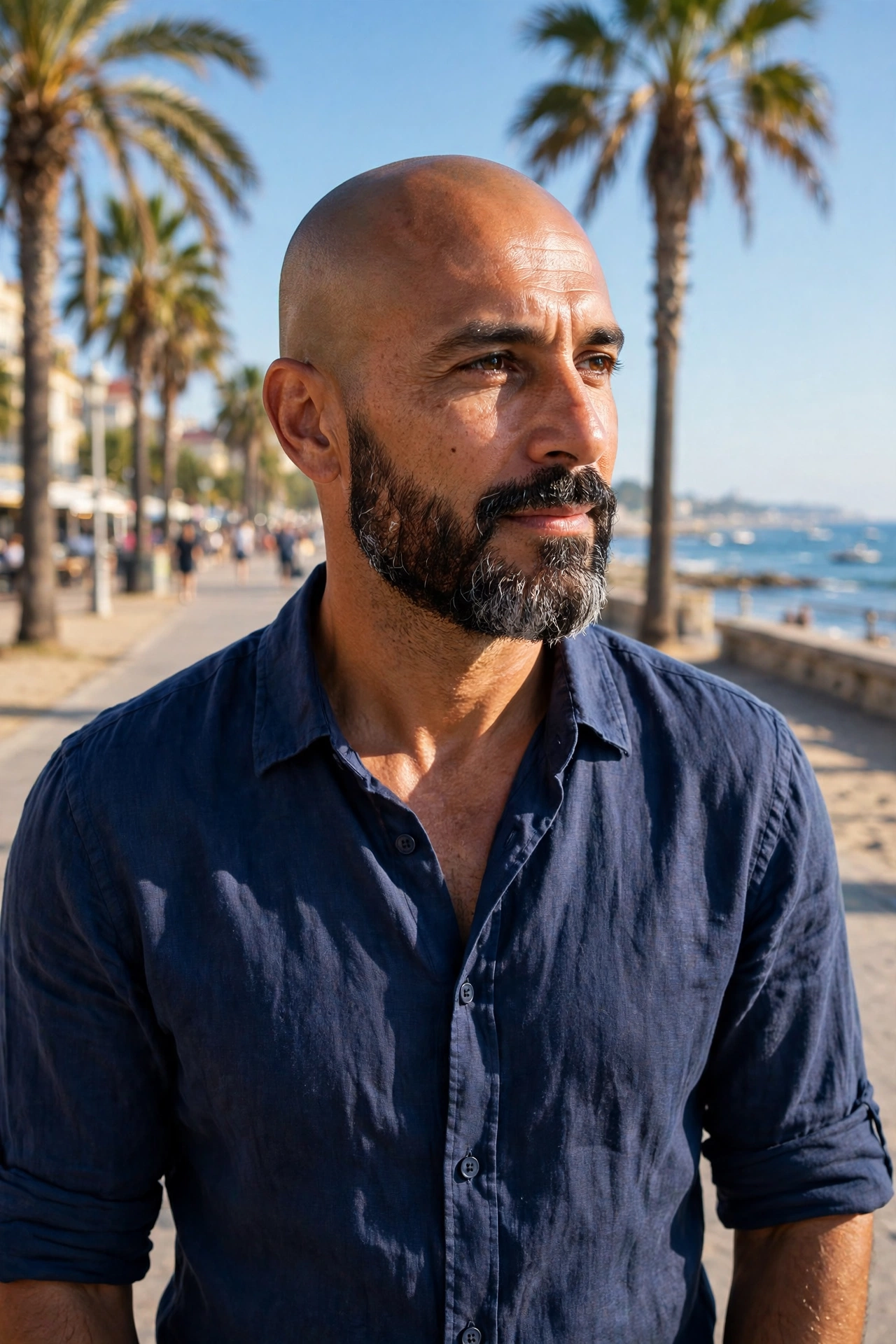
An Italian beard with a bald head is a strong, confident combination. The dense beard gives the face its shape, and the smooth head keeps the look clean and modern.
With no hair on top, the beard has to carry the whole silhouette. A full, rounded or squared beard adds the weight the head no longer has.
💈 Let the Beard Carry the Shape
Keep the sides of the beard trimmed close to the jaw, and let the chin carry the most length. That gives a bald head a strong, elongated profile instead of a round one.
Shaving the Head Around the Beard
The point where the beard meets the scalp needs attention. Shave the head down to the top of the sideburns, then fade the sideburns slightly with a trimmer, so the beard starts gradually rather than in a hard block.
Shave the head every one to three days to keep it smooth. A head that’s half grown in makes the beard look less deliberate.
12
OF 25
The Italian Beard for Thinning Hair

When hair starts to thin, a dense Italian beard shifts the attention down to the jaw. Paired with very short hair, it makes thinning much less noticeable.
Very short hair reduces the contrast between thin and full areas. The beard then gives the face a full, strong shape where growth is still good.
💡 Go Shorter on Top, Not Longer
Growing the hair longer to cover thinning areas usually makes them more noticeable. A number 1 or 2 buzz with a full beard looks deliberate and confident.
Keep the beard neat and well defined. With short hair, the beard is the main feature, so its lines need to stay clean.
13
OF 25
The Italian Goatee
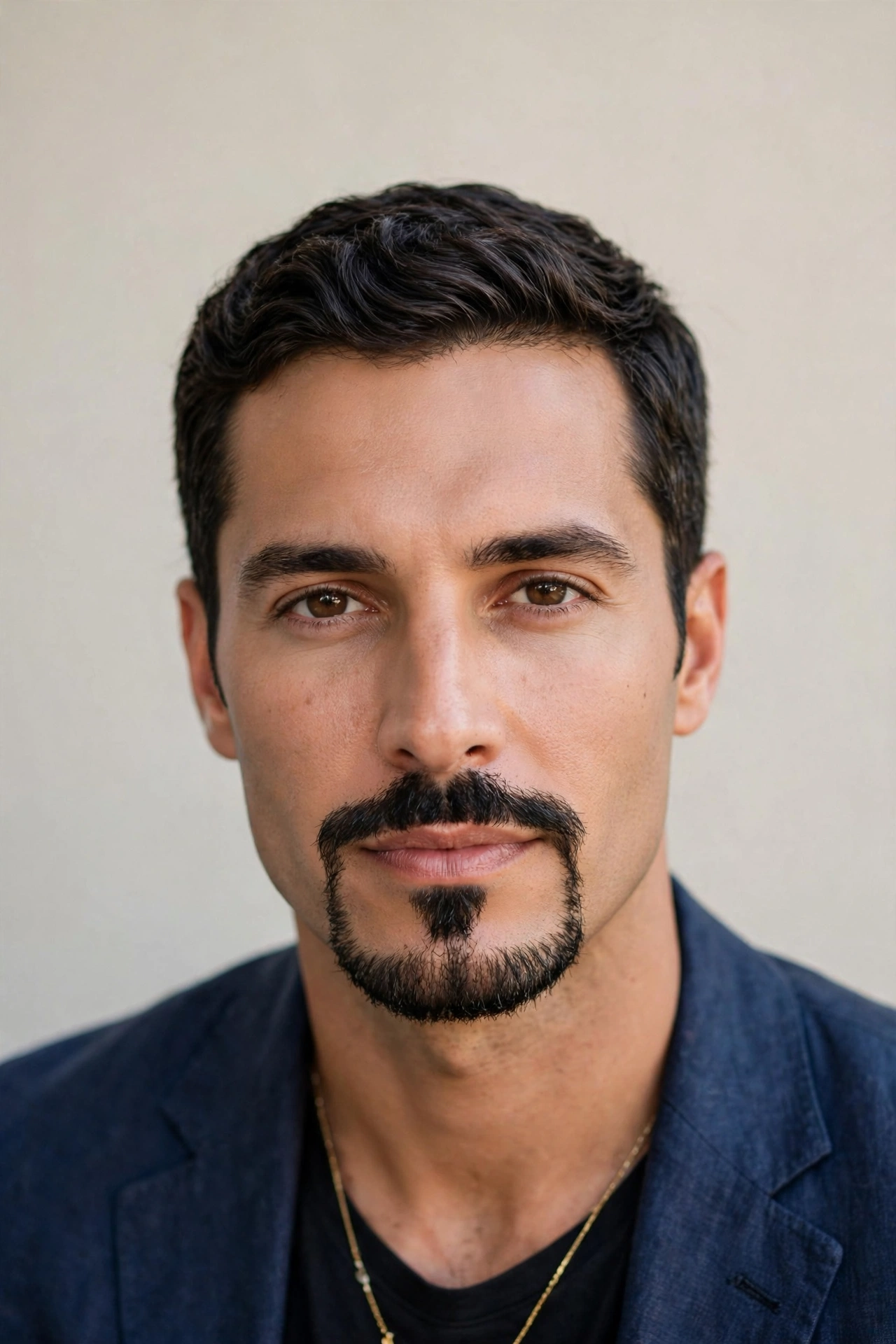
An Italian goatee keeps a full, dense moustache and chin beard, connected around the mouth, with the cheeks shaved. It has the same neat, defined finish as the full Italian beard, just on a smaller area.
In parts of South Asia, this connected style is often called a French beard. Whatever you call it, the look relies on density, so it suits men with strong growth around the mouth and chin.
Skip It If Your Chin Is Already Long
A goatee adds length to the lower face. On a long or narrow face, it can make the chin look longer still, and a short boxed beard usually balances it better.
Keep the goatee about as wide as the mouth. Shave the cheeks daily so the contrast stays sharp.
14
OF 25
The Italian Anchor Beard

An anchor beard has a chin beard that runs along the jawline and comes to a point at the bottom, like the shape of an anchor, with a separate moustache. The cheeks are shaved.
It’s a precise, stylish beard that suits the polished side of the Italian look. The pointed chin also adds length, which flatters square and round faces.
The anchor relies on symmetry. A detail trimmer helps keep both sides of the jawline even and the point at the chin centred.
15
OF 25
The Italian Moustache With a Short Beard

This style keeps the beard short and lets the moustache grow fuller, so it becomes the clear focal point. It’s a classic Italian moustache and beard combination, with a slightly retro feel.
The contrast in length is what makes it work. A short beard lets a full moustache stand out, while a longer beard would swallow it.
🧴 A Pea-Sized Bit of Moustache Wax
A small amount of moustache wax keeps a full moustache in shape and off the lip. Warm it between your fingers first, then comb it through, and keep the amount small so the moustache doesn’t look stiff or shiny.
Trim the moustache along the top lip so it never covers the mouth. Comb it straight down and trim only the hairs that hang past the lip line.
In general, an Italian beard means a dense, full beard with clean edges and a well-defined cheek line. The moustache is usually kept a touch heavier than the rest, and a little wax sets it slightly to the sides.
16
OF 25
The Italian Beard With a Sloped Cheek Line
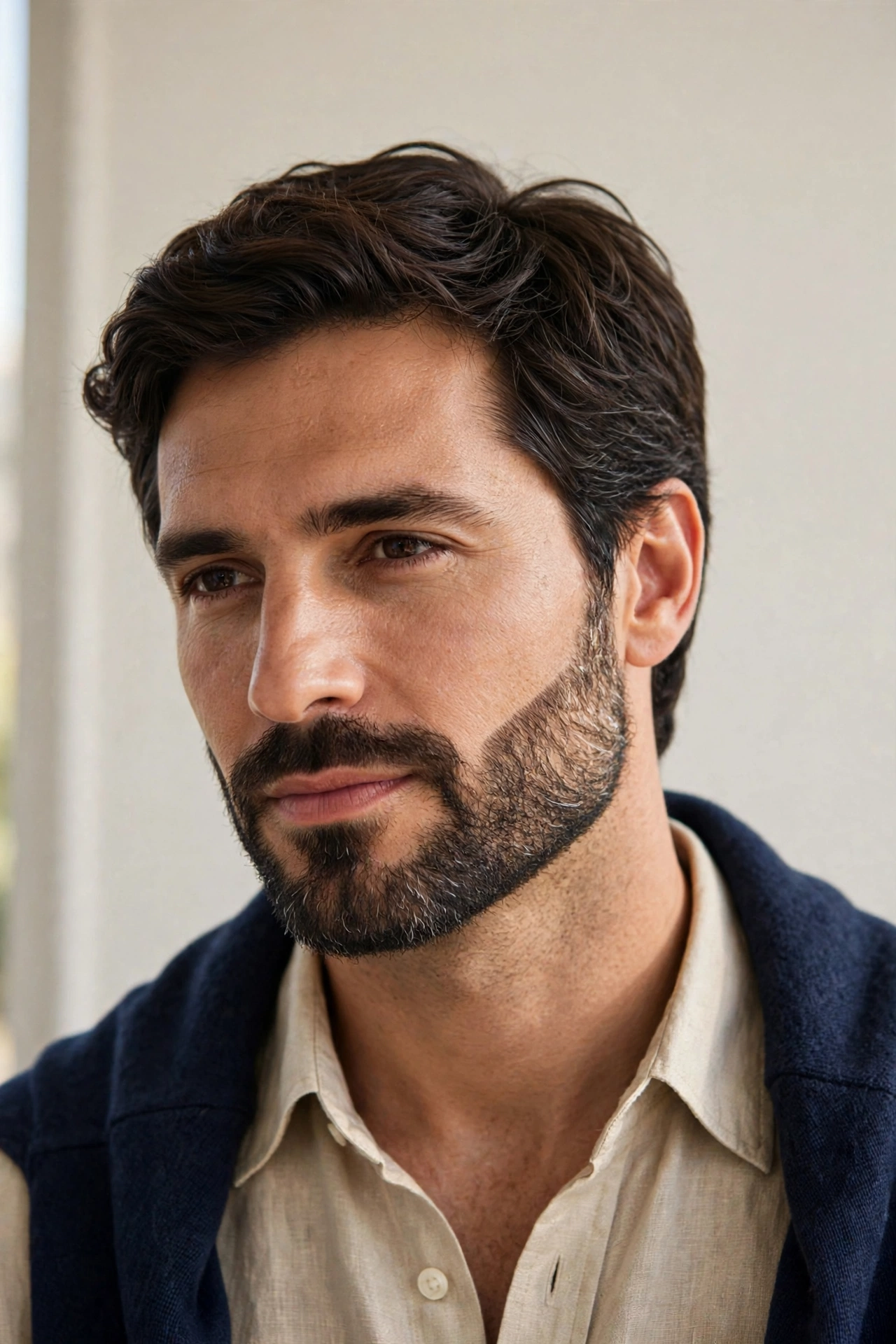
A sloped beard has a cheek line that runs on a diagonal, from high at the sideburn down toward the corner of the mouth. It slims the face and gives the Italian beard a sharp, sculpted look.
A variation, often called an L-shaped line, drops straight down from the sideburn and then turns along the jaw. It’s a bolder, more graphic version that suits men with very dense beards.
How to Shape the Italian Cheek Line at Home
You don’t need a barber to keep the cheek line clean between cuts, but you do need a steady hand and good light. Work slowly, and take a little off at a time.
Comb the beard so the hair sits in its natural direction.
Find the top of the line, roughly level with the bottom of your ear.
Picture a straight line from there to just above the corner of your mouth.
Trim everything above that line with a trimmer, without a guard, in short strokes.
Check both sides in a mirror to make sure the slope matches.
Shave the area above the line with a razor for an extra-clean finish.
Keep the line natural rather than very low. Cutting it too far down makes the beard look thin and the cheeks look bare.
17
OF 25
The Long Italian Beard
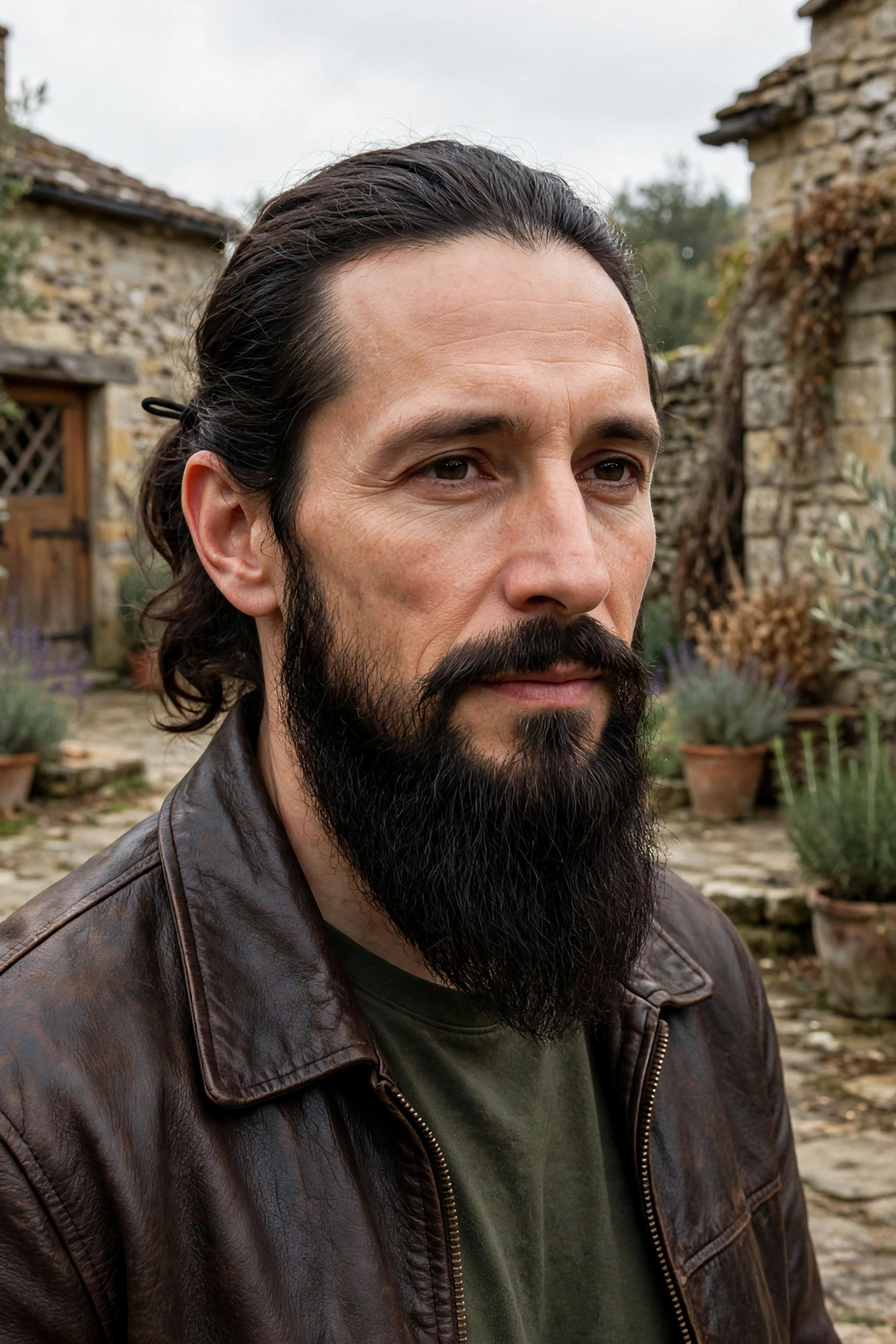
A long Italian beard keeps all the density and grooming of the classic style, just with much more length. It’s combed smooth, shaped at the bottom, and kept tidy at the cheeks and neck.
That grooming is what separates it from a wild, overgrown beard. The length is a choice, and the shape shows it.
💡 The “Oil Makes It Grow Faster” Myth
Myth: Beard oil makes a beard grow longer or faster.
Reality: Beard oil softens the hair and moisturises the skin underneath, but there’s no good evidence that it speeds up growth. Growth rate depends mainly on genetics and age.
Long beards need washing a few times a week and a daily brush. A boar-bristle brush spreads natural oils and helps the hair lie smooth.
18
OF 25
The Grey Italian Beard
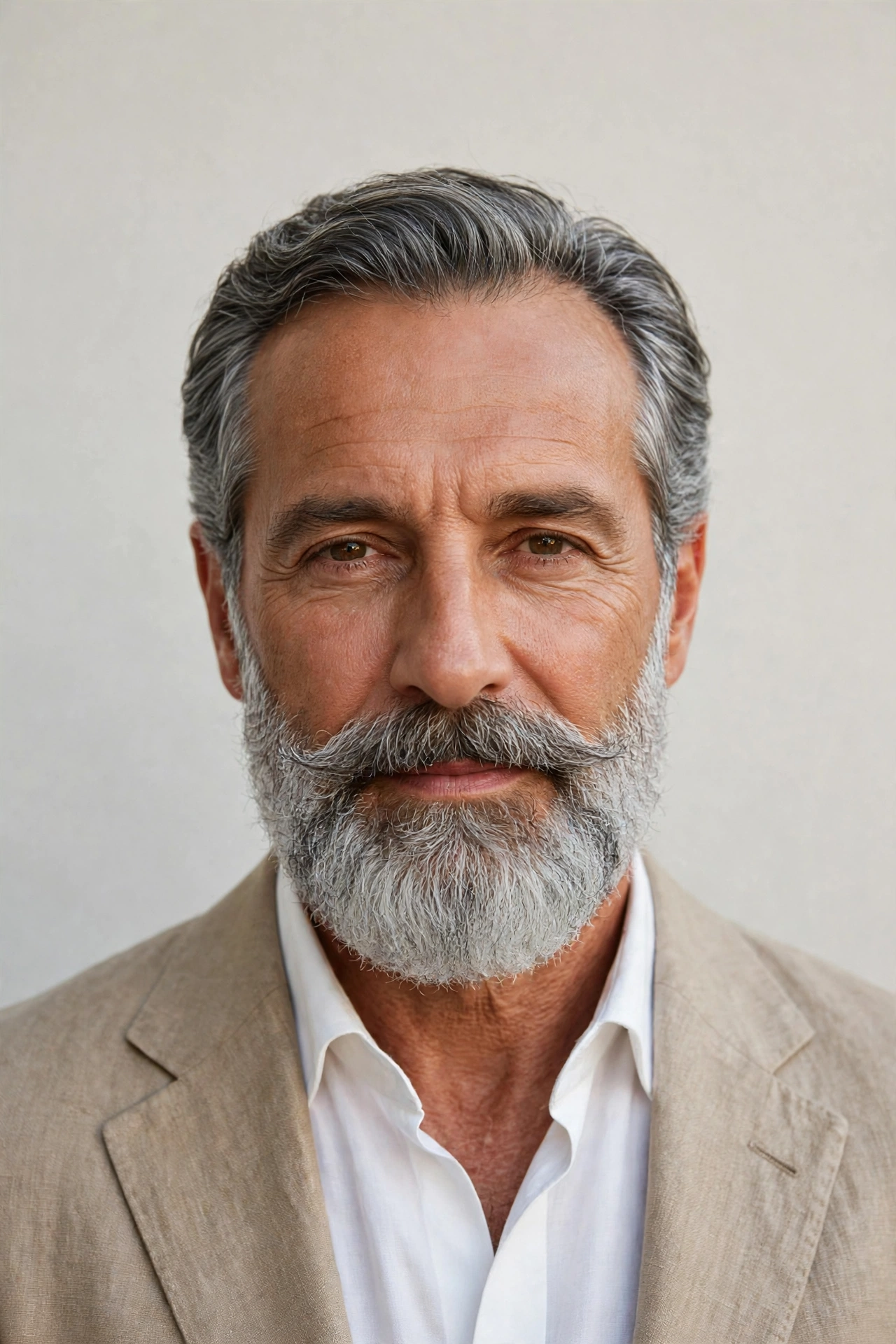
A grey Italian beard is the classic look grown older. A neatly shaped silver beard with swept-back grey hair has a distinguished, confident feel.
Grey hair can be coarser and more wiry than it used to be. Keeping the beard shorter and well trimmed helps it look neat rather than unruly.
BEFORE:
A grey beard left to grow without a shape, with a soft cheek line and a fuzzy neck.
AFTER:
A 2.5 cm beard with a defined cheek line, a crisp neckline, and a neatly trimmed moustache, so the grey looks deliberate and polished.
Keeping Grey From Turning Yellow
Grey and white beard hair can pick up a yellowish tint from sun, smoking, or hard water. Using a purple shampoo on the beard once a week helps neutralise it and keeps the silver bright.
19
OF 25
The Old Money Italian Beard

The old money version of the Italian beard is short, neat, and understated. It’s well groomed but never flashy, with a soft natural line rather than a sharp, sculpted edge.
It pairs naturally with classic clothing, like a cashmere sweater, a collared shirt, or a tailored jacket. The beard looks like it belongs to someone who doesn’t need to try hard.
📅 Wear It For
Keep the cheek line natural with this style. A very sharp or low line looks more styled than the relaxed elegance this version is going for.
20
OF 25
The Italian Beard With Curly Hair
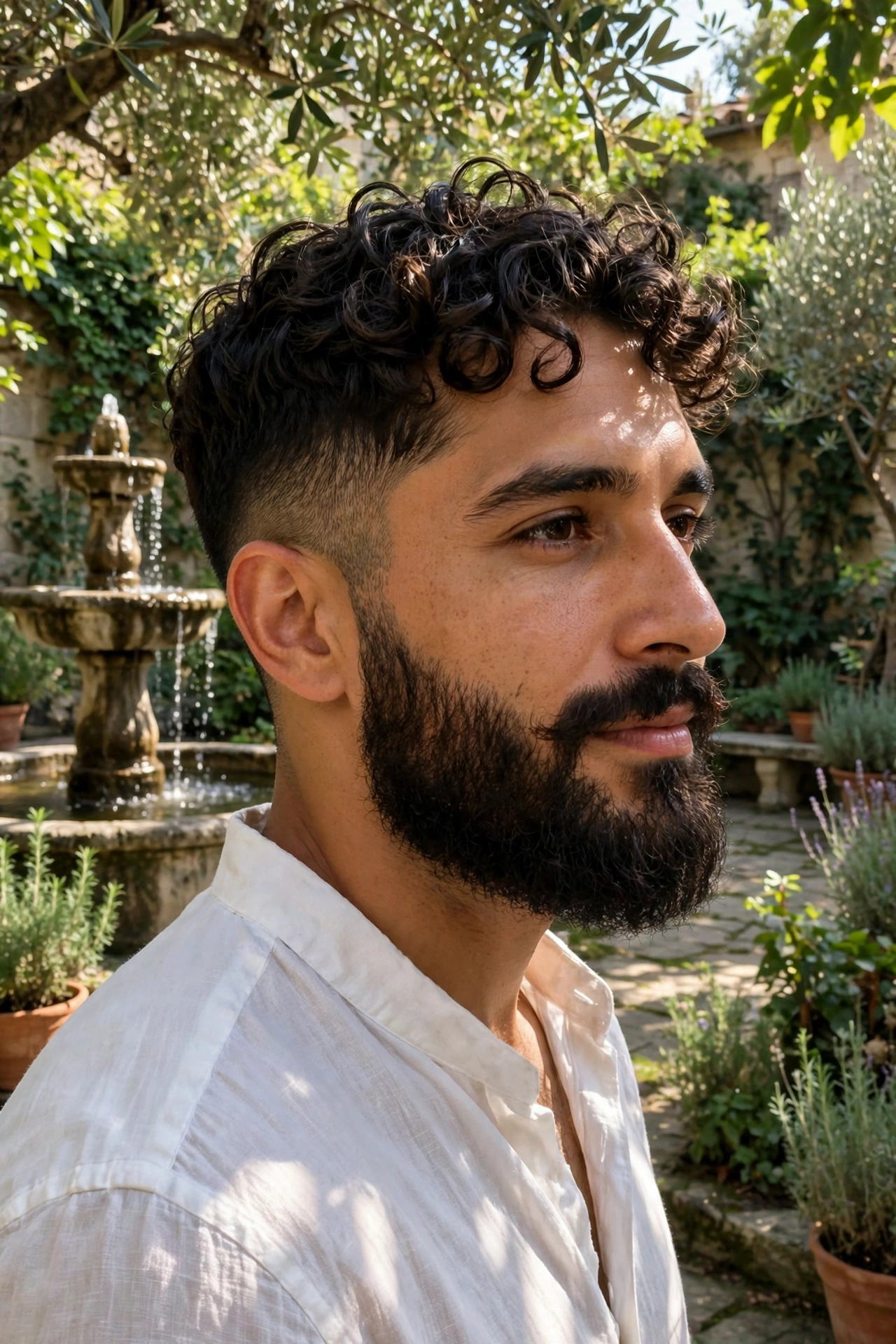
Curly hair with an Italian beard gives the style a relaxed, romantic feel. The curls add volume and texture on top, while the beard keeps the lower face neat.
The balance matters. With full curls on top, keep the beard trimmed and defined, so the face doesn’t look crowded.
💡 Shape Curly Beards Dry, Not Wet
Curly beard hair shrinks as it dries, so a trim done on a wet beard can end up much shorter than you meant. Trim dry, after combing, to see the length you’ll actually wear.
A low taper on the sides keeps the curls from adding too much width. It also gives the haircut a clean edge that matches the beard’s neat finish.
21
OF 25
The Italian Beard With Medium Wavy Hair

Medium-length waves pushed back loosely with a full beard is one of the most effortless versions of the Italian look. It’s polished but not stiff, with movement in the hair and a neat beard below.
The waves soften the face, while the beard gives it structure. Together, they look relaxed but put together.
🎨
Hair
medium waves
✂️
Beard
2–3 cm
📐
Finish
light cream, pushed back
A light styling cream gives waves hold without stiffness. Rough-dry the hair with your fingers and push it back, rather than combing it flat.
22
OF 25
The Relaxed Italian Beard With Beach Hair

The beach version of the Italian beard is looser and more relaxed. The hair is tousled and textured, and the beard is kept full but less sharply shaped.
It’s the summer, off-duty take on the style. The beard still has a neckline and a basic shape, but the edges are softer and more natural.
⚠️ Salt Water Dries a Beard Fast
Sea water and sun can leave beard hair rough and the skin underneath dry and itchy. Rinse your beard with fresh water after swimming, and use a light beard oil in the evening.
Keep the neckline tidy even with a relaxed beard. It’s the one edge that keeps a beach beard looking intentional rather than neglected.
23
OF 25
The Italian Beard for Black Men
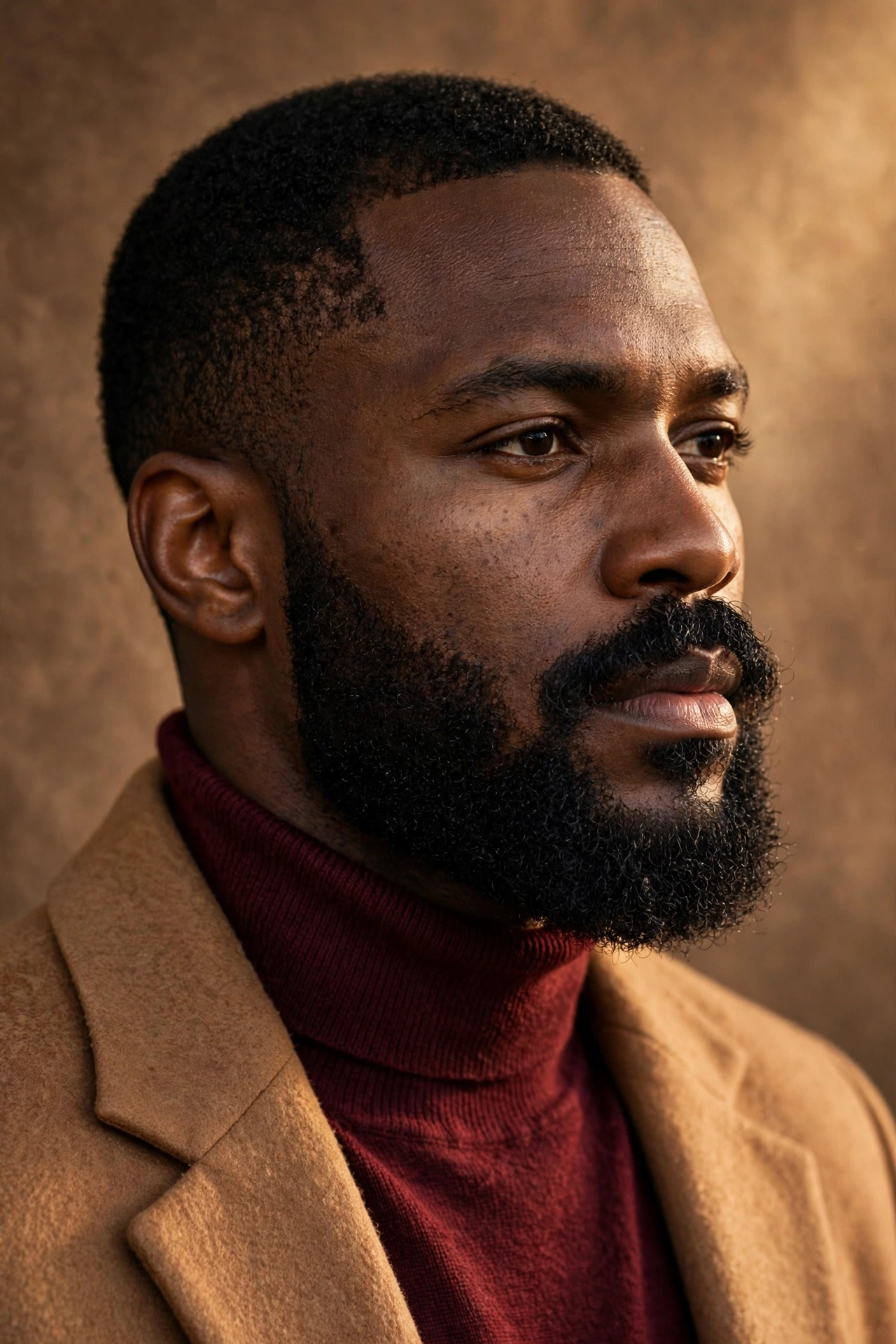
The Italian beard works beautifully with coily beard hair. Dense coils give the beard natural fullness, and a sharp cheek line with a fuller moustache gives it the polished Italian finish.
Coily beards look fuller than straight beards of the same length. That means you can keep the beard a little shorter and still have the dense look the style is known for.
🧴 Moisture Before Shape for Coily Beards
Coily beard hair tends to be dry, which makes it harder to shape neatly. A leave-in conditioner or beard oil, applied daily, keeps the coils soft and makes them easier to comb into a clean outline.
Avoiding Razor Bumps on the Cheek Line
Tightly curled hair is more likely to grow back into the skin after close shaving, which causes razor bumps. Using a trimmer instead of a razor along the cheek line and neck, rather than shaving to bare skin, helps prevent them.
24
OF 25
The Italian Beard for Indian Men

Many Indian and South Asian men grow dense, dark beards quickly, which makes the Italian beard a natural fit. The thickness gives the style its fullness without months of waiting.
Dense, fast growth also means the edges blur fast. The cheek line and neckline can lose their sharpness within a few days.
🎨
Beard
1.5–3 cm, dense
✂️
Edges
cleaned every 2–3 days
📐
Moustache
slightly fuller
A low fade on the haircut keeps a thick beard from looking heavy at the sideburns. It gives the dense beard a clean starting point at the top.
25
OF 25
The Italian Beard for Round Faces

A round face is about as wide as it is long. The Italian beard can flatter it by keeping the cheeks shorter and the chin longer, which makes the face look longer and more defined.
A little height in the haircut adds to the effect. Together, the taller top and longer chin stretch the face vertically.
✅ Do This
Keep the cheeks short and let the chin grow slightly longer, with a squared or gently pointed bottom.
🚫 Skip This
A wide, rounded beard with full cheeks, which adds width exactly where a round face doesn’t need it.
A slightly sloped cheek line, as in #16, also helps. It takes away bulk from the upper cheeks and makes the face look slimmer.
Which Italian beard are you going for?
FAQs
What is an Italian beard style?
An Italian beard is a dense, well-groomed beard with a fuller moustache, clean cheek and neck lines, and a rounded or squared shape. It’s less a single cut than a polished way of wearing a full beard.
What are Italian beard styles called?
Two classic styles have Italian names: the Verdi, a rounded beard with a distinct styled moustache, and the Garibaldi, a wide, full, rounded beard. The general “Italian beard” is usually a shorter, neatly groomed full beard.
How long should an Italian beard be?
Most Italian beards are kept around 1–4 cm. A Verdi can reach about 10 cm, and a Garibaldi up to about 20 cm.
What haircut goes with an Italian beard?
A slicked-back style is the classic pairing, but low fades, side parts, curly tops, and shaved heads all work well. The main thing is that the haircut looks as neat as the beard.
Does an Italian beard suit a round face?
Yes, if the cheeks are kept shorter and the chin a little longer. That shape makes a round face look longer and more defined.
How do I keep an Italian beard looking sharp?
Trim the length every week, clean the cheek line and neckline every few days, and brush the beard daily. Beard oil keeps the hair soft and the skin underneath healthy.