23 French Beard Styles That Frame the Face: Classic to Fork

Ask for a “French beard” in a barbershop in India, Pakistan, or much of the Middle East, and you’ll get a goatee joined to a moustache, with the cheeks and jaw shaved clean. In other countries, the same shape is usually just called a goatee, so the name depends on where you’re sitting in the chair.
Whatever you call it, it’s one of the most flexible beards there is. Because it covers only the mouth and chin, it suits patchy cheeks, sharpens soft jaws, and changes character completely with a fade, a thicker moustache, or a pointed chin. Below are 23 French beard styles, from a short classic cut to a handlebar and a forked beard, with face shapes, haircut pairings, and how to trim each one.
Short on Time? Pick Your Path
Table of Contents
- 01The Classic French Beard
- 02The Short French Beard
- 03The French Beard With Designer Stubble
- 04The Light French Beard
- 05The French Beard Without a Moustache
- 06The French Beard With a Thick Moustache
- 07The French Beard With a Handlebar Moustache
- 08The Pointed French Beard
- 09The Disconnected French Beard
- 10The French Beard With a Low Fade
- 11The Double Shade French Beard
- 12The French Beard With Short Hair
- 13The French Beard With Long Hair
- 14The French Beard With Curly Hair
- 15The French Beard With a Side Part
- 16The Grey French Beard
- 17The French Beard for Round Faces
- 18The French Beard for Oval Faces
- 19The French Beard for Square Faces
- 20The Indian French Beard
- 21The French Beard for Patchy Beards
- 22The French Fork Beard
- 23The First French Beard for Teens
01
OF 23
The Classic French Beard

The classic French beard is a moustache joined to a goatee at the corners of the mouth, forming a rounded frame around the lips. Everything outside that frame, the cheeks, jaw, and neck, is shaved clean.
It’s a sharp, defined look that puts all the focus on the centre of the face. The contrast between the full goatee and bare cheeks is what makes it work, so the cheeks need shaving every day or two.
Where the Classic Fits Among Similar Beards
The French beard is often confused with other mouth-and-chin styles. They share the same basic idea, but small details change the look.
| Style | Moustache | Chin | Cheeks |
|---|---|---|---|
| Classic French beard | Connected to the goatee | Rounded, 1–2 cm | Shaved |
| Disconnected French beard | Separate from the goatee | Rounded or squared | Shaved |
| Pointed French beard | Separate, often styled | Tapered to a point | Shaved |
| French beard without moustache | None | Rounded | Shaved |
Most men start with the classic. Once the shape suits you, it’s easy to move to a pointed or disconnected version later.
In the UK, a barber may not know what you mean by a “French beard”. Ask for a “circle beard” or a “goatee with a moustache, connected” if you want the two joined, or a “Van Dyke” if you want them separate.
The easiest way of all is to show a photo on your phone. It takes the guesswork out completely.
02
OF 23
The Short French Beard

A short French beard keeps the goatee and moustache at under a centimetre. It looks neat and professional, and it’s the easiest version to maintain at home.
Short lengths also show the outline clearly. A clean, even border around the goatee is what makes a short French beard look deliberate rather than like a few days of growth.
How to Trim a French Beard at Home
You only need a trimmer with a couple of guards and a razor for the cheeks. Work in good light, and take a little off at a time.
Trim the moustache and goatee to an even length with the same guard, for example a number 2.
Decide the width: the goatee usually looks best at about the width of your mouth.
With no guard, trim a clean line down from each corner of the moustache to the jaw.
Shape the bottom of the goatee into a soft curve just below the chin.
Shave the cheeks, jaw, and neck clean with a razor.
Comb the moustache down and trim any hairs that hang over the lip.
Check both sides in the mirror before you finish. A goatee that’s slightly wider on one side is the most common home-trimming slip.
03
OF 23
The French Beard With Designer Stubble
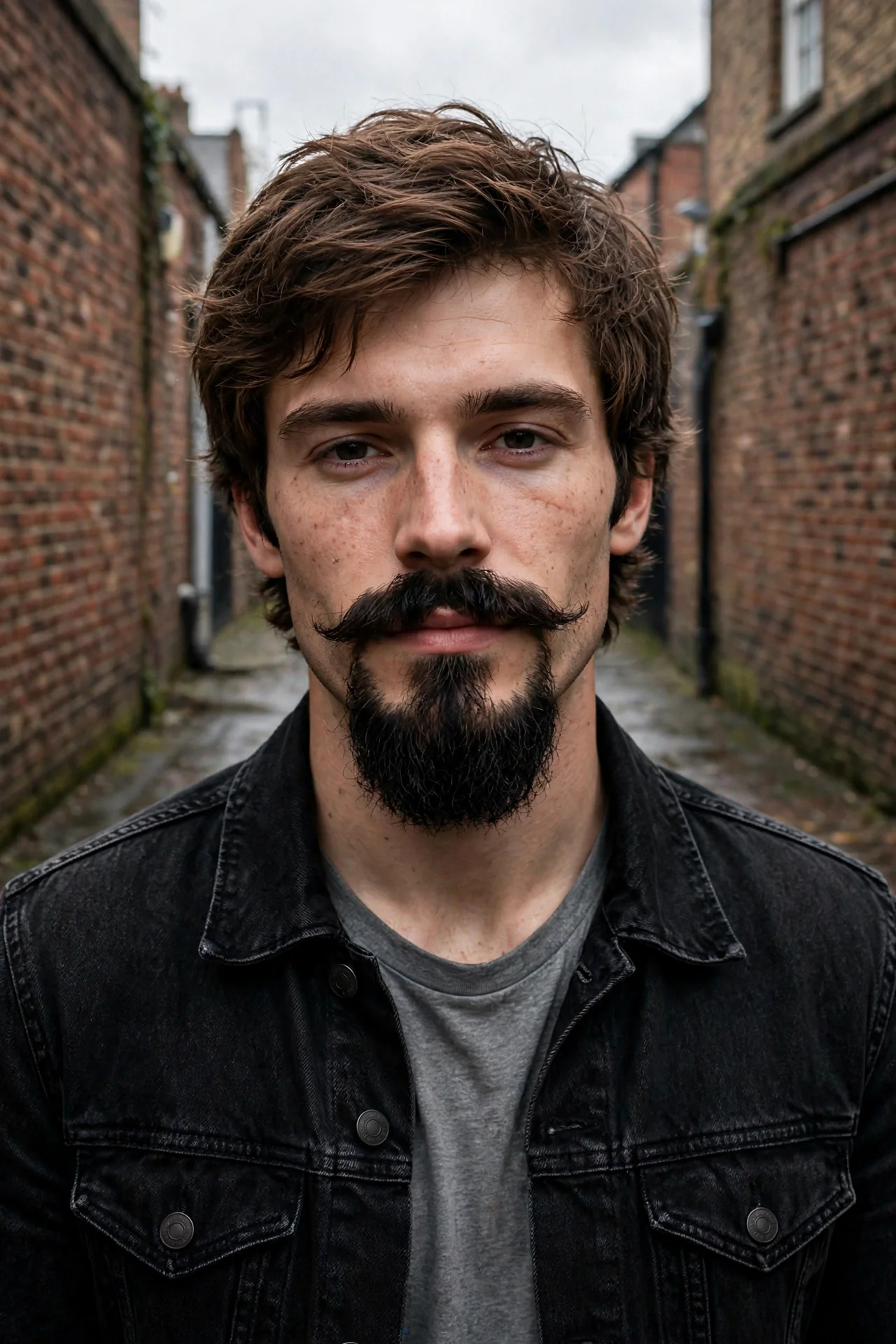
Instead of shaving the cheeks clean, this version keeps them at light stubble while the goatee and moustache grow longer. It gives the French beard a relaxed, rugged feel, like a short beard with extra weight around the mouth.
It’s also forgiving. You only need to trim the stubble every few days rather than shave daily, and there’s no harsh line between the goatee and bare skin.
✅ Do This
Keep the stubble clearly shorter than the goatee, so the French beard shape still stands out.
🚫 Skip This
Letting the stubble grow to the same length as the goatee, which turns it into an ordinary short beard.
A clean neckline matters here too. Stubble on the neck below the jaw makes the whole look scruffy, even if the goatee is neat.
04
OF 23
The Light French Beard

A light French beard works with fine or thin growth around the mouth. Because the cheeks are shaved anyway, you don’t need full coverage across the face, only enough around the lips and chin.
Many men whose cheeks fill in slowly still grow a reasonable moustache and goatee. A French beard uses exactly that growth and shaves away the rest.
💡 Let It Grow a Few Extra Millimetres
Light hair looks thinner when it’s cut very short. Keeping the goatee and moustache a few millimetres longer than you’d expect gives the shape more body and makes it easier to see.
Keep the outline soft rather than razor-sharp. A sharp edge around sparse hair can make the thin areas more noticeable.
05
OF 23
The French Beard Without a Moustache

This version keeps the goatee on the chin but shaves the upper lip. It’s a clean, simple look, and a practical option if your moustache grows in thin or patchy.
Without the moustache, all the focus goes to the chin. That makes the shape of the goatee even more important, so keep it neat and symmetrical.
Skip It If Your Chin Is Already Long
With no moustache to balance it, a goatee adds length to the lower face. On a long or narrow face, the chin can look longer still, and a classic French beard with a moustache usually balances it better.
Shave the upper lip every day. Even short regrowth there makes the style look like a moustache that’s half grown in.
06
OF 23
The French Beard With a Thick Moustache

Here the moustache is the star. It’s grown thick and full, while the goatee below stays shorter, so the weight of the style sits on the upper lip.
It’s a bold, slightly retro look. On square faces, the heavy moustache balances a strong jaw, while the short goatee keeps the chin neat.
🧴 A Little Wax for a Heavy Moustache
A small amount of moustache wax keeps a thick moustache off the lip and holds its shape through the day. Warm a pea-sized amount between your fingers, comb it through, and keep it light so the hair still looks natural.
Trim the moustache along the lip line every few days. Comb it down first, then cut only the hairs that hang past the top lip.
07
OF 23
The French Beard With a Handlebar Moustache

A handlebar moustache has long ends that are waxed and curled upward. Paired with a short goatee, it turns the French beard into a vintage statement piece.
It takes time to grow. The moustache needs to be long enough at the sides to curl, which usually means several months of letting the ends grow while trimming only the centre.
Where the Handlebar Look Tips Over: Growing a long, curled moustache over a goatee of the same length. The two compete, and the look becomes busy. Keep the goatee short, around 1 cm, so the handlebar stays the clear focus.
Style the ends daily with a firm moustache wax. Twist each side between your fingers and curl it up, then leave it to set for a minute.
08
OF 23
The Pointed French Beard

A pointed French beard keeps the moustache separate from the chin beard, and tapers the chin into a neat point. It’s often called a Van Dyke, and it’s the most refined and artistic version of the style.
The point adds length to the face, which makes it especially flattering on round and square faces. It also draws the eye down, which slims a wide jaw.
Where the Van Dyke Got Its Name
The pointed style is named after Anthony van Dyck, the 17th-century Flemish painter best known for his portraits at the court of England’s King Charles I. He and many of the men he painted wore a pointed chin beard with a separate moustache, and the shape took his name.
Keep the point modest. A gentle taper just past the chin looks polished, while a long, sharp spike can look theatrical.
09
OF 23
The Disconnected French Beard

A disconnected French beard separates the moustache from the goatee with a small clean gap at each corner of the mouth. It’s a sharp, modern variation, and it works around one of the most common thin spots in a beard.
The gap gives the face more definition. Each part stands alone, which looks cleaner than a connection that’s thin or patchy.
📌 Connected or Disconnected? Check the Corners
Grow the beard for two weeks and look at the corners of your mouth. If the hair there is full, a connected French beard looks best; if it’s thin or grows in a different direction, a disconnected one will look neater.
Keep the gap the same width on both sides. An uneven gap is the first thing people notice.
10
OF 23
The French Beard With a Low Fade

A low fade on the sides of the haircut pairs neatly with a French beard. Both keep the sides of the head and face clean, so the eye goes to the top of the haircut and the centre of the beard.
It’s sometimes called an Italian goatee with a fade. Whatever the name, it’s one of the cleanest ways to wear a French beard.
💈 Your Fade-and-Goatee Request
Ask for “a low fade on the sides, faded down to the sideburns, and the sideburns shaved off so the cheeks are clean.” Then ask for the goatee and moustache to be trimmed to the same length and outlined crisply.
The sideburns are the detail that ties the two together. Fading them down to bare skin removes the only hair between the haircut and the goatee, so the face looks clean from temple to chin.
Fades grow out within a couple of weeks. Plan a barber visit every two to three weeks, and keep the cheeks shaved at home in between.
11
OF 23
The Double Shade French Beard
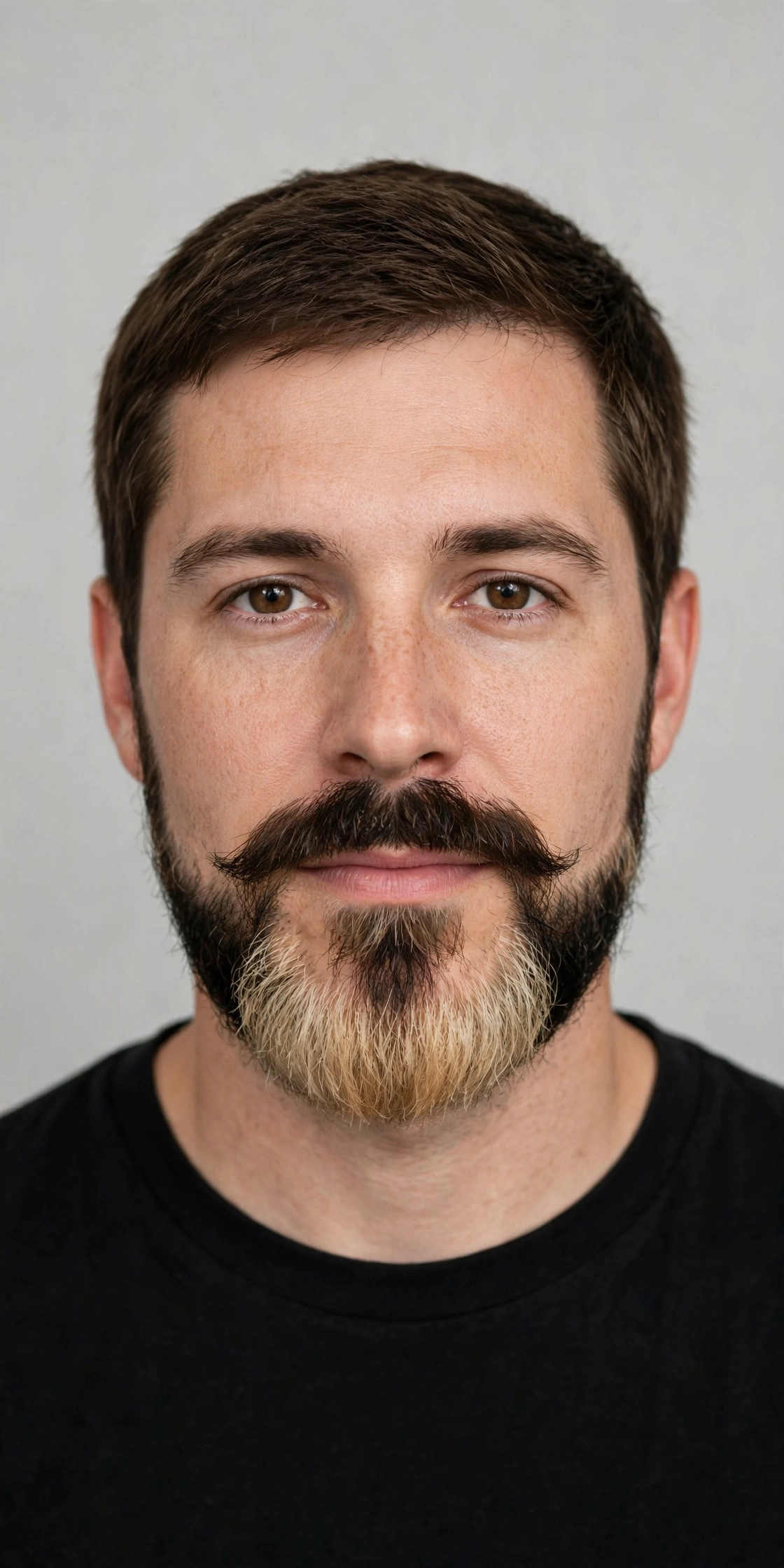
A double shade French beard uses two lengths: the centre of the chin is left fuller, and the outer edges are trimmed shorter. That shading softens the border so the goatee fades into the skin rather than ending in a hard edge.
It’s a popular request in many South Asian barbershops, especially for dense beards. The shorter edges stop a thick goatee from looking blocky.
🎨
Centre
about 1.5 cm
✂️
Edges
3–5 mm
📐
Cheeks
shaved clean
Blend the two lengths by flicking the trimmer outward at the edge of the longer section. Without that blend, you get a visible step instead of a smooth shade.
12
OF 23
The French Beard With Short Hair

A French beard with short hair, like a crew cut or a short crop, is one of the most practical combinations. Both are quick to maintain, and the look is neat enough for work.
The short haircut keeps attention on the face. The French beard then gives the lower face its shape, so the whole look feels balanced.
✅ Copy the Crew Cut Pairing
- A crew cut with about 2–3 cm on top
- Short tapered sides, around a number 2
- A French beard at about 1 cm, with a connected moustache
- Clean-shaven cheeks and a crisp neckline
Keep the goatee and haircut on similar schedules. A sharp haircut with a grown-out French beard looks mismatched.
13
OF 23
The French Beard With Long Hair

Long hair with a French beard gives a relaxed, artistic look. The hair frames the sides of the face, so the beard can stay compact around the mouth and chin.
Because long hair already covers the cheeks and jaw, the shaved cheeks don’t look bare. The goatee then gives the face a clear focal point.
⚠️ Long Hair Can Swallow a Short Goatee
A very short French beard under a full head of long hair can look lost. Let the goatee grow a little longer, around 2 cm, so it holds its own against the volume above.
Tie the hair back now and then to check the shape. With the face fully visible, any unevenness in the goatee shows more clearly.
14
OF 23
The French Beard With Curly Hair

Curly hair and a French beard pair naturally. The curls add texture on top, and the compact beard keeps the lower face neat, so the look feels balanced instead of heavy.
Curly beard hair often looks fuller than straight hair at the same length. That means a curly French beard can be kept slightly shorter and still look dense.
💡 Trim Curly Goatees When Dry
Curly hair shrinks as it dries, so trimming it wet can leave the goatee much shorter than you intended. Comb it out dry, then trim to the length you actually want to wear.
A light beard oil keeps curly hair soft and reduces frizz around the edges. It also makes the goatee easier to comb into a neat shape.
15
OF 23
The French Beard With a Side Part

A side-parted haircut with a short French beard is a classic, polished pairing. It looks smart in a suit and works in most workplaces.
The secret is keeping everything short and tidy. A short goatee, a neat moustache, and crisp lines make the style look groomed rather than bold.
📅 Wear It For
Comb the side part with a little cream or light pomade for a clean finish. A messy part next to a sharp French beard can look unfinished.
16
OF 23
The Grey French Beard

A grey French beard is a sharp choice for older men. Keeping only the goatee and moustache means the grey is neat and defined, instead of spreading across a full beard.
Grey hair is often coarser than it used to be. A compact French beard keeps that texture under control and looks distinguished rather than unruly.
BEFORE:
A full grey beard grown out on the cheeks and neck, looking shapeless and making the face look heavier.
AFTER:
A 1.5 cm salt-and-pepper French beard with clean cheeks, so the face looks sharper and the grey looks deliberate.
Grey beard hair can turn slightly yellow from sun, smoking, or hard water. A purple shampoo once a week keeps it bright and silvery.
17
OF 23
The French Beard for Round Faces

A round face is about as wide as it is long. A French beard flatters it by adding length at the chin and keeping the cheeks clean, which makes the face look longer and more defined.
Pairing it with a fade adds to the effect. Short sides slim the face, and a little height on top lengthens it further.
✅ Do This
Grow the goatee a little longer at the chin, with a gentle point or slightly squared bottom.
🚫 Skip This
A wide, rounded goatee that spreads past the corners of the mouth, which adds width to a round face.
Keep the goatee about as wide as your mouth. That narrow shape draws the eye down the centre of the face.
18
OF 23
The French Beard for Oval Faces

An oval face is longer than it is wide, with balanced proportions. Almost any French beard suits it, so you can choose based on personal style rather than correcting your face shape.
The main thing to avoid is a long, pointed chin. Too much length can make an already long oval face look stretched.
🎨
Goatee
1–2 cm, rounded
✂️
Moustache
connected or floating
📐
Avoid
long, sharp point
With an oval face, a classic rounded French beard is the easiest place to start. From there, you can experiment with a disconnected or thicker-moustache version.
19
OF 23
The French Beard for Square Faces
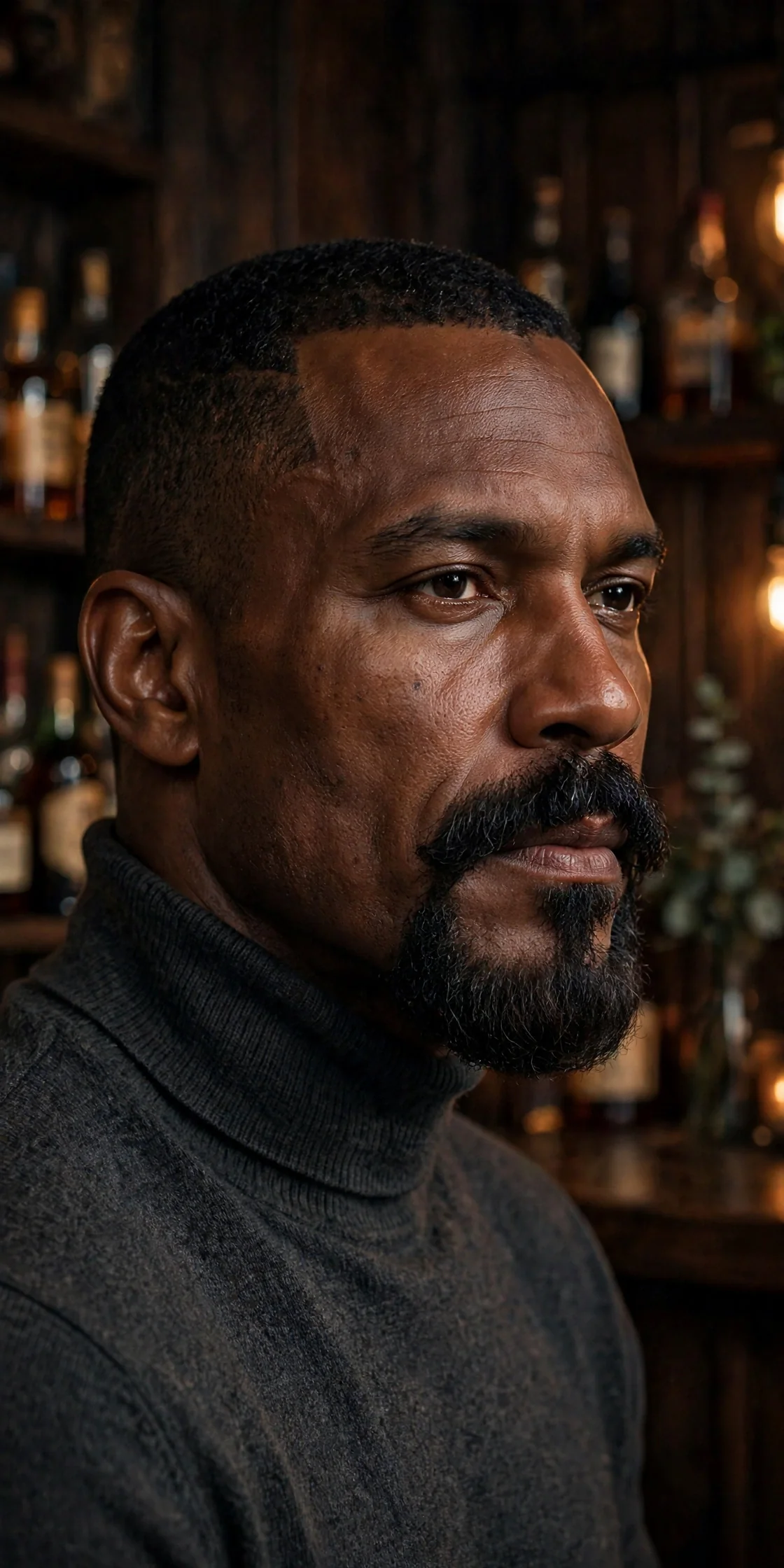
A square face has a wide, angular jaw. A French beard with a softly rounded chin softens those angles, while the clean cheeks still show off the strong jawline.
The shape of the chin is everything here. A rounded bottom balances the face, while a flat, square goatee makes it look even more angular.
💈 Round the Chin, Not the Jaw
When you trim, shape the bottom of the goatee into a gentle curve that follows the chin. Leave the jaw itself clean, so the rounded goatee contrasts with the square jaw rather than copying it.
A slightly longer goatee also helps. Extra length at the chin adds height to the face, which balances a wide jaw.
20
OF 23
The Indian French Beard

The French beard is one of the most requested beard styles in India and across South Asia. Dense, dark growth makes the goatee and moustache look full even when they’re kept short.
That density also means fast regrowth. The cheeks can look shadowed again within a day, so the contrast that makes the style sharp needs regular shaving.
🎨
Length
short, under 1.5 cm
✂️
Cheeks
shaved daily
📐
Outline
sharp, mouth-width
A short Indian French beard, at around 6–8 mm, is a neat everyday option. It’s tidy enough for most workplaces and quick to keep in shape.
21
OF 23
The French Beard for Patchy Beards

Many men with patchy beards grow their fullest hair around the mouth and chin. A French beard keeps exactly that area and shaves away the thin cheeks, so the beard looks deliberate instead of unfinished.
It’s one of the best styles for patchy growth. You get a clear beard shape without waiting months for the cheeks to fill in.
💡 The “Shaving Makes It Grow Back Fuller” Myth
Myth: Shaving patchy cheeks often will make the hair grow back thicker.
Reality: Shaving doesn’t change how thick hair grows or how many hairs you have. Regrowth can feel coarser because of the blunt cut ends, but the coverage stays the same.
If the goatee itself has small gaps, keep it a little longer. A few extra millimetres can cover thin spots that show at shorter lengths.
22
OF 23
The French Fork Beard

The French fork is very different from the South Asian French beard. It’s a long, full beard split into two prongs at the bottom, like the tines of a fork.
It takes months of growth, since the beard needs enough length at the chin to divide. The cheeks and jaw are part of the beard rather than shaved.
⚠️ The Fork Needs Density at the Chin
If the beard is thin at the chin, the two prongs look sparse and stringy. This style only works well when the hair at the bottom of the beard is thick enough to split into two full sections.
Shape the prongs by combing the beard down, parting it at the centre of the chin, and trimming each side into a slight taper. A little beard balm helps hold the split in place.
23
OF 23
The First French Beard for Teens

Early facial hair usually grows first on the upper lip and chin. A simple, short French beard makes use of that growth and looks neater than patchy stubble across the whole face.
Keep it very short and simple. A light, even goatee and moustache looks natural on young facial hair, while a sharply sculpted shape can look overdone.
💡 Trimmer Before Razor for First Beards
A trimmer with a short guard is gentler on young skin than a razor. Trim the goatee and moustache to an even length, and shave the cheeks lightly with the grain.
If the growth is very light, a clean shave may look tidier for now. Facial hair usually fills in over the next few years.
Which French beard are you going for?
FAQs
What is a French beard?
A French beard is a goatee joined to a moustache around the mouth, with the cheeks and jaw shaved clean. The name is widely used in South Asia; elsewhere, the same style is usually called a goatee.
Which face shape suits a French beard?
Most face shapes can wear one. Round and square faces suit a slightly longer or pointed chin, oval faces suit almost any shape, and long faces suit a shorter goatee with a moustache.
How do I trim a French beard at home?
Trim the goatee and moustache to an even length, outline the goatee at about the width of your mouth, round the bottom, and shave the cheeks and neck clean.
Can I have a French beard without a moustache?
Yes. Keeping just the goatee on the chin works well if your moustache grows in thin, though the shape of the goatee becomes more important.
Is a French beard good for patchy beards?
Yes. It keeps the area around the mouth and chin, where growth is usually fullest, and shaves away thin or patchy cheeks.
How long does it take to grow a French beard?
Most men can grow a short French beard in one to three weeks. A pointed or handlebar version takes longer, often several months.