22 Fulani Braids for Men That Frame the Face: Bold Heritage Style

Fulani braids mix two directions in one style. A centre row runs from the front to the back, while side braids sweep down towards the face or ears, so the pattern frames the face in a way straight-back cornrows don’t.
Below are 22 Fulani braids for men, teens and boys. They cover classic, long and short styles, fades and tapers, beads and cowrie shells, zigzag, stitch, flip-over and design parts, barrel twist and twist combinations, curly hair, locs, extensions, ponytails and beards. Each one covers what to ask your braider, how long it lasts and how to keep your edges healthy.
Short on Time? Pick Your Path
Table of Contents
- 01Classic Fulani Braids
- 02Fulani Braids With a Low Fade
- 03Fulani Braids With a Taper
- 04Long Fulani Braids
- 05Short Hair Fulani Braids
- 06Fulani Braids With Beads
- 07Fulani Braids With Cowrie Shells
- 08Fulani Braids With Zigzag Parts
- 09Fulani Braids With a Heart Design
- 10Stitch Fulani Braids
- 11Flip-Over Fulani Braids
- 12Fulani Braids With a Bold Centre Braid
- 13Fulani Braids Into Barrel Twists
- 14Fulani Braids With Twists at the Back
- 15Fulani Braids on Curly Hair
- 16Fulani Braids on Locs
- 17Fulani Braids With Added Extensions
- 18Fulani Braids Into a Ponytail
- 19Fulani Braids With a Beard
- 20Simple Fulani Braids for Beginners
- 21Teen Fulani Braids
- 22Boys’ Fulani Braids
01
OF 22
Classic Fulani Braids
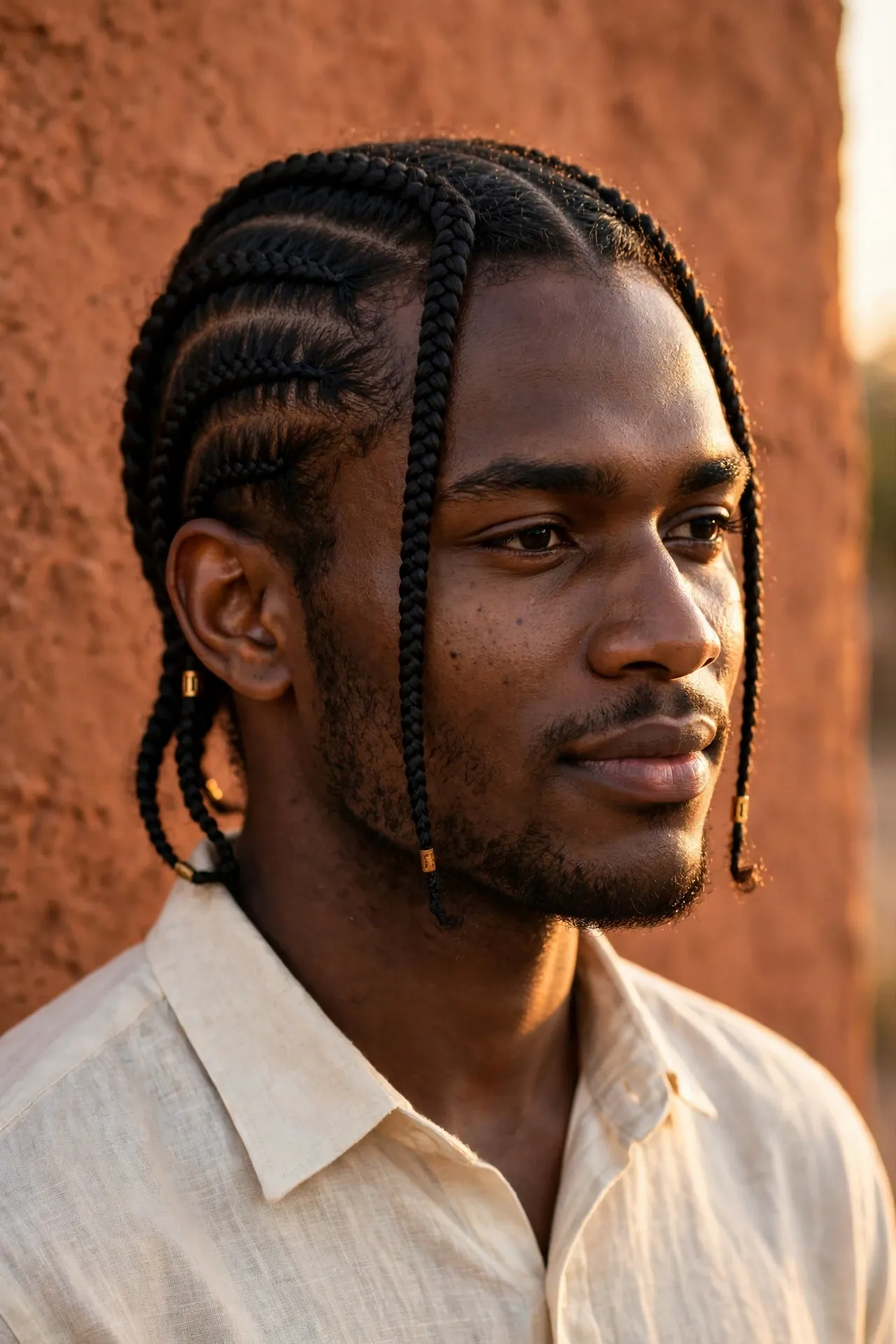
Classic Fulani braids combine a centre braid running front to back with side braids sweeping down towards the ears. The mix of directions is what makes the style recognisable.
The side braids frame the face, which suits oval and long faces especially well. The centre braid draws the eye upward.
A Fulani style is built from a few parts. Here’s what each one does.
| Part | Where It Sits | What It Adds |
|---|---|---|
| Centre braid | Middle of the head, front to back | Height and structure |
| Side cornrows | Sides, angled towards the ears | Frames the face |
| Back braids | Behind the ears and at the nape | Length and hang |
| Parts | Between every braid | Sharp, clean pattern |
| Beads or shells | On braid ends or along braids | Personal detail |
You can change any one part without losing the Fulani look. A fade at the sides, beads at the ends or a design in the parts all build on the same base.
02
OF 22
Fulani Braids With a Low Fade
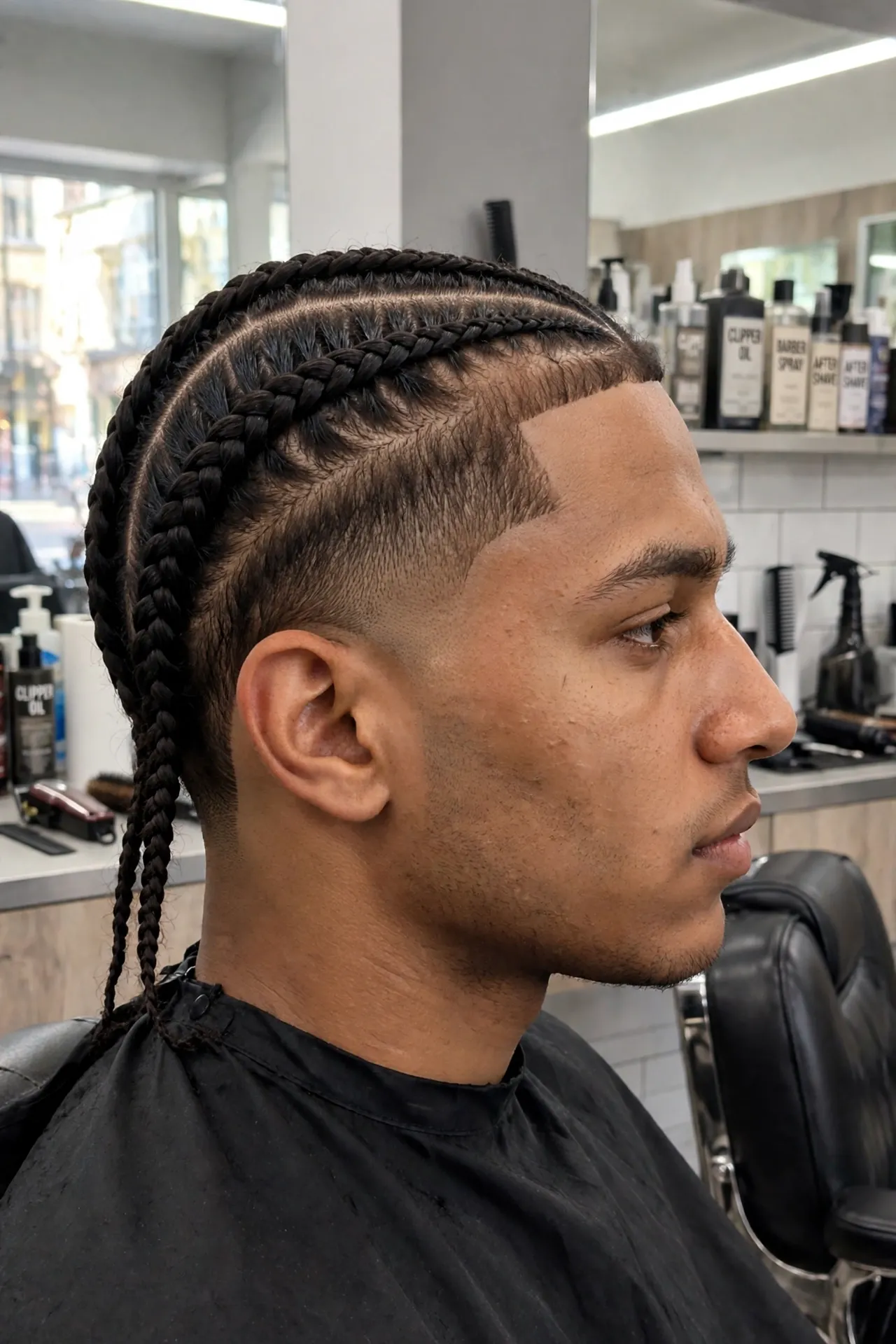
Fulani braids with a low fade braid the top and keep the area around the ears and nape faded short. The fade makes the braids stand out and keeps the style tidy.
The fade grows out faster than the braids. Plan a quick fade touch-up halfway between braid appointments.
✅ Do This
Get the fade done first, so the braider can plan the side braids around the faded edge.
🚫 Skip This
Don’t fade too high, because the side braids need enough hair to angle down towards the ears.
A low fade suits most face shapes. A higher fade makes the braided top look narrower.
03
OF 22
Fulani Braids With a Taper
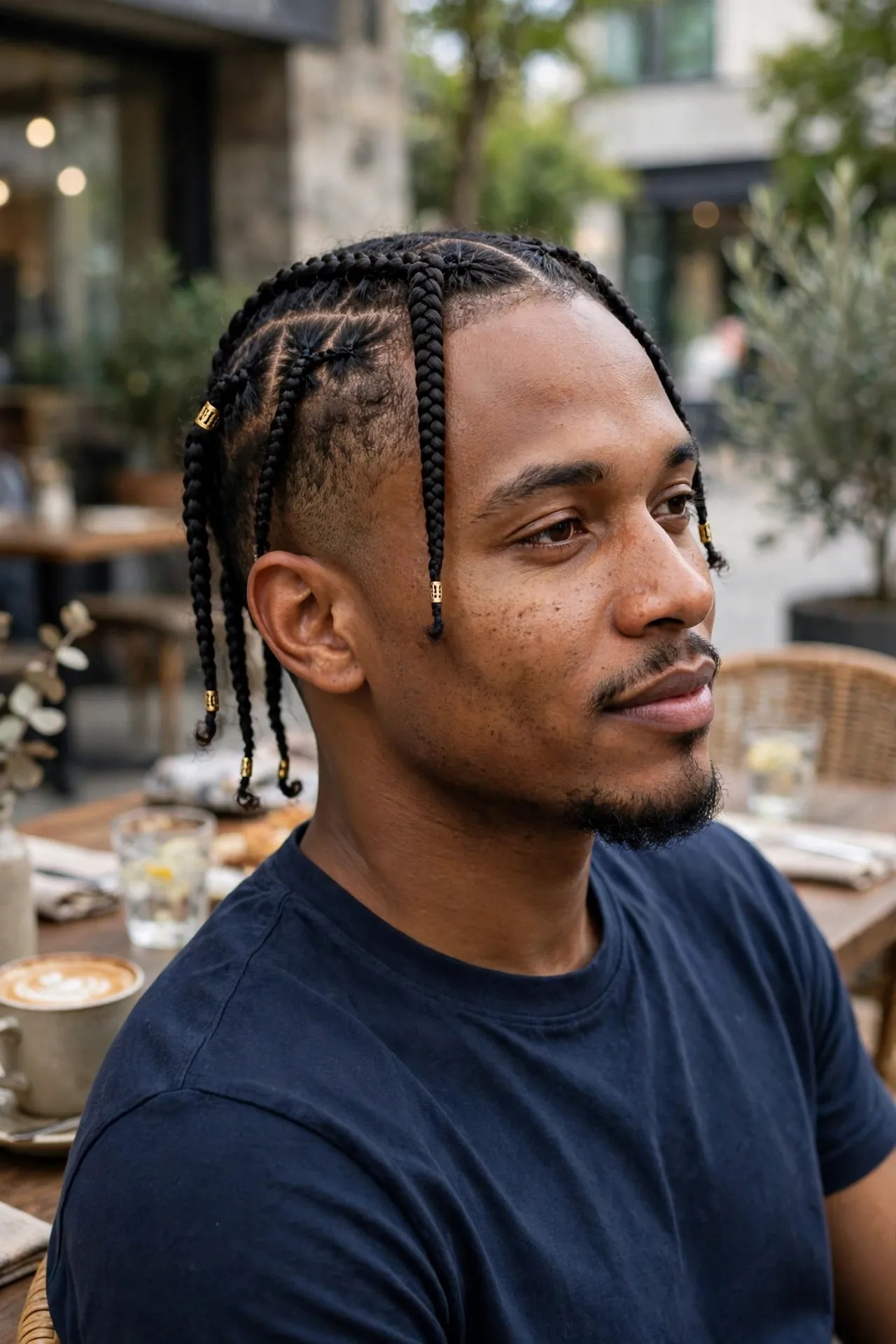
Fulani braids with a taper only shorten the hair at the temples and nape. The outer braids stay fuller, so the style looks softer than with a full fade.
🎨
Braids
centre and sides
✂️
Edges
soft taper
📐
Upkeep
every 3 weeks
A taper grows out more evenly than a fade. It’s a good choice for work and school.
04
OF 22
Long Fulani Braids
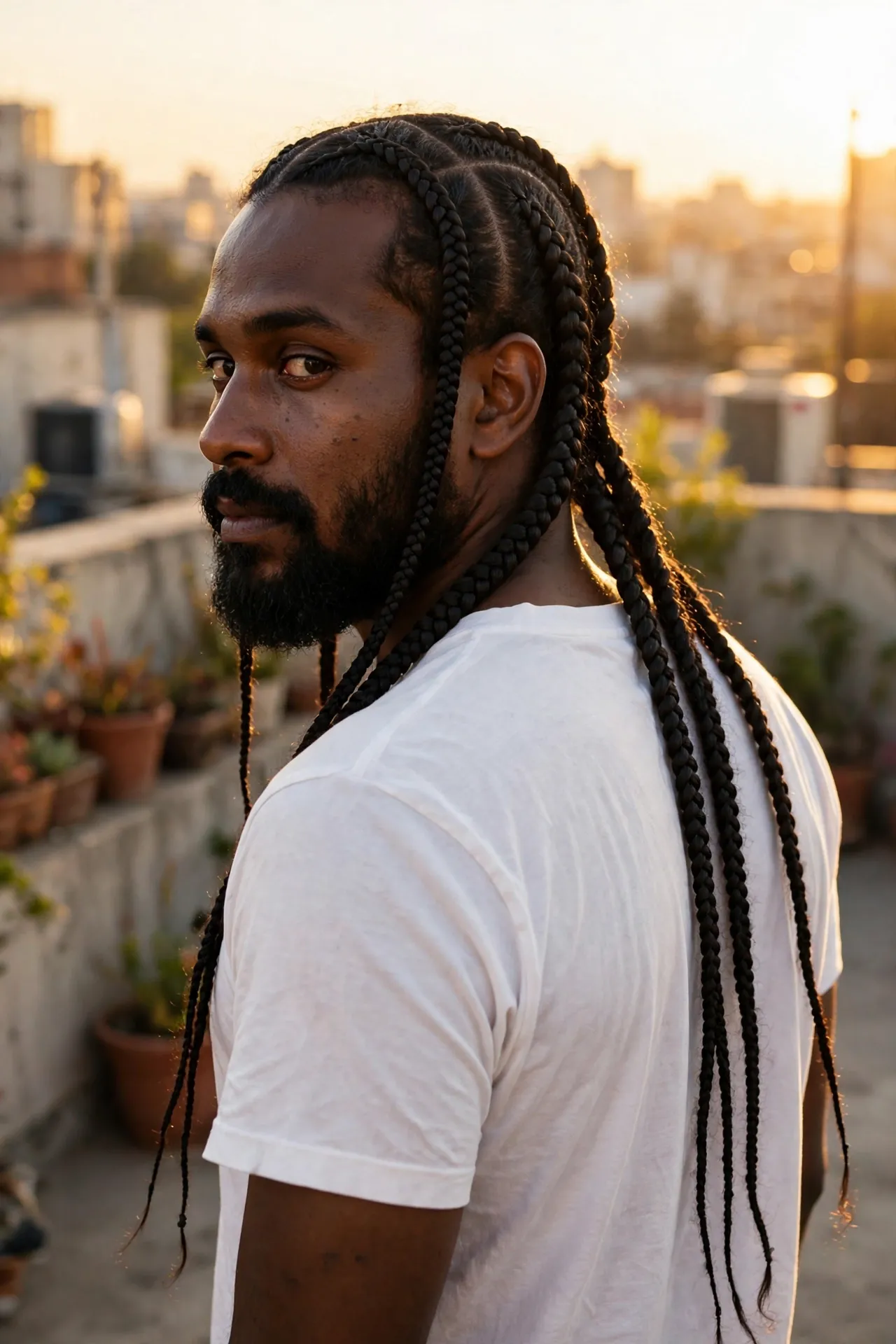
Long Fulani braids let the braids hang past the shoulders. The length gives the style movement and shows off the pattern from every angle.
Where Fulani Braids Come From
The style takes its name from the Fulani, also called the Fulbe or Peul. According to Britannica, they are a mainly West African people concentrated in countries including Nigeria, Mali, Guinea, Senegal and Niger, and were originally herders. OkayAfrica describes the traditional style as long braids looped or hanging to frame the face, with braids at the centre of the head, often decorated with coins, beads or cowrie shells that could signal wealth, status or marital status.
Long braids get heavy over time. Keep them loose at the scalp so the weight doesn’t pull on your edges.
05
OF 22
Short Hair Fulani Braids
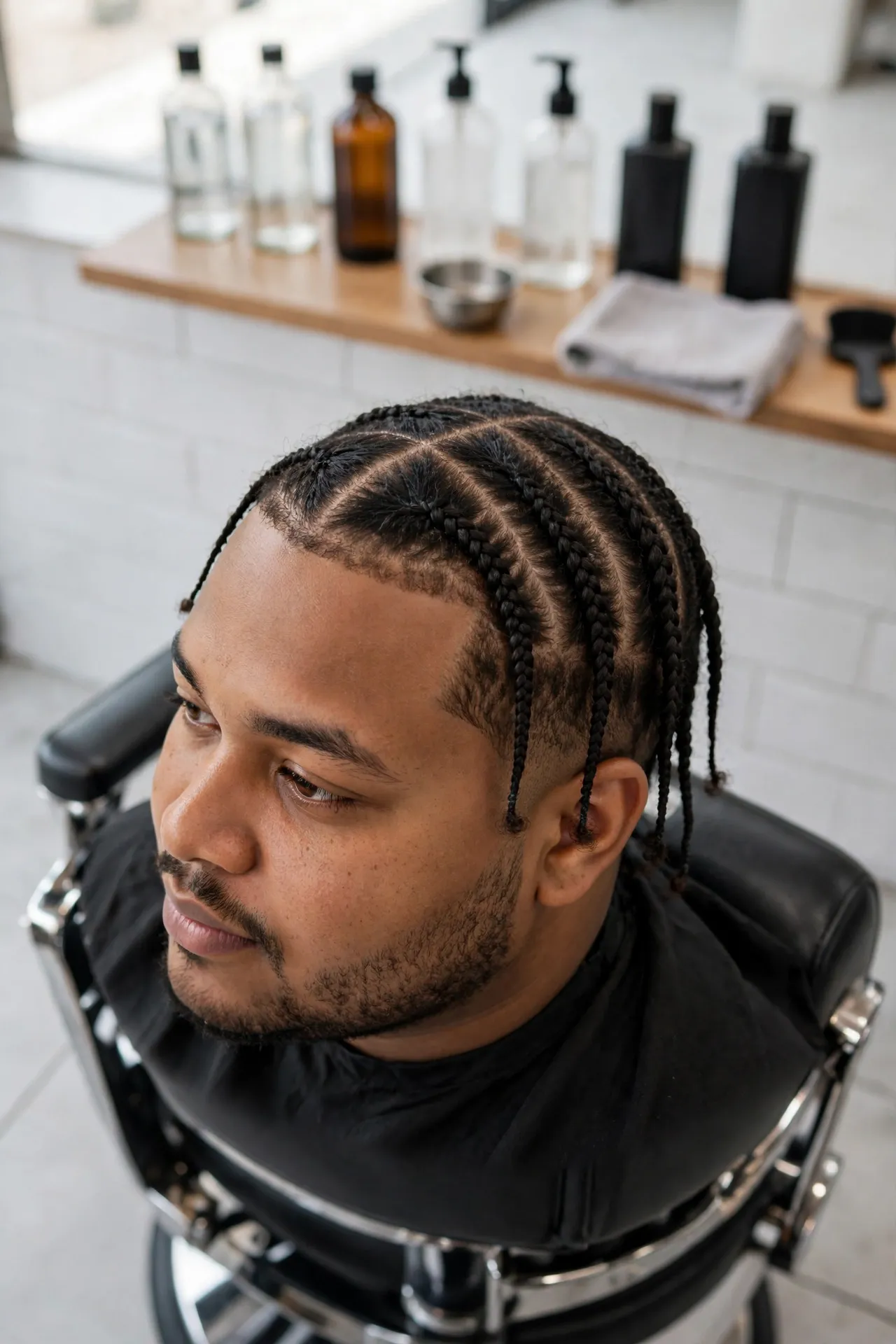
Short hair Fulani braids use thin rows, so shorter hair can still hold the pattern. The braids end at the nape instead of hanging long.
Short braids loosen faster, since there’s less hair holding each row. Plan to redo them every couple of weeks.
💡 The “Fulani Braids Need Long Hair” Myth
Myth: You can’t get Fulani braids without long hair.
Reality: Many braiders can create a Fulani pattern on hair around two inches long using thin rows. The braids just end at the nape rather than hanging.
06
OF 22
Fulani Braids With Beads
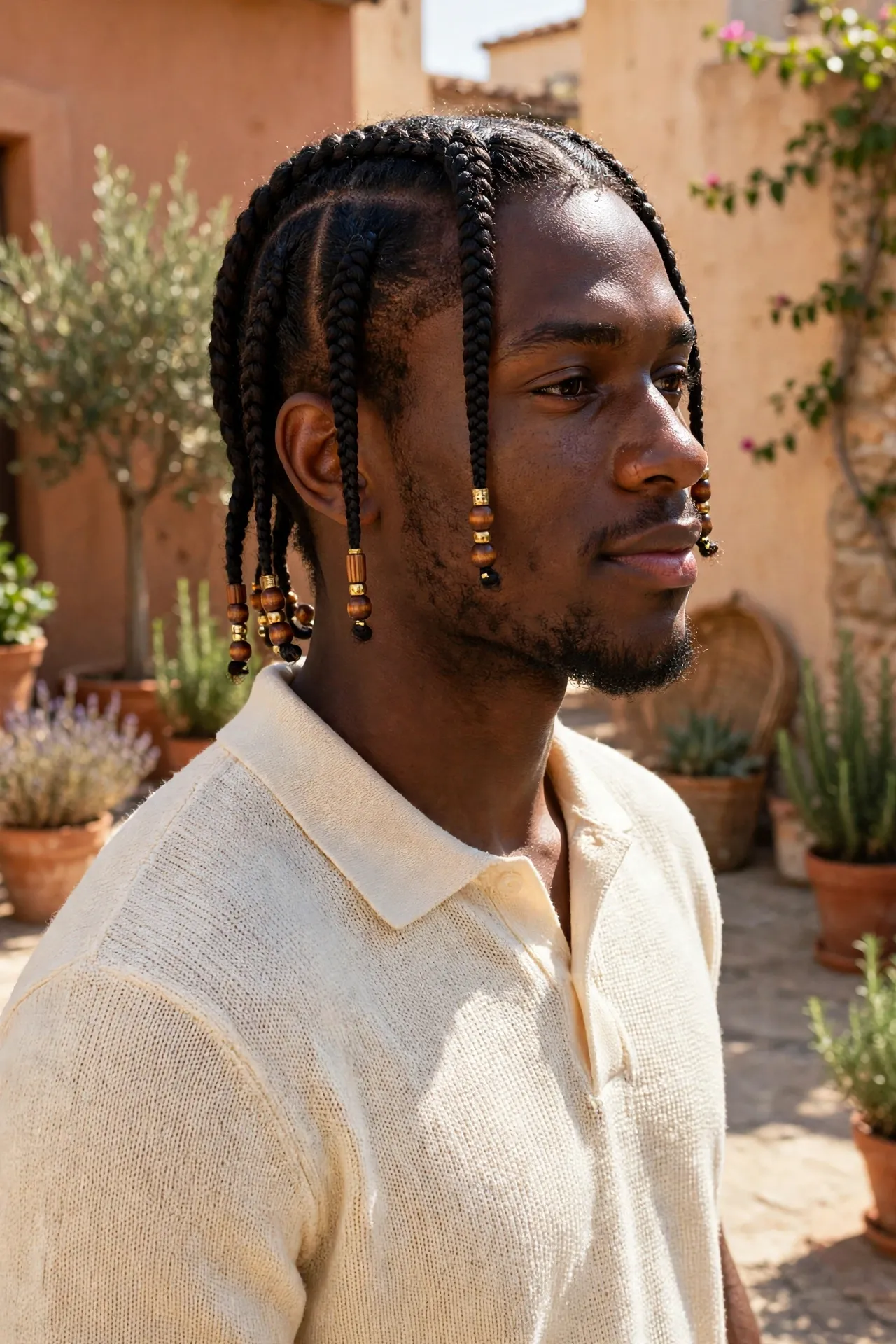
Fulani braids with beads add small beads to the ends or along the braids. Wooden, gold or silver beads look striking against dark braids.
Beads are part of the style’s traditional look. Keep them light and few, especially on men’s styles.
⚠️ Heavy Beads Pull on the Hairline
Large or heavy beads add weight to every braid, which pulls on the scalp all day. Choose small, lightweight beads, and skip them on the braids nearest your edges.
07
OF 22
Fulani Braids With Cowrie Shells
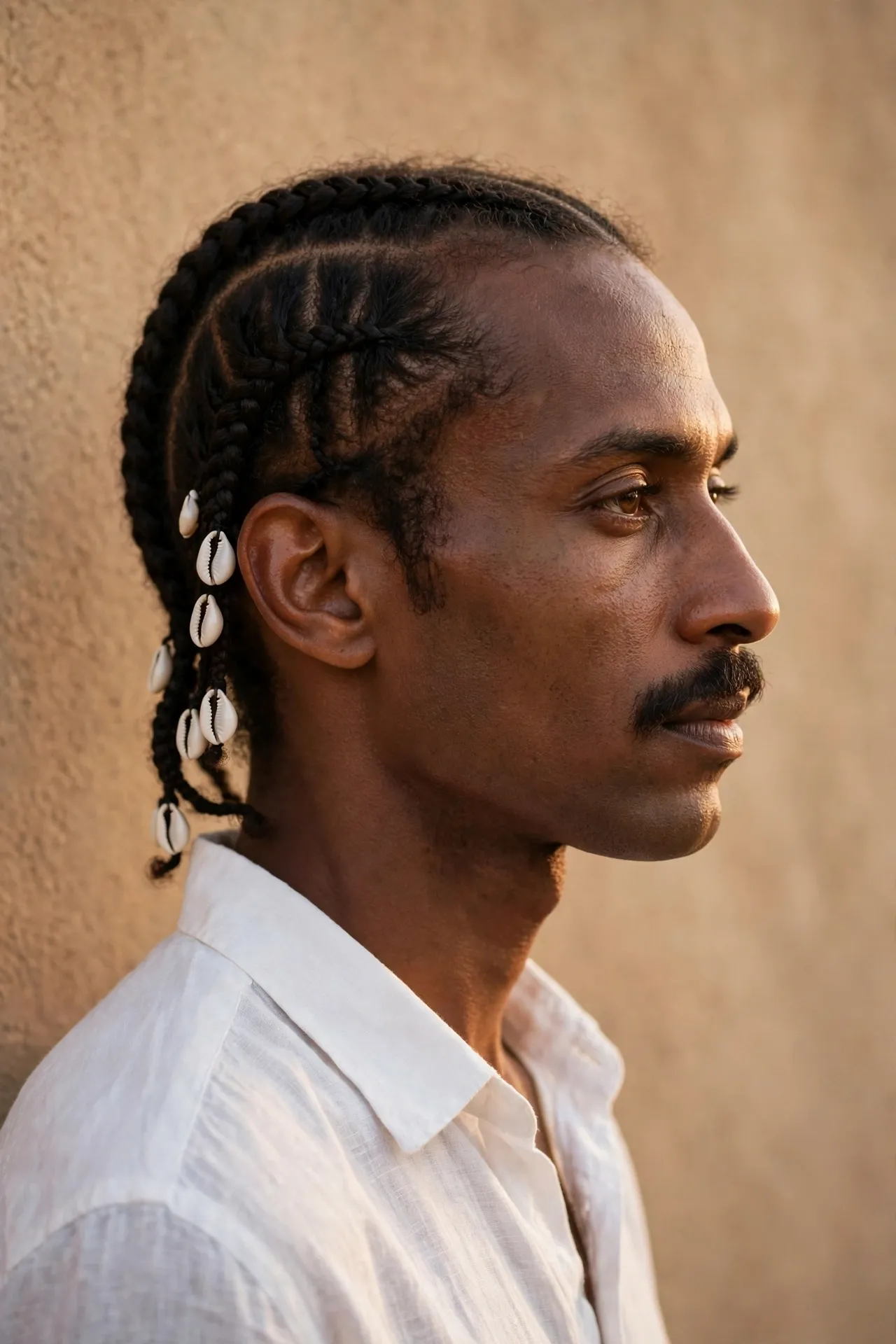
Fulani braids with cowrie shells add small white shells along the braids or at the ends. They give the style a heritage-inspired finish.
A few shells look better than many. Two or three on each side keep it subtle.
📌 Shells Can Snag on Pillows and Collars
Cowrie shells have rough edges that can catch on fabric. A satin durag or pillowcase at night stops them pulling on your braids.
08
OF 22
Fulani Braids With Zigzag Parts
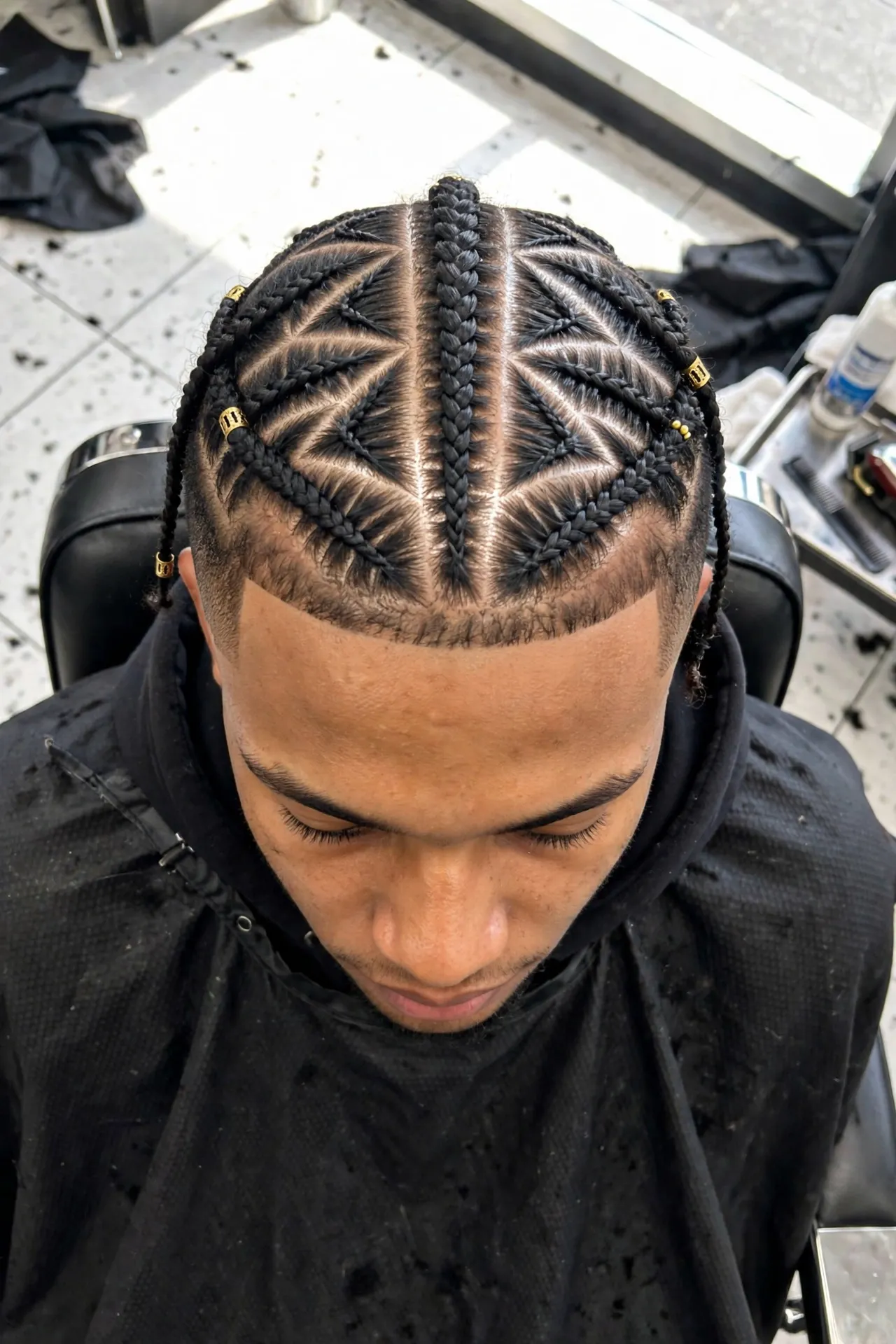
Fulani braids with zigzag parts add sharp zigzag lines between the side braids. The centre braid stays straight, so the zigzags stand out.
Zigzag parts take more time and skill than straight ones. Choose a braider who has done designs before.
A clean zigzag looks sharp, but a shaky one looks messy fast. Check a braider’s past work first.
✅ Copy This Zigzag Fulani Style
- One straight centre braid from front to back
- Three or four side braids on each side
- Sharp zigzag parts between the side braids
- A low taper at the temples and nape
- A light oil on the parts once braided
09
OF 22
Fulani Braids With a Heart Design
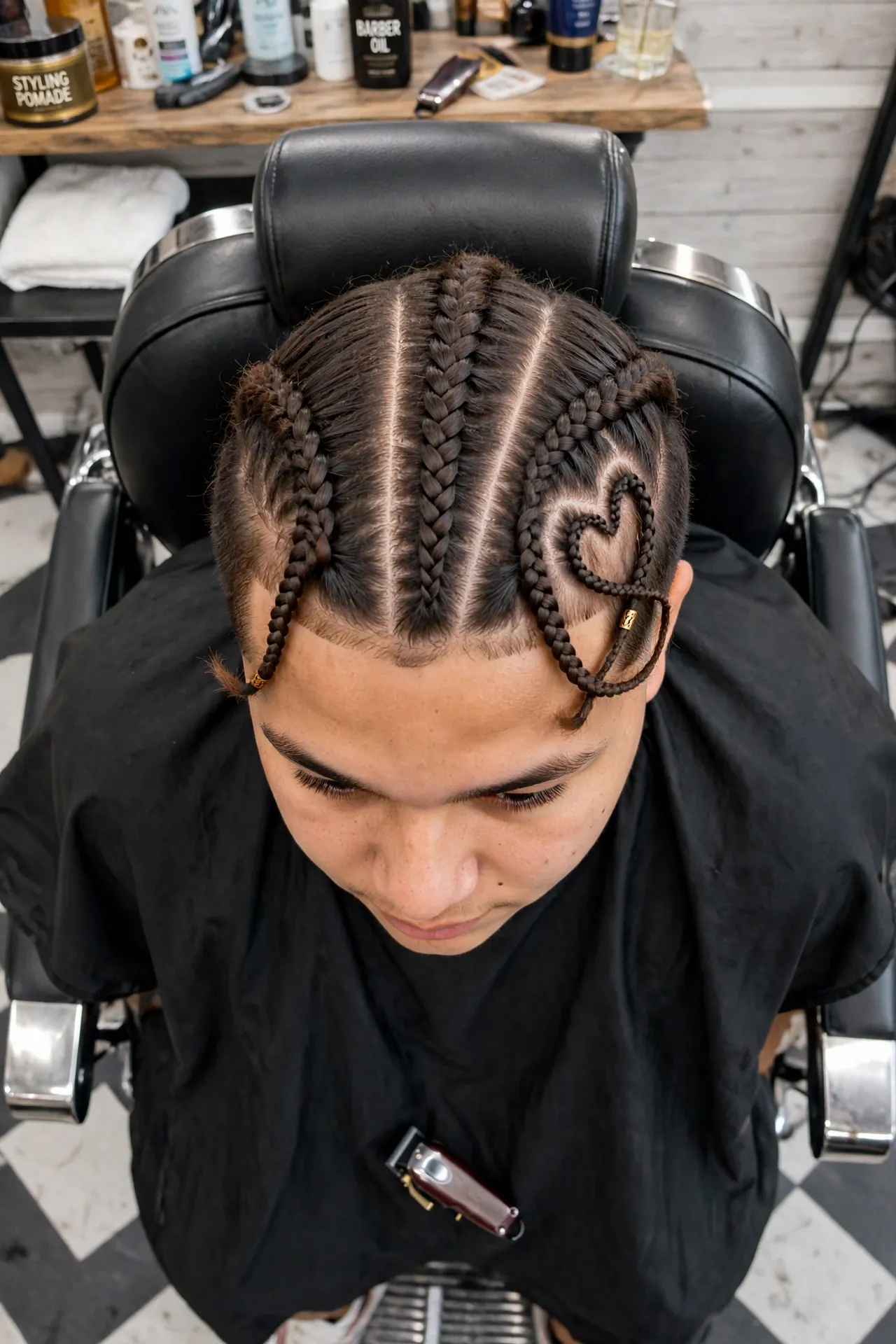
Fulani braids with a heart design curve two side braids into a small heart near the temple. It’s a playful detail on top of the classic pattern.
Keep the design to one spot. The rest of the braids should stay simple.
Skip It If You Want a Low-Key Look
Designs like hearts draw attention. For work or school, plain Fulani rows are easier to wear every day.
10
OF 22
Stitch Fulani Braids
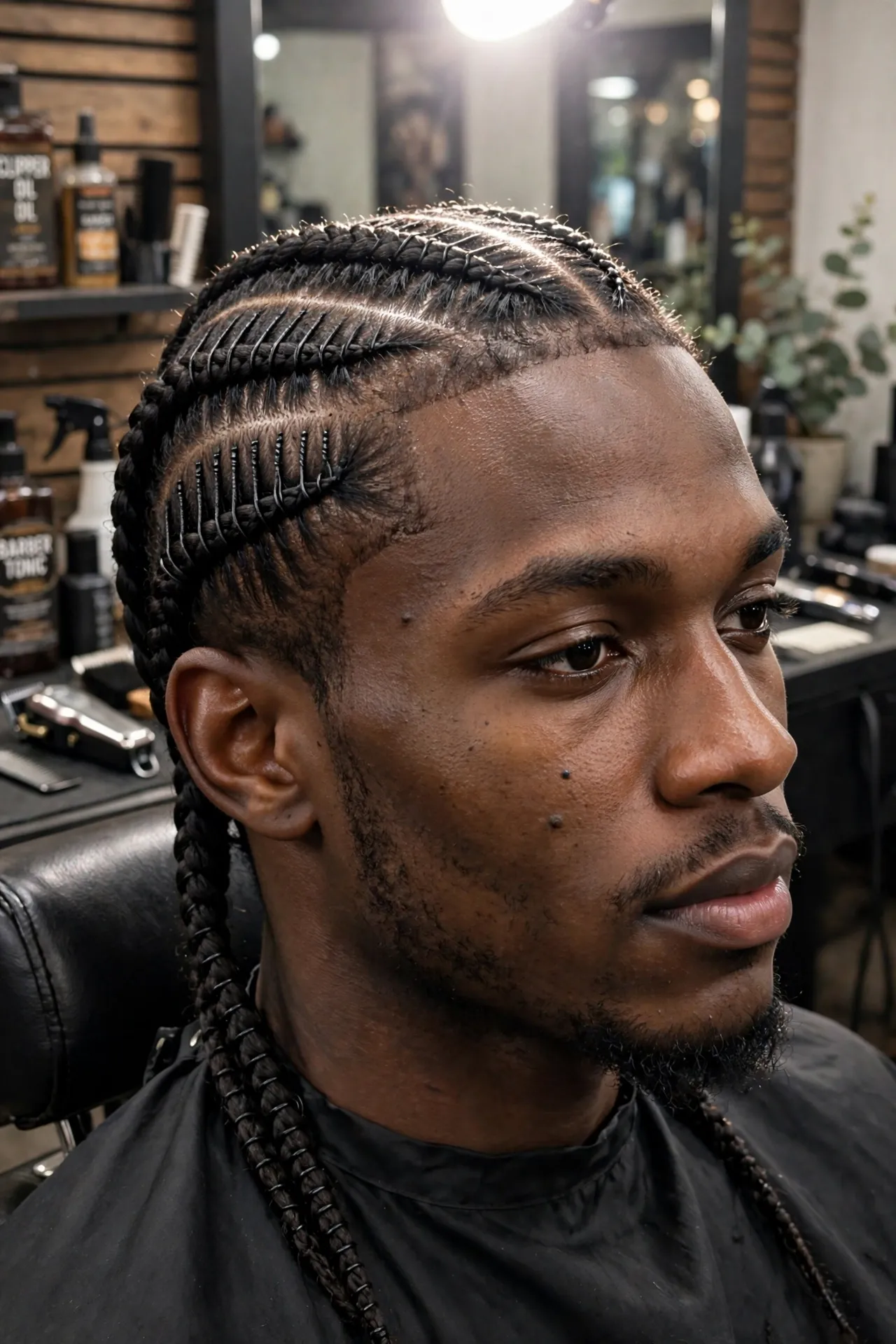
Stitch Fulani braids have small horizontal lines along each braid, created by adding hair in small sections. The stitches make the pattern look extra crisp.
Stitches look best on the centre braid and the longest side braids. They highlight the shape of the style.
💈 Your Stitch Fulani Request, Word for Word
Tell your braider: “Fulani braids with one centre braid and four side braids on each side, with stitches on every braid, not too tight at the edges.” Ask to see their past stitch work first.
11
OF 22
Flip-Over Fulani Braids
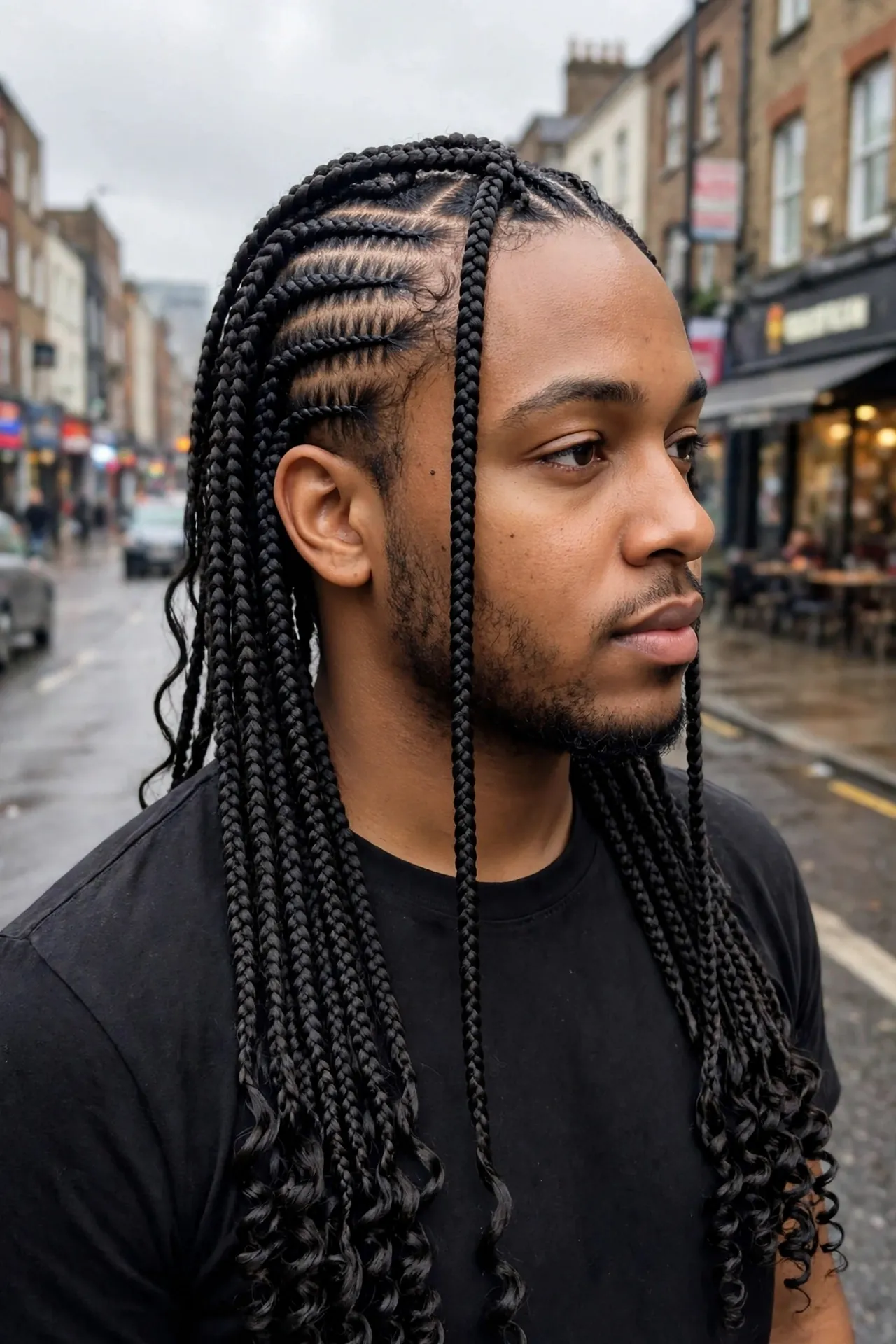
Flip-over Fulani braids braid one side towards the other, so the braids flip over the top of the head. It looks like a side part with braids swept across.
The style looks different from each side. It’s a good choice if you want something less symmetrical.
The flipped side carries more weight. Ask your braider to keep that side loose at the roots.
12
OF 22
Fulani Braids With a Bold Centre Braid
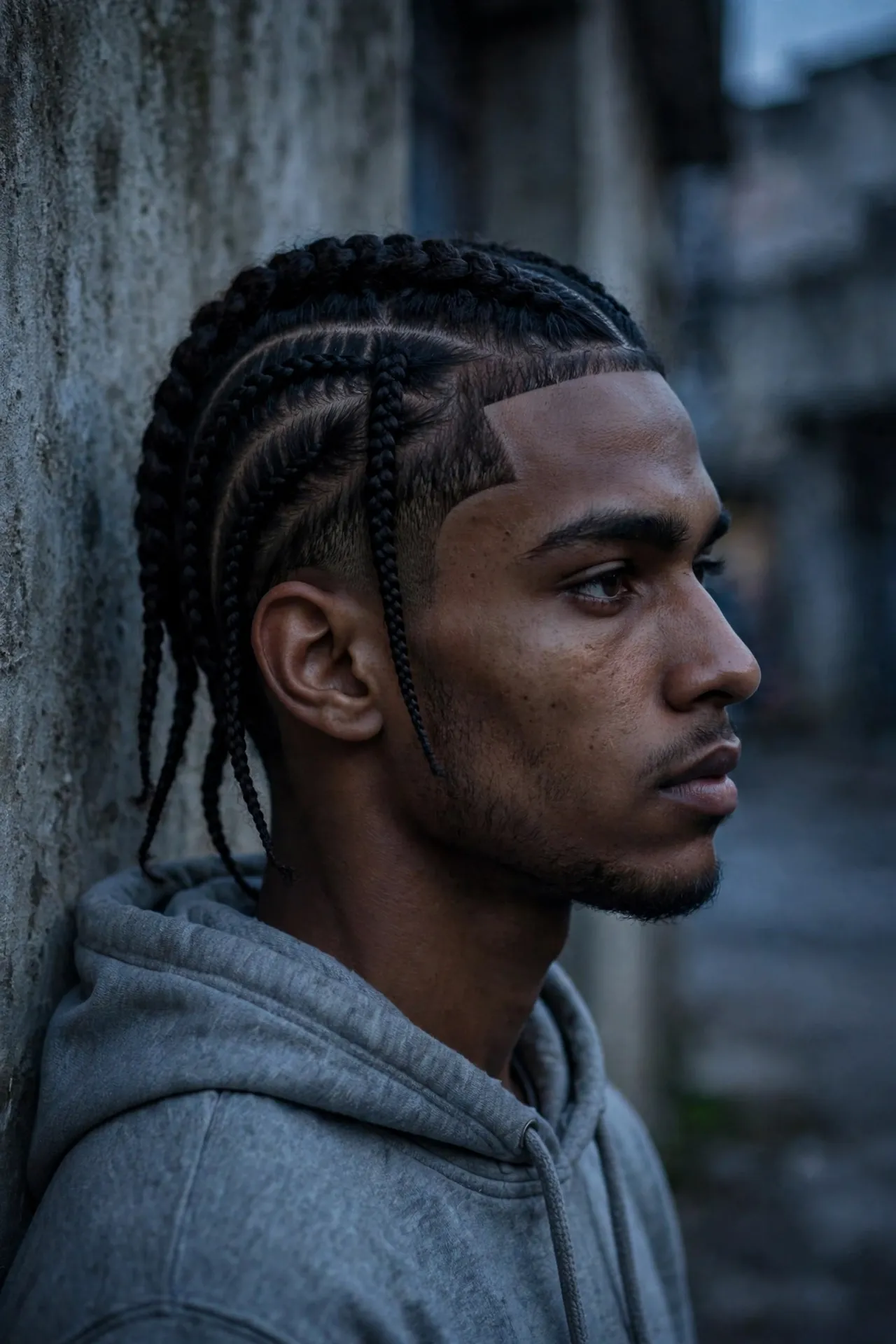
Fulani braids with a bold centre braid make the middle row thicker than the rest. The thick centre braid works like a braided mohawk, with thinner rows framing it.
The contrast between thick and thin braids looks striking. It also makes the style quicker to braid.
Easing Tight New Braids
New braids can feel tight for the first few days. Kenyan hairstylist Laureen Sabwa told The Star that pain often comes from “the amount of hair that was being grabbed during the plaiting,” and shared a few ways to ease it.
Wrap a warm, damp towel around your scalp for a few minutes.
Apply a light oil to the parts while the scalp is warm.
Massage your scalp gently with your fingertips.
Sleep on a softer pillow to avoid pressure on the braids.
Speak up next time if your braider pulls too hard.
13
OF 22
Fulani Braids Into Barrel Twists
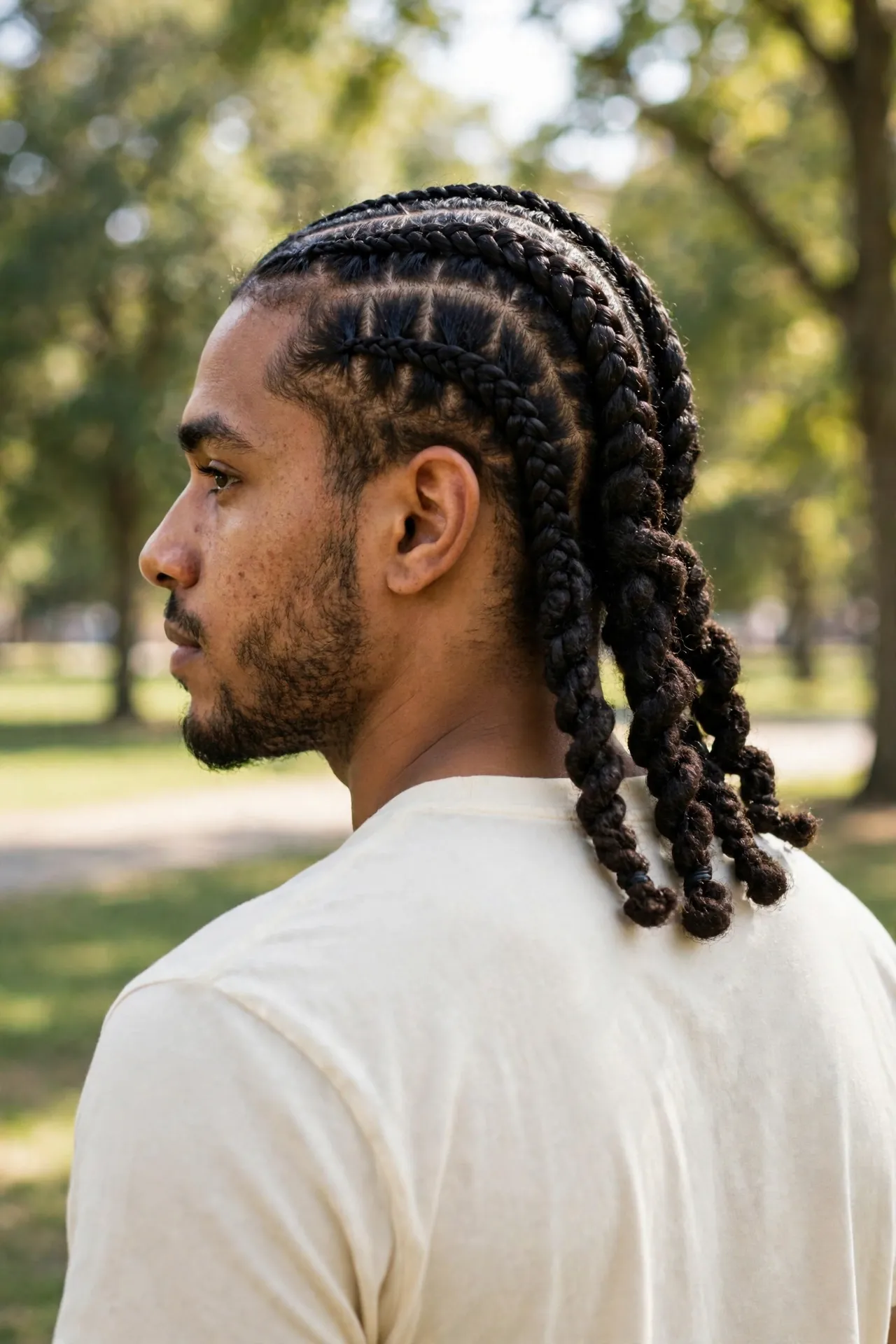
Fulani braids into barrel twists start as a Fulani cornrow pattern on top, then turn into thick barrel twists at the back. The twists add bulk and texture.
Barrel twists work best on thick hair or locs. On fine hair, they can look thin.
14
OF 22
Fulani Braids With Twists at the Back
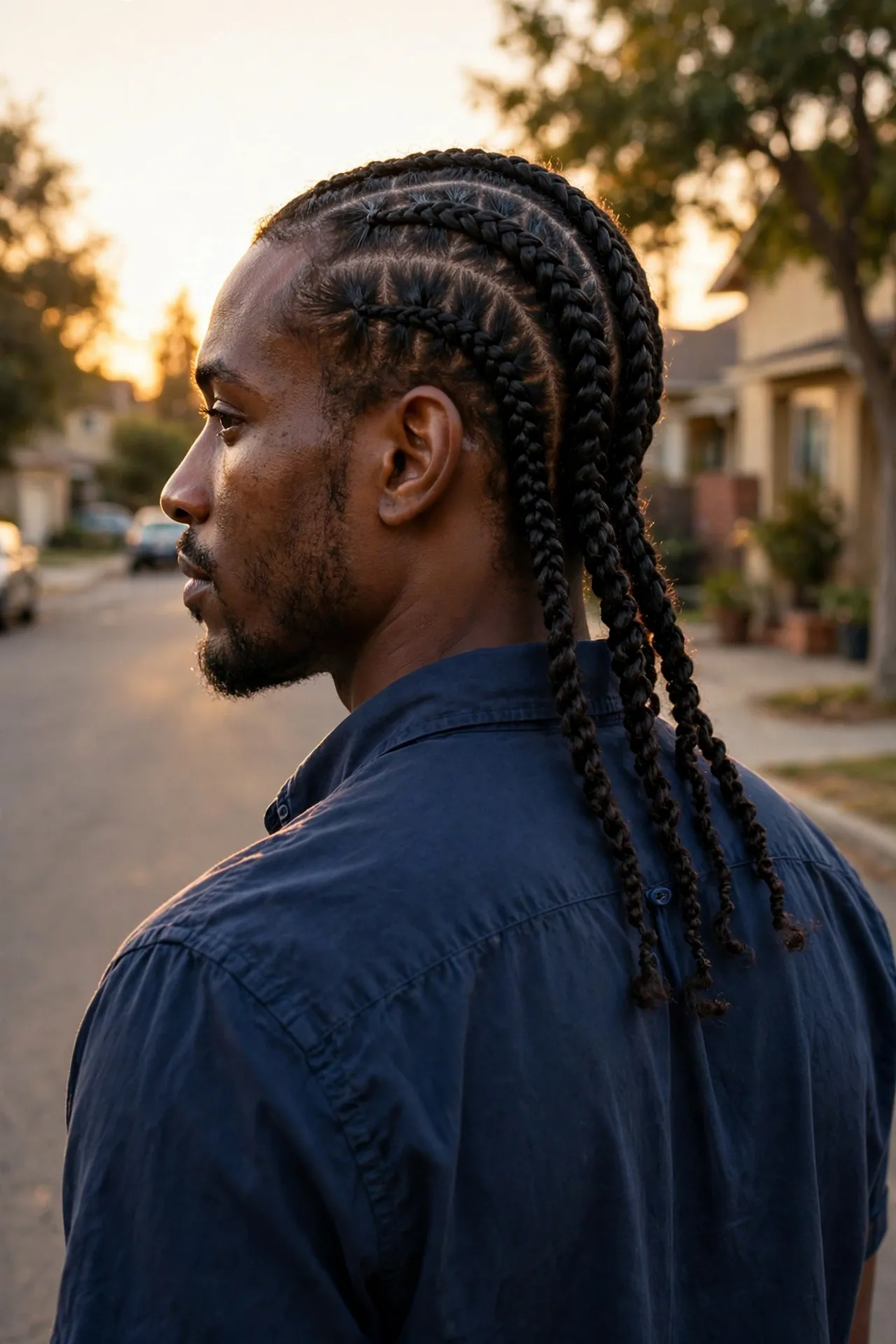
Fulani braids with twists at the back turn the cornrows into two-strand twists at the nape. The twists look softer than braids and add movement.
Twists are quicker to install than full braids. They also loosen a little faster.
A light oil keeps the twisted ends from frizzing. Twist them back with your fingers if they loosen.
15
OF 22
Fulani Braids on Curly Hair
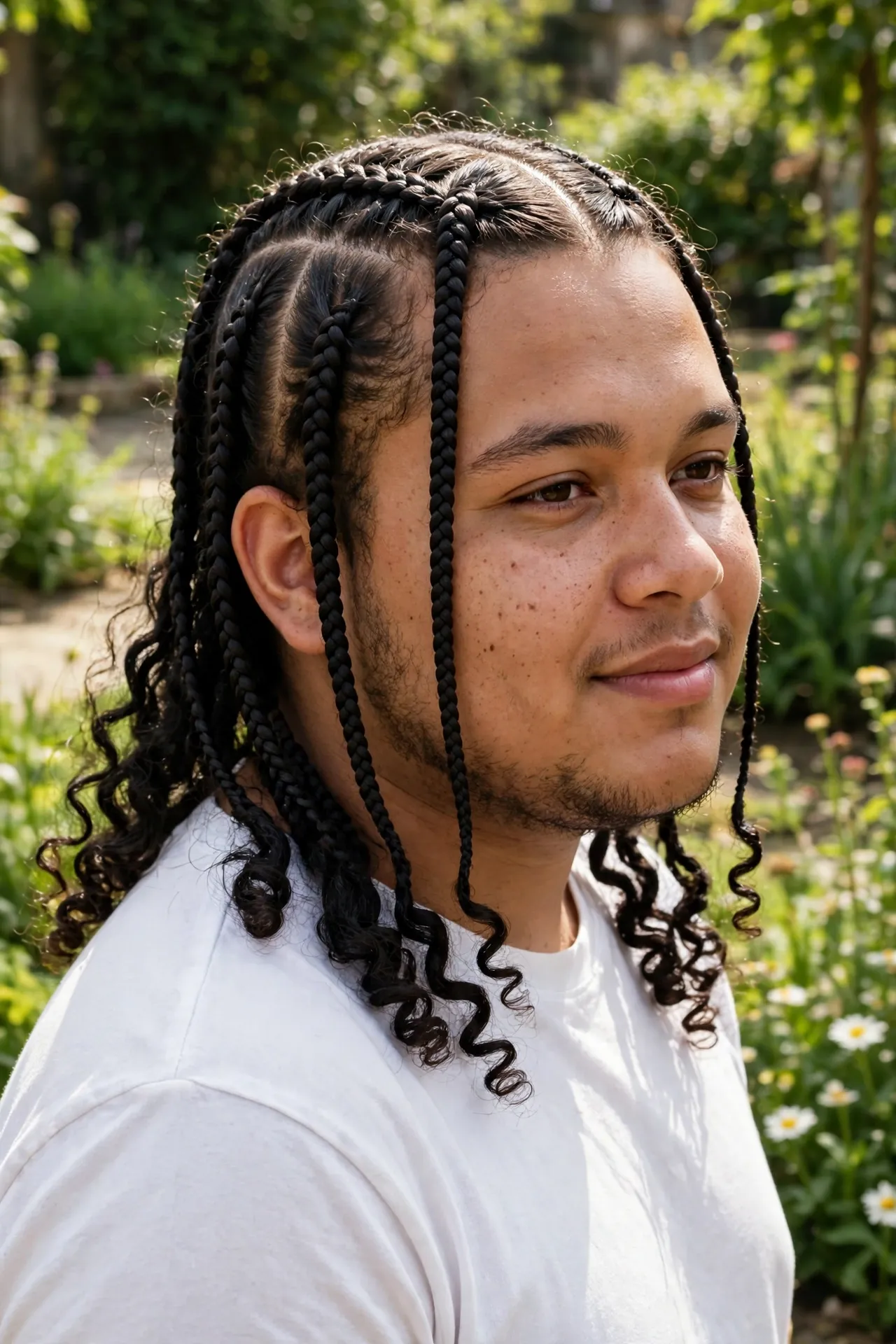
Fulani braids on curly hair work well when the curls are long enough to grip. The loose curly ends left out at the back look soft and natural.
Looser curls slip out of braids faster than tightly coiled hair. Expect to redo them sooner.
🧴 Moisturise Curls Before Braiding
Curly hair braids more smoothly when it’s moisturised. A leave-in conditioner and a light oil before braiding reduce frizz and breakage.
16
OF 22
Fulani Braids on Locs
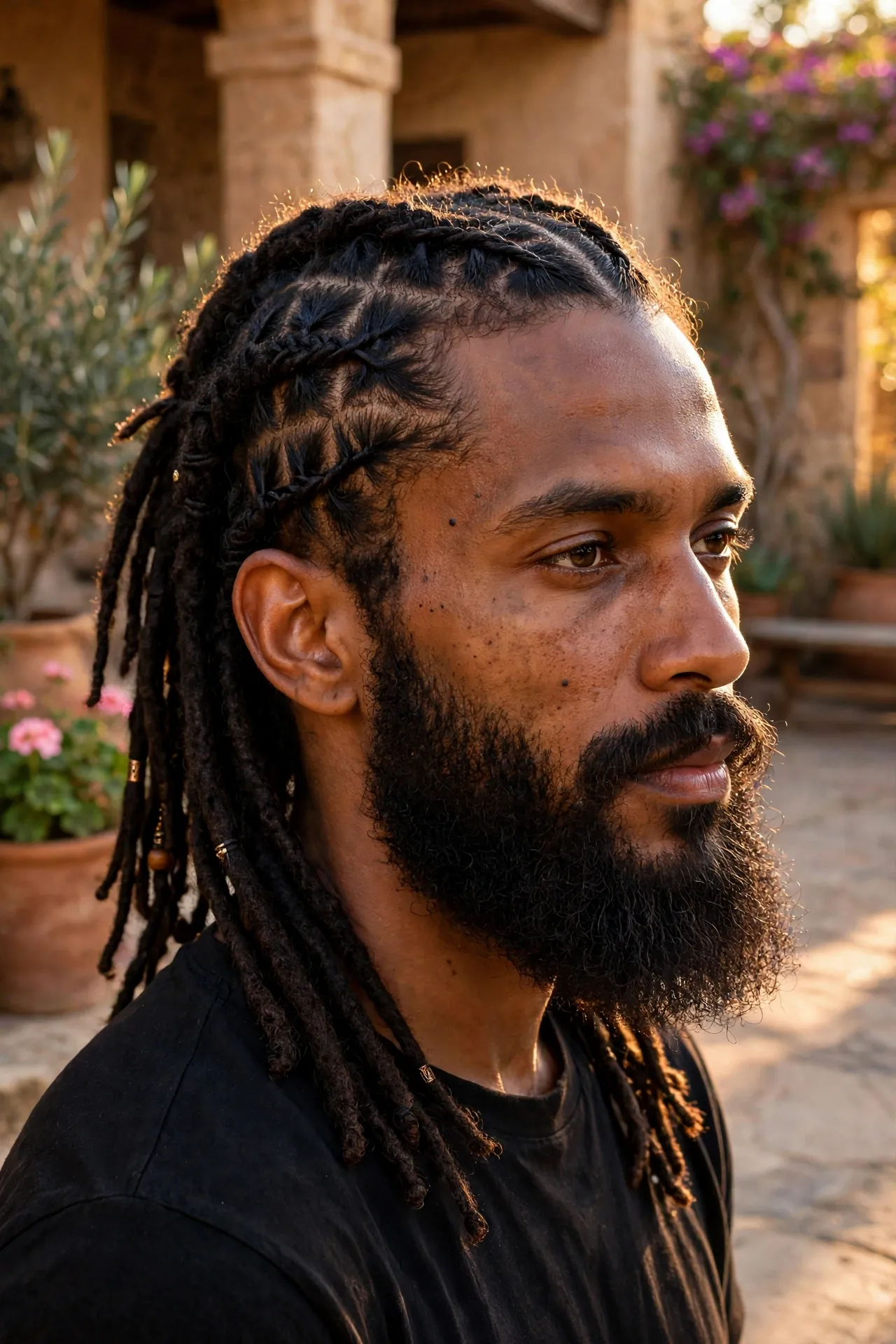
Fulani braids on locs style existing locs into the Fulani pattern. A loctician braids or twists the locs into a centre row and angled side rows.
It’s a great way to change up locs without cutting them. The style lasts a few weeks before you let them down.
Keep the tension light, since locs are heavy. Tight styling on locs can pull on the roots.
17
OF 22
Fulani Braids With Added Extensions
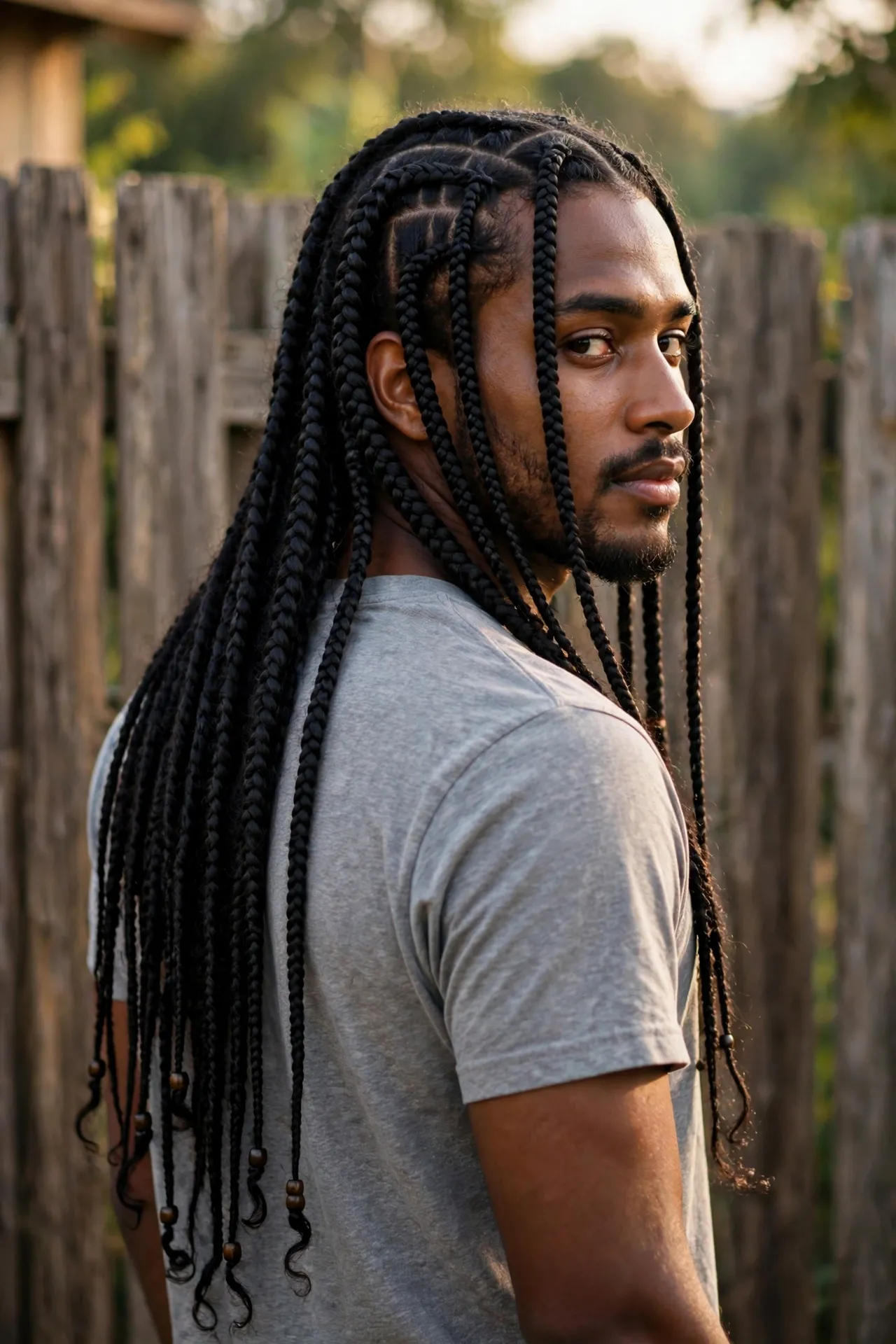
Fulani braids with added extensions use braiding hair to make the braids longer and fuller. It’s a quick way to get long Fulani braids without growing your hair.
Extensions also help braids last longer, since the extra hair holds the shape. Most styles last four to six weeks.
Using Extensions That Are Too Heavy:
Too much added hair makes braids heavy, which pulls on the scalp and edges. Ask for a light amount of extension, especially at the front.
18
OF 22
Fulani Braids Into a Ponytail
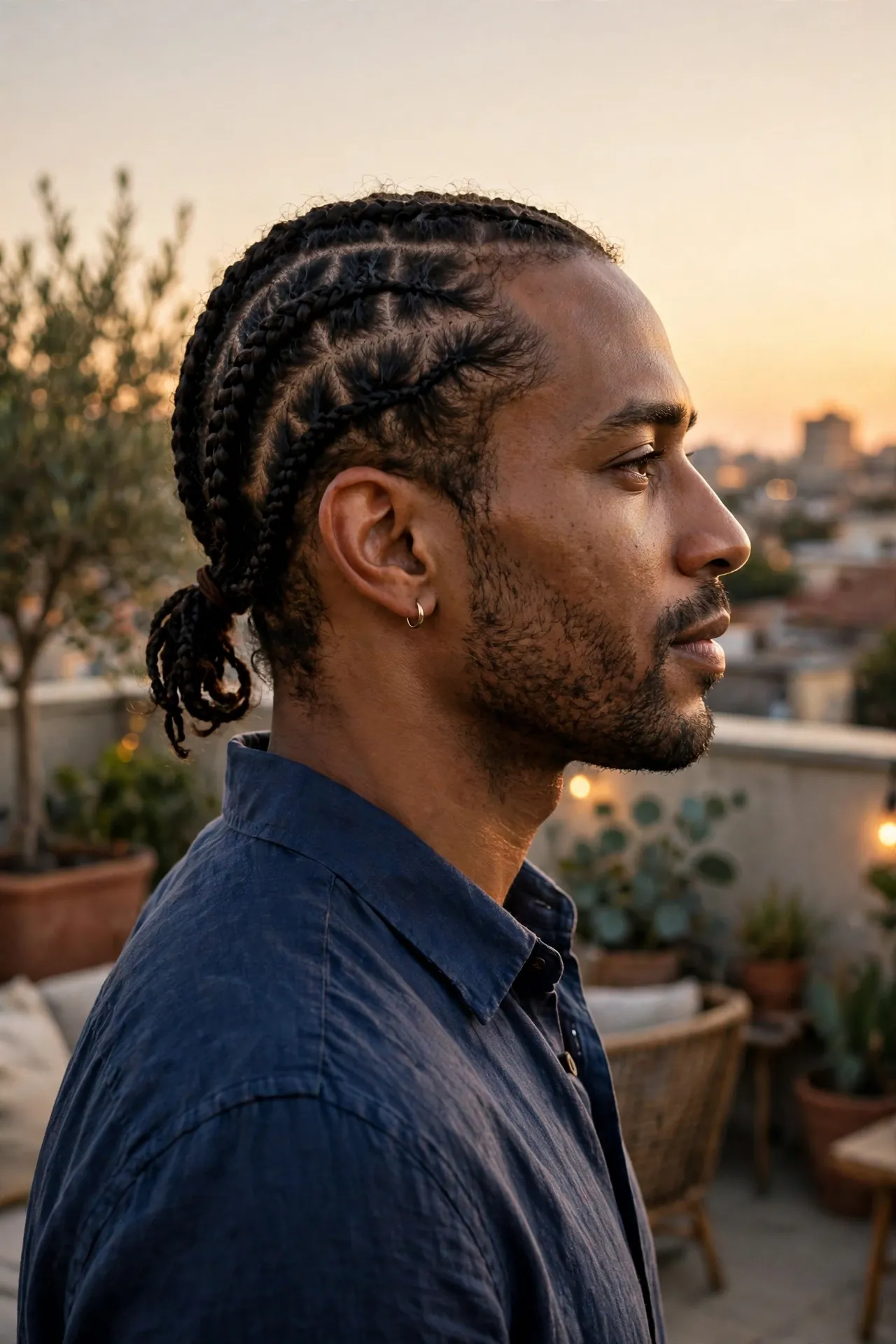
Fulani braids into a ponytail gather the back braids at the nape. It keeps the braids neat and off your neck, especially in hot weather.
Use a soft band rather than a tight elastic. Tight bands snap braids and pull on the scalp.
Wear the ponytail on some days and leave the braids down on others. That gives your edges a break.
19
OF 22
Fulani Braids With a Beard
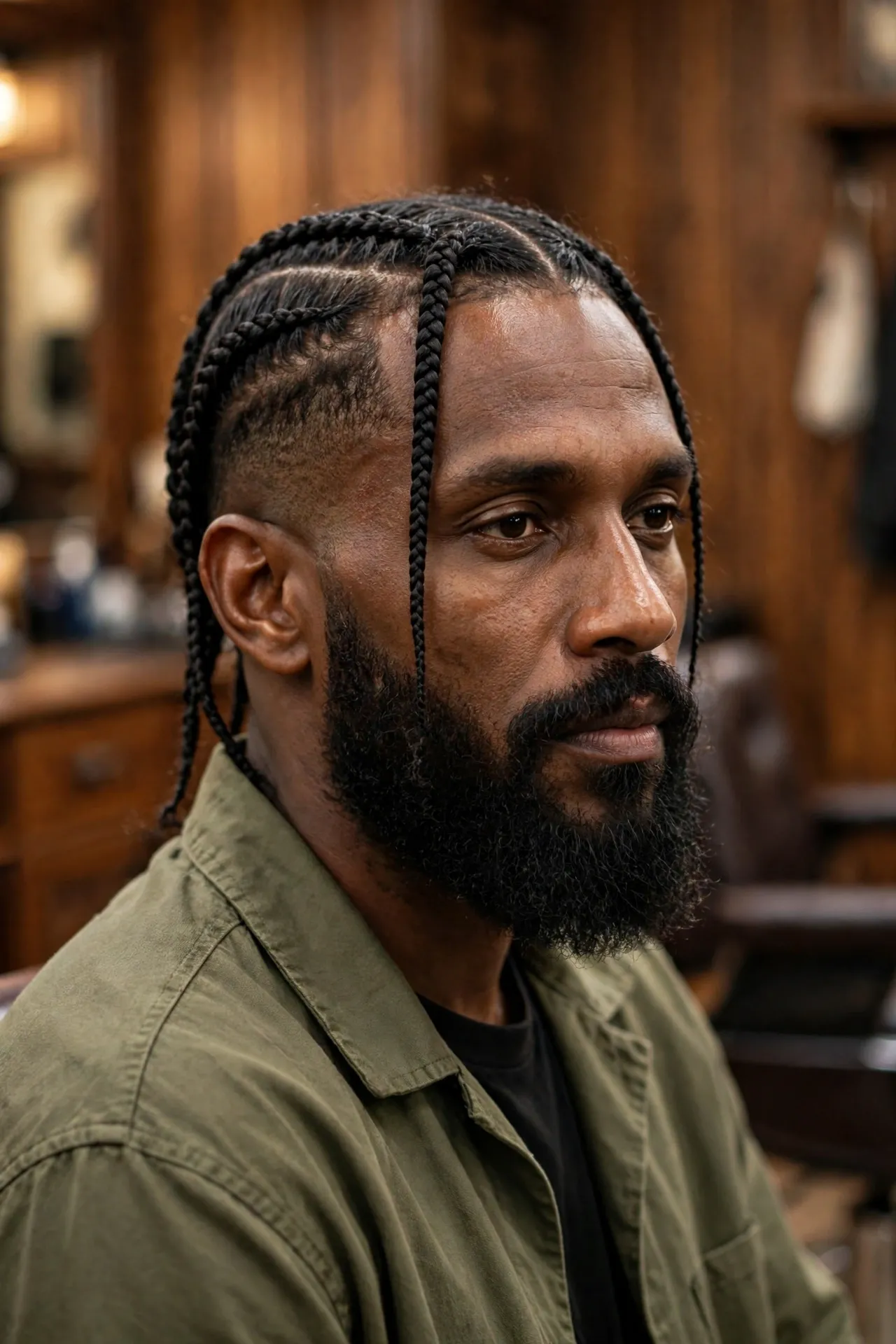
Fulani braids with a beard balance braided hair with a strong, groomed face. The side braids angle towards the ears and connect visually with the beard.
🎨
Braids
centre and sides
✂️
Sideburns
taper into beard
📐
Beard
groomed weekly
A beard oil keeps the beard soft and matches the healthy look of freshly oiled braids. Keep the beard line sharp.
20
OF 22
Simple Fulani Braids for Beginners
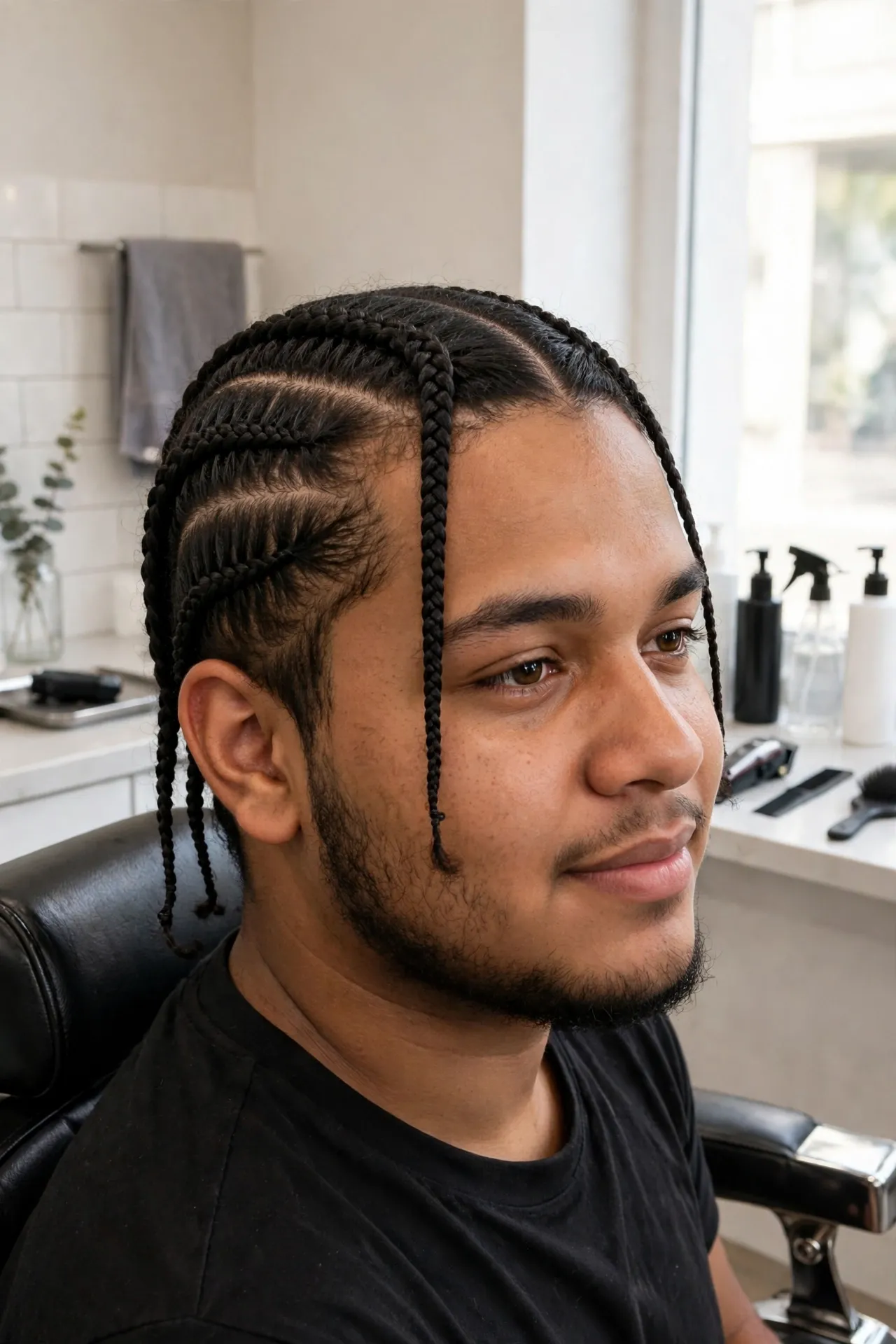
Simple Fulani braids for beginners use one centre braid and a few side braids on each side. Fewer rows mean a shorter appointment and easier care.
Start simple to see how your scalp handles braids. You can try beads, designs or extensions next time.
Give your hair breaks between styles. On the LongHairCareForum, one member who braids often said they take braids out every two weeks and tries to go “one complete day without the braids” before the next set.
BEFORE:
Back-to-back tight braids with no breaks, leaving the edges thin and the scalp sore.
AFTER:
Simple, looser Fulani braids with a day or two off between styles, keeping the edges healthy.
21
OF 22
Teen Fulani Braids
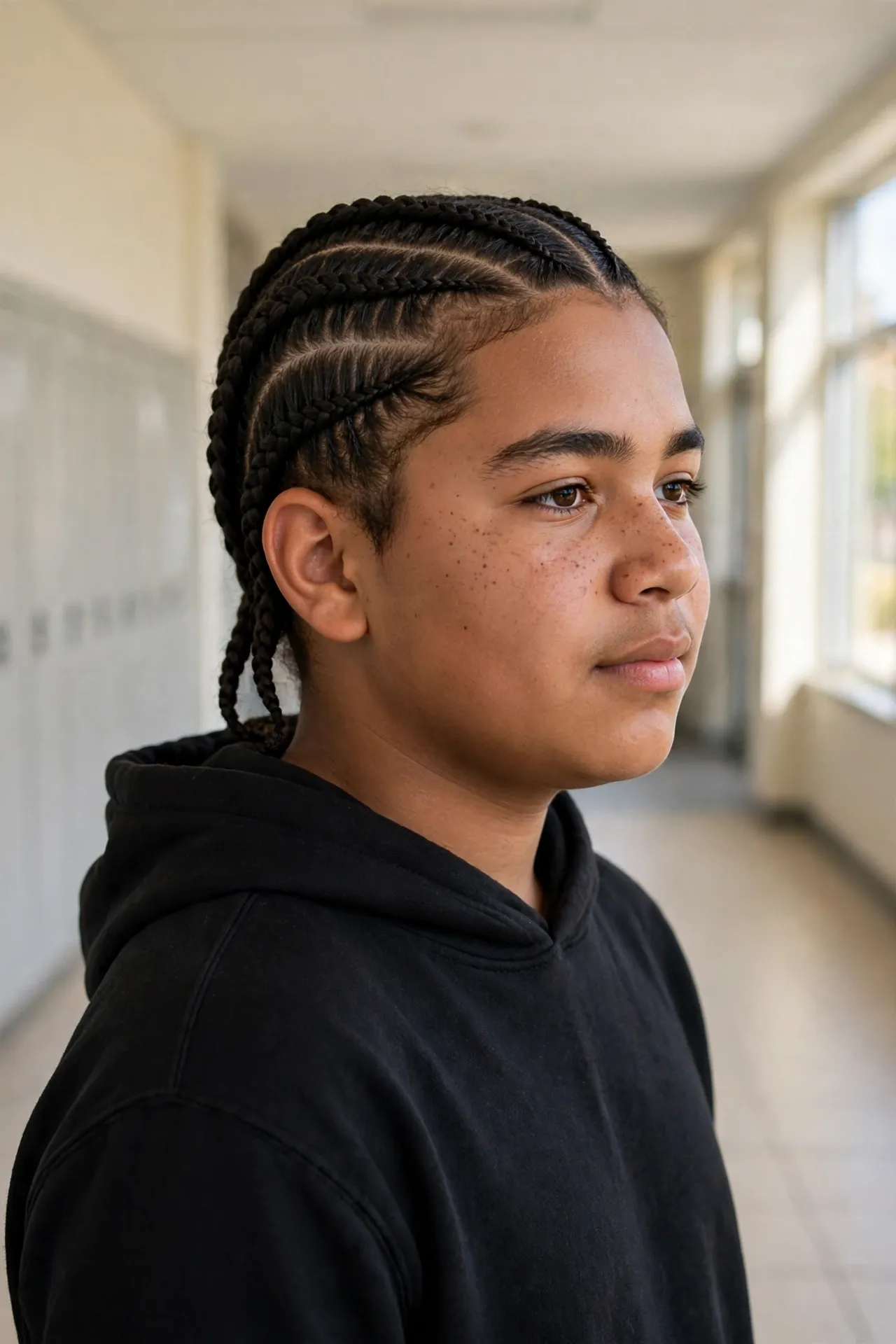
Teen Fulani braids keep hair neat for school, sports and weekends. A simple pattern with a centre braid and a few side rows looks clean and easy.
Braids last longer when teens sleep with a durag or bonnet. It keeps them neat for school.
📅 Wear It For
22
OF 22
Boys’ Fulani Braids
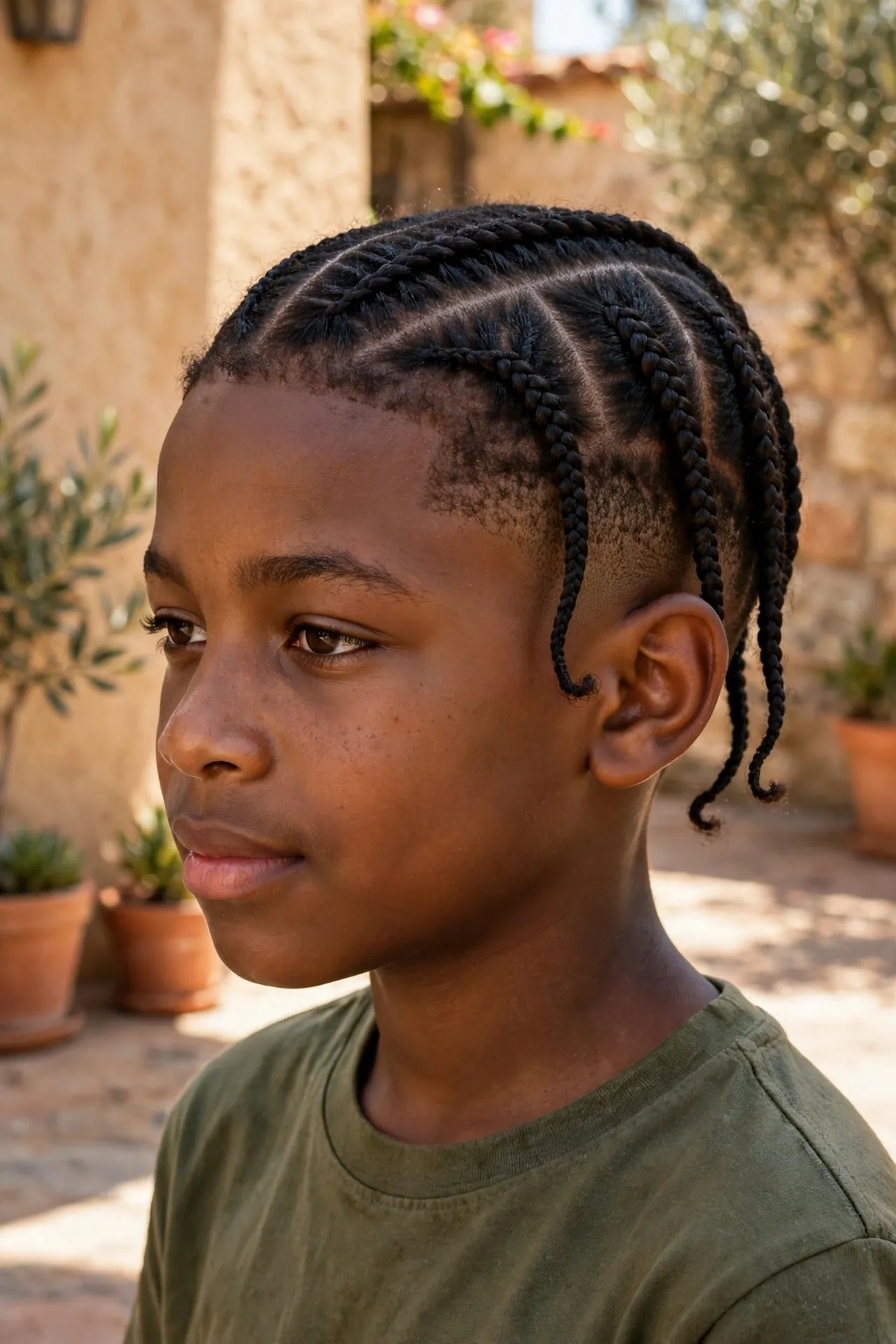
Boys’ Fulani braids should be simple, loose and quick to braid. A centre braid and two side braids on each side keep kids’ hair neat without long sitting times.
Children’s scalps are sensitive. Braids should never feel tight or cause bumps.
💡 Skip Beads on Very Young Kids
Small beads can come loose and be a choking hazard for toddlers and young children. Leave them out until kids are older.
Which Fulani braids would you try first?
FAQs
What are Fulani braids for men?
Fulani braids combine a centre braid running front to back with side braids angled down towards the ears. Men often wear them with a fade, taper or beads.
How long do Fulani braids last for men?
Most Fulani braids last two to four weeks on natural hair. With extensions, they can last four to six weeks.
Can you get Fulani braids with short hair?
Yes. Many braiders can braid hair around two inches long using thin rows. The braids end at the nape instead of hanging.
Do Fulani braids damage your hair?
Braids done too tight, too heavy or back to back can pull on the edges. Keep them loose, use light beads and take breaks between styles.
Can you get a fade with Fulani braids?
Yes. A low fade or taper keeps the edges neat. Get the fade first so the braider can plan the side braids.
Where do Fulani braids come from?
The style is named after the Fulani people of West Africa, whose traditional braiding often featured long braids framing the face and decorations like beads and cowrie shells.