28 Men’s Curly Hairstyles That Work With Curls: No More Frizz

Curly hair gets cut differently than straight hair, and a lot of guys don’t find that out until a haircut goes wrong. The curl pattern changes how much a barber needs to account for shrinkage, how layers behave once the hair dries, and which products actually hold versus which ones just sit there doing nothing.
This list covers the full range, short to long, loose waves to tight coils, plus the styling decisions that come with each one. Some of it is about the cut itself, some is about what you do with it after you leave the chair.
Short on Time? Pick Your Path
Table of Contents
- 01The Classic Curly Crop
- 02Curly Hair With a Taper
- 03Curly Hair With a Skin Fade
- 04The Curly Undercut
- 05Layered Medium-Length Curls
- 06Long Curly Hair
- 07The Curly Fringe
- 08The Curly Middle Part
- 09The Curly Comb-Over
- 10Curly Hair Slicked or Pushed Back
- 11The Curly Quiff or Pompadour
- 12The Curly Mullet
- 13Natural Curls With a Medium Beard
- 14The High-Crown Curly Cut
- 15The Grown-Out Curly Cut
- 16Defined Coily Curls on Top
- 17Loose Curls, Worn Natural
- 18Wavy-Curly Hair in a Medium Cut
- 19A Cut Built for Frizzy Curls
- 20The Short Summer Curl Cut
- 21The Permed Curly Look
- 22Curly Hockey Hair
- 23Curly Surfer Hair
- 24Old Hollywood Curls (1920s–1940s Inspired)
- 2590s Curly Revival
- 26Blonde or Bleached Curly Hair
- 27Short Silver Curls
- 28The Curly Flow
01
OF 28
The Classic Curly Crop
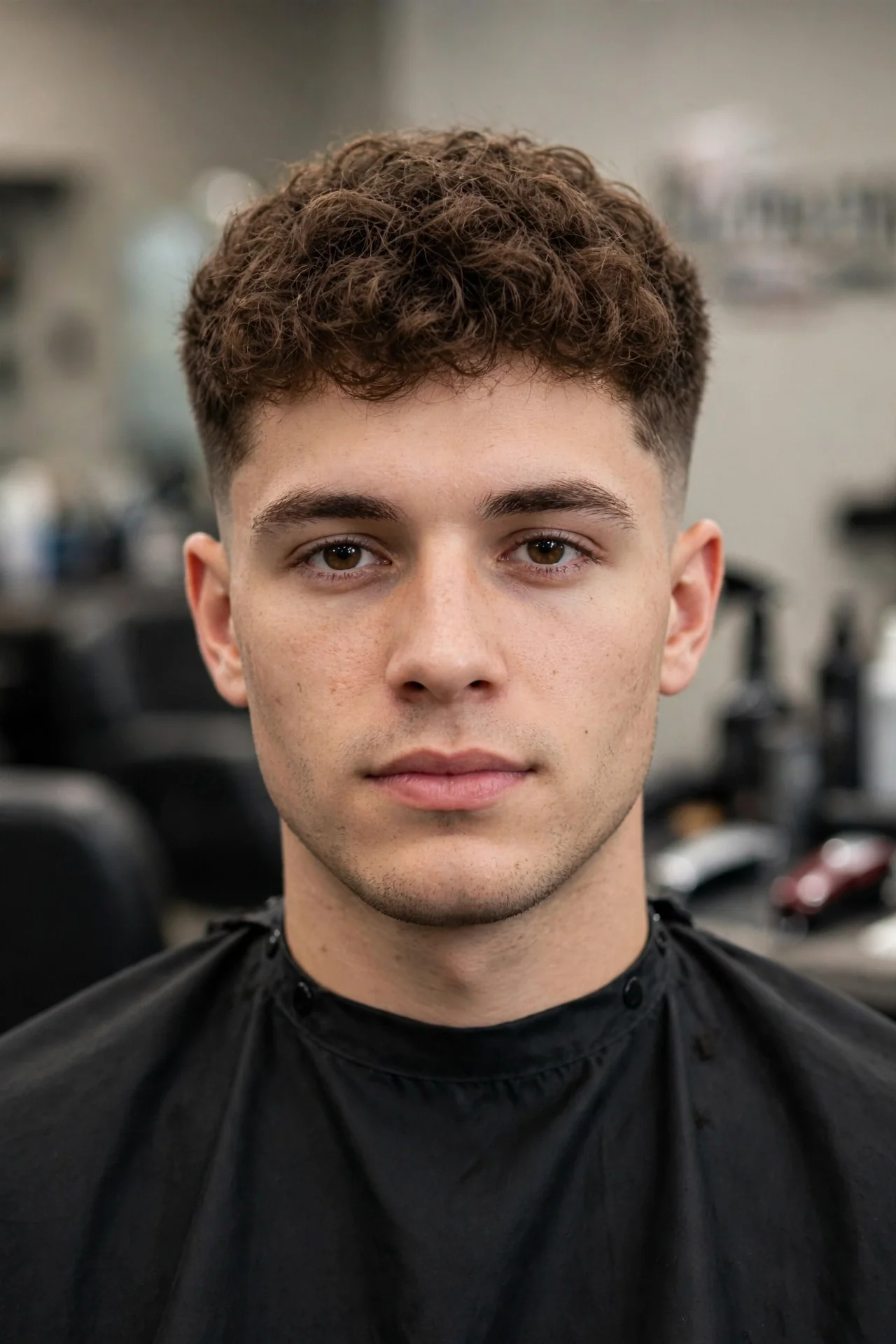
Short on top, tight on the sides, enough length left to see the curl pattern without it taking over. This is the cut most guys land on by default, and it’s a reasonable default, since it works with nearly any face shape and doesn’t demand much styling time.
The length left on top matters more than people think. Go too short and the curl barely shows, which defeats the point of having curly hair in the first place. Leave an inch and a half to two inches, and the pattern actually gets to do something.
Getting that texture to actually show up every day comes down to a short, repeatable routine rather than anything complicated.
The Morning Routine
Scrunch a small amount of curl cream into damp hair, working upward from the ends
Let it air-dry for ten minutes, or diffuse on low heat if you’re in a rush
Touch up any flat spots with a little water and a quick scrunch before heading out
Guys who’ve worn this for years tend to say the same thing: it’s the cut they stop thinking about once this routine becomes automatic.
In my view, curly hair is best cut dry. Wet curls stretch out and look longer than they are, so a wet cut often ends up the wrong shape once it dries, while a dry cut lets the barber see where each curl actually sits.
Stylist guides make the same point about shrinkage: America’s Beauty Show notes that curly hair can shrink by up to 80% as it dries, and suggests cutting only about half the length you planned when working on wet hair.
The most common bad result is simply cutting too much off. Ask your barber to keep weight on top and add layers, and bring a photo of someone whose curls look like yours.
02
OF 28
Curly Hair With a Taper
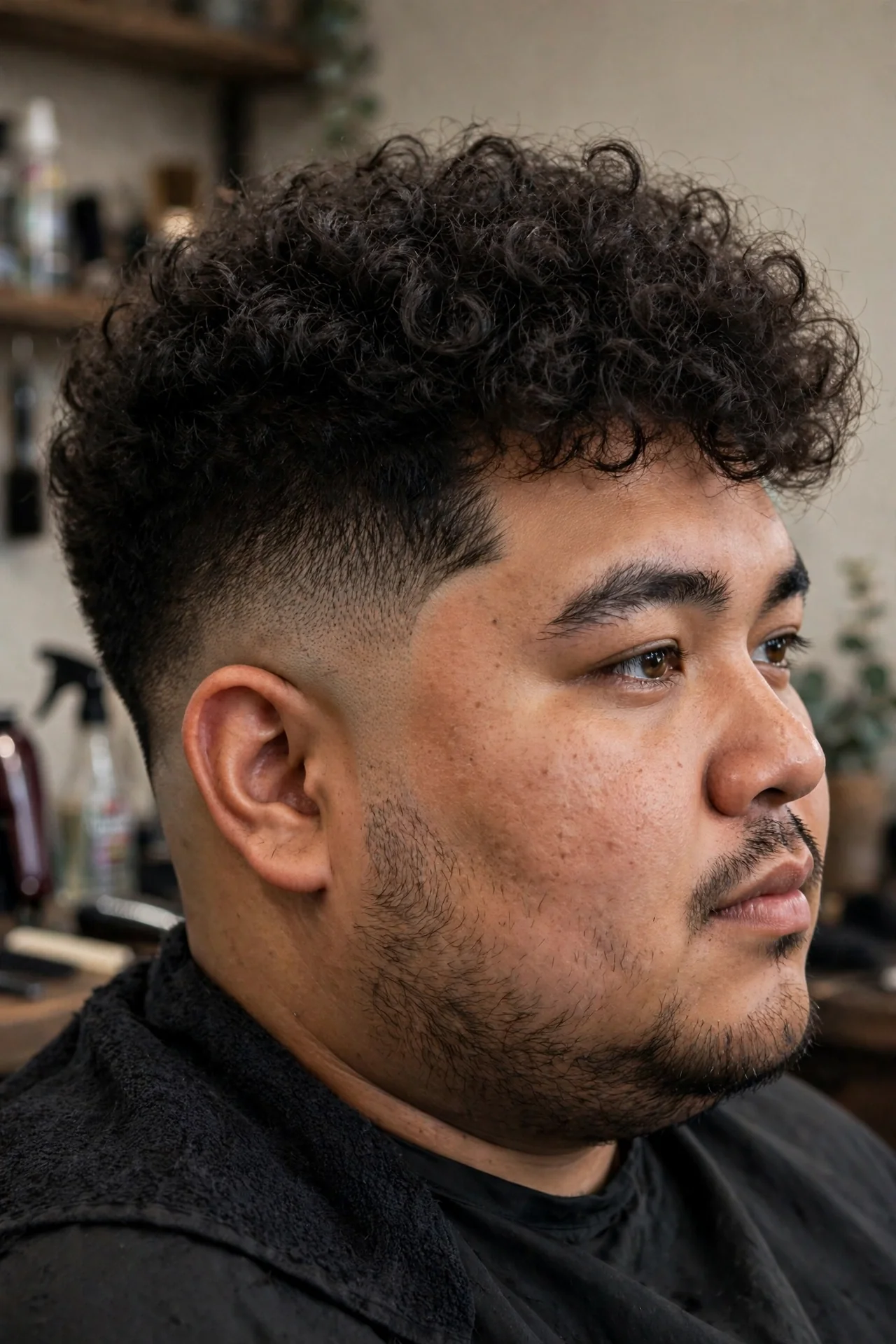
A taper brings the sides down gradually rather than cutting straight to skin. Compared to a skin fade, it’s a gentler contrast, which some guys prefer because it ages better between cuts and doesn’t demand the same sharp maintenance schedule.
💈 What to Ask Your Barber:
Ask for the taper to start below the curl line, not through it. Starting the taper too high can cut into the curls themselves rather than just blending the straight hairline underneath.
03
OF 28
Curly Hair With a Skin Fade
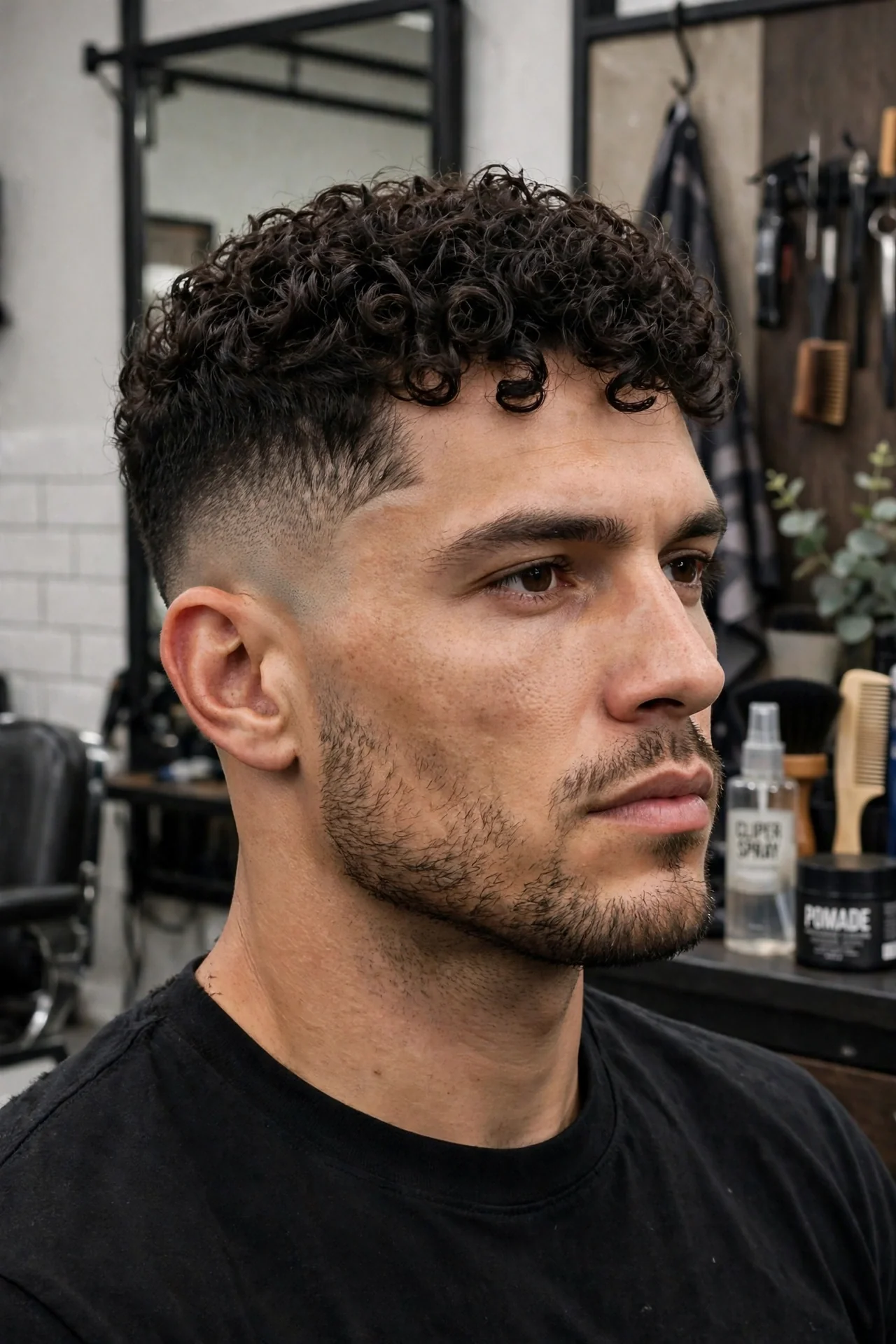
Where a taper fades gradually, a skin fade goes all the way down to bare skin, usually starting higher and finishing sharper. The contrast between the curls on top and the bare skin at the sides is the whole point here, it makes the curl pattern read as more deliberate, almost like a frame around it.
If a skin fade feels too sharp, a mid fade with curly hair keeps some of that contrast, while a low fade with curly hair is softer still.
This is genuinely the highest-maintenance pairing on this entire list, and it’s worth understanding why before you commit to it. A skin fade grows out from the skin itself, so there’s no gradual blend to fall back on the way there is with a taper, once regrowth starts showing at the hairline, it shows fast and it shows obviously.
| Taper | Skin Fade | |
|---|---|---|
| Starts from | Gradually fades into longer hair | Bare skin |
| Grows out | Softens gradually, forgiving | Shows regrowth within days |
| Touch-up schedule | Every 4–5 weeks | Every 2–3 weeks |
| Best for | Lower-maintenance guys | Guys who don’t mind frequent barber visits |
That touch-up schedule difference isn’t just a minor inconvenience, it’s worth genuinely factoring into whether this cut fits your actual life, not just how it looks on day one. Guys who travel often or who can’t guarantee a barber visit every two to three weeks tend to be happier with a taper long-term, even if the skin fade photographs sharper on the day it’s fresh.
The cost side adds up too. More frequent barber visits mean more money spent over the course of a year compared to a taper’s longer gap between appointments, which is worth factoring in alongside the styling tradeoffs.
✅ Do This
Book your next appointment before you leave the chair. Skin fades need to be scheduled in advance, not booked reactively once they’ve already grown out.
🚫 Skip This
Letting this grow out more than two weeks before a touch-up. A grown-out skin fade looks noticeably more unkempt than a grown-out taper would in the same amount of time.
04
OF 28
The Curly Undercut
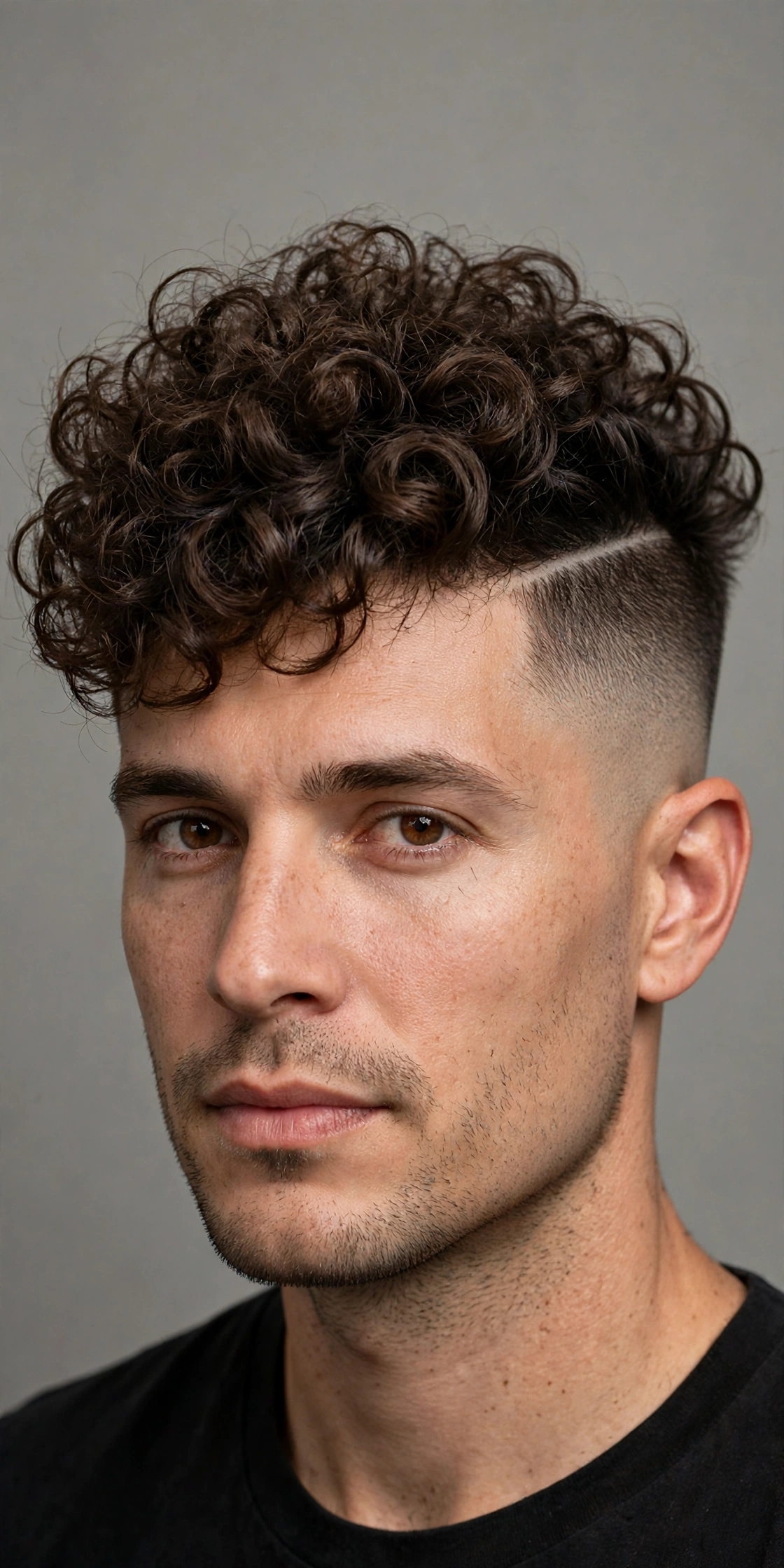
An undercut takes the sides down much shorter and more abruptly than a taper or fade, often with a harder visual line where the long top meets the short sides. It’s a bolder statement than either of those, since the contrast is immediate rather than gradual.
BEFORE:
Curly hair with sides and top at roughly the same length, the curl pattern getting lost in an undifferentiated mass.
AFTER:
The same curls with sides shaved down hard, the top left full, suddenly reading as volume and shape instead of just bulk.
The real advantage here is how much length and volume you get to keep on top compared to a tapered cut. If your curl pattern is strong enough to hold real shape and bounce, the undercut lets that show off in a way a shorter cut simply can’t.
05
OF 28
Layered Medium-Length Curls

This is the middle ground, long enough that the curl pattern has real presence, short enough that it doesn’t require serious daily styling. Most guys describing their goal as “just let my curls do their thing” end up somewhere in this range.
Layering is what makes or breaks medium curly hair specifically. Without it, medium-length curls tend to grow into a triangle shape, narrow at the crown, wide at the bottom, since the ends accumulate more weight than the top. A barber who layers correctly breaks that shape up before it becomes a problem.
06
OF 28
Long Curly Hair
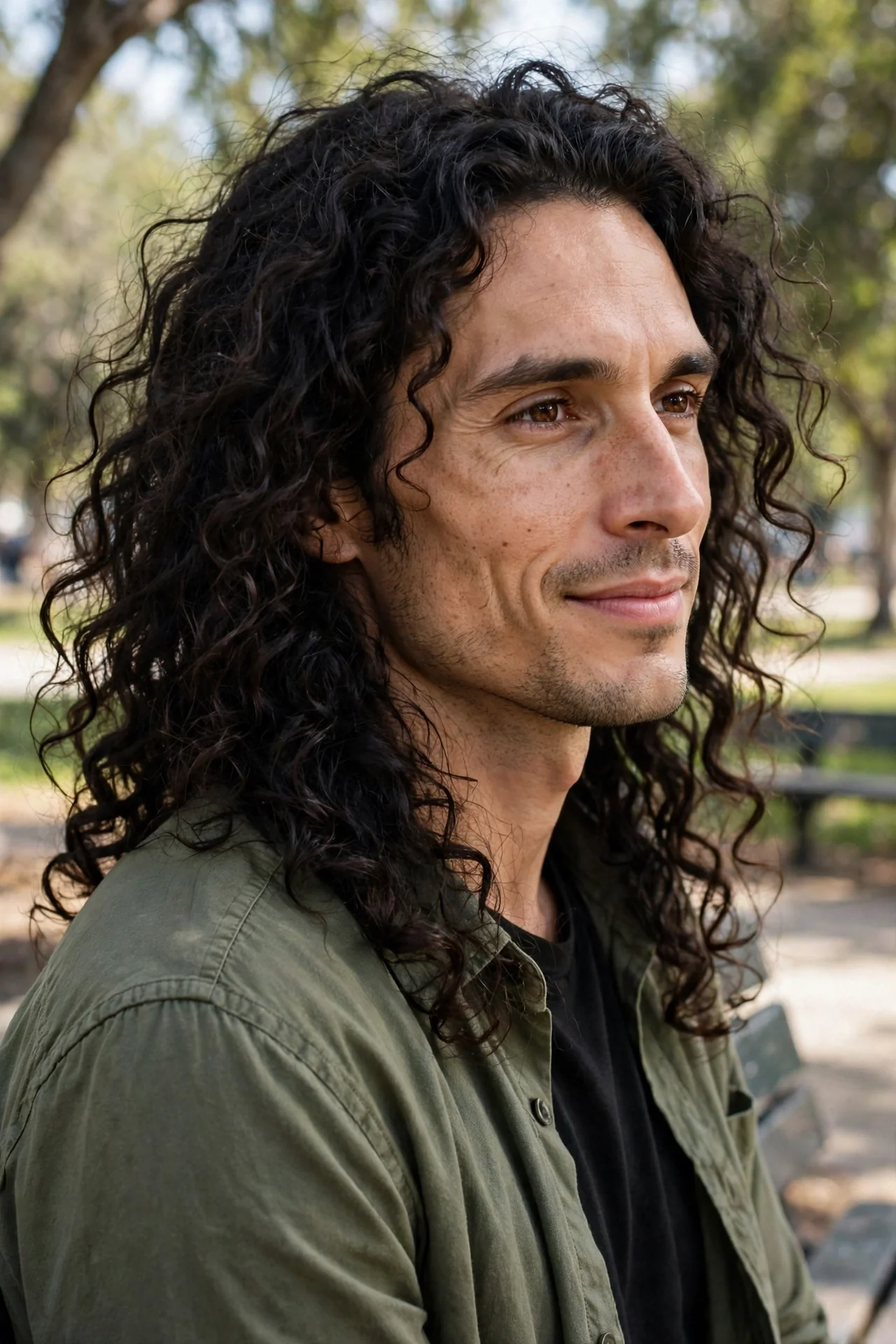
Long curly hair is a genuine commitment, not because of daily styling, but because of the growing-out phase it takes to get there. Most guys underestimate how long that transition actually takes and give up around the six-month mark, right before it starts looking intentional.
Common Mistake
Trimming too often out of impatience with the awkward stage. Long curly hair needs length to pull the curl down into looser waves near the bottom, and frequent trims keep resetting that process before it has a chance to happen.
07
OF 28
The Curly Fringe
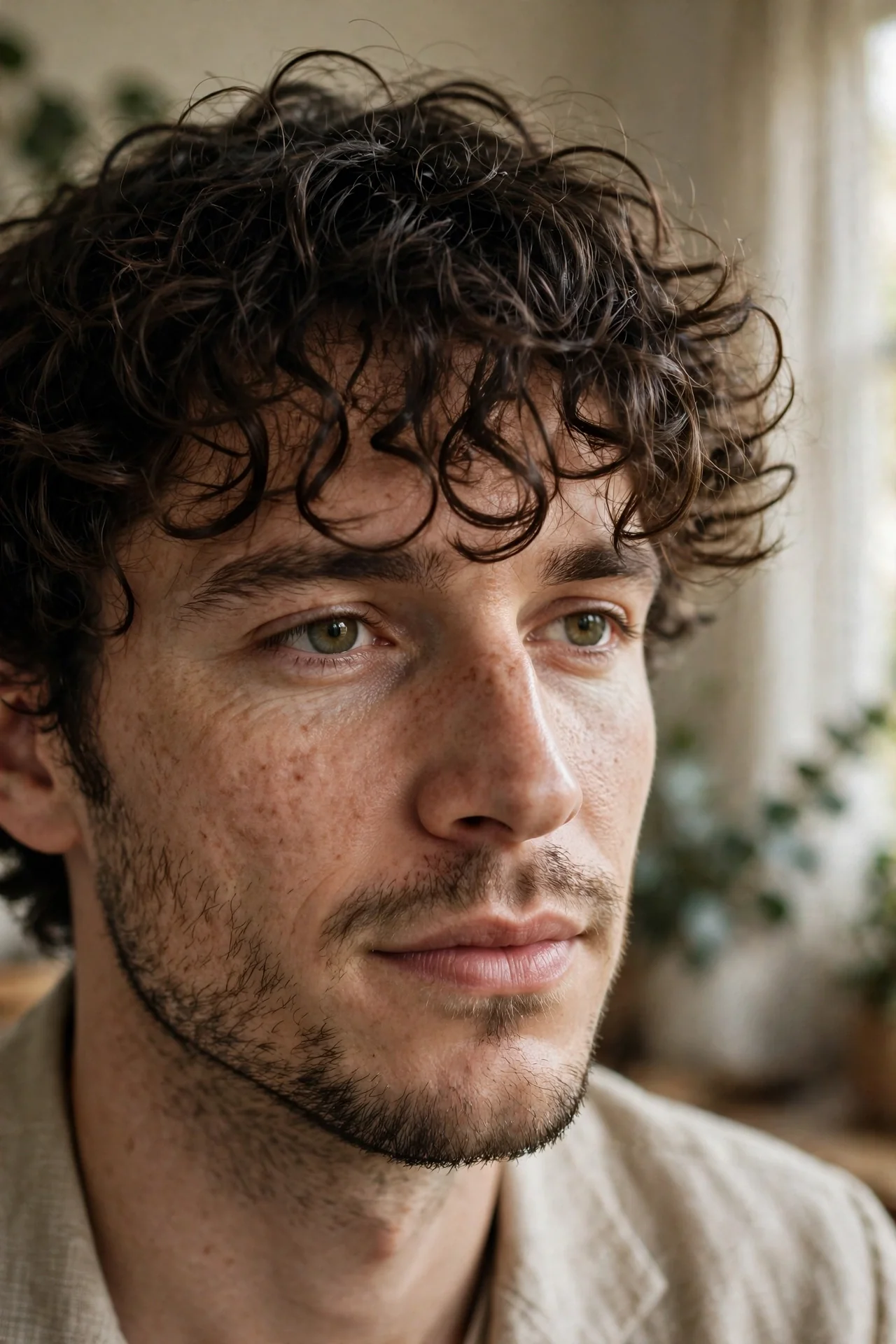
Instead of sweeping curls back or to the side, a curly fringe lets the front pieces fall forward over the forehead. It’s a younger, more relaxed read than most of the other cuts here, closer to a lived-in, unbothered look than a polished one.
The curl pattern has to cooperate for this to actually work. Tighter, coilier textures tend to spring up and away from the forehead rather than falling forward, which is why this style holds up best on looser curl patterns that have some weight to drape with.
08
OF 28
The Curly Middle Part
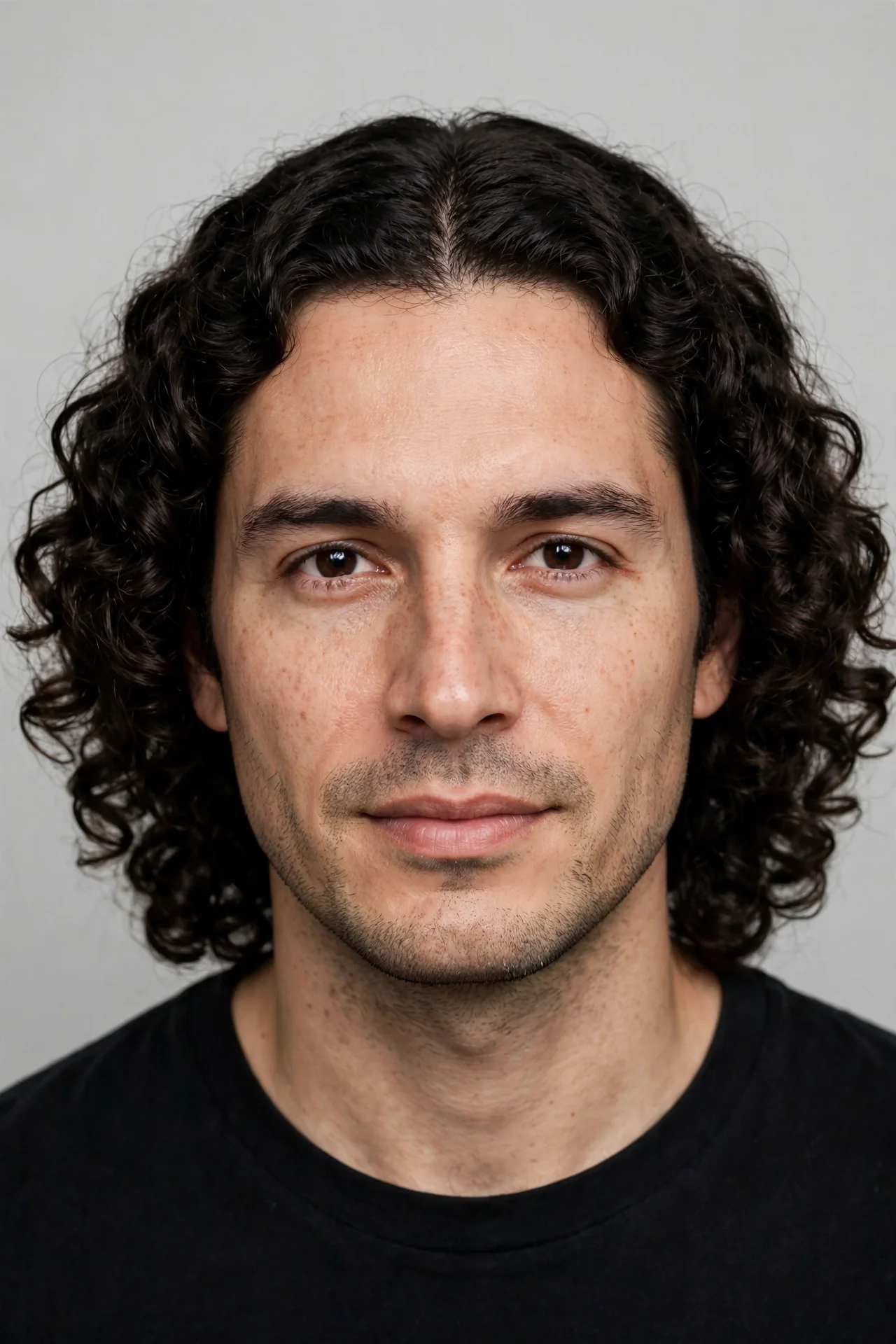
A center part on curly hair reads differently than it does on straight hair, since the curl adds volume on both sides rather than letting the hair fall flat. It tends to suit rounder faces well, since the vertical line down the middle adds a sense of length.
Middle Part vs. Side Part
A curly middle part needs more daily reset than a side part does, since curls don’t hold a crisp line the way straight hair does. A side part on curly hair tends to stay put better day to day, simply because gravity and the curl pattern are both working in the same direction instead of fighting a dead-center split.
09
OF 28
The Curly Comb-Over

A comb-over on curly hair takes a side part and sweeps a significant portion of the top hair across to one side, usually with enough length to create real coverage rather than a thin side-swept fringe. It reads more structured and deliberate than most curly styles on this list.
This one leans on a looser curl pattern specifically, since tighter coils resist being combed flat in one direction the way looser waves do. If your curls are on the tighter end, a comb-over will take more product and more daily effort to hold than it will on someone with a looser pattern.
10
OF 28
Curly Hair Slicked or Pushed Back
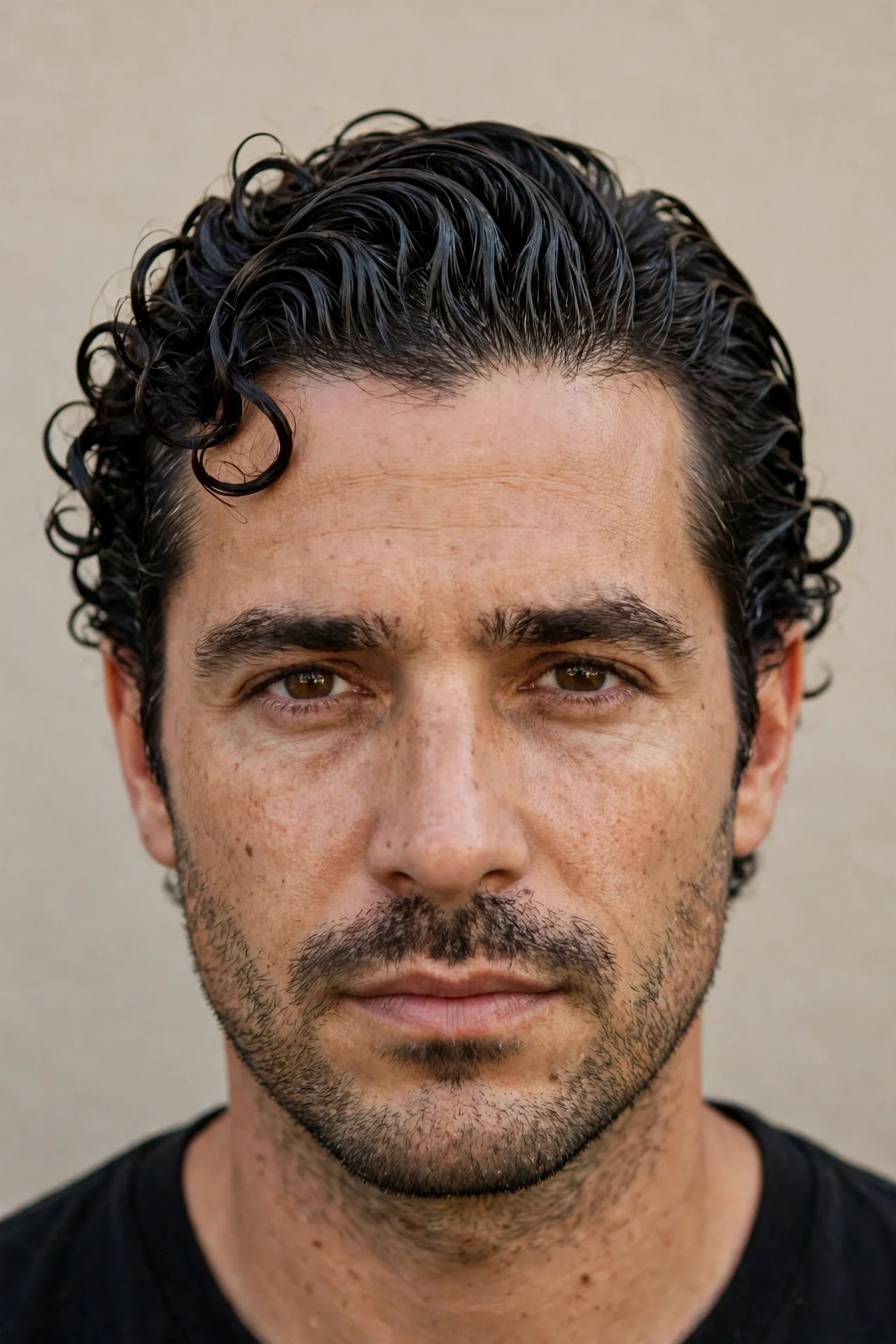
Pushing curls back off the forehead rather than letting them fall forward is one of the more polished ways to wear curly hair. A strong gel or curl-defining cream does the actual work here, holding the curls up and back instead of letting them settle into their natural fall.
✅ Recreate This Look:
- Apply a firm-hold gel to soaking wet hair, not just damp
- Comb straight back from the hairline in one consistent direction
- Let it air-dry completely without touching it, disturbing it while wet breaks the hold
How It Should Feel
Done right, this should feel firm but not crunchy. A lot of guys over-apply gel trying to get maximum hold, and end up with curls that feel stiff and look glued down rather than genuinely styled. Less product, worked through more thoroughly, almost always beats more product applied in a rush.
11
OF 28
The Curly Quiff or Pompadour
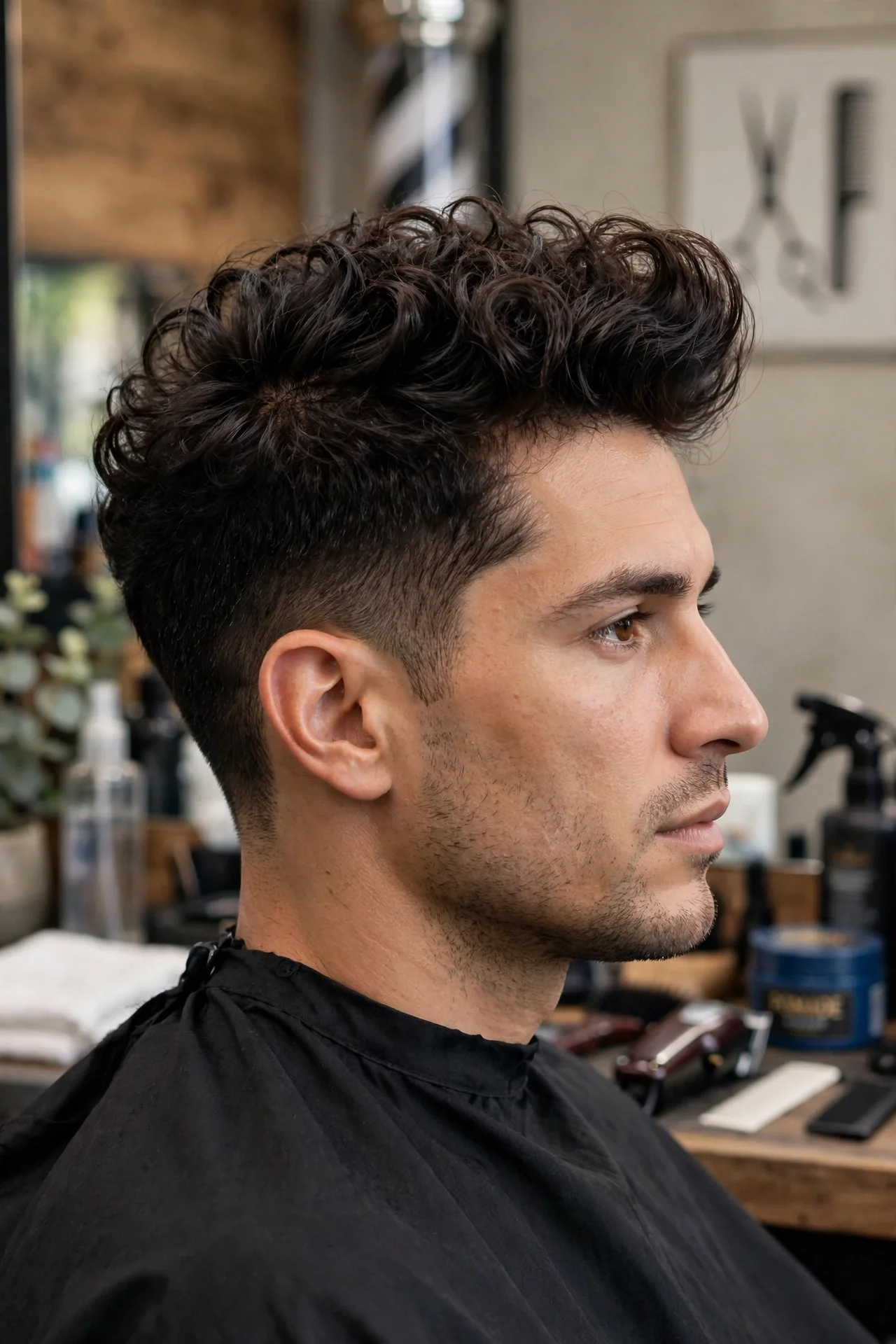
A quiff or pompadour on curly hair takes advantage of the curl’s natural lift, building height at the front rather than fighting it flat. This is one of the more product-dependent styles on the list, since the shape needs to be built and held rather than just encouraged.
That combination is really what separates this from the shorter curly crop, deliberate built height instead of hair that’s just left to its own natural shape. Most barbers will tell you this style photographs better than it survives a full day. The height tends to settle somewhat by evening even with strong product, which is worth knowing before you count on it holding through a 12-hour day.
12
OF 28
The Curly Mullet
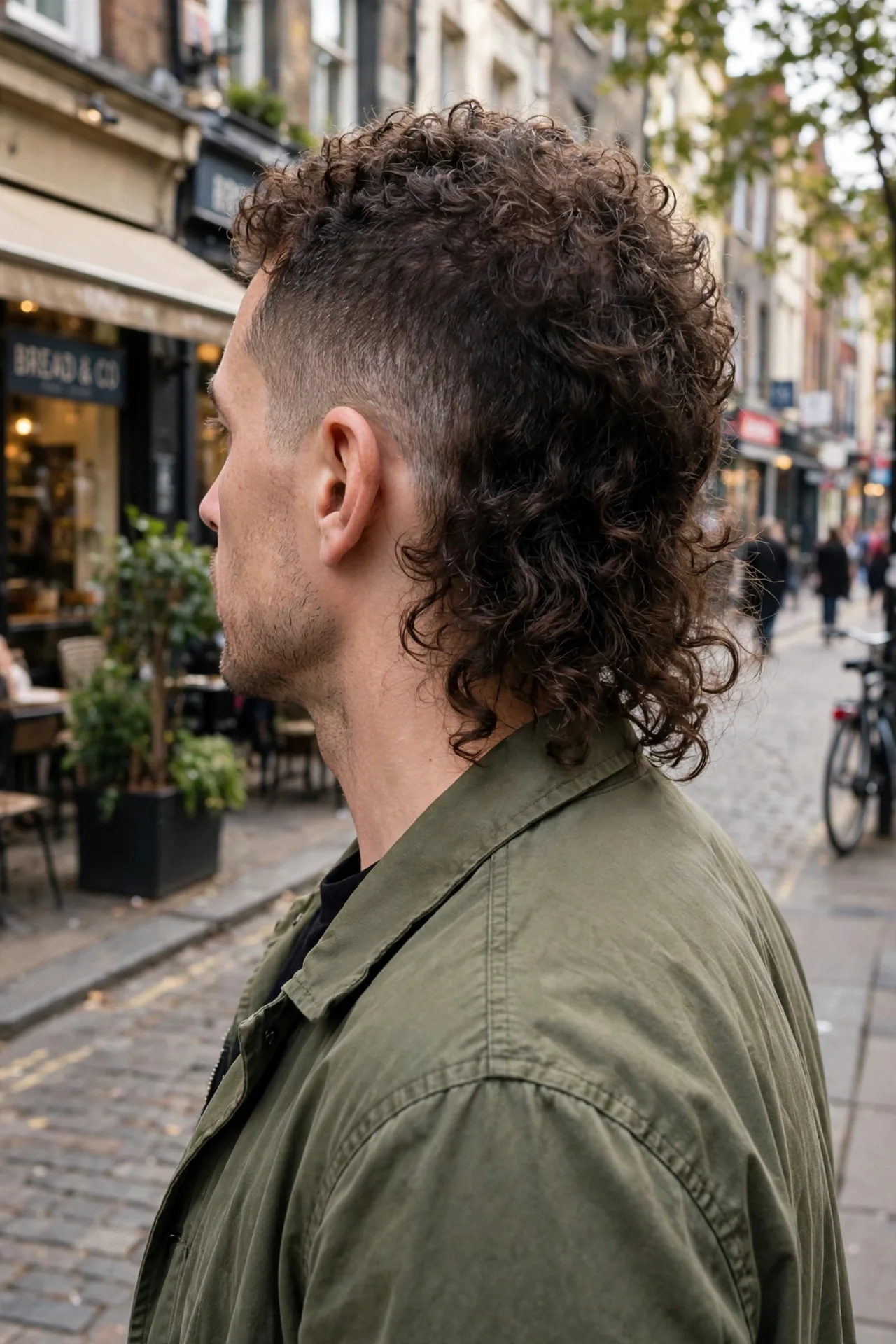
Curly hair actually suits a mullet better than straight hair does in one specific way, the curl at the back reads as styled volume rather than just length, which softens the usual harsh short-long contrast a straight-hair mullet has.
Who This Isn’t For
This isn’t a style for guys who want to blend into a traditional office environment. It’s a genuinely bold choice, and it’s worth being honest that it reads as a personality statement first and a practical haircut second, which is exactly why the guys who wear it well tend to actually want that reaction.
13
OF 28
Natural Curls With a Medium Beard

Curly hair already adds visual volume up top, so the beard needs to roughly match that energy rather than disappear underneath it. A full, voluminous curly top over a thin, patchy beard tends to look unbalanced, and the reverse is just as true.
💈 From the Chair:
A medium-density beard, textured rather than perfectly trimmed, tends to pair best with curly hair specifically. A razor-sharp beard line looks oddly formal against the softer, less structured shape curls naturally have.
14
OF 28
The High-Crown Curly Cut
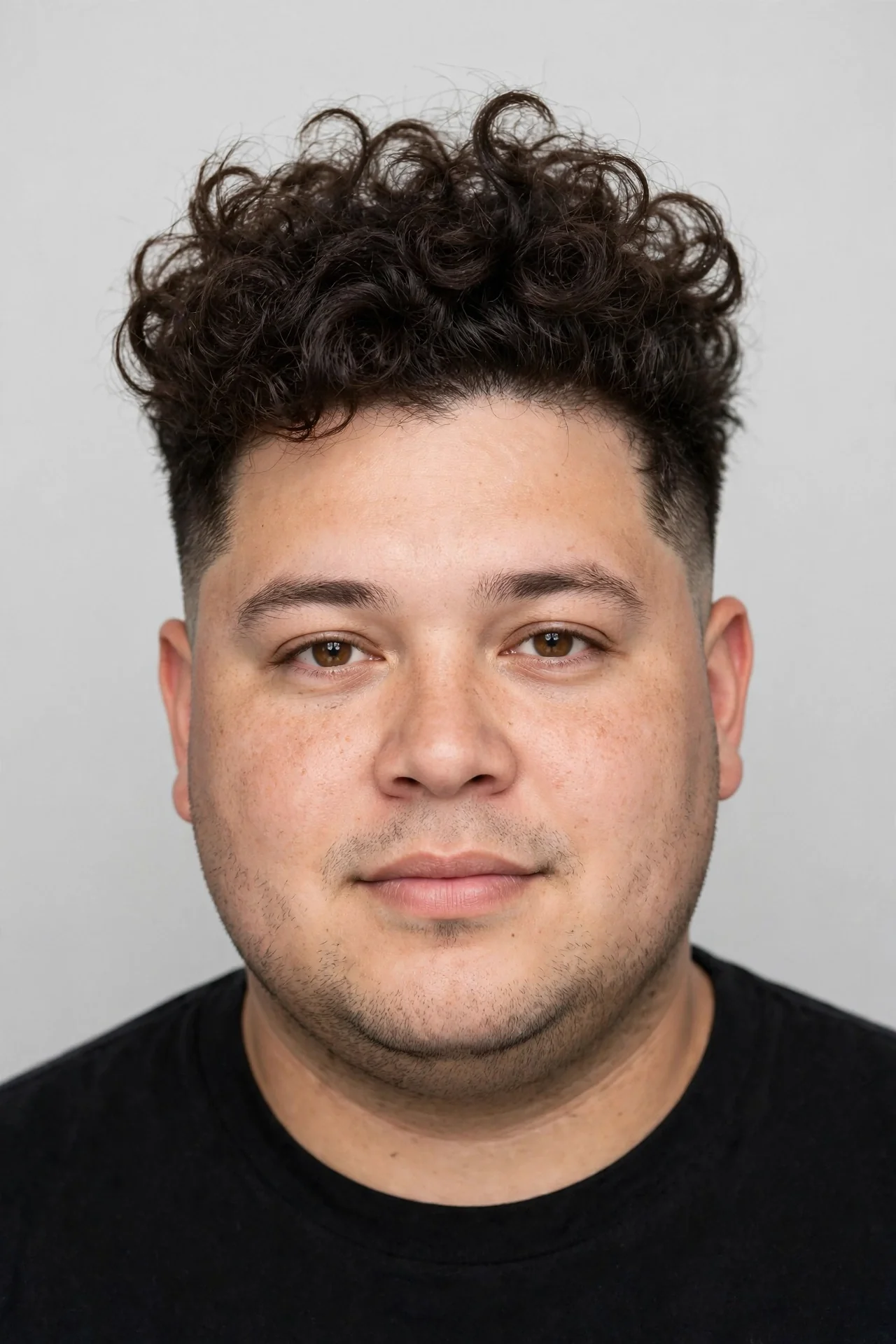
This cut piles the volume up top and keeps the sides close, which is why it works so well on round faces. Round faces generally do better with some added height and shorter sides, since the goal is to visually lengthen the face rather than add more width, and a full, wide curly shape on the sides tends to emphasize roundness instead.
🎨
Crown
built up, not flattened
✂️
Sides
kept close and tight
📐
Effect
adds length, reduces width
The crown height doesn’t need to be dramatic to work. Even an extra inch of lift at the top, combined with sides that sit noticeably closer to the head, is usually enough to shift how a round face reads, without tipping into a shape that looks exaggerated or overly styled.
How much product that takes depends on your curl pattern. Tighter 3B–4A curls naturally hold height at the crown with less product than looser 3A waves do, so a guy with coilier hair can often get away with a lighter styling cream where someone with looser curls needs a firmer-hold product to keep that same lift through the day.
✅ Do This
Keep volume concentrated at the crown rather than spread evenly across the whole head. Even an inch of extra lift there does more than widening the sides ever will.
🚫 Skip This
A wide, evenly rounded curly shape with no height variation. It tends to mirror the shape of a round face rather than offsetting it.
15
OF 28
The Grown-Out Curly Cut

The grown-out curly cut is the in-between stage most guys hit somewhere between month two and month five of letting curls grow, long enough to lose the shape of the short cut, not long enough for the weight to pull it into something new. It’s less a planned style than a phase, but it can be shaped into one.
Keeping It Looking Intentional
This stage is uncomfortable mostly because it looks less intentional than either the short cut before it or the longer style after it. The fix isn’t to cut it short again out of frustration, it’s smaller shape-maintaining trims every few weeks that keep the sides and back tidy while the top keeps growing.
16
OF 28
Defined Coily Curls on Top
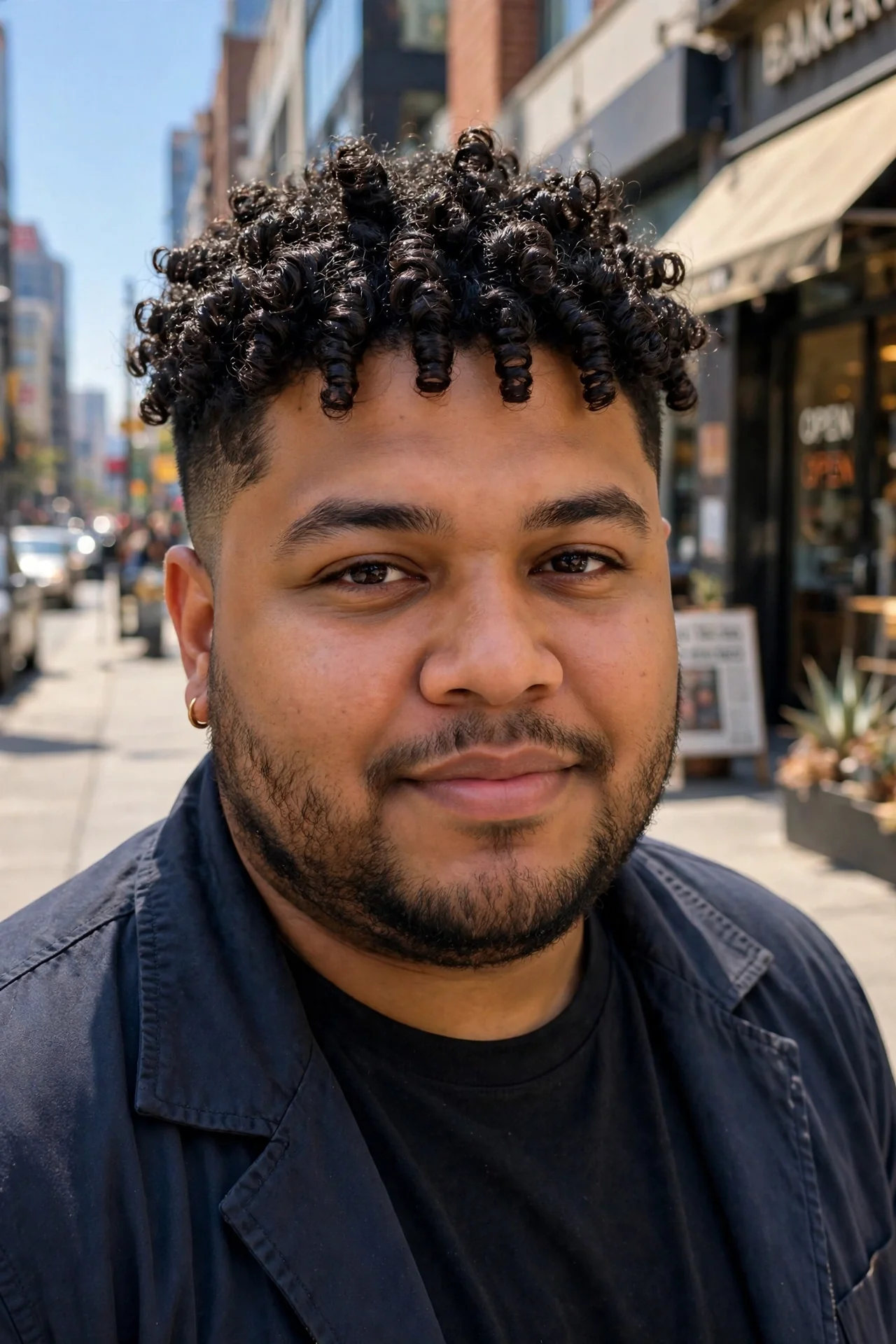
Defined coils on top with a cleaner cut around them is the look most guys with 3B–4A texture land on, and it takes a different approach than looser curls do. Tighter curl patterns behave differently from looser waves in almost every way that matters for a cut, they shrink more as they dry, they hold shape with less product, and they respond better to curl-specific cutting techniques than a standard dry trim.
🧴 Product Note
Most curl-specific product lines marketed toward this texture range claim their formulas define curl clumps without the heavy, greasy buildup older styling creams were known for. That’s a real formulation difference worth looking for, lighter curl creams and gels tend to perform better on this texture than the heavier pomades made for straighter hair.
What Barbers Say
Barbers who specialize in textured cuts generally agree that cutting this texture dry, rather than wet, gives a more accurate read on the final shrunk-up shape, since cutting it wet and stretched can leave the cut too short once it dries and springs back.
17
OF 28
Loose Curls, Worn Natural
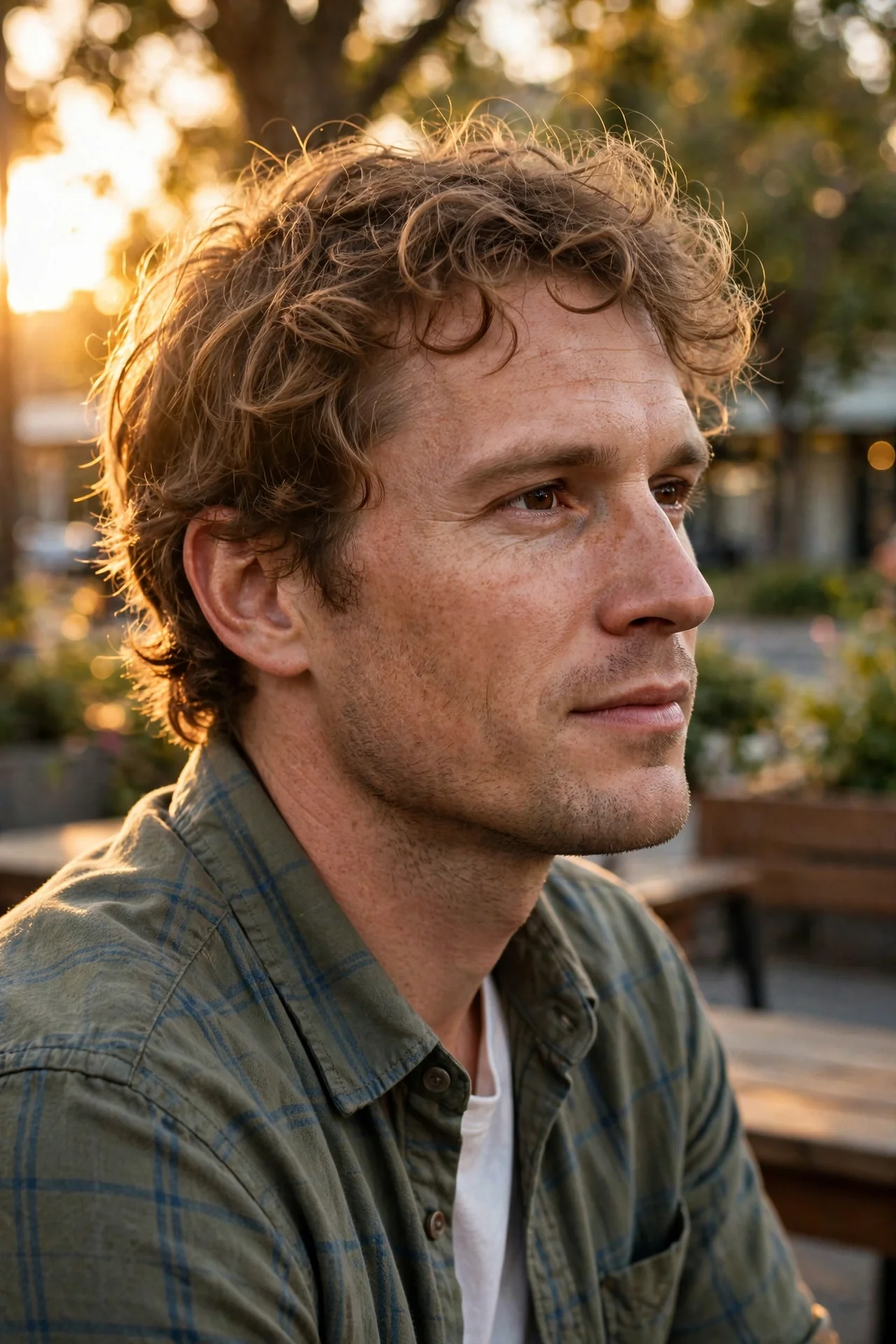
This is the loosest end of the curl spectrum, closer to a strong wave than a tight coil. It needs less product and less aggressive layering than tighter curl types, since the natural pattern already has a soft, relaxed movement to it.
🌊
Curl Shape
loose, open spiral
💧
Shrinkage
minimal when drying
✂️
Cutting Approach
can cut closer to final length
3A vs. 4A: What Actually Changes
Against tighter 3B–4A texture, 3A curls shrink far less when drying and hold a flatter, more elongated shape overall. That means a barber cutting this texture can work closer to the final length while cutting, rather than accounting for significant shrinkage the way they would on a coilier pattern.
18
OF 28
Wavy-Curly Hair in a Medium Cut

Plenty of guys have hair that sits somewhere between wavy and curly, an S-shaped bend that loops at the ends without ever forming a tight ring. Cut to a medium length with soft layering, it gives you a loose, tousled shape with natural movement.
That in-between texture gets lumped in with both wavy and curly hair constantly, but it’s cut differently than either. Wavy hair has an S-shaped bend without a full loop, while true curls form a more defined ring or coil shape.
💡 Myth vs Reality:
Myth: wavy and curly hair need the same products and the same cut.
Reality: wavy hair generally needs lighter products and less aggressive layering, since it has less natural volume to manage than true curls do. Treating wavy hair like tight curls, heavy cream, lots of layering, often leaves it looking greasy and overworked rather than textured.
19
OF 28
A Cut Built for Frizzy Curls

Frizzy curls need a cut as much as a product fix. Soft layering with some weight left in the ends helps curls clump together instead of fluffing out, which is why this one is as much about the cut as the routine.
Frizz isn’t actually a hair type, it’s usually a moisture and friction problem layered on top of whatever curl pattern you already have. Towel-drying roughly, skipping conditioner, or brushing dry curls are the three most common causes.
BEFORE:
Curls dried roughly with a regular towel, rubbed rather than squeezed, frizz surrounding each curl rather than defined shape.
AFTER:
The same curls dried with a microfiber towel or cotton t-shirt, scrunched rather than rubbed, each curl visibly separated and defined.
That difference comes down almost entirely to friction. A standard terry towel is rough enough to rough up the hair cuticle on contact, which is what triggers frizz in the first place, regardless of how good your curl pattern naturally is. Changing the drying method alone, before touching a single product, fixes a surprising amount of frizz on its own.
The Three-Step Fix
Swap your regular bath towel for a microfiber towel or an old cotton t-shirt
Scrunch, don’t rub, squeezing water out upward into the roots instead of down
Apply a leave-in product to soaking wet hair, before it has a chance to start drying unevenly
How It Should Feel
Curls that are properly moisturized should feel slightly damp and pliable even once dry, not brittle or straw-like. If your curls feel crunchy or dry to the touch by midday, that’s usually a sign the hair needs more moisture, not more hold product.
20
OF 28
The Short Summer Curl Cut
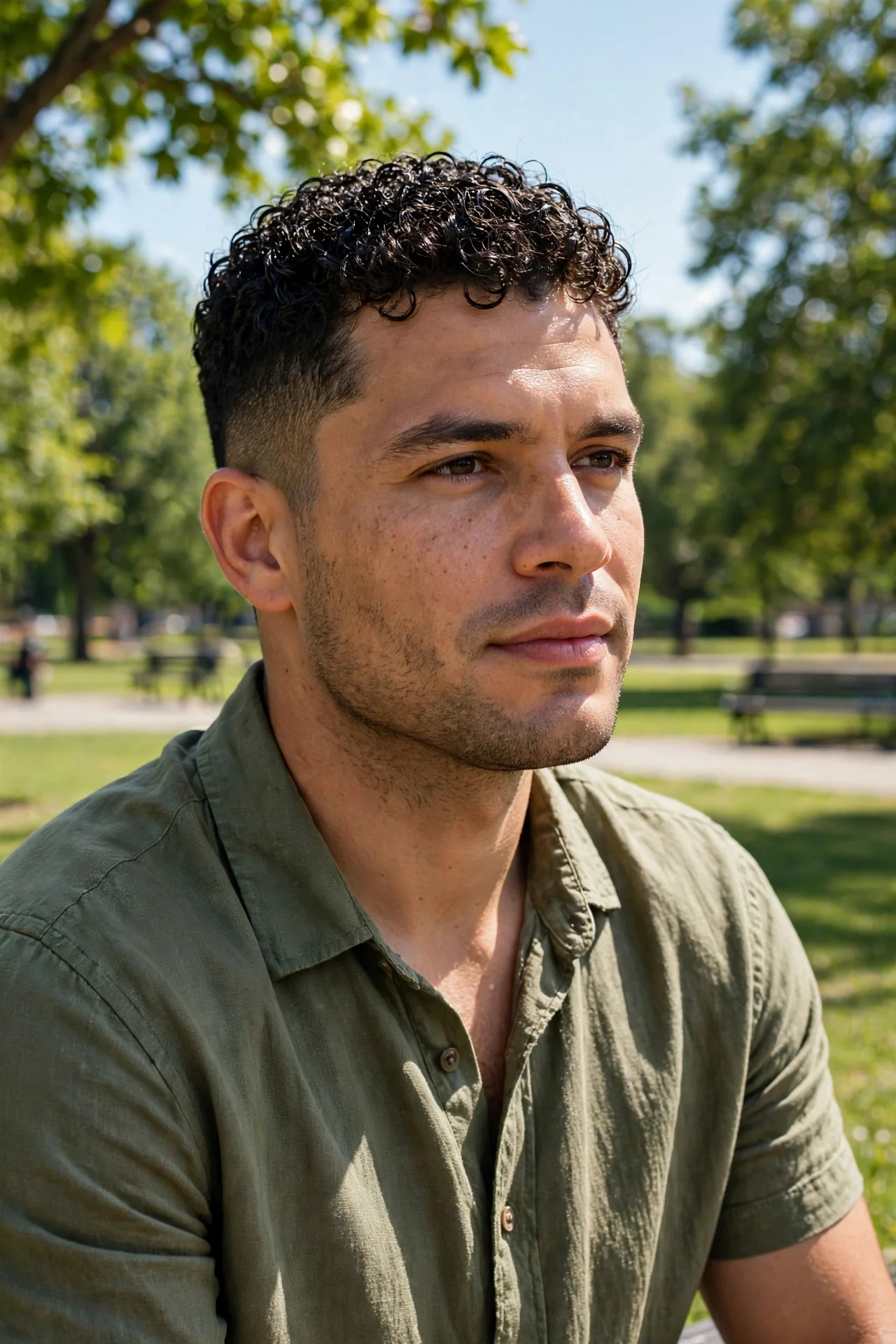
A shorter curly cut with tight sides is the practical summer version, less hair to hold heat and less length for humidity to work on.
Humidity swells the hair shaft and makes curls expand, which is why the same haircut can look completely different in July than it did in February. This isn’t a flaw in the cut, it’s just how curly hair behaves in moisture-heavy air.
What Stylists Recommend
Stylists who work in humid climates tend to suggest anti-humidity sprays or leave-in products with a light hold polymer specifically for summer, swapping out whatever heavier product works fine in drier months. The product that holds beautifully in winter can actually make summer frizz worse if it’s too heavy for the added moisture already in the air.
21
OF 28
The Permed Curly Look
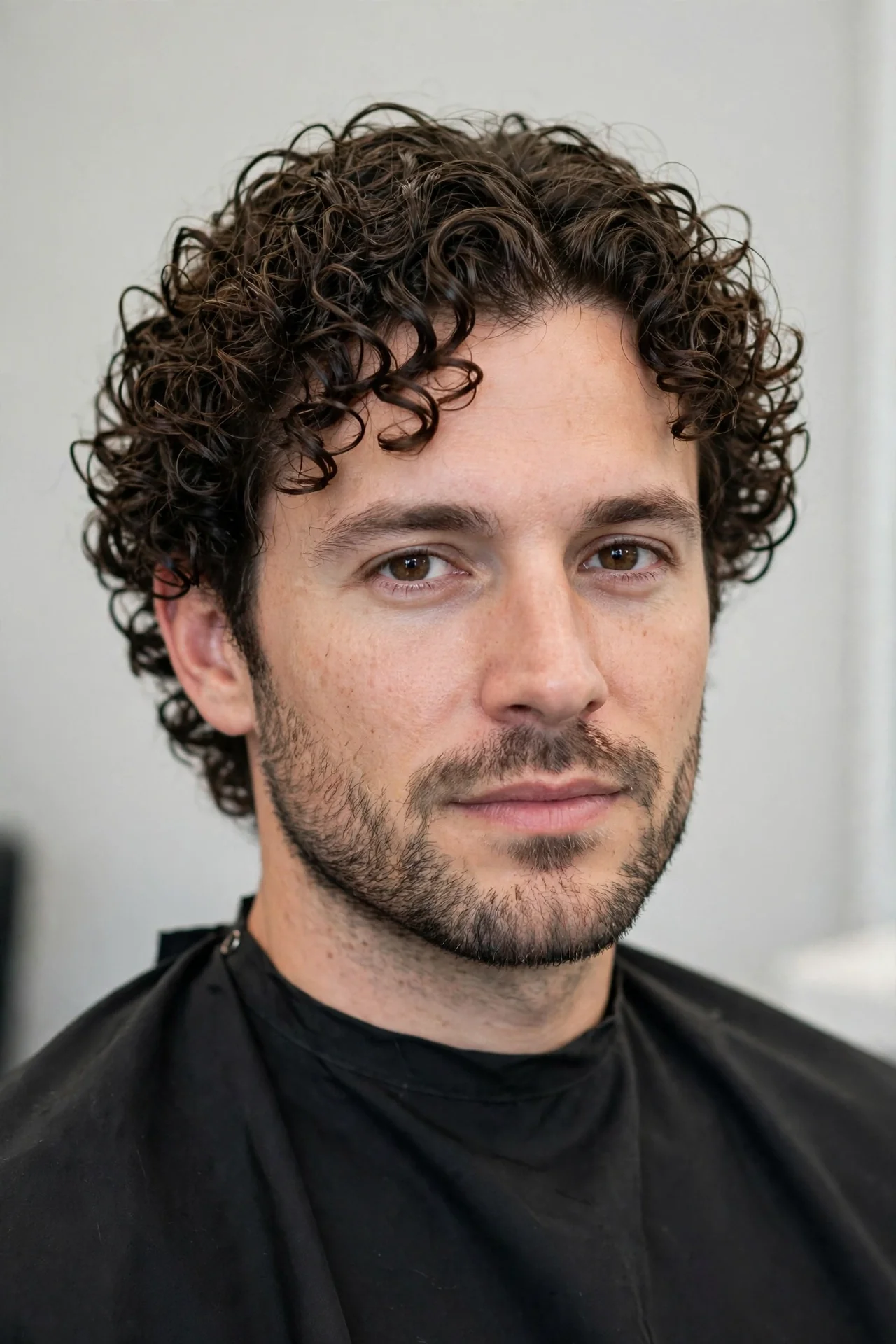
The permed curly look is what you get when a chemical process restructures straight or slightly wavy hair into a curl pattern that wasn’t there naturally. It’s a real commitment, not a styling trick, and it needs to be done by someone experienced specifically with men’s perms rather than a general colorist.
🧴 Product Note
Most professional perm solutions marketed for finer or previously-colored hair claim a gentler formulation than older traditional perm chemicals, which is generally accurate. Modern perm products tend to be less damaging than the stronger solutions common decades ago, though any chemical perm still carries some risk to hair health regardless of formulation.
That risk isn’t evenly distributed across every head of hair, though. Virgin hair that’s never been colored or chemically treated handles a perm with far less drama than hair that’s already been through bleach or repeated coloring, which is the single biggest factor in how safely this process actually goes.
⚠️ Watch Out:
A perm on hair that’s recently been bleached or heavily colored carries real risk of breakage. Tell whoever’s doing the perm about any chemical history first, this isn’t a detail to leave out.
22
OF 28
Curly Hockey Hair

This style gets its nickname from hockey culture, long, flowing hair that moves under a helmet and looks good pushed back off the ice. On curly hair, it translates into a fuller, longer top with enough length for real movement, usually worn pushed straight back or loose.
Where the Name Comes From
Guys who grew up playing hockey often say this style started purely as practicality, long enough to tuck under a helmet, not long enough to be a hassle, and only became a deliberate fashion choice later. That practical origin is part of why it still reads as effortless rather than overly styled.
23
OF 28
Curly Surfer Hair
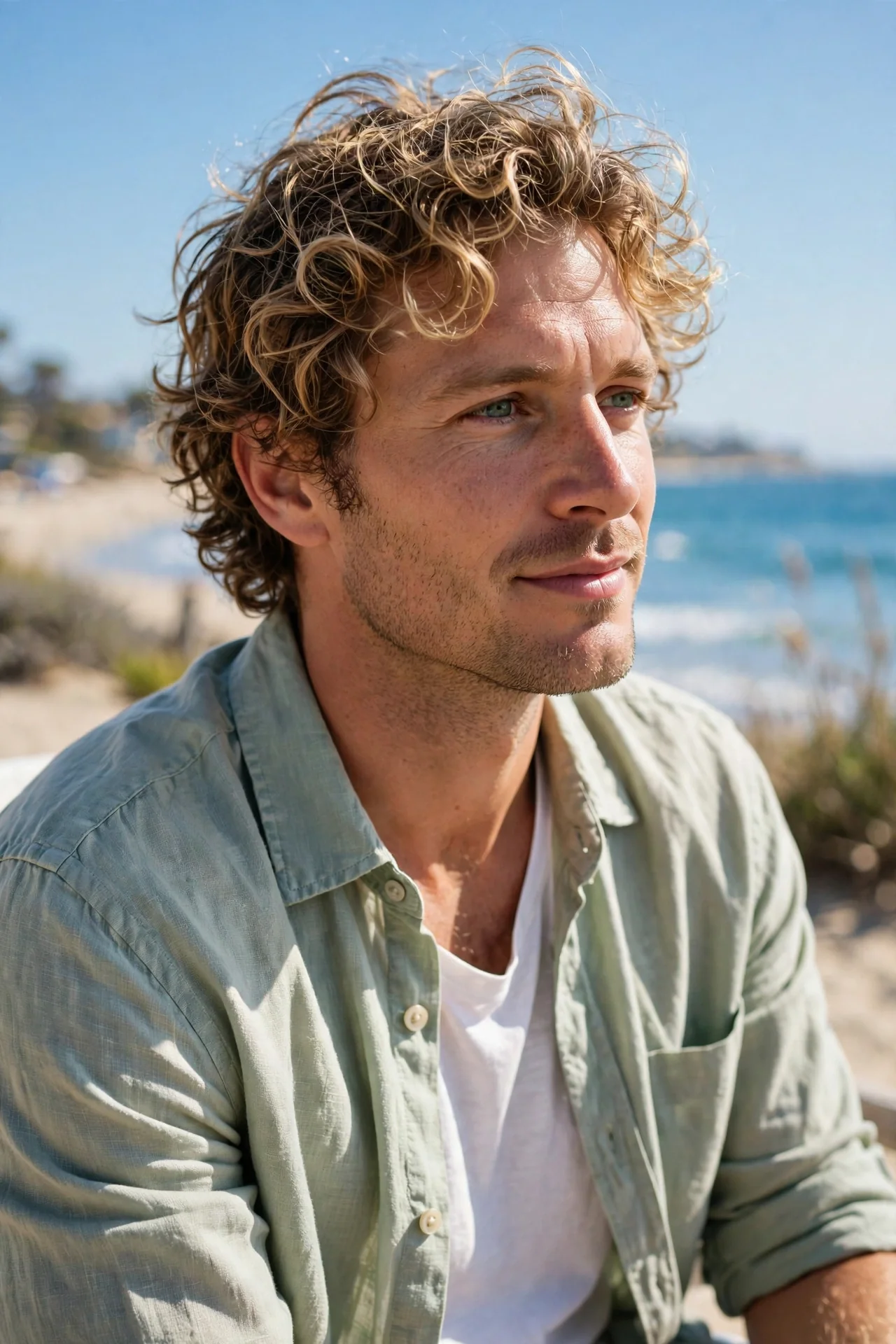
Surfer hair leans into natural texture rather than fighting it, salt-tousled, slightly undone, with sun-lightened pieces mixed through darker curls. It’s a style that genuinely looks better slightly imperfect than it does precisely styled.
✅ Recreate This Look:
- A sea-salt spray, scrunched into damp hair rather than combed through
- Let it air-dry completely in natural light rather than blow-drying it smooth
- Skip the comb entirely once it’s dry, fingers only, to keep the texture rough
This gets you most of the beach effect without actual ocean exposure, since the salt spray roughs up the texture just enough to read as beachy instead of simply unkempt.
24
OF 28
Old Hollywood Curls (1920s–1940s Inspired)
Where It Actually Came From
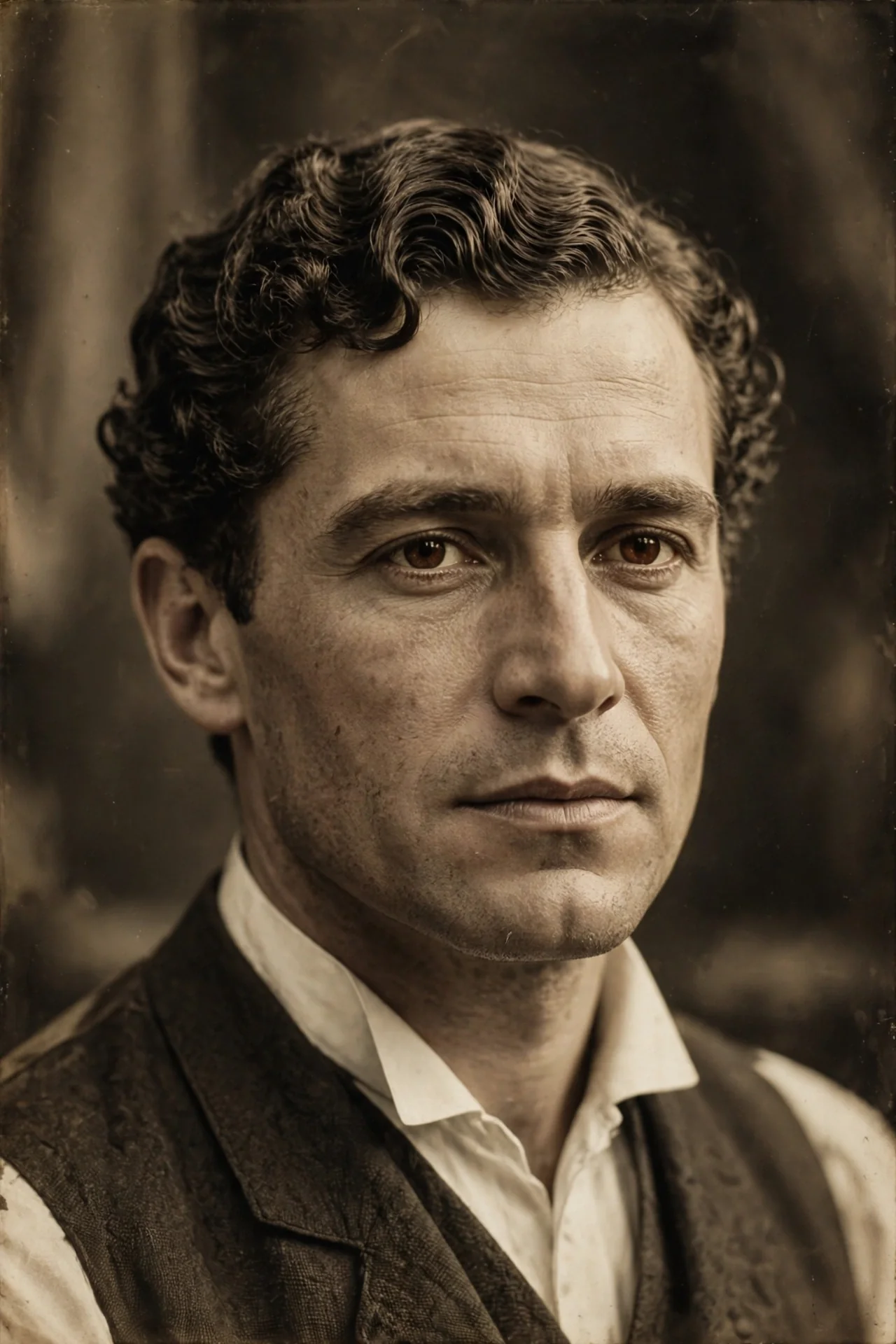
Curly hair in the 1920s through 1940s was typically worn shorter, slicked with pomade, and combed into a controlled side part, a world away from the tousled, texture-forward styles popular today. Hollywood leading men of the era made this look part of a broader clean, formal aesthetic.
Recreating it today means leaning harder into product and comb-styling than most modern curly cuts call for. The curl is present but tamed, not the main visual feature the way it is in most of the other entries on this list.
25
OF 28
90s Curly Revival
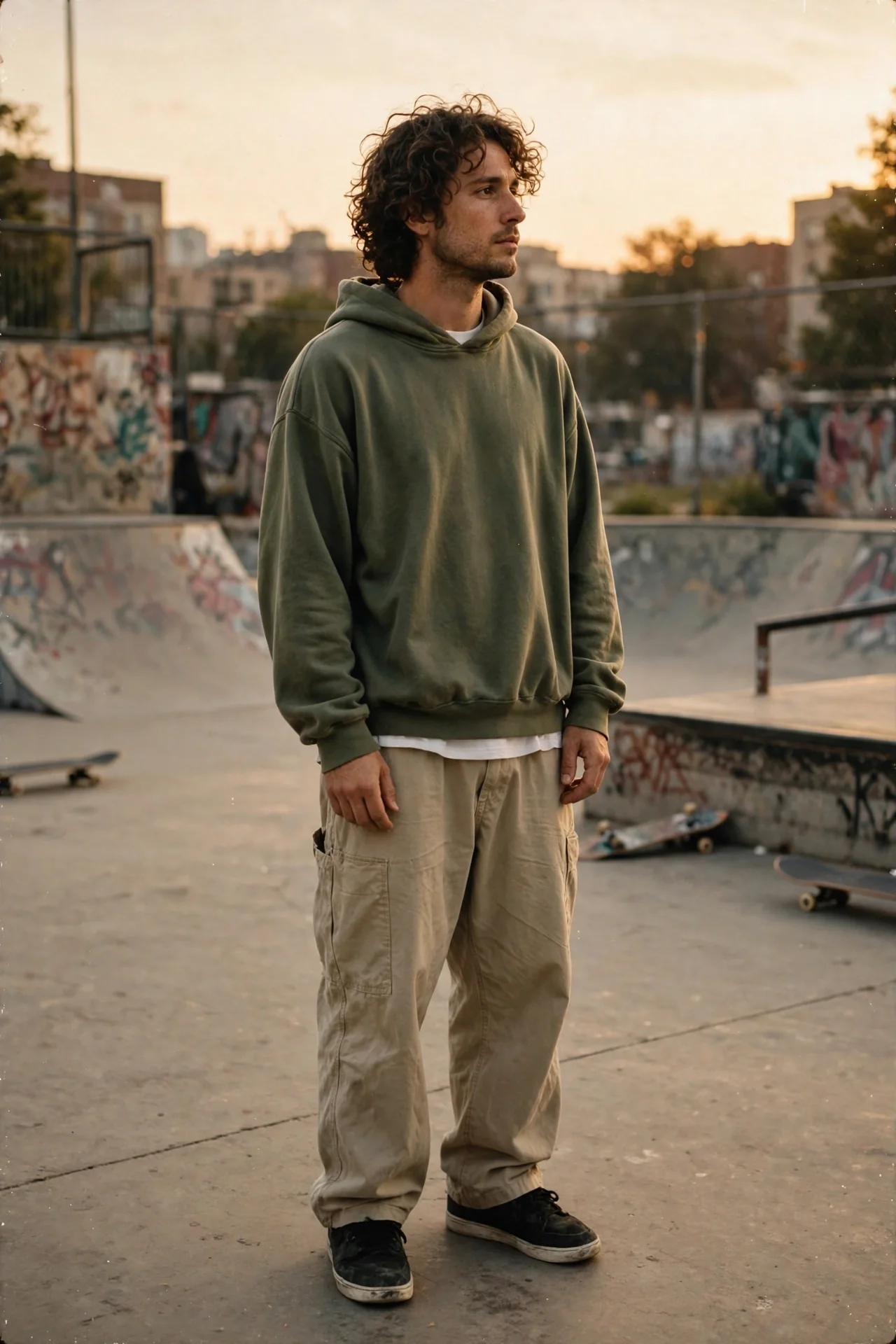
Unlike the controlled curls of the 1940s, the 90s leaned into curls left mostly alone, longer, looser, and deliberately less polished, often paired with baggier clothing and a generally unbothered attitude toward styling.
The Honest Trade-Off
This look depends almost entirely on the clothing and overall styling around it to read as intentional rather than just unstyled. The haircut itself is genuinely simple, longer length, minimal product, it’s the rest of the outfit doing most of the work to place it in a specific decade rather than just looking like someone who skipped the barber.
26
OF 28
Blonde or Bleached Curly Hair

Bleaching curly hair makes the texture and definition far more visible, since lighter strands catch and reflect light differently than dark hair does. It also changes how the hair physically behaves, bleached curls tend to be more porous and prone to dryness than natural color.
🧴 Product Note
Most bond-building treatments marketed for bleached hair claim to reduce breakage during the lightening process itself, which is generally accurate for guys going more than one or two levels lighter, though they don’t eliminate the ongoing dryness that comes after, that still needs a dedicated moisture routine.
27
OF 28
Short Silver Curls

Cut short, grey and white curls make one of the cleanest looks on this list. They behave slightly differently than pigmented hair, often coarser and drier, which actually means they can benefit from shorter, cleaner cuts that don’t rely as much on length to show shape.
💈 From the Chair:
Older clients with curly hair tend to do better moving toward shorter, more defined cuts rather than fighting to keep the fuller, longer styles they wore younger. Grey curl texture holds a short, tidy shape exceptionally well, often better than it holds length.
28
OF 28
The Curly Flow

The flow haircut, medium length, swept back, built on layering, usually gets discussed on straight or wavy hair, but it works on looser curl patterns too. The curl does extra work here, adding natural volume and texture that a barber would otherwise need to build in through cutting technique alone.
Curly Flow vs. Straight Flow
A straight-hair flow depends heavily on product and blow-drying technique to fake movement and texture. A curly flow gets a lot of that for free. The tradeoff is control, straight hair holds whatever direction you style it in, while curly hair will always do a bit of its own thing regardless of how it’s brushed.
So, which curl pattern are you working with, and which of these have you actually tried? Drop it in the comments, especially if you’ve found a product or technique that made a real difference.
Which curly cut are you trying next?
FAQs
What’s the best haircut for curly hair that’s low maintenance?
The classic curly crop, short on top with tight sides, is generally the lowest-effort option. It holds its shape well with minimal daily styling and doesn’t require precise product application the way longer or more structured curly cuts do.
Should curly hair be cut wet or dry?
It depends on the texture. Tighter curl patterns, 3B and above, are often cut dry to account for shrinkage and get an accurate read on the final shape. Looser waves and curls can usually be cut wet with more predictable results.
Why does my curly haircut look different in summer than winter?
Humidity causes the hair shaft to swell, which makes curls expand and often frizz more in warm, humid conditions. The same cut and product routine that works fine in drier winter air often needs adjusting for summer, typically a lighter product with some anti-humidity properties.
Is it true that curly hair shouldn’t be brushed?
Brushing dry curls with a standard brush tends to break up the curl clumps and create frizz. Detangling is usually better done on wet, conditioned hair with fingers or a wide-tooth comb instead.
Can I get a perm if I’ve colored my hair?
It depends on how recently and how aggressively the hair was colored. Heavily bleached or chemically treated hair carries real risk of breakage during a perm, so it’s worth telling whoever’s doing the perm about your hair’s chemical history before starting.
How often should curly hair be trimmed?
Most curly cuts hold their shape for six to eight weeks before needing a trim, slightly longer than many straight-hair cuts, since curl pattern tends to disguise minor regrowth better than straight hair does.