26 French Crop Haircuts for Men: Why It Suits Almost Everyone

The French crop is short, textured on top, and finished with a fringe that sits just above the forehead. It’s simple enough to explain in one sentence, which is part of why it’s become one of the most requested short cuts in barbershops.
What makes it work on so many guys is how adjustable it is. Change the fade, the fringe length, or the amount of texture, and you’ve got a completely different haircut built on the same frame. Here are 26 versions, and how to pick the one that fits your hair.
Short on Time? Pick Your Path
Table of Contents
- 01The Classic French Crop
- 02The Textured French Crop
- 03French Crop With a Low Fade
- 04French Crop With a Mid Fade
- 05French Crop With a Skin Fade
- 06French Crop With a Drop Fade
- 07French Crop With a Burst Fade
- 08French Crop With a Shadow Fade
- 09French Crop With a Low Taper on Straight Hair
- 10The Messy French Crop
- 11The Modern French Crop
- 12The Long French Crop
- 13French Crop With a Heavy Fringe
- 14French Crop With a Straight, Blunt Fringe
- 15Curly French Crop
- 16Wavy French Crop
- 17French Crop for Fine or Thinning Hair
- 18French Crop for an Oval Face
- 19French Crop With a Beard
- 20French Crop With a Hair Design
- 21Silver or Grey French Crop
- 22Bleached or Coloured French Crop
- 23The 1920s French Crop (Peaky Blinders Inspired)
- 24French Crop for a Wedding
- 25French Crop for Boys
- 26French Crop for Toddlers
01
OF 26
The Classic French Crop
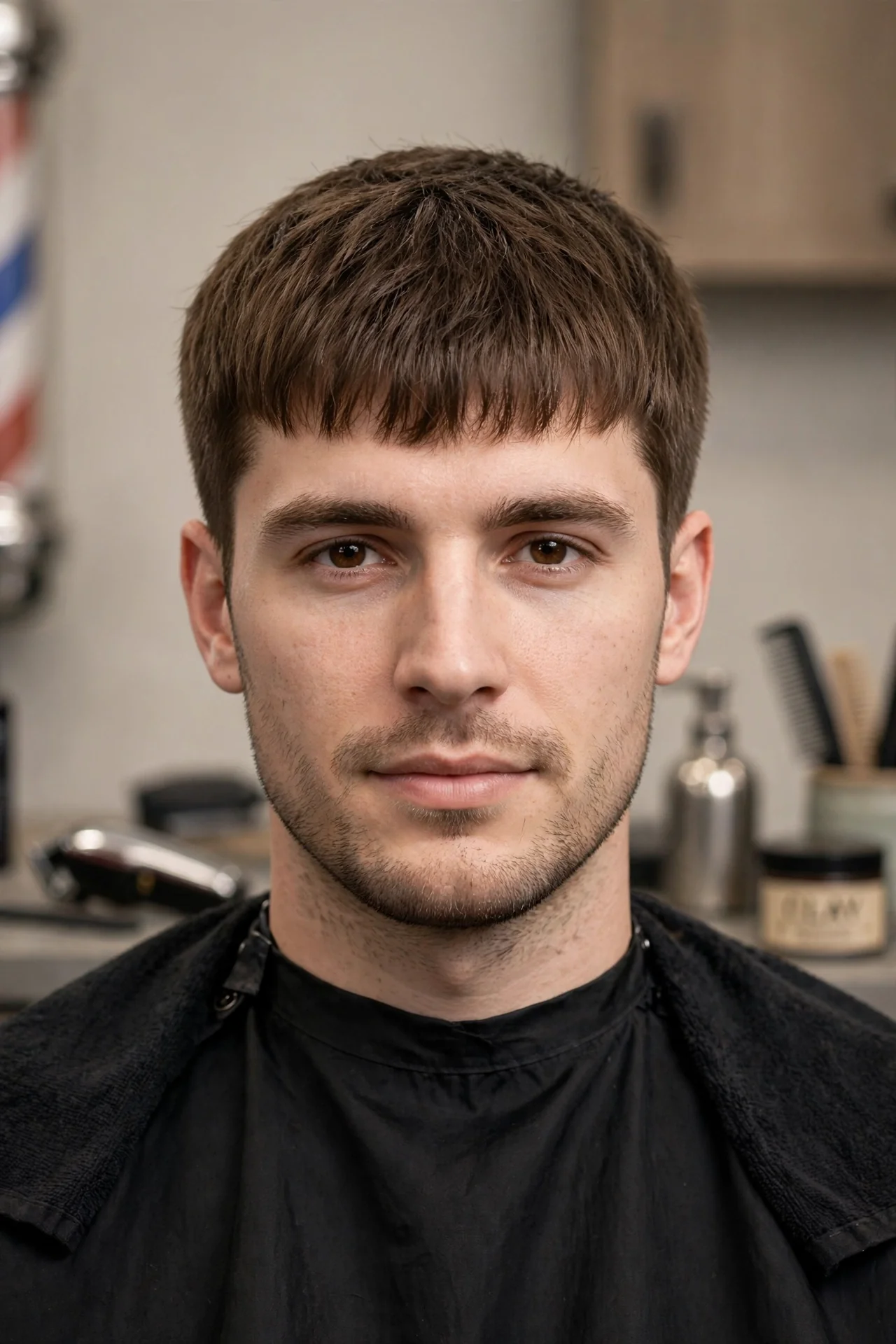
The classic French crop keeps the top somewhere around one to two inches, pushed forward so the fringe lands just above the eyebrows. The sides are tapered short, and the whole top is cut with enough texture that it doesn’t sit flat like a helmet.
That forward direction is what separates it from most short cuts. Instead of sweeping hair up or back, you’re working with the way hair naturally wants to fall, which is why it takes so little effort to style once it’s cut properly.
How to Style It in Under Two Minutes
Towel-dry until the hair is damp, not dripping
Rub a pea-sized amount of matte clay or paste between your palms until it’s warm
Work it through the top from back to front, pushing everything toward your forehead
Pinch a few pieces at the fringe to break up the line so it doesn’t look blunt
Most guys find they stop needing a mirror for this after the first week. It’s one of the few cuts where styling it badly still looks mostly fine.
As a barber, I usually keep the fringe sitting just above the eyebrows, with the top somewhere between 1 and 3 inches. To hold the shape, plan on a trim every three to four weeks.
On a round face, a textured top adds height. On a long face, the fringe balances the length, and it’s also one of the best ways to disguise a receding hairline.
02
OF 26
The Textured French Crop
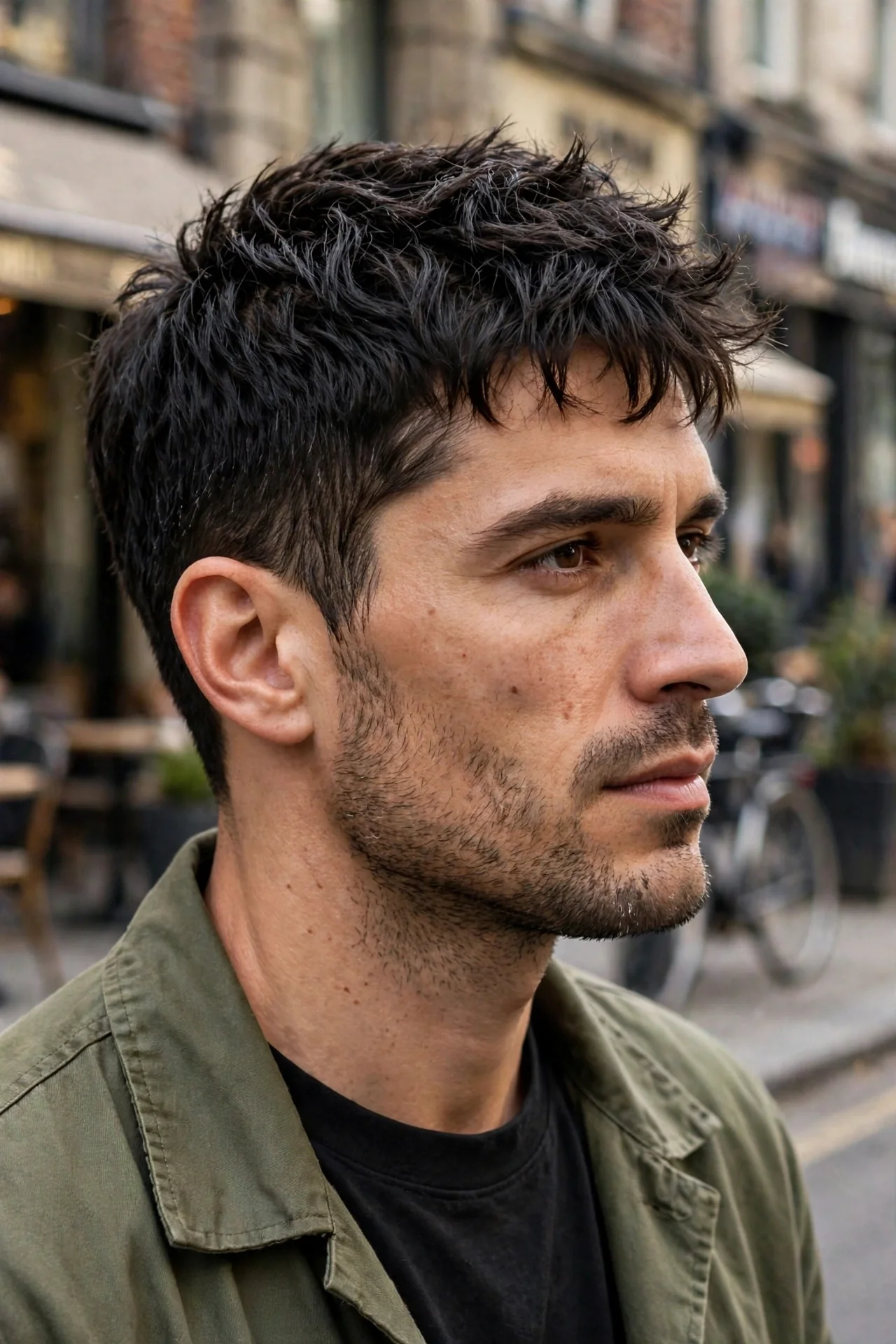
The textured version pushes the choppiness further. Your barber point-cuts into the top with scissors, snipping vertically into the ends rather than straight across, which creates separated, uneven pieces instead of one smooth surface.
This is the version I’d point to for guys with thick hair that tends to look puffy when it’s short. Removing bulk through texturizing lets the top lie down and move rather than sticking out.
✅ Recreate This Look:
- Ask for point-cutting through the top, not just a straight trim
- Keep the top around 1.5 to 2 inches so there’s enough length to show the texture
- Style with a matte clay on dry hair, then rough it up with your fingers
- Skip anything shiny; gloss smooths texture out and makes the cut look flatter
The finished look should feel slightly stiff and gritty to the touch, not slick. If it feels greasy, you’ve used too much product.
03
OF 26
French Crop With a Low Fade
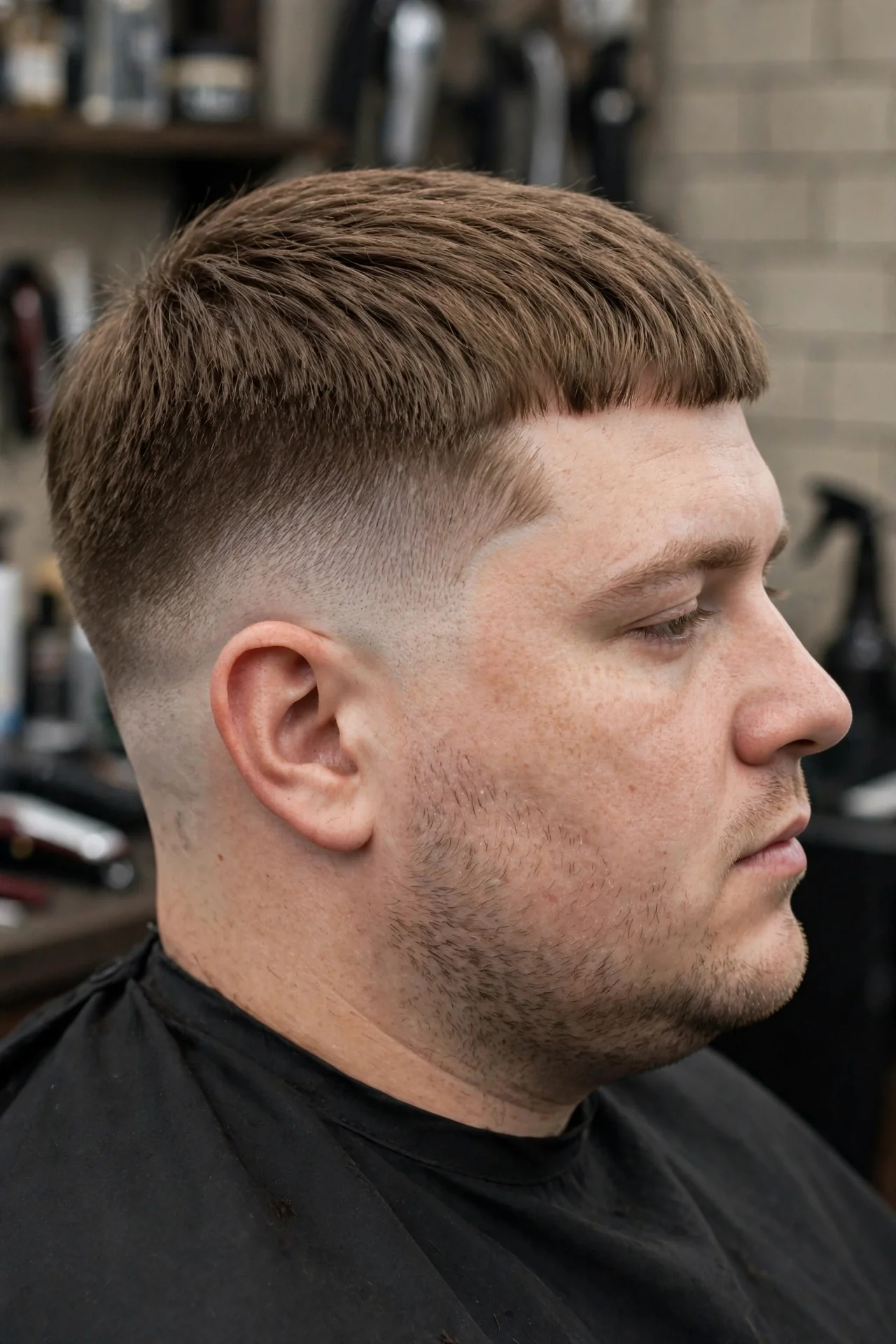
A low fade starts just above the ear and keeps most of the length on the sides. It gives the crop a cleaner finish without the high-contrast look of a skin or high fade, which makes it the safest choice if you work somewhere that’s still a bit traditional about haircuts.
The low fade also hides growth longer. Because the shortest part sits so low on the head, a couple of weeks of regrowth blends in rather than showing as a clear line.
💈 What to Ask Your Barber:
“French crop with a low fade starting just above the ear, textured on top, fringe about an inch long.” Point to the spot on your head where you want the fade to begin, because “low” means slightly different things in different shops.
A reference photo helps even more than wording. Take one from the side, since that’s where the fade actually shows.
04
OF 26
French Crop With a Mid Fade
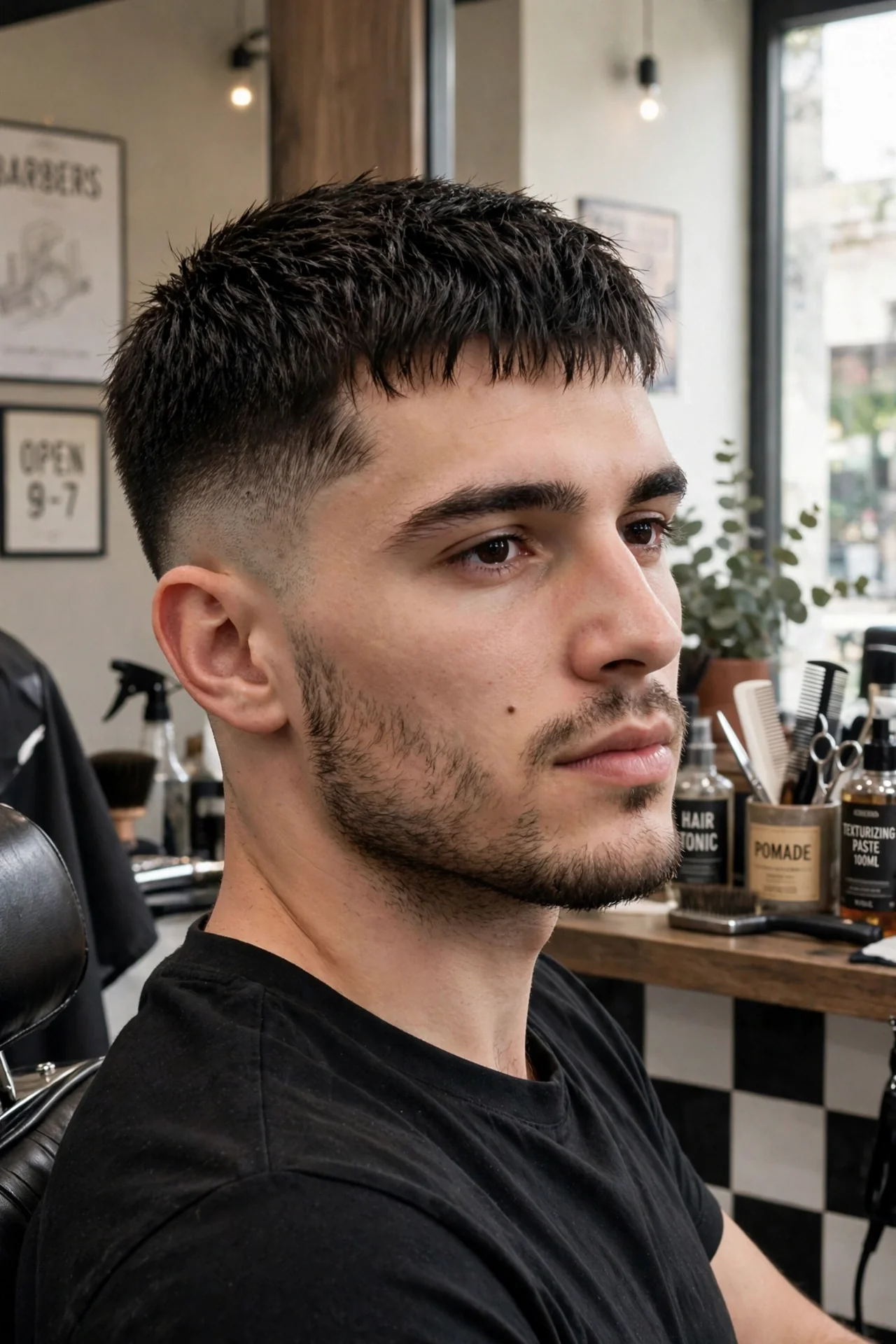
A mid fade starts around the temple, roughly halfway up the side of the head. It’s the most common pairing with a French crop because it shows a clear difference between top and sides without making the cut look aggressive.
Fade height changes the whole character of the crop, so it helps to see the options side by side.
| Fade Height | Where It Starts | Look | Touch-Up Every |
|---|---|---|---|
| Low | Just above the ear | Subtle, conservative | 3–4 weeks |
| Mid | Temple level | Balanced, most popular | 2–3 weeks |
| High | Above the temple | Sharp, high contrast | 2 weeks |
| Skin | Down to bare skin | Boldest, cleanest line | 1–2 weeks |
If you can’t decide, mid is the one barbers tend to recommend for a first French crop. It’s easy to go higher at the next visit, while a fade that’s too high takes weeks to grow back down.
05
OF 26
French Crop With a Skin Fade
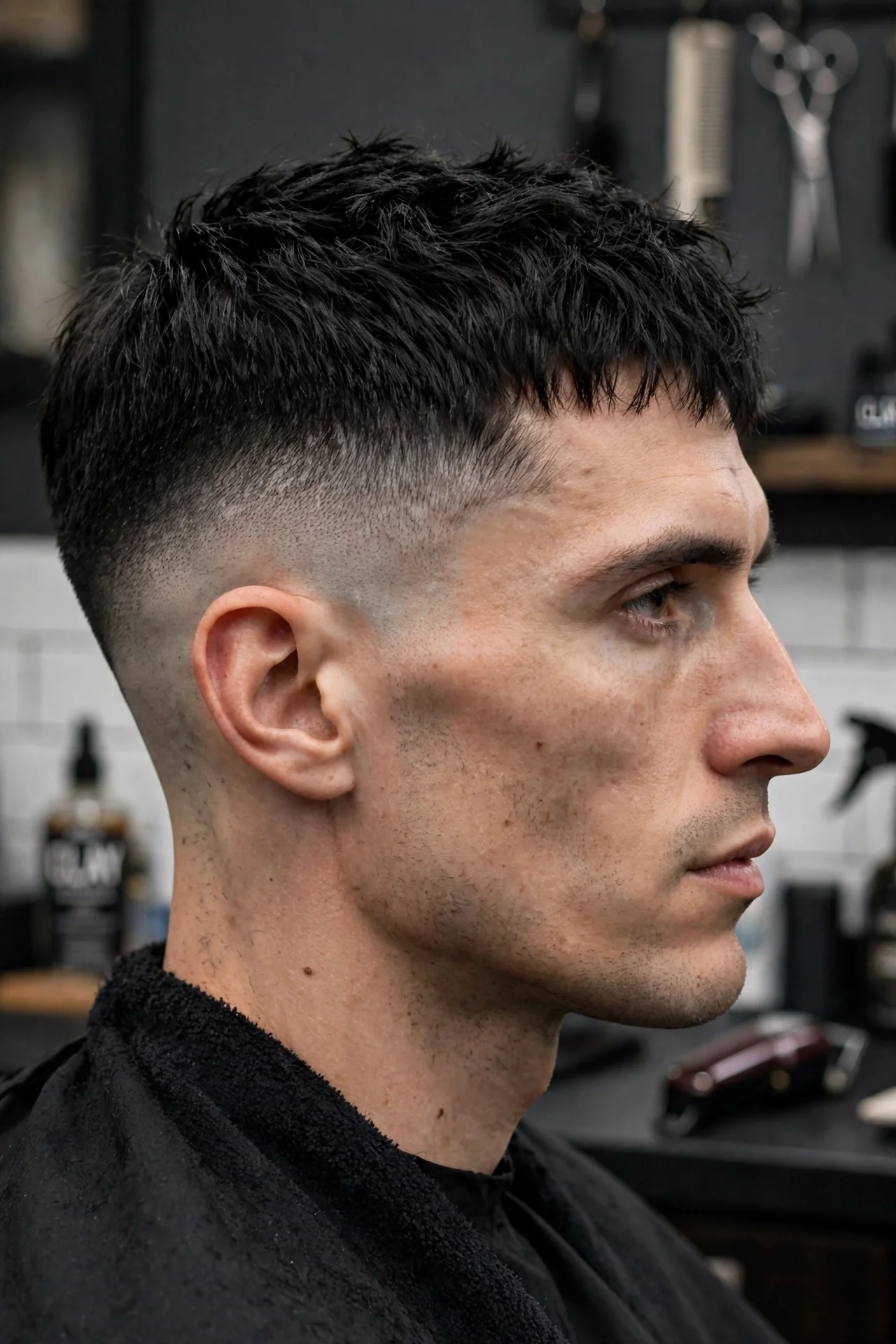
A skin fade takes the sides all the way down to bare skin, usually starting high. Against a textured French crop top, the contrast makes the top look fuller and the whole cut look freshly done, even from across a room.
That sharpness comes with a short lifespan. The bare-skin section shows regrowth within a week, and by week two the clean line has already softened into stubble.
⚠️ Watch Out:
Skin fades on very pale skin can show redness or razor irritation for a day or two after the cut. If your skin reacts easily, ask your barber to stop at a zero guard instead of a foil shaver, which gets you almost the same look with less irritation.
This version suits guys with a strong jaw and thick hair best, since the bare sides put all the focus on the top and face shape.
06
OF 26
French Crop With a Drop Fade
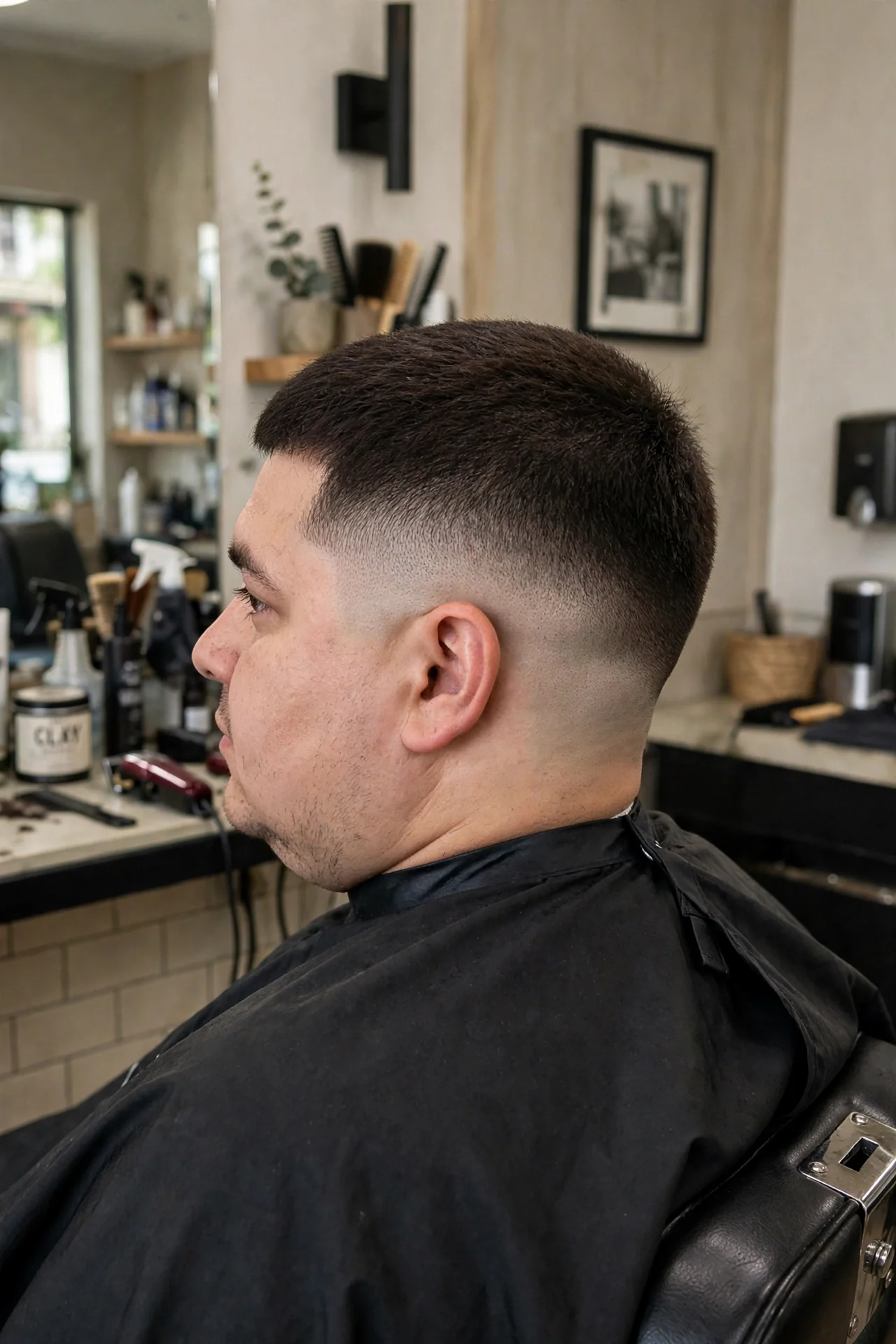
A drop fade follows a curved line that dips down behind the ear instead of running straight around the head. From the side, it looks like the fade “drops” toward the back of the neck.
🎨
Fade Line
curves down behind the ear
️✂️
Back
stays fuller at the crown
📐
Effect
softens a round head shape
The curve keeps more weight at the back of the head, which balances guys whose crown is a little flat. It also looks more deliberate than a straight-line fade in photos taken from the side.
07
OF 26
French Crop With a Burst Fade
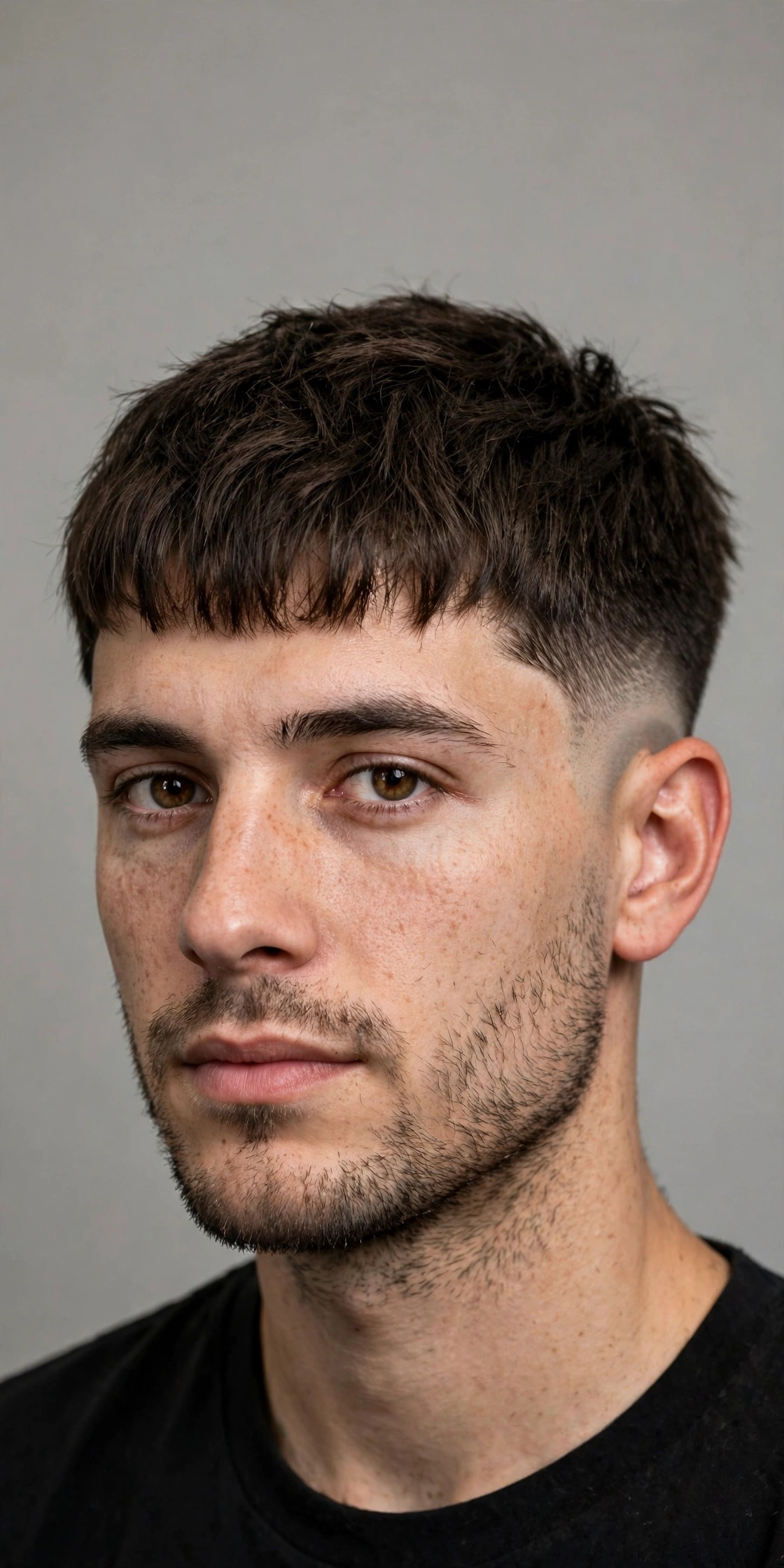
A burst fade fans out in a half circle around the ear only, leaving the back of the head longer. On a French crop, it creates a rounder, more relaxed outline than a fade that wraps all the way around.
📌 Good To Know
Burst fades read more casual and streetwear-leaning than other fades. If you need a cut that works in a strict office, a low or mid fade is the safer choice.
Because the back stays longer, this one also grows out more gracefully than a full skin fade. The fade around the ear needs touching up, but the rest of the cut can go longer between visits.
08
OF 26
French Crop With a Shadow Fade

A shadow fade goes short on the sides but stops before skin, usually at a one or one-and-a-half guard. You get the clean, faded shape without the scalp showing through.
This is the version that tends to suit guys in their 30s and up who want a modern cut without a look that reads too young. It’s also forgiving on scalps with scars, uneven skin tone, or bumps that a skin fade would put on display.
📌 Quick Tip:
Ask for the shadow fade to finish with scissor-over-comb at the top of the sides. It blends the fade into the crop more softly than clippers alone.
The tradeoff is less contrast. If you want the top to look dramatically fuller, a shadow fade won’t do that the way a skin fade will.
09
OF 26
French Crop With a Low Taper on Straight Hair
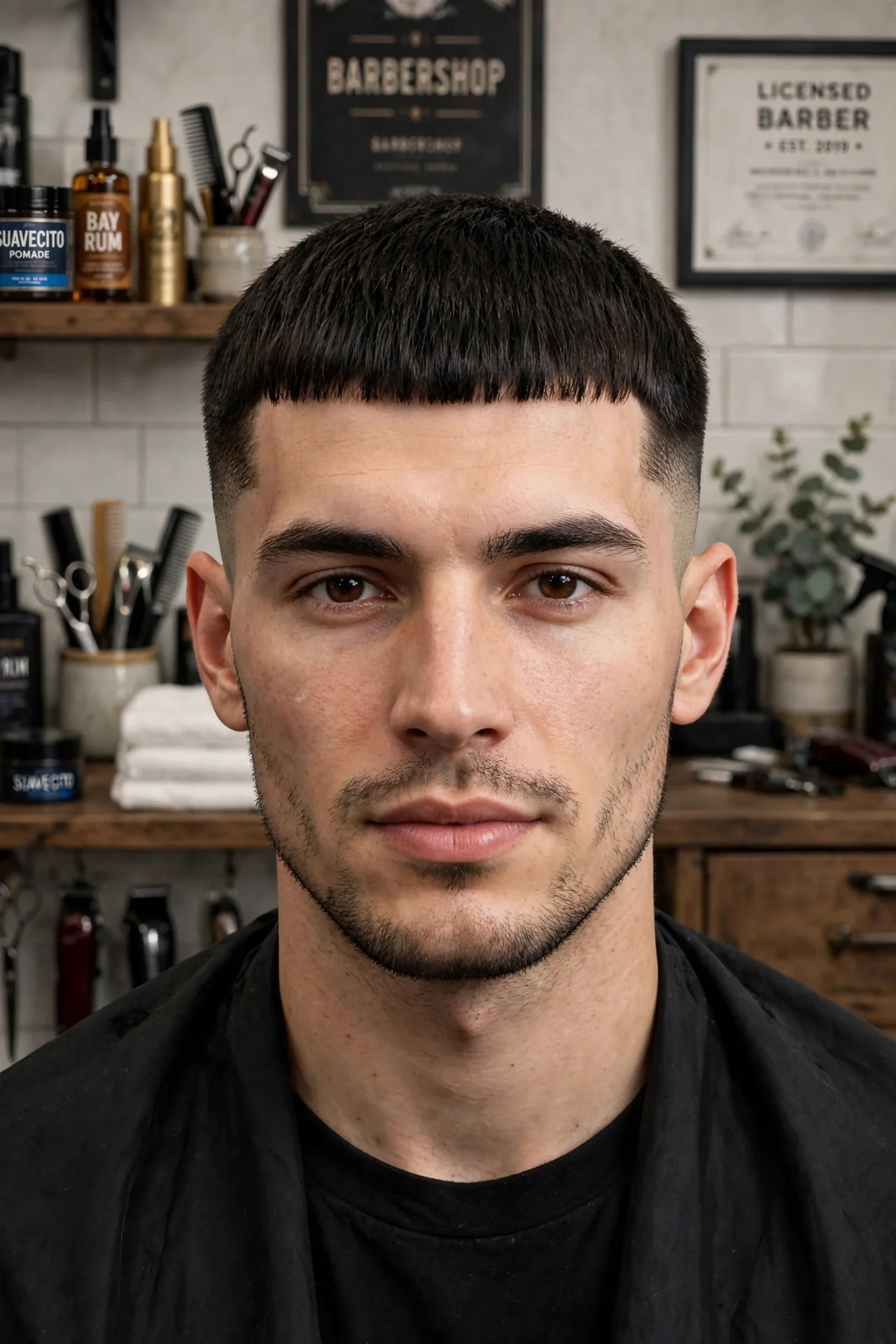
A taper only shortens the hair at the edges, the sideburns and the neckline, while a fade blends the whole side. Paired with a French crop on straight hair, it gives a neater, more natural look that doesn’t scream “fresh haircut.”
💡 Myth vs Reality:
Myth: a French crop needs a fade to look right.
Reality: the crop itself is defined by the textured top and forward fringe, not the sides. A low taper keeps it clean while leaving more hair on the sides, which some guys find more comfortable and natural.
Straight hair especially benefits here, since it tends to show clipper lines clearly. A taper avoids that problem by keeping the sides longer and the transitions softer.
10
OF 26
The Messy French Crop
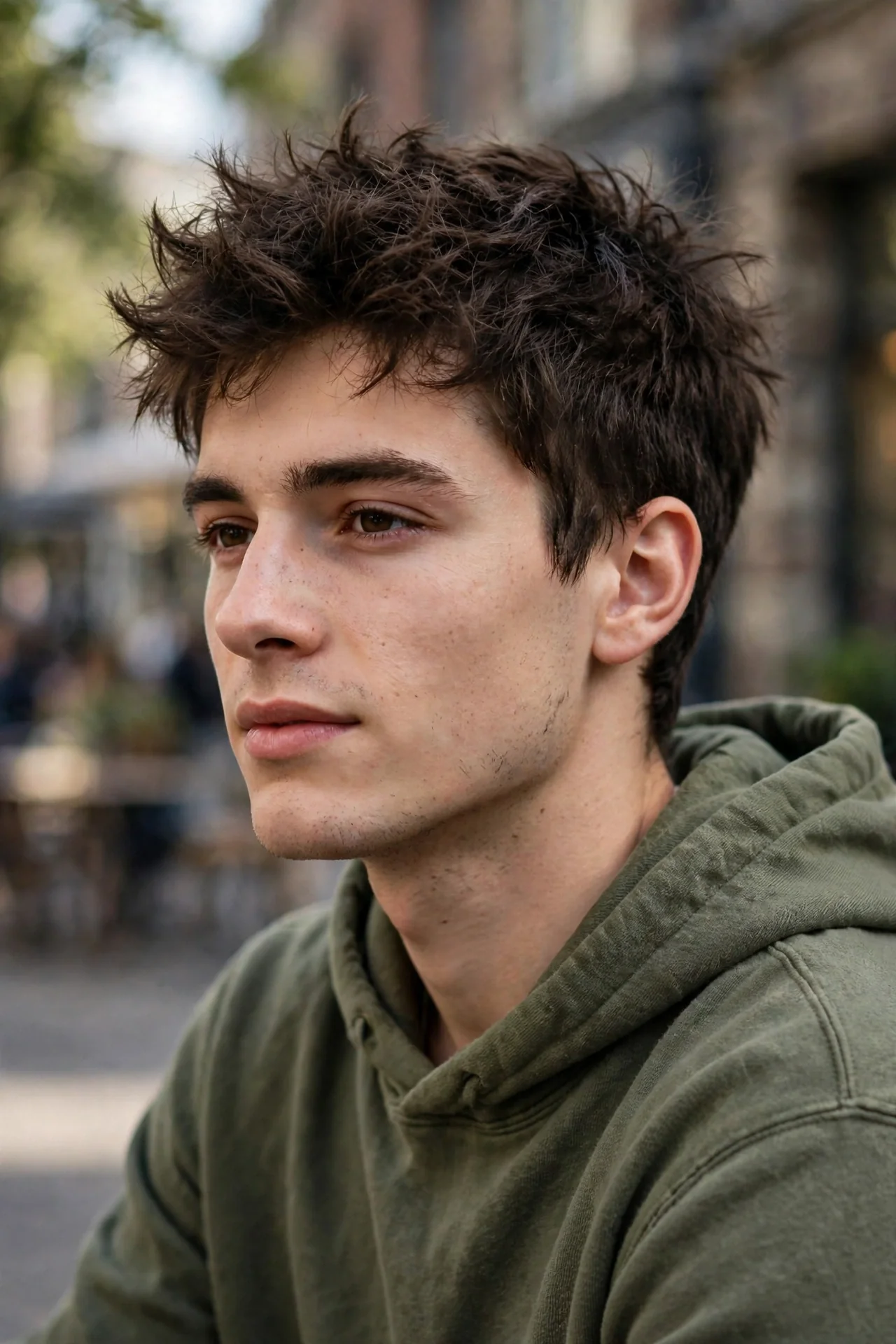
The messy French crop keeps the same cut but skips the neat finish. Pieces point in slightly different directions, and the fringe looks broken up rather than lined up.
BEFORE:
A neatly combed crop with every piece lying flat and the fringe in one straight line.
AFTER:
The same cut roughed up with matte paste and fingers, pieces separated and lifted, looking relaxed instead of stiff.
The difference is almost entirely in styling, not cutting. Apply a little texture powder at the roots first, then work a matte paste through with your fingers and stop before it looks finished. That’s the whole trick, knowing when to stop.
11
OF 26
The Modern French Crop
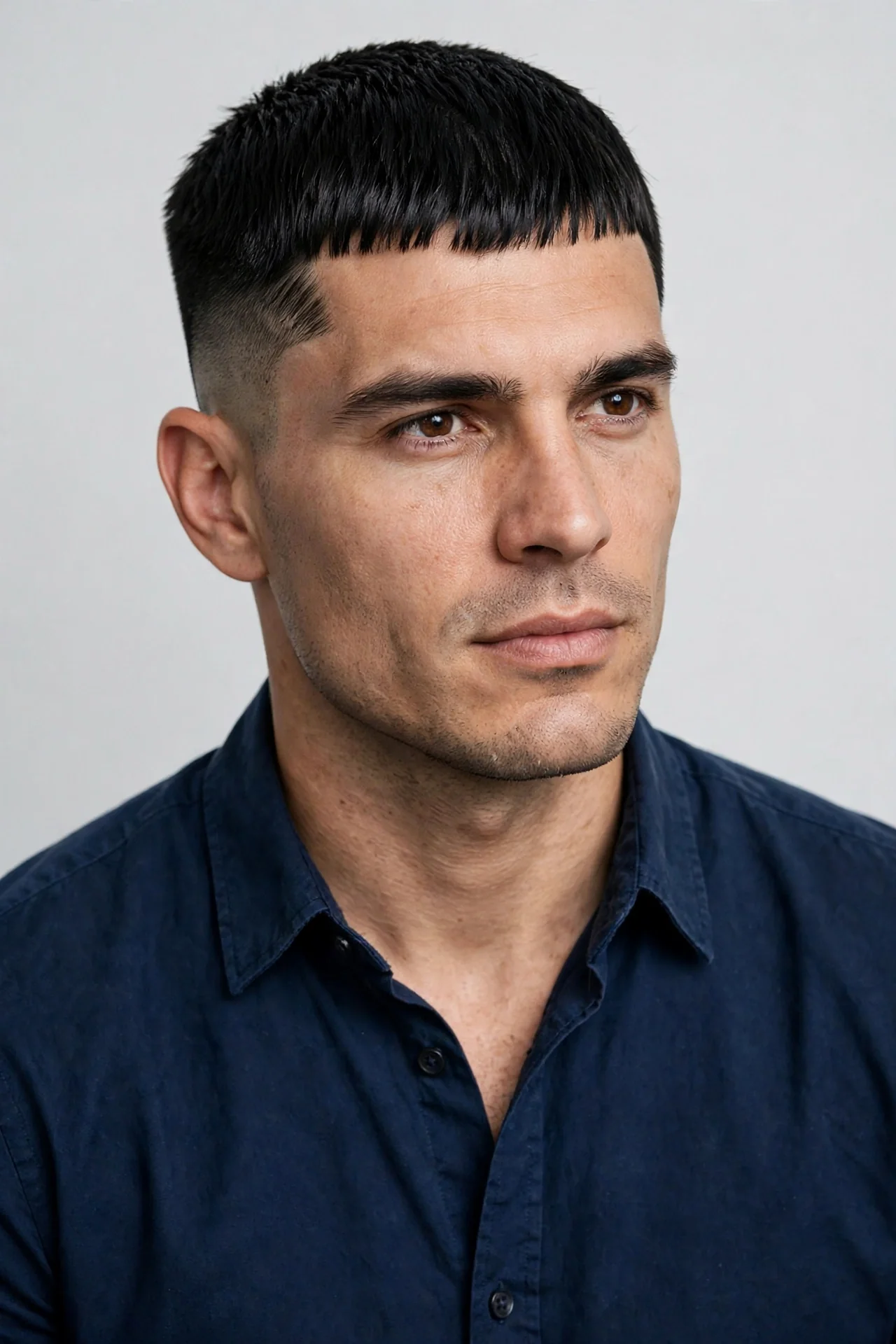
The modern version leaves a bit more length on top and lets it fall more naturally, with less of the hard, blunt fringe line the original had. It’s the crop most barbers mean today when someone just asks for “a French crop.”
The longer top gives you options. You can push it forward for the classic look, or lift it slightly at the front for something closer to a textured quiff on days you want a change.
✅ Do This
Keep about two inches on top so the hair has room to move and fall softly.
🚫 Skip This
A heavy, glossy pomade. It weighs the top down and erases the soft movement that makes this version look current.
12
OF 26
The Long French Crop

A long French crop pushes the top to around three inches, with a fringe that reaches the eyebrows or slightly past them. The sides are often cut with scissors instead of clippers, so the whole cut looks softer and more grown-in.
The all-scissor approach matters here. Clippers leave a clear line where the sides end, while scissors let the length blend gradually from sides to top, which suits a longer crop much better.
Common Mistake
Letting the fringe grow into your eyes without reshaping it. A long crop still needs regular trims to the front, or it stops looking like a crop and just looks like hair that needs cutting.
It’s also the easiest version to transition out of. If you decide to grow your hair longer, the long crop is already halfway to a textured medium cut.
13
OF 26
French Crop With a Heavy Fringe
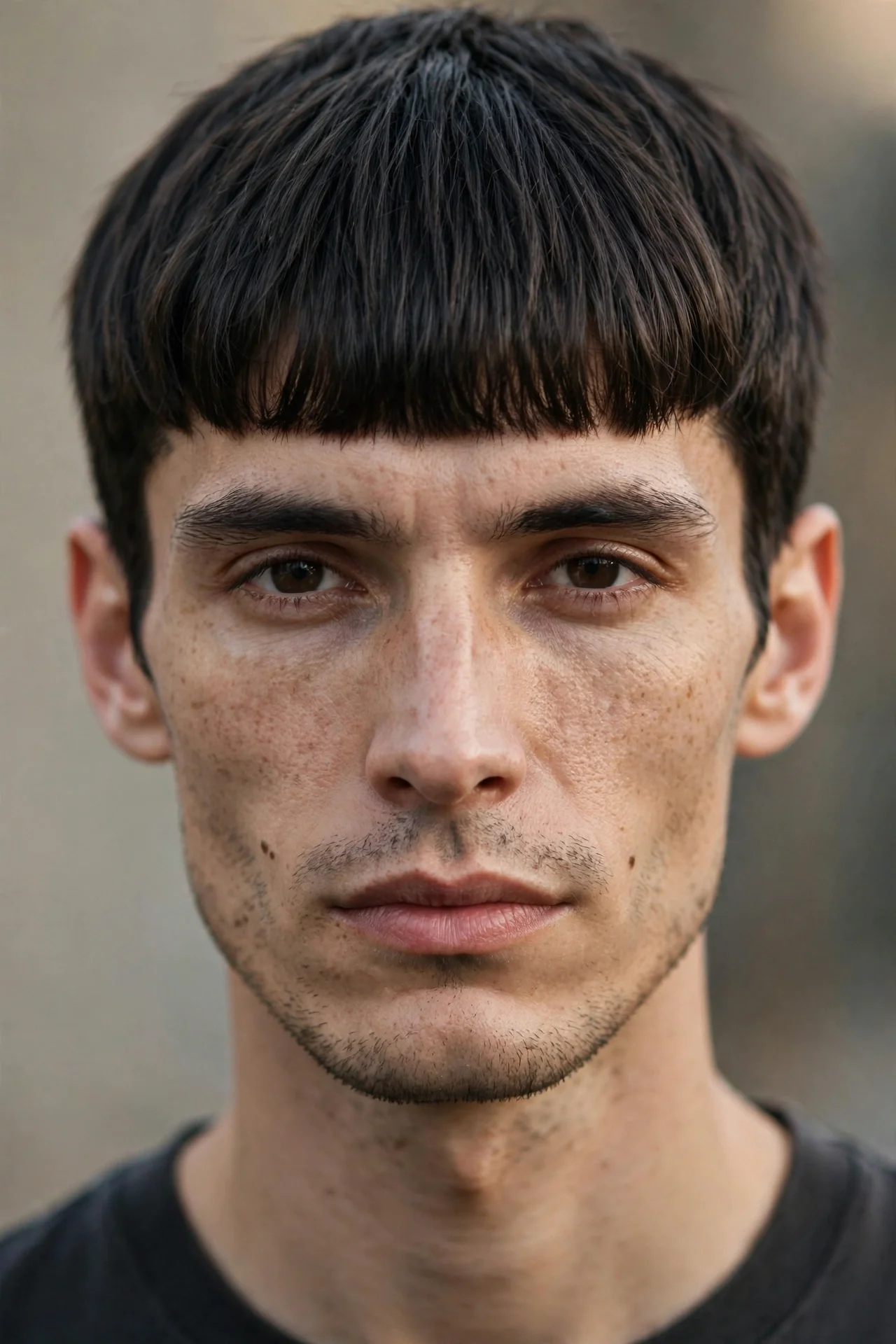
A heavy fringe uses more hair at the front, creating a thick, solid curtain over the forehead. It’s a bolder look than the classic short fringe and gives the crop a stronger graphic shape.
🎨
Fringe
thick, covers most of the forehead
️✂️
Sides
short to keep contrast
📐
Effect
shortens a long face
This is one of the most practical versions for guys with a long face or a high forehead. Covering more of the forehead visually shortens the face and balances the proportions without needing a longer haircut.
14
OF 26
French Crop With a Straight, Blunt Fringe
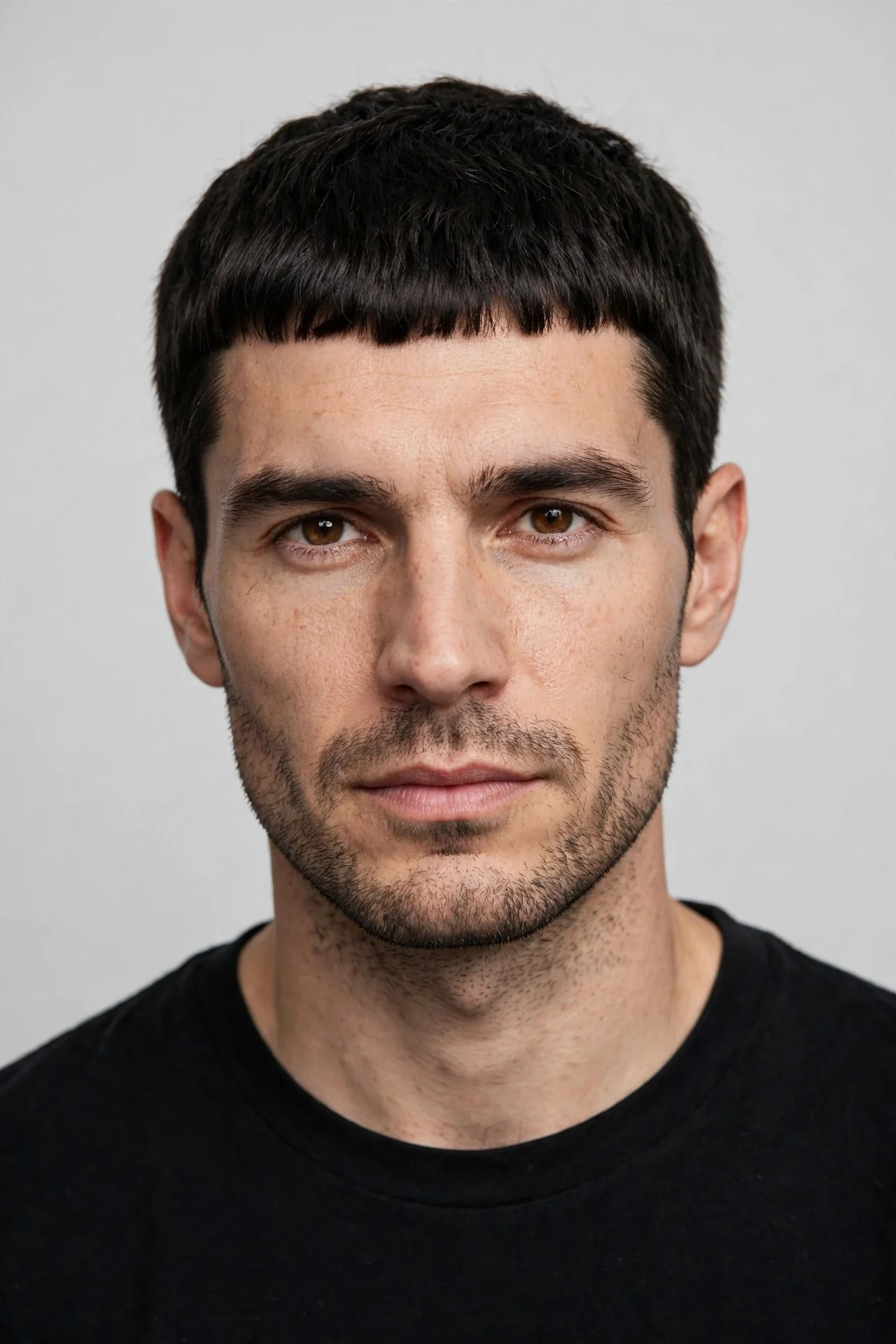
Instead of a choppy fringe, this one is cut in a clean straight line across the forehead. It’s sharper and more graphic, and it looks very intentional.
Straight hair is a must for this one. Wavy or curly hair won’t hold a crisp line, and the fringe will look uneven within a day.
French Crop vs. Caesar Cut
These two get mixed up constantly. A Caesar cut is very short all over, with a short, straight fringe and little length on top. A French crop keeps more length and texture on top, and its fringe usually looks a little longer and looser, even in this blunt version.
15
OF 26
Curly French Crop

A French crop on curly hair lets the curls form the fringe themselves instead of trying to flatten them into a straight line. The curls add natural height and texture, so this version needs less styling product than a straight-hair crop.
Shrinkage is the thing to plan around. Curls shrink as they dry, so a fringe that looks right while wet can spring up much shorter once it’s dry.
🧴 Product Note
A light curl cream on damp hair works better here than clay or paste. Heavier products tend to break curls apart and leave them frizzy instead of defined.
Ask your barber to cut the top dry, or at least check the length once it’s dry. That’s the most reliable way to avoid a fringe that ends up shorter than you wanted.
16
OF 26
Wavy French Crop
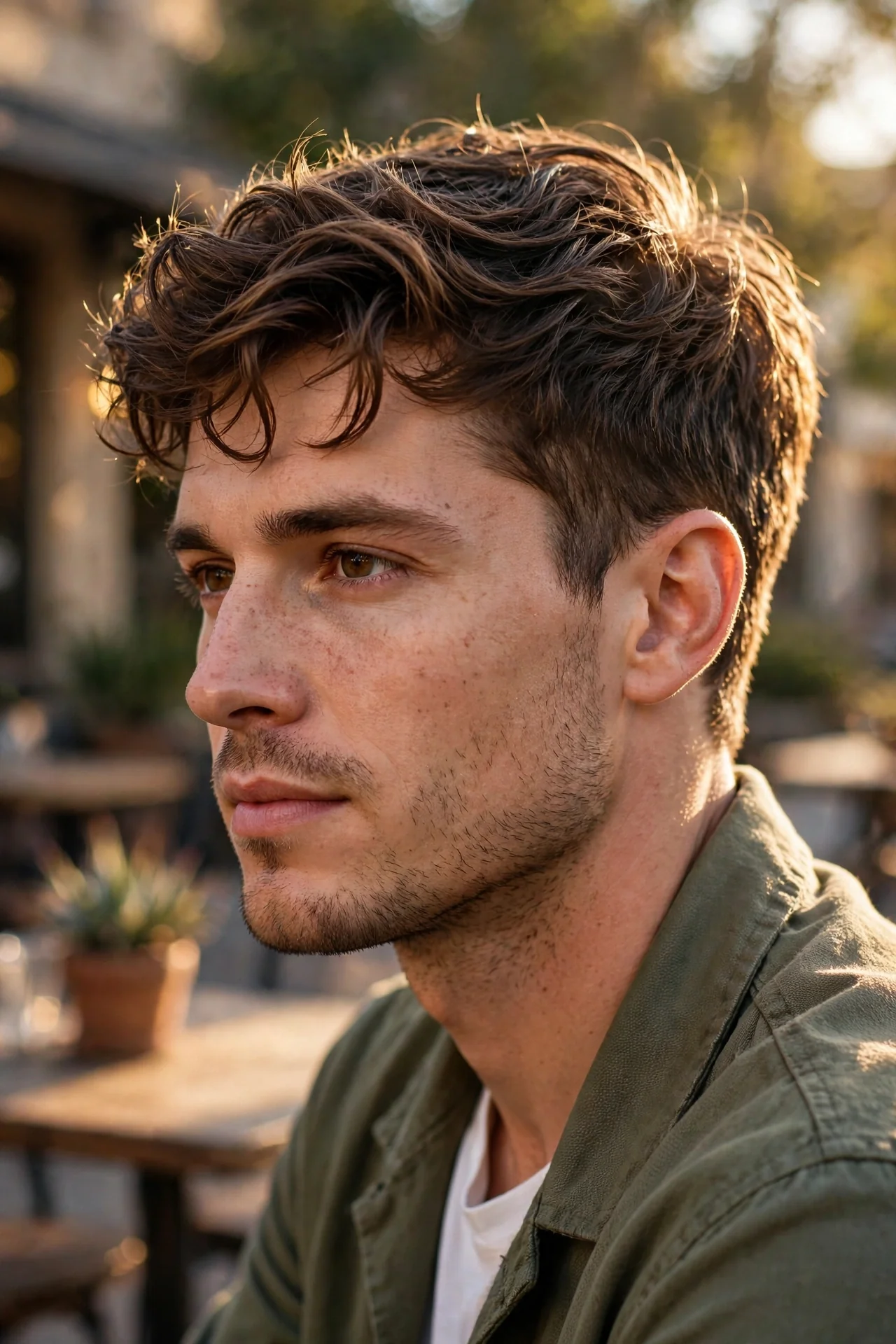
Wavy hair might be the easiest texture for a French crop. The waves give the top natural movement, so it looks textured without much product, and the fringe falls forward without much encouragement.
A sea salt spray is usually all it needs:
Spray a few pumps of sea salt spray into damp hair
Scrunch the top upward with your hands to encourage the wave
Let it air-dry, or use a diffuser on low heat
Push the front forward with your fingers once it’s dry
The main thing to avoid is brushing it once it’s dry. That pulls the waves straight and turns them into frizz.
17
OF 26
French Crop for Fine or Thinning Hair
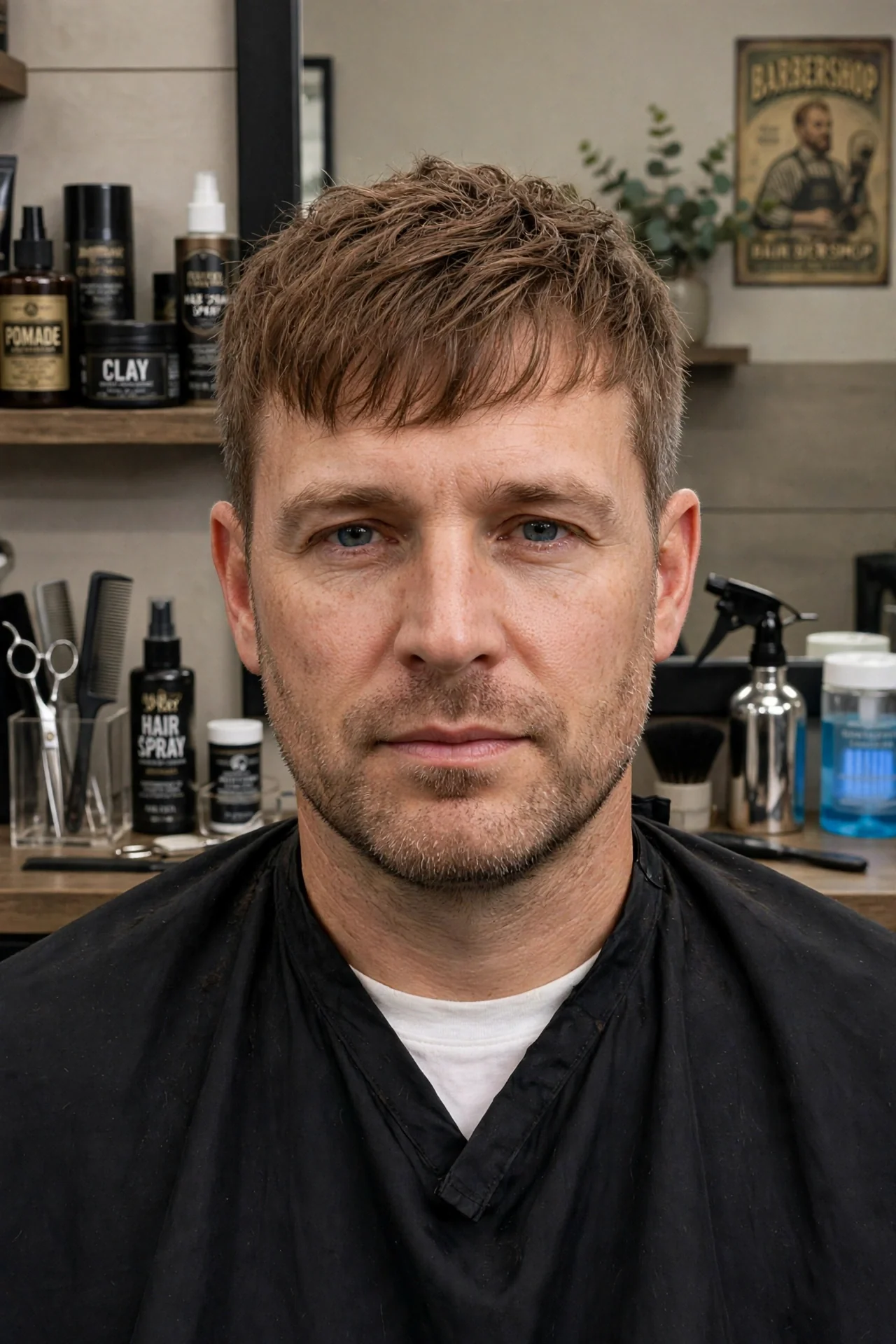
This is one of the strongest cases for a French crop. Pushing the hair forward covers a receding hairline naturally, and keeping the top short means fine hair doesn’t separate and show scalp the way it does when it’s left long.
BEFORE:
Fine hair grown a little long and swept back, the hairline and thinner areas on top clearly visible.
AFTER:
The same hair cut into a short, textured crop and pushed forward, the fringe covering the hairline and the top looking fuller.
Texture is what creates the illusion of thickness. Choppy, separated pieces catch light differently than flat hair and make the top look denser than it is.
Use a light texture powder or matte clay rather than anything heavy. Heavy products clump fine hair together and actually expose more scalp.
18
OF 26
French Crop for an Oval Face

Oval faces have balanced proportions, so almost every version on this list works without adjustment. You don’t have to use the fringe to shorten your face or the fade to slim it.
That frees you up to choose based on lifestyle instead of face shape. A low taper and a short fringe suit a strict office, while a skin fade and a messy top suit a more relaxed job or a weekend look.
💈 From the Chair:
On an oval face, the most common thing barbers see go wrong is a fringe cut too heavy. It hides one of the best-balanced face shapes there is, so a medium, textured fringe usually looks better than a thick block of hair.
19
OF 26
French Crop With a Beard
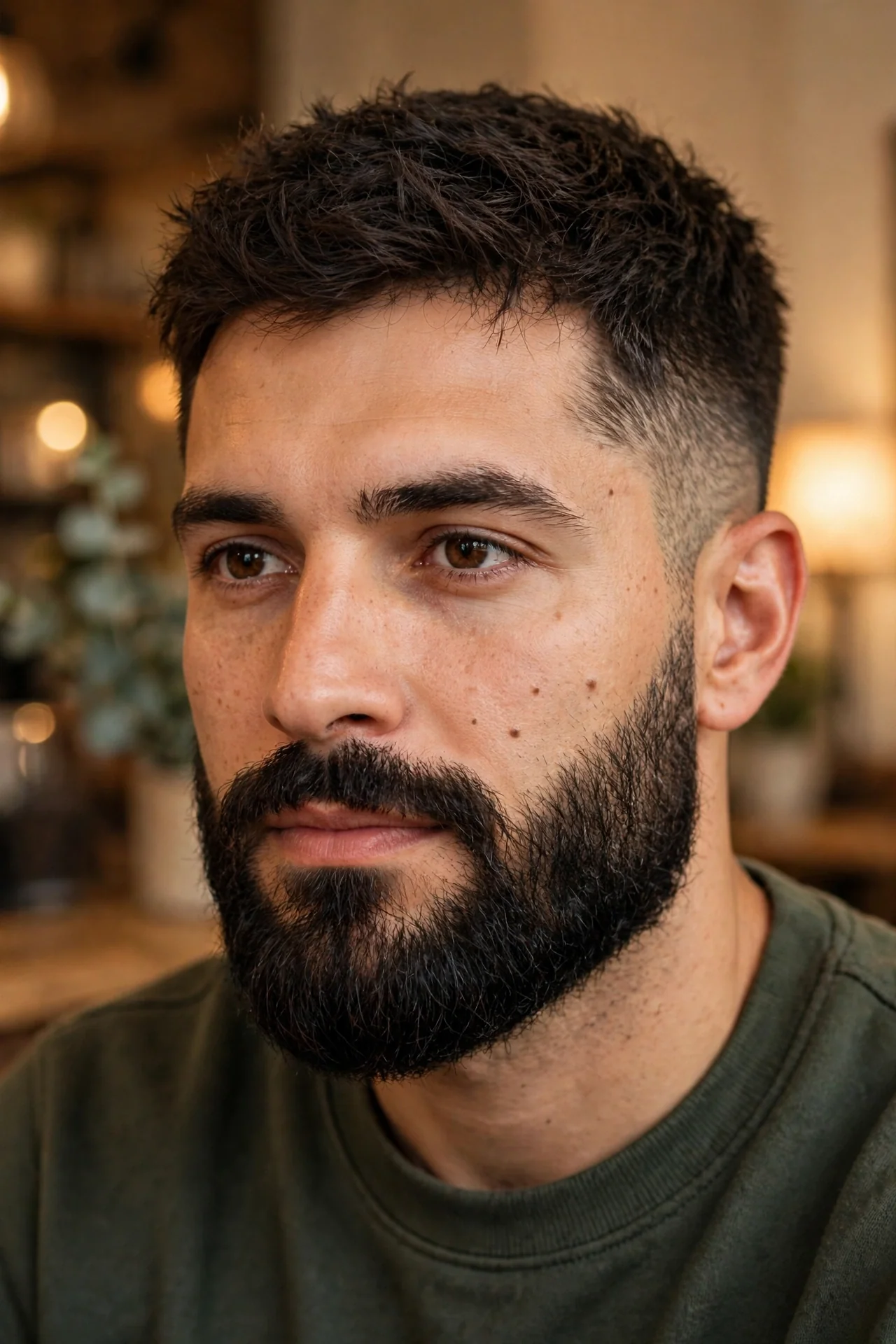
A French crop paired with a beard is one of the most balanced looks on this list. The short top and the beard frame the face from above and below, and a fade that blends into the beard ties the two together.
🎨
Top
short and textured
️✂️
Fade
blends into the beard
📐
Beard
trimmed close at the cheeks
The blend is what makes it work. Ask your barber to fade the sideburns into the beard rather than leaving a gap of bare skin between them, which can make the beard and haircut look like two separate things.
Keep the beard trimmed on the same schedule as the haircut. A sharp crop next to an overgrown beard throws the whole look off.
20
OF 26
French Crop With a Hair Design
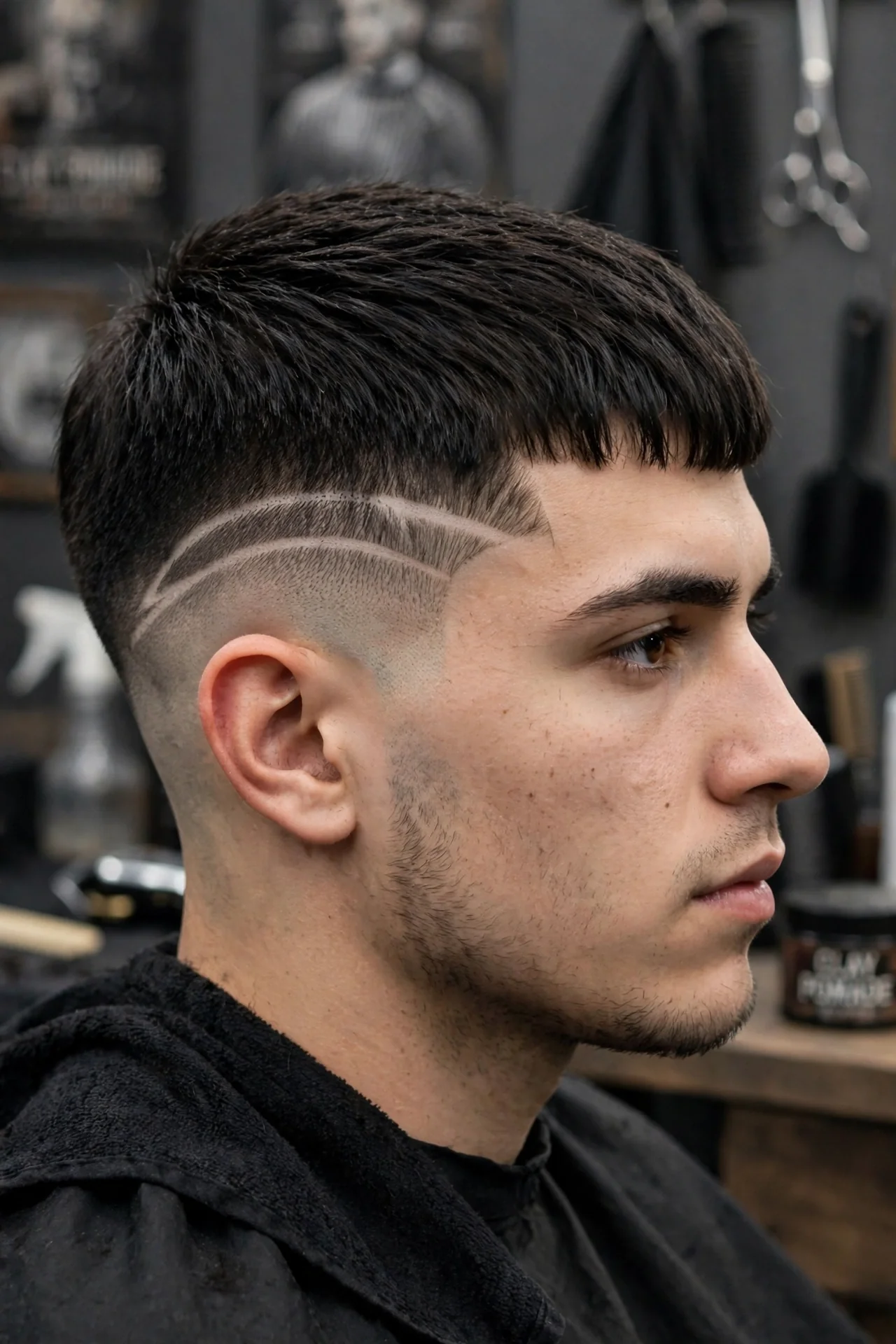
A shaved design adds a line or pattern into the faded sides, from a single hard part to a curved line or geometric shape. It turns a standard crop into something more personal.
Simple designs tend to age better. A single line or curve still looks fine after a week, while detailed patterns blur fast as the hair grows back.
⚠️ Watch Out:
Hair designs only last about a week to ten days before they start fading into regrowth. If you’re not planning on frequent barber visits, a design will look messy for most of the time between cuts.
Dark hair shows designs most clearly because of the contrast against the scalp. On light or blonde hair, a design can be almost invisible.
21
OF 26
Silver or Grey French Crop

Grey and silver hair suit a French crop well. The short, textured top keeps grey hair looking neat and deliberate instead of wiry or unkempt, which is what often happens when grey hair grows longer.
Grey hair also tends to be coarser and drier than pigmented hair. That texture actually helps the crop hold its shape, though it may need a light moisturizing product to avoid looking dull.
✅ Do This
Use a matte or light-hold product to keep the grey looking clean and natural.
🚫 Skip This
High-shine pomade. On grey hair, shine can look greasy and draw attention to the scalp.
22
OF 26
Bleached or Coloured French Crop
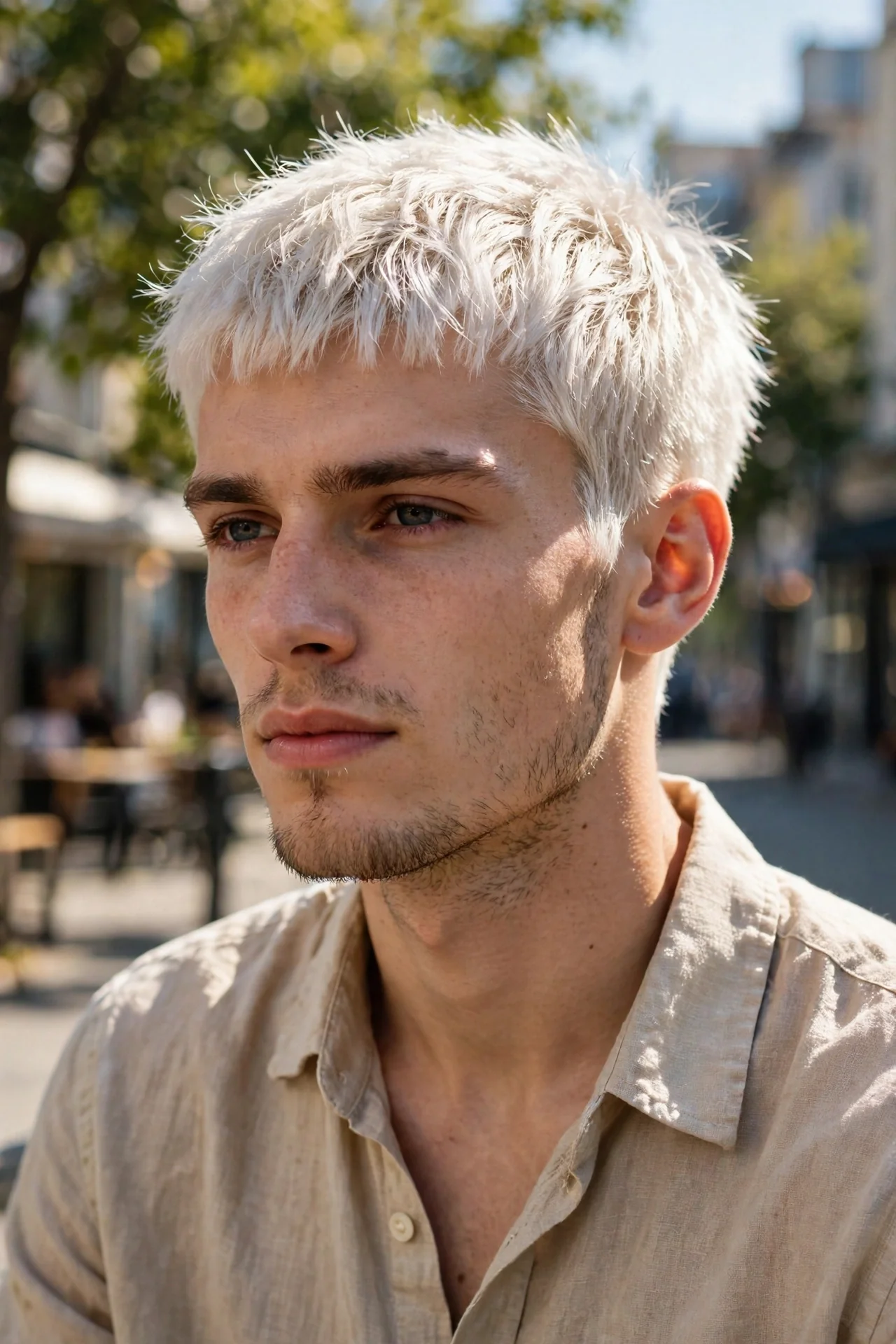
A short crop is one of the easier cuts to colour, since there’s less hair to process and damage grows out quickly. Platinum or bleached blonde is a common choice, especially paired with a dark fade for contrast.
The short length works in your favour. Damaged ends get cut off at every appointment, so a bleached crop is easier to keep healthy than bleached long hair.
🧴 Product Note
Most bond-repair treatments marketed for bleached hair claim to reduce breakage during lightening. They do help, but bleached hair still dries out, so a weekly conditioning treatment is worth adding to your routine.
Expect root touch-ups every four to six weeks, separate from your haircut schedule.
23
OF 26
The 1920s French Crop (Peaky Blinders Inspired)
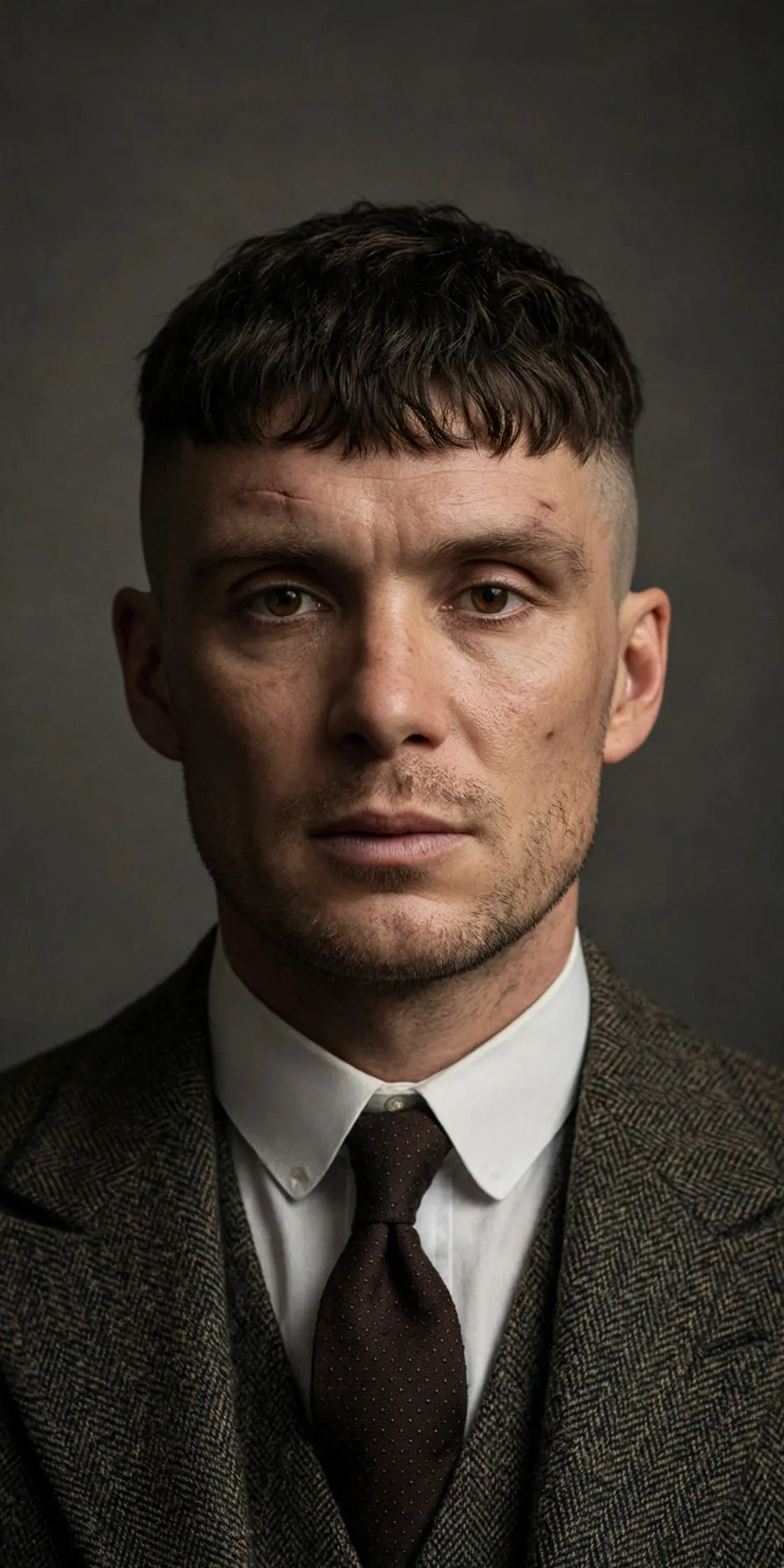
This version keeps a short, neat top with very short, almost shaved sides and a hard contrast between the two. It’s the look that became heavily associated with the TV series Peaky Blinders.
Where It Came From
Very short sides with a longer top were a common working-class cut in early 20th-century Britain, and the style was widely worn by soldiers around World War I and II because it was practical and easy to keep clean. Peaky Blinders brought the look back into popular culture.
A modern version usually adds a bit more texture on top than the original. The originals were often slicked or combed, while today’s version pushes the top forward like a French crop.
24
OF 26
French Crop for a Wedding
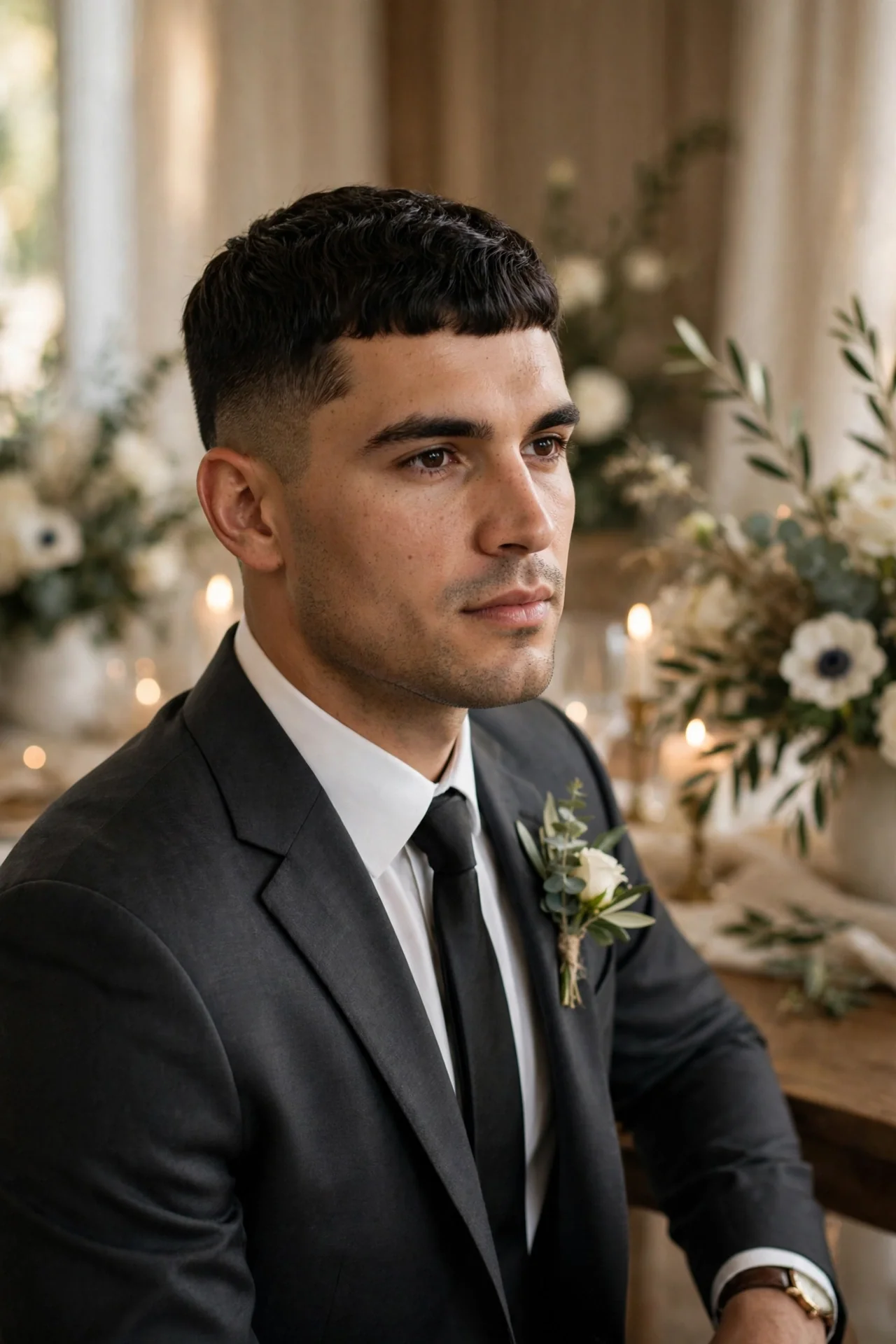
A French crop is one of the most reliable wedding cuts. It’s short enough to hold its shape through a long day of photos, dancing, and changing weather.
Book the cut about five to seven days before the wedding. A fresh fade can look slightly too sharp in photos, and a few days lets it soften into something more natural.
📅 Wear It For
For the day itself, use a medium-hold matte product instead of something shiny. Gloss can pick up glare under flash photography.
25
OF 26
French Crop for Boys
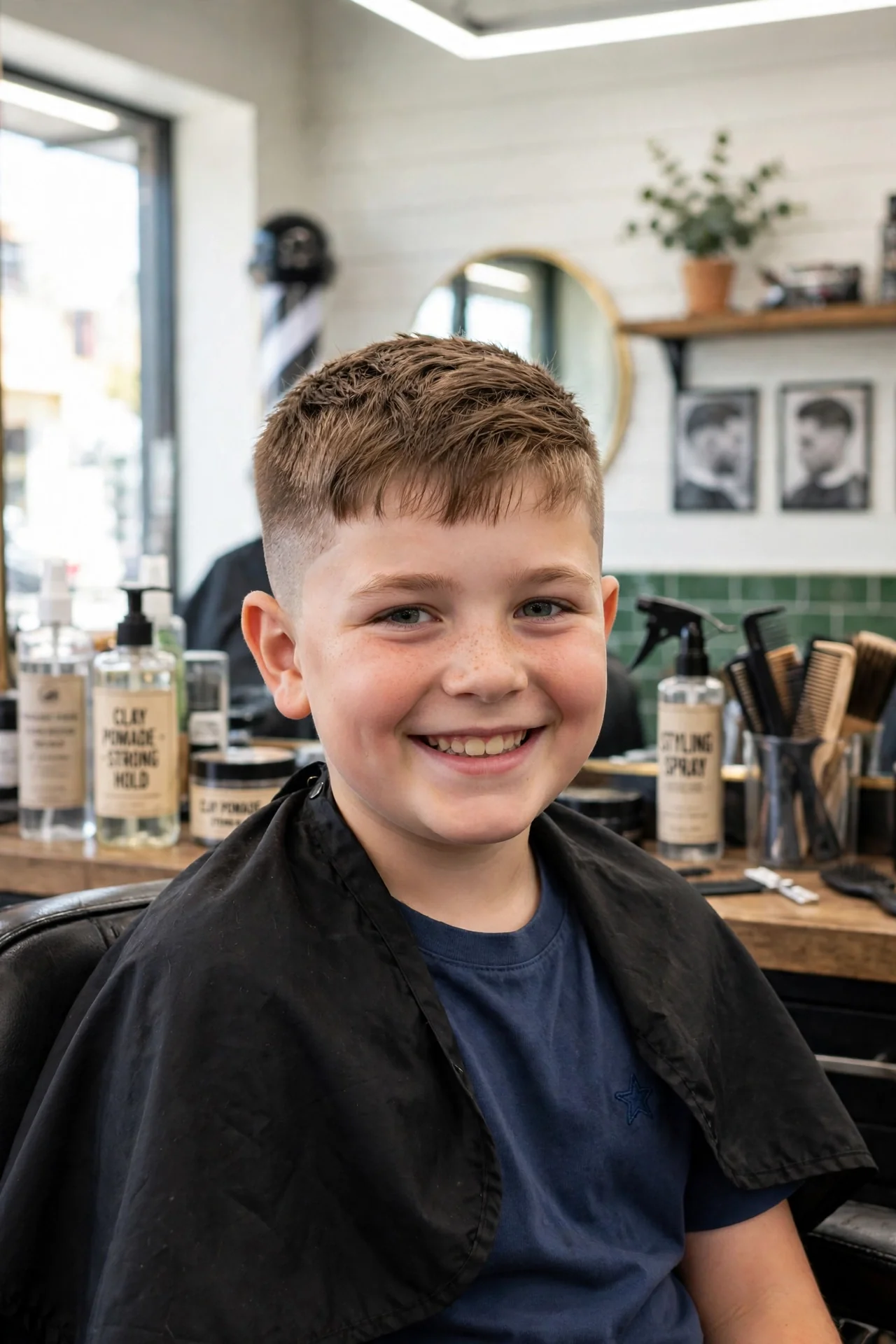
A French crop is one of the most practical cuts for boys. It’s short enough to stay out of their eyes, needs almost no styling in the morning, and still looks tidy at school.
A soft taper usually suits boys better than a high or skin fade. It’s gentler around the ears, grows out more evenly, and fits most school dress-code rules.
📌 Good To Know
Kids’ hair grows fast, so expect a trim every three to four weeks to keep the fringe out of their eyes.
For styling, a small amount of water or a light kids’ styling cream is usually enough. Most boys’ hair doesn’t need clay or paste.
26
OF 26
French Crop for Toddlers
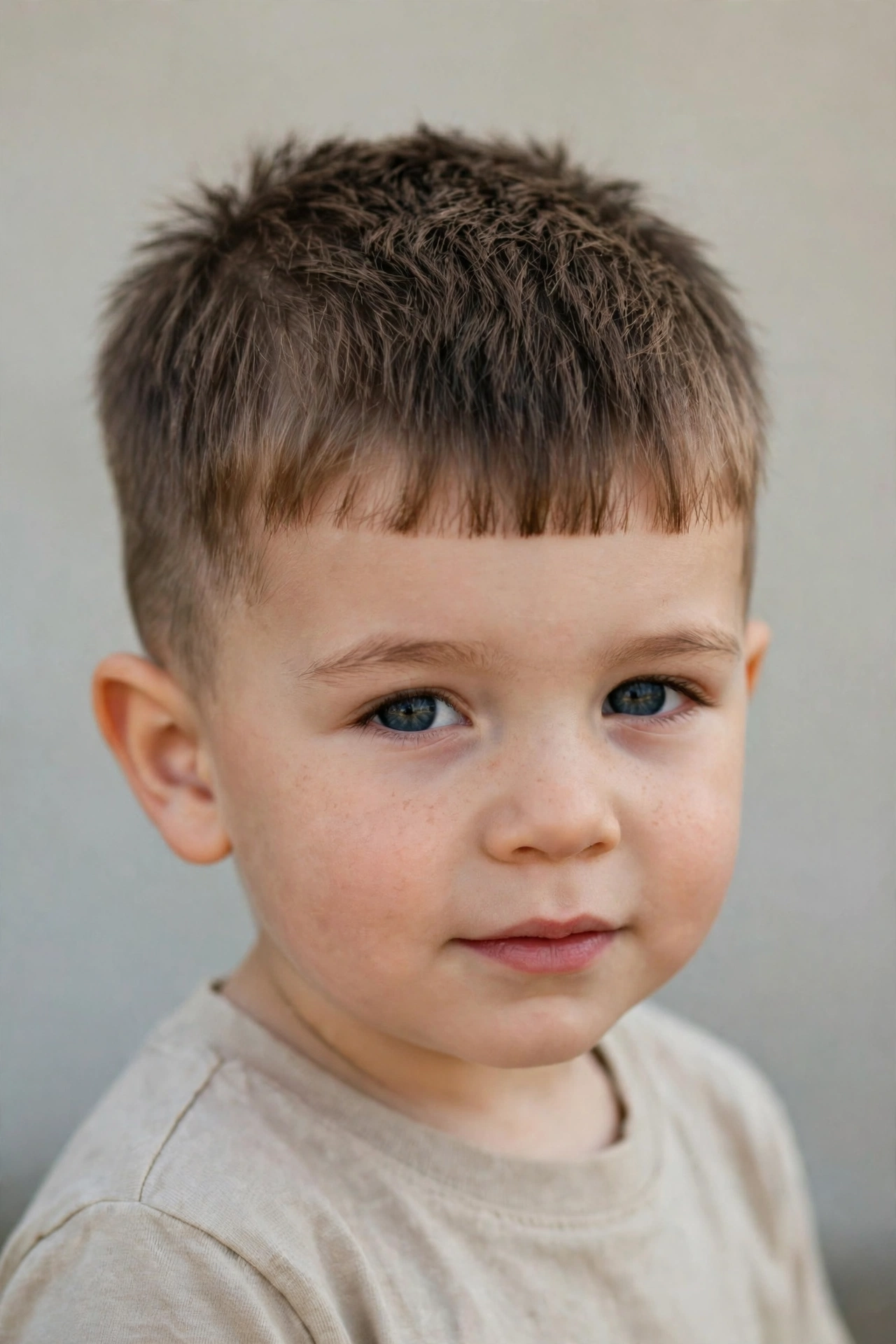
For toddlers, a French crop is mostly about practicality. A short top with a soft fringe keeps hair out of their eyes and is easy to wash, and it looks neat without any styling.
Scissors work better than clippers for most toddlers. Clippers can be loud and scary for little ones, while scissors are quieter and let the barber work more gently around fine baby hair.
📌 Quick Tip:
Book the haircut for a time when your toddler is usually rested and fed, and bring a favourite toy or snack. A calm toddler makes for a much neater cut.
Keep the sides and fringe a little longer than you would on an older child. Fine baby hair can look patchy when it’s cut too short.
So, which French crop are you asking for at your next appointment? Tell us in the comments, along with your hair type, and we’ll point you toward the version that suits it best.
Which French crop are you trying next?
FAQs
What is a French crop haircut?
A French crop is a short haircut with a textured top pushed forward into a short fringe, usually paired with a fade or taper on the sides. It’s low-maintenance and works on most hair types.
How long does hair need to be for a French crop?
Around one to two inches on top is enough for a classic French crop. A long French crop usually leaves around three inches.
Is a French crop good for thinning hair?
Yes. Pushing the hair forward covers a receding hairline, and the short, textured top makes fine hair look thicker.
What’s the difference between a French crop and a Caesar cut?
A Caesar is shorter all over with a short, straight fringe. A French crop keeps more length and texture on top, and its fringe is usually longer and looser.
How do you style a French crop?
Work a small amount of matte clay or paste into damp hair, push everything forward toward your forehead, and pinch a few pieces at the fringe to break up the line.
How often should a French crop be trimmed?
Every three to four weeks for most versions. Skin fades and hair designs need a touch-up more often, around every one to two weeks.