25 Short Modern Mullet Cuts for Men: Subtle to Bold

The short modern mullet keeps the basic idea of the old mullet, shorter at the front and sides with more length at the back, but trims everything down and blends it properly. The result looks like a deliberate haircut instead of a joke from a 1980s photo album.
The big difference is control. You decide how long the back goes, how sharp the sides are, and whether there’s a fringe, and each choice moves the cut from barely-there to properly bold. These 25 versions run that whole range, so you can find the level that suits your hair, face, and job.
Short on Time? Pick Your Path
Table of Contents
- 01The Classic Short Modern Mullet
- 02Short Mullet With a Low Taper
- 03Short Mullet With a High Skin Fade
- 04The Micro Mullet
- 05The Undercut Short Mullet
- 06The V-Shaped Short Mullet
- 07Short Mullet With a Textured Fringe
- 08Short Mullet Swept Back With No Fringe
- 09Short Curly Modern Mullet
- 10Short Mullet on Straight Hair
- 11Short Mullet on Thick, Straight Hair
- 12The Permed Short Mullet
- 13Blonde Short Modern Mullet
- 14The Short Wolf Cut Mullet
- 15Short Mullet With a Cropped Top
- 16The Sports Mullet
- 17The Dad Mullet
- 18Short Mullet for Men Over 40
- 19Short Mullet With a Receding Hairline
- 20Short Mullet With a Beard
- 21Short Mullet for an Oval Face
- 22Surfer-Style Short Mullet
- 23The Short Flow Mullet
- 24Short Modern Mullet for Boys
- 25Toddler Short Mullet
01
OF 25
The Classic Short Modern Mullet
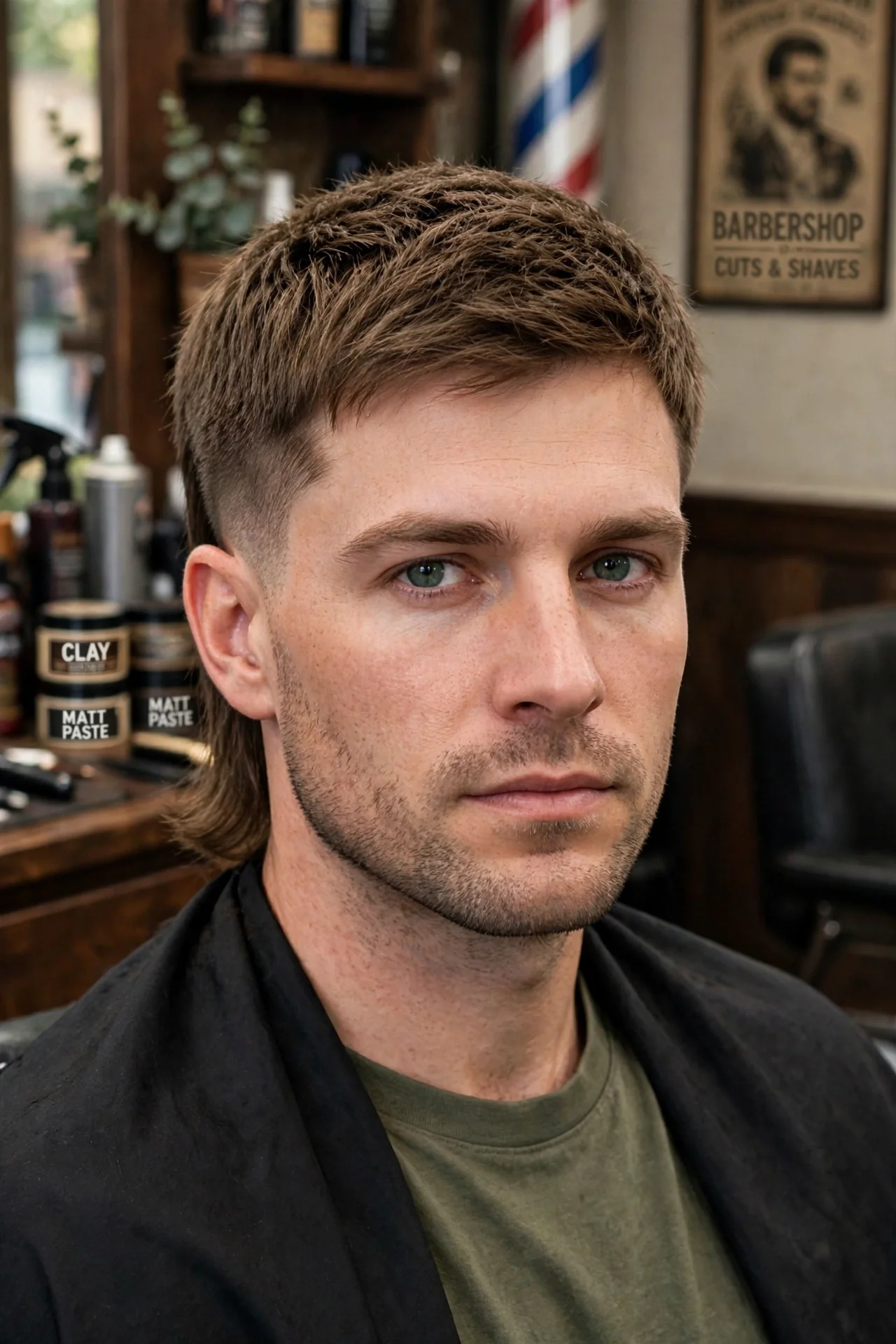
This is the baseline everything else builds on. The top is short and textured, the sides are tapered close, and the back is left about two to three inches longer, so it just touches the collar.
What keeps it modern is the blending. Instead of a sharp jump between the short top and the long back, your barber connects them with layers, so the length steps down gradually from crown to nape.
Where the Mullet Came From
Hair that’s shorter at the front and longer at the back has shown up in many periods of history, but the mullet as most people picture it peaked in the 1980s with rock musicians and athletes. The word “mullet” only became the common name for it in the 1990s, by which point the style had started to look dated.
The modern version keeps the shape but drops the hard, heavy back. That’s why it reads current instead of retro.
If you decide to grow a mullet out, trim the longest parts every six to eight weeks so the rest can catch up. A transitional cut, something like a shag, makes the mullet much less obvious along the way.
Gel to set the hair back, or a headband, gets you through the awkward weeks. The Long Hairs, a site about growing hair out, agrees that trimming during this stage is fine, especially around the ears and the back of the neck, and that it doesn’t slow growth.
Above all, be patient. If you need it gone immediately, a shorter cut is the only real option.
02
OF 25
Short Mullet With a Low Taper
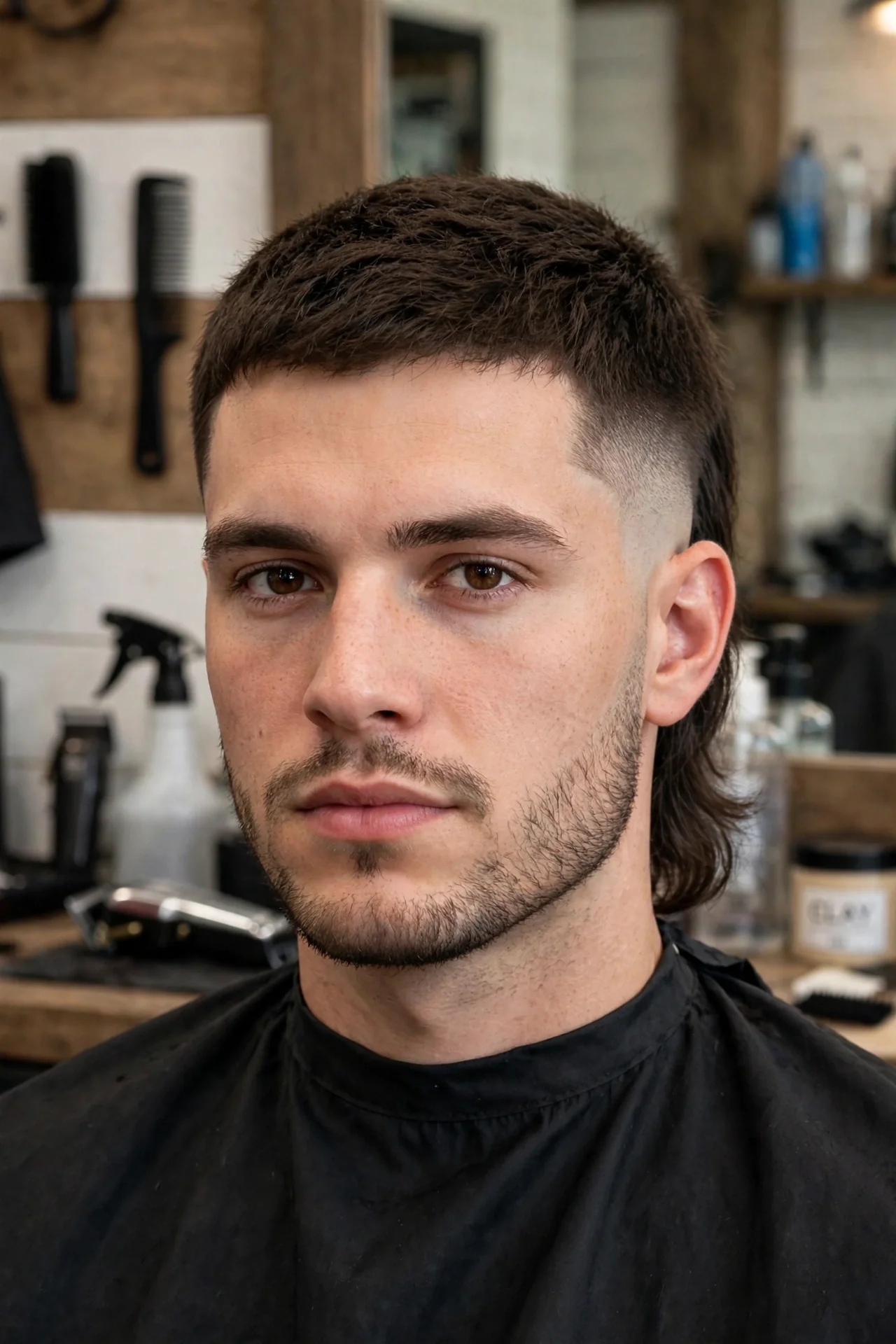
A low taper only shortens the hair right at the sideburns and around the ear. The rest of the sides stay fuller, which makes the mullet look softer and less like a statement cut.
This is the version I’d point most guys to if they’re unsure. It still has the longer back, but from the front it looks like a neat, normal haircut, which makes it easy to wear to work.
💈 What to Ask Your Barber
“Short modern mullet with a low taper, keep the sides fuller, about two inches on top, and leave the back just touching my collar, blended, no hard line.” Show a side and back photo, since the back is the part you can’t see yourself.
03
OF 25
Short Mullet With a High Skin Fade
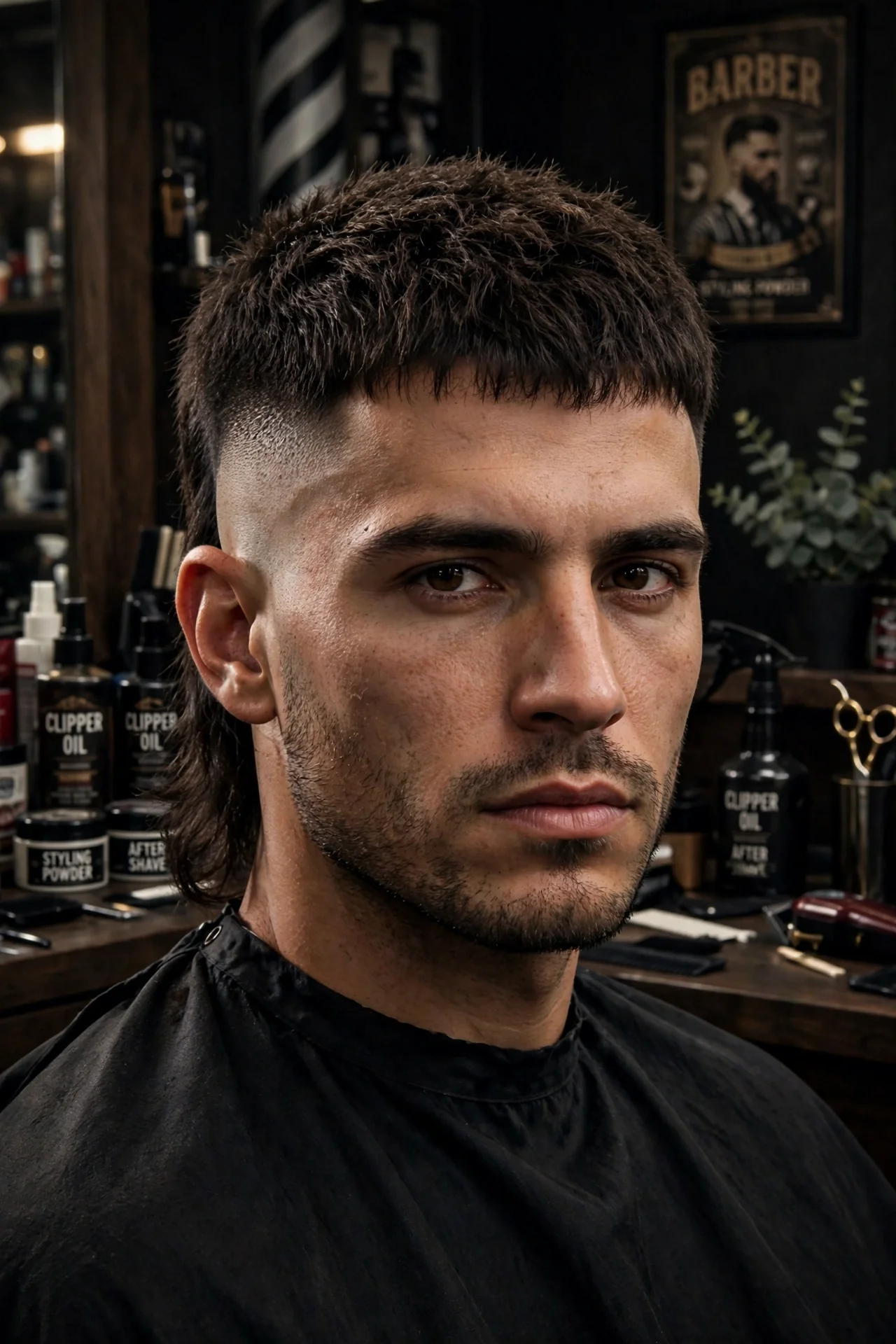
A high skin fade takes the sides down to bare skin, starting well above the ear. Against that, the longer back stands out sharply, so this is the version people notice from across the street.
How high you fade changes the whole look, so it’s worth seeing the options together.
| Side Option | Where It Starts | Look | Touch-Up Every |
|---|---|---|---|
| Low taper | Sideburns and ear only | Subtle, office-friendly | 4–5 weeks |
| Mid fade | Temple level | Balanced, clear contrast | 3 weeks |
| High skin fade | Well above the ear, to skin | Bold, high contrast | 2 weeks |
The trade-off is upkeep. Bare skin shows regrowth within a week, and once the sides soften, the longer back starts to look heavy and unbalanced.
04
OF 25
The Micro Mullet
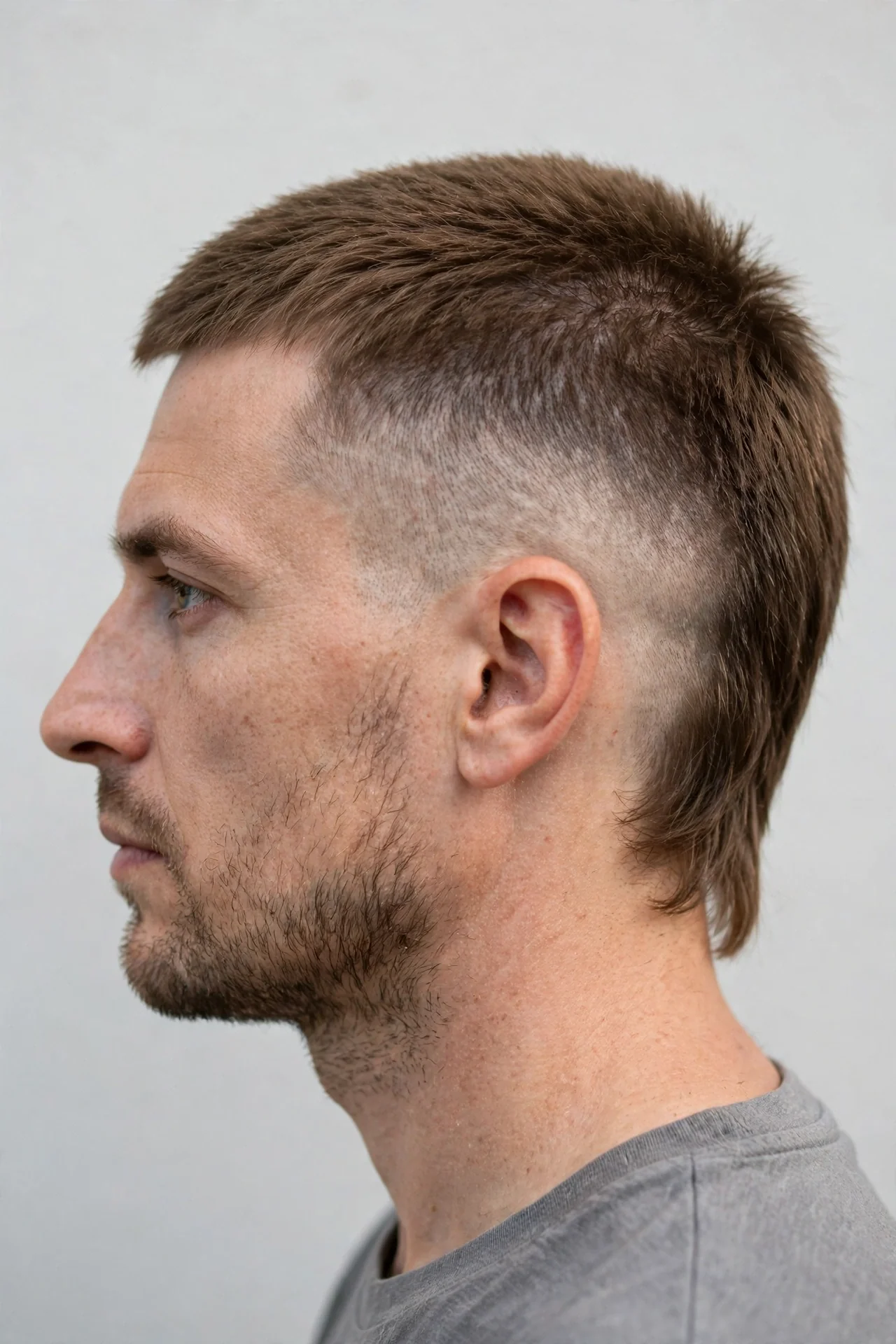
A micro mullet is the smallest possible version. The back is only about an inch longer than the rest, just enough that you see a little tail at the nape when you turn your head.
🎨
Back Length
about one inch longer
✂
S️ides
neat, scissor or low taper
📐
Visibility
mostly from behind
It’s the easiest way to try a mullet. If you like it, you grow the back out a bit more; if you don’t, one normal haircut removes it completely.
Most people won’t notice it from the front, which is exactly why it suits strict workplaces.
05
OF 25
The Undercut Short Mullet
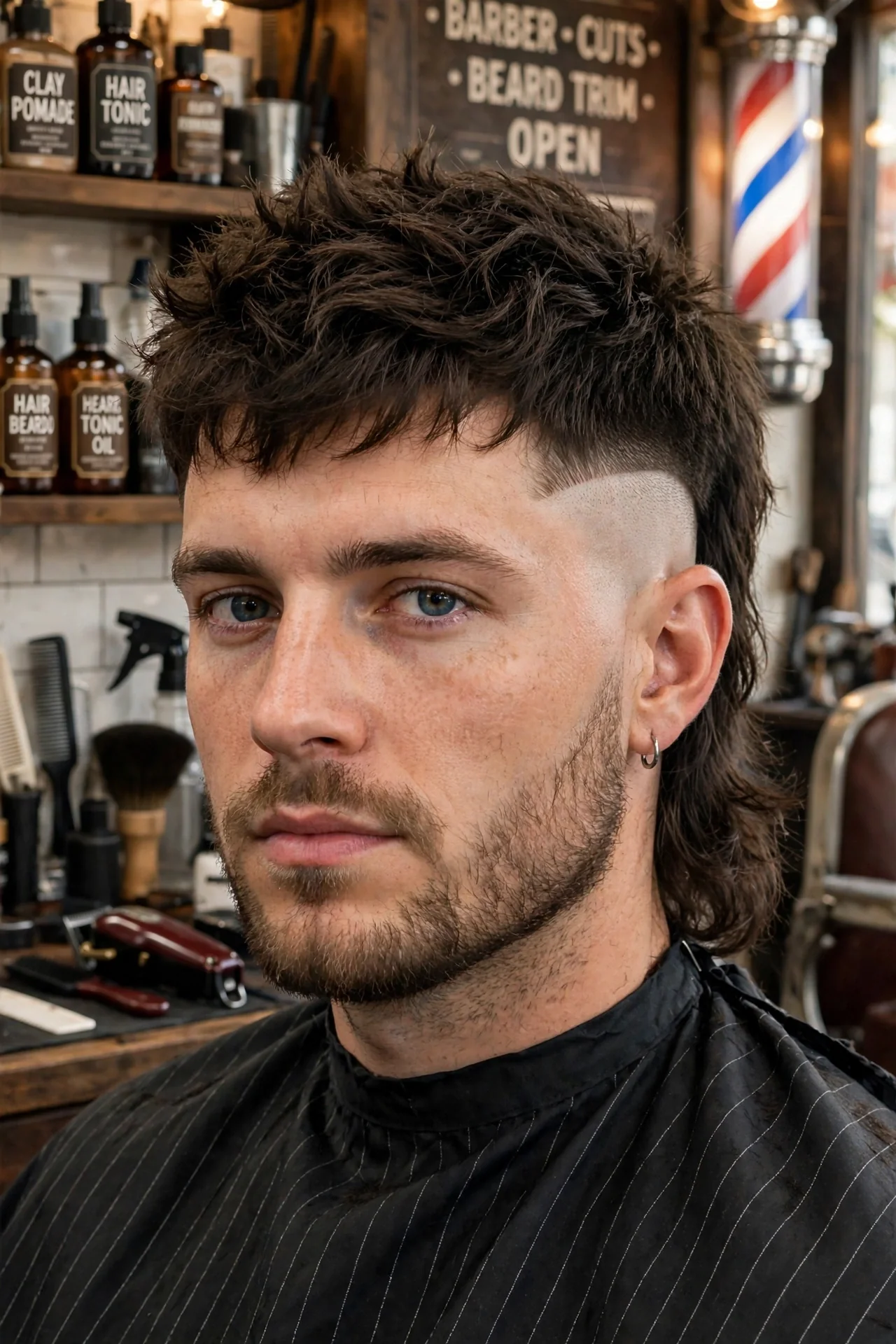
An undercut mullet shaves the sides short with a hard line where the shaved part ends, instead of blending it. The top and back stay longer, so you get a clear, graphic shape.
✅ Do This
Keep the undercut line level and clean at every visit. The sharp edge is what makes the cut look deliberate.
🚫 Skip This
Letting the shaved sides grow out to a fuzz. A blurred undercut makes the whole cut look unfinished.
This one suits thick hair best, since the top needs enough density to sit over the shaved section without the line showing through.
06
OF 25
The V-Shaped Short Mullet
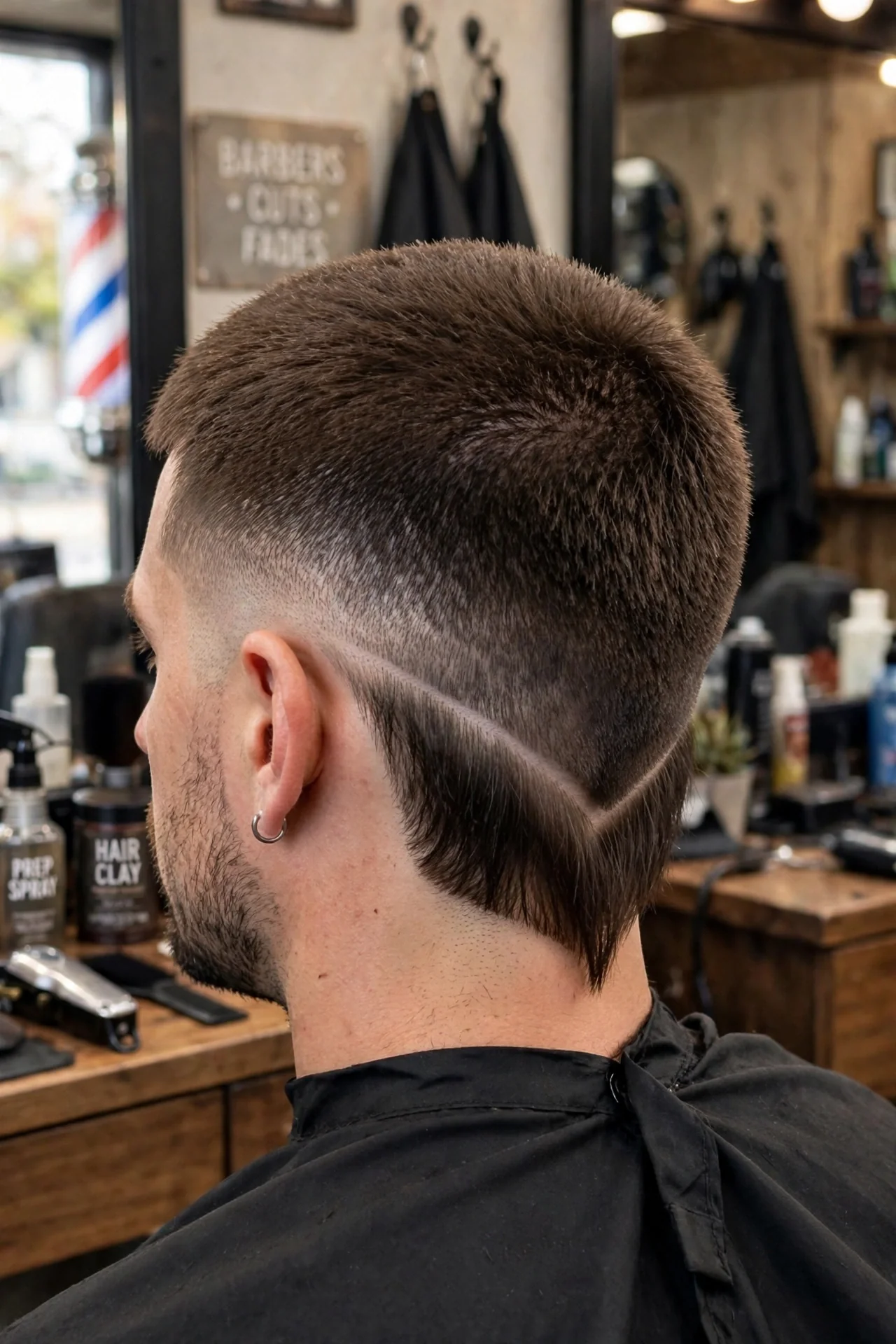
In this version, the back is cut into a V that points down the neck instead of being straight across. It’s a small detail, but it gives the mullet a sharper, more designed look from behind.
Straight hair holds the V best. Curly or very wavy hair tends to blur the point within a few days as the curls spring up.
📌 Good To Know
The V shape loses its point quickly as the back grows. Plan on a quick neckline tidy-up every two to three weeks, even if you don’t need a full cut.
07
OF 25
Short Mullet With a Textured Fringe
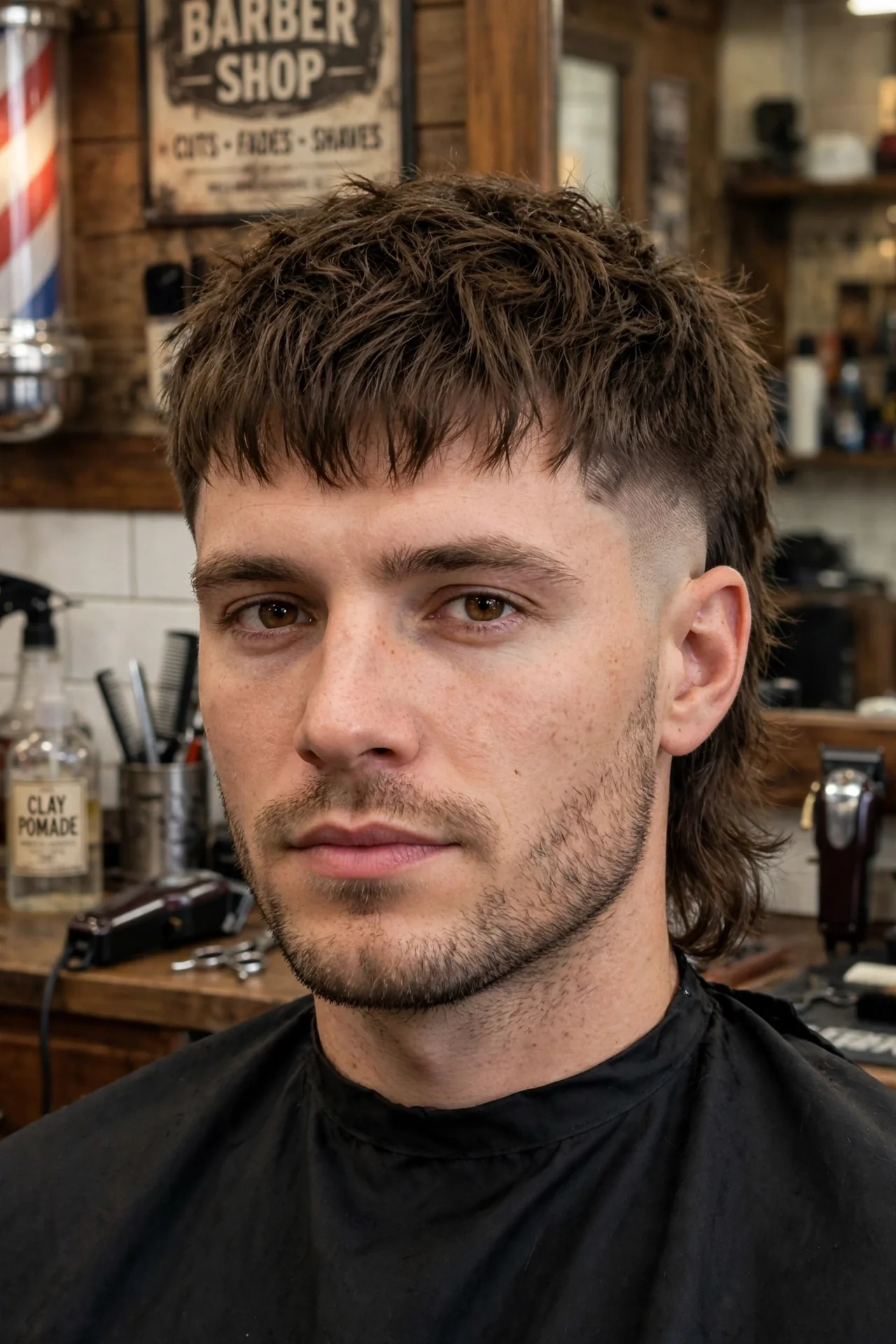
Adding a textured fringe brings the hair forward onto the forehead, so the mullet looks good from the front too, not just from behind. The choppy fringe also softens a high forehead.
Styling it takes about two minutes once you get the hang of it:
Towel-dry until damp and spray a little sea salt spray at the roots
Blow-dry the front forward with your fingers, not a brush
Rub a small amount of matte paste between your palms and pinch it through the fringe
Push the back down and slightly out with your hands so it sits close to the neck
Keep the fringe at eyebrow length or shorter. Any longer and it hangs in your eyes and starts to look like it needs a cut.
08
OF 25
Short Mullet Swept Back With No Fringe
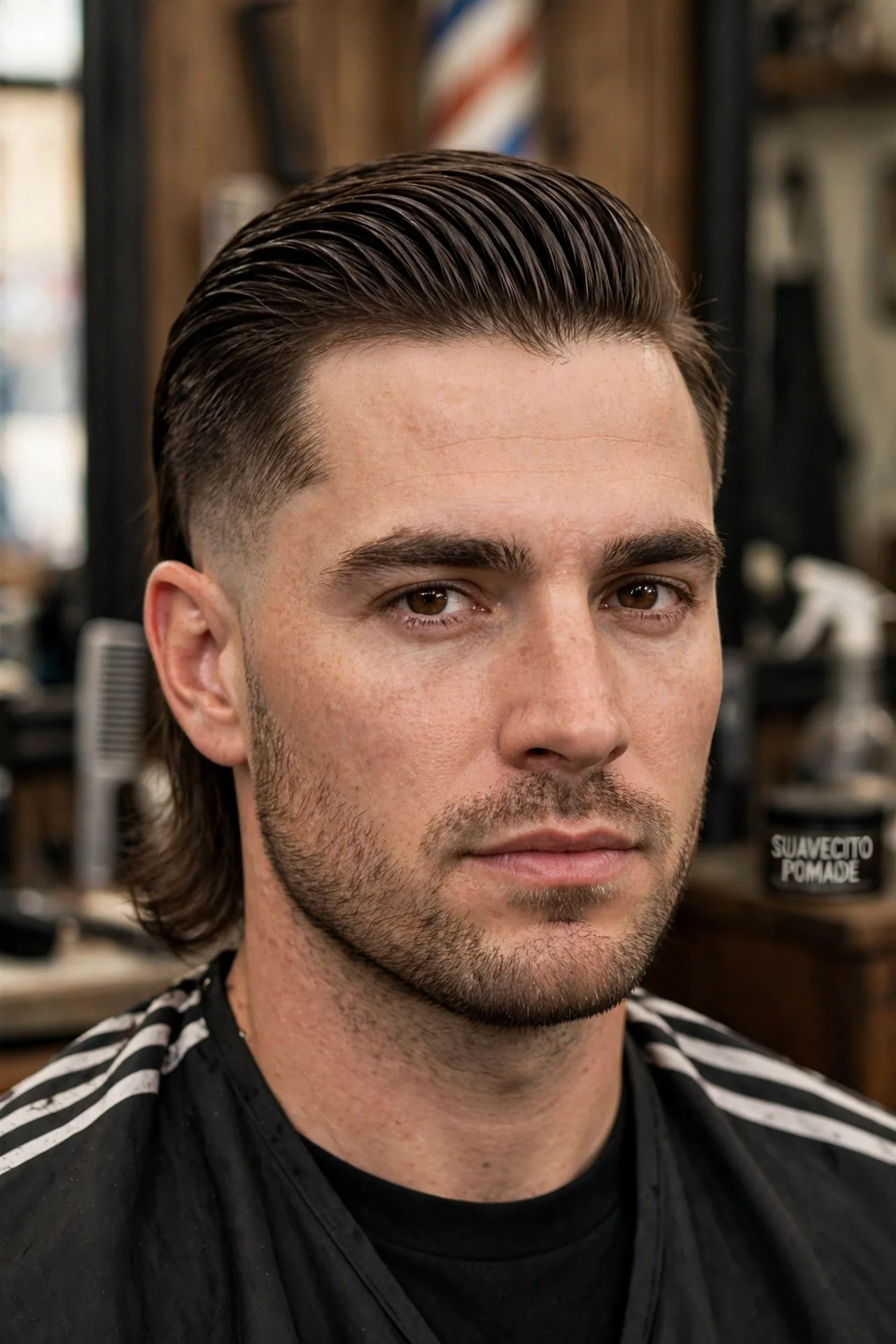
Without a fringe, the top is pushed straight back off the face, which makes the cut look cleaner and slightly older. It’s a good option if you want a mullet that still works with a collared shirt.
💡 Quick Tip
Use a light cream rather than a paste. A cream keeps the swept-back hair soft and natural instead of stiff and shiny.
Wavy hair holds this best, because the waves give the swept-back top some lift. Very straight hair can fall forward again by the afternoon unless you blow-dry it back first.
09
OF 25
Short Curly Modern Mullet
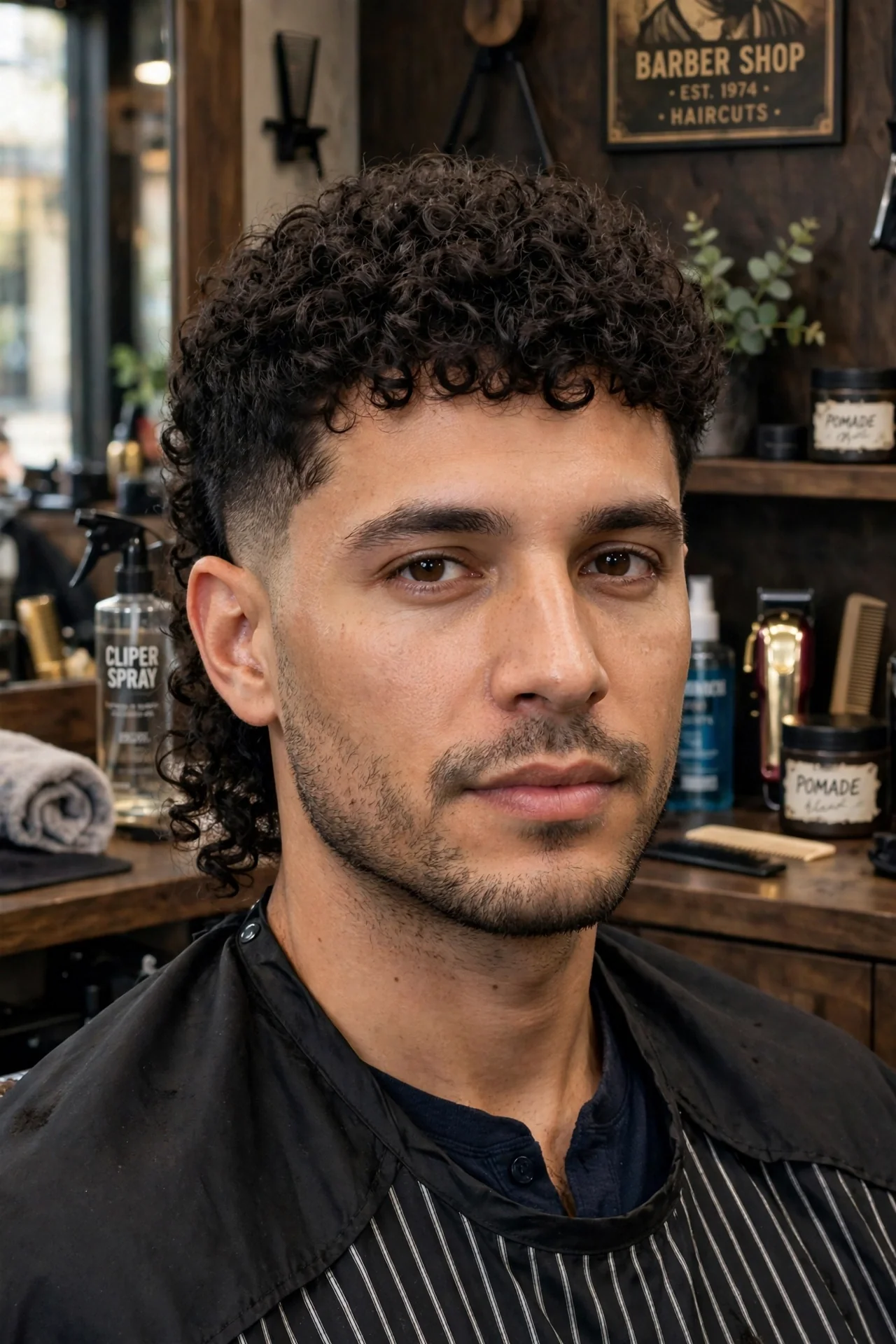
Curly hair is a natural fit for a short mullet. The curls give the back volume and shape on their own, so the length looks full rather than thin and stringy.
Curls also shrink as they dry, sometimes by a lot. Ask your barber to check the back length dry, because a back that looks right wet can spring up far shorter.
🧴 Product Note
A light curl cream on soaking-wet hair usually holds curls better than gel or paste. Most curl creams are sold on the promise of defining curls without crunch, and for short curly cuts that’s usually all you need.
Skip brushing once it’s dry. Brushing breaks the curls apart and leaves the back frizzy instead of defined.
10
OF 25
Short Mullet on Straight Hair
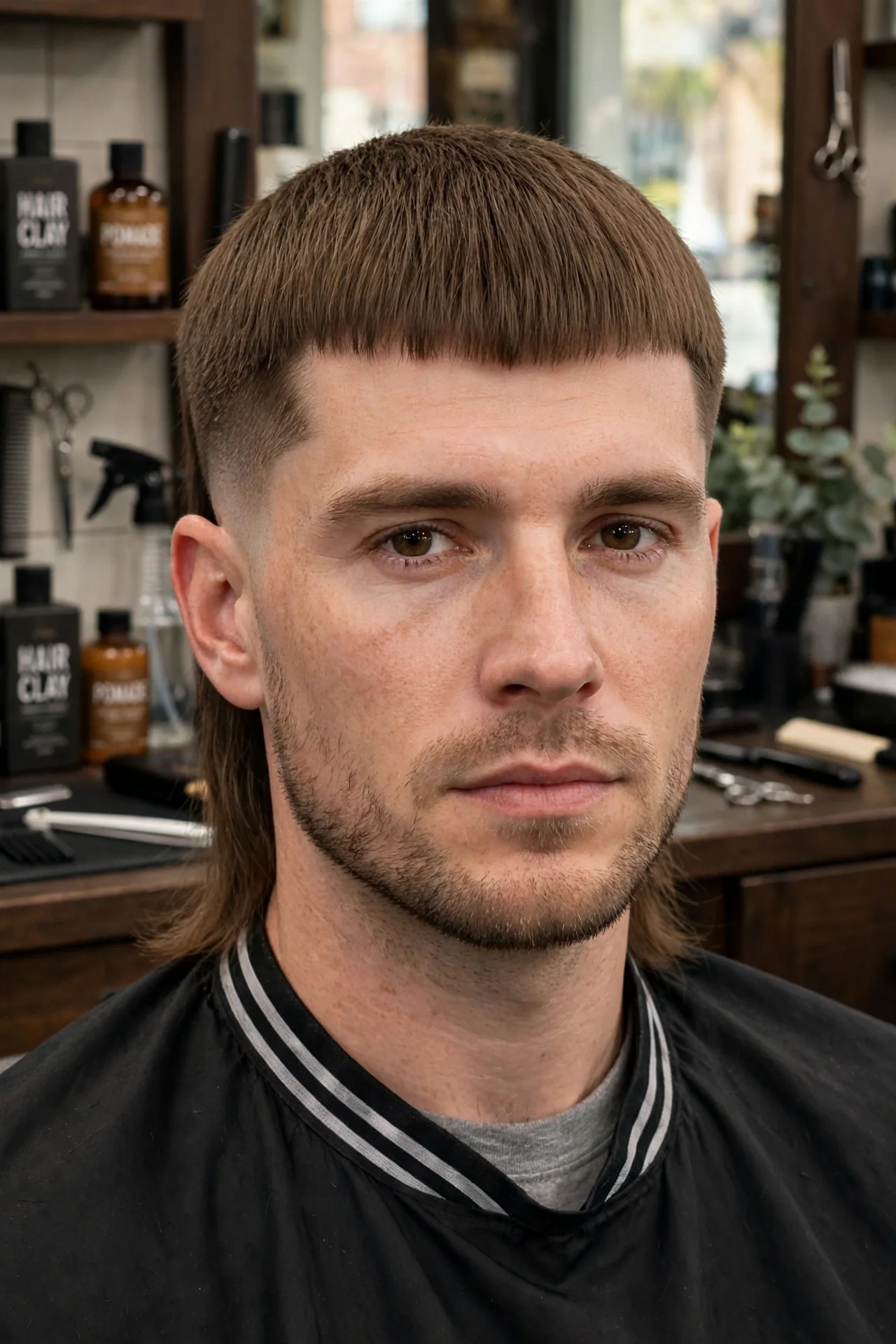
Straight hair can make a mullet look flat and heavy at the back, because there’s no natural texture to lift it. The fix is layering and texture cutting, which break up the back so it moves.
BEFORE:
Straight hair cut one length at the back, hanging flat against the neck like a curtain.
AFTER:
The same length cut with layers and point-cutting, the back lifting slightly and separating into pieces.
A texture spray before you blow-dry adds the grip straight hair is missing. Dry it with your head tilted forward to get some lift at the crown.
11
OF 25
Short Mullet on Thick, Straight Hair
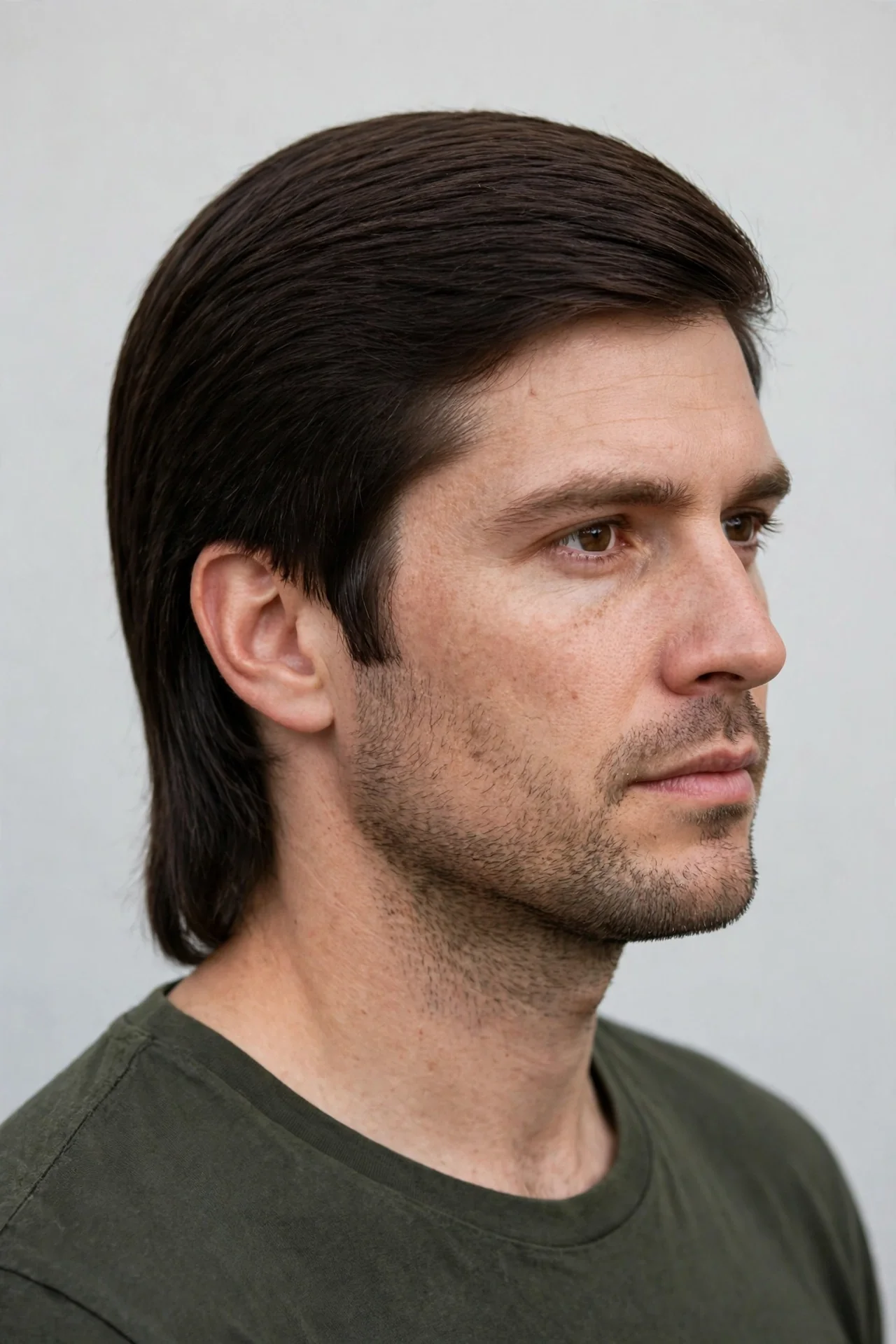
Thick, straight, often dark hair, common across many East and Southeast Asian hair types, behaves differently from fine straight hair. It has plenty of volume, so the problem isn’t flatness, it’s bulk that sticks out.
💈 From the Chair
On very dense straight hair, the cut depends on thinning. Barbers usually remove weight from inside the top and back with thinning shears or point-cutting, so the hair lies down and moves instead of puffing out.
A high or mid taper also helps. Taking the sides tighter stops dense hair from pushing outward above the ears, which keeps the mullet’s shape clean.
12
OF 25
The Permed Short Mullet
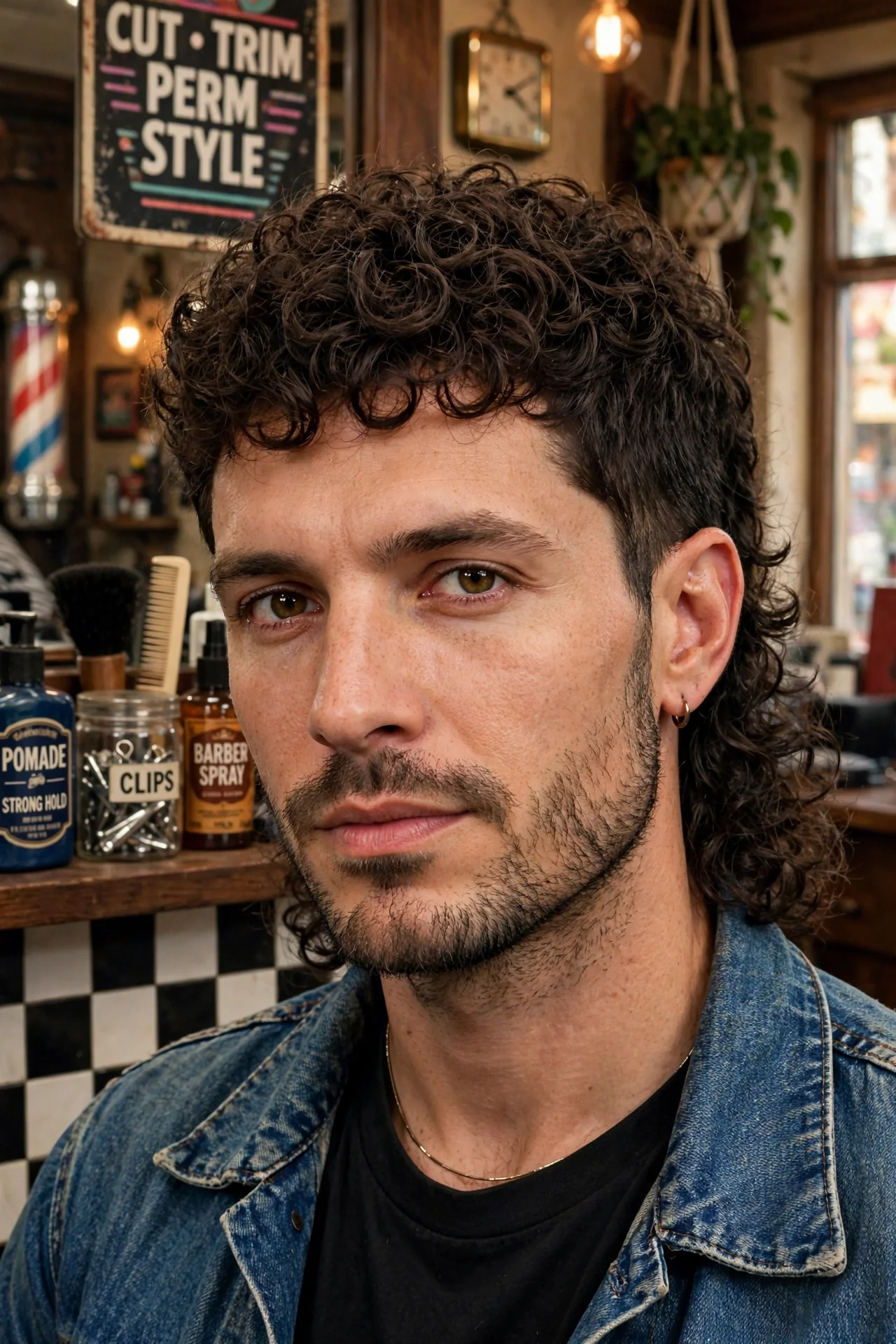
A light perm adds waves or loose curls to straight hair, giving a mullet the movement and volume it can’t get on its own. Many men use a loose body wave rather than tight curls.
💡 Myth vs Reality:
Myth: a perm gives you tight, 1980s-style poodle curls.
Reality: modern men’s perms are usually loose waves that look closer to natural texture, and the curl size depends on the rod size your stylist uses.
Perms are chemical, so tell your stylist if your hair has been bleached or coloured. Bleached hair can break when permed on top.
Expect the wave to loosen over two to three months. The mullet shape still needs regular trims during that time.
13
OF 25
Blonde Short Modern Mullet
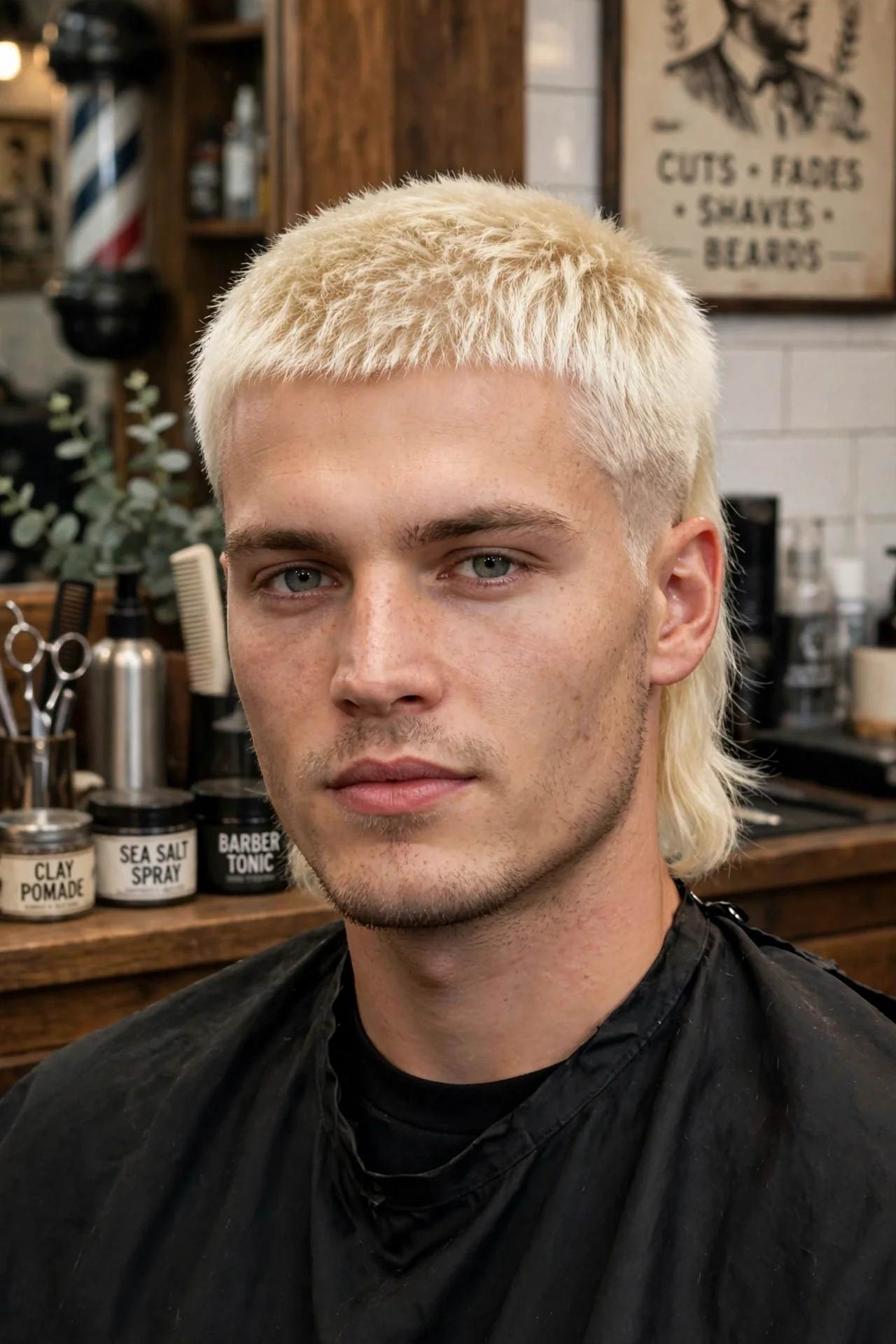
Bleaching a mullet makes the shape more visible, since light hair catches the light and shows the texture and layers. Platinum with dark faded sides is a popular, high-contrast version.
⚠️ Watch Out:
Bleached hair dries out and breaks more easily, and the longer back takes the most damage. Cut the ends regularly and use a deep conditioner every week.
Roots show quickly against dark faded sides. Expect a root touch-up every four to six weeks, separate from your haircut.
14
OF 25
The Short Wolf Cut Mullet
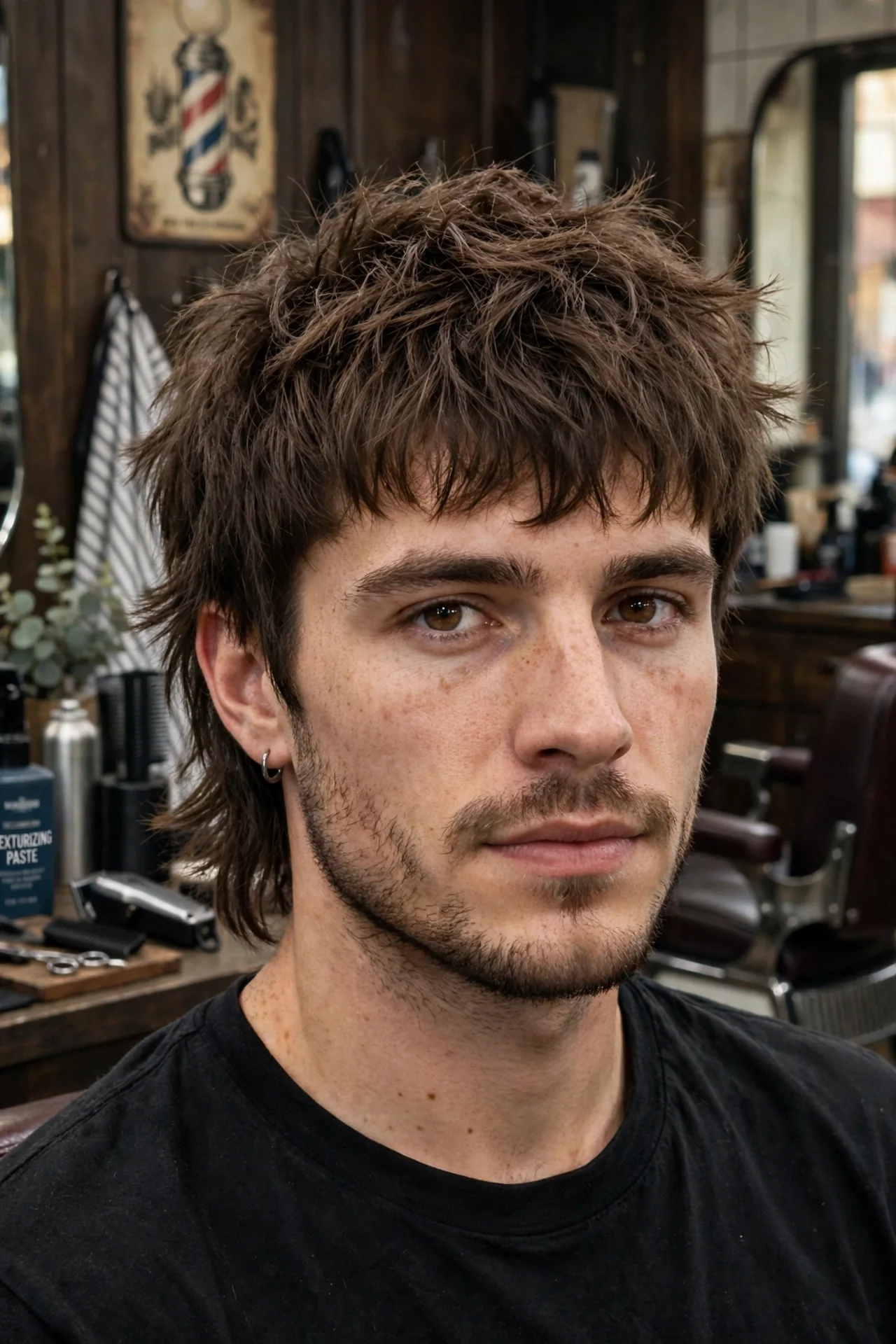
A wolf cut mullet mixes the mullet’s longer back with shaggy, choppy layers all over the top and around the face. It looks rougher and more textured than a classic mullet.
Wolf Cut vs. Classic Mullet
A classic mullet keeps the sides short and tidy and puts all the extra length at the back. A wolf cut keeps more length around the sides and face, with heavy layering throughout, so the whole head looks shaggy rather than just the back.
Wavy hair suits this best, since the waves fill out the layers. On very straight hair, a wolf cut can look thin and stringy unless you add texture spray every morning.
15
OF 25
Short Mullet With a Cropped Top
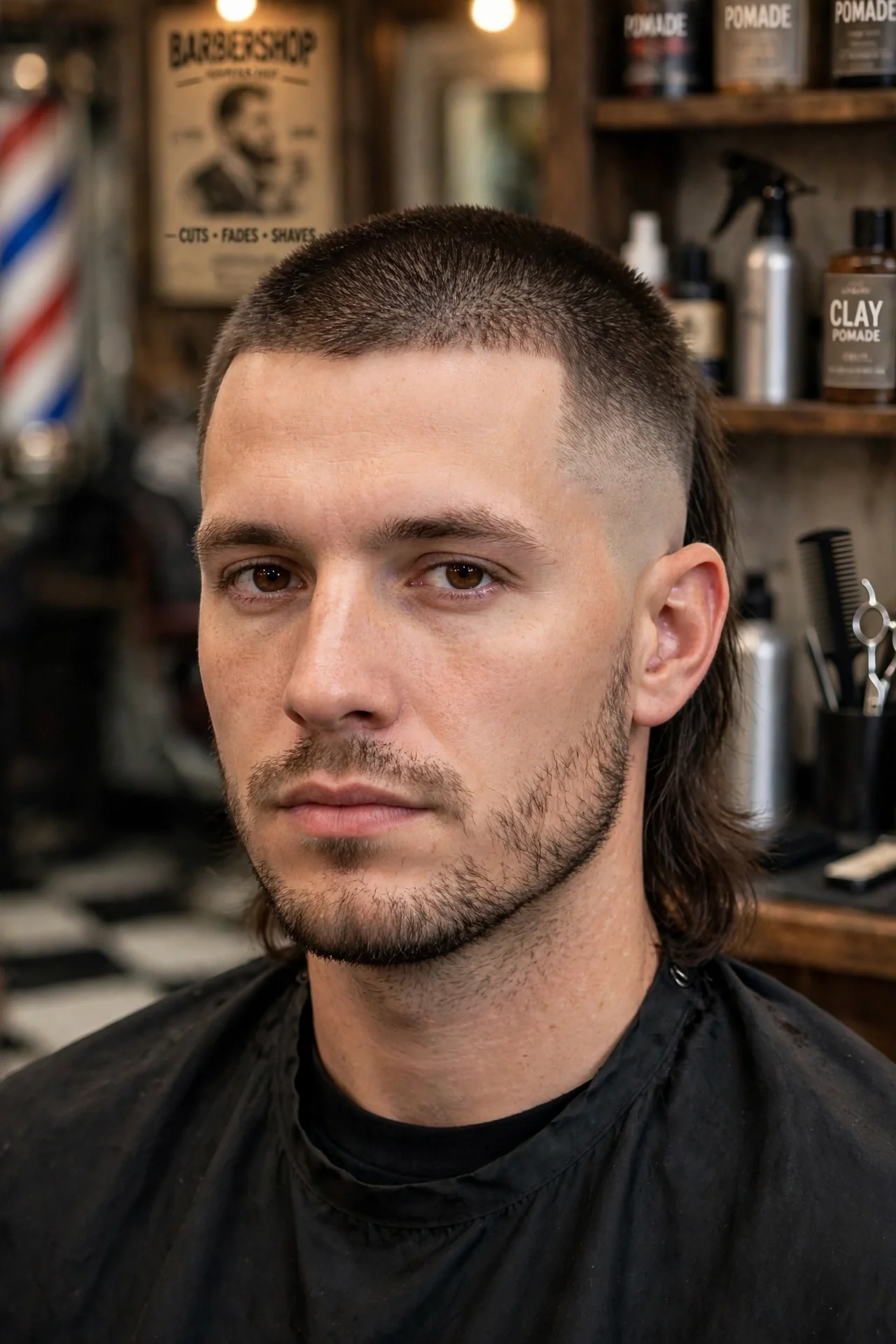
This one puts a messy French crop on top, short, textured, and pushed forward, then leaves a little extra length at the back. It’s a cross between two popular short cuts.
The front reads as a normal crop, so it stays easy to style. The extra length at the back is the only mullet giveaway, which suits guys who want something different without a big change.
16
OF 25
The Sports Mullet
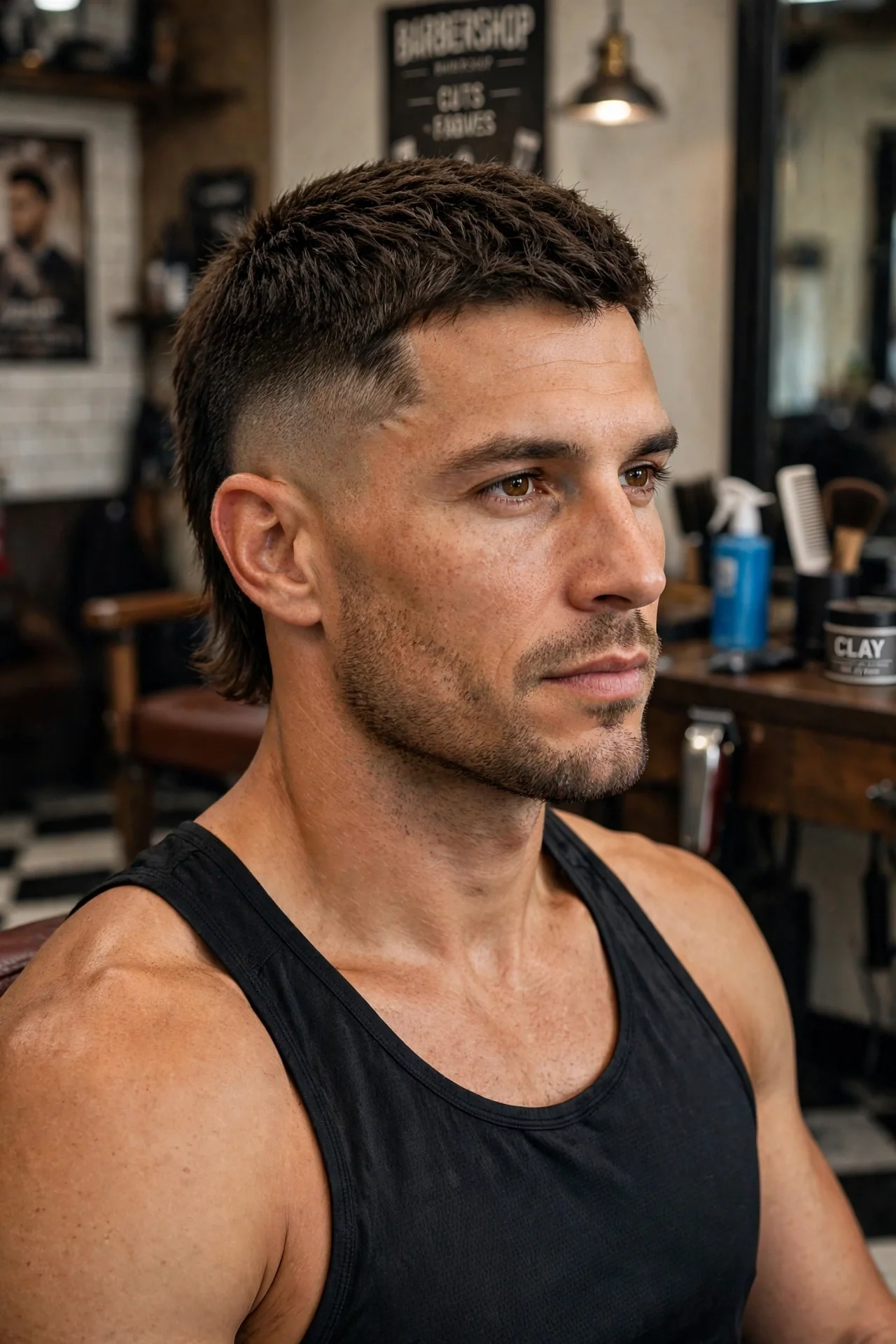
The sports mullet keeps the top and sides short and practical, with a longer back that sits out of the way of helmets and caps. It’s a functional cut that has long been popular in sports like hockey.
📅 Wear It For
Because the top is so short, it dries fast after training and needs almost no product. A quick towel-dry and a push with your fingers is usually enough.
Who This Isn’t For
If your job or school has strict haircut rules, the sports mullet’s longer back can be the one thing that breaks them. A micro mullet is a safer pick in that case.
17
OF 25
The Dad Mullet
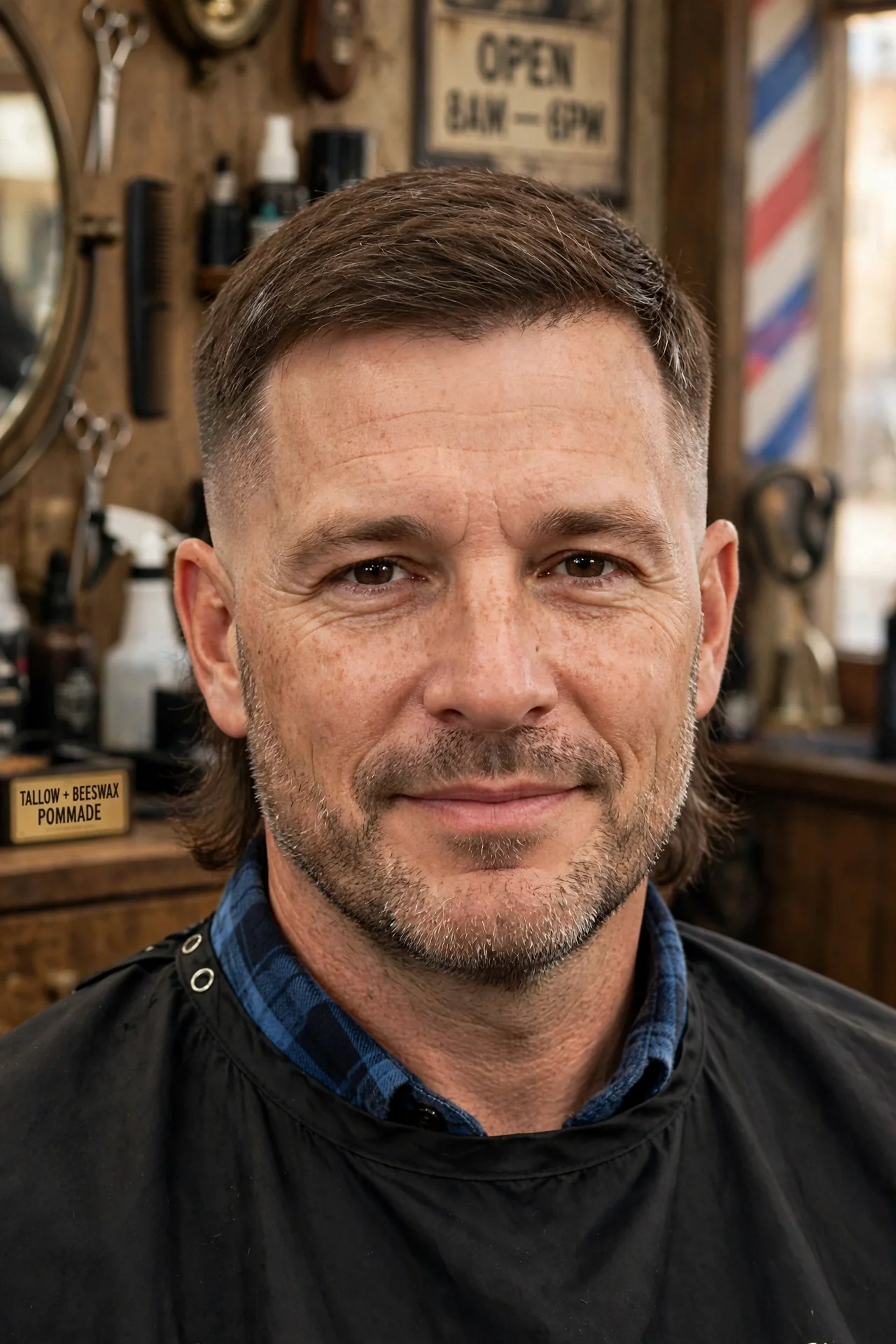
The dad mullet is the relaxed, slightly grown-out version. The top and sides are short but soft, scissor-cut rather than faded, and the back is left a little longer over the collar.
It’s intentionally low-effort. There’s no sharp fade to maintain, so it still looks fine six weeks after a cut.
Common Mistake
Skipping trims entirely. The cut is relaxed, but the sides and back still need a tidy every five to six weeks, or the back turns shaggy and the whole look stops reading as a style.
18
OF 25
Short Mullet for Men Over 40
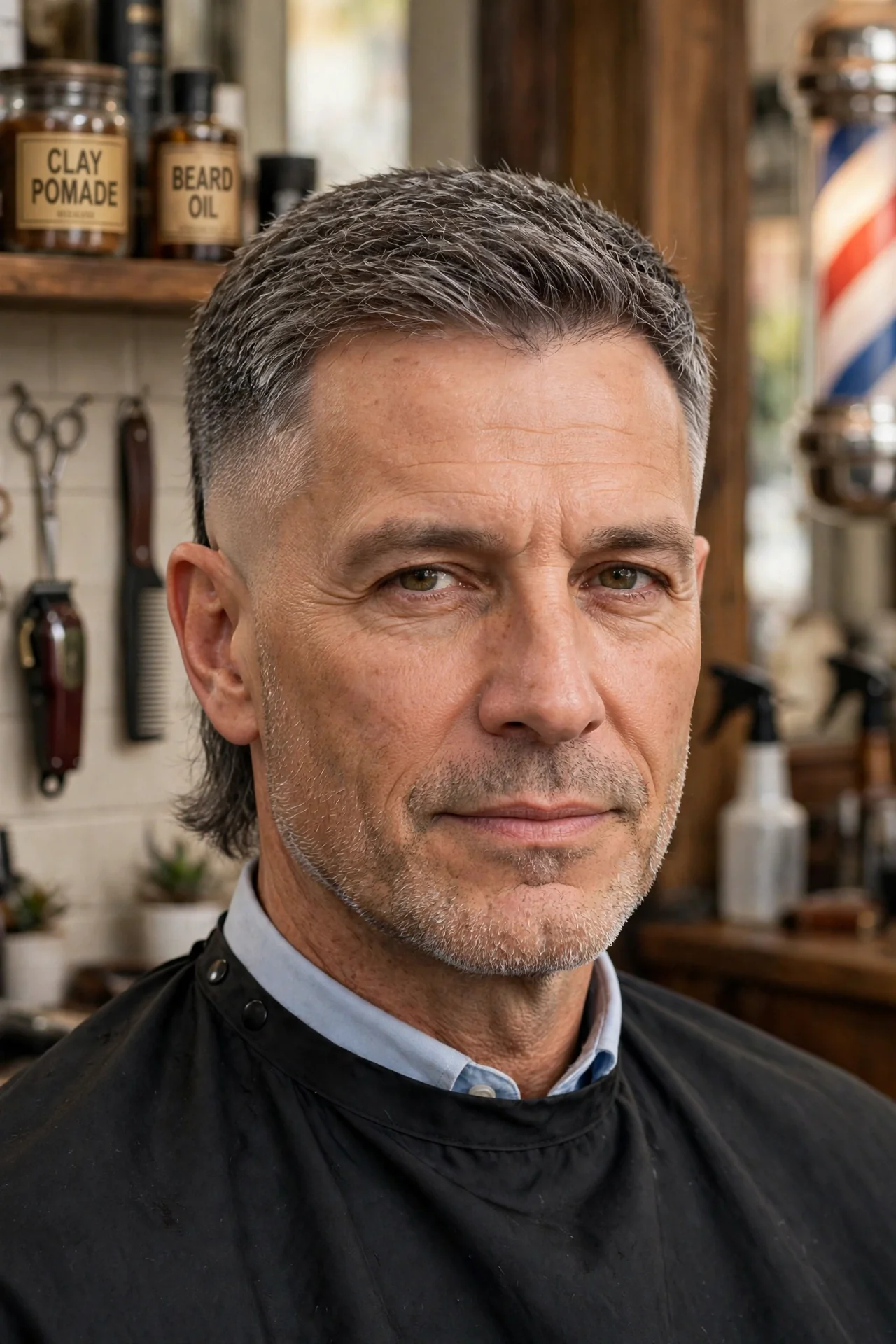
A mullet can absolutely work after 40, as long as it stays neat. The trick is keeping the back short and the sides tidy, so it reads as a modern haircut rather than a throwback.
🎨
Back Length
just touches the collar
✂
️S️ides
low taper, not a skin fade
📐
Top
neat, lightly textured
Grey hair actually helps here. Silver and salt-and-pepper texture makes the short layers more visible, which gives the cut a grown-up, considered look.
Avoid the most extreme versions, like a high skin fade with a long back. They tend to look like you’re trying too hard, while a softer, shorter version looks confident.
19
OF 25
Short Mullet With a Receding Hairline
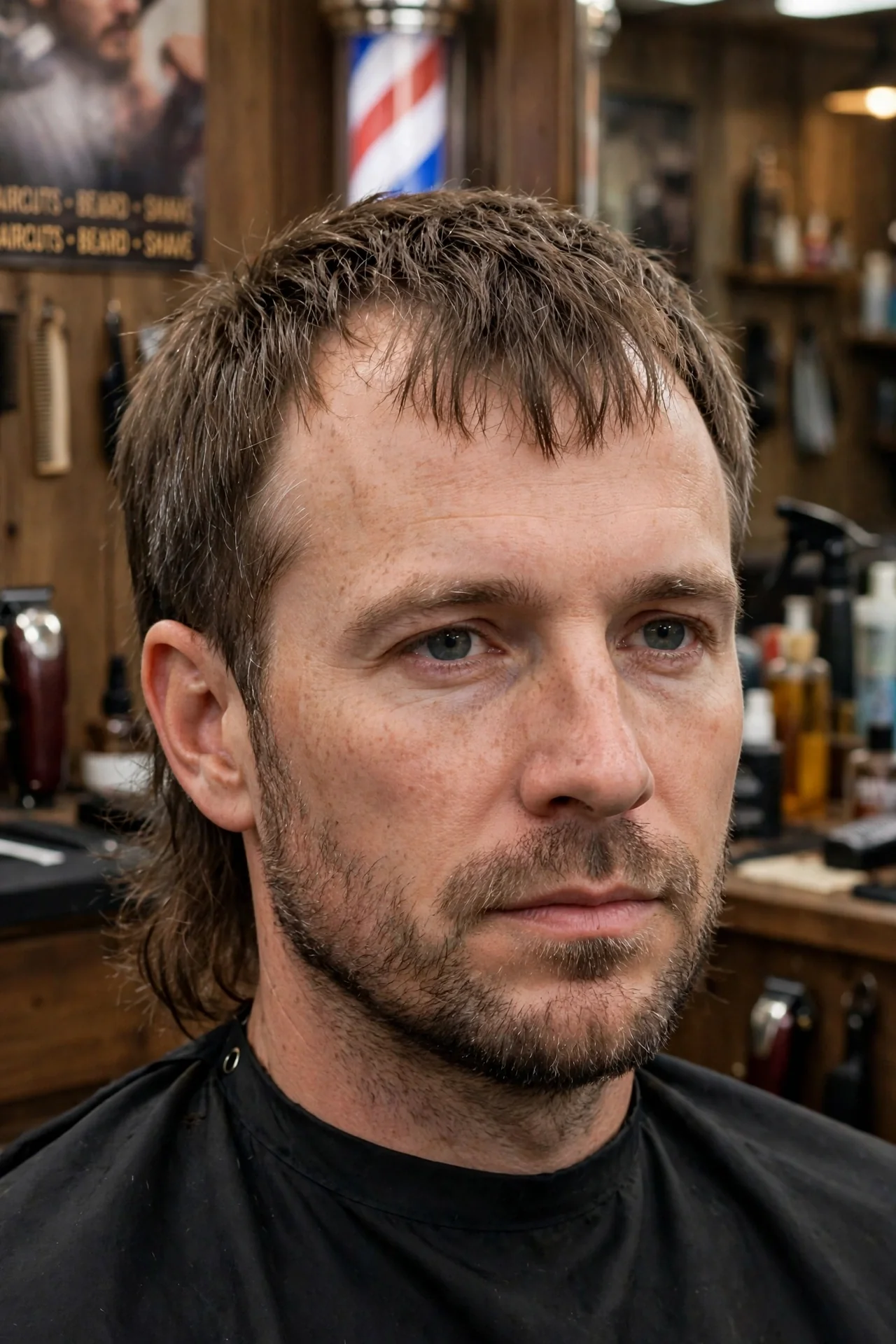
A short mullet can work well with a receding hairline, as long as the front stays short and textured. Pushing a short fringe forward softens the temples, and the longer back shifts attention away from the hairline.
BEFORE:
Hair swept back off the forehead, with the receding temples and a long top making the hairline stand out.
AFTER:
A short textured top pushed forward and a longer back, the hairline softened and the eye drawn to the shape of the cut.
Keep the top short. Longer hair on top separates and shows more scalp, especially on fine hair.
A matte texture powder at the roots adds thickness without the shine that makes thinning areas more visible.
20
OF 25
Short Mullet With a Beard
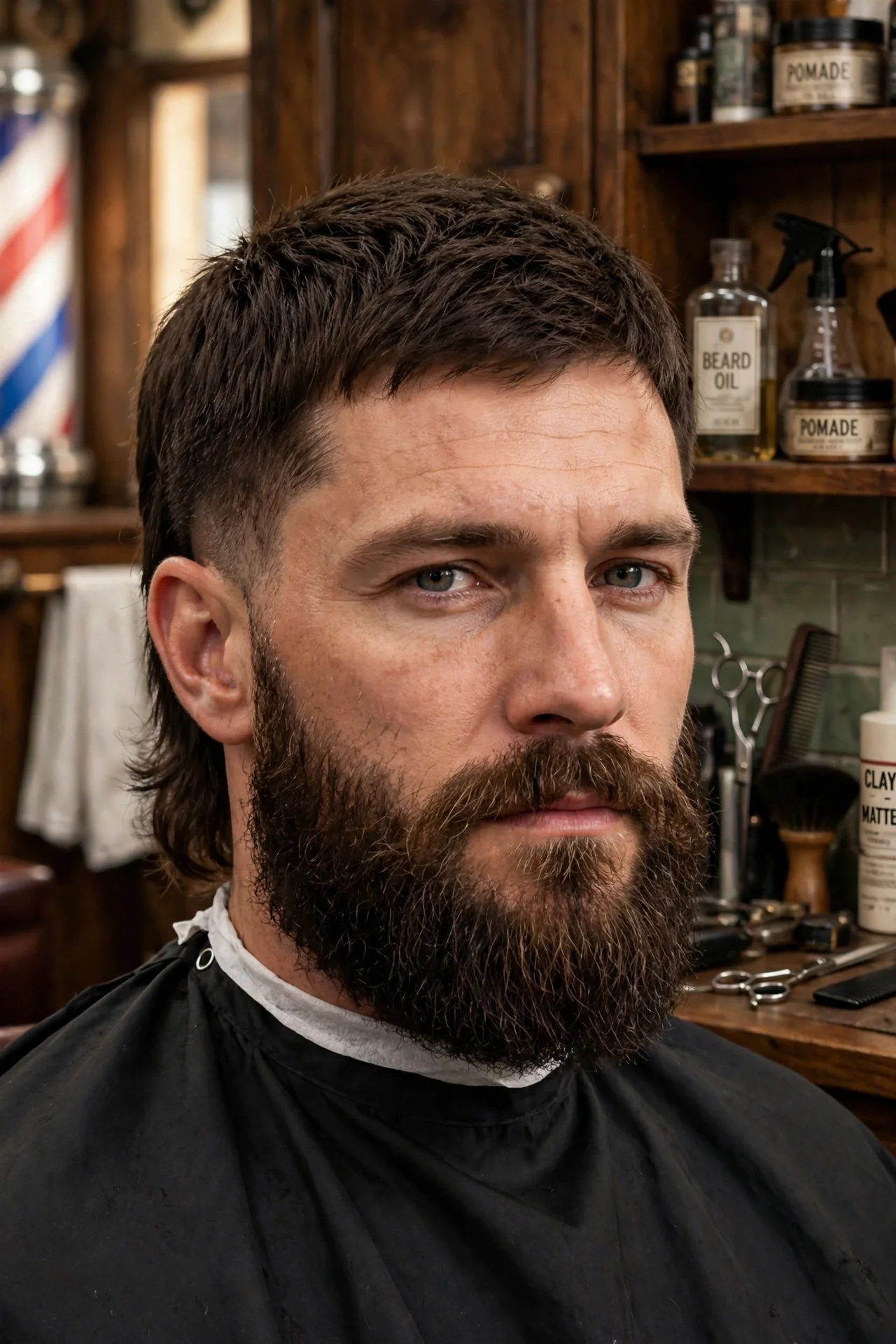
A beard balances a mullet well, because it adds weight at the bottom of the face to match the extra length at the back. The two together frame the whole head.
✅ Recreate This Look
- A mid fade that blends straight down into the beard, with no bare gap at the sideburns
- A beard trimmed tight on the cheeks and slightly fuller at the chin
- A short textured top, around two inches
- Back length just over the collar, layered so it doesn’t look heavy
Trim the beard on the same schedule as the haircut. A fresh mullet next to an overgrown beard throws off the balance that makes this look work.
21
OF 25
Short Mullet for an Oval Face
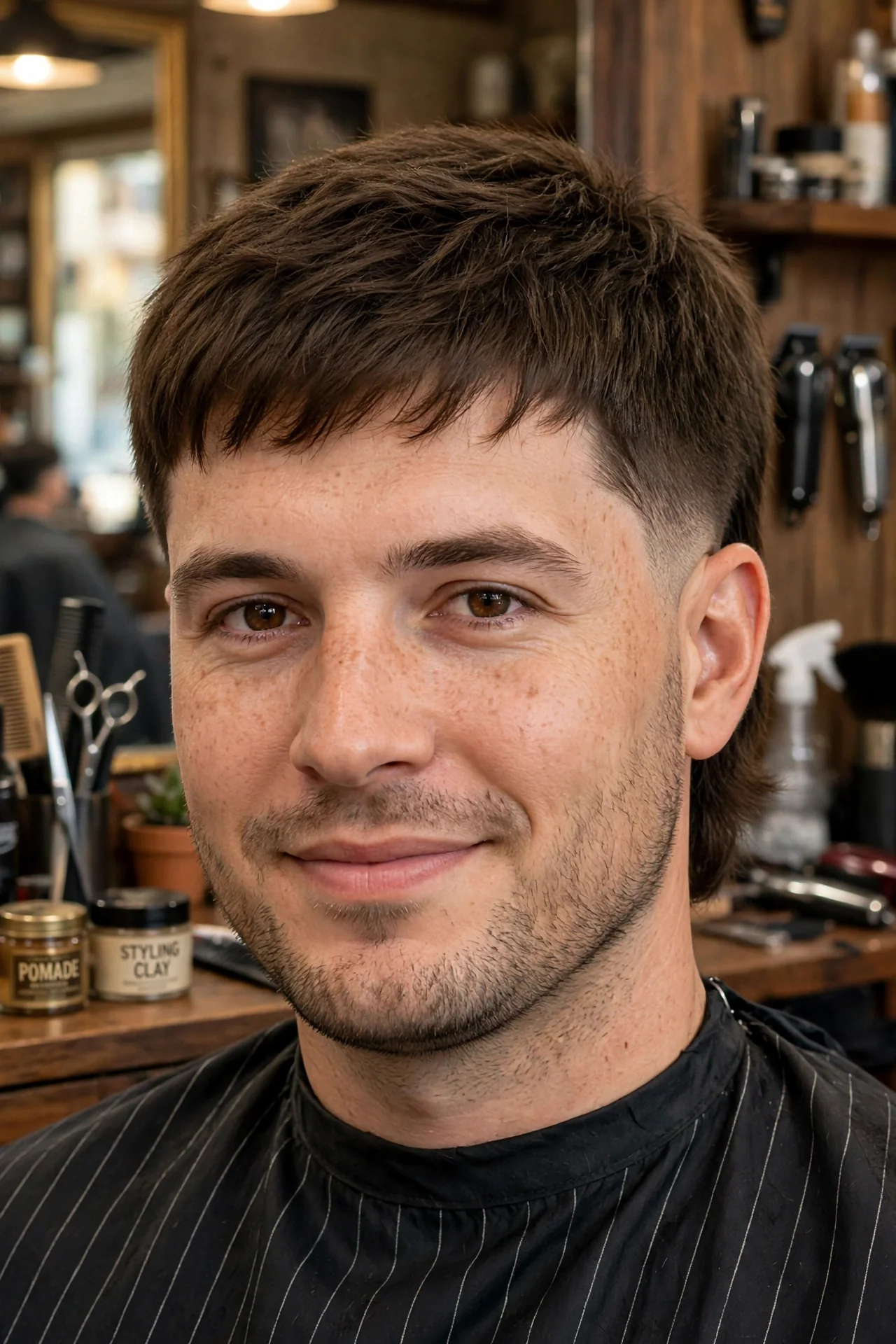
Oval faces have balanced proportions, so almost every mullet on this list works without adjustment. You can choose based on your job and style instead of face shape.
🎨
Fringe
any length suits
✂
S️ides️
low, mid, or high all work
📐
Back
short to medium
The one thing to watch is going too long at the back. Even on an oval face, a very long back can drag the eye down and make the face look longer than it is.
22
OF 25
Surfer-Style Short Mullet
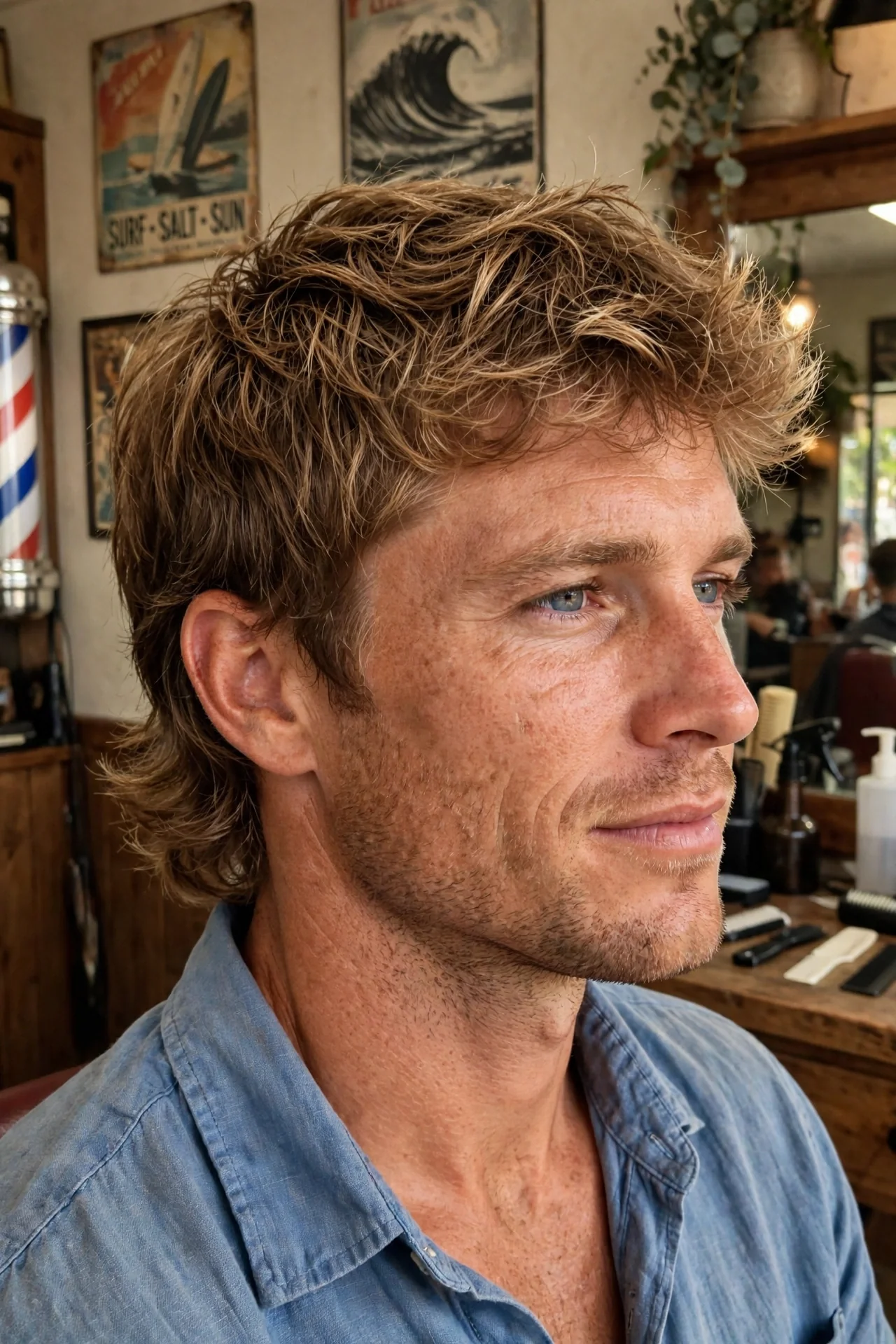
The surfer mullet looks a bit messy on purpose, with salty, sun-lightened waves and soft, unfaded sides. It’s the most relaxed version on this list.
✅ Do This
Scrunch sea salt spray into damp hair and let it air-dry for natural texture.
🚫 Skip This
A sharp skin fade. It looks too neat against the messy, beachy top and back.
Sun and salt dry hair out, so a leave-in conditioner on the ends of the back helps stop them going straw-like.
23
OF 25
The Short Flow Mullet
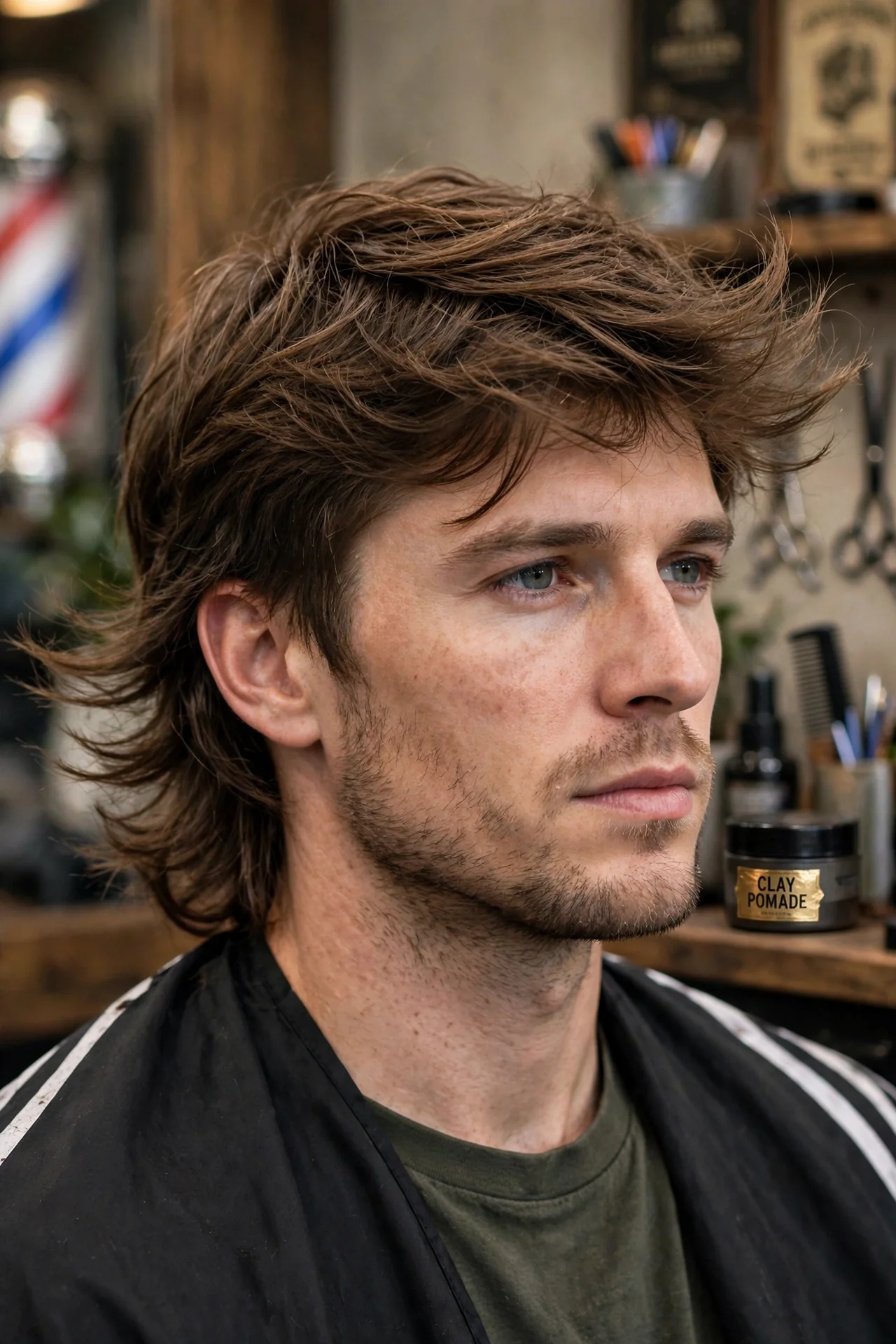
A flow mullet takes the swept-back flow haircut and leaves extra length at the back, so the hair flows from front to back in one direction. It’s a natural step if you’re already growing out a flow.
📌 Good To Know
Flow mullets need slightly longer top length than most versions here, usually three inches or more, so the hair has enough weight to sweep back.
Layers matter even more here. Without them, the swept-back top and longer back feel heavy and stick out at the nape.
24
OF 25
Short Modern Mullet for Boys
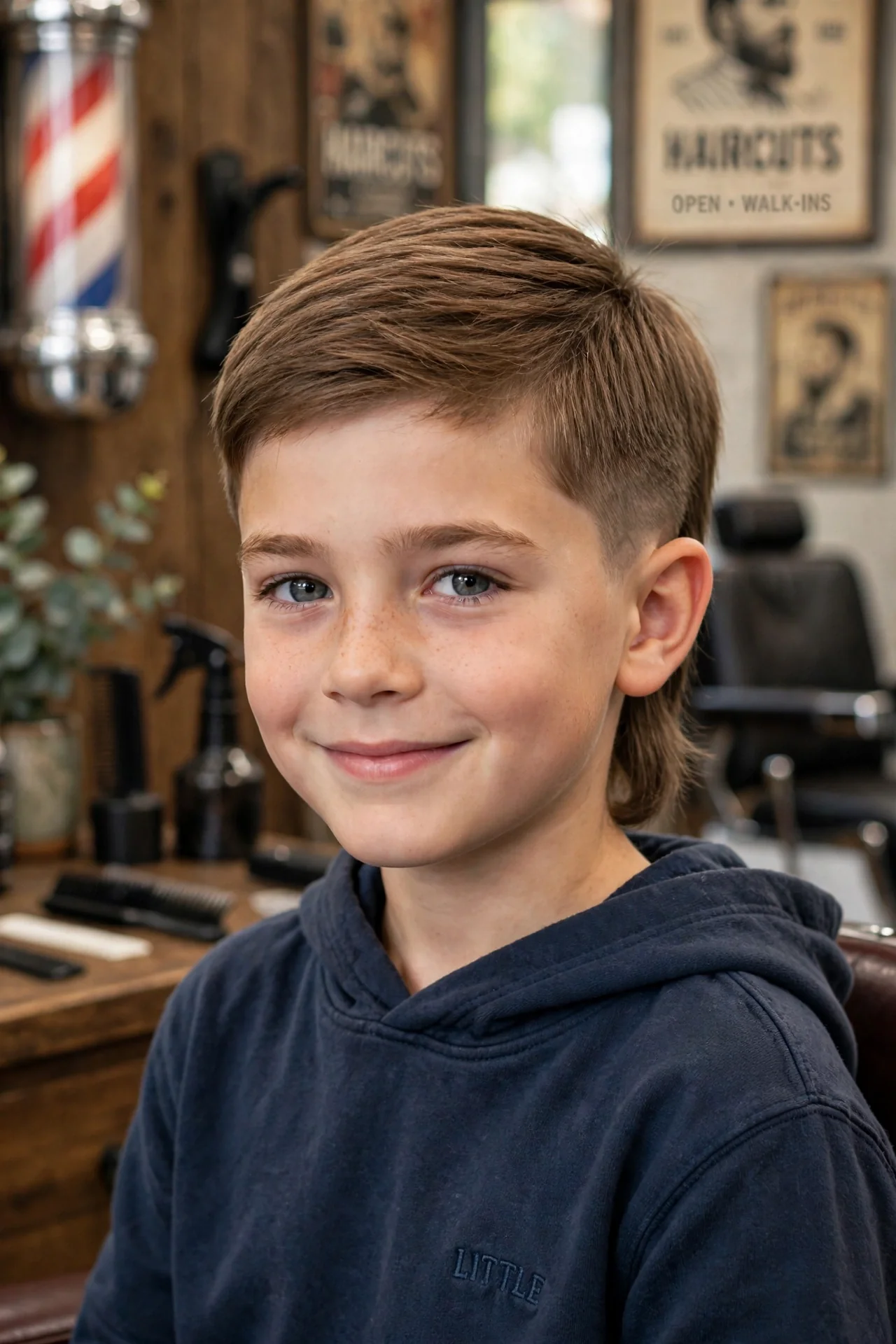
A short modern mullet is a popular cut for boys, because it’s easy to manage and still looks fun. A soft taper and a back that just touches the collar keep it neat enough for school.
⚠️ Watch Out:
Some schools have rules about hair length at the back or about fades. Check the dress code before cutting, so the longer back doesn’t cause trouble.
Kids’ hair grows fast, so plan on a tidy-up every three to four weeks. For styling, a bit of water or a light kids’ cream is usually enough.
25
OF 25
Toddler Short Mullet
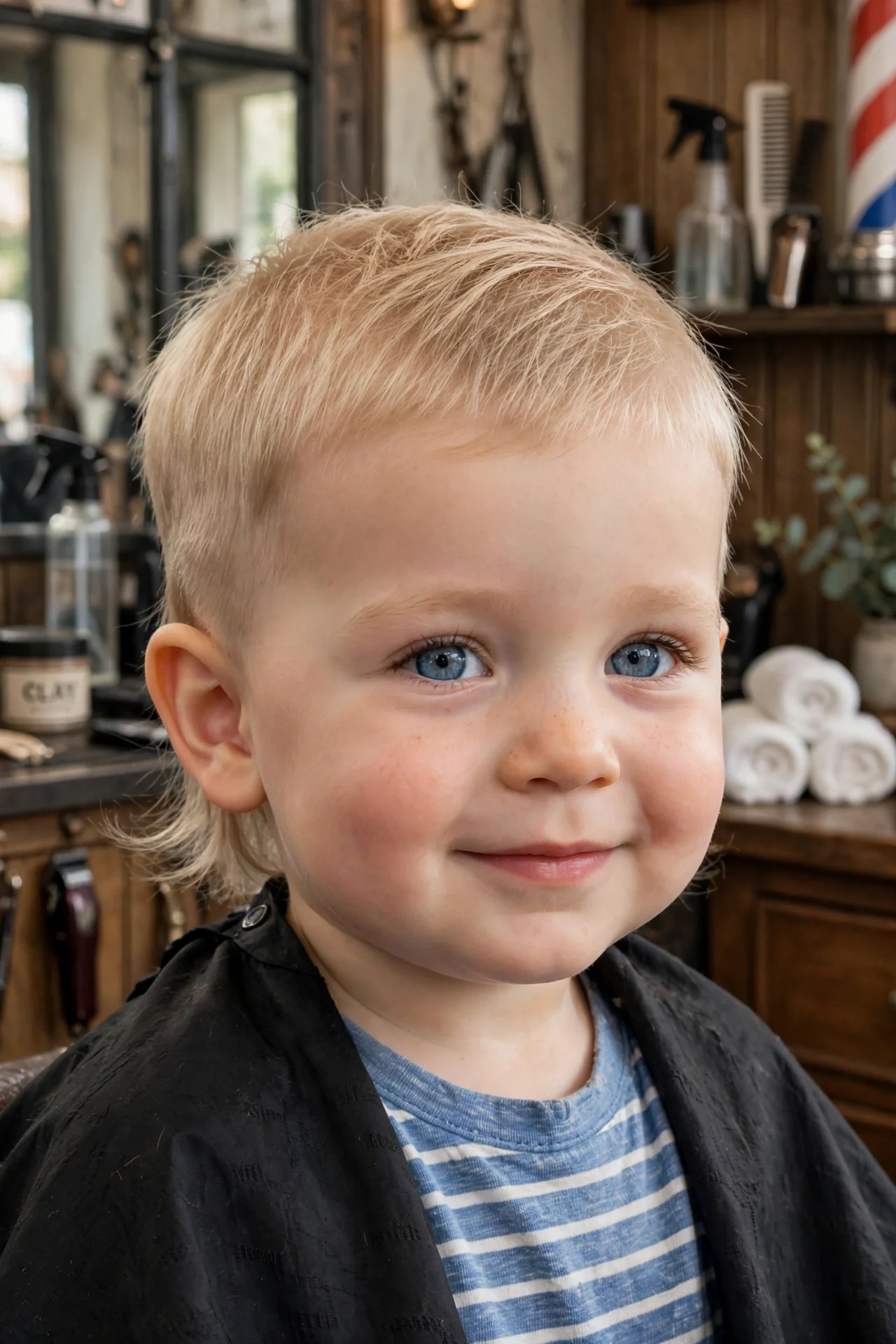
A toddler mullet is usually a very soft version: a short top and sides, with the back left a bit longer and wispy. It’s popular with parents because it keeps hair out of the eyes while leaving some length.
💡 Quick Tip
Scissors are calmer than clippers for most toddlers, since clippers can be loud and scary. Book the cut when your child is rested and fed, and bring a favourite toy.
Keep the back length modest. Very long, thin baby hair at the nape can tangle easily and look straggly rather than styled.
Which short modern mullet are you asking your barber for?
FAQs
What is a short modern mullet?
A short modern mullet is a mullet with a short, textured top and sides and slightly longer hair at the back, blended so it looks clean and current rather than 1980s.
How long should the back be on a short mullet?
Most short mullets leave the back about one to three inches longer than the sides, usually ending at or just over the collar.
Can I get a short mullet with straight hair?
Yes. Ask for layers and texture cutting at the back so it doesn’t hang flat, and use a texture spray when styling.
What should I ask my barber for?
Say “short modern mullet,” name the side option you want (low taper, mid fade, or skin fade), give the top length, and say how far down the back should go. Bring a side and back photo.
Is a short mullet professional?
A low-taper or micro mullet usually works in most offices, since it looks like a neat cut from the front. High skin fades and long backs read more casual.
How often does a short mullet need trimming?
Every three to five weeks for most versions. Skin fades and V-shaped backs need a touch-up more often, around every two weeks.