24 Wolfcut Styles for Men, Decoded: Find Your Version

A wolfcut is a heavily layered haircut that’s choppy and full on top, shorter and textured around the crown, and longer and wispier at the back. It sits somewhere between a shag and a mullet, which is why it looks a little wild even when it’s freshly cut.
The name covers a lot of ground, though. A short wolfcut on straight hair and a long curly one barely look like the same haircut, and the right version depends far more on your hair texture than on any photo you bring in. Here are 24 versions, and how to tell which one your hair will actually hold.
Short on Time? Pick Your Path
Table of Contents
- 01The Classic Medium Wolfcut
- 02The Short Wolfcut
- 03The Long Wolfcut
- 04The Shaggy Wolfcut
- 05The Soft Wolfcut
- 06The Korean Perm Wolfcut
- 07The Japanese-Style Straight Wolfcut
- 08The Curly Wolfcut
- 09The Wavy Wolfcut
- 10The Fluffy Wolfcut
- 11The Wolfcut Mullet
- 12The Wolfcut With a Low Taper
- 13The Wolfcut With a Mid Fade
- 14The Undercut Wolfcut
- 15The Wolfcut With Curtain Bangs
- 16The Wolfcut With Straight Bangs
- 17The Middle-Part Wolfcut
- 18The Swept-Back Wolfcut Flow
- 19The Blonde Wolfcut
- 20The Grunge Wolfcut
- 21The 80s-Inspired Wolfcut
- 22The Long Wolfcut Tied Back
- 23The Wolfcut With a Suit
- 24The Wolfcut for Boys
01
OF 24
The Classic Medium Wolfcut
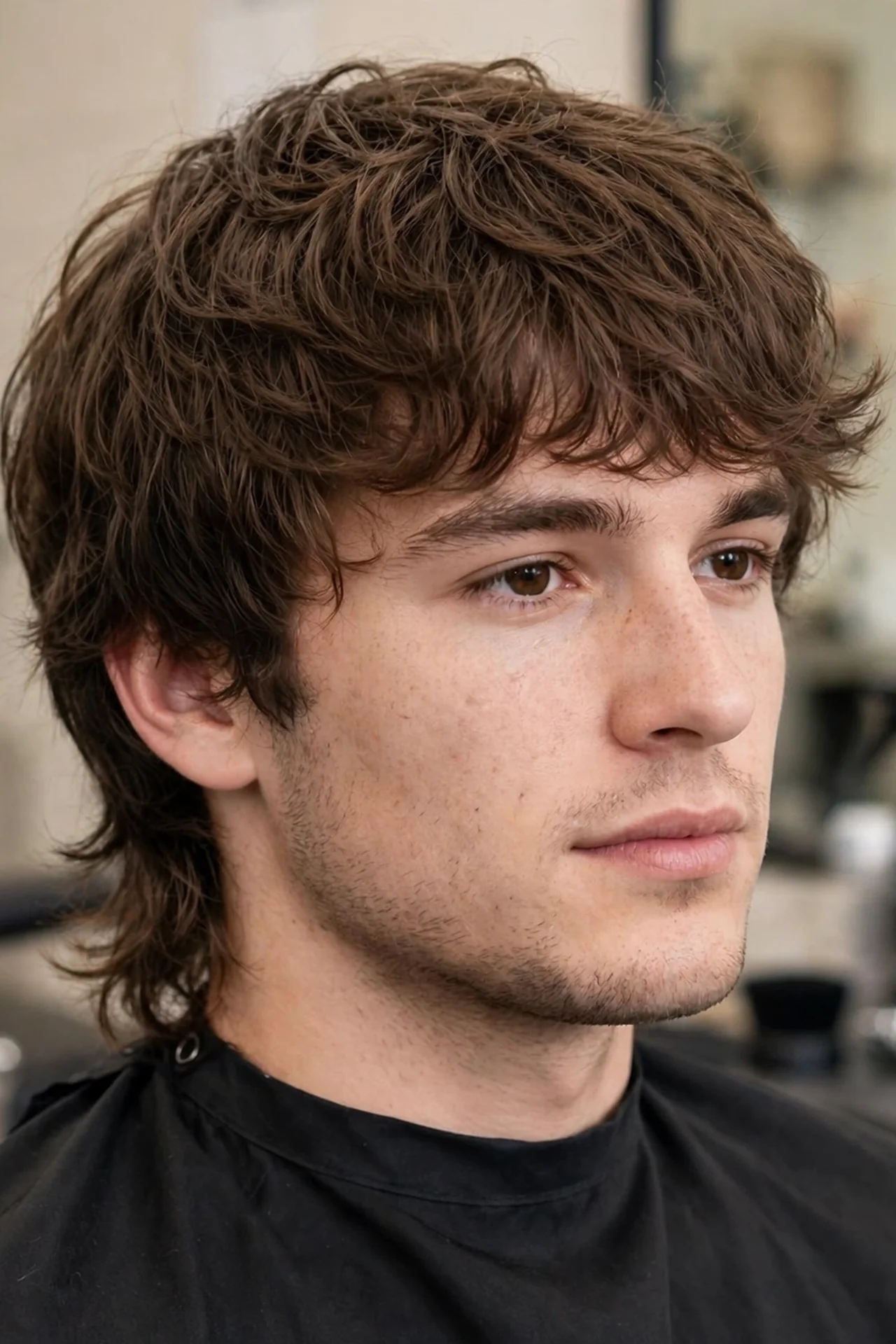
The classic version keeps the hair roughly chin length at the longest point, with lots of short, choppy layers at the crown and a messy fringe. The back stays longer and thinner, which gives it that slightly untamed outline.
What makes it a wolfcut instead of a regular layered cut is where the layers sit. They’re concentrated at the top and crown, so the hair has height and volume up there and thins out as it moves down toward the neck.
💈 What to Ask Your Barber:
“Medium wolfcut, short choppy layers at the crown, a textured fringe around eyebrow length, and longer wispy layers at the back that touch my collar.” Bring photos of the front, side, and back, since the shape changes a lot from each angle.
Many barbers cut this with a razor or point-cutting scissors rather than straight cuts. Ask which they plan to use; razor cutting gives softer, wispier ends, while scissors keep the ends a little fuller.
The biggest misunderstanding I see is that people ask for this cut from a photo, but that look usually comes from thick, textured hair and daily styling. On fine, straight hair, you won’t get the same result without a lot more work.
02
OF 24
The Short Wolfcut
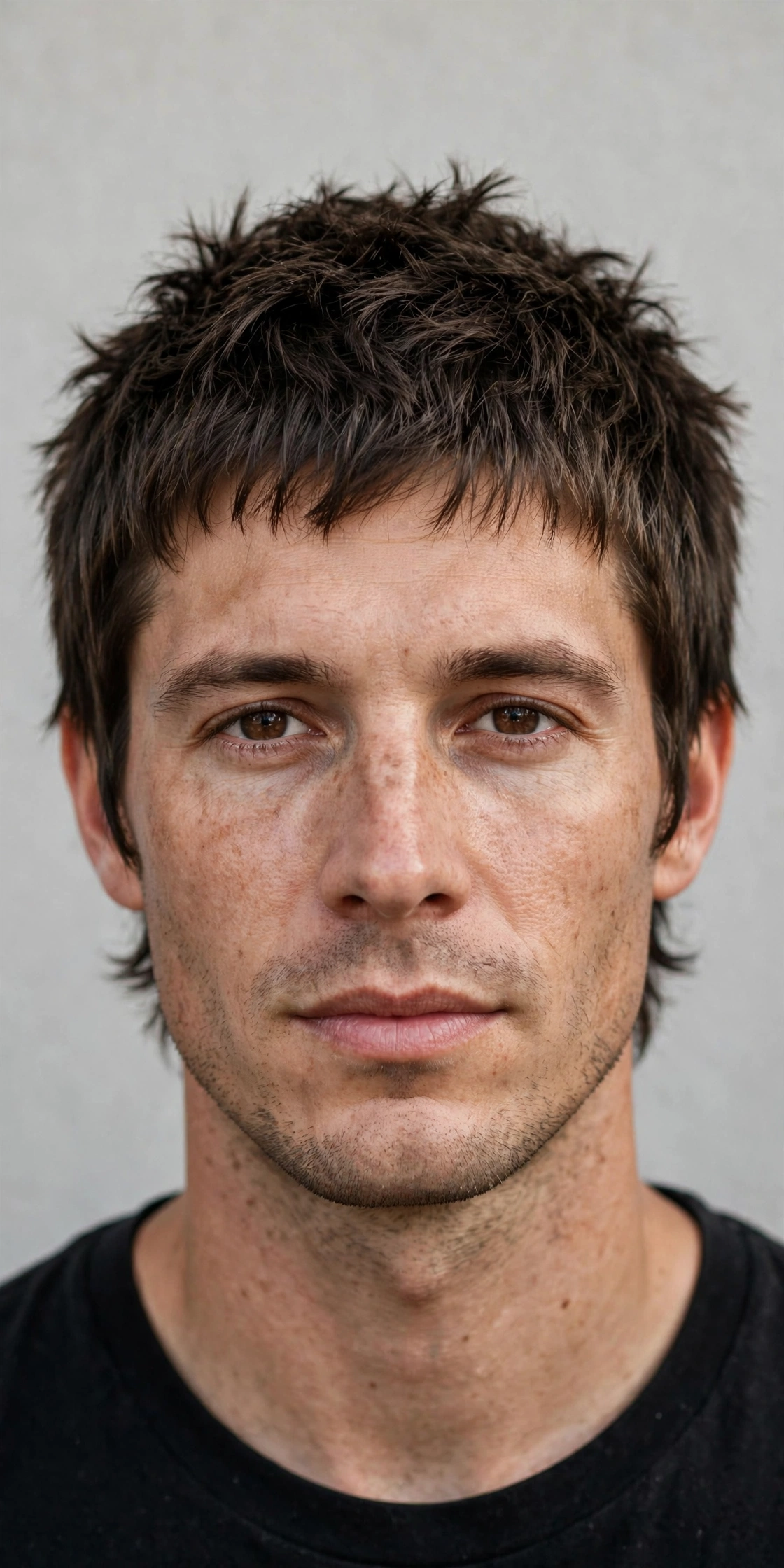
A short wolfcut squeezes the same idea into less hair. The top is choppy and textured, the sides are shorter, and the back is left just a little longer, usually only an inch or two.
🎨
Top
choppy, 2–3 inches
✂️
Sides
short and textured, no fade
📐
Back
1–2 inches longer than the sides
It’s the easiest way to try the style. If you like it, you grow it into a medium wolfcut; if not, one regular haircut takes it back to a normal short cut.
On a round face, ask for a little extra height at the crown. Keeping volume on top rather than at the sides helps the face look longer.
03
OF 24
The Long Wolfcut
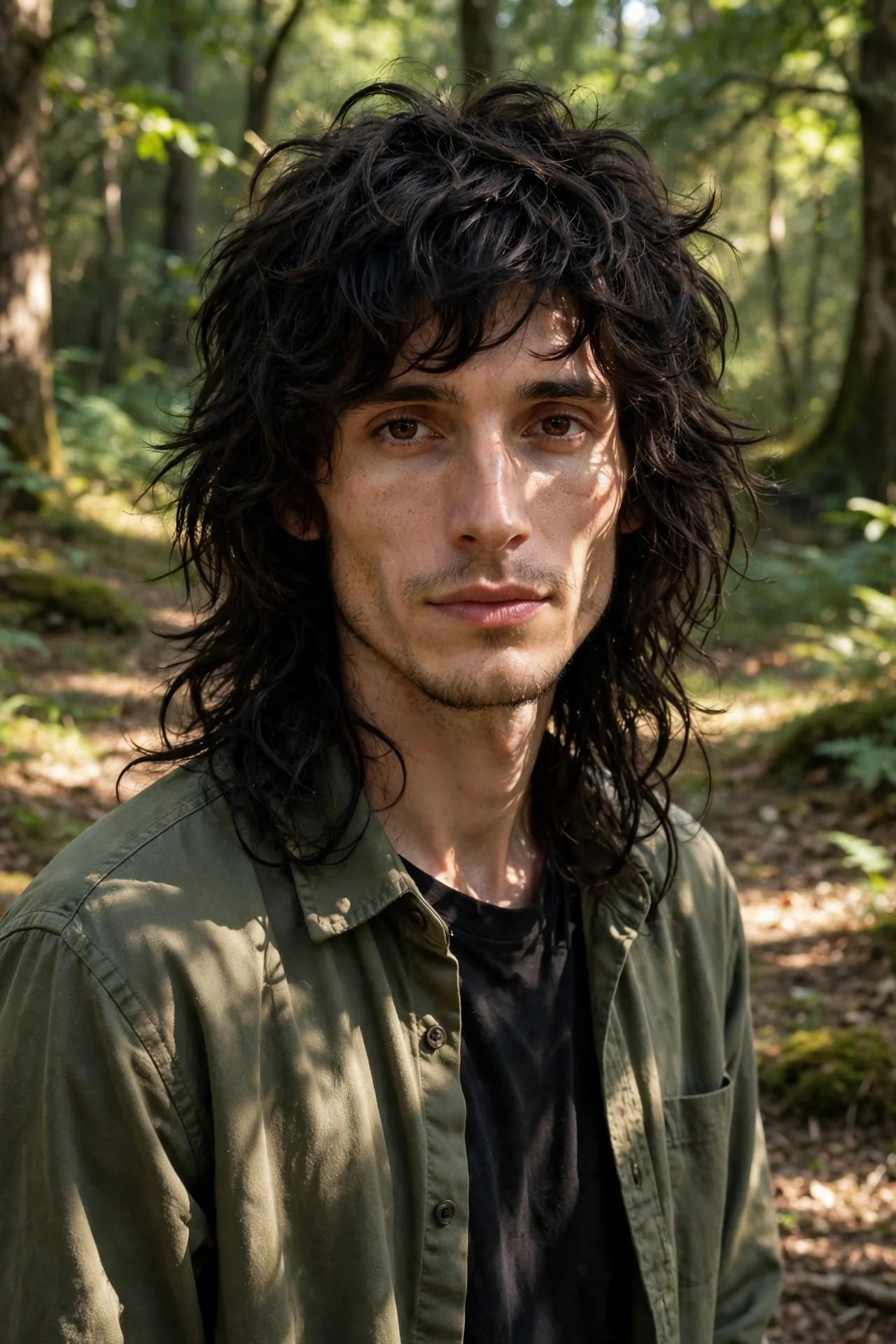
A long wolfcut keeps length past the shoulders but adds heavy layering at the crown and face-framing pieces at the front. It turns long hair that just hangs into hair with shape and movement.
It’s a good fix if your long hair feels heavy and flat. Taking weight out of the top with layers gives it lift without losing the length you’ve spent months growing.
⚠️ Watch Out:
The layers at the crown are much shorter than the rest of the hair. If you later decide to grow everything one length, expect it to take many months for those top layers to catch up.
Long wolfcuts can tangle at the back, since the thinner ends move around more. A wide-tooth comb and a light leave-in conditioner keep them manageable.
04
OF 24
The Shaggy Wolfcut

A shaggy wolfcut pushes the choppy layers all the way through the hair, not just at the crown. It looks messier and more relaxed, closer to a classic shag haircut.
People mix up the wolfcut, the shag, and the mullet constantly, so here’s how they differ.
| Cut | Top | Sides | Back | Overall Look |
|---|---|---|---|---|
| Wolfcut | Choppy, lots of volume | Textured, medium | Longer and wispy | Wild, layered |
| Shag | Choppy layers all over | Layered | Similar to the sides | Soft, messy |
| Mullet | Short | Short | Clearly longer | Sharp contrast |
The shaggy wolfcut sits closest to the shag, but it still keeps more volume on top and thinner ends at the back.
It needs very little styling. A bit of sea salt spray and some scrunching is usually enough, since the look is meant to be undone.
05
OF 24
The Soft Wolfcut

A soft wolfcut keeps the layered shape but blends everything more smoothly, with less choppiness and less contrast between top and back. From the front, it can look like a well-layered medium cut.
💡 Myth vs Reality:
Myth: a wolfcut is always too wild for an office.
Reality: the soft version, with blended layers and a tidy fringe, looks neat enough for most workplaces. The wildness comes from heavy choppiness, which you can ask your barber to tone down.
This is also a good choice if you have fine hair. Very choppy layers can make fine hair look thin and stringy, while softer, blended layers keep more weight in the hair.
06
OF 24
The Korean Perm Wolfcut
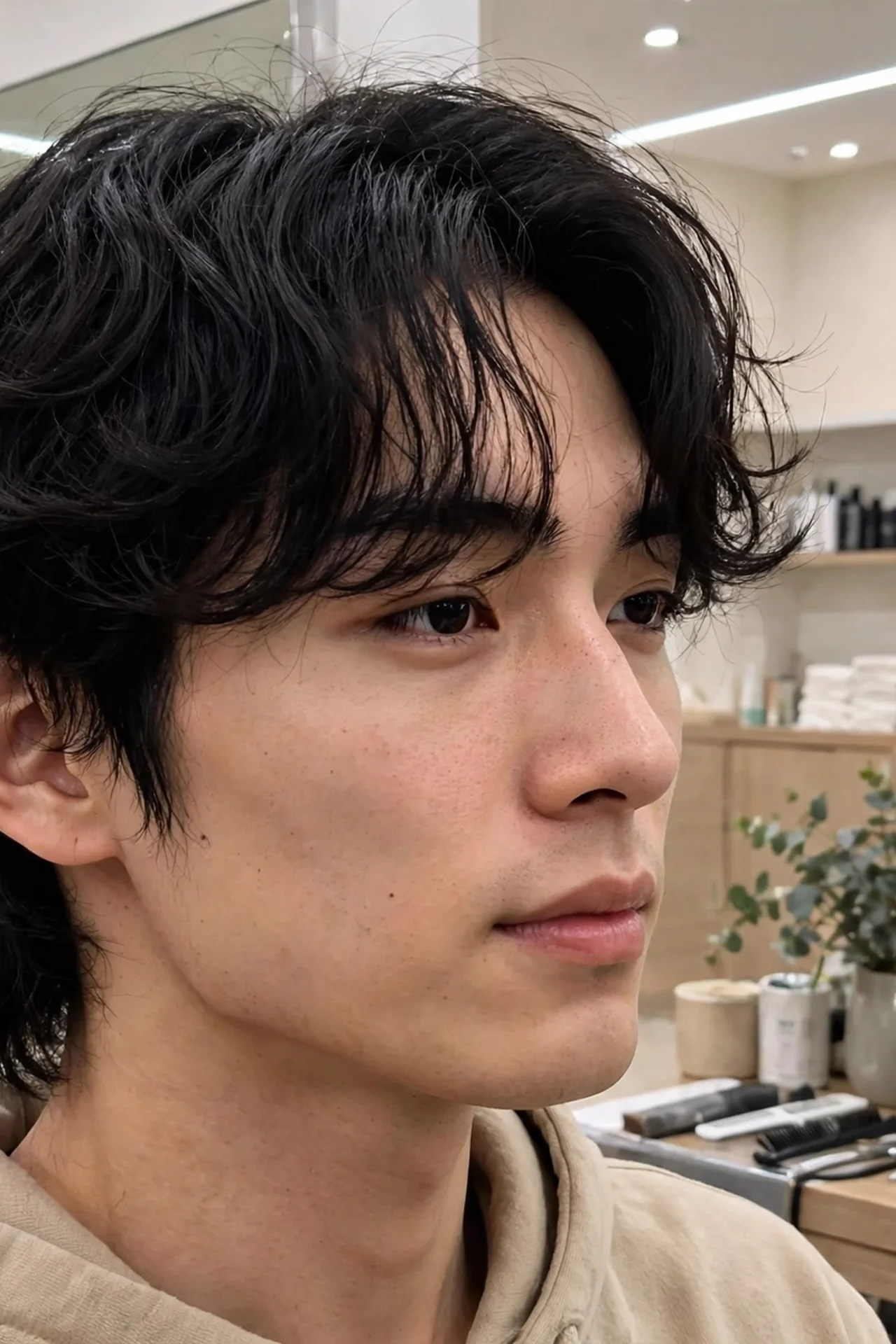
This version comes from Korean salons and pairs a soft wolfcut with a light perm. The perm adds loose waves, so thick, straight hair gets the volume and movement a wolfcut needs.
Thick, straight, dark hair, which many East Asian men have, often struggles to hold a wolfcut on its own. It’s heavy and lies flat, so the layers don’t show. The perm solves that by adding texture that lasts for weeks.
📌 Good To Know:
Most men’s perms like this use large rods for loose waves rather than tight curls. A loose perm usually lasts around two to three months before it relaxes noticeably.
Tell your stylist if your hair has been bleached or coloured. Perming over bleached hair can cause breakage.
07
OF 24
The Japanese-Style Straight Wolfcut
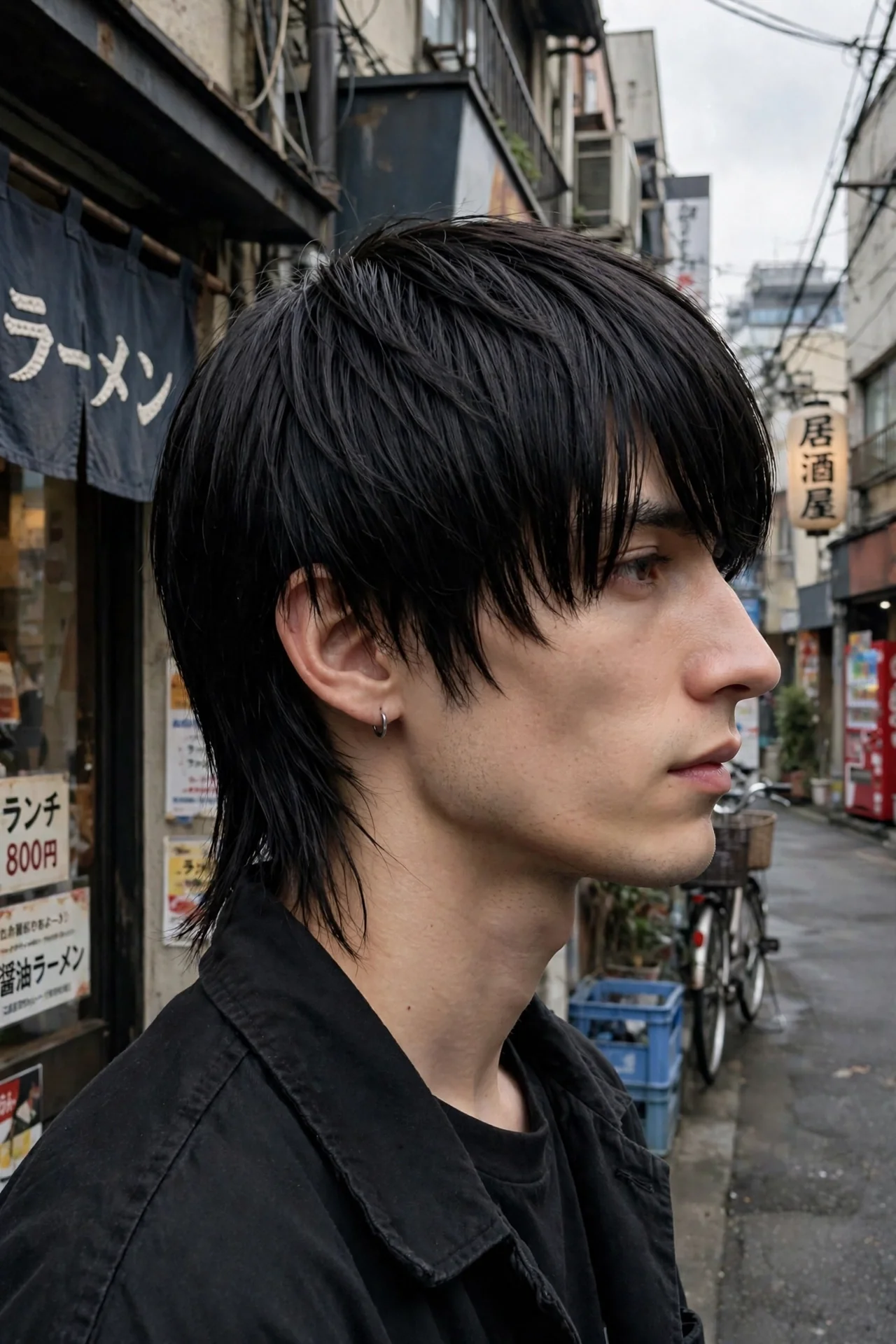
Japanese-style wolfcuts on straight hair usually look sleeker than the shaggy Western version. They rely on a heavier fringe, face-framing pieces, and razor-thinned layers rather than lots of volume.
BEFORE:
Straight hair cut to one length, hanging flat around the face with no shape at the crown.
AFTER:
The same hair cut with a heavy fringe, thinned crown layers, and long wispy ends, showing clear shape without needing a perm.
Thinning is what makes it work. Straight hair holds layers better once some weight is removed from inside the top, so the layers separate and show instead of blending into one flat surface.
A light texture spray before blow-drying helps too. Dry the crown upward, then let the ends fall naturally.
08
OF 24
The Curly Wolfcut
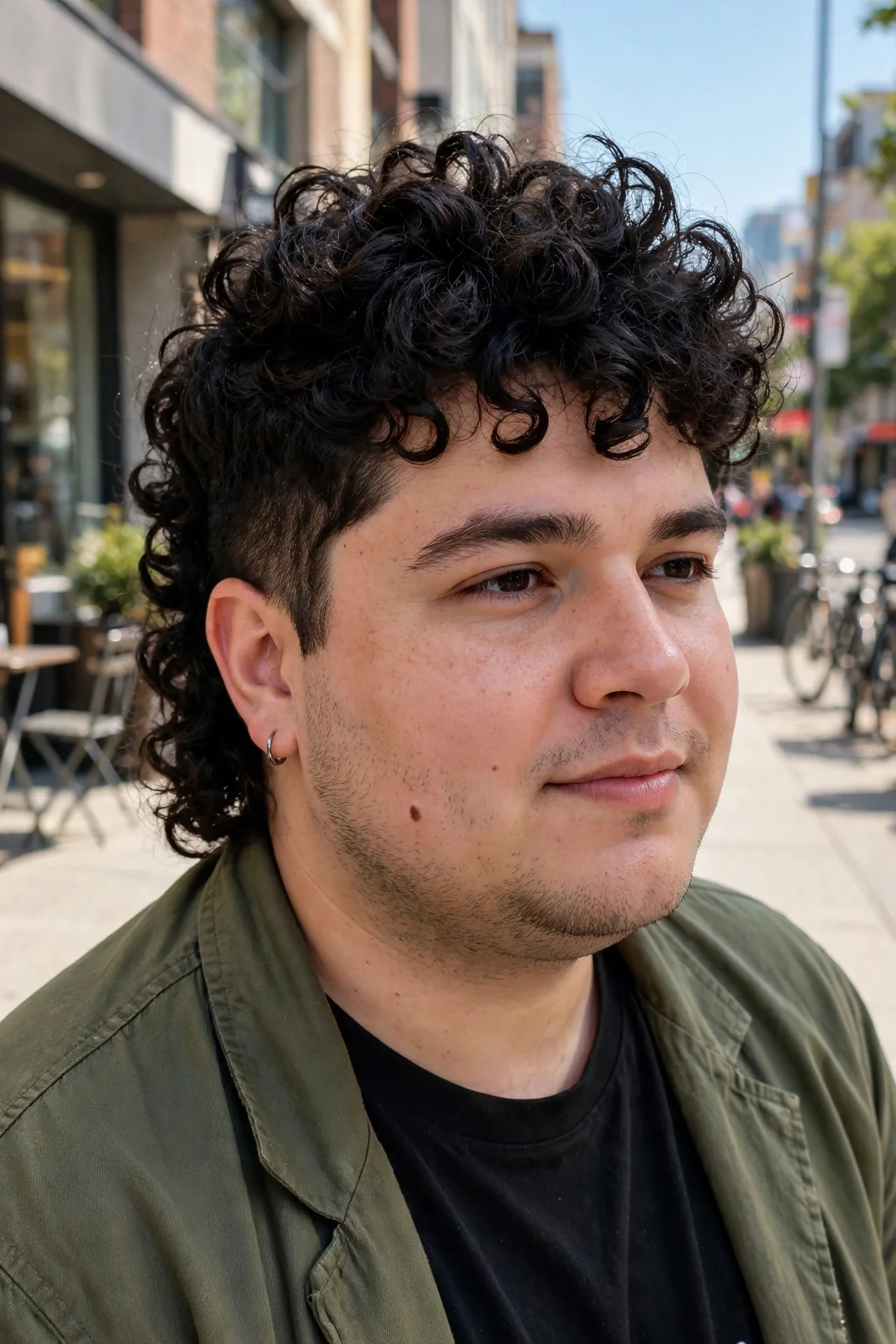
Curly hair might be the most natural fit for a wolfcut. The curls create volume and texture on their own, so the layered shape looks full without much styling.
Curls shrink as they dry, sometimes a lot. A good barber cuts curly wolfcuts dry, or at least checks the shape dry, so the back doesn’t spring up shorter than you expected.
🧴 Product Note
Most curl creams are sold on the promise of defining curls without frizz or crunch. For a curly wolfcut, a light cream applied to soaking-wet hair usually holds curls better than gel or paste.
Skip brushing once it’s dry. Brushing breaks the curls apart, and the cut loses its shape.
09
OF 24
The Wavy Wolfcut

Wavy hair holds a wolfcut with almost no effort. The waves add texture and separation to the layers, so the cut looks styled even when you’ve barely touched it.
✅ Do This
Scrunch sea salt spray into damp hair and let it air-dry to bring out the waves.
🚫 Skip This
Brushing it straight once it’s dry, which turns the waves into frizz. Deeper waves, around 2C, give the most volume at the crown. Looser waves may need a little texture spray to keep the top from falling flat by the afternoon.
10
OF 24
The Fluffy Wolfcut

A fluffy wolfcut is all about air and volume. The hair looks soft and light rather than piecey or defined, with a big, round outline.
Most of the fluffiness comes from how you dry it:
Wash and condition, then towel-dry until damp
Spray a volumising or texture spray at the roots
Blow-dry with your head tilted forward, lifting the roots with your fingers
Flip your head back up and push the fringe into place with your fingers
Finish with a light texture powder at the crown, and skip heavy products
Heavy waxes and pastes weigh down fluffy hair. If you need hold, a texture powder adds grip without flattening anything.
11
OF 24
The Wolfcut Mullet
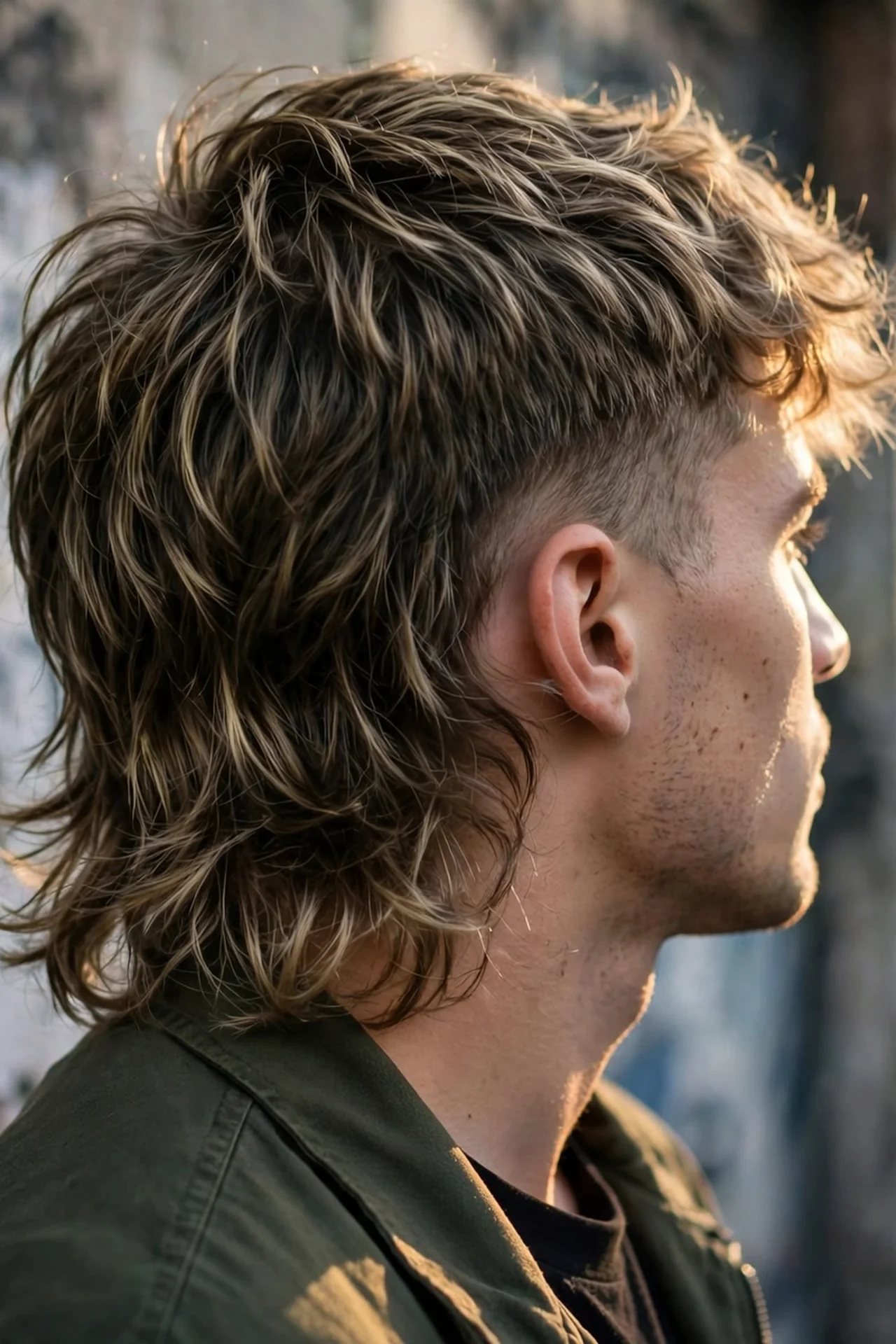
This version leans harder into the mullet side. The sides are cut shorter than a standard wolfcut, and the back is left noticeably longer, so the contrast between front and back is clearer.
It suits guys who like the attitude of a mullet but want more texture and layers on top than a classic mullet has.
Keep the back thin and wispy rather than thick. A heavy back makes it look like an old-school mullet instead of a wolfcut.
12
OF 24
The Wolfcut With a Low Taper
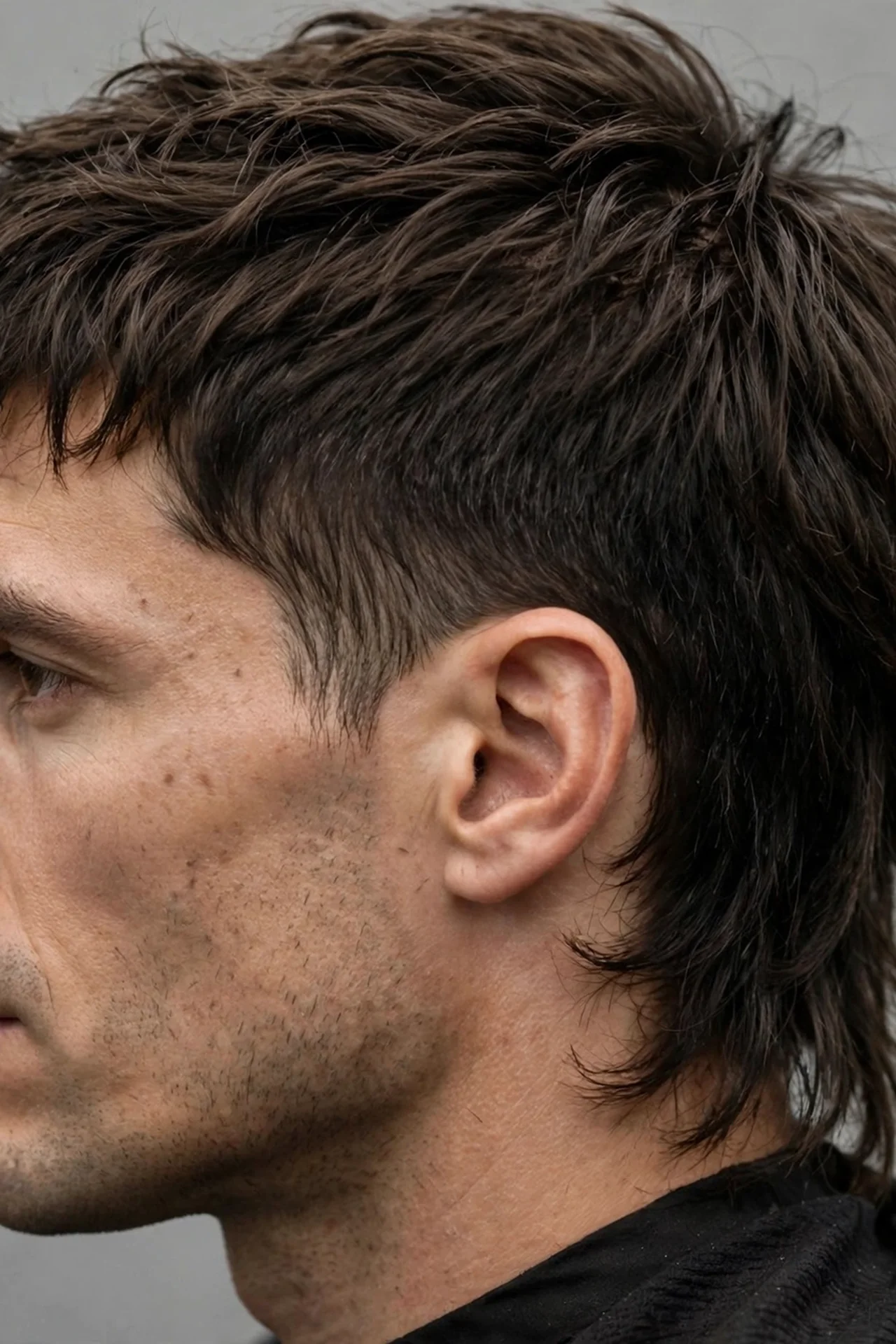
A low taper cleans up just the sideburns and the hair around the ear. The wolfcut shape stays the same, but the edges look sharper and neater.
It’s a good middle ground if a full wolfcut feels too messy for your job. The taper makes the haircut look intentional from the side.
💡 Quick Tip:
Ask for the taper to stay below the layers. If it climbs too high, it cuts into the textured sides and starts to look like a different haircut.
A taper grows out softly, so you can go around four to five weeks before it needs a clean-up.
13
OF 24
The Wolfcut With a Mid Fade
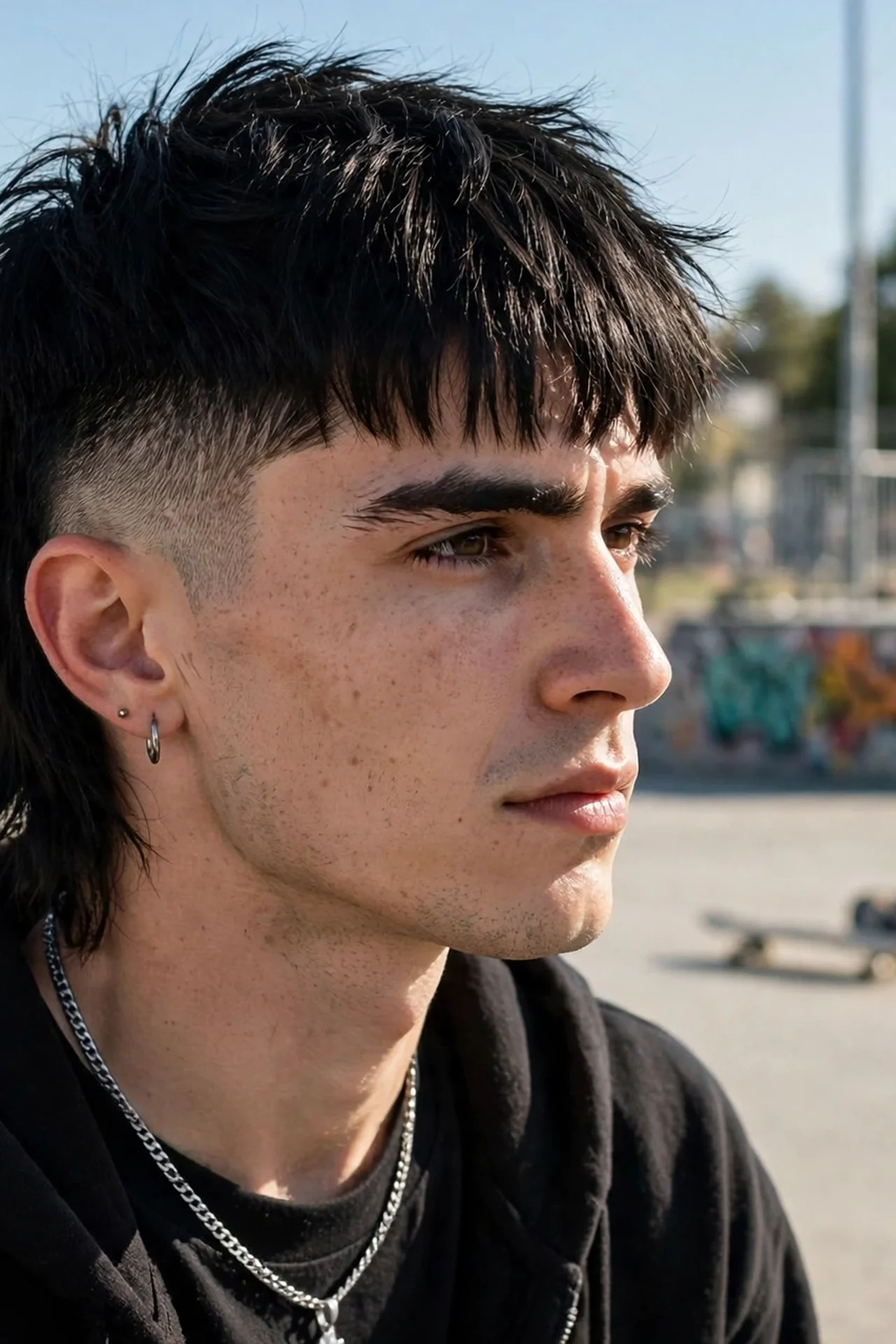
A mid fade takes the sides down to short or skin around the temples. Against a full, choppy top and a longer back, it creates a high-contrast look that’s sharper than a classic wolfcut.
🎨
Sides
faded from temple down
✂️
Top
full, choppy, textured
📐
Back
long and wispy over the fade
The fade grows out quickly, so plan on a touch-up every two to three weeks to keep the contrast clean.
This one suits thick hair best. On fine hair, the faded sides can make the top look thinner by comparison.
14
OF 24
The Undercut Wolfcut
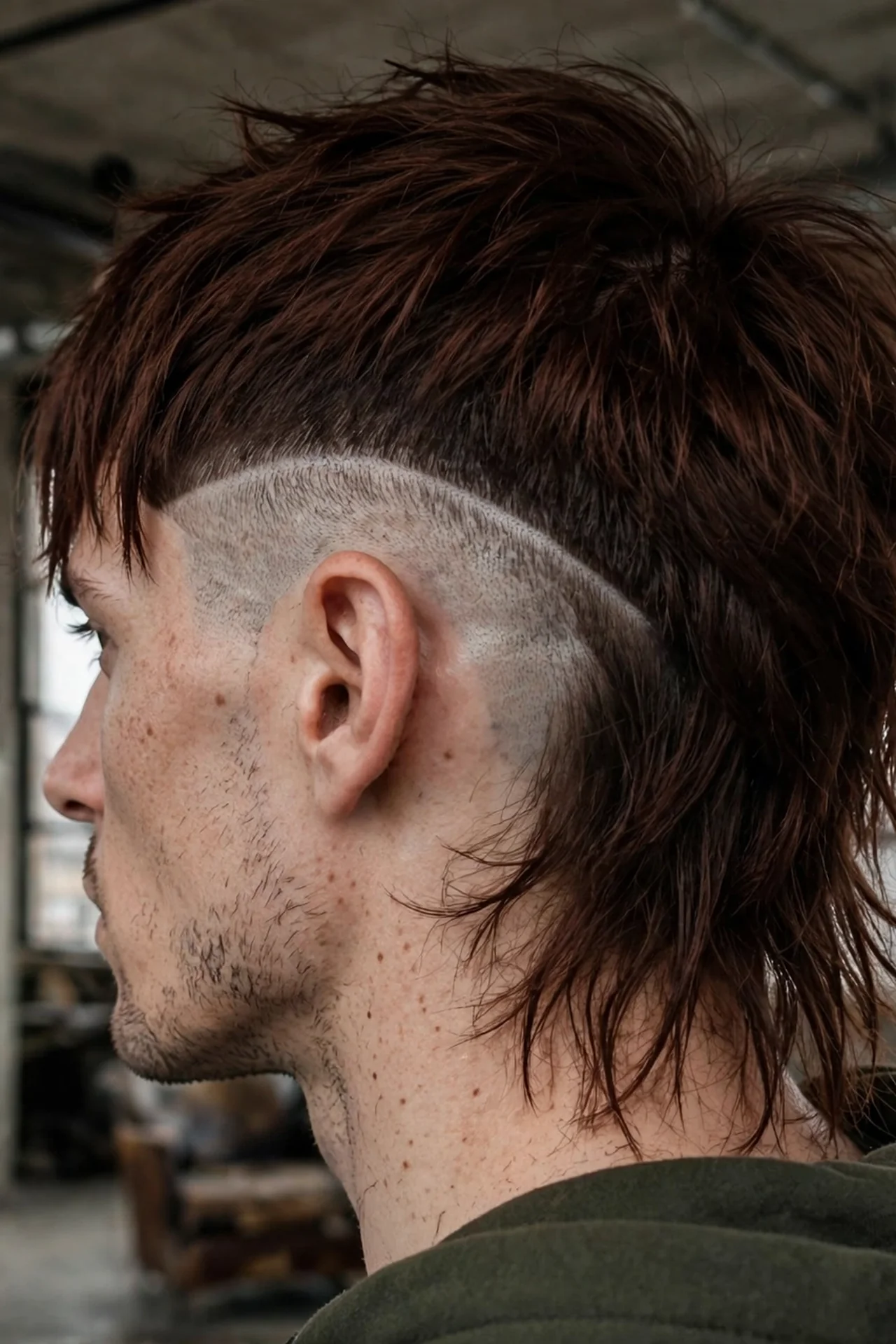
An undercut shaves the sides with a hard, disconnected line, while the top stays long and layered. When the top falls down, it covers the shaved part; when you push it aside, the undercut shows.
That makes it practical for very thick hair. Shaving the sides removes a lot of bulk, so the layered top sits better.
Who This Isn’t For
If you want a soft, natural look, the hard undercut line works against it. It’s a bolder, edgier version, and it shows clearly whenever you tie your hair back or push it away from your face.
15
OF 24
The Wolfcut With Curtain Bangs

Curtain bangs split down the middle and fall to each side of the face. Paired with a wolfcut, they frame the eyes and cheekbones and soften the cut’s wilder outline.
✅ Recreate This Look:
- Bangs cut to cheekbone length, parted in the centre
- Short, choppy layers at the crown for volume
- Longer, wispy layers at the back
- A round brush or fingers to sweep the bangs outward while blow-drying
Curtain bangs grow fast, so expect a quick fringe trim every three to four weeks, even if the rest can wait.
16
OF 24
The Wolfcut With Straight Bangs
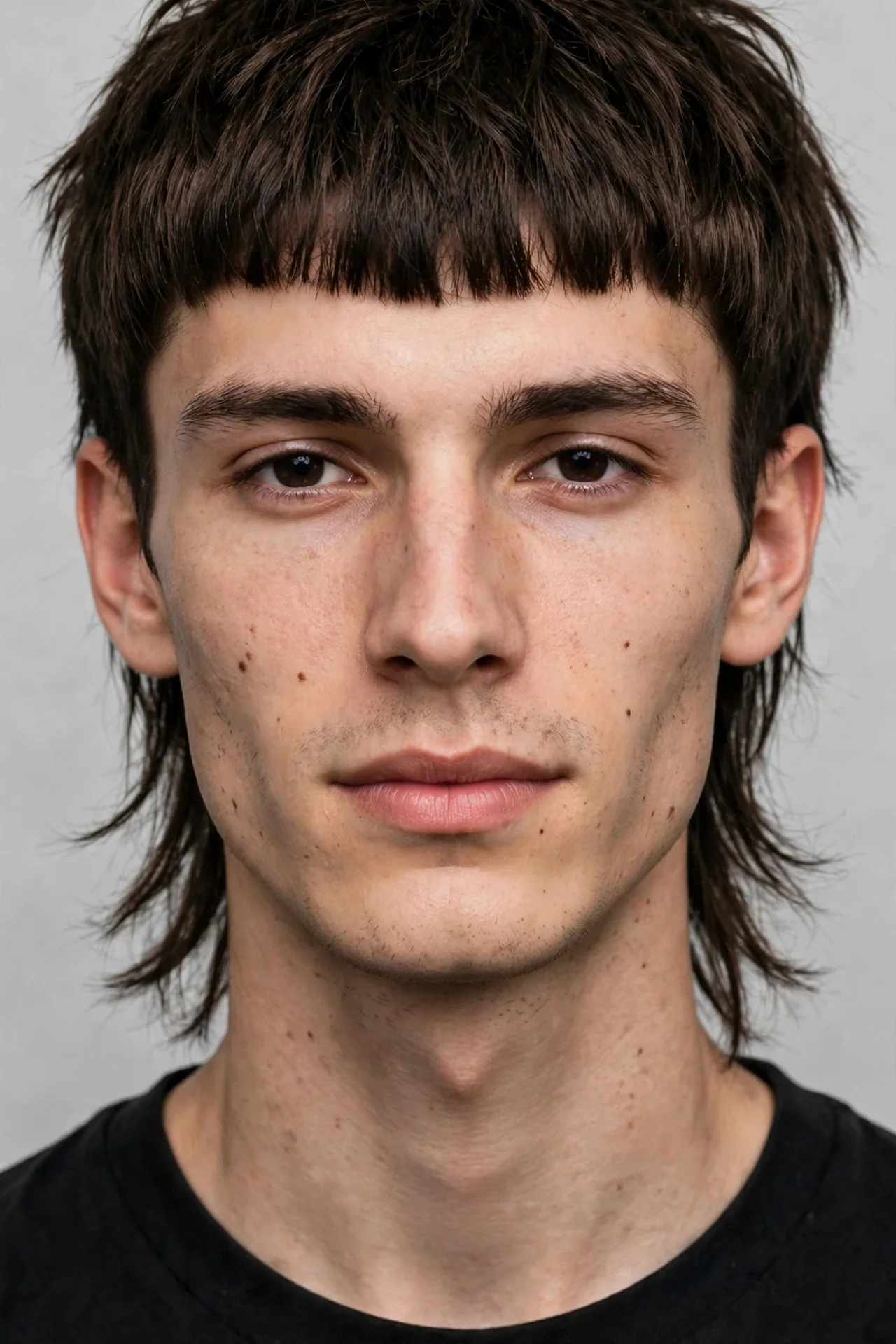
A full, straight fringe covers more of the forehead than curtain bangs do. It shortens a long face and gives the wolfcut a sharper, more graphic front.
⚠️ Common Mistake:
Cutting the fringe too heavy and blunt. A wolfcut needs texture, so the fringe should be point-cut or slightly choppy along the edge, not a solid straight line like a bowl cut.
Straight hair holds this best. Wavy or curly hair springs up and makes the fringe look uneven within a day.
17
OF 24
The Middle-Part Wolfcut
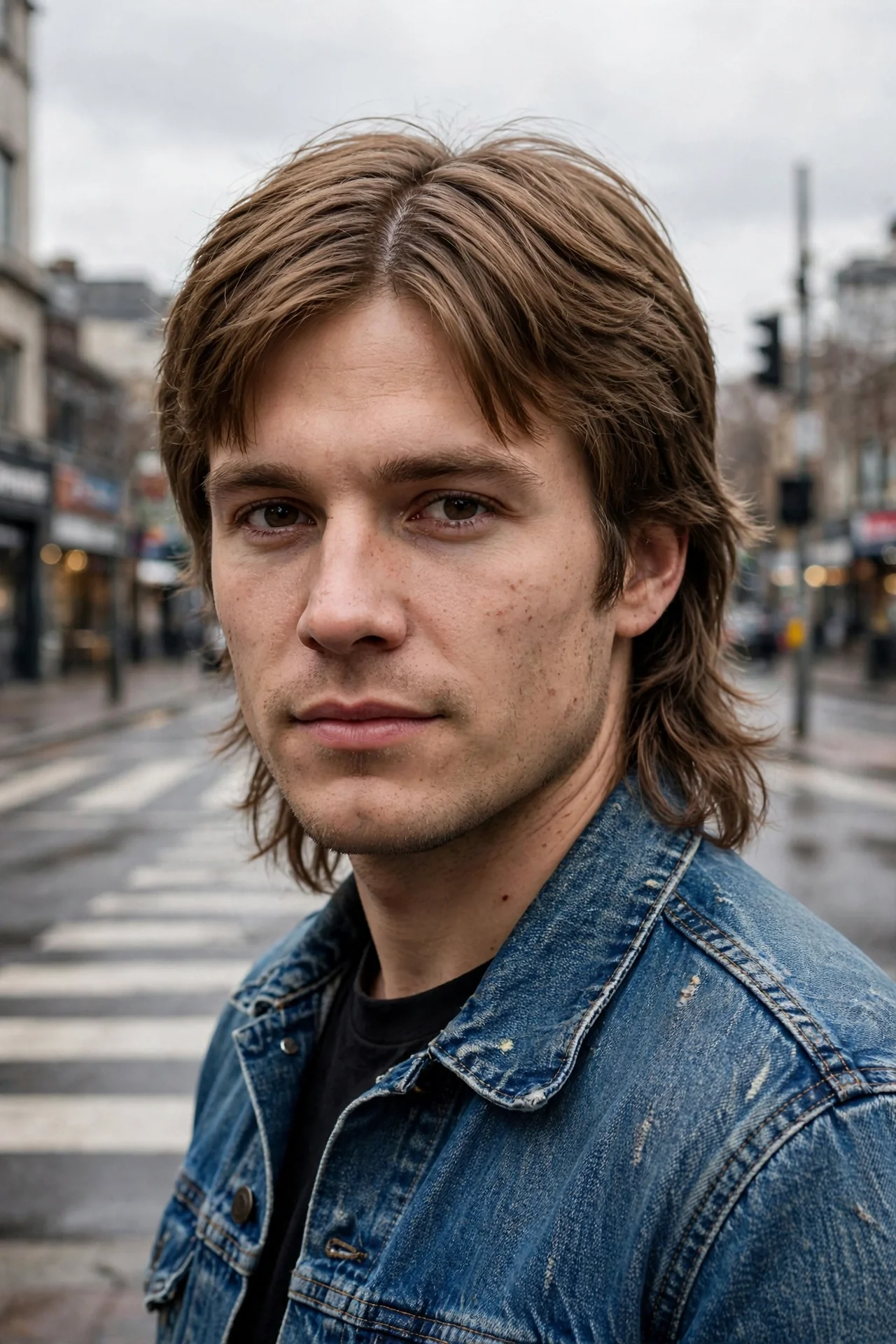
A middle part divides the top evenly, so the hair falls to both sides of the face. It gives the wolfcut a more symmetrical, relaxed look than a messy fringe does.
💈 From the Chair:
A middle part usually needs a slightly longer top than other wolfcuts, at least four inches at the front. Shorter hair tends to stand up at the part instead of falling to the sides.
On a square jaw, the side-falling hair softens the angles. On a very round face, though, a middle part can make the face look wider, so a side-swept fringe is usually a better fit.
18
OF 24
The Swept-Back Wolfcut Flow
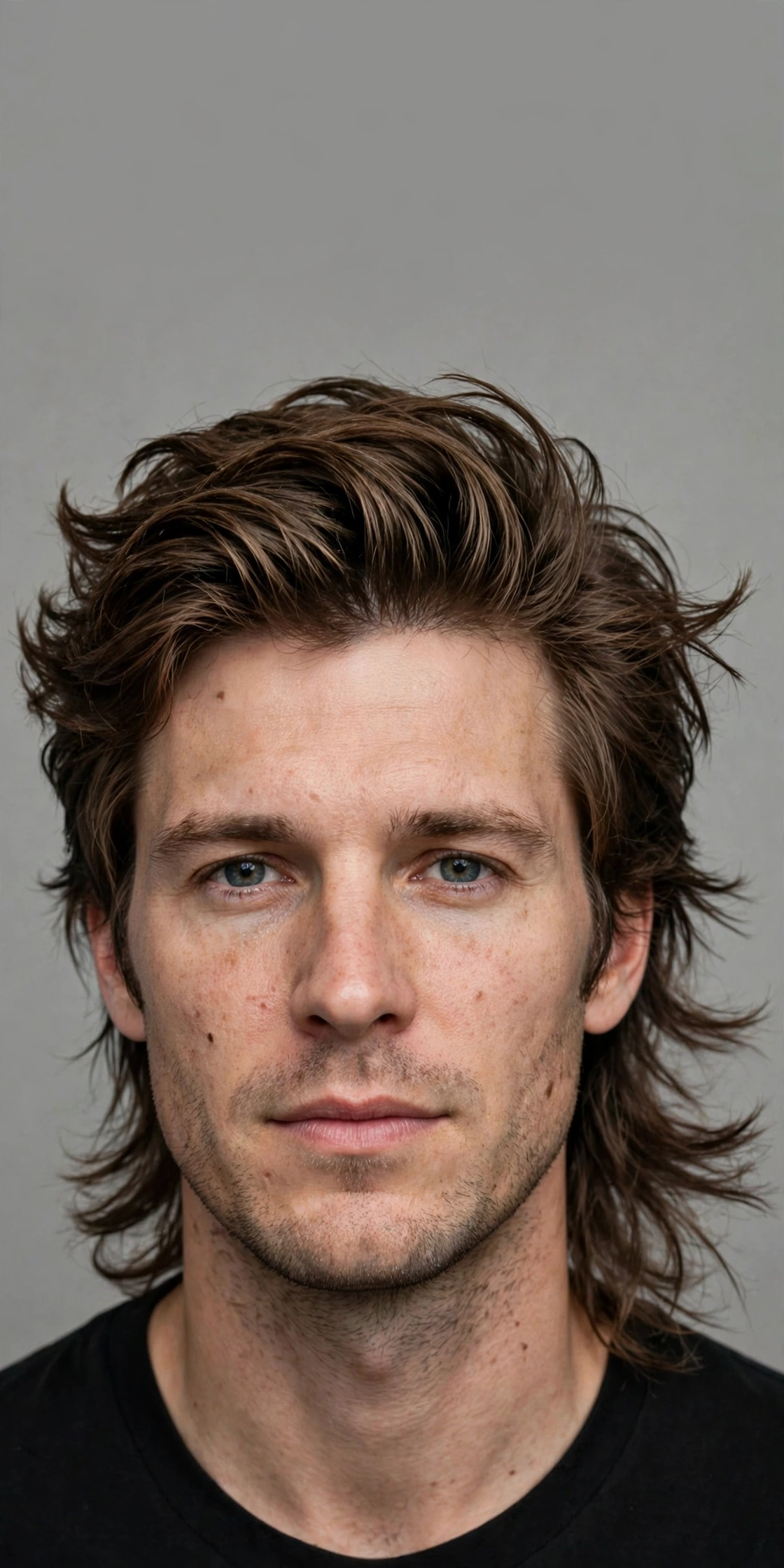
Pushing a wolfcut straight back off the face turns it into something closer to a flow haircut. The layers still give it texture, but the overall look is cleaner and less messy.
BEFORE:
A medium wolfcut worn forward with a messy fringe, choppy and casual.
AFTER:
The same cut pushed back with a light cream, the layers flowing toward the nape and the face fully visible.
You need enough length at the front, around four to five inches, for the hair to sweep back without falling forward again. A light cream holds it better than a stiff paste.
19
OF 24
The Blonde Wolfcut
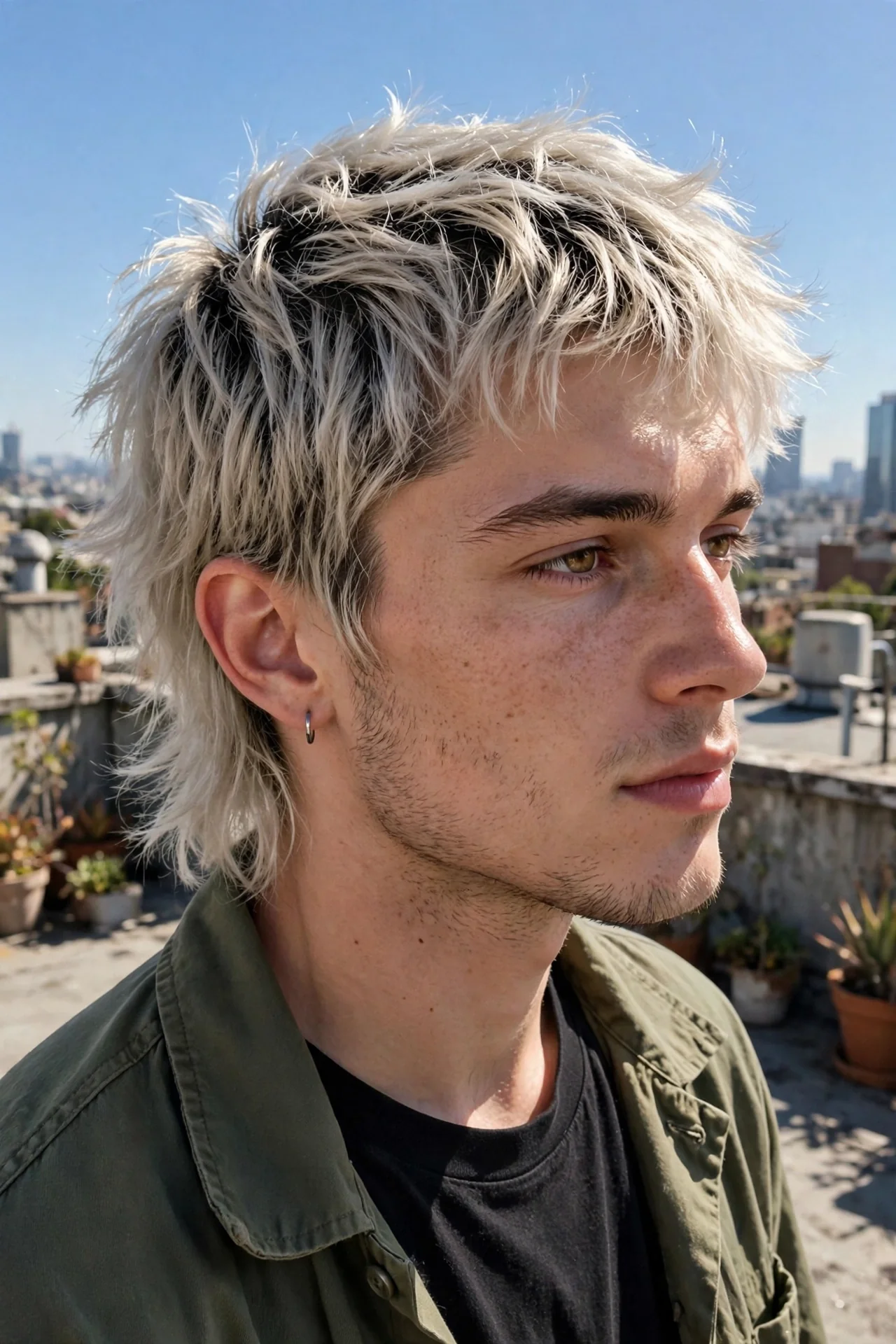
Light hair shows texture more clearly than dark hair, so a blonde wolfcut makes every layer and choppy piece easy to see. Some guys leave darker roots on purpose for a more grungy, grown-out look.
⚠️ Watch Out:
Bleach makes hair drier and more fragile, and the thin, wispy ends of a wolfcut take the most damage. Trim the ends regularly and use a deep conditioner every week.
If you want to bleach and perm, do them weeks apart and tell your stylist about both. Combining them too close together raises the risk of breakage.
20
OF 24
The Grunge Wolfcut
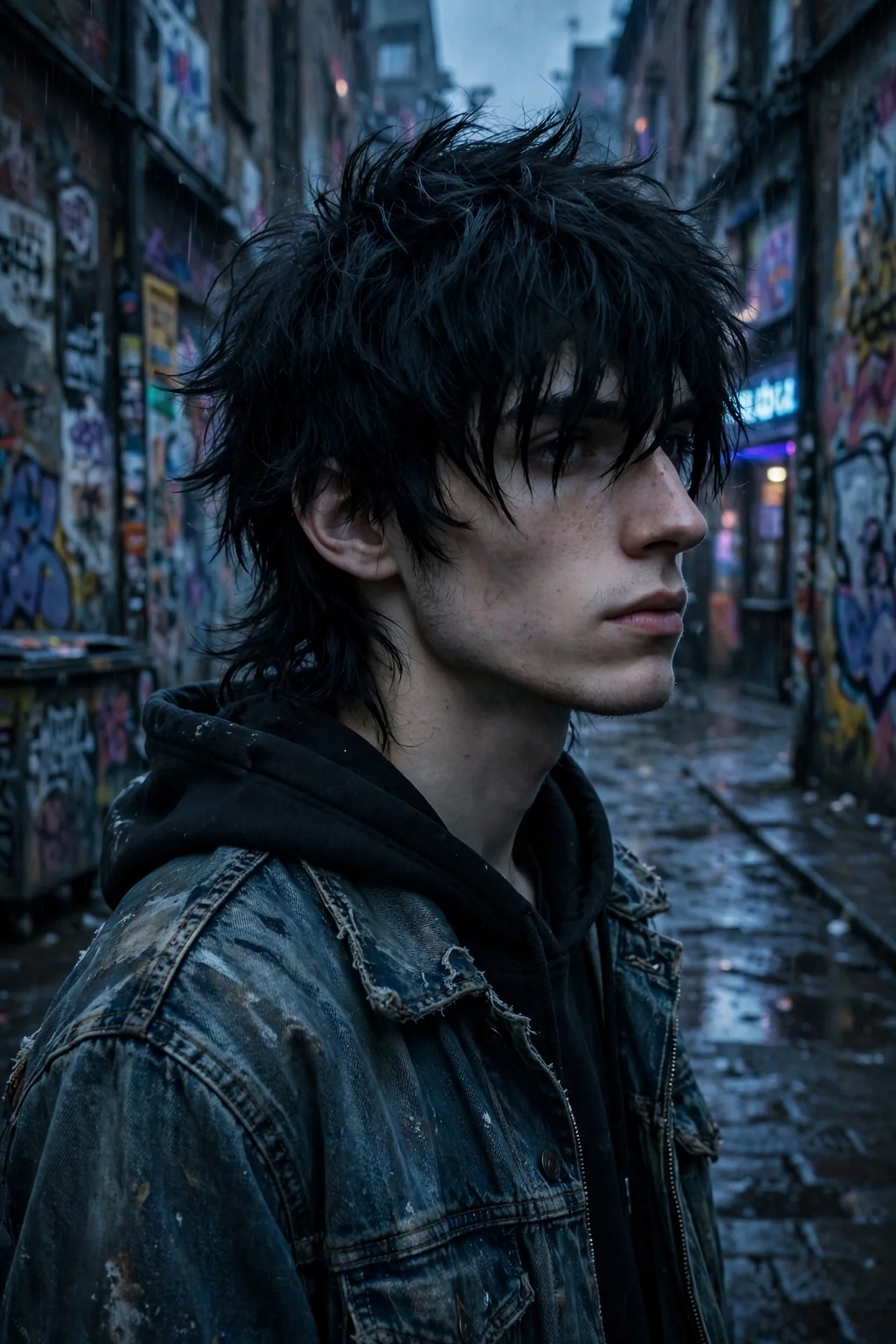
The grunge version pairs a messy, fluffy wolfcut, often dyed black, with a fringe that falls over the eyes. It’s tied to alternative styles like emo and the online “e-boy” look.
The messiness is styled, not accidental. A little texture powder and a quick tousle with your fingers gives the piecey, lived-in look without it turning into a flat, greasy mess.
The long fringe can bother your eyes, especially if you play sports or wear glasses. Ask for it to be cut so it rests on the eyebrows rather than covering them completely if that’s a concern.
21
OF 24
The 80s-Inspired Wolfcut
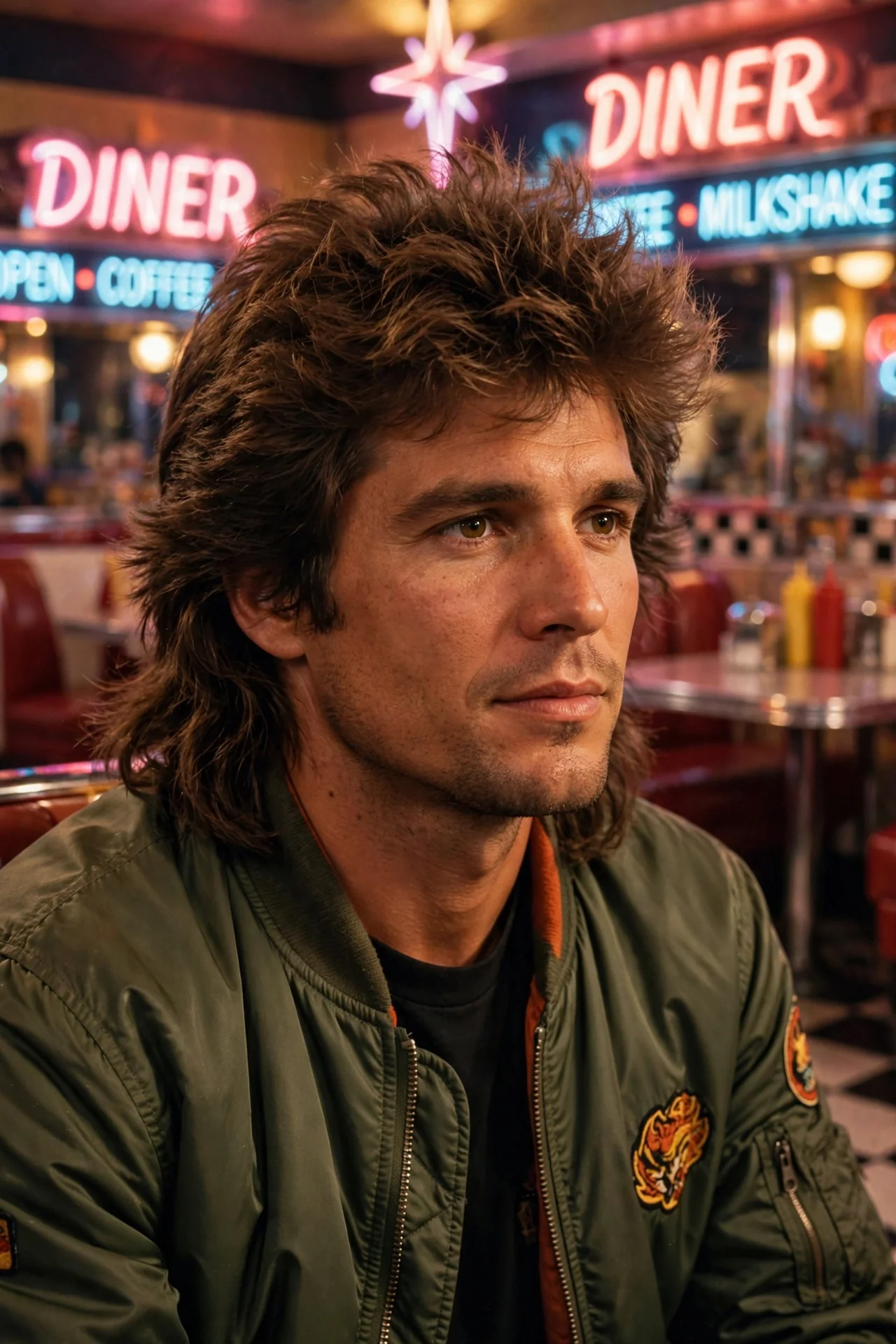
This version leans into big volume and feathered layers, borrowing directly from the 1970s shag and 1980s mullet that the wolfcut grew out of.
Where the Wolfcut Came From
The wolfcut blends two older haircuts: the heavily layered shag of the 1970s and the short-front, long-back mullet of the 1980s. The modern wolfcut became widely popular around 2020 and 2021, spreading through social media, with Korean and Japanese salons helping shape the softer versions many people know today.
To get the 80s feel, use a round brush and blow-dry the sides back and away from the face. A light-hold hairspray keeps the volume in place.
22
OF 24
The Long Wolfcut Tied Back
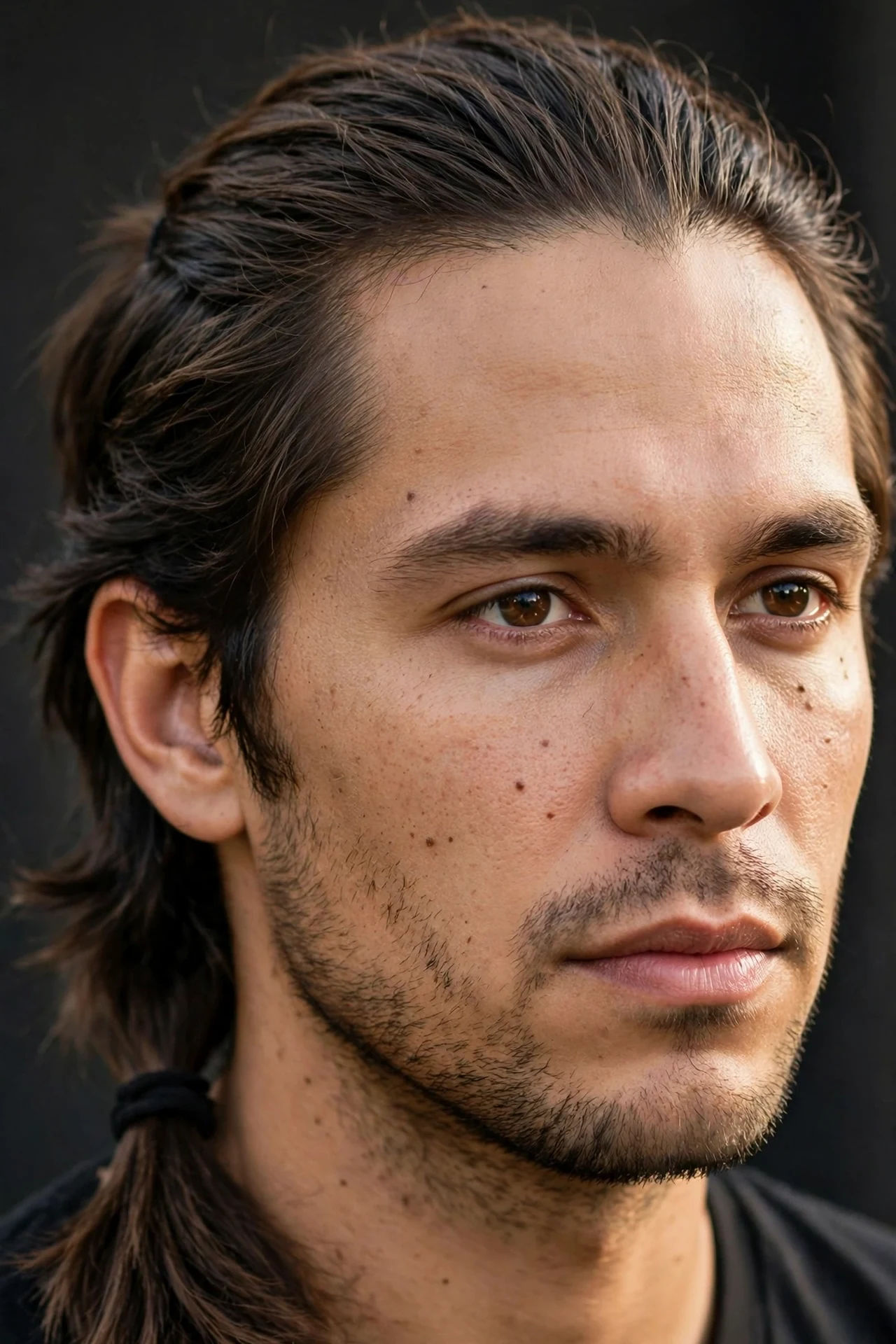
A long wolfcut can be tied into a low ponytail or a loose man bun. The shorter crown layers and face-framing pieces usually fall out, which keeps the look soft rather than slicked back.
📅 Wear It For
23
OF 24
The Wolfcut With a Suit
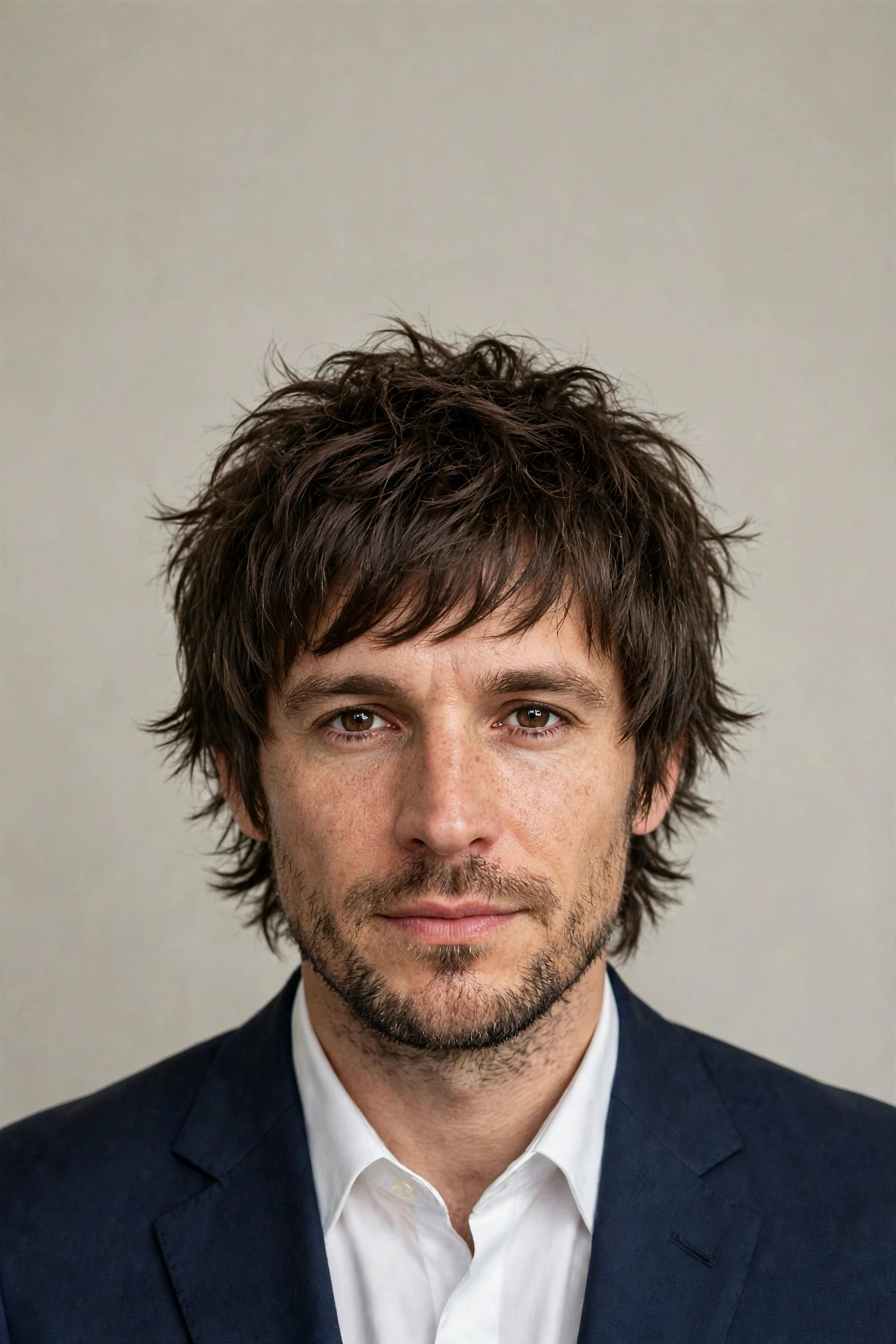
A wolfcut can work with a suit if you tidy the edges and tame the volume. The contrast between a sharp suit and textured hair can look modern rather than out of place.
✅ Do This
Choose a soft wolfcut and style it neatly with a light cream, fringe swept slightly to the side.
🚫 Skip This
Very messy, fluffy styling with a suit. It looks like you forgot to style your hair rather than chose a bold look.
A fresh neckline clean-up before a formal event makes a big difference. The back is the part most likely to look messy above a shirt collar.
24
OF 24
The Wolfcut for Boys
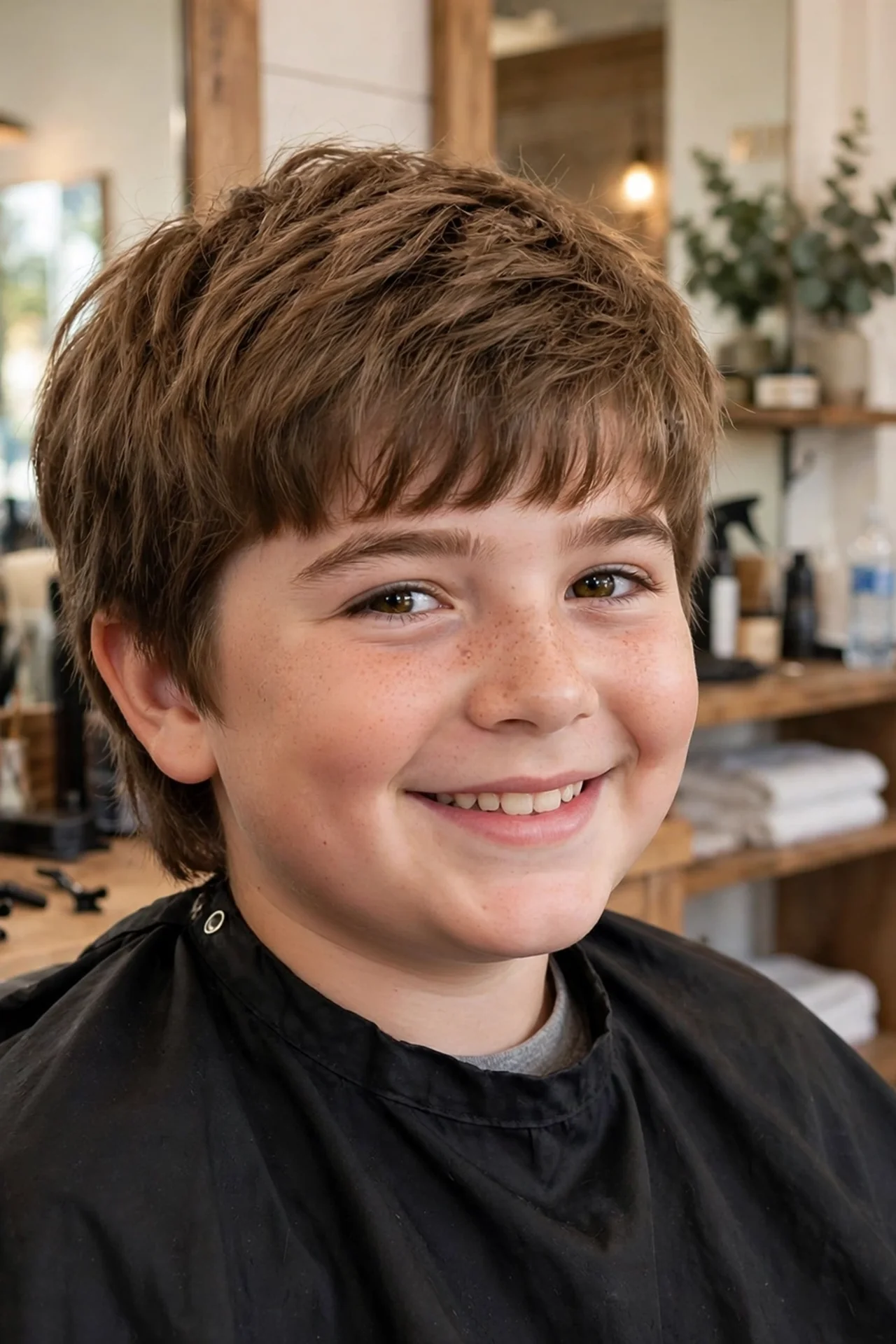
A short, soft wolfcut has become a popular cut for boys. It’s easy to manage, needs very little styling, and still looks fun.
Keep it short and soft for kids. Heavy choppiness and a long back can look messy quickly on kids’ hair, which grows fast and is often fine.
📌 Good To Know:
Some schools have rules about hair length at the back or about fringes covering the eyes. Check before cutting, so the cut doesn’t break the dress code.
Plan on a trim every four to five weeks to keep the fringe out of the eyes. For styling, a little water is usually enough.
Which wolfcut are you trying next?
FAQs
What is a wolfcut for men?
A wolfcut is a heavily layered haircut with choppy volume at the crown, a textured fringe, and longer, wispy layers at the back. It blends the shag and the mullet.
Can I get a wolfcut with straight hair?
Yes. Ask for thinned, razor-cut layers and a heavier fringe, and use a texture spray when styling. A light perm is another option if your straight hair won’t hold volume.
How long does my hair need to be for a wolfcut?
A short wolfcut needs about 2–3 inches on top, while a medium wolfcut usually reaches the chin or collar. Long wolfcuts go past the shoulders.
What’s the difference between a wolfcut and a mullet?
A mullet has short sides and top with clearly longer hair at the back. A wolfcut has more volume and choppy layers on top and around the sides, with a thinner, wispier back.
Is a wolfcut high maintenance?
It needs a trim every five to eight weeks to keep the shape, and a little styling each day. Versions with fades or bangs need touch-ups more often.
Will a wolfcut suit my face shape?
Most face shapes can wear one. Round faces do best with extra height at the crown, long faces with a fringe, and square faces with softer, side-falling layers.