26 Business Casual Outfits for Men: A Whole Workweek Sorted

Business casual sits between a suit and what you’d wear on the weekend. In practice, it usually means trousers or chinos, a collared shirt or smart knit, and leather shoes, with a blazer when the day calls for it and no tie.
The confusing part is that every office reads it a little differently. A law firm and a tech startup can both say “business casual” and mean very different things. These 26 outfits cover that whole range, from the safest classic to more relaxed looks, plus seasonal and special-occasion versions, so you can build a full week without guessing.
Short on Time? Pick Your Path
Table of Contents
- 01Navy Blazer, Light Blue Shirt, and Grey Chinos
- 02An Oxford Shirt and Chinos
- 03A Knit Polo and Tailored Trousers
- 04A Crewneck Sweater Over a Collared Shirt
- 05Dark Jeans With a Blazer
- 06Pleated Trousers and a Tucked Knit
- 07A Quarter-Zip Over a Shirt With Chinos
- 08A Sweater Vest Over a Shirt
- 09An Unstructured Blazer and a T-Shirt
- 10Business Casual With Clean Sneakers
- 11An Olive Green, Old-Money Look
- 12All-Black Business Casual
- 13Black and Grey Together
- 14Brown and Earth Tones
- 15Tonal Blue From Shirt to Trousers
- 16A Burgundy Accent
- 17A Linen-Blend Shirt for Summer
- 18Resort Business Casual for Warm-Weather Offices
- 19An Overshirt Layer for Fall
- 20A Rollneck, Wool Trousers, and an Overcoat for Winter
- 21A Trench Coat for Rainy Days
- 22Stretch Chinos and a Knit Blazer for Business Travel
- 23Business Casual for a Job Interview
- 24Business Casual for a Work Dinner
- 25Refined Business Casual for Men Over 40 and 50
- 26Business Casual for Bigger and Taller Builds
01
OF 26
Navy Blazer, Light Blue Shirt, and Grey Chinos
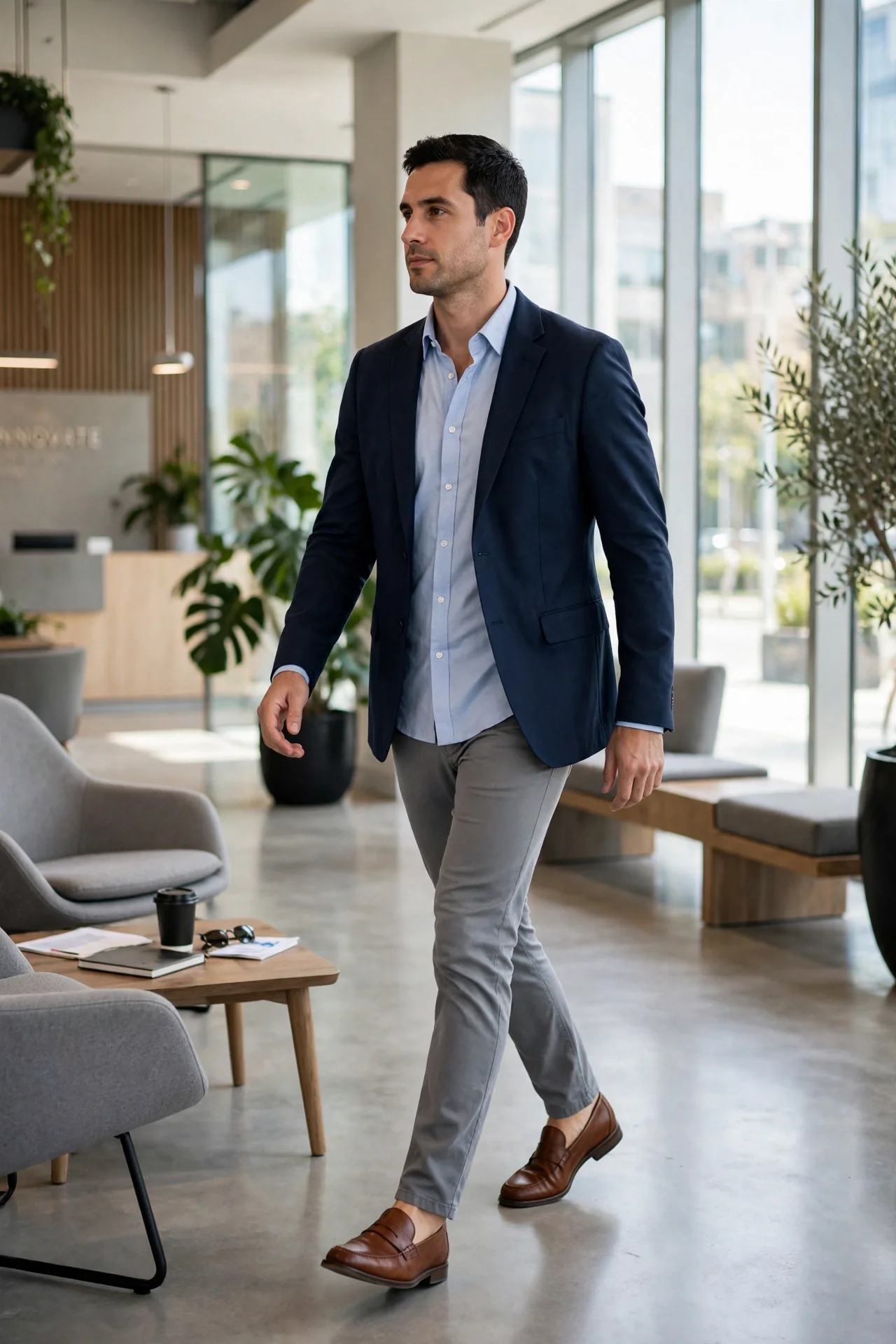
This is the outfit that works in nearly every business casual office. Navy, light blue, and grey are all calm, professional colours, and they never clash with each other.
The navy blazer does most of the work. It lifts the outfit above everyday casual, but because there’s no tie and the trousers are chinos rather than suit trousers, it doesn’t look stiff.
✅ Recreate This Look:
- A navy blazer with natural shoulders, not heavily padded
- A light blue oxford or poplin shirt, collar open
- Mid or light grey chinos with a slim, straight leg
- Brown leather loafers or derbies and a matching brown belt
Keep the shirt collar crisp. A soft, floppy collar under a blazer is the quickest way for this outfit to look tired.
The trouser length matters too. Chinos that pool at the ankle undo the clean line, so aim for little or no break at the shoe.
Fit matters more than the brand, and a tailor can fix most of it. The easy jobs are shortening trousers or chinos, tapering the leg, and adjusting blazer sleeves; taking in a blazer at the waist sits in the middle.
Shoulders are the one thing to get right in the shop. Tailors often call reworking them major surgery, and it’s risky and expensive, so check the shoulder fit before you buy anything else about the blazer.
02
OF 26
An Oxford Shirt and Chinos

Take the blazer away from the first outfit, and this is what’s left: a tucked oxford shirt and chinos. It’s the backbone of most business casual wardrobes.
Oxford cloth is slightly thicker and more textured than a dress shirt, so it looks a little more relaxed. That makes it right for business casual, where a shiny, smooth dress shirt can feel too formal.
Where Business Casual Came From
Relaxed office clothing has roots in “Aloha Friday” in 1960s Hawaii, when office workers began wearing aloha shirts at the end of the week. The idea spread through American offices as “casual Friday” in the 1990s, and over time many companies relaxed their dress codes all week.
Even so, an Oxford shirt and chinos remains one of the safest answers to what to wear to a job interview at a relaxed office.
That history is why chinos and oxford shirts became the standard. They were the comfortable middle ground between a suit and weekend clothes.
The mistakes I see most in business casual are small ones. A shirt that hasn’t been pressed, or a vest whose creases show through it. An undershirt peeking above the collar, which a V-neck undershirt solves.
Then there’s what shows when you sit down: socks in a random colour, when they should match your trousers. Add tired, scuffed shoes, or a belt that doesn’t match them, and a good outfit starts to look careless.
03
OF 26
A Knit Polo and Tailored Trousers
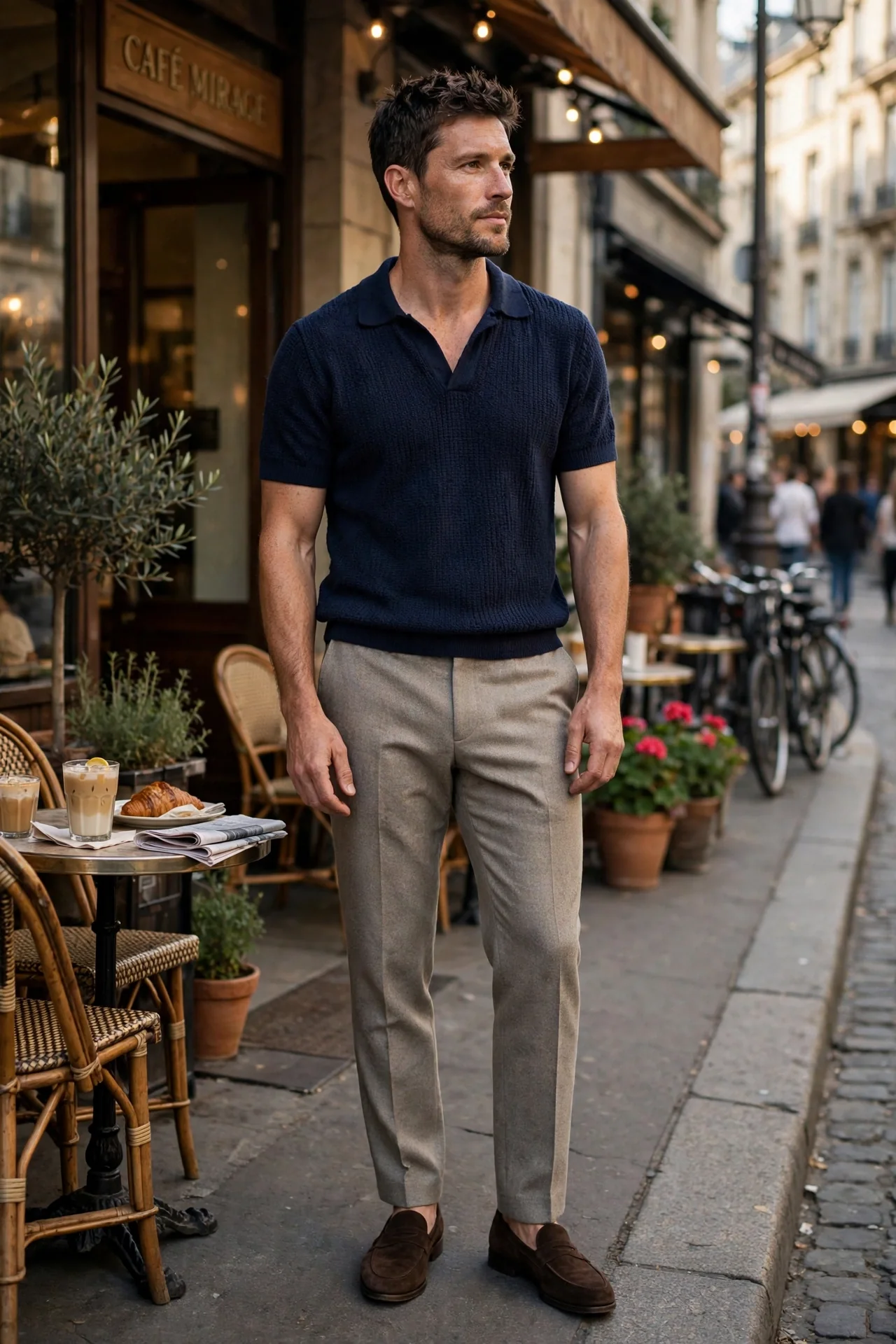
A knitted polo is different from a sporty piqué polo. It’s made from a fine knit, often with a softer collar, so it looks smarter and drapes better over the body.
💡 Myth vs Reality:
Myth: polos are too casual for business casual.
Reality: sporty piqué polos with logos can be, but a fine knitted polo tucked into tailored trousers looks polished enough for most offices.
Tuck it in and wear a belt. Untucked, a knit polo starts to look like weekend wear.
04
OF 26
A Crewneck Sweater Over a Collared Shirt
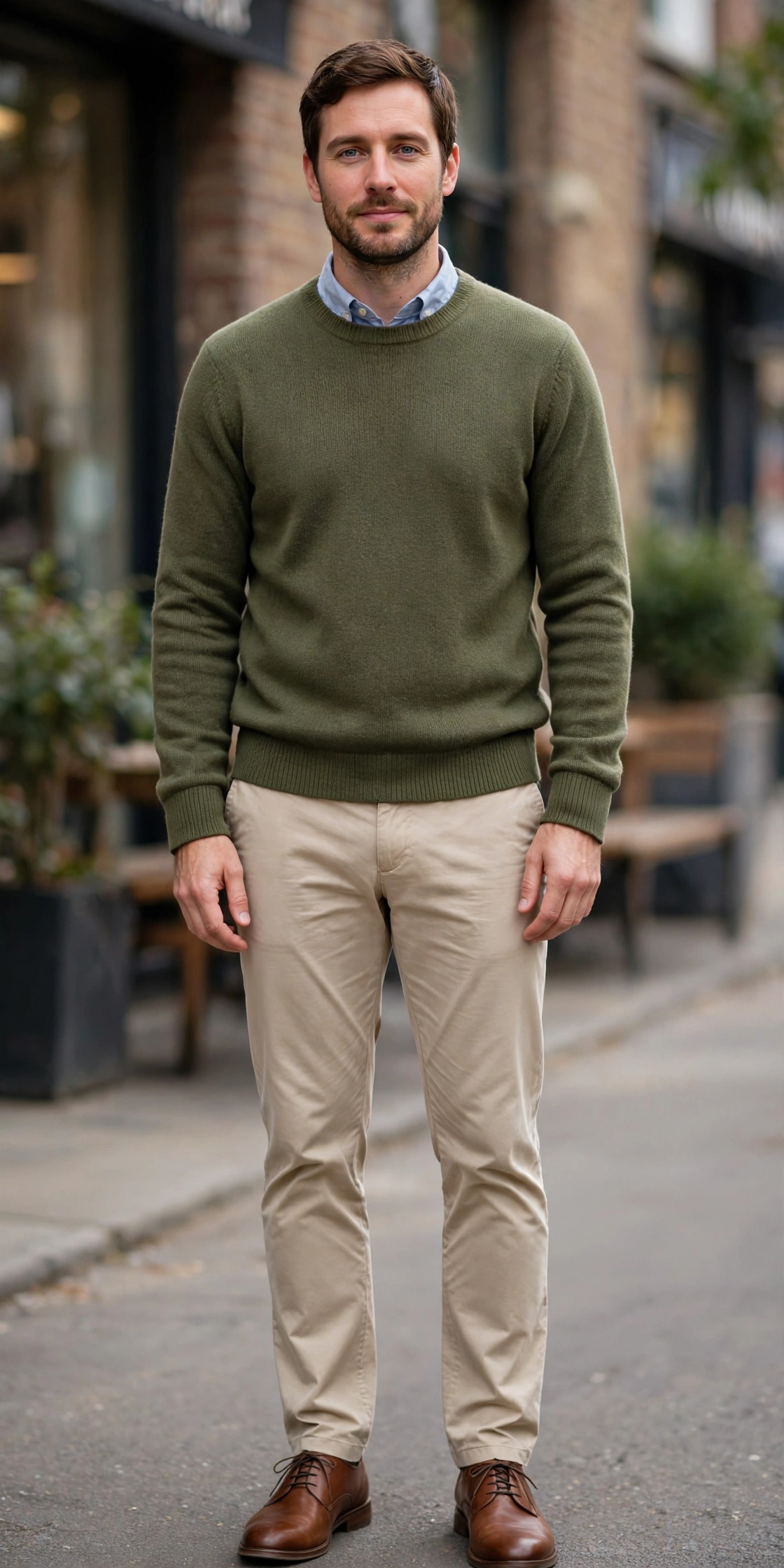
A fine crewneck sweater over a collared shirt is one of the easiest ways to look smart in a cold office. The shirt collar adds structure at the neck, and the sweater adds warmth without bulk.
✅ Do This
Choose a thin merino or cotton sweater that sits flat over the shirt.
🚫 Skip This
A chunky knit over a shirt. The bulk pushes the collar out of shape and looks heavy.
Let the collar sit neatly outside the sweater, and keep the cuffs of the shirt tucked inside the sweater sleeves or showing just slightly.
05
OF 26
Dark Jeans With a Blazer
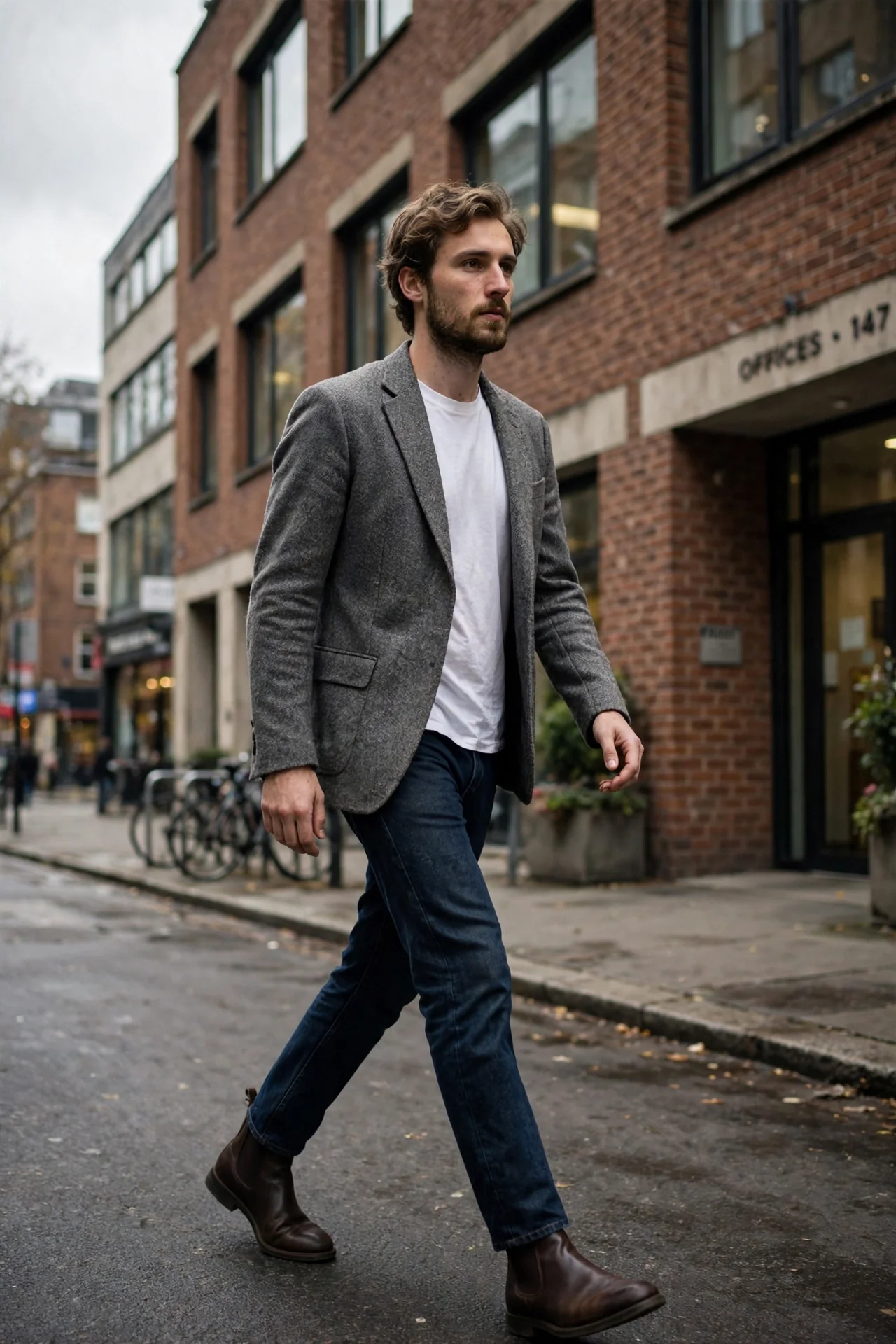
Many offices allow jeans now, but not every pair works. Dark, clean, straight-leg jeans with a blazer look deliberate rather than casual.
The blazer is what keeps it in business casual. Without it, dark jeans and a tee read as weekend wear.
⚠️ Watch Out:
Avoid rips, heavy fading, or light washes. Even in a relaxed office, distressed denim usually looks out of place next to a blazer.
Check your company’s dress code before you start wearing jeans. Some offices allow them only on Fridays or on days without client meetings.
06
OF 26
Pleated Trousers and a Tucked Knit
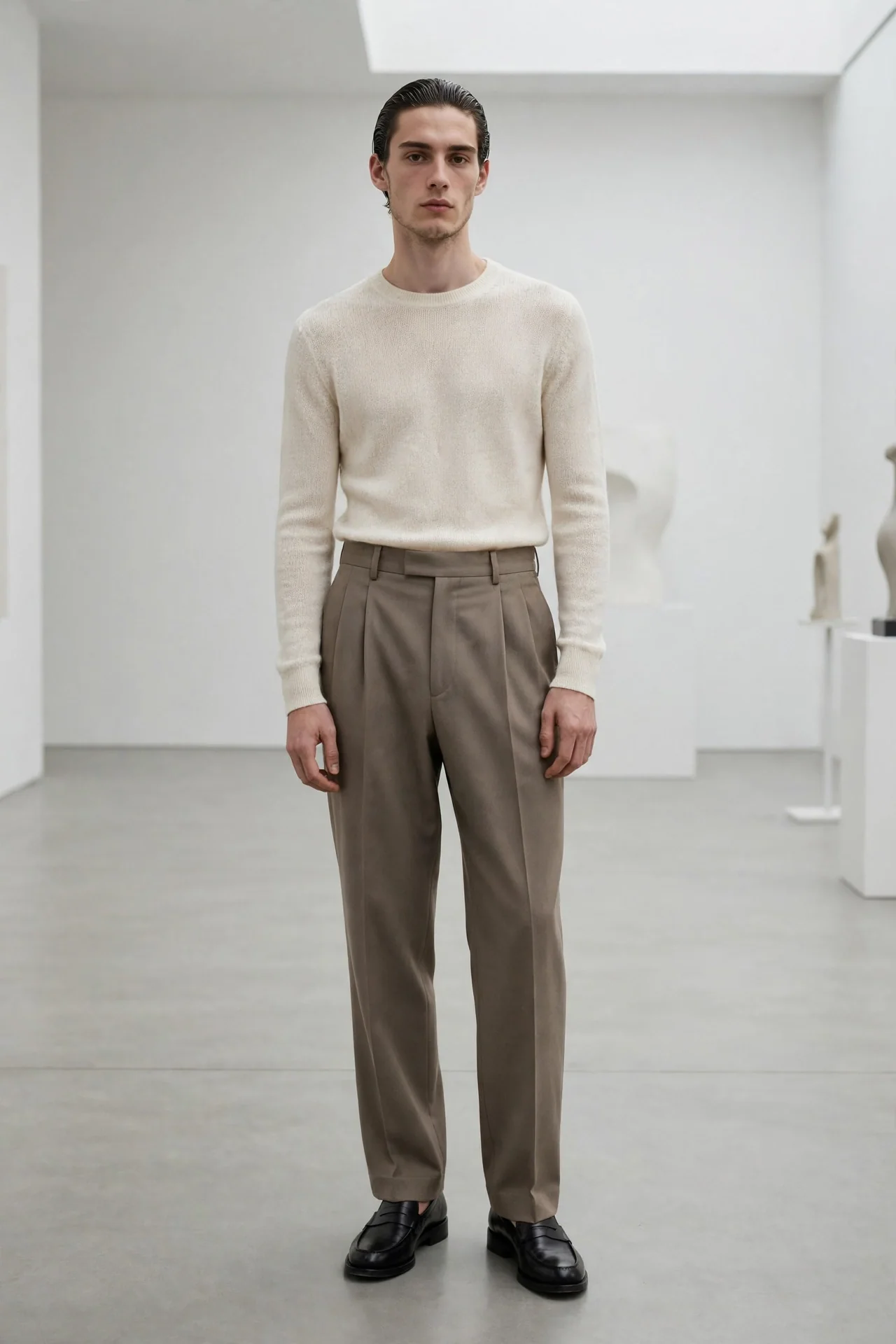
Pleated trousers have a fold of fabric at the front of the waist, which gives more room at the hip and thigh. They’ve come back into style as a slightly relaxed, more fashion-led choice than slim chinos.
Tucking a fine knit into the higher waist shows off the trousers’ shape. It creates a clean line from the waist down.
📌 Good To Know:
Pleated trousers should still fit at the waist and taper slightly toward the ankle. If they balloon at the leg, they look oversized rather than relaxed.
Single pleats are the easiest place to start. Double pleats add more volume and suit taller men better.
07
OF 26
A Quarter-Zip Over a Shirt With Chinos

A quarter-zip over a collared shirt is the relaxed office uniform in many tech and startup workplaces. It’s comfortable, warm, and still looks smarter than a hoodie.
The collared shirt underneath matters. A quarter-zip over a t-shirt can look like gym wear, while a shirt collar keeps it professional.
💡 Quick Tip:
Pick a fine merino or cotton quarter-zip rather than a thick fleece or athletic fabric. Thin knits look sharper and fit better under a coat.
Zip it partway, so the shirt collar shows. Fully zipped, it hides the collar and loses the smart layer underneath.
08
OF 26
A Sweater Vest Over a Shirt
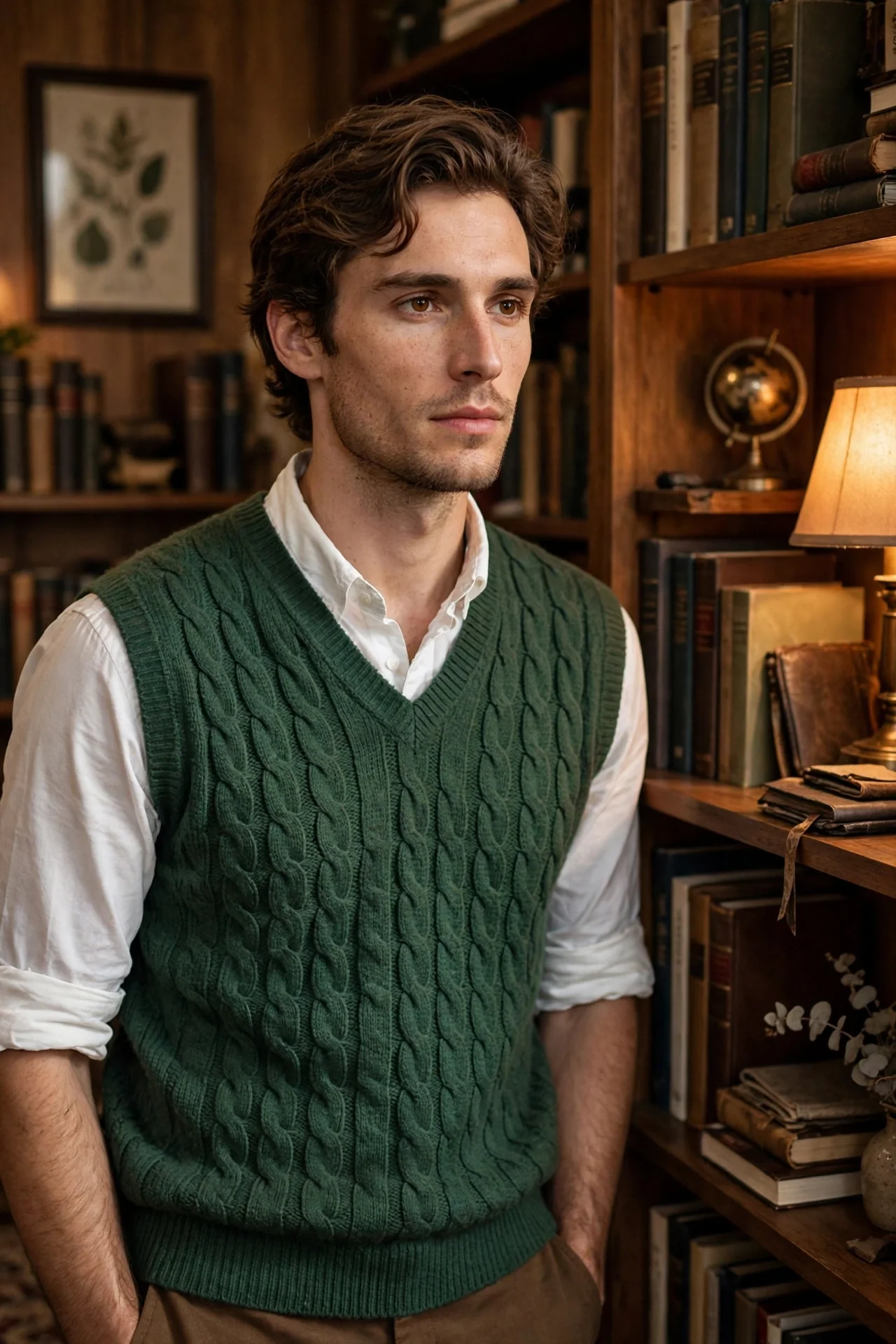
A knitted vest over a shirt adds a layer of colour and texture without the warmth of a full sweater. It looks a little preppy and works well in offices that aren’t too heated.
The vest should sit at the waistband or just below it. Too long, and it covers the belt and makes the legs look shorter.
⚠️ Common Mistake:
Wearing a vest that’s too tight. A sweater vest should lie flat without pulling across the chest; if the knit stretches between the shoulders, size up.
Muted colours like navy, grey, forest green, and camel are the easiest to wear. Bold patterns can look costume-like in a professional setting.
09
OF 26
An Unstructured Blazer and a T-Shirt
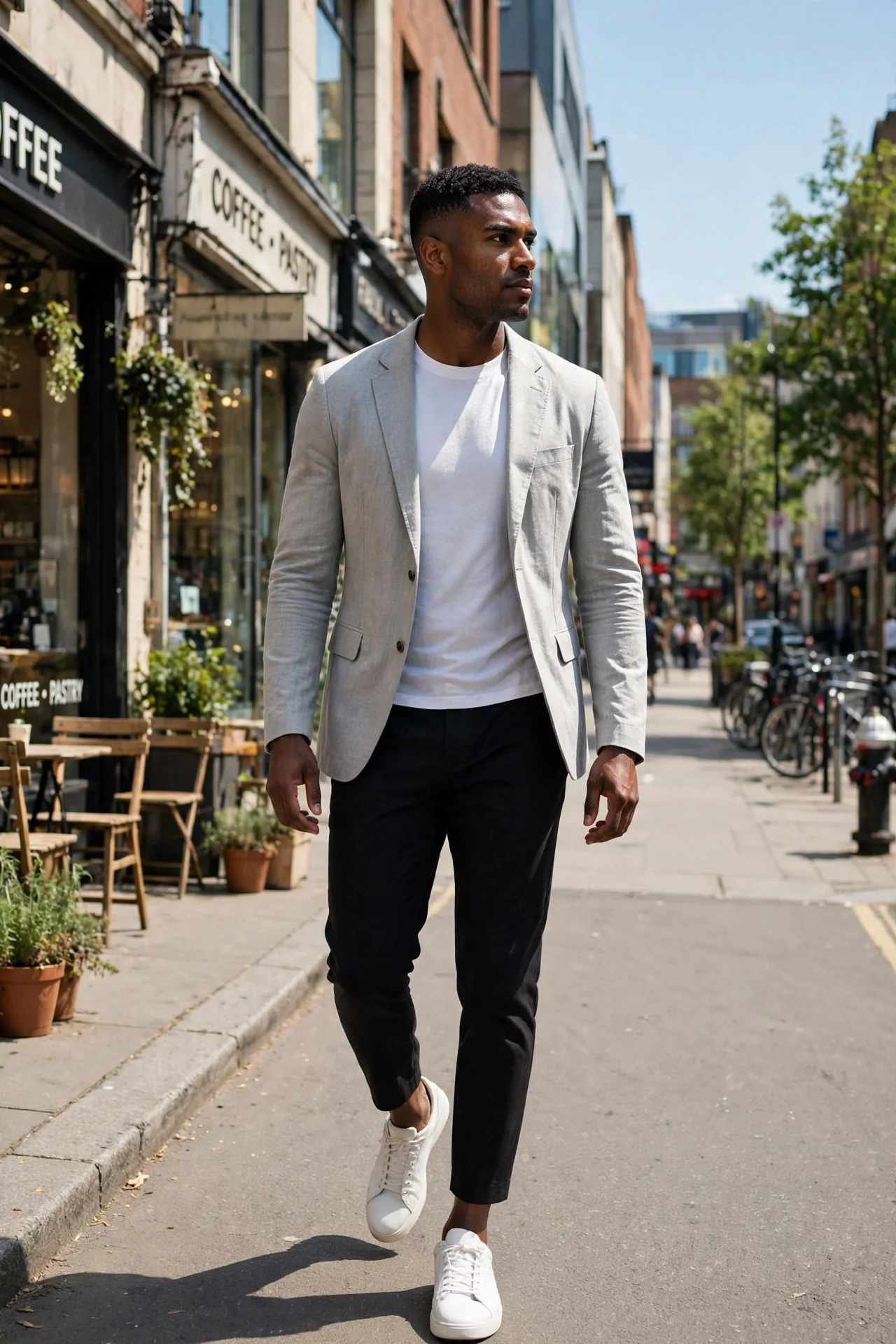
An unstructured blazer has little or no padding in the shoulders and a soft lining, so it moves more like a cardigan. Over a plain t-shirt, it creates a modern, relaxed business casual look.
🎨
Blazer
unstructured, soft shoulders
✂️
Tee
fitted, heavyweight, plain
📐
Trousers
tapered, no break at the shoe
The t-shirt has to be good quality. A thin, stretched tee makes the outfit look cheap, while a heavyweight cotton tee holds its shape under the blazer.
Spending a little more on a few core basics like this is how you dress business casual on a budget without the outfits looking cheap.
This is not the right outfit for a conservative office or a client meeting. In those settings, swap the tee for a collared shirt.
10
OF 26
Business Casual With Clean Sneakers
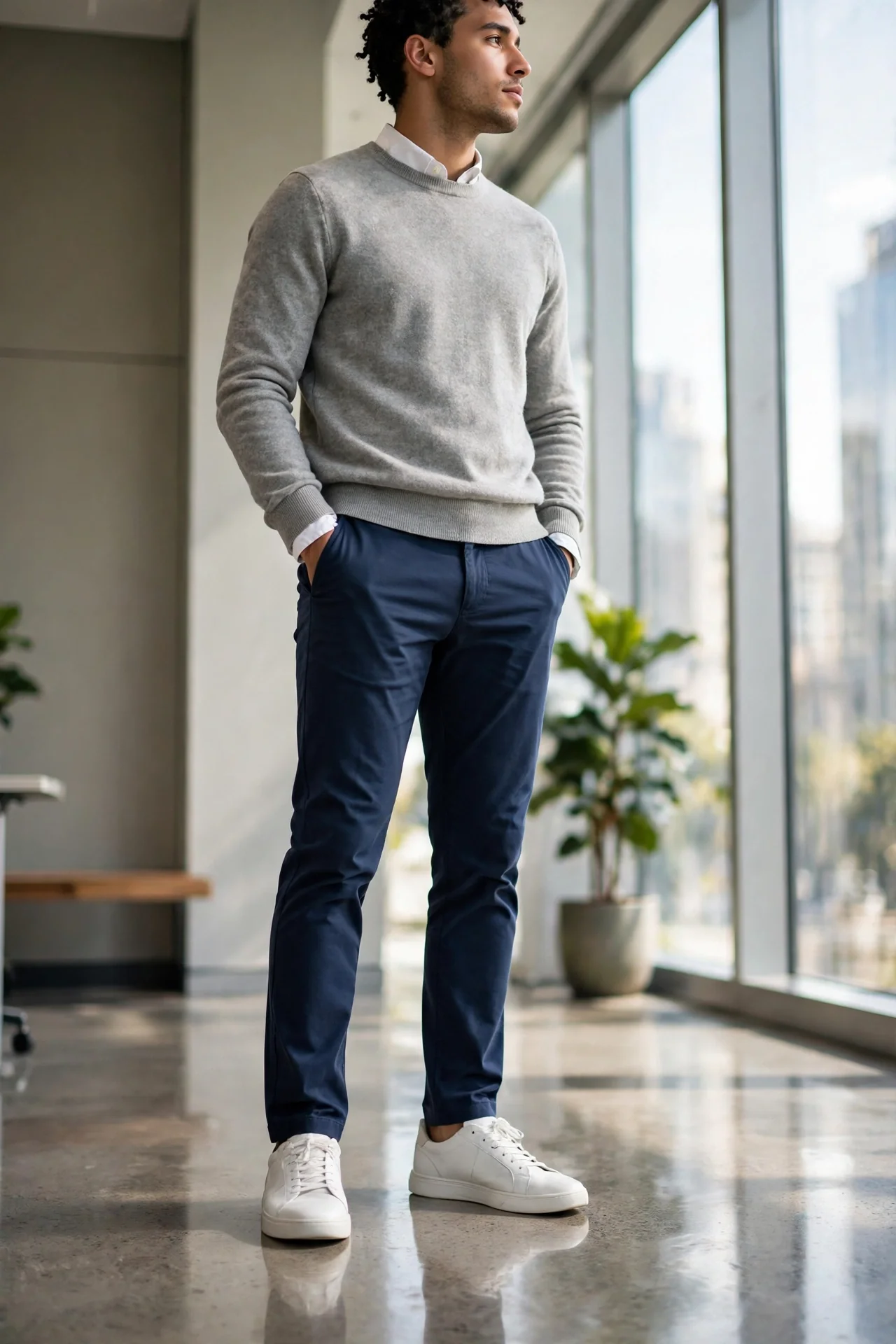
Sneakers have become common in many business casual offices, but only certain kinds. Minimal leather sneakers in white, black, or tan look clean enough to sit next to chinos and a sweater.
✅ Do This
Wear plain leather sneakers with no big logos, and keep them spotless.
🚫 Skip This
Running shoes, chunky trainers, or canvas sneakers that look scuffed.
Clean them regularly with a damp cloth. White leather sneakers look scruffy quickly in a professional setting once they start to grey.
11
OF 26
An Olive Green, Old-Money Look
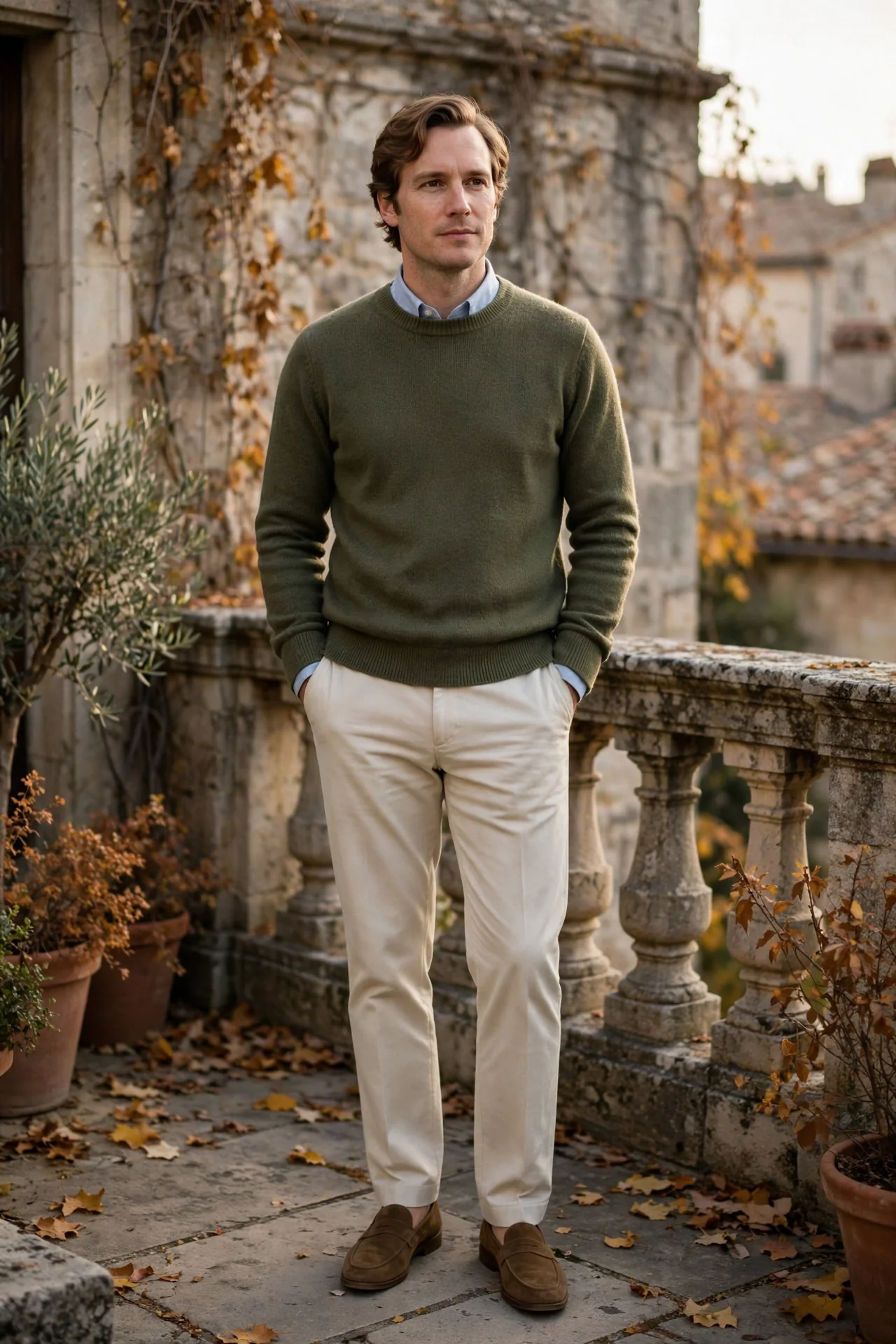
The “old money” style favours quality basics in quiet colours, with no logos. Olive green is a good entry point, because it pairs well with cream, navy, and brown.
This look depends on fabric and fit more than anything else. A well-fitted merino sweater and good trousers look expensive even without brand names.
Keep accessories simple: a leather-strap watch and a brown belt are enough. Adding more takes away from the understated feel.
12
OF 26
All-Black Business Casual
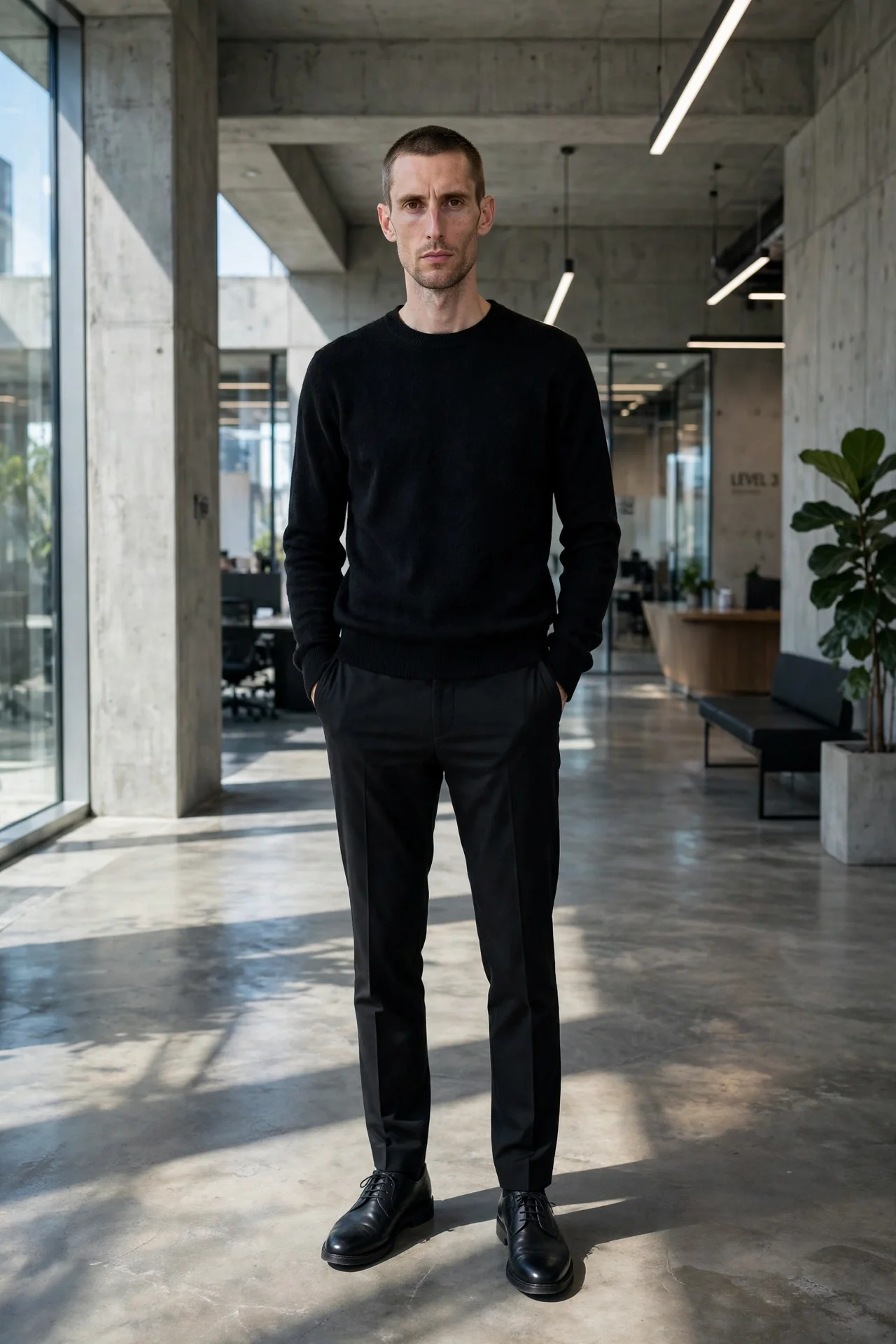
All black looks sleek and modern, and it’s easy to put together. It suits creative fields like design, media, and tech especially well.
Mixing textures stops it from looking flat. A matte merino knit with smooth trousers and polished leather shoes keeps each piece distinct.
⚠️ Watch Out:
Black clothes show lint, dust, and fading more than other colours. Keep a lint roller at your desk, and wash black items inside out in cold water so they don’t fade into charcoal.
Make sure the blacks match closely. A faded black sweater next to new black trousers looks like an accident.
13
OF 26
Black and Grey Together
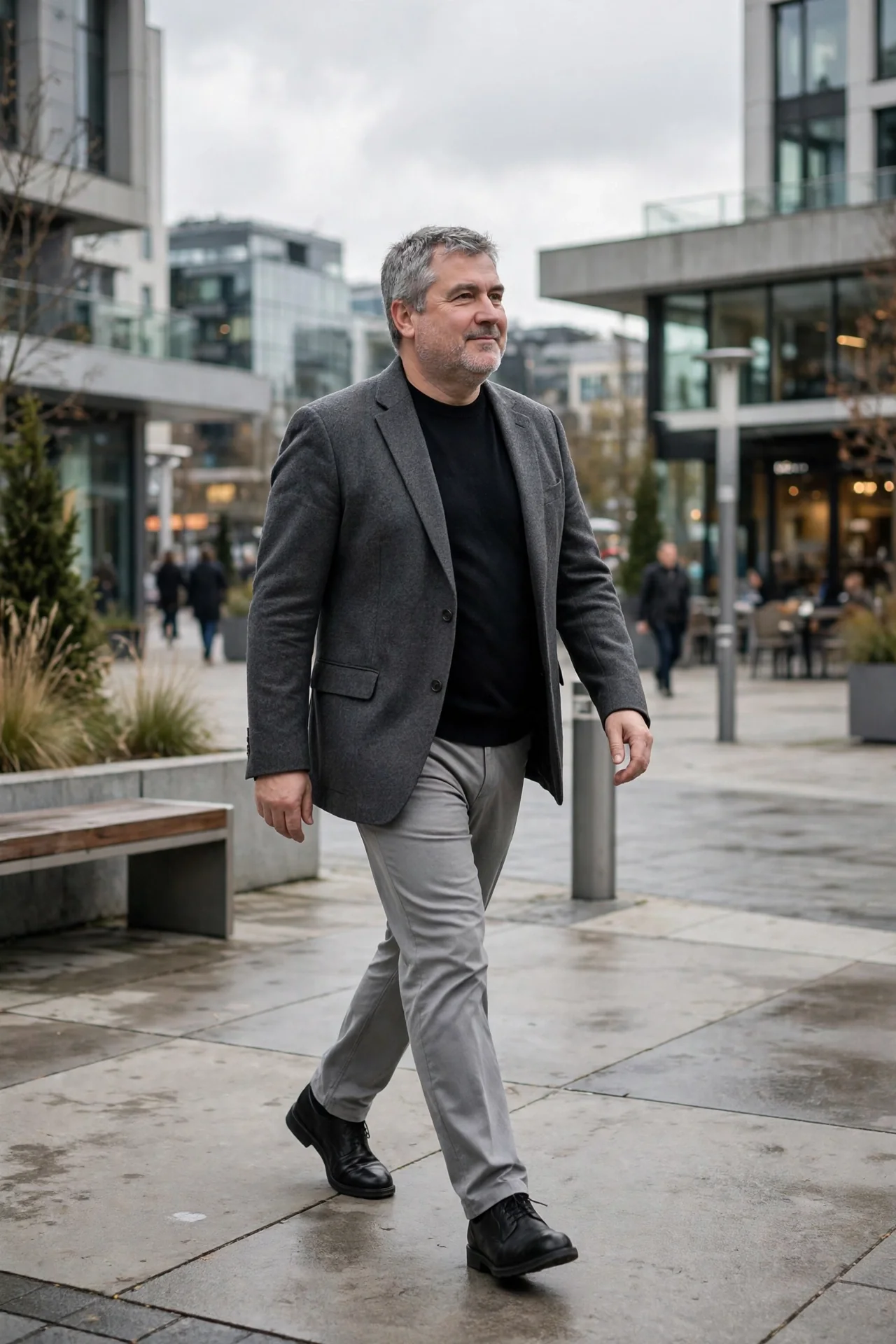
Combining black and grey softens all black and adds some depth. It’s a calm, modern palette that works in almost any office.
🎨
Top Layer
charcoal blazer
✂️
Middle
black knit
📐
Bottom
light grey trousers
Varying the shades is what makes it work. Light grey trousers with a darker top, or the reverse, keeps the outfit from blurring into one colour.
Black shoes are the safest choice here. Brown can work, but it shifts the outfit toward a warmer, less sleek look.
14
OF 26
Brown and Earth Tones
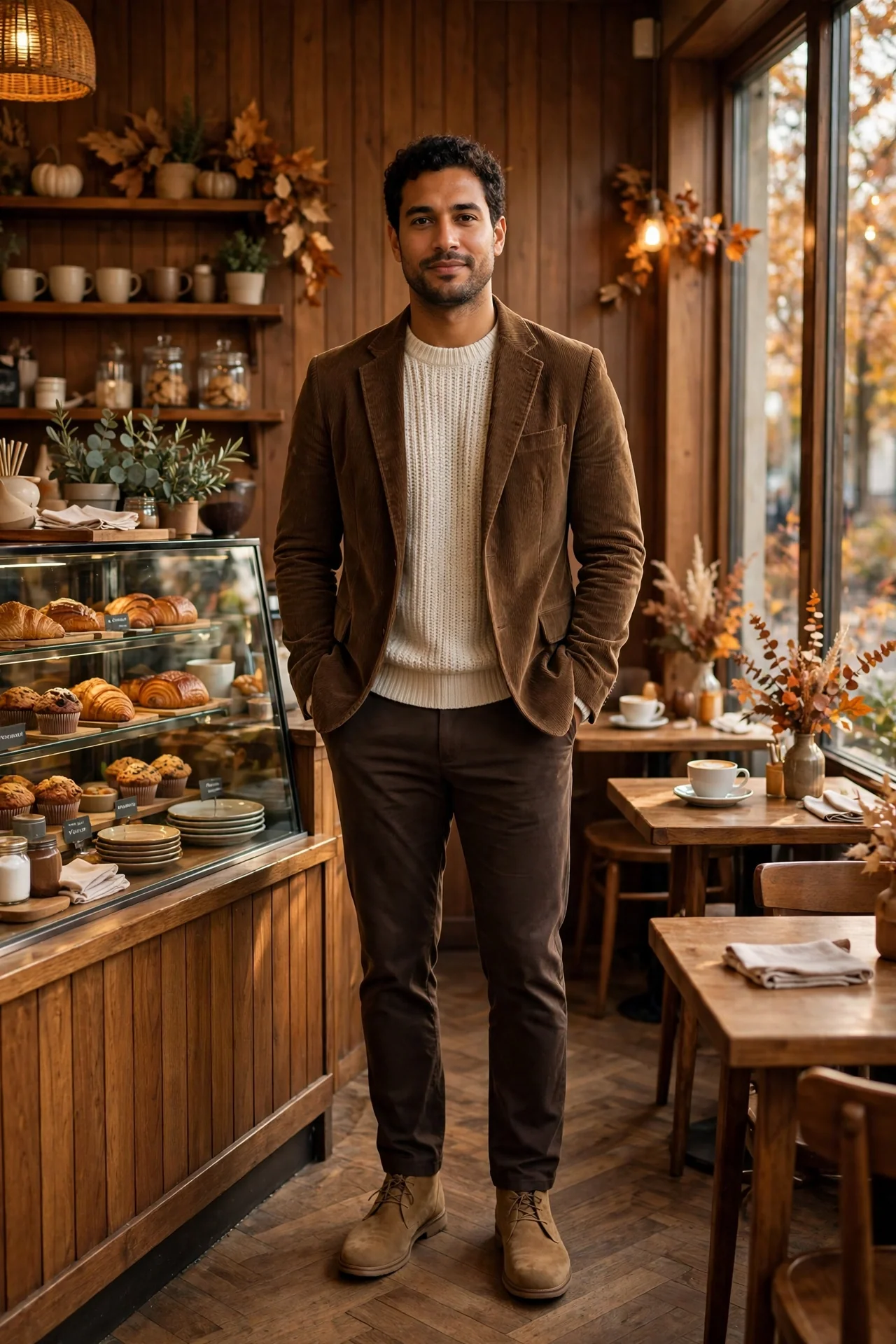
Browns, tans, creams, and rust tones feel warm and approachable. A brown blazer or corduroy jacket gives a business casual outfit a relaxed, autumn feel.
💡 Myth vs Reality:
Myth: brown is “never in town,” meaning brown shoes and clothes don’t belong in a city office.
Reality: that old British saying applied to strict formal dress. In business casual, brown shoes and brown clothing are completely normal.
Layering different shades of brown adds depth. A tan shirt, a darker brown blazer, and cream trousers look richer than one flat brown head to toe.
15
OF 26
Tonal Blue From Shirt to Trousers
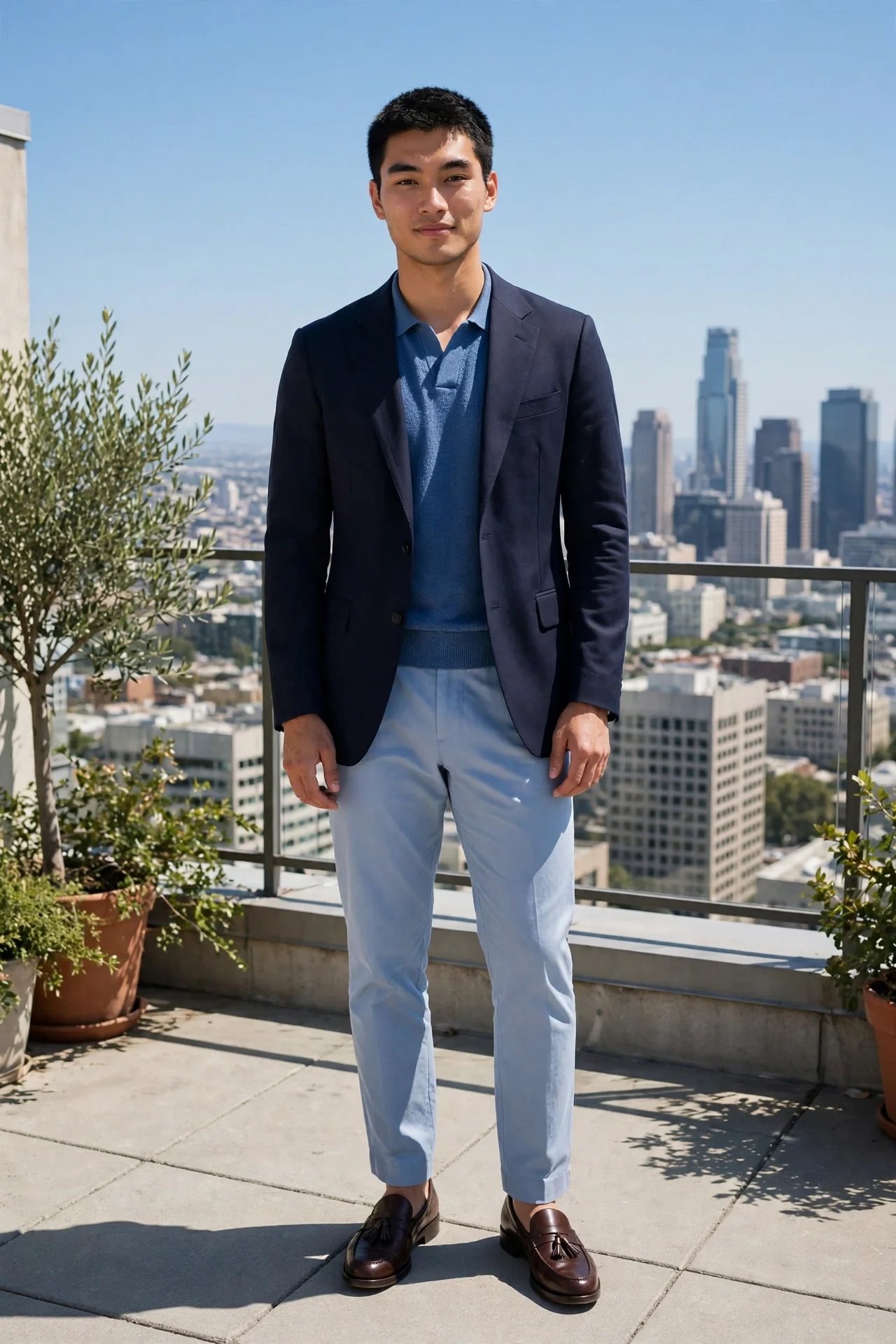
A tonal outfit uses different shades of one colour. Blue works especially well, because navy, mid-blue, and light blue all feel professional.
BEFORE:
A navy blazer, navy shirt, and navy trousers, all the same shade, so the outfit looks flat and uniform-like.
AFTER:
The same navy blazer with a mid-blue polo and light blue trousers, each shade clearly different, creating depth and contrast.
Keep at least two clear steps of contrast between the shades. If they’re too close, the pieces look like they almost match but don’t.
16
OF 26
A Burgundy Accent
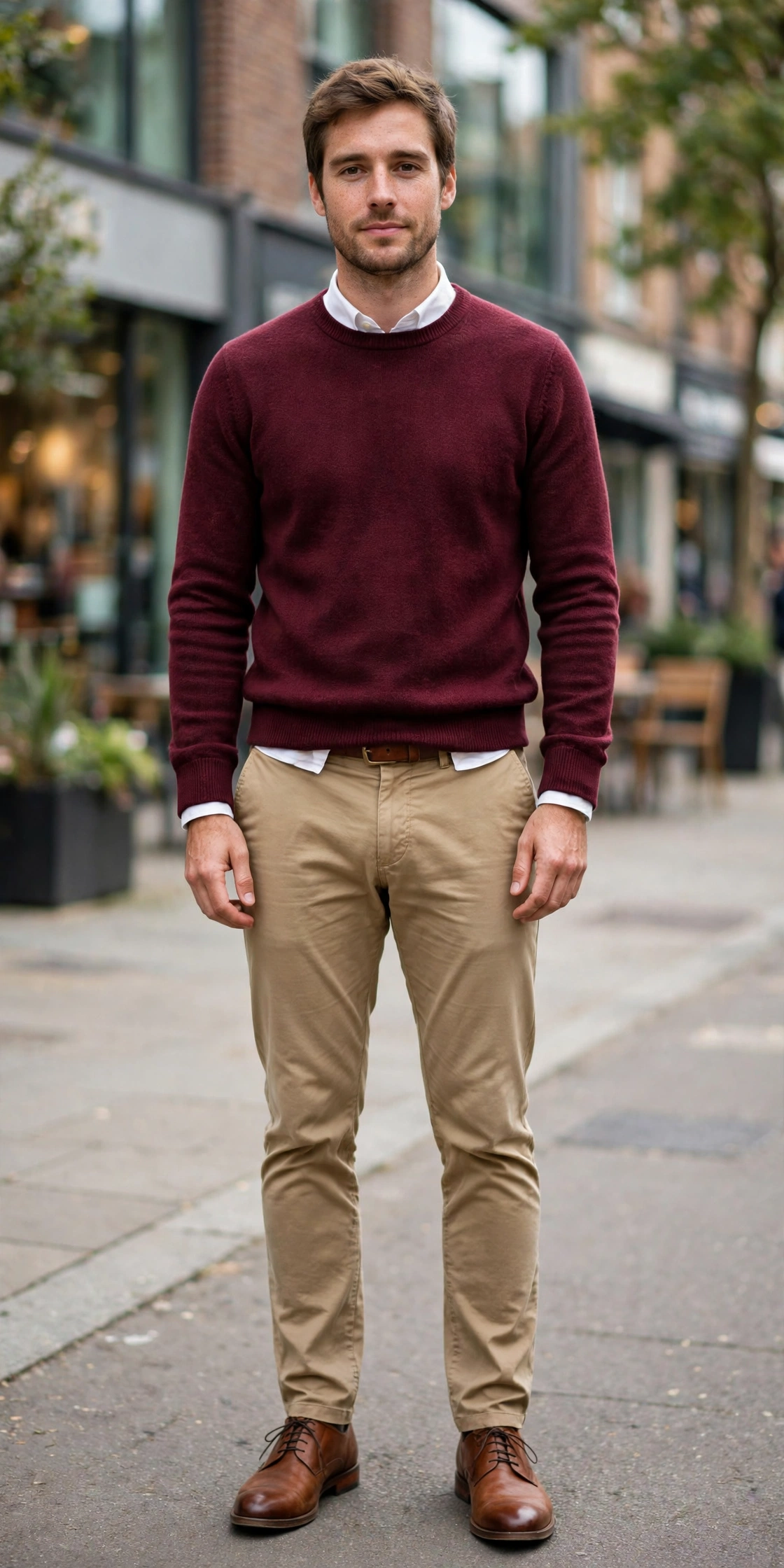
Red can feel too bold for the office, but burgundy is a deeper, quieter shade. One burgundy piece, like a sweater or tie, adds colour while staying professional.
💡 Quick Tip:
Keep the rest of the outfit neutral: grey, navy, or charcoal. Burgundy looks best when it’s the only strong colour in the outfit.
Burgundy pairs especially well with grey. The cool grey makes the warm red tone stand out without looking flashy.
17
OF 26
A Linen-Blend Shirt for Summer
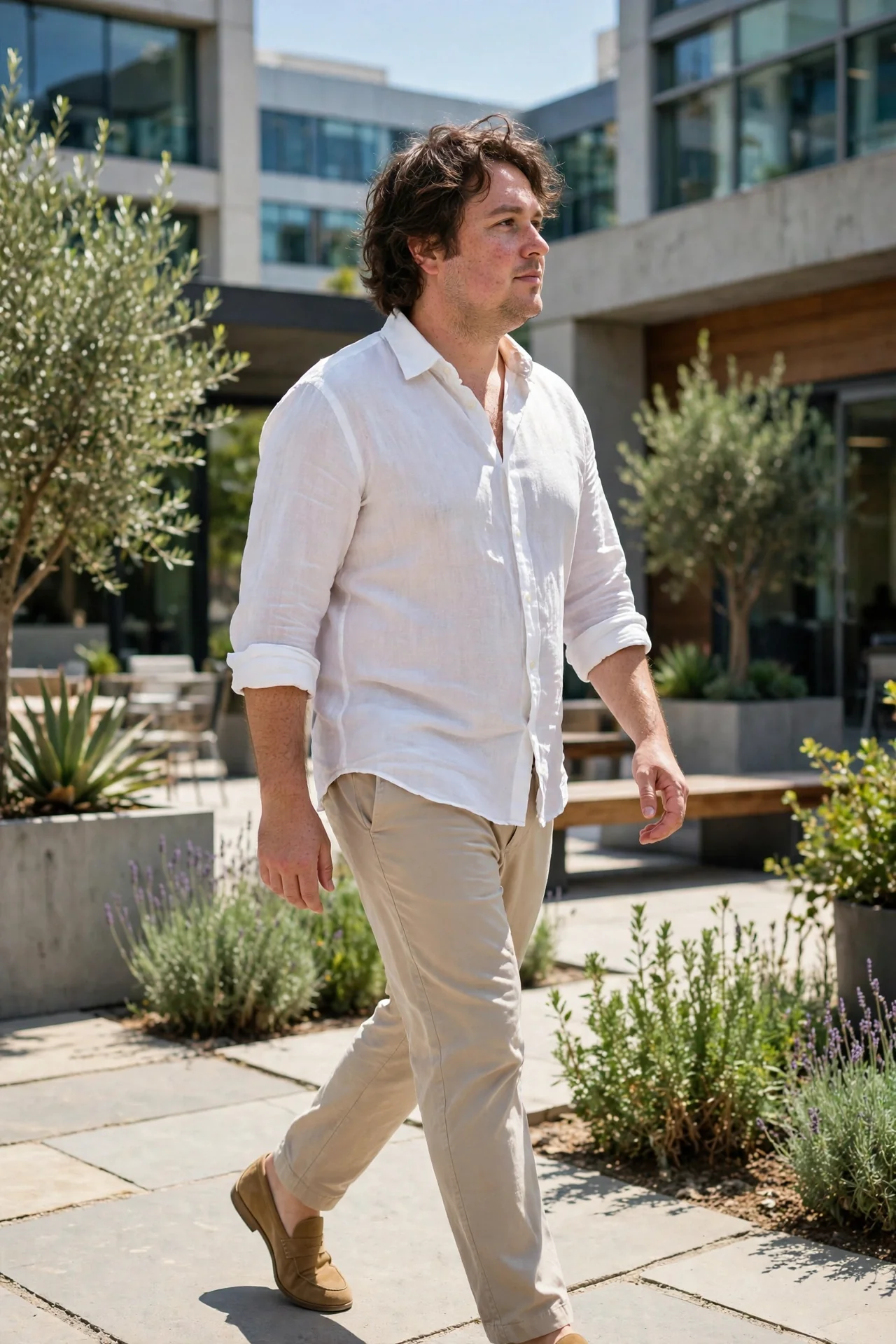
Linen and linen-blend shirts are cooler than cotton because the fabric is loose and breathable. Paired with lightweight cotton trousers, they make a comfortable summer business casual outfit.
📌 Good To Know:
Pure linen wrinkles quickly, which can look messy in a formal office. A linen-cotton blend keeps most of the breathability while creasing much less.
Lighter colours like white, beige, light blue, and sage reflect heat better than dark colours. They also look fresher on hot days.
Loafers without visible socks keep the summer feel. Use no-show socks so your feet stay comfortable.
18
OF 26
Resort Business Casual for Warm-Weather Offices
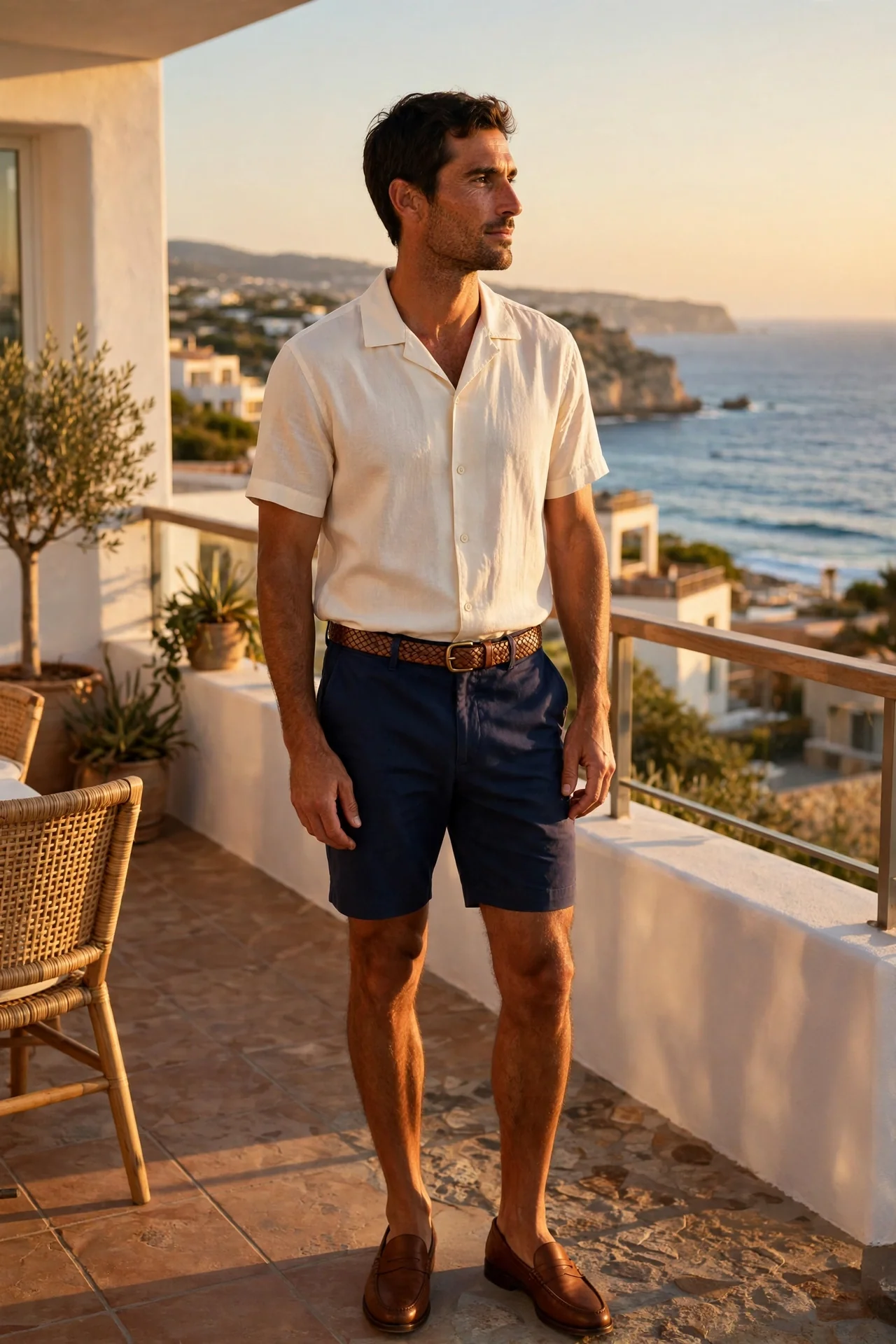
Some workplaces in warm, coastal areas, and some summer events, allow a more relaxed version of business casual. Tailored shorts and a crisp short-sleeve shirt can still look professional.
📅 Wear It For
The shorts need to be tailored, not cargo or athletic. A clean hem just above the knee and a neat crease keep them looking smart.
Tuck the shirt in and wear a belt. Untucked, the outfit quickly reads as holiday wear.
19
OF 26
An Overshirt Layer for Fall
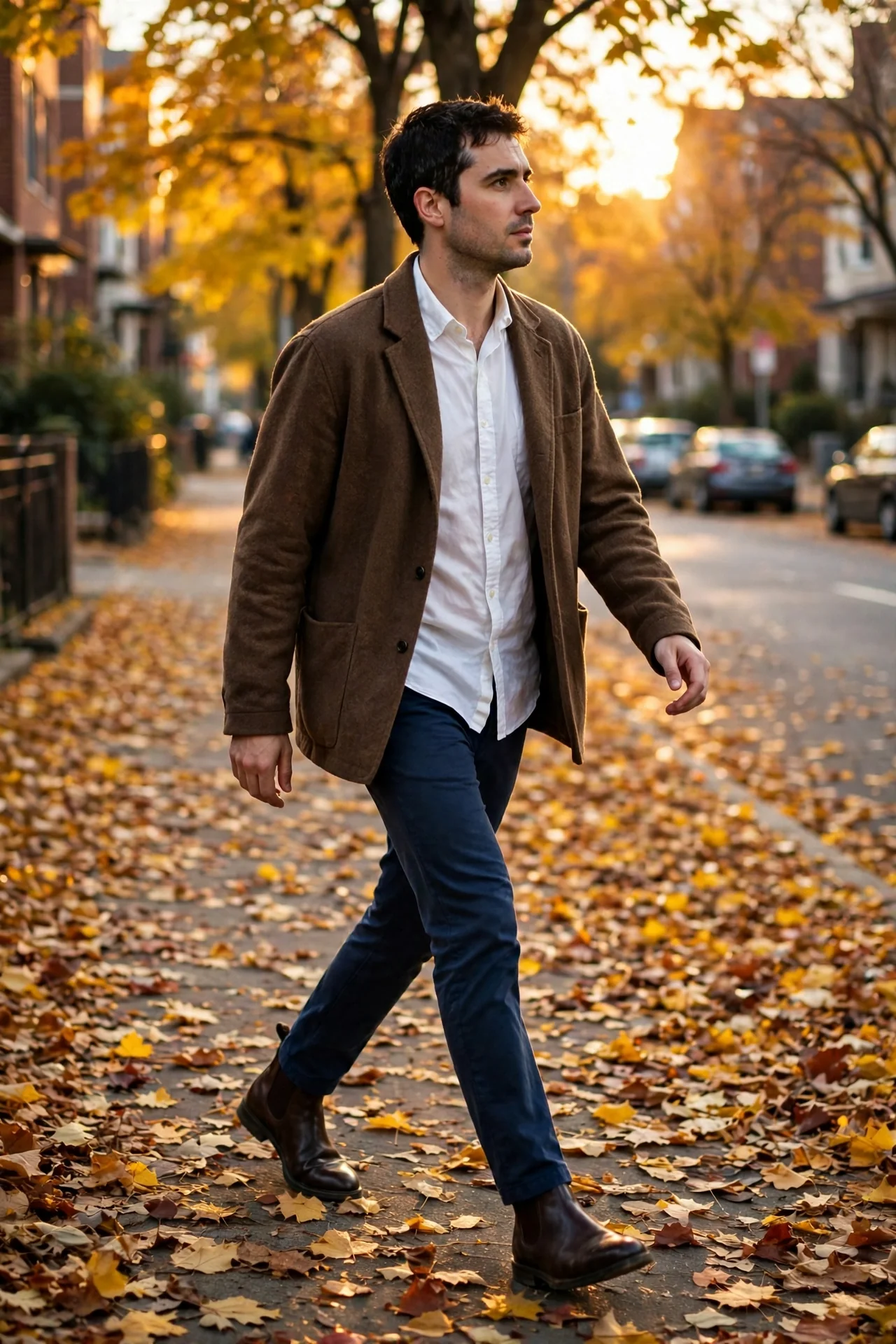
An overshirt sits between a shirt and a jacket. Worn open over a collared shirt, it adds warmth and texture, and it can come off once the office warms up.
✅ Recreate This Look:
- A wool or heavy cotton overshirt in brown, olive, or navy
- A white or light blue oxford shirt underneath
- Navy or grey chinos
- Leather Chelsea boots or chukkas
Pick an overshirt that’s slightly larger than your regular shirt size, so it sits comfortably over the layer underneath without pulling.
This outfit suits relaxed and mid-level offices. For a conservative office, a blazer is still the safer outer layer.
20
OF 26
A Rollneck, Wool Trousers, and an Overcoat for Winter
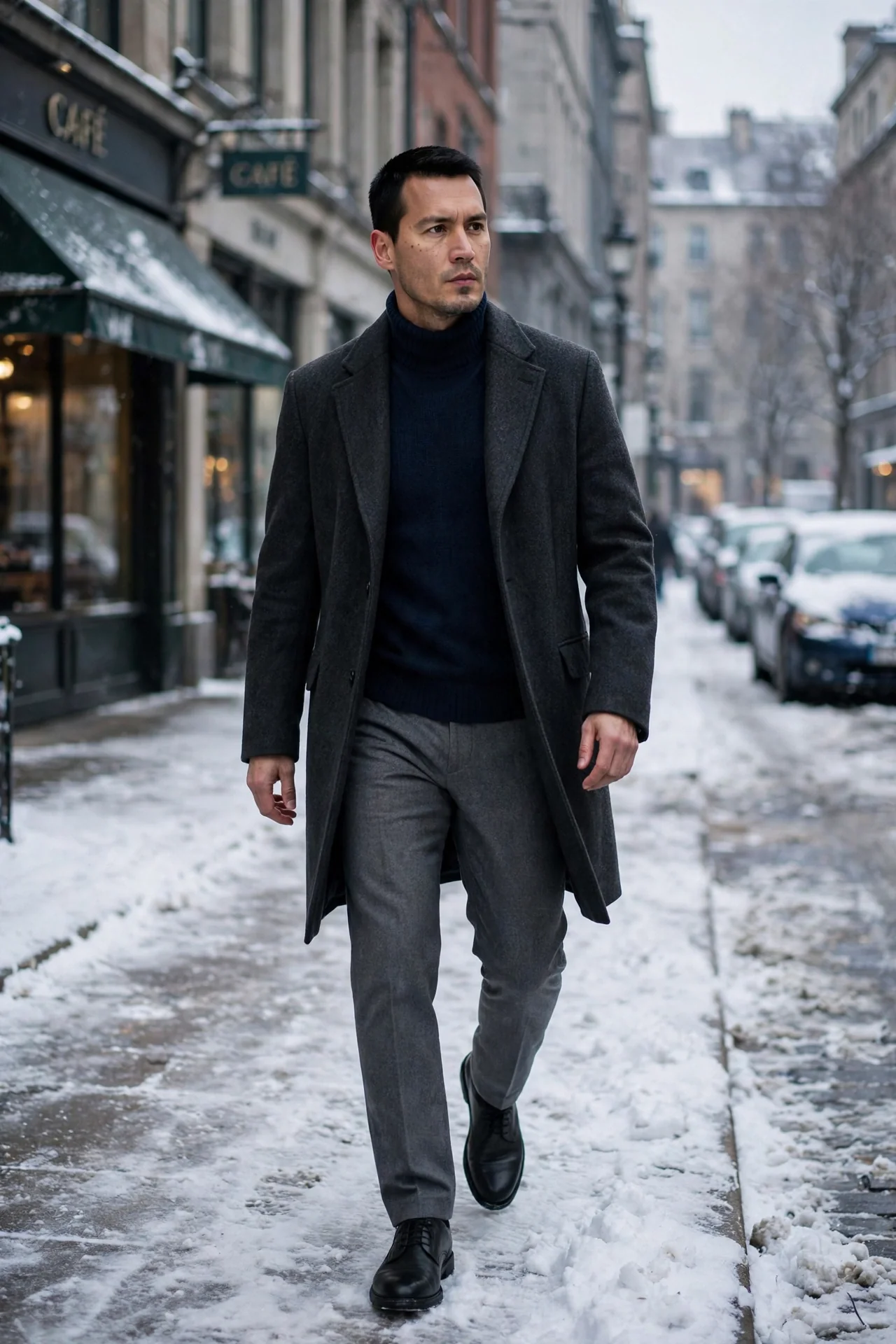
A thin merino rollneck under a wool overcoat looks sharp and keeps you warm. Paired with wool trousers, it’s a winter outfit that works for meetings and commutes alike.
Layering it well keeps you comfortable both outside and in a heated office:
Start with a thin merino rollneck as the base, since merino keeps you warm without bulk
Add wool trousers, which are warmer than cotton chinos
Put on a wool overcoat that reaches at least mid-thigh
Finish with a scarf and leather gloves for the commute, and take them off once you’re inside
Merino handles changing temperatures well, so you won’t overheat once you’re at your desk. A cotton rollneck tends to feel stuffy indoors.
21
OF 26
A Trench Coat for Rainy Days
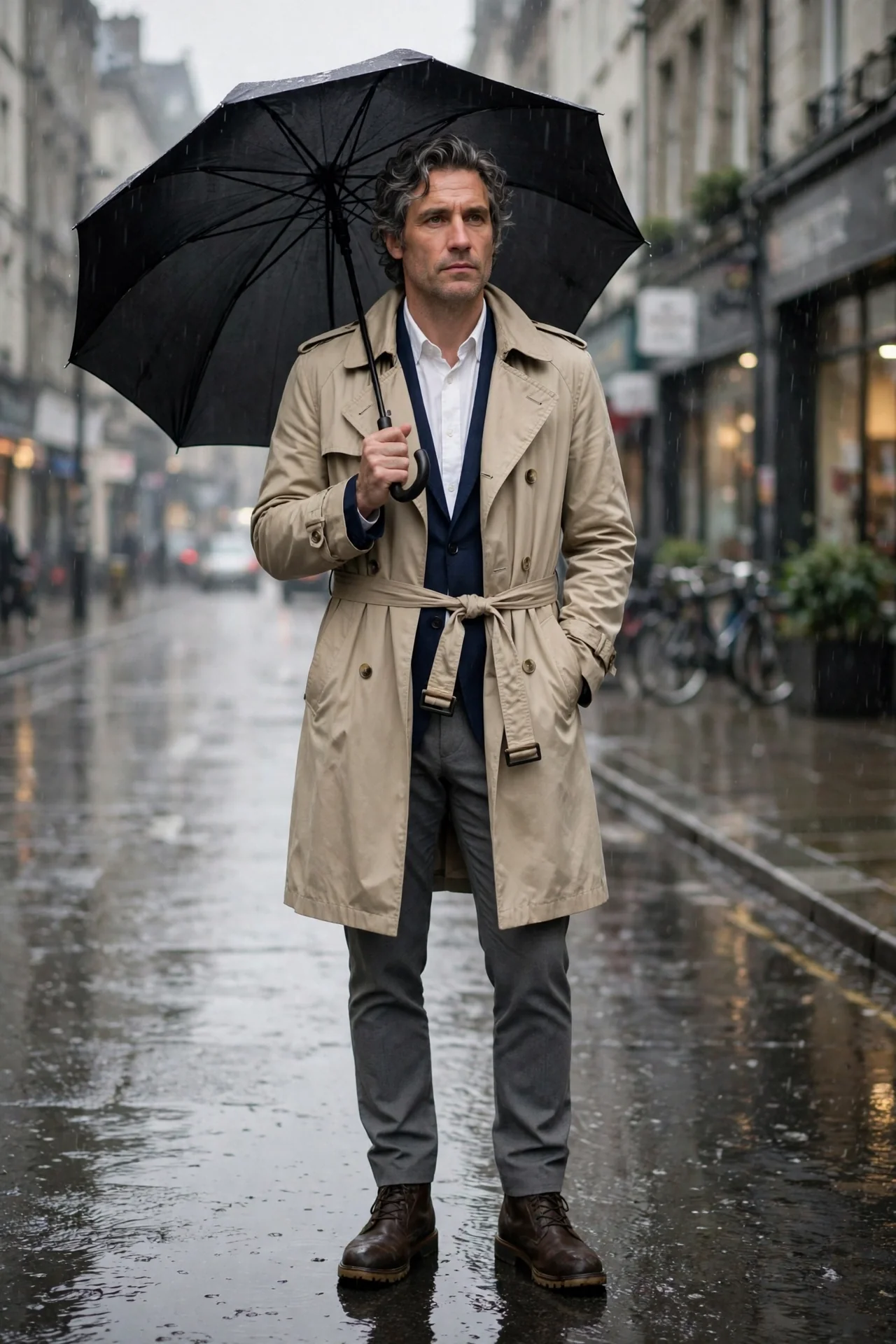
A trench coat was designed for rain and fits naturally over business casual. It covers a blazer completely, so your outfit underneath stays dry.
⚠️ Watch Out:
Skip suede shoes and loafers on rainy days. Water stains suede quickly, and loafers let rain in at the top. Leather boots or derbies with rubber soles are safer.
Darker trousers hide splashes better than light ones. Navy, charcoal, and dark grey are the practical choices for wet weather.
22
OF 26
Stretch Chinos and a Knit Blazer for Business Travel
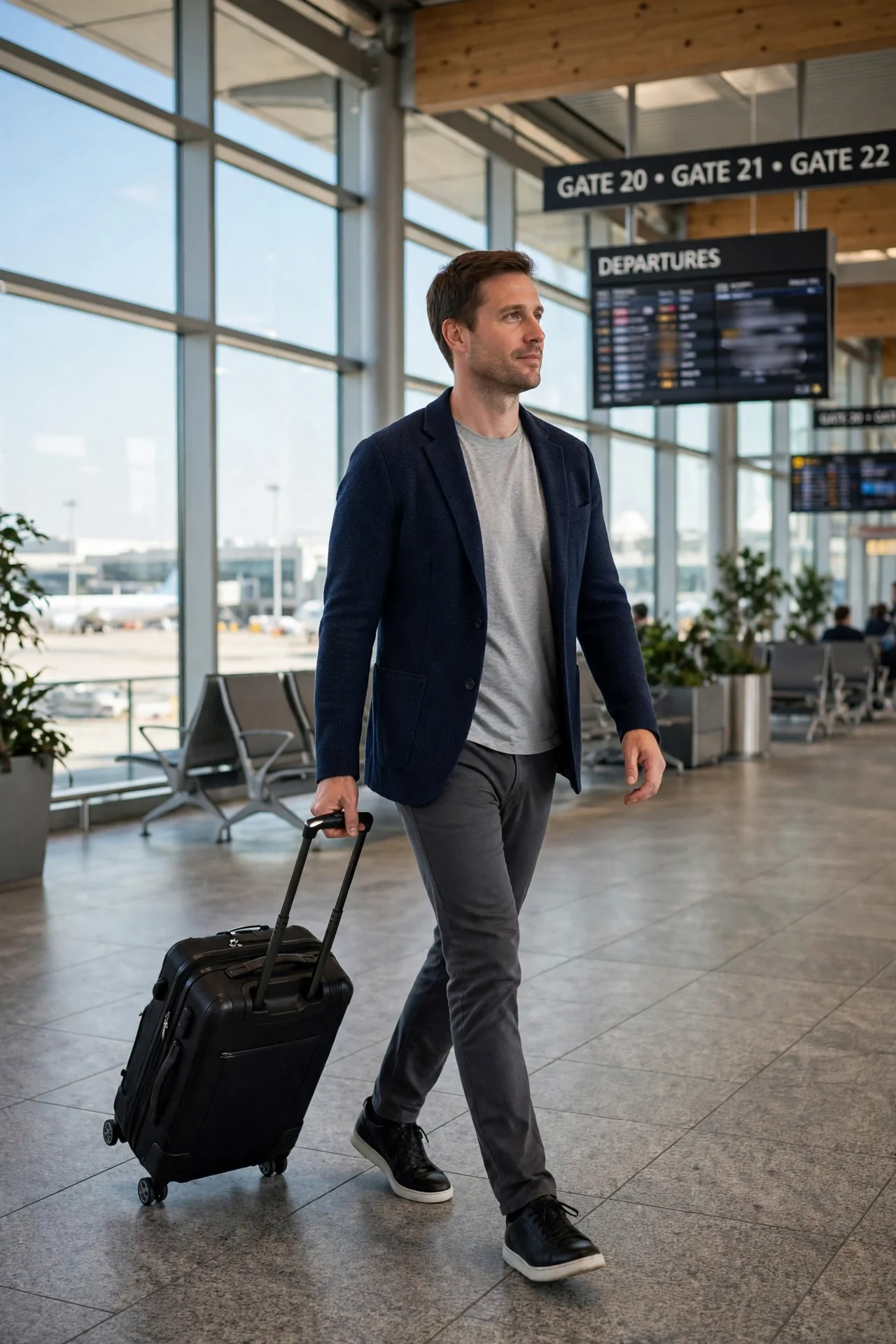
Business travel needs clothes that look smart but survive hours of sitting. Stretch chinos and a knit blazer move with you and come out of a suitcase with fewer wrinkles.
🧵 Fabric Note:
Many brands sell “travel” blazers and chinos made from knit or stretch fabrics, often claiming they resist wrinkles. Knit fabrics do recover from creases better than woven cotton, which is why they work well for long flights.
A merino t-shirt or polo under the blazer stays fresher than cotton over a long day, since merino handles sweat and odour well.
23
OF 26
Business Casual for a Job Interview
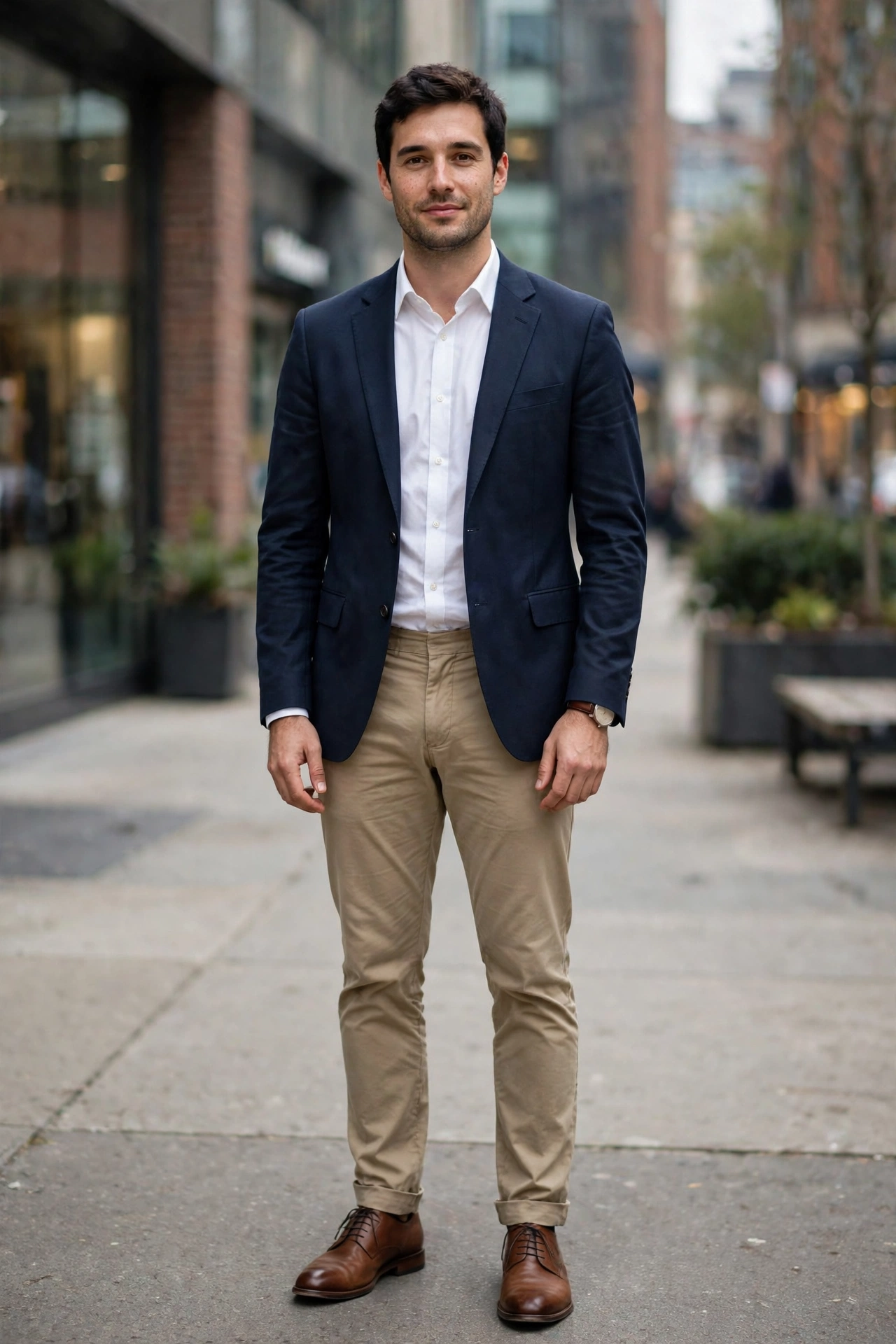
When a company describes its dress code as business casual, the safest interview outfit is the smartest version of it. A navy blazer, white shirt, and grey trousers look polished without being as formal as a suit.
Different industries read business casual differently, so it helps to match the setting.
| Industry | Interview Outfit | Blazer? |
|---|---|---|
| Law, finance, accounting | Blazer, dress shirt, wool trousers, leather shoes | Yes |
| Consulting and sales | Blazer, collared shirt, chinos or trousers | Yes |
| Tech and startups | Smart knit or shirt, chinos, clean shoes | Optional |
| Creative fields | Clean, fitted outfit with some personality | Optional |
When in doubt, dress one step smarter than the people who already work there. It shows you took the interview seriously.
💬 What to Ask Before the Interview:
“What’s the dress code like for the team?” It’s a normal question to ask your recruiter or HR contact, and the answer tells you exactly where to aim.
24
OF 26
Business Casual for a Work Dinner
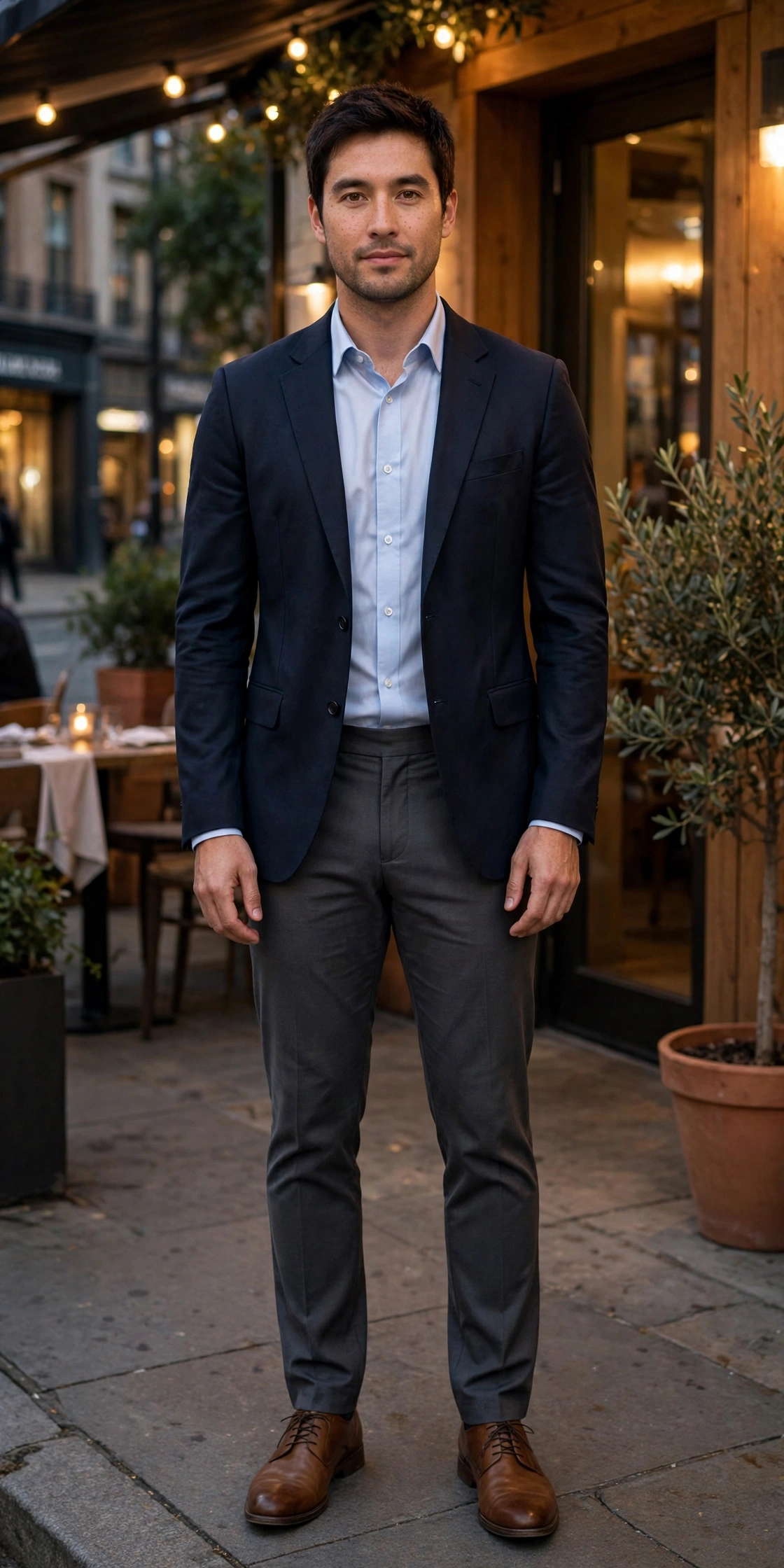
Evening work events usually call for a darker version of business casual. Swapping your daytime colours for charcoal, black, or deep navy makes the outfit look more suited to the evening.
BEFORE:
The same office outfit worn straight from the desk: light blue shirt, khaki chinos, brown sneakers.
AFTER:
A dark blazer added, the shirt swapped for a black knit polo, and sneakers changed for leather loafers, a look made for dinner.
Keep a dark blazer and a pair of leather shoes at the office if you often have evening events. You can switch your outfit in a few minutes without going home.
25
OF 26
Refined Business Casual for Men Over 40 and 50
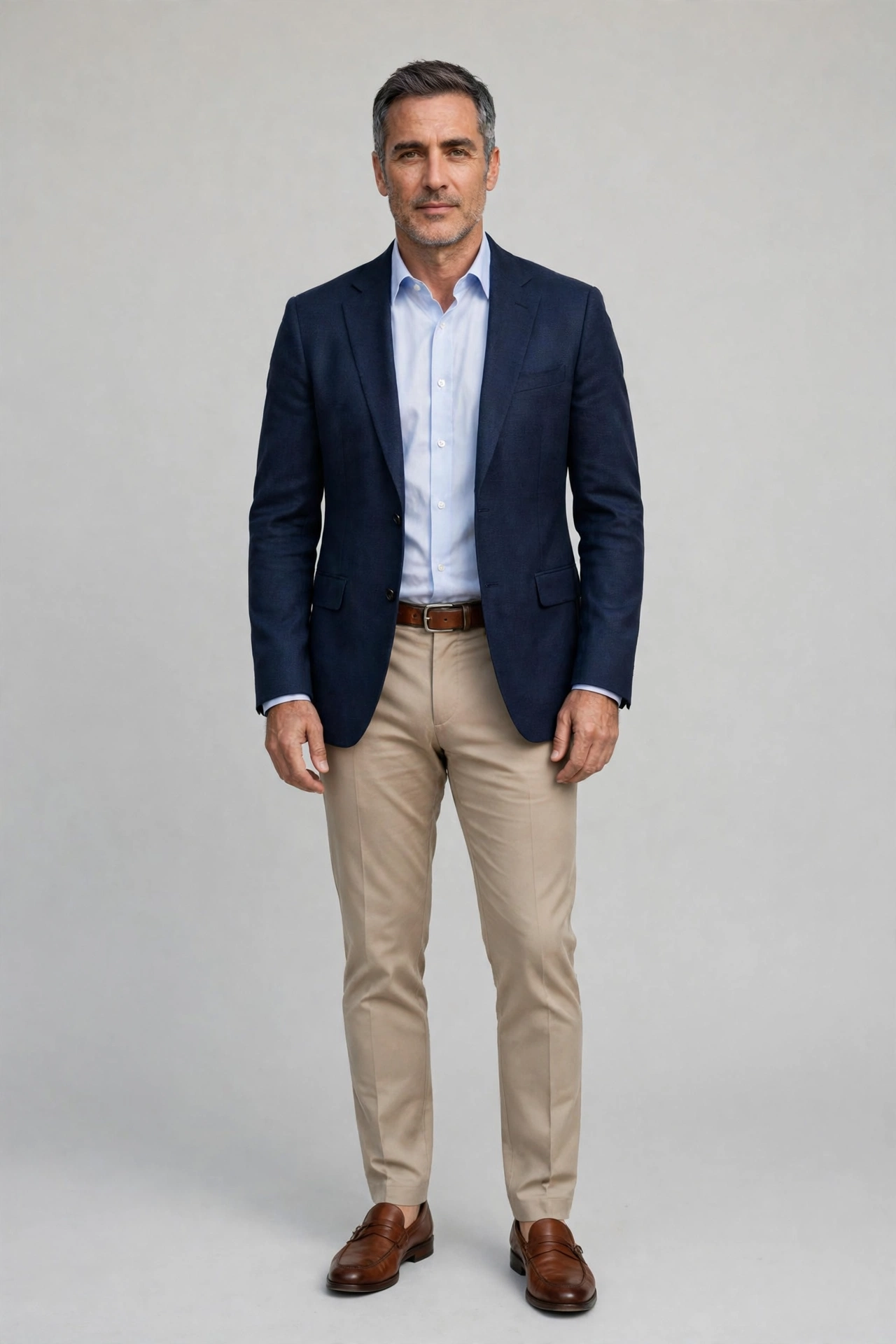
For men over 40 and 50, business casual looks best when it leans toward quality and fit rather than trends. Good fabrics like wool, flannel, and merino do more than any fashionable cut.
👔 Stylist’s Note
The biggest upgrade here is tailoring. A blazer that fits well at the shoulders and trousers hemmed to the right length make an outfit look expensive, even if the pieces themselves aren’t.
A knit tie is a relaxed option if you want a little more polish without wearing a formal silk tie. It suits business casual better than a shiny tie.
26
OF 26
Business Casual for Bigger and Taller Builds

The right fit matters more than anything for bigger men. Clothes that are too tight pull at buttons, while clothes that are too baggy add bulk.
Darker colours and vertical lines, like a single-breasted blazer with one or two buttons, create a long, clean line. A straight-leg trouser balances a broader upper body better than a skinny fit.
💡 What to Ask Your Tailor:
“Can you take in the waist of the blazer slightly and hem the trousers so they have no break?” Small adjustments like these often make off-the-rack clothes fit far better.
Stretch fabrics help too. Trousers and shirts with a small amount of stretch stay comfortable through a full workday without looking loose.
Which business casual outfit are you trying?
FAQs
What is business casual for men?
Business casual usually means trousers or chinos, a collared shirt or smart knit, and leather shoes, with an optional blazer and no tie. It’s smarter than casual clothing but less formal than a suit.
Can I wear jeans for business casual?
In many offices, yes, as long as they’re dark, clean, and free of rips. Pairing them with a blazer or collared shirt keeps them looking professional.
Are sneakers business casual?
Minimal leather sneakers in white, black, or tan are accepted in many offices. Athletic running shoes and worn canvas sneakers usually aren’t.
What’s the difference between business casual and business professional?
Business professional usually means a full suit and tie. Business casual drops the tie and allows separates like chinos, knits, and blazers.
What colours work best for business casual?
Navy, grey, white, light blue, brown, and olive are the easiest to mix. Add one accent colour, like burgundy, if you want more personality.
What should I wear to a business casual interview?
Go for the smartest version of business casual: a navy blazer, a crisp shirt, tailored trousers, and leather shoes.