Men’s Dress Shoes Guide: Types, Colours, Fit and Occasions

Dress shoes are one of the few things in a man’s wardrobe where the details genuinely matter. The difference between an oxford and a derby, or black and dark brown, decides whether a pair looks right at a wedding, in an office or with jeans on a Friday night.
This guide is for any man buying his first good pair, dressing for a wedding, or trying to make sense of the shoes already in his closet. It covers what most guides skip: the main styles and how formal each one is, oxford versus derby, which colours go with which trousers, how a dress shoe should actually fit, outfits for grooms, guests, offices and summer, socks and trouser breaks, and how to make a good pair last for years.
Quick answer: Start with black cap-toe oxfords for formal events and weddings, then add dark brown derbies or loafers for business casual and smart casual outfits. Choose closed lacing and black for formality, open lacing, brown and suede for relaxed looks, and make sure the shoe fits snugly with about half an inch of toe room.
Short on Time? Pick Your Path
Table of Contents
- 01The Main Types of Dress Shoes
- 02Oxford vs Derby: The Difference That Matters Most
- 03From Most Formal to Most Casual
- 04Choosing a Dress Shoe Colour
- 05How Dress Shoes Should Fit
- 06Dress Shoe Outfits for Every Occasion
- 07Socks and Trousers With Dress Shoes
- 08Building a Small Dress Shoe Collection
- 09Caring for Dress Shoes So They Last
- 10Mistakes Men Make With Dress Shoes
01
OF 10
The Main Types of Dress Shoes
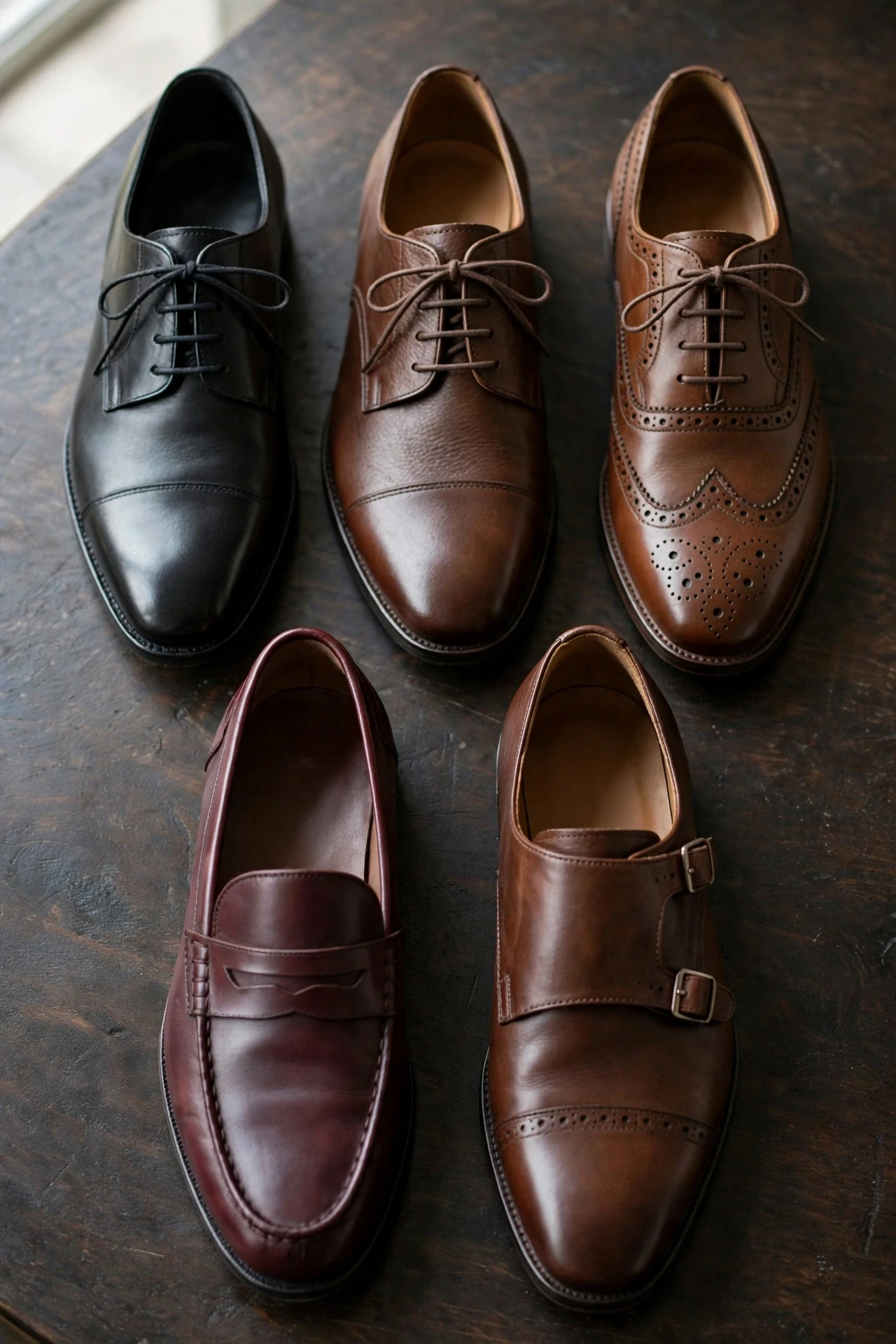
Most dress shoes fall into a handful of styles. Once you can tell them apart, it’s much easier to know where each one belongs.
| Style | How to Spot It | Formality | Best With |
|---|---|---|---|
| Oxford | Closed lacing, sleek shape | Most formal | Suits, tuxedos, weddings |
| Derby | Open lacing, flaps sit on top | Smart to smart casual | Suits, chinos, wool trousers |
| Brogue or wingtip | Decorative punched holes | Less formal than plain | Tweed, chinos, jeans |
| Monk strap | Buckle instead of laces | Smart to smart casual | Suits, blazers, chinos |
| Loafer | Slip-on, no laces | Smart casual | Chinos, summer suits, jeans |
| Chelsea or chukka boot | Ankle height, elastic or two eyelets | Smart casual | Chinos, jeans, casual suits |
A simple rule runs through all of them: the sleeker and plainer the shoe, the more formal it is. Decoration, open lacing, suede and chunky soles all push a shoe toward casual.
02
OF 10
Oxford vs Derby: The Difference That Matters Most
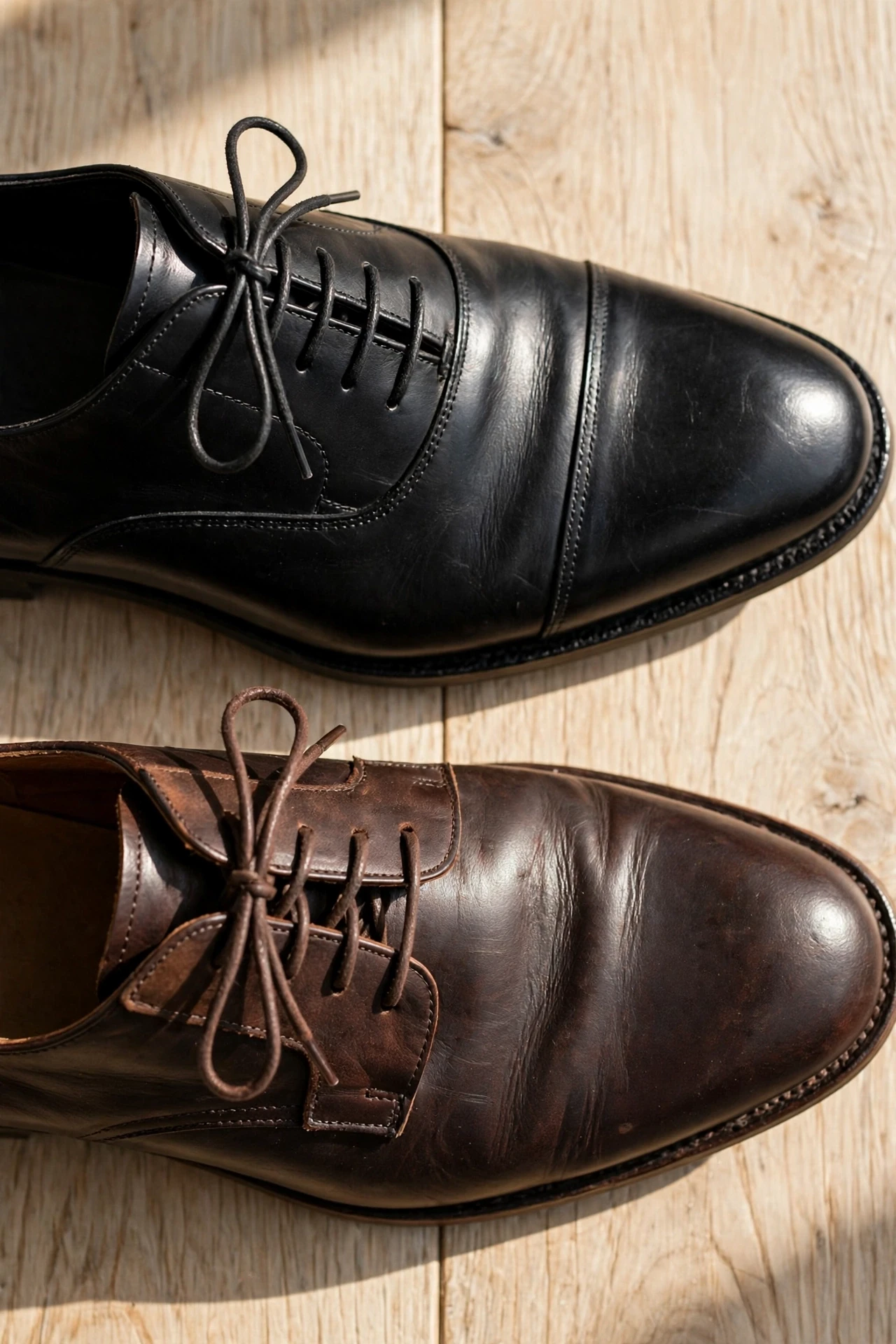
Oxfords and derbies look similar, but the lacing tells them apart. According to English shoemaker Cheaney, “You can distinguish an Oxford shoe by the closed-lacing system,” while “Derbys have an open-lacing system.”
That small change affects both formality and comfort. Closed lacing gives oxfords a sleek, formal look, while the open flaps of a derby give more room over the top of the foot.
Where Oxfords and Derbies Got Their Names
Cheaney notes that derbies were mentioned as early as 1862 and links the style to the 14th Earl of Derby, said to have had wide feet. Oxfords may trace back to 19th-century students who cut down their leather boots into lower shoes.
If you have a high instep or wide feet, a derby is often more comfortable. Cheaney points out that the open facings “easily accommodate a higher instep,” which a closed oxford can’t.
03
OF 10
From Most Formal to Most Casual
Matching the shoe to the event matters more than owning lots of pairs. A plain black oxford at a casual barbecue looks as wrong as suede loafers at a black-tie dinner.
Think of a ladder. At the top sits the black patent or plain black oxford for black tie; then black and dark brown cap-toe oxfords for suits; then derbies and monk straps; then brogues and loafers; and finally suede chukkas and Chelsea boots.
🎨
Most formal
black patent or plain black oxfords
✂️
Office
cap-toe oxfords, derbies, monk straps
📐
Smart casual
loafers, brogues, suede boots
When you’re unsure, go one step dressier than you think. It’s easier to look slightly overdressed than to stand out in shoes that are too casual.
04
OF 10
Choosing a Dress Shoe Colour
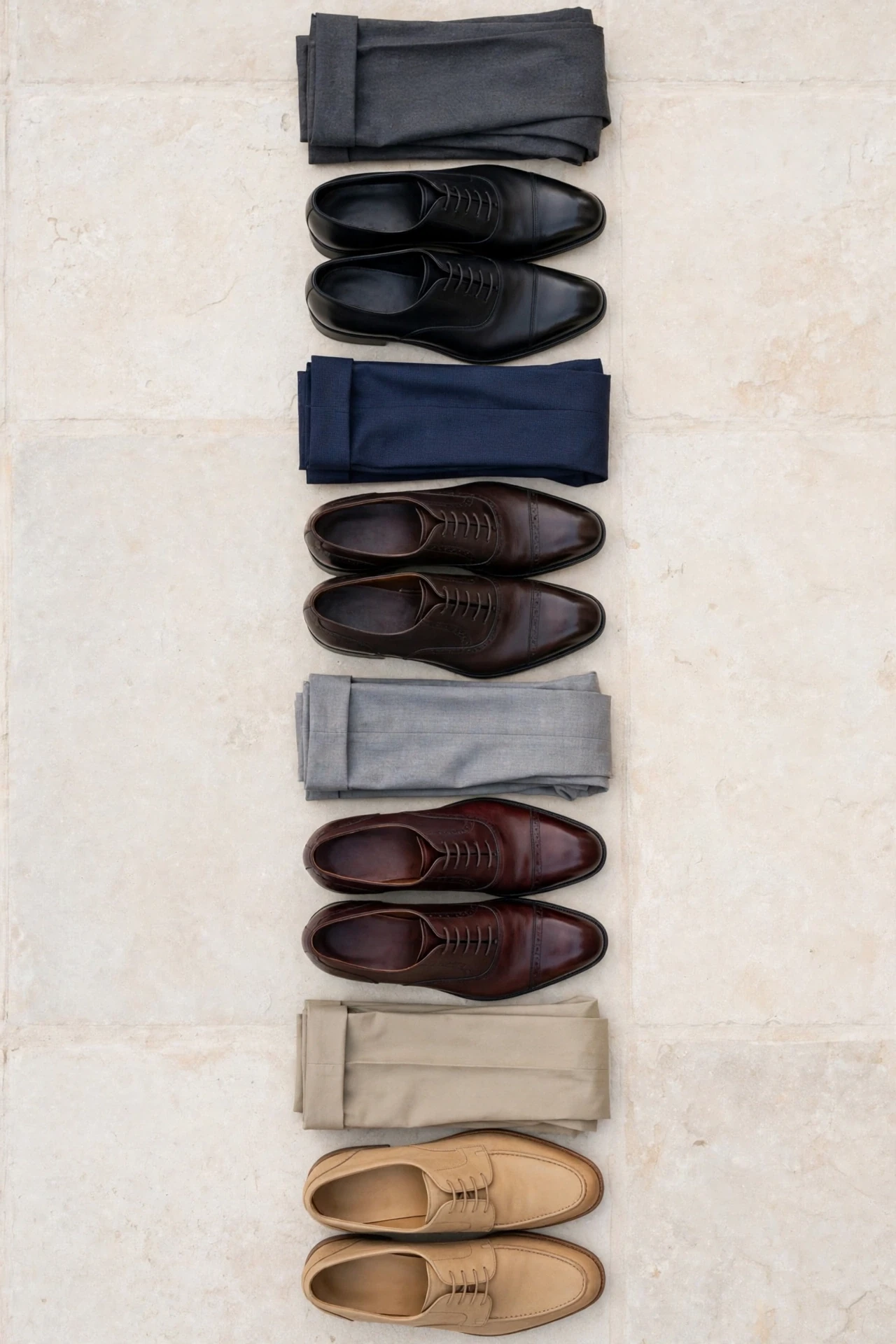
Colour is the next biggest factor after style. Black is the most formal, followed by dark brown and burgundy, with tan and lighter browns the most casual.
Here’s a simple colour guide for matching shoes to trousers.
| Shoe Colour | Formality | Best Trouser Colours | Avoid With |
|---|---|---|---|
| Black | Most formal | Charcoal, grey, navy, black | Tan, khaki, very casual chinos |
| Dark brown | Formal to smart casual | Navy, grey, olive, khaki, denim | Black suits |
| Burgundy or oxblood | Smart to smart casual | Navy, grey, khaki, olive | Black tuxedos |
| Tan or light brown | Smart casual | Navy, light grey, khaki, denim | Charcoal and black suits |
| Suede (any colour) | Casual to smart casual | Chinos, jeans, flannel, linen | Formal suits, black tie |
When in doubt, dark brown is the most flexible colour. It works with almost every trouser except a black suit.
Matching Your Belt and Watch Strap
Your belt should roughly match your shoes in colour and finish. Black shoes go with a black belt, brown with brown, and suede shoes with a suede or matte leather belt.
A leather watch strap in the same family finishes the look. It doesn’t need to match exactly, but avoid black shoes with a tan belt.
05
OF 10
How Dress Shoes Should Fit
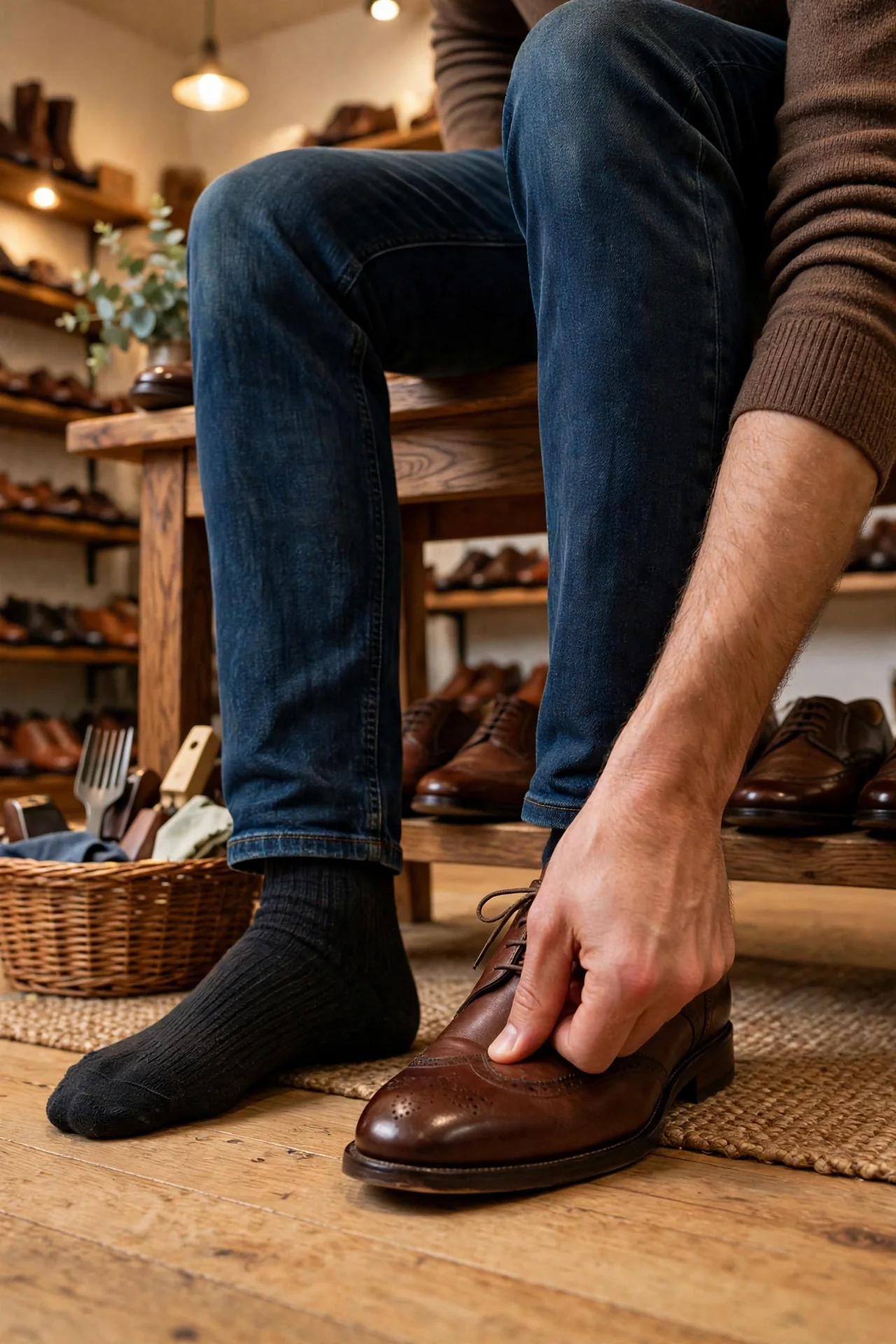
A beautiful shoe that doesn’t fit will hurt and crease badly. Dress shoes are usually slimmer than trainers, so many men need a different size than they’re used to.
On the Reddit shoe community r/goodyearwelt, a widely shared fit guide suggests “at minimum, there should be half an inch of toe room,” and that “some heel slip is acceptable, but it should not be noticeable during your normal stride.”
Try shoes on in the afternoon, when feet are slightly larger.
Wear the thin dress socks you’ll wear with them.
Check for about half an inch of space in front of your longest toe.
Make sure the widest part of your foot sits at the widest part of the shoe.
Lace them snugly and walk; the heel should lift only slightly.
Check nothing pinches across the top or sides.
Sizes vary between makers, so don’t assume your usual size. Judge by how the shoe feels, not the number on the box.
💬 A Little Heel Slip Is Normal at First
On The Shoe Snob, Justin FitzPatrick explains that new leather heel counters are stiff and that slight heel slip “is common” until the leather softens. If you can walk out of the shoe, though, it’s too big.
He suggests that if the heel still feels loose after about seven to ten wears, your heel may simply be narrow for that shoe. Try a different shape or a heel grip insert.
06
OF 10
Dress Shoe Outfits for Every Occasion
These six outfits cover weddings, formal events, work and summer. Each shows which shoe to pick and why.
The Groom: Black Cap-Toe Oxfords
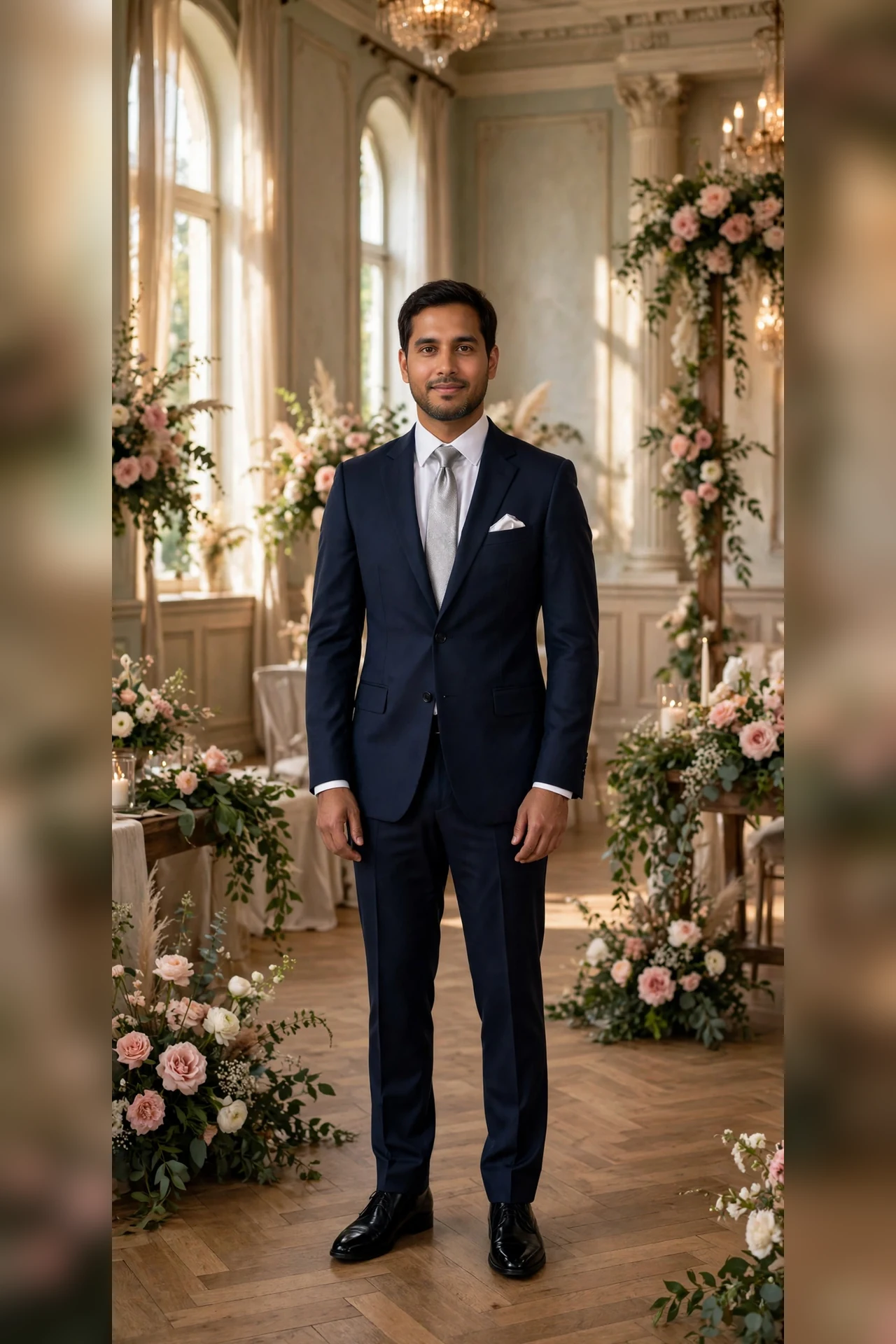
Black cap-toe oxfords are the safest groom’s shoe because they work with navy, charcoal and black suits and tuxedos. They’re formal without looking flashy.
Polish them the night before and wear them in at home first. For a black-tie wedding, choose plain black oxfords or patent leather instead.
The Wedding Guest: Dark Brown or Burgundy
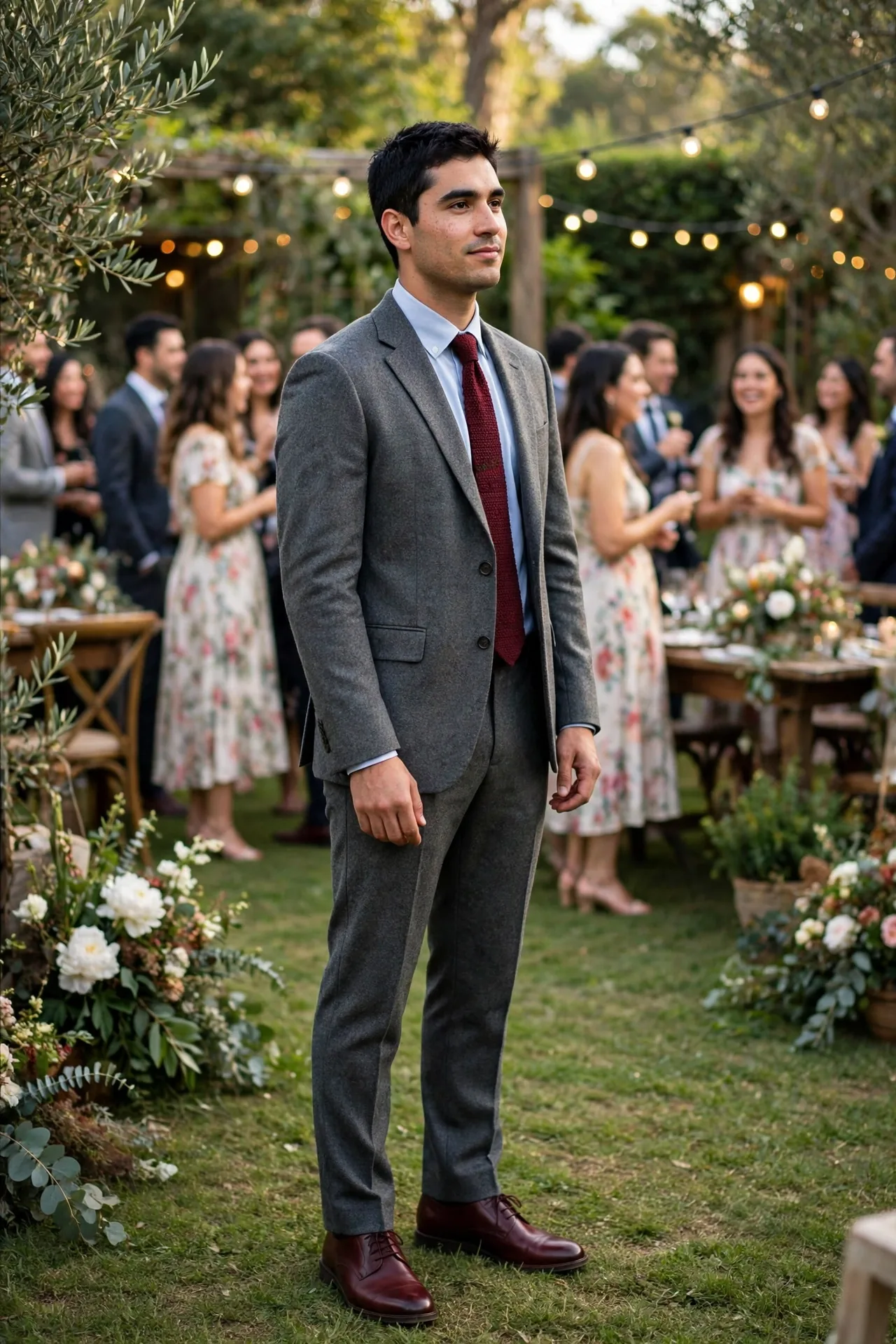
Guests have more freedom than grooms. Dark brown or burgundy oxfords or derbies look warmer than black and pair well with grey, navy and blue suits.
Match the shoes to a leather belt in the same tone. For a beach or very casual wedding, suede loafers can work, but check the dress code first.
Black Tie: Plain or Patent Oxfords
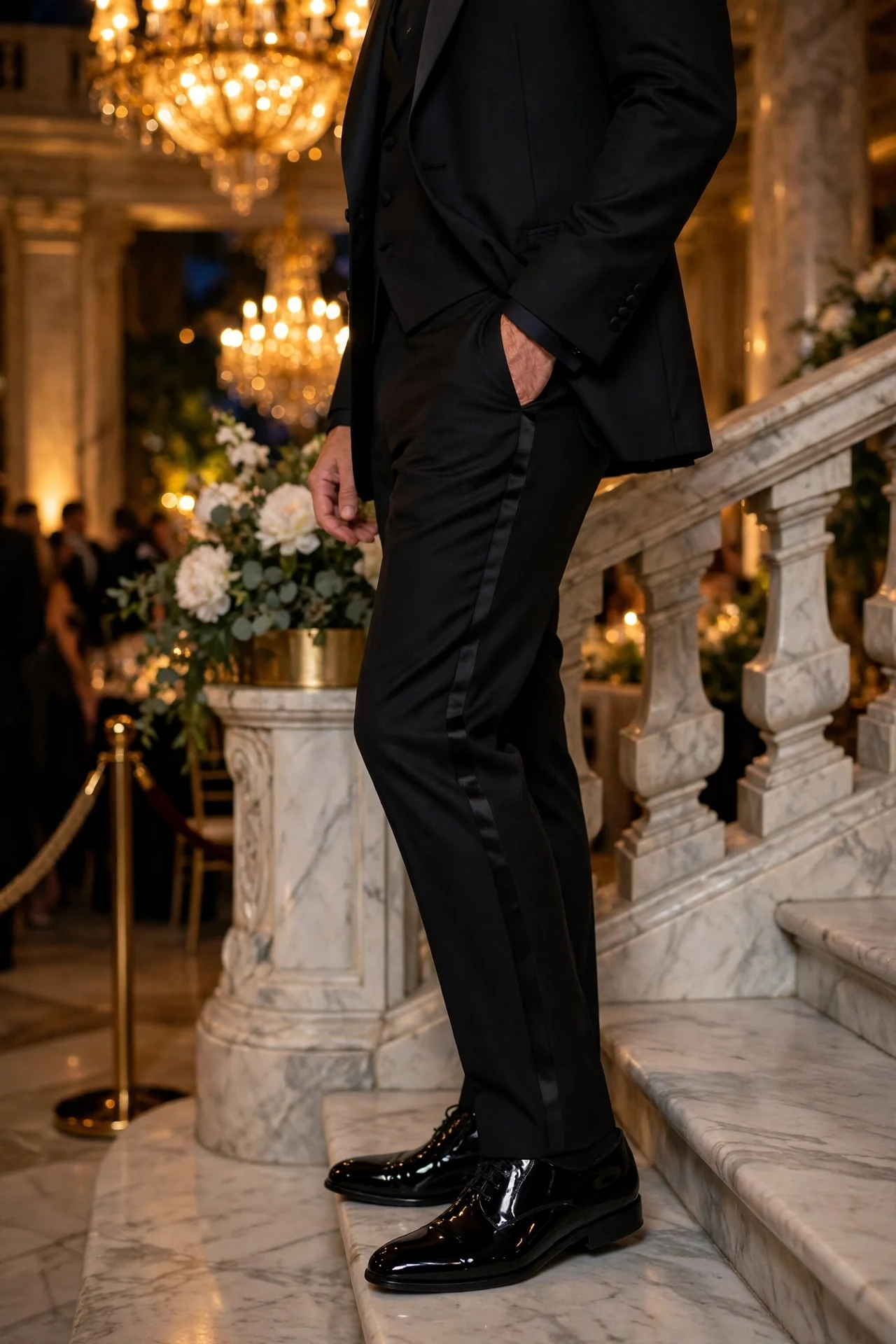
Black tie needs the plainest, shiniest shoe you own: plain-toe black oxfords or patent leather. Brogues, brown leather and suede don’t belong here.
Pair them with black dress socks so no skin shows when you sit. Polished calf leather works if you don’t own patent.
Business Casual: Derbies or Loafers

Dark brown derbies, loafers or monk straps are the best business casual shoes. They look sharp with wool trousers and chinos without the stiffness of black oxfords.
Pick leather over suede if your office leans formal. Keep a black pair for days with important presentations or suits.
Smart Casual Weekend: Suede Chukkas

Suede chukka boots sit right between dress shoes and sneakers. They dress up jeans and dress down chinos, which makes them one of the most useful casual dress shoes.
Avoid them in heavy rain unless they’re treated with a protective spray. Brown or sand suede is the most versatile.
Summer: Suede Loafers and Linen

Suede loafers are the classic summer dress shoe. They’re light, breathable and look elegant with linen or cotton trousers.
Wear them with no-show socks for a clean ankle. Avoid heavy black oxfords in summer, which look too formal and feel hot.
07
OF 10
Socks and Trousers With Dress Shoes
Socks and trouser length can make or break a good pair of shoes. Get them wrong and even expensive shoes look awkward.
The traditional rule is to match socks to your trousers, not your shoes. That creates a smooth line from waist to shoe and makes you look taller.
BEFORE:
Black dress shoes with white athletic socks and trousers that pool on top of the shoes, which hides the shape of the shoe.
AFTER:
Charcoal socks that match charcoal trousers, hemmed with a slight break so they just touch the top of the shoe, which shows off the shoe cleanly.
Trousers should just touch the top of your shoes, with a slight or no break. Too long and they bunch up; too short and they can look like you’ve outgrown them.
08
OF 10
Building a Small Dress Shoe Collection
You don’t need ten pairs. Three or four well-chosen shoes cover almost every situation.
Start with the most formal shoe you’re likely to need, then work down. Buy quality over quantity; a well-made pair can last years with care.
✅ A Four-Pair Dress Shoe Collection
- Black cap-toe oxfords for weddings, funerals and suits
- Dark brown derbies or monk straps for office and smart casual
- Brown or burgundy loafers for business casual and summer
- Suede chukka or Chelsea boots for weekends and jeans
If your budget only stretches to one pair, choose dark brown derbies. They work with more outfits than black, from suits to chinos and dark jeans.
09
OF 10
Caring for Dress Shoes So They Last
Good leather shoes can last a decade or more with basic care. Most damage comes from wearing the same pair every day and storing them badly.
Rotate your shoes so each pair gets a day off to dry out. Cedar shoe trees help absorb moisture and keep the shape, which reduces deep creasing.
Wipe off dust and dirt with a soft brush or cloth after wearing.
Insert shoe trees as soon as you take the shoes off.
Condition the leather every few weeks with a leather cream.
Polish with a matching wax for shine and protection.
Let the shoes rest for at least a day before wearing them again.
Take them to a cobbler for new heels or soles before they wear through.
Rain is the biggest threat to leather shoes, and the usual fix makes it worse.
⚠️ Where Wet Leather Gets Ruined
Drying wet leather shoes on a radiator or with a hairdryer can crack and shrink them. Stuff them with newspaper or use shoe trees, and let them dry slowly at room temperature.
For suede, use a suede brush instead of polish. A protective spray helps it resist water and stains.
10
OF 10
Mistakes Men Make With Dress Shoes
Most dress shoe mistakes are about matching, fit and care. They’re also easy to fix.
Wearing Brown Shoes With a Black Suit or Tuxedo:
Brown shoes clash with black suits and look out of place at formal events. Black suits and tuxedos need black shoes.
Another common mistake is buying shoes a size too big for comfort. Loose shoes crease badly and cause blisters as your heel moves.
💡 The “Expensive Shoes Don’t Need Breaking In” Myth
Myth: A well-made leather shoe should feel perfect from the first wear.
Reality: Most good leather shoes need a few wears to soften and mould to your foot. Wear them around the house for short periods before a big event.
The rest comes down to a few simple habits.
✅ Do This
Choose your shoes based on the event’s formality, match your belt, and wear socks that match your trousers.
🚫 Skip This
Don’t wear the same pair every day, skip shoe trees, or wear brand-new shoes for the first time at a wedding.
Fit is the one thing no amount of care can fix later.
Skip It If the Shoe Pinches in the Shop
A shoe that hurts on day one rarely stops hurting completely. Some softening happens, but a shoe that pinches across the widest part of your foot is the wrong size or shape.
Which pair are you adding next?
FAQs
What dress shoes should every man own?
Start with black cap-toe oxfords for formal events, then add dark brown derbies or loafers for business casual and smart casual outfits.
What dress shoes should a groom wear?
Black cap-toe or plain oxfords suit most grooms, and patent leather works for black tie. Match the belt and wear dark socks.
What colour dress shoes go with a navy suit?
Dark brown, burgundy and black all work with navy. Brown and burgundy look warmer, while black looks more formal.
What is the difference between oxford and derby shoes?
Oxfords have closed lacing and look more formal. Derbies have open lacing, look a bit more casual and suit wider feet or high insteps.
Can you wear dress shoes with jeans?
Yes. Brown derbies, loafers, brogues and suede chukka boots look great with dark jeans; avoid shiny black oxfords.
How should dress shoes fit?
Snug across the widest part of your foot, with about half an inch of toe room and only slight heel lift when walking.