21 Mountain Hiking Outfits for Men Built for Summits: Layer Smart

Mountain hiking is a different game from a forest trail. You can start in warm sun at the car park and reach a cold, windy ridge a few hours later, so your outfit has to cover several climates in one day.
Below are 21 mountain hiking outfits for men, teens and boys. They cover summer, fall, winter, rain and cold summits, softshells and hardshells, black, brown, baggy and cargo looks, gorpcore, techwear, mountain-man and heritage styles, alpine climbing, multi-day treks and even the evening at the mountain hut. Each one explains what to layer, what to pack and what to leave at home.
Short on Time? Pick Your Path
Table of Contents
- 01Mountain Day Hike Outfit With Three Layers
- 02Summer Mountain Hiking Outfit With a Packable Puffy
- 03Cold Summit Mountain Hiking Outfit
- 04Rainy Mountain Hiking Outfit With a Hardshell
- 05Softshell Mountain Hiking Outfit
- 06Winter Mountain Hiking Outfit With Insulated Boots and Gaiters
- 07Fall Mountain Hiking Outfit With a Grid Fleece
- 08Black Mountain Hiking Outfit With Black Hiking Boots
- 09Mountain Climber Outfit for Alpine Routes
- 10Mountain Adventure Outfit With Convertible Pants
- 11Mountain Man Outfit With a Wool Shirt and Leather Boots
- 12Heritage Ventile Smock Mountain Outfit
- 13Gorpcore Mountain Outfit With a Colour-Blocked Shell
- 14Techwear Mountain Hiking Outfit
- 15Baggy Mountain Hiking Pants Outfit
- 16Brown Cargo Mountain Hiking Outfit
- 17Mountain Shorts Outfit for Hot Ascents
- 18Multi-Day Mountain Trekking Outfit
- 19Mountain Hut Evening Outfit
- 20Teen Mountain Hiking Outfit
- 21Boys’ Mountain Hiking Outfit
01
OF 21
Mountain Day Hike Outfit With Three Layers
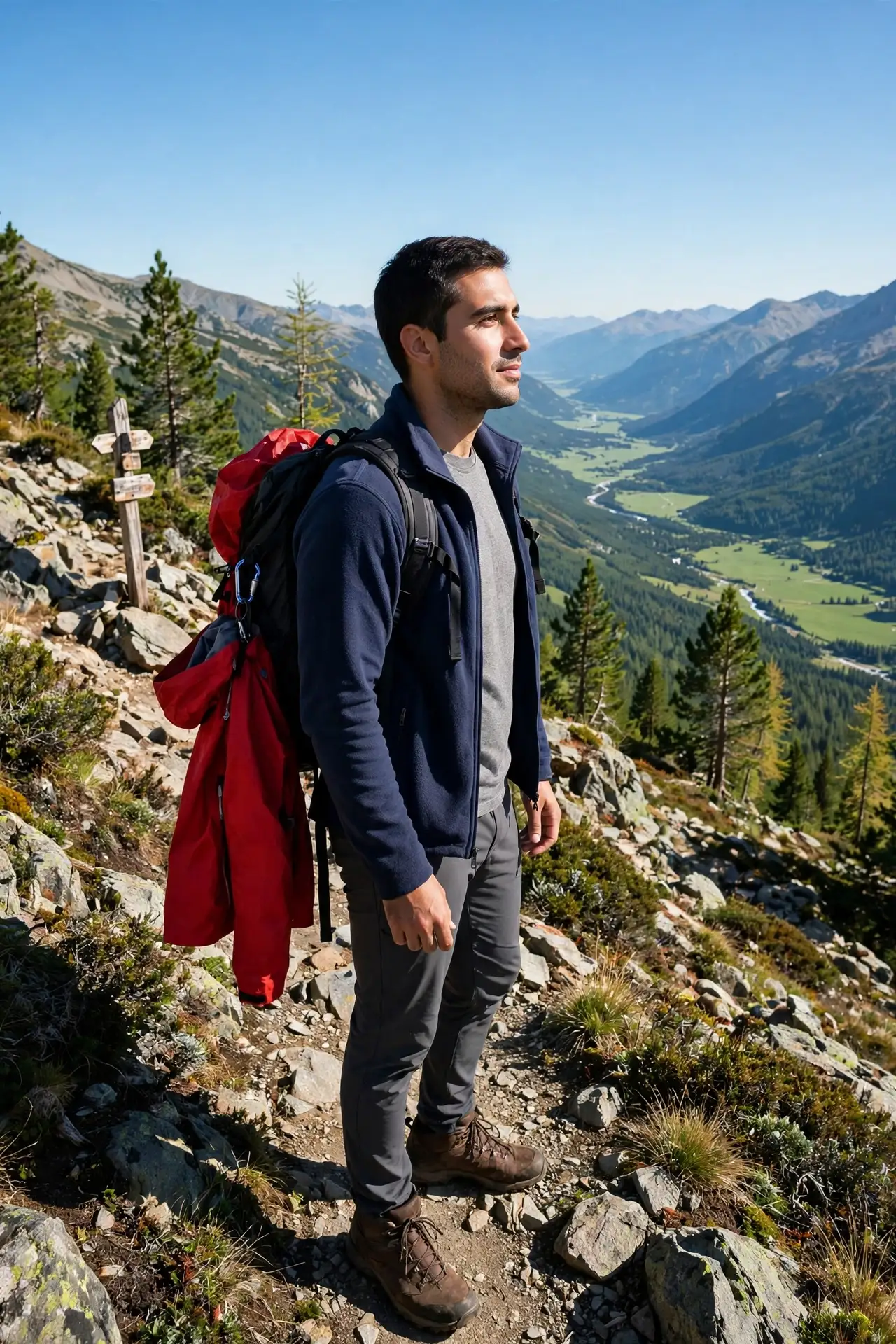
A mountain day hike outfit with three layers is the foundation for every other look here. A base layer handles sweat, a fleece adds warmth, and a waterproof shell blocks wind and rain.
The reason is simple: mountains get colder as you climb. OpenSnow forecaster Bryan Allegretto explains in his lapse rate guide that in dry air, “the temperature decreases about 5.5 degrees Fahrenheit for every 1,000 feet gained in elevation.”
Here’s how a typical mountain day changes as you climb, and what to add.
| Mountain Zone | Typical Feel | What You’re Wearing | What to Add |
|---|---|---|---|
| Trailhead | Mild, often sunny | Base layer, pants | Nothing yet |
| Forest climb | Warm, sweaty | Base layer only | Open vents, roll sleeves |
| Treeline | Cooler, breezy | Base layer | Fleece or wind shell |
| Ridge and summit | Cold, windy | Base and fleece | Shell, hat, gloves |
| Descent | Cooling down | Fleece | Keep shell handy |
You’ll take layers on and off more than you expect. That’s normal, and it’s how you stay dry and warm.
02
OF 21
Summer Mountain Hiking Outfit With a Packable Puffy
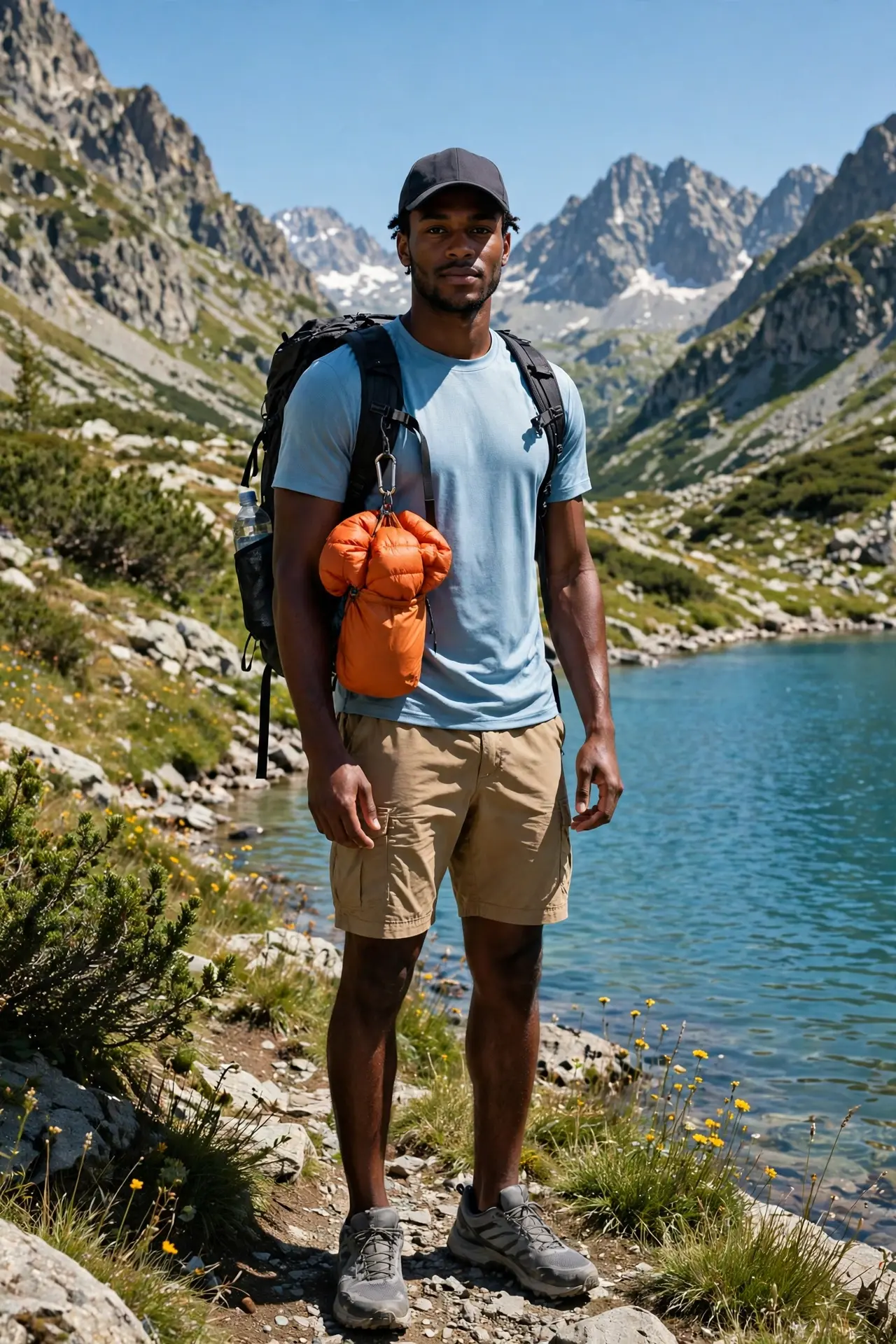
A summer mountain hiking outfit with a packable puffy keeps you cool on the climb and warm on top. Shorts and a synthetic tee work for the hot ascent, and a light puffy jacket waits in your pack.
The British Mountaineering Council notes that “the range of temperatures experienced in one day will often be greater in the hills than in cities.” A summit that feels mild in the forecast can be chilly in the wind.
✅ Do This
Pack a light puffy and a shell even on a hot summer morning, so a cold summit break stays comfortable.
🚫 Skip This
Don’t leave every warm layer in the car because the trailhead feels hot, since the top can be much colder.
03
OF 21
Cold Summit Mountain Hiking Outfit
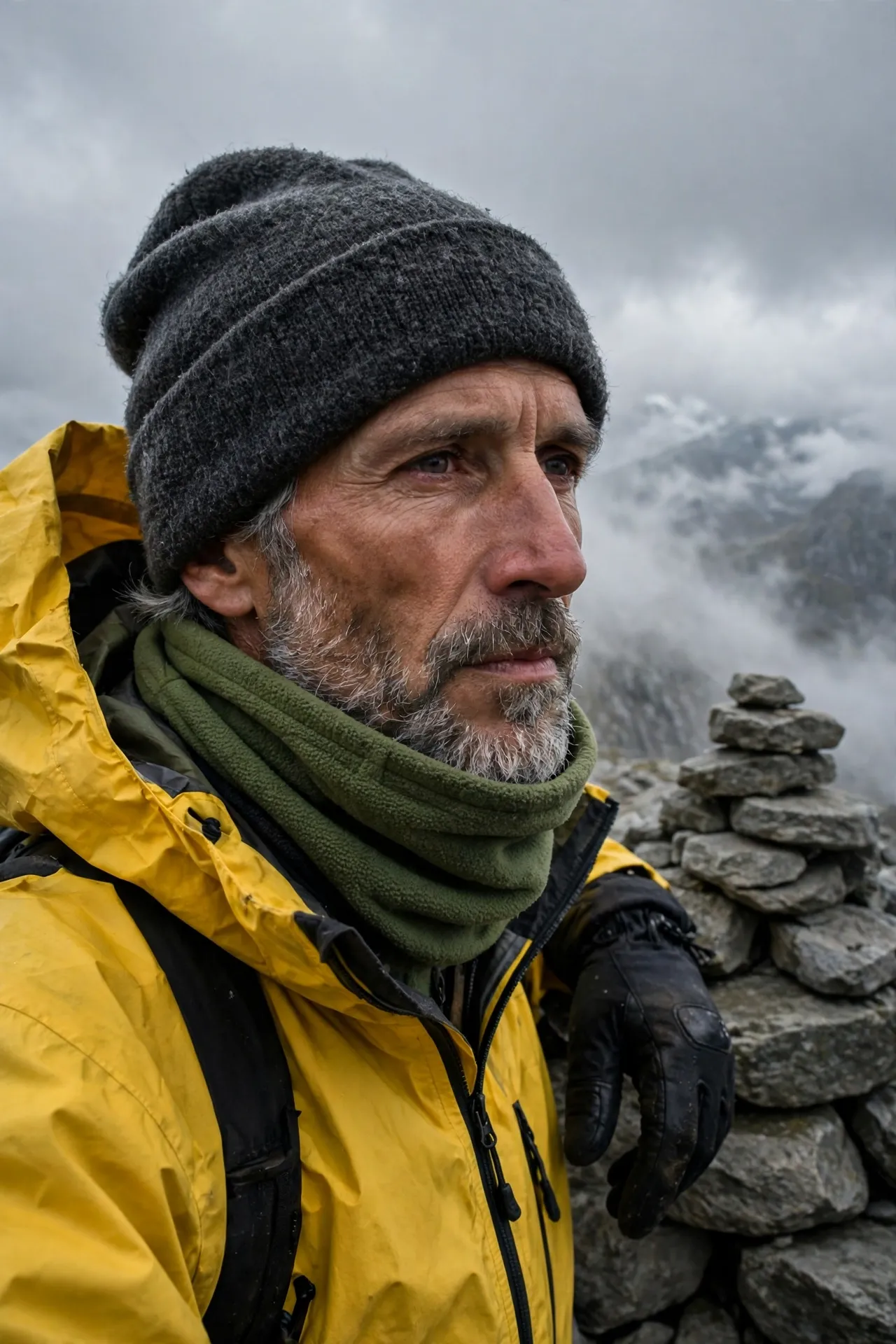
A cold summit mountain hiking outfit focuses on your head, neck and hands. These are the first places you feel the cold when you stop on a windy top.
The BMC advises that “on cold days, a hat and scarf or neck gaiter will reduce the heat lost through the head and neck.” They’re small, light items that make a big difference at the top.
🎨
Head
wool beanie
✂️
Neck
fleece gaiter
📐
Hands
windproof gloves
Pack them somewhere easy to reach. Digging through a full bag in the wind is miserable.
04
OF 21
Rainy Mountain Hiking Outfit With a Hardshell
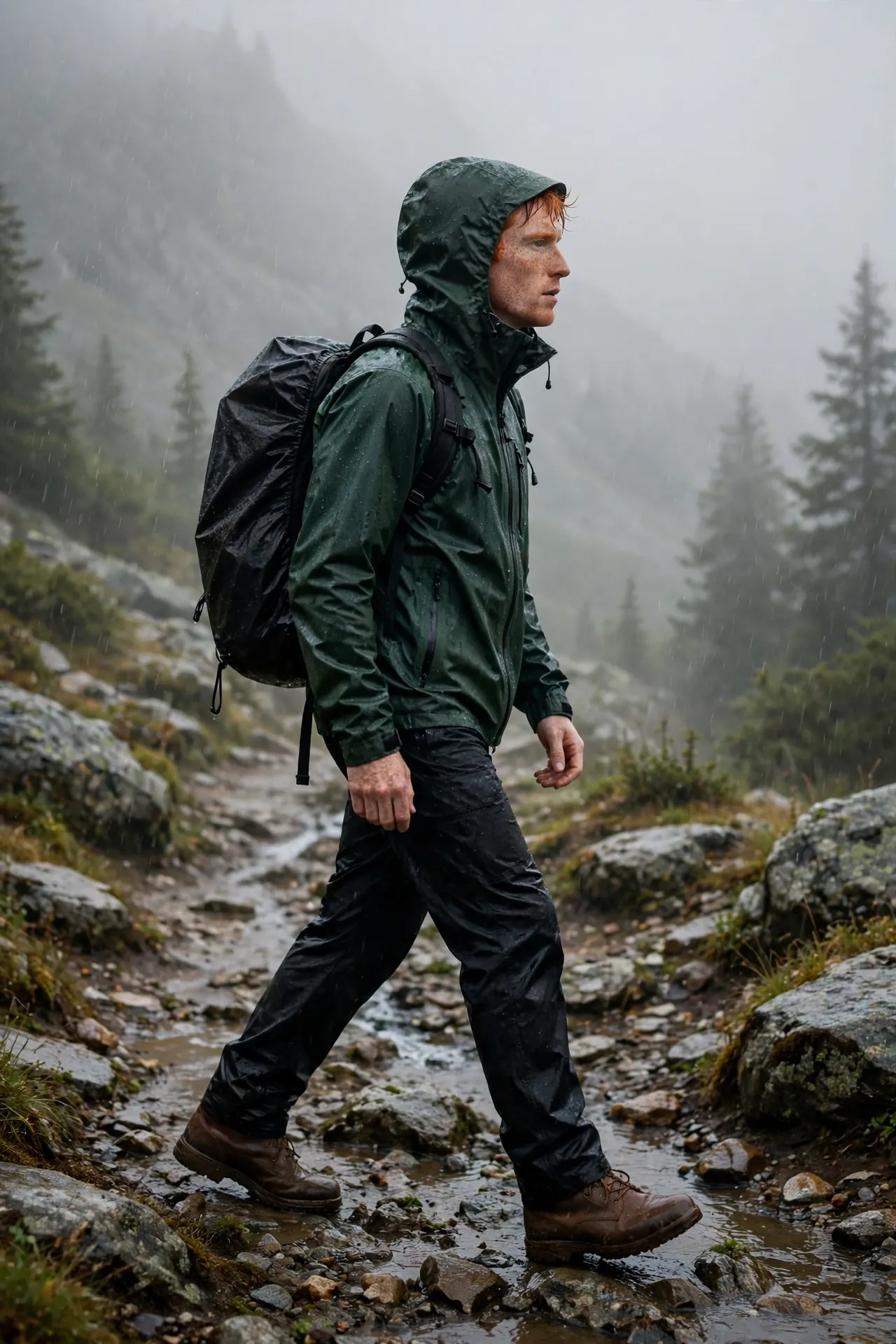
A rainy mountain hiking outfit with a hardshell keeps you dry when the weather turns. A fully waterproof jacket and overtrousers protect you from rain driven by mountain wind.
The BMC puts it plainly: “If you get wet, you’ll soon get cold, so decent waterproofs are vital for safety.” On a mountain, wet and wind together cool you down much faster than at sea level.
📌 Hardshell and Softshell Do Different Jobs
A hardshell is fully waterproof and built for real rain. A softshell is stretchier and more breathable, but it’s mainly for wind and light showers.
05
OF 21
Softshell Mountain Hiking Outfit
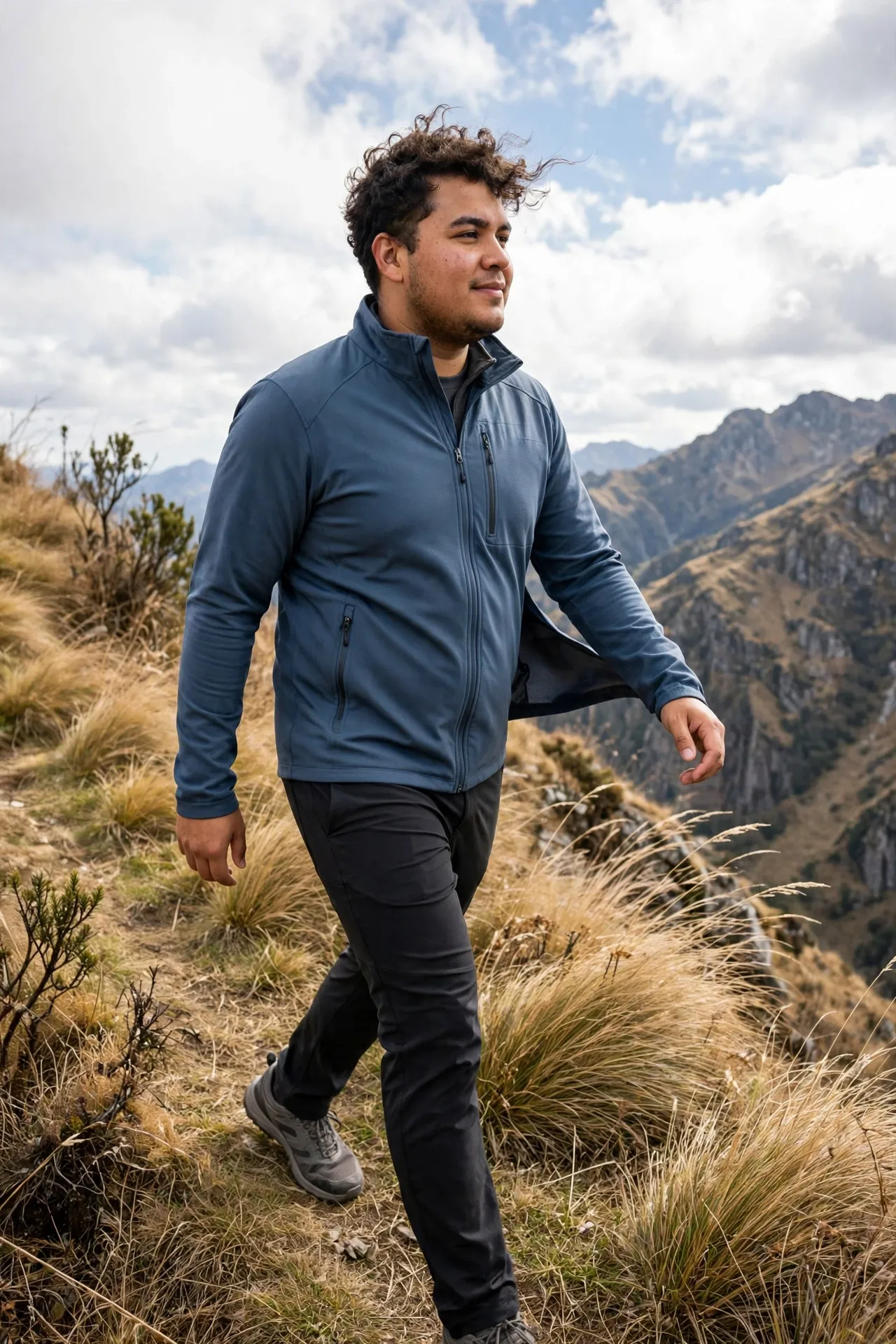
A softshell mountain hiking outfit feels comfortable and moves with you. Softshells block wind, breathe better than waterproofs and stretch for big steps.
Opinions on softshells are split, though. On a UKHillwalking thread about softshells for hill walking, one member called them “polarising,” and another planned to bring a hardshell on wet winter days anyway.
💡 The “Softshell Replaces a Waterproof” Myth
Myth: A good softshell is all you need in any weather.
Reality: Most softshells handle wind and light showers, not steady mountain rain. Carry a hardshell when real rain is forecast.
06
OF 21
Winter Mountain Hiking Outfit With Insulated Boots and Gaiters
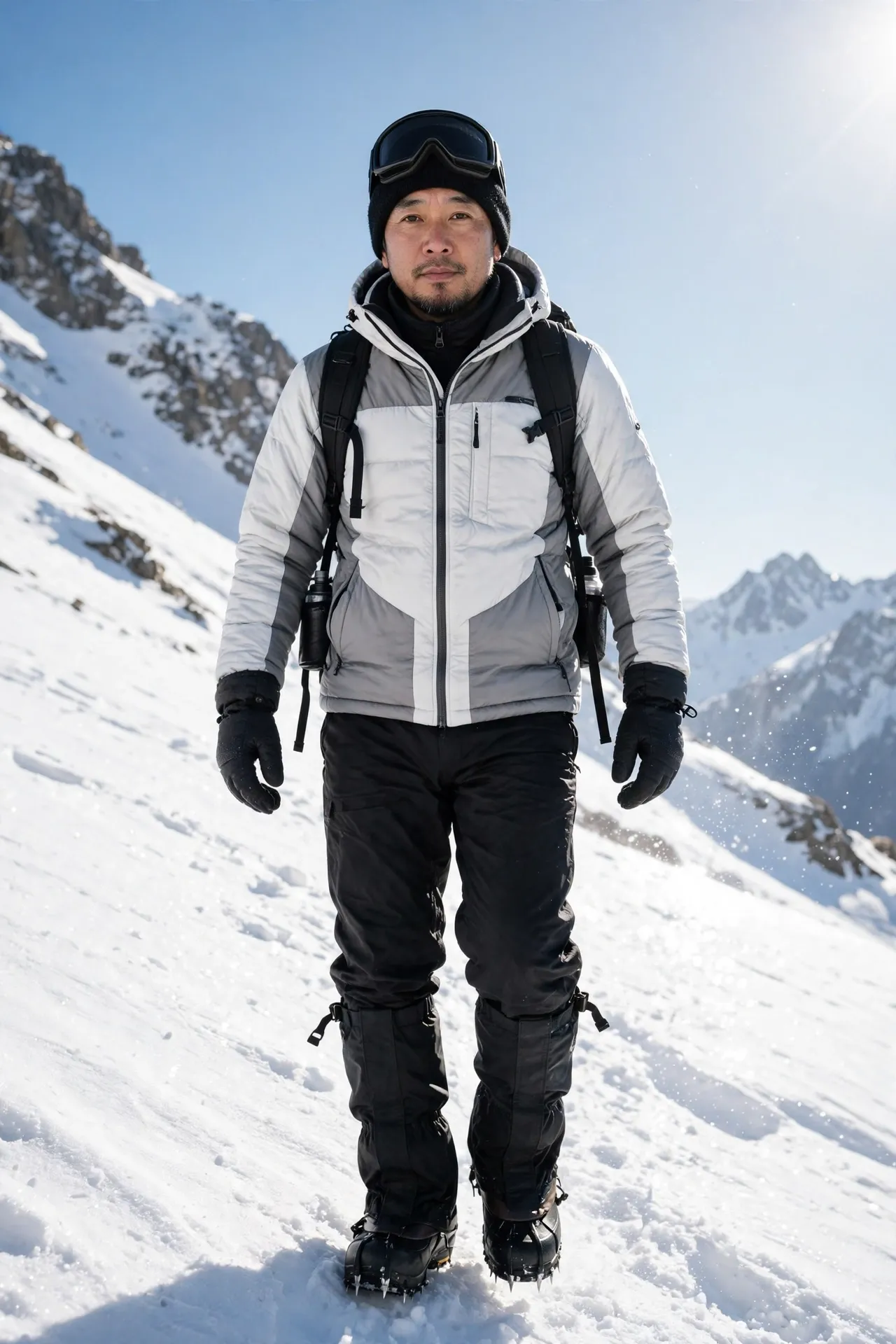
A winter mountain hiking outfit with insulated boots and gaiters is built for snow, ice and deep cold. Warm, stiff boots and gaiters keep feet dry, and insulated layers handle freezing summits.
Winter mountains also need the right traction. Microspikes or crampons, matched to the route, matter as much as warm clothes.
Dressing at a Cold Trailhead
It feels wrong, but you should start a winter climb slightly cold. You’ll warm up fast once you’re moving uphill.
Put on your base layer, pants and boots in the car.
Fit gaiters and traction before you leave the car park.
Start walking in your base layer and a light shell.
Stop after 10 minutes to adjust layers.
Put on your puffy every time you stop for more than a minute.
07
OF 21
Fall Mountain Hiking Outfit With a Grid Fleece
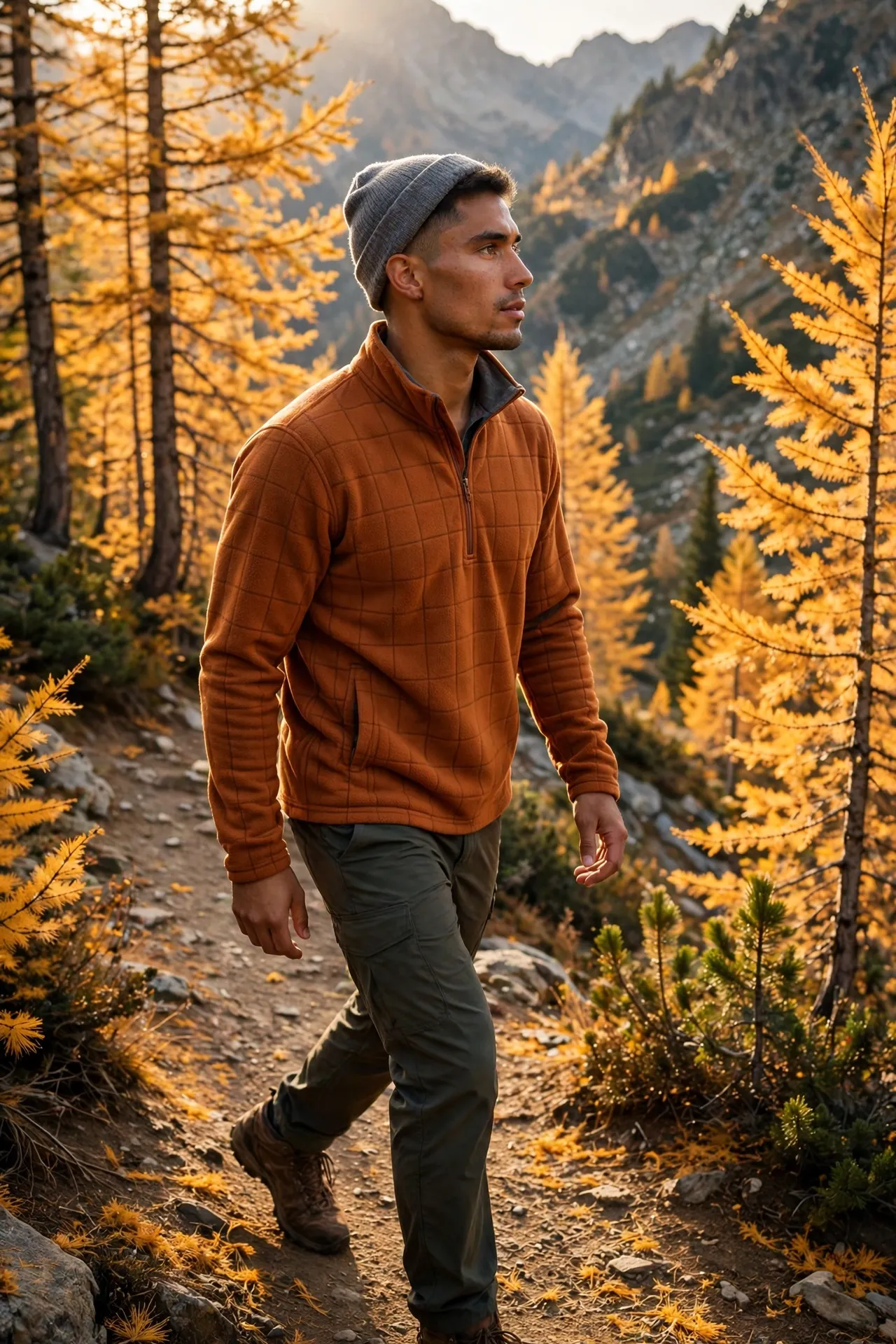
A fall mountain hiking outfit with a grid fleece is warm but breathable. Grid fleece has a textured inside that traps warmth and lets sweat escape on the climb.
Autumn colours like burnt orange and olive suit the season. A beanie handles cold mornings and windy tops.
Wearing Jeans Up the Mountain:
The BMC warns that “cotton t-shirts and jeans are particularly cold when wet, so it’s best to avoid both.” Jeans also restrict big steps and take hours to dry.
08
OF 21
Black Mountain Hiking Outfit With Black Hiking Boots
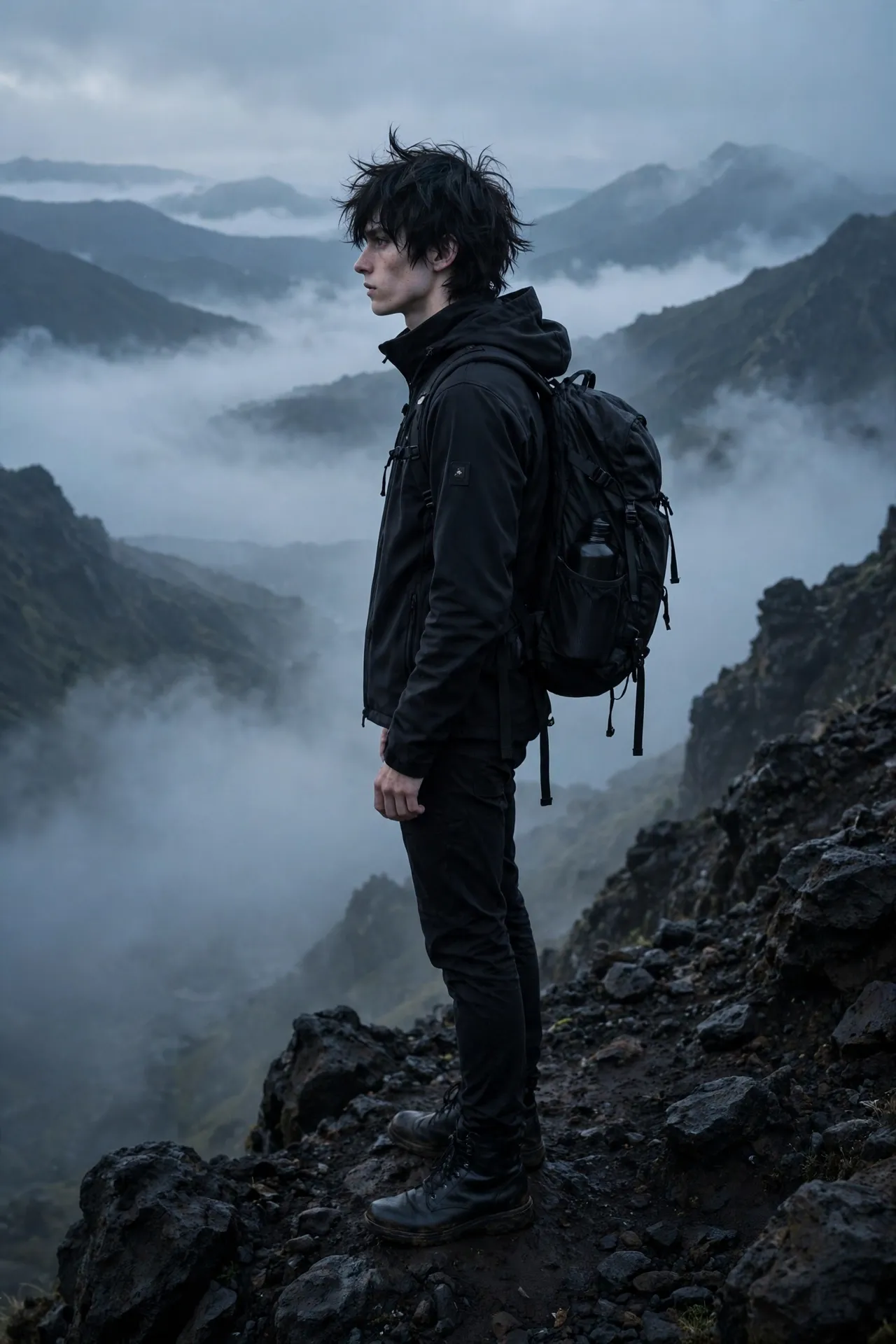
A black mountain hiking outfit with black hiking boots looks sleek and minimal. Black hides mud, scuffs and trail dust well on long days.
Carry something bright, like an orange hat or a red shell. It helps others spot you in fog or bad light.
Skip It If You’re Climbing in Strong Summer Sun
Black absorbs heat on hot, exposed slopes. Lighter colours feel cooler on summer ascents.
09
OF 21
Mountain Climber Outfit for Alpine Routes
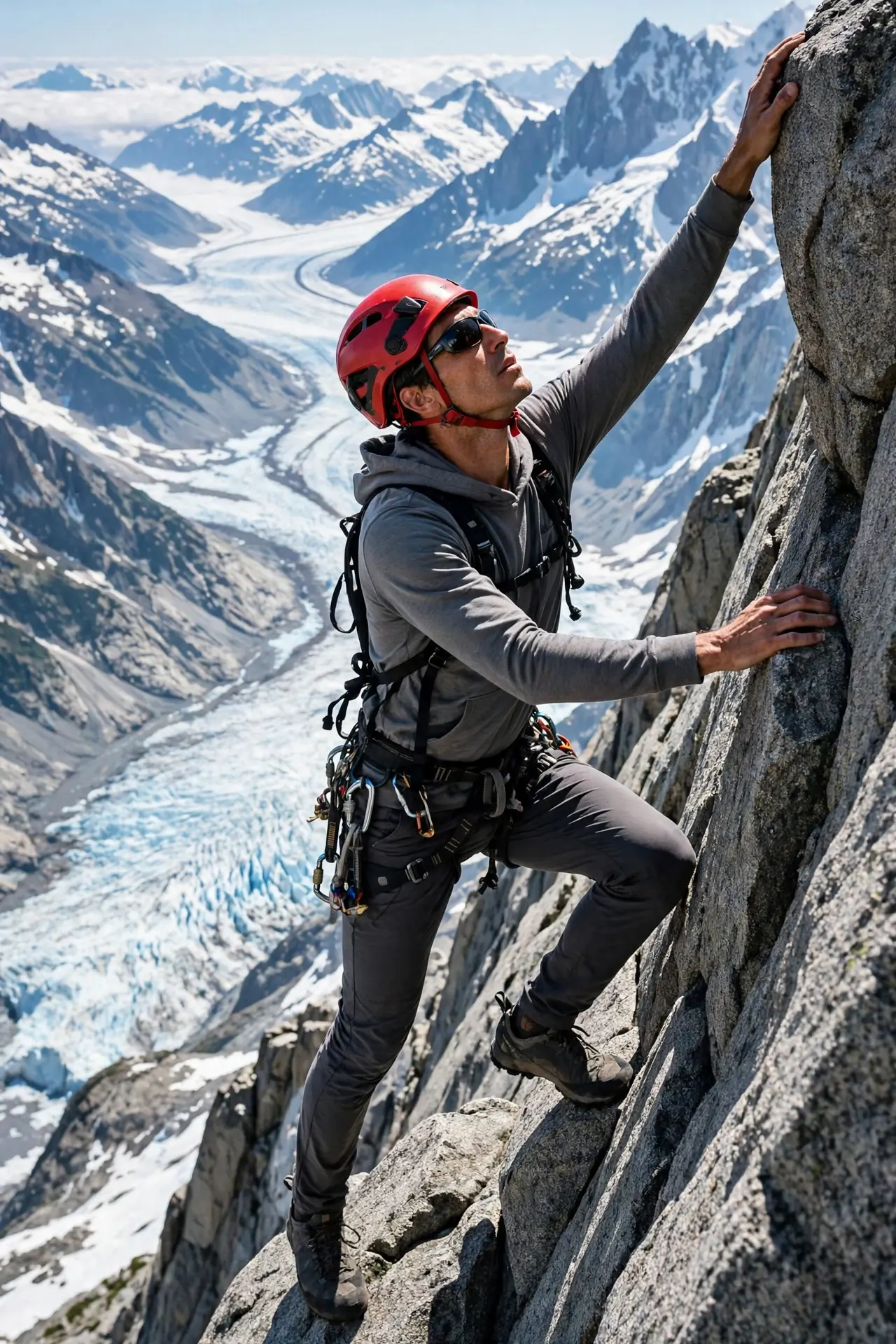
A mountain climber outfit for alpine routes has to fit closely and move freely. Stretchy pants and a fitted hoodie work smoothly under a harness and don’t snag on rock.
Approach shoes give sticky grip on rocky ground. A helmet protects you from loose stones above.
⚠️ Where Alpine Sun Catches Climbers Out
Snow, ice and pale rock reflect strong sunlight at height. Cover up with a sun hoodie, wear proper sunglasses and use sunscreen even on cool days.
10
OF 21
Mountain Adventure Outfit With Convertible Pants
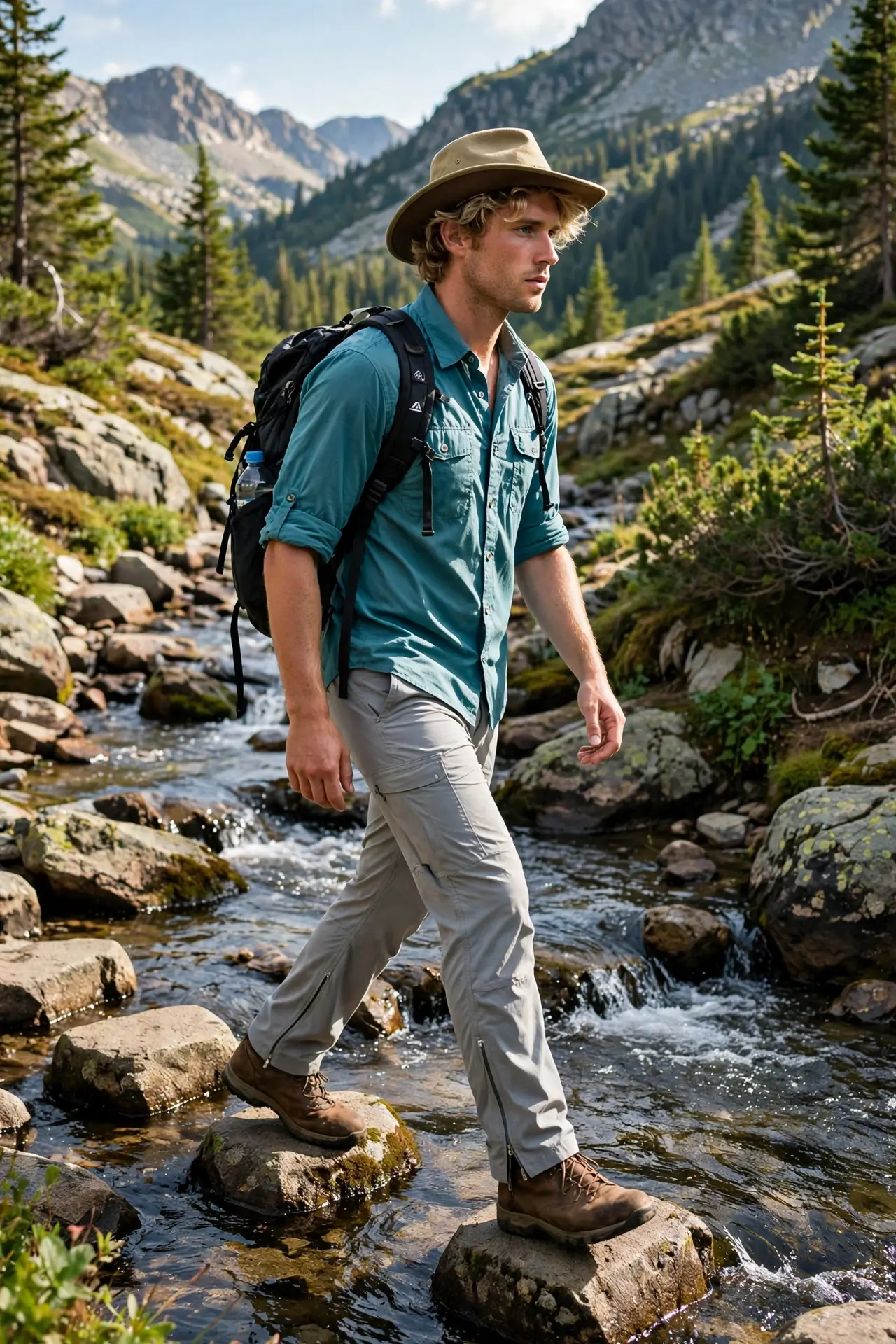
A mountain adventure outfit with convertible pants handles the cool start and the hot afternoon. The legs zip off into shorts when the valley heats up.
A button-up hiking shirt lets you vent heat by opening the front. Rolled sleeves stay cool but are quick to cover up in strong sun.
11
OF 21
Mountain Man Outfit With a Wool Shirt and Leather Boots
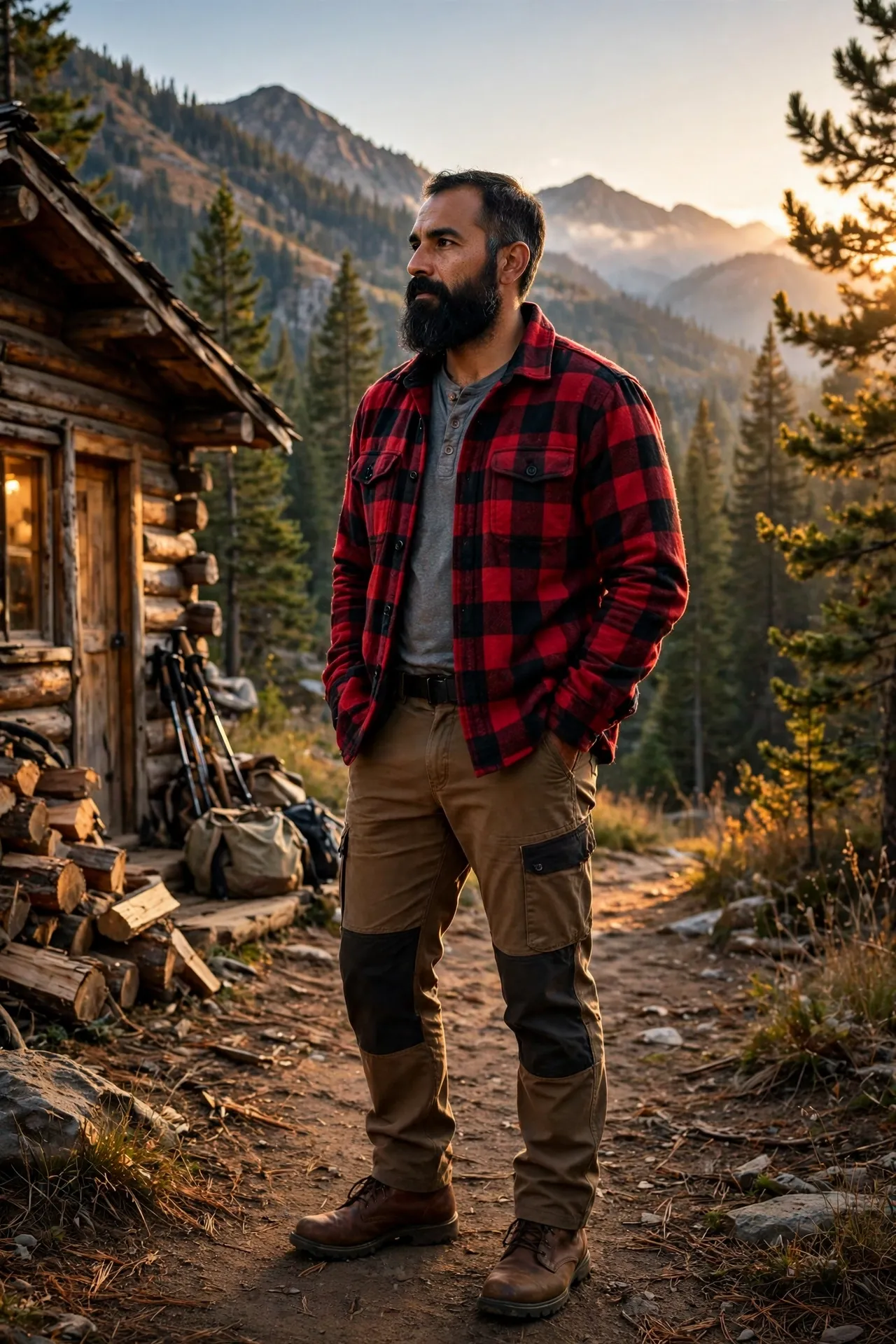
A mountain man outfit with a wool shirt and leather boots has a rugged, lumberjack feel. A heavy wool shirt-jacket works as both a shirt and a light jacket.
Wool is the practical choice here, unlike a cotton flannel. It stays warm when damp and handles campfire sparks better than synthetics.
The same wool-and-boots logic carries over to camping outfits for men, where nights by the fire get cold.
This look suits easier mountain walks and cabin trips best. For long, steep climbs, swap the heavy wool for lighter technical layers.
12
OF 21
Heritage Ventile Smock Mountain Outfit
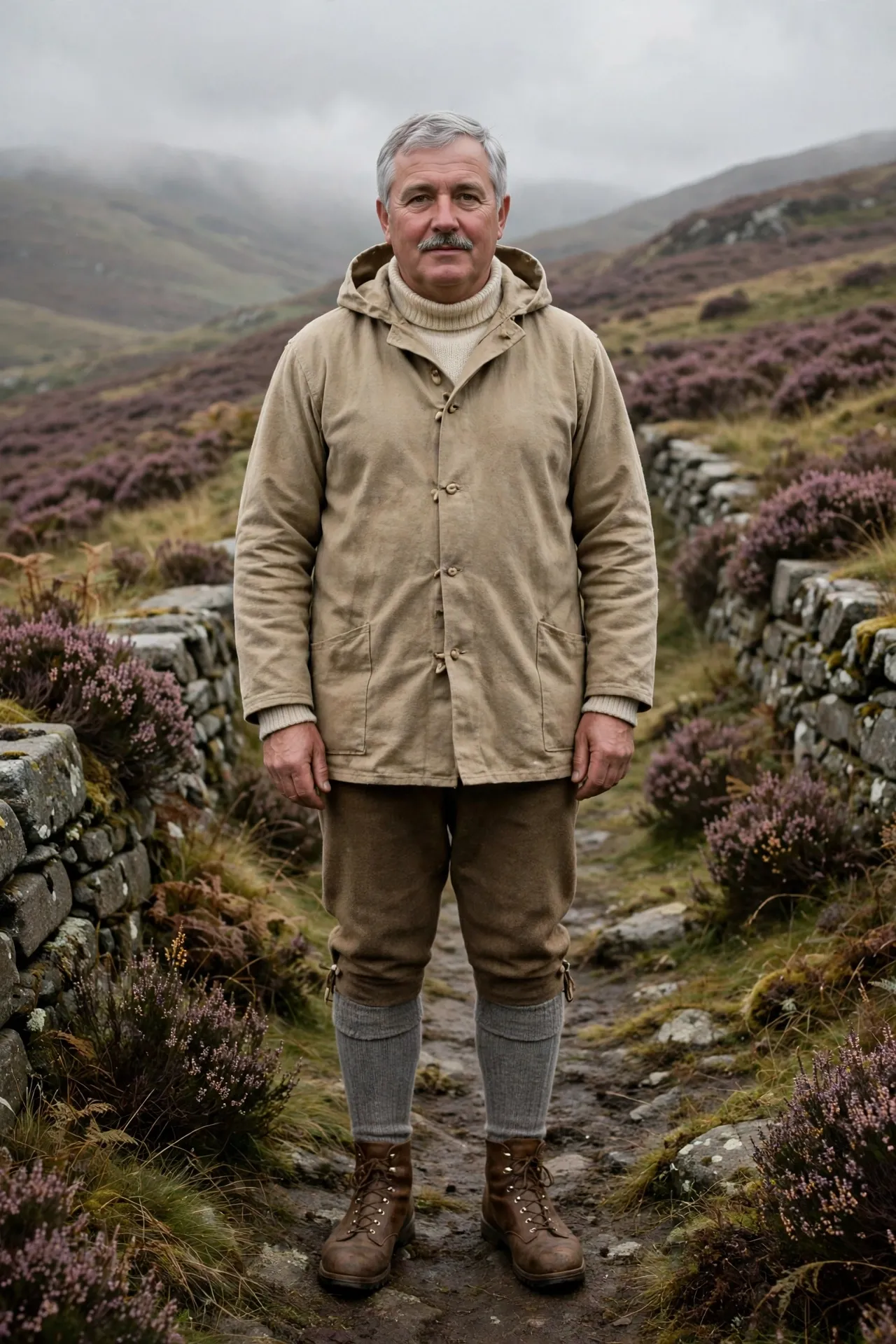
A heritage Ventile smock mountain outfit has an old explorer feel. Ventile is a tightly woven cotton, so it looks and feels very different from glossy synthetic shells.
How Ventile Went From the RAF to the Mountains
According to Ventile’s own history page, the fabric was “originally developed in 1943 by the Shirley Institute” for the British Royal Air Force. The company says it was later “trusted by the pioneering mountaineers and explorers of the 20th century.”
On UKHillwalking, one member recommended a Ventile smock layered over fleece, calling it “far tougher than any man-made fibre option” for abrasion and thorns. It’s heavier than a modern shell, so it suits walkers who value toughness over low weight.
13
OF 21
Gorpcore Mountain Outfit With a Colour-Blocked Shell
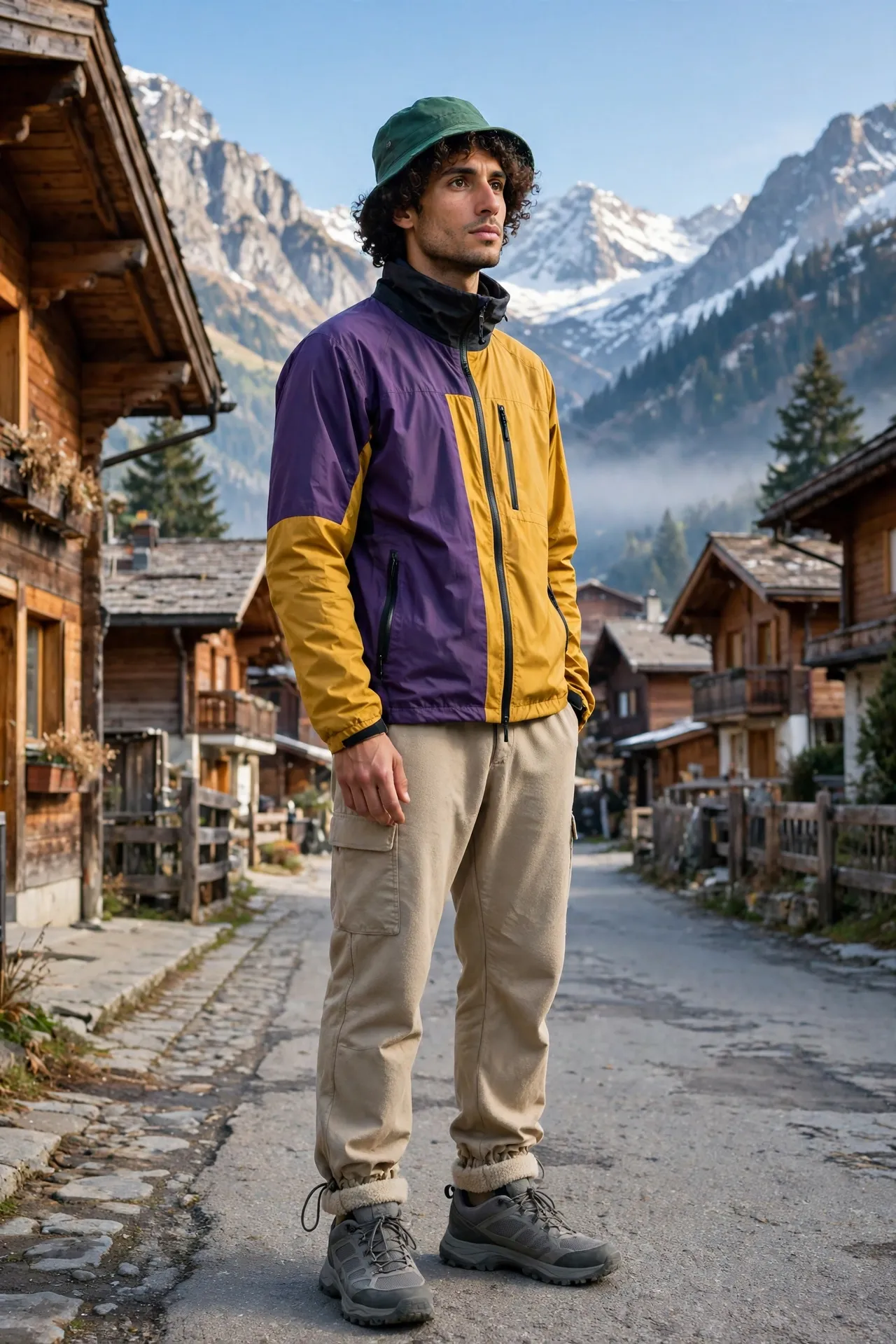
A gorpcore mountain outfit with a colour-blocked shell mixes real mountain gear with everyday style. The bright shell and chunky hiking shoes look good in town and still work on the trail.
Gorpcore looks best when the gear is genuinely functional. A real waterproof shell and proper hiking shoes look more convincing than fashion pieces.
💬 Bright Shells Help in Bad Weather
A bold coloured jacket isn’t just a style choice. It makes you easier to spot in fog, rain and snow.
14
OF 21
Techwear Mountain Hiking Outfit
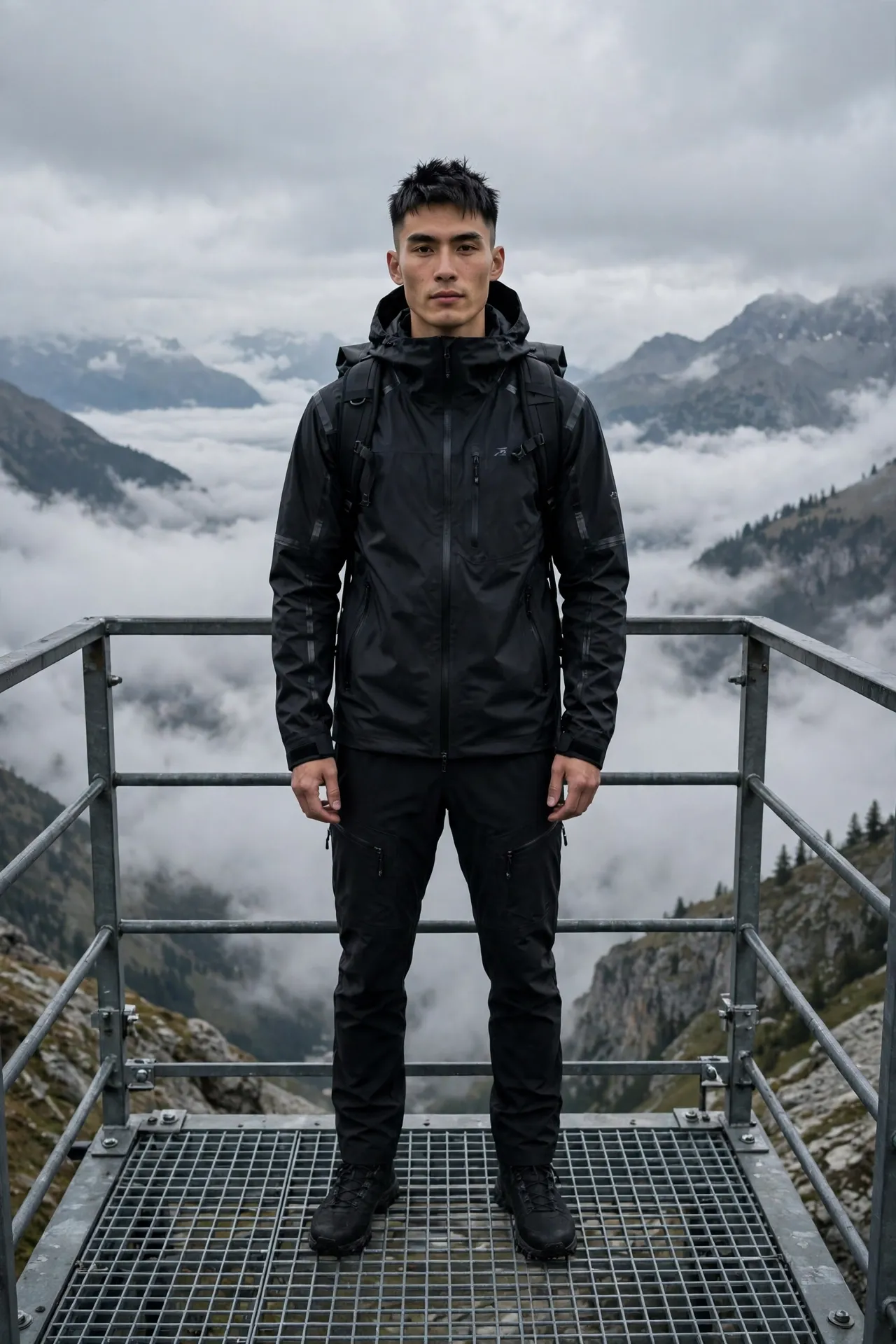
A techwear mountain hiking outfit combines a dark, sleek look with real weather protection. Taped seams, articulated knees and zip pockets suit steep, wet mountain days.
Check that the pieces are truly waterproof and breathable. Some techwear only looks technical.
BEFORE:
A fashion techwear jacket with lots of straps and buckles, no taped seams and a hood that doesn’t move with your head.
AFTER:
A plain, fully waterproof shell with taped seams, an adjustable hood and two zipped pockets, worn with real articulated tech pants.
15
OF 21
Baggy Mountain Hiking Pants Outfit
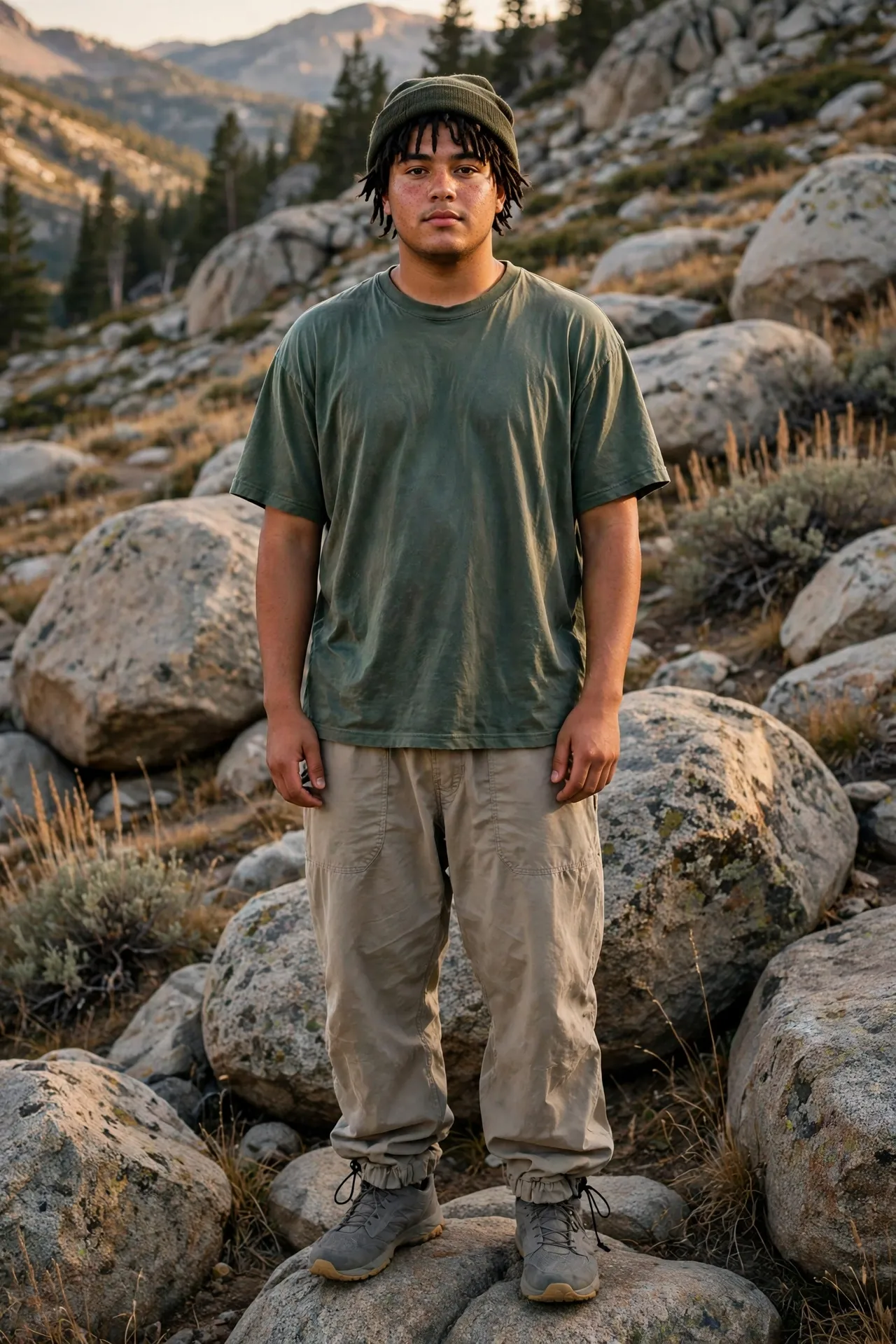
A baggy mountain hiking pants outfit gives your legs plenty of room. Loose pants feel great on high steps and scrambles.
Drawstring or cinch ankles stop baggy hems from catching on rocks. A gusseted crotch also helps you move freely.
Avoid baggy cotton pants on the mountain. They soak up rain and stay heavy.
16
OF 21
Brown Cargo Mountain Hiking Outfit
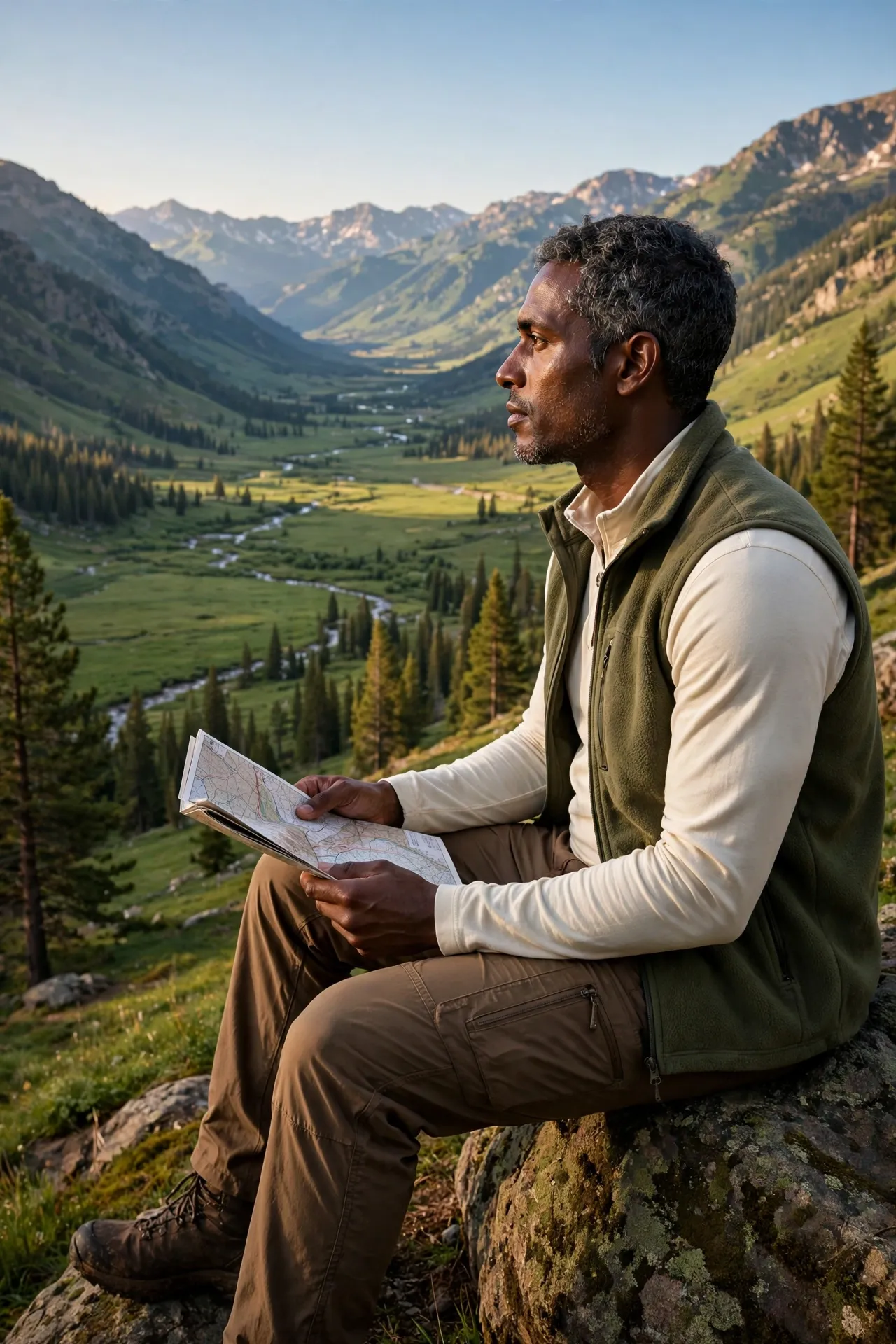
A brown cargo mountain hiking outfit is practical and earthy. Brown ripstop cargos hide mud, and zipped pockets hold a map, snacks or a phone.
A fleece vest adds core warmth without making you too hot on the climb. It’s a handy extra layer for windy breaks.
✅ Copy This Brown Mountain Look
- Brown ripstop cargo hiking pants
- A cream synthetic long-sleeve top
- An olive fleece vest
- Dark brown hiking boots
- A small map and compass in a zipped pocket
17
OF 21
Mountain Shorts Outfit for Hot Ascents
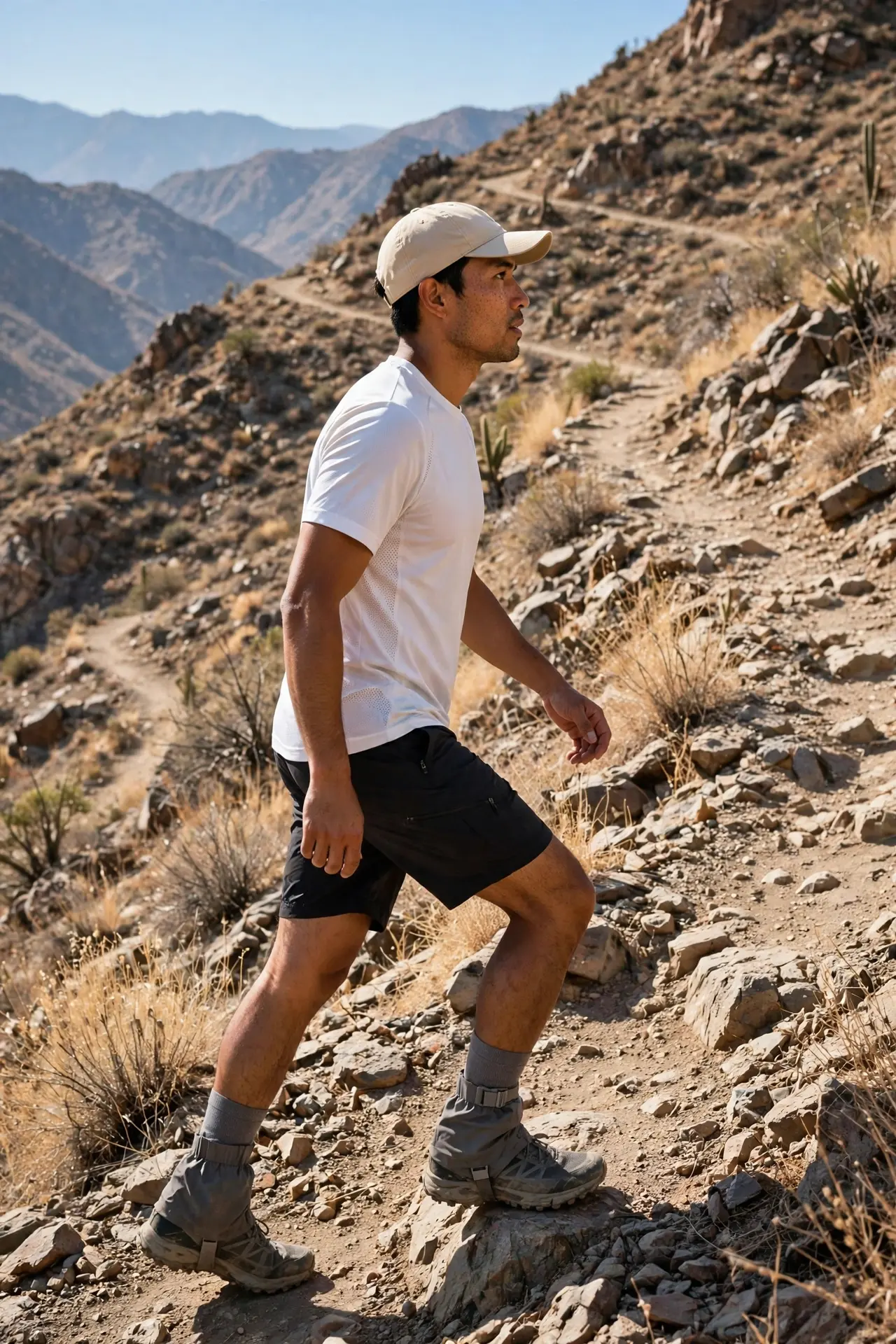
A mountain shorts outfit for hot ascents keeps you cool on long climbs. Light nylon shorts let your legs breathe on steep, sunny switchbacks.
Pack light trousers or a wind layer for the top. Bare legs get cold quickly on a windy summit.
💡 Short Gaiters Keep Stones Out of Shoes
On loose, rocky trails, small stones easily get into low shoes. Short trail gaiters stop that and protect your ankles from scratches.
18
OF 21
Multi-Day Mountain Trekking Outfit
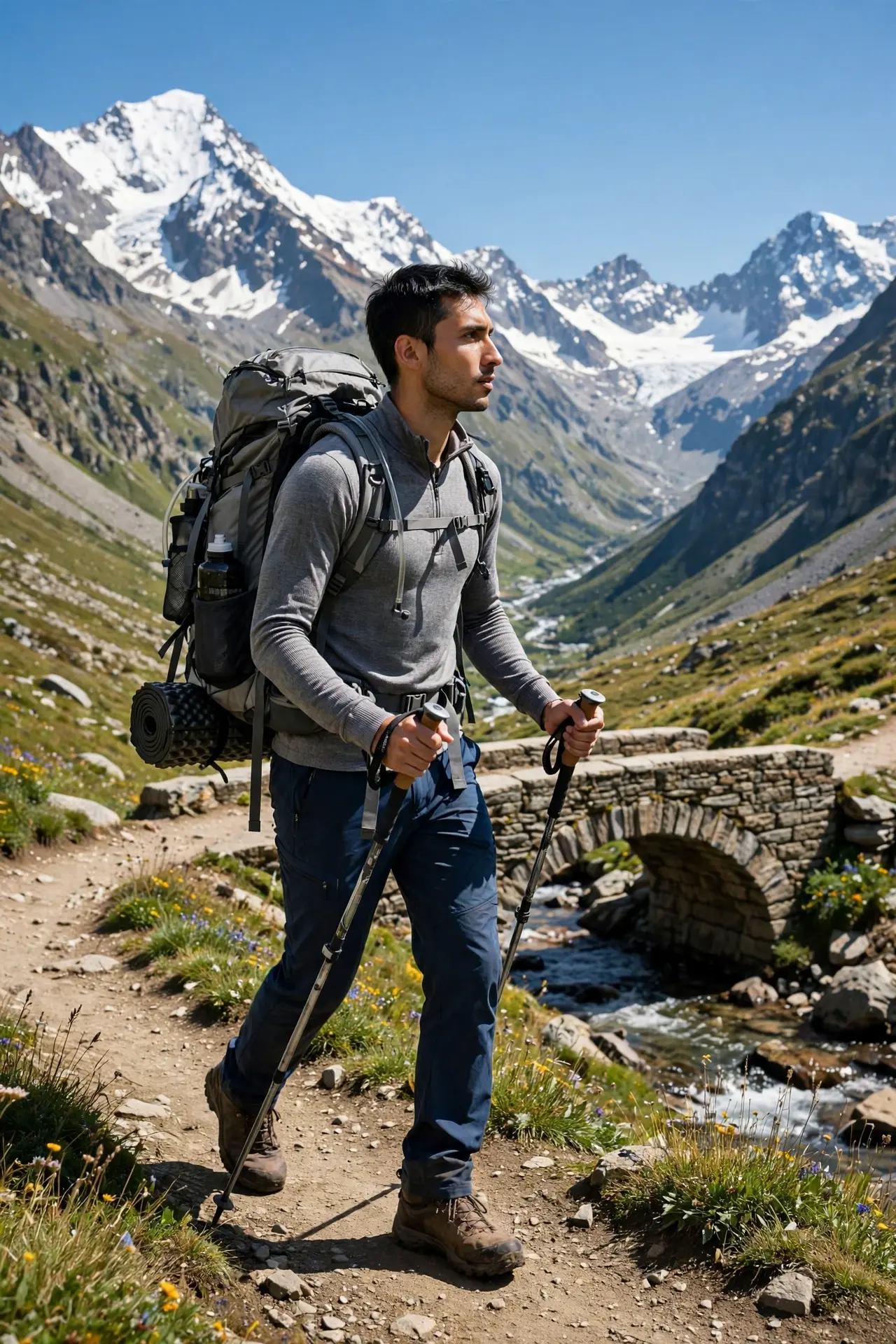
A multi-day mountain trekking outfit has to work day after day with little washing. A merino top resists odour, so you can wear it for several days.
🎨
Base
merino top
✂️
Warmth
puffy and fleece
📐
Spare
dry sleep set
Keep one dry set of clothes just for sleeping. It helps you stay warm at night after a wet day.
💈 Your Rain Jacket Check at the Outdoor Store
Ask to try the jacket over a fleece, and check the hood fits over a hat. Raise your arms to make sure the hem doesn’t ride up.
19
OF 21
Mountain Hut Evening Outfit
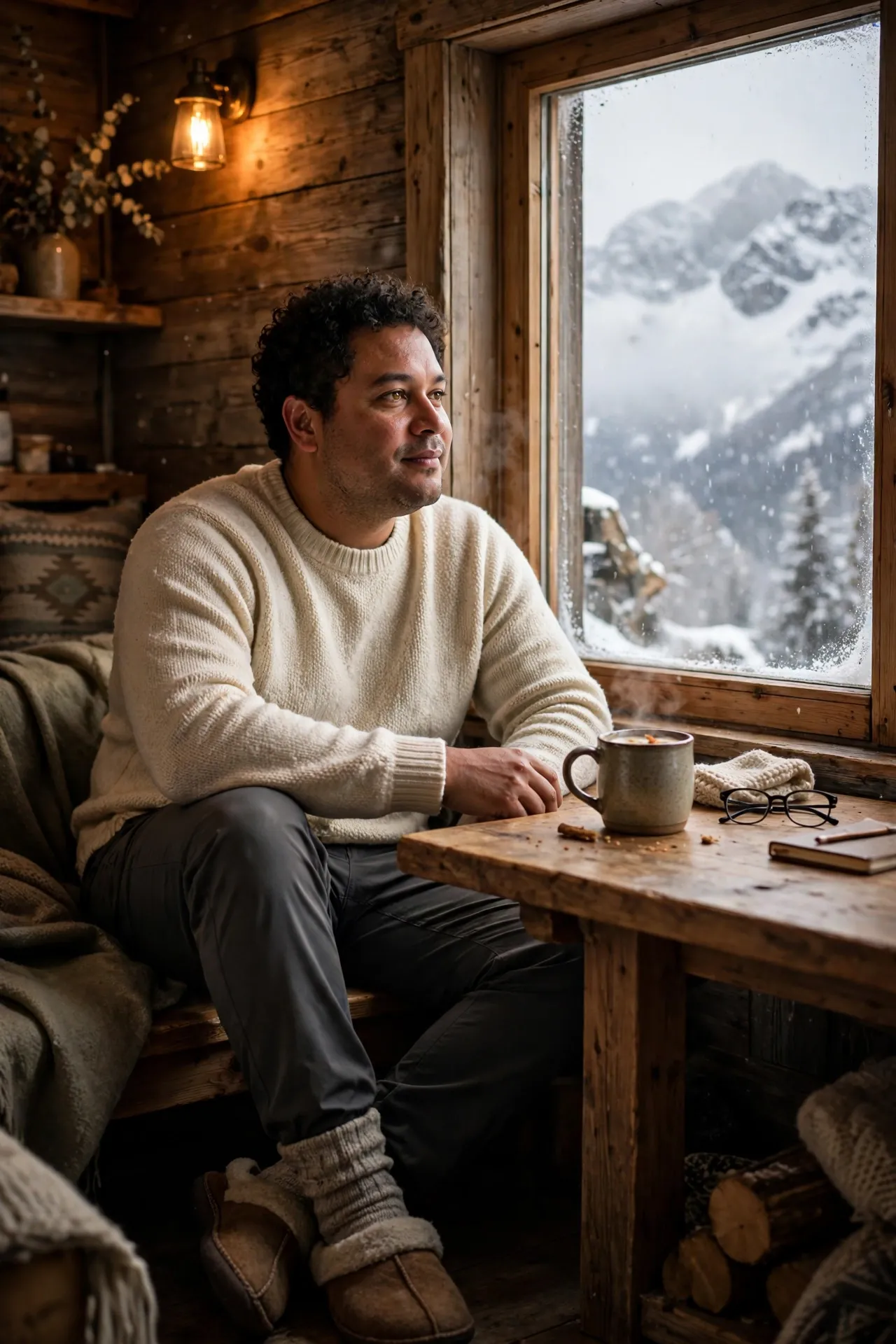
A mountain hut evening outfit is all about getting dry and warm after a long day. Change into a dry wool sweater, clean socks and comfy pants as soon as you arrive.
Many mountain huts ask you to leave your boots at the door. Pack light hut shoes or thick socks.
📅 Wear It For
20
OF 21
Teen Mountain Hiking Outfit
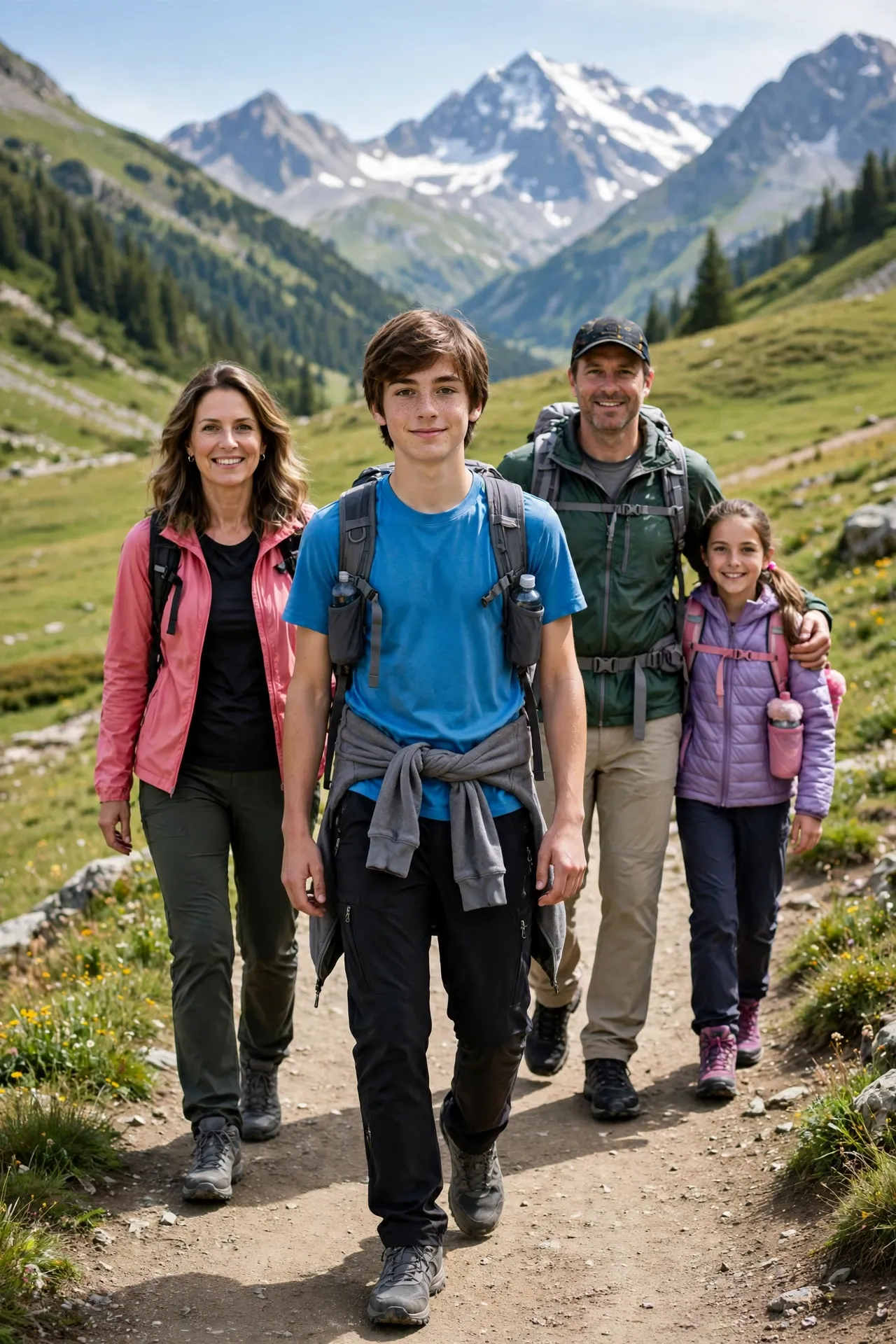
A teen mountain hiking outfit should be light and easy to adjust. A synthetic tee, zip-off pants and a fleece handle the climb and the colder top.
Bright colours make teens easy to see on a busy mountain. Trail shoes are lighter than boots for most summer paths.
📌 Pack Teens Their Own Waterproof
Teens often warm up fast and forget layers. Make sure their pack has a waterproof jacket and a warm layer of their own.
21
OF 21
Boys’ Mountain Hiking Outfit
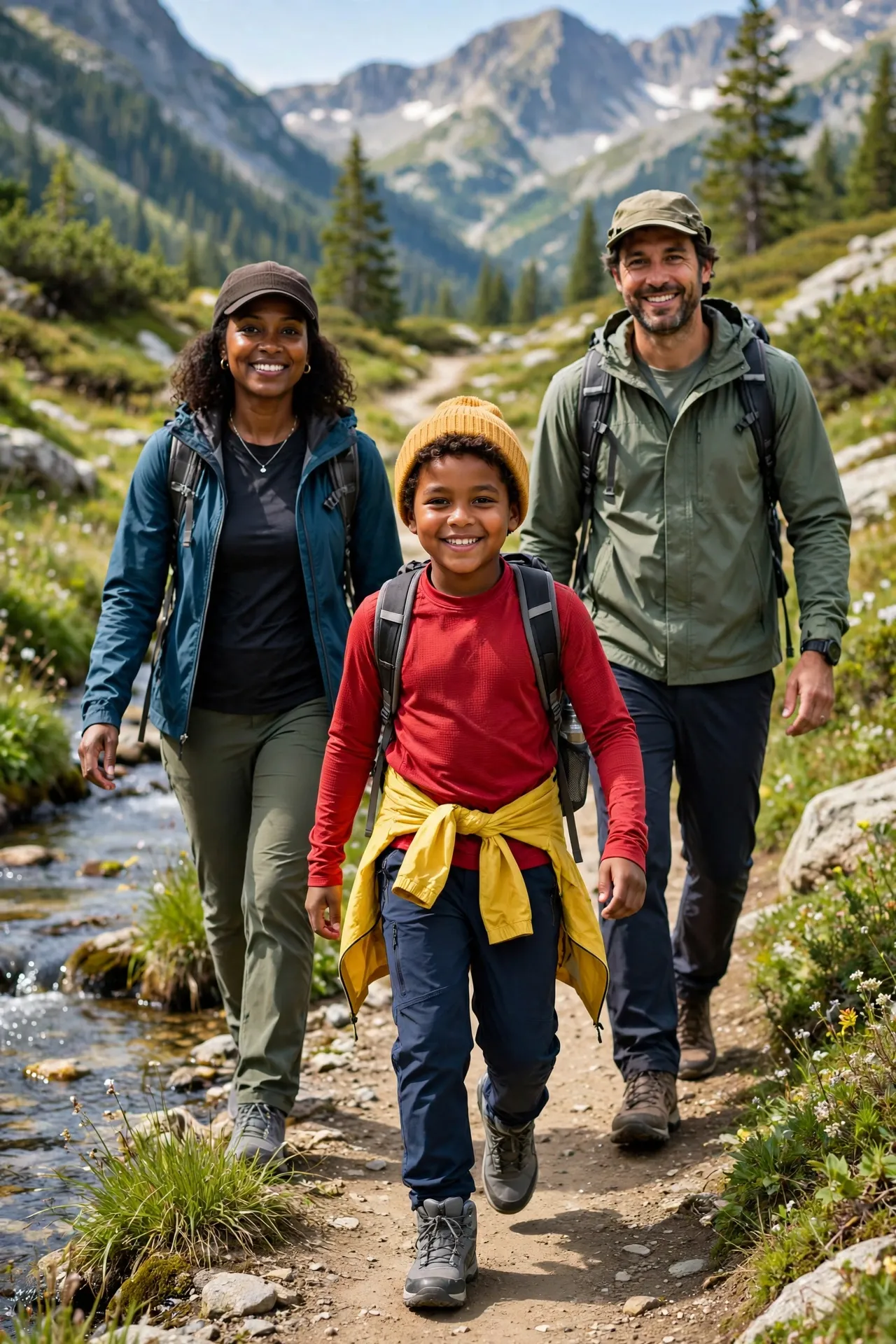
A boys’ mountain hiking outfit should be warm, bright and easy to move in. Kids cool down quickly at higher altitudes, so pack a warm hat and rain jacket.
Kids’ hiking boots with good grip help on rocky paths. Bright colours keep them easy to spot.
💬 Kids Get Cold Faster at Breaks
Children lose heat quickly when they stop moving. Put a warm layer on them as soon as you stop for snacks.
Which mountain hiking outfit would you pack first?
FAQs
What should men wear for mountain hiking?
A merino or synthetic base layer, a fleece, a waterproof shell, quick-dry hiking pants and sturdy hiking boots or shoes. Add a hat, gloves and a puffy jacket for cold summits.
How much colder is it at the top of a mountain?
It gets colder as you climb, often by around 3 to 5.5°F for every 1,000 feet, depending on how dry or moist the air is. Wind can make it feel even colder.
Is a softshell enough for mountain hiking?
A softshell handles wind and light showers well. For steady rain, carry a fully waterproof hardshell.
Can I wear jeans for mountain hiking?
It’s best not to. Jeans are cotton, so they get heavy and cold when wet and restrict movement.
What should I wear hiking a mountain in summer?
Light shorts or pants and a synthetic tee for the climb, plus a packable puffy, a shell, a hat and gloves for the summit.
What shoes are best for mountain hiking?
Hiking boots suit rocky, steep or snowy routes, while trail shoes suit dry, well-made paths. Choose footwear with good grip for your route.