24 Burst Fade Mullets That Look Modern, Not 80s: Bold Yet Easy

A burst fade mullet keeps the length at the back that makes a mullet a mullet, but swaps the old flat sides for a fade that curves in a half-circle around the ear. The result looks sharp and current, with a clean shape around the ear and plenty of movement at the nape.
Below are 24 burst fade mullets for men, teens and boys, from low, mid and high bursts to short and long cuts, curly, wavy, straight, afro and blonde hair, fringes, designs, mohawk and perm versions, plus kid and toddler styles. Each one covers who it suits, what to ask your barber, how it grows out, and how to style it at home.
Short on Time? Pick Your Path
Table of Contents
- 01Low Burst Fade Mullet
- 02Mid Burst Fade Mullet
- 03High Burst Fade Mullet
- 04Modern Burst Fade Mullet
- 05Short Burst Fade Mullet
- 06Long Burst Fade Mullet
- 07Curly Burst Fade Mullet
- 08Wavy Burst Fade Mullet
- 09Straight Hair Burst Fade Mullet
- 10Burst Fade Mullet With a Textured Fringe
- 11Burst Fade Mullet With a Shaved Design
- 12Burst Fade Mohawk Mullet
- 13Burst Taper Mullet
- 14Burst Fade Mullet With a Perm
- 15Afro Burst Fade Mullet
- 16Blonde Burst Fade Mullet
- 17Burst Fade Mullet for Thick, Coarse Straight Hair
- 18V-Shaped Burst Fade Mullet
- 19Bulky Textured Burst Fade Mullet
- 20Burst Fade Mullet for a Receding Hairline
- 21Cowboy Burst Fade Mullet
- 22Teen Burst Fade Mullet
- 23Kids’ Burst Fade Mullet
- 24Toddler Burst Fade Mullet
01
OF 24
Low Burst Fade Mullet
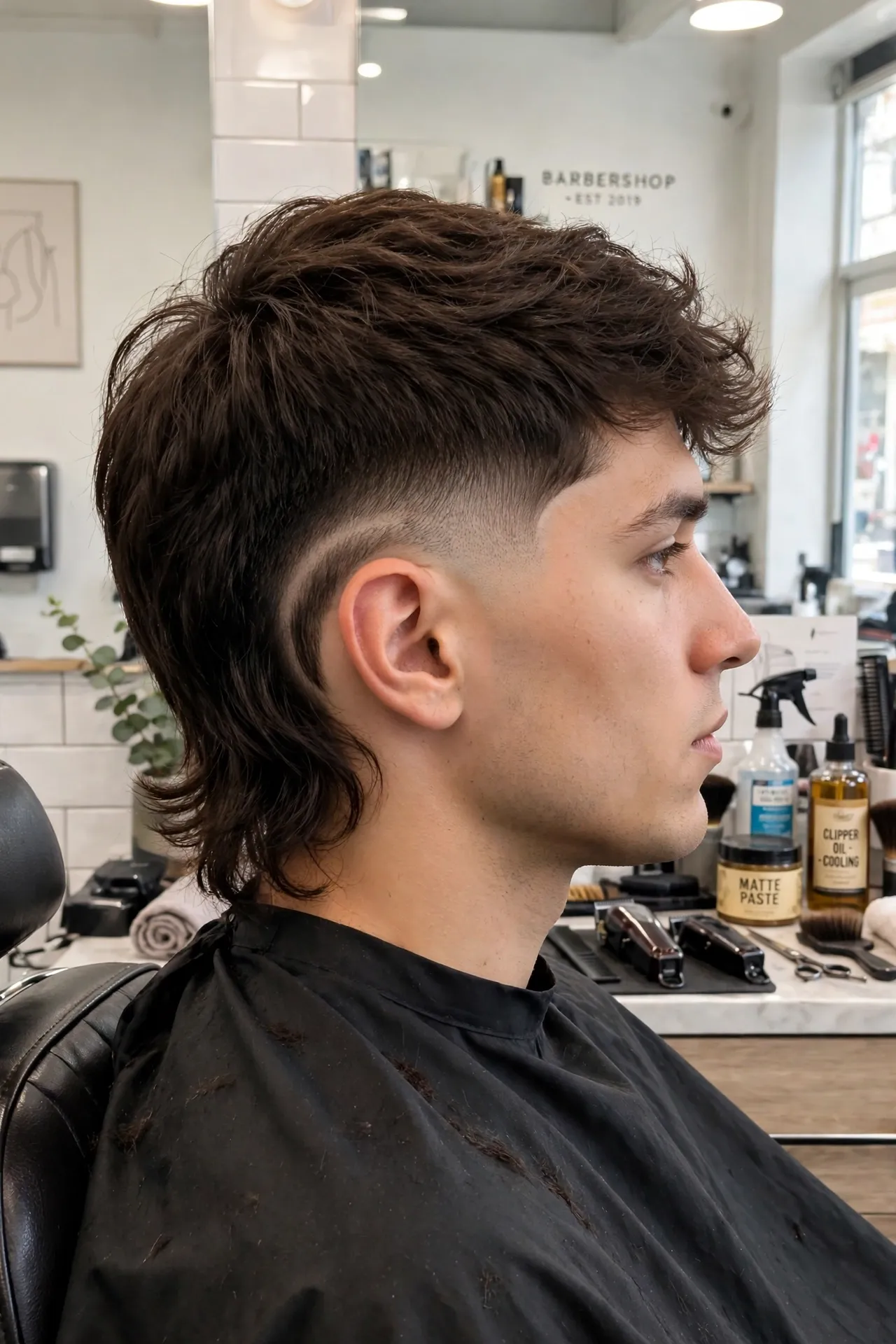
A low burst fade mullet starts the fade low, just around the ear, and curves it towards the nape. It’s the most subtle version, so it works well for school, work and first-timers.
The low fade keeps more hair on the sides, which grows out more gracefully. It’s the easiest burst fade mullet to live with between cuts.
The height of the burst changes how bold the cut looks. Here’s how the main options compare.
| Fade Type | Where It Starts | How Bold | Grow-Out |
|---|---|---|---|
| Low burst | Just around the ear | Subtle | Most forgiving |
| Mid burst | Halfway up the side | Balanced | Moderate |
| High burst | Near the temple | Bold | Shows fastest |
| Burst taper | Only at the sideburn and nape | Very subtle | Easiest |
A low burst is the safest choice if you’re unsure. You can always go higher at the next cut.
02
OF 24
Mid Burst Fade Mullet
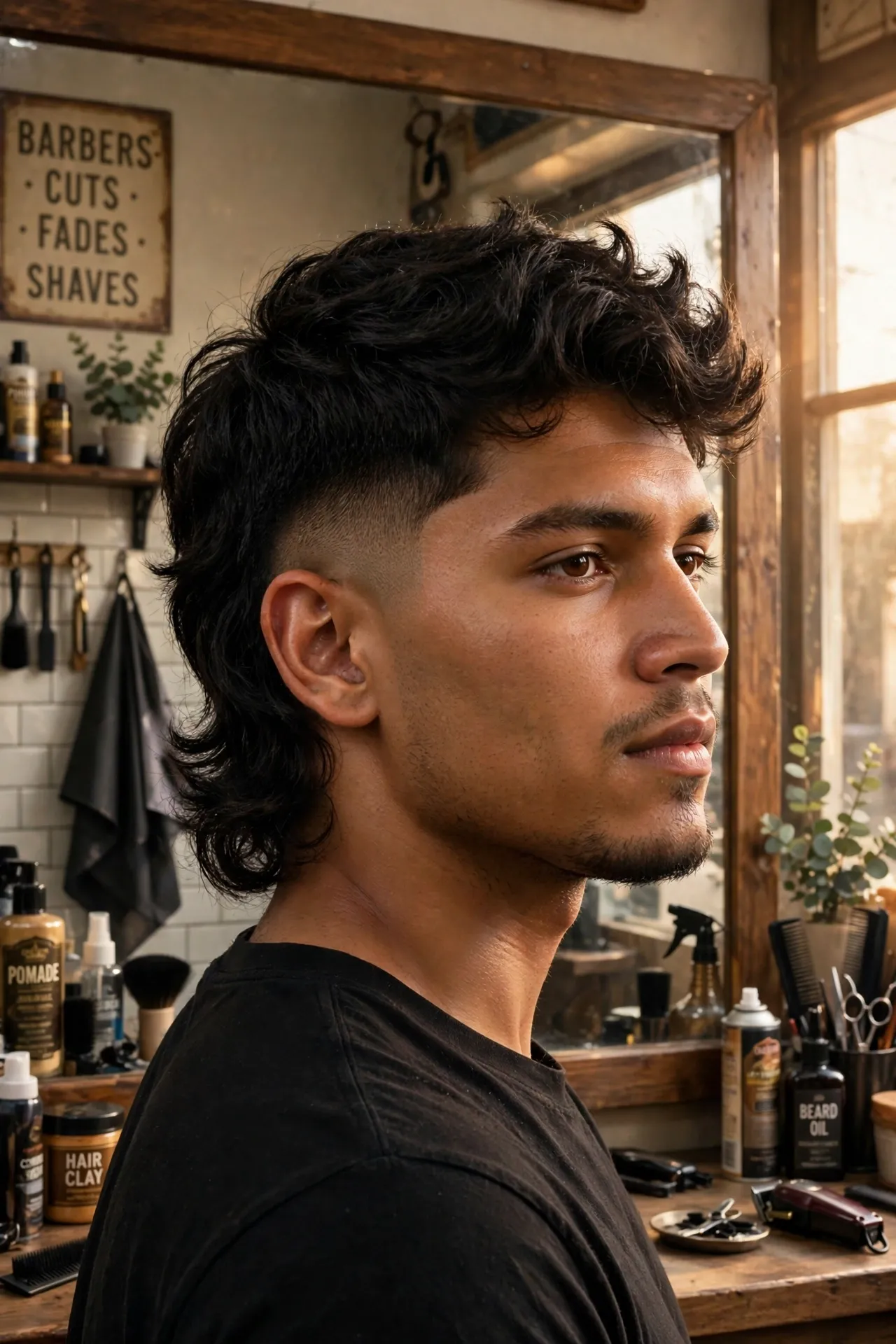
A mid burst fade mullet takes the fade halfway up the side of the head. It’s more noticeable than a low burst but not as dramatic as a high one.
The fade frames the ear clearly while the back stays long. It’s a good balance for men who want a statement without going extreme.
✅ Do This
Ask for the burst to stay a few centimetres behind your sideburn, so the curve around the ear looks smooth and round.
🚫 Skip This
Don’t let the fade run straight back to the nape, because it turns the burst into a regular fade and loses the curve.
Keep the back at least collar length. Shorter than that, and the mullet shape starts to disappear.
03
OF 24
High Burst Fade Mullet
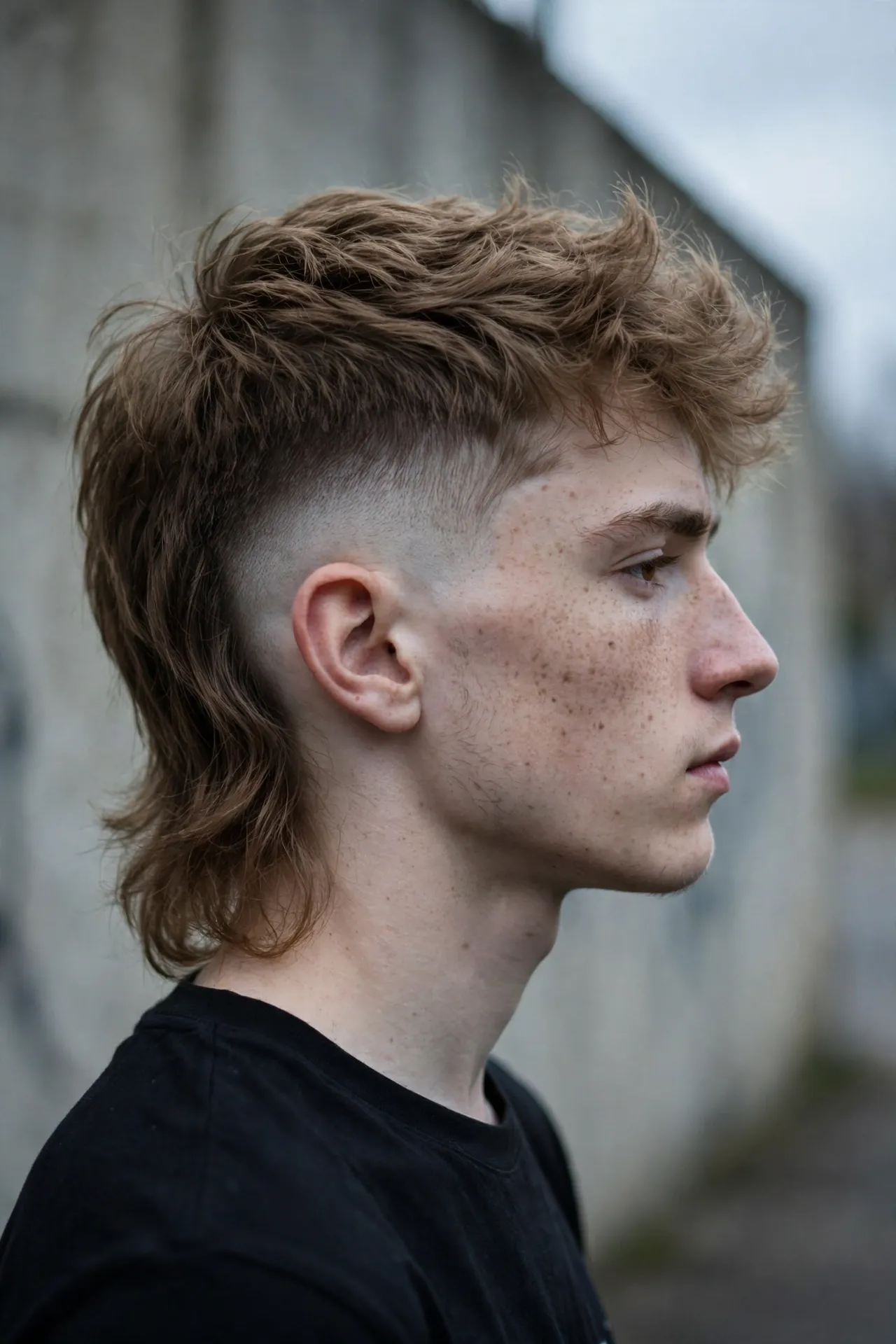
A high burst fade mullet starts the fade near the temple, creating a strong contrast between the faded sides and the long back. It’s bold, edgy and very eye-catching.
The high fade shows growth quickly, so it needs regular touch-ups. Expect to visit your barber every week or two.
🎨
Fade
high burst near temple
✂️
Top
short textured
📐
Back
below the collar
High bursts suit oval and long face shapes well. On round faces, they can make the head look wider at the top.
04
OF 24
Modern Burst Fade Mullet
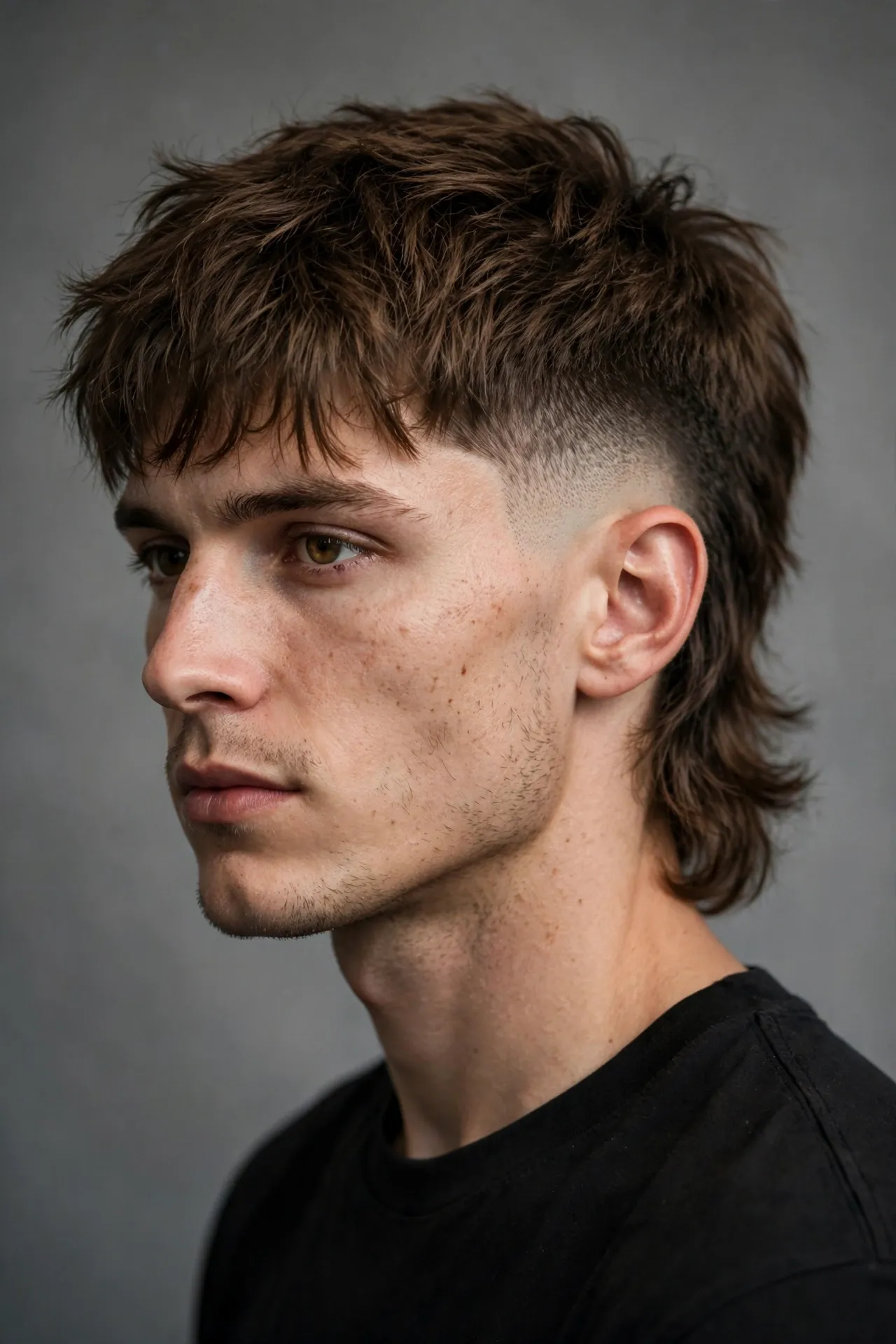
The modern burst fade mullet is softer and more textured than the 80s original. The top is choppy, the sides are faded around the ear, and the back is textured rather than one heavy flat layer.
Where the Word Mullet Comes From
According to Vocabulary.com, the haircut was common in the 1980s, but the earliest confirmed use of “mullet” as the name of a hairstyle is the Beastie Boys’ 1994 song “Mullet Head,” which the Oxford English Dictionary cites. An earlier 1992 “mullet-headed” sighting in an Australian car magazine could not be confirmed.
💈 Your Modern Burst Fade Mullet Request, Word for Word
Tell your barber: “I’d like a mid burst fade around the ear, a choppy textured top with a little fringe, and textured length at the back, not a heavy flat layer.” Bring a photo of the back as well as the front.
05
OF 24
Short Burst Fade Mullet
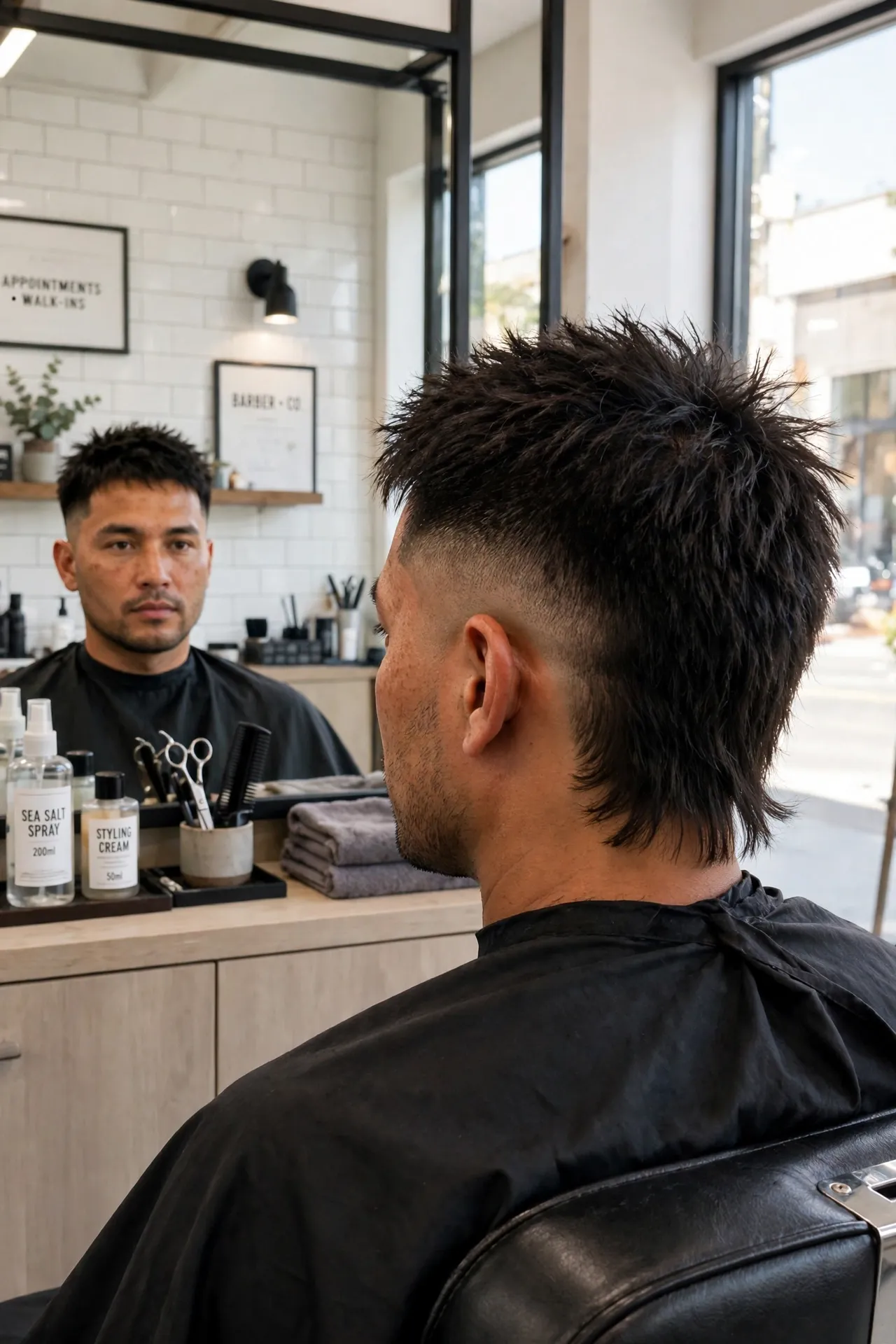
A short burst fade mullet keeps the back only slightly longer than the top. It’s subtle enough for most workplaces but still has the mullet shape.
Keeping the back this short is what most short modern mullet cuts are built around.
It’s a good way to try a mullet without committing to lots of length. You can grow the back longer later if you like it.
A light matte paste is enough to style it. Run it through the top for texture and leave the back natural.
06
OF 24
Long Burst Fade Mullet
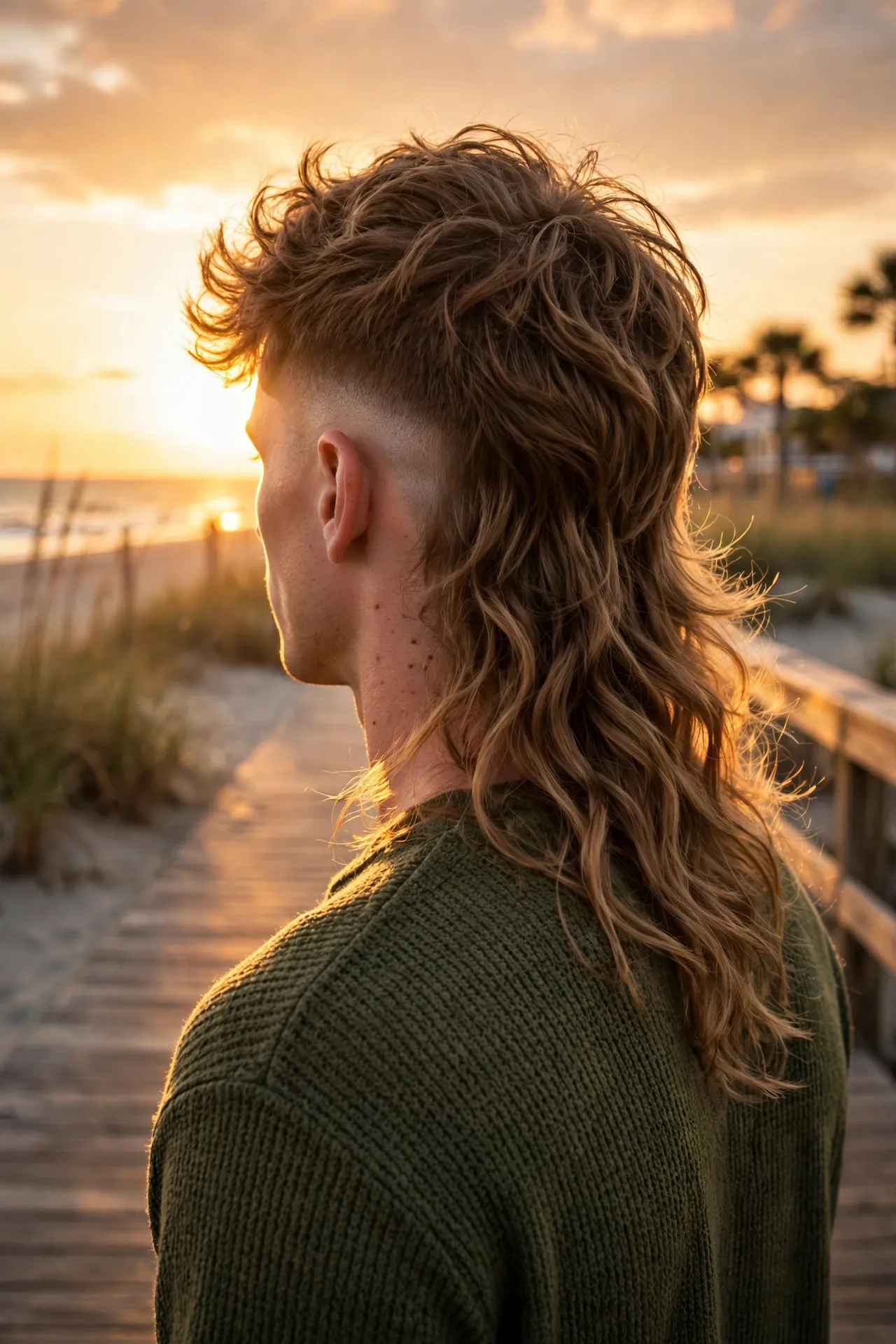
A long burst fade mullet lets the back flow past the collar or even the shoulders. It’s dramatic, rock-and-roll and easy to tie back.
Getting Through the Grow-Out Stage
Growing the back takes patience. The natural hair site CurlCentric says a medium-length mullet typically takes around four to six months to take shape, and textured hair grows only about a third of an inch a month.
On a Men’s Long Hair Hyperboard thread about the awkward stage, members growing out their hair described a mullet-like phase, and one said at 13 months that “the ‘mullet’ effect has gone away.” Another member’s advice was simple: “it DOES get better, so hang in there.”
07
OF 24
Curly Burst Fade Mullet
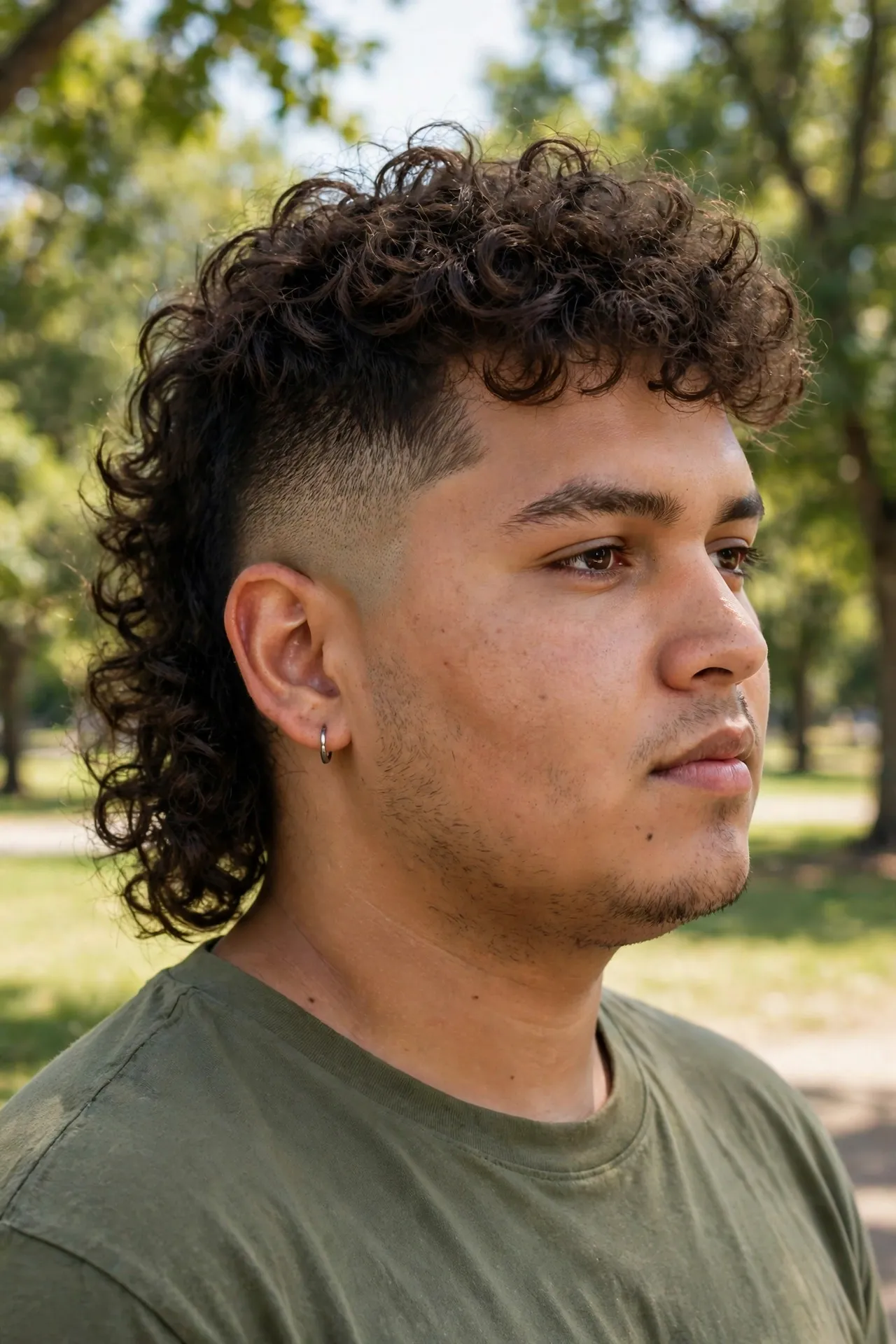
A curly burst fade mullet lets natural curls do the work. The faded sides keep the shape clean, while curls on top and at the back add volume and movement.
Curls shrink when dry, so the back looks shorter than it really is. Ask your barber to leave a little extra length.
🧴 Define Curls With Cream, Not Gel
A light curl cream on damp hair defines curls without the crunch of heavy gel. Scrunch it in, then let your hair air-dry or use a diffuser on low heat.
A curl-friendly barber cuts curls dry or semi-dry to see how they fall. Ask about this if your barber usually cuts everything wet.
08
OF 24
Wavy Burst Fade Mullet
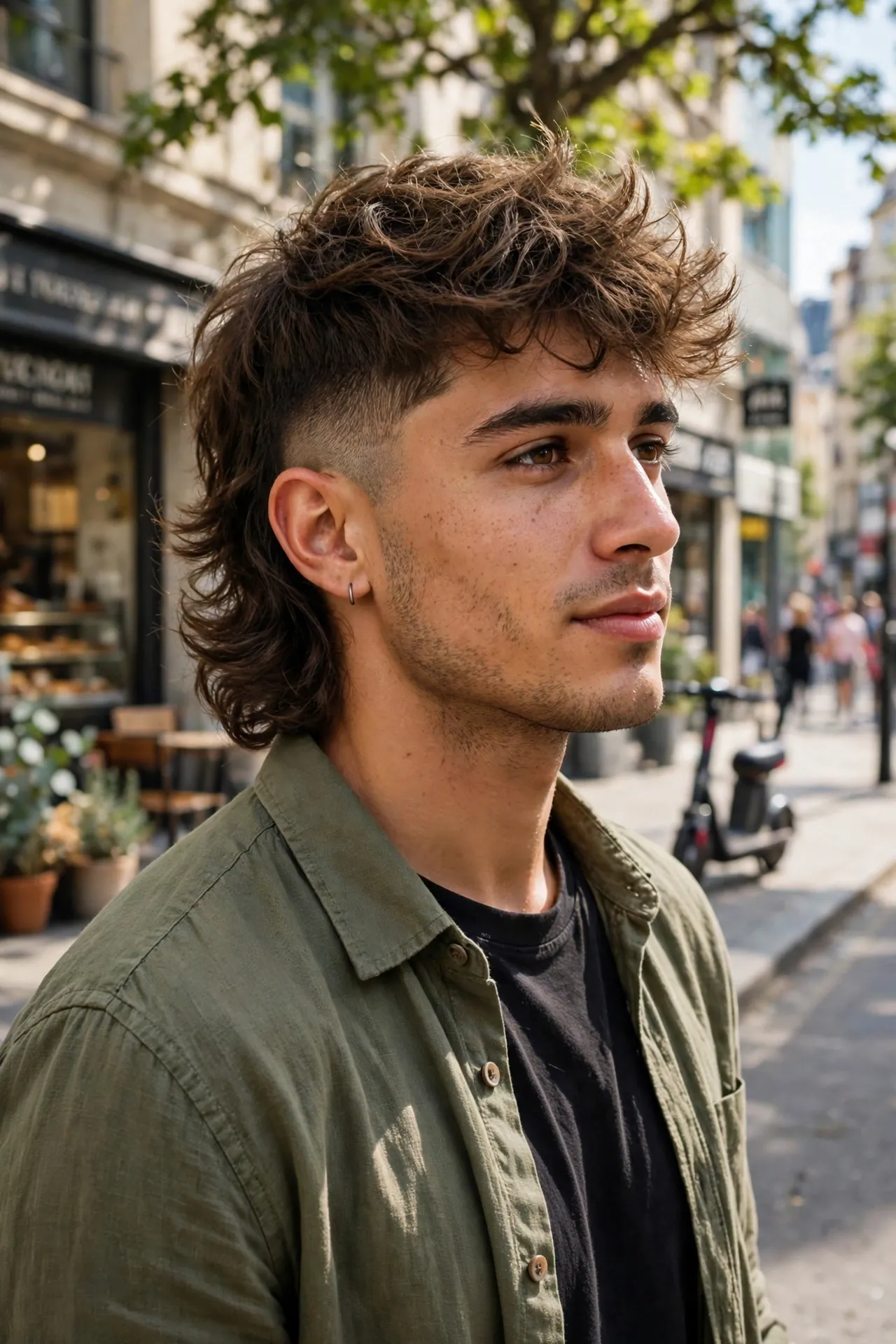
A wavy burst fade mullet has a relaxed, effortless look. Natural waves give movement to the top and back without much styling.
Sea salt spray on damp hair brings out the waves. Scrunch it in and let it air-dry for a beachy finish.
🎨
Fade
low burst
✂️
Top
messy waves
📐
Styling
sea salt spray
Wavy hair can go frizzy in humid weather. A little leave-in conditioner keeps it smooth.
09
OF 24
Straight Hair Burst Fade Mullet
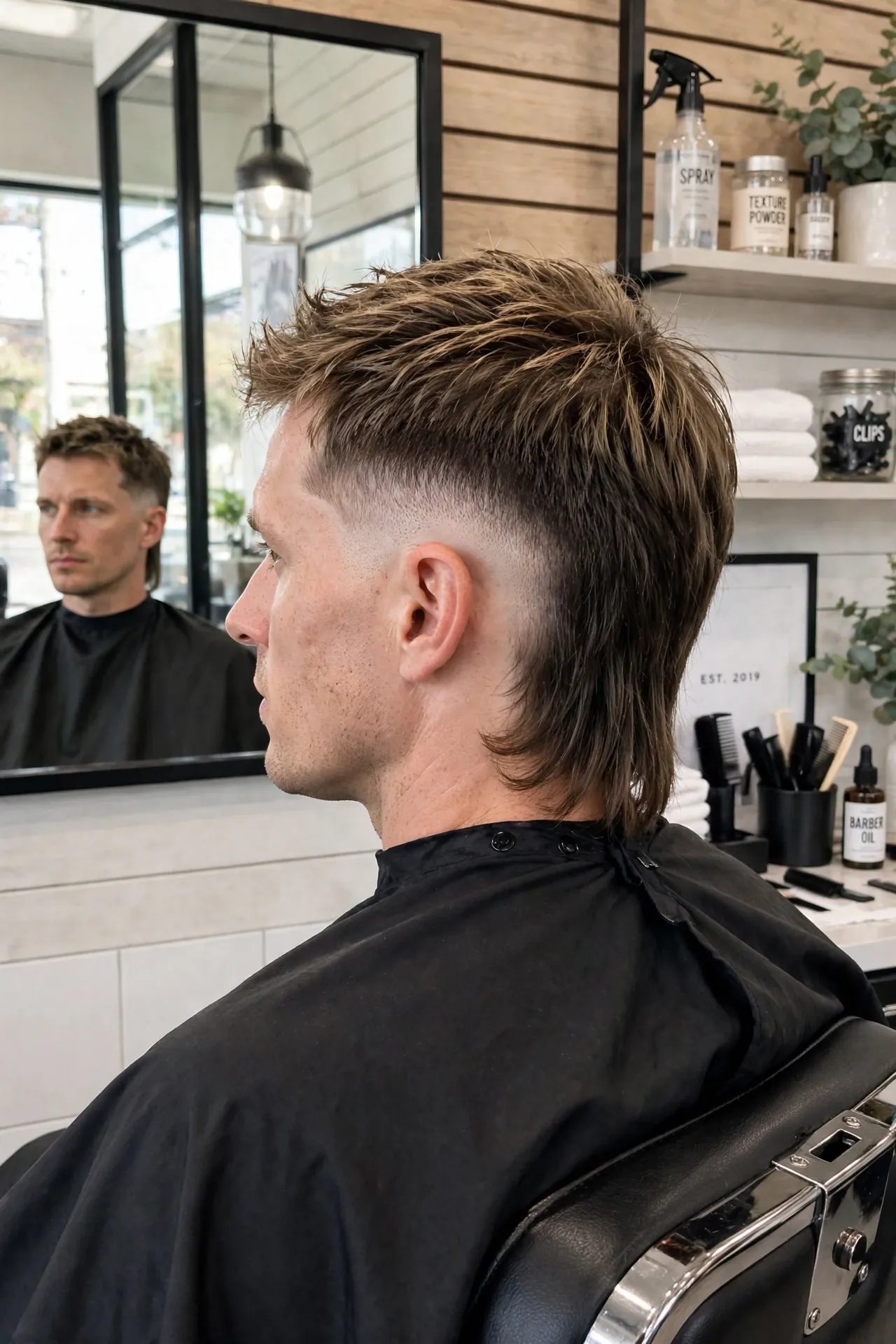
A burst fade mullet on straight hair needs texture to avoid looking flat. Point cutting, where the barber cuts into the ends, breaks up the hair and adds movement.
Straight hair shows every line, so the fade and the back must be cut precisely. A skilled barber makes a big difference.
📌 Straight Hair Needs Texture to Look Modern
A straight, blunt-cut back can look like the old 80s mullet. Ask for point cutting or texturising on the top and back so the hair moves and looks lighter.
A matte clay or texture powder adds grip and volume. Blow-drying the top upwards helps too.
10
OF 24
Burst Fade Mullet With a Textured Fringe
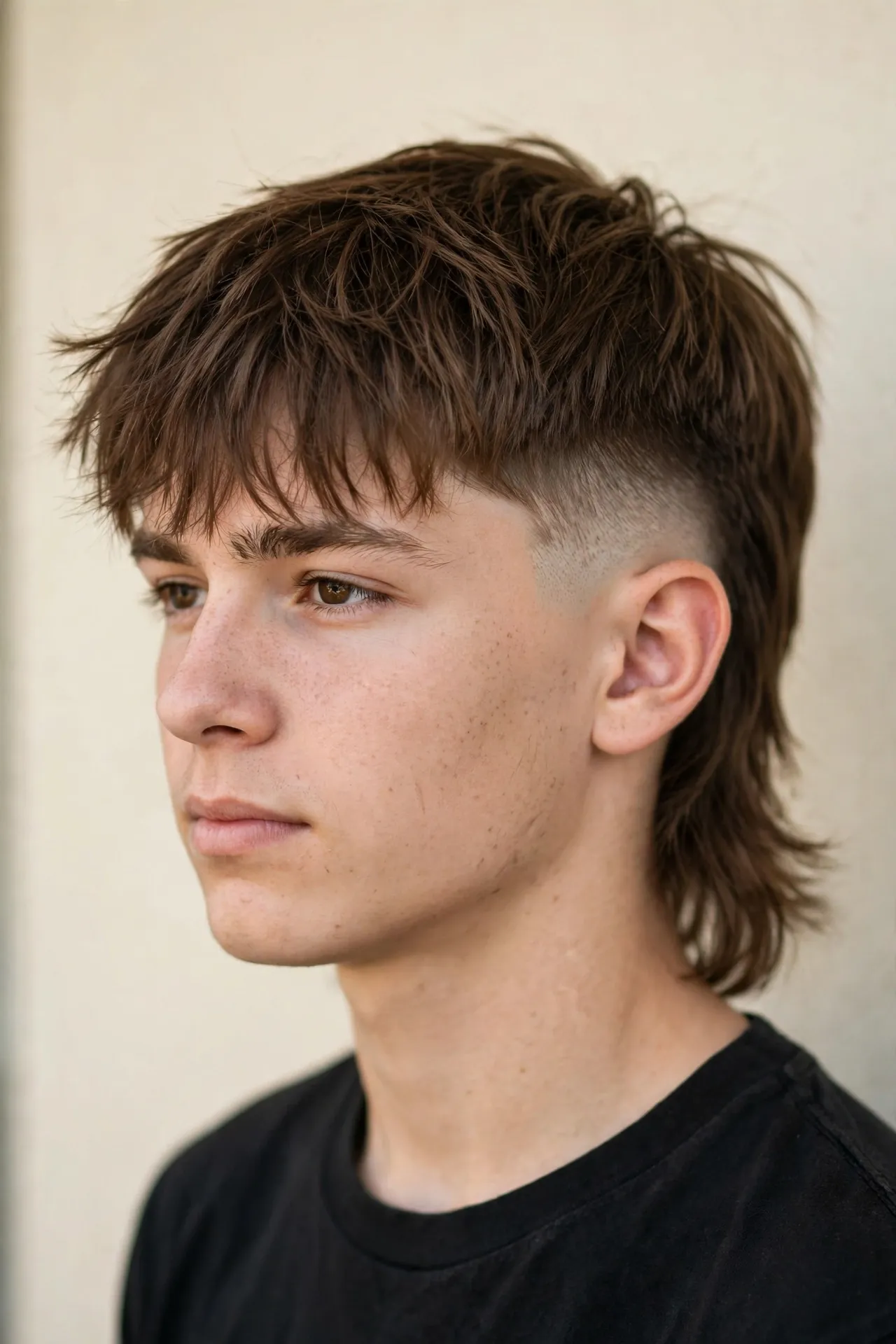
A textured, messy fringe gives the burst fade mullet a youthful, relaxed look. The fringe falls naturally over the forehead, while the sides and back keep the mullet shape.
The fringe should be choppy and uneven, not cut in a straight line. That keeps it looking natural.
✅ Your Fringe Mullet Request, Piece by Piece
- A mid burst fade around the ear
- A choppy, textured fringe falling to the eyebrows
- Texture through the top with point cutting
- Longer, textured hair at the back
- A matte paste or sea salt spray for styling
A fringe also helps hide a high or large forehead. Ask your barber to keep it long enough to cover it.
11
OF 24
Burst Fade Mullet With a Shaved Design
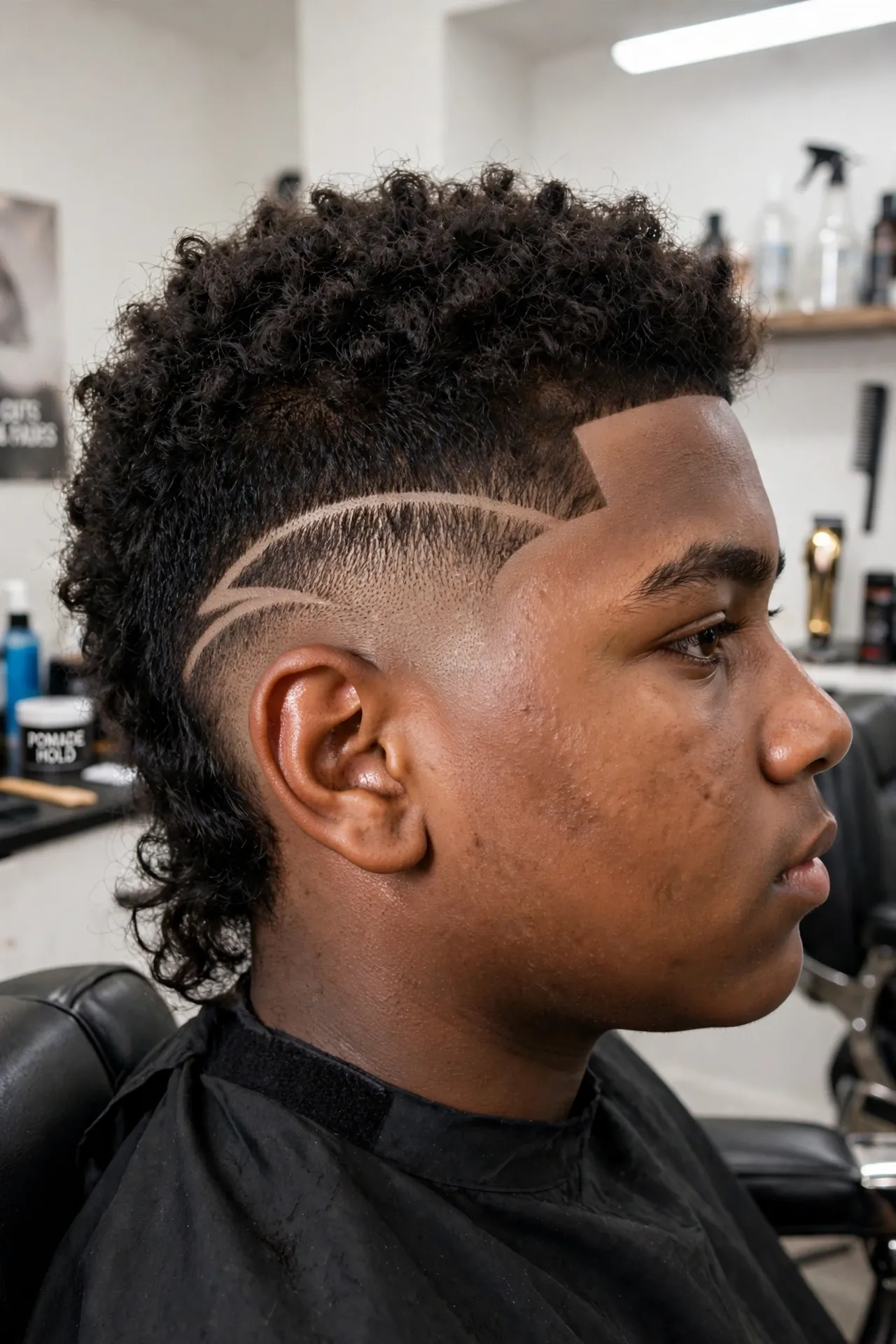
A shaved design in the faded area adds a bold, personal touch. Simple lines, curves or triangles cut into the burst look clean and modern.
A sharp line-up at the front frames the face and matches the crisp design. Both need regular touch-ups.
⚠️ Shaved Designs Fade in About a Week
Designs are cut very short, so they blur as hair grows, often within a week or two. Plan for quick touch-ups if you want the lines to stay sharp.
Simple designs grow out more cleanly than detailed ones. Start with one or two lines if you’re unsure.
12
OF 24
Burst Fade Mohawk Mullet
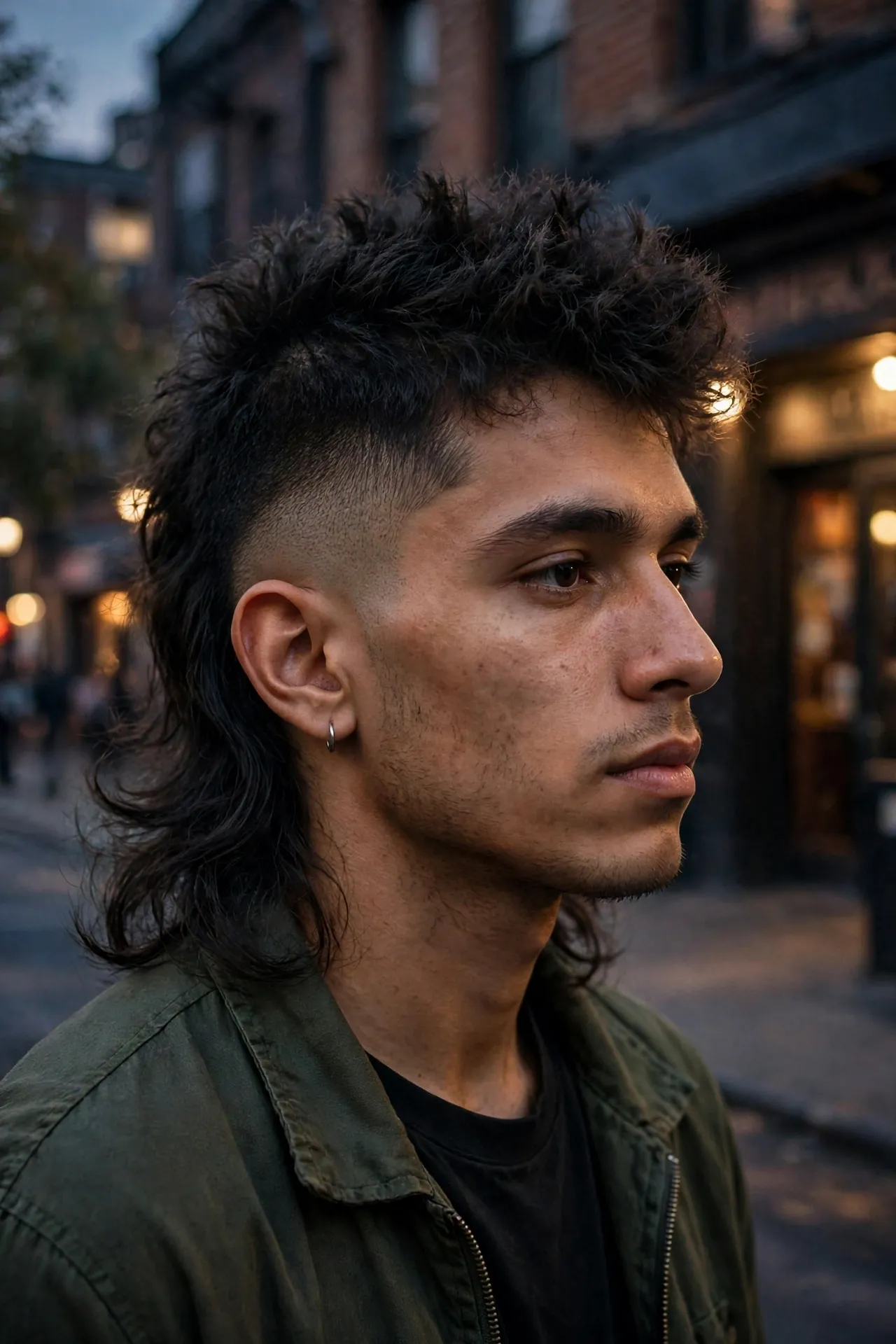
A burst fade mohawk mullet, sometimes called a fohawk mullet, keeps a strip of longer hair down the centre and at the back. The burst fade around the ears makes the strip stand out.
It’s bold and punk-inspired, but softer than a full shaved mohawk. The hair blends from the top into the back.
Styling paste pushed towards the centre creates the raised mohawk shape. A light hold keeps it textured rather than spiky.
13
OF 24
Burst Taper Mullet
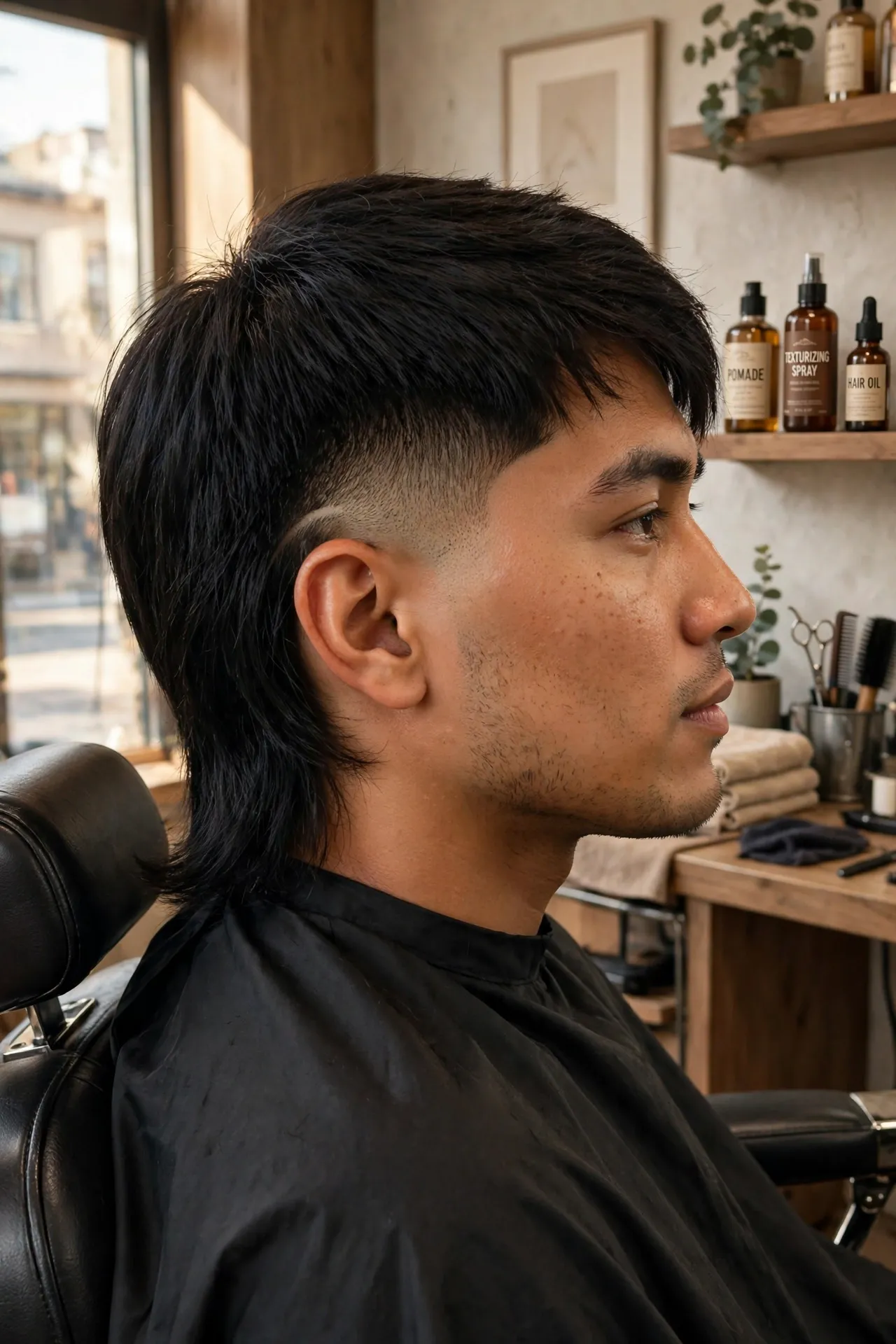
A burst taper mullet fades only a small area around the sideburn and the nape, leaving more hair on the sides. It’s the subtlest, most professional version of the style.
It grows out gracefully, since the tapered area is small. It’s a great choice if your workplace is conservative.
💡 The “Taper and Fade Are the Same” Myth
Myth: A taper and a fade are the same thing.
Reality: A taper shortens the hair gradually in a small area, usually the sideburns and nape. A fade blends the hair down to very short or skin over a larger area of the sides.
14
OF 24
Burst Fade Mullet With a Perm
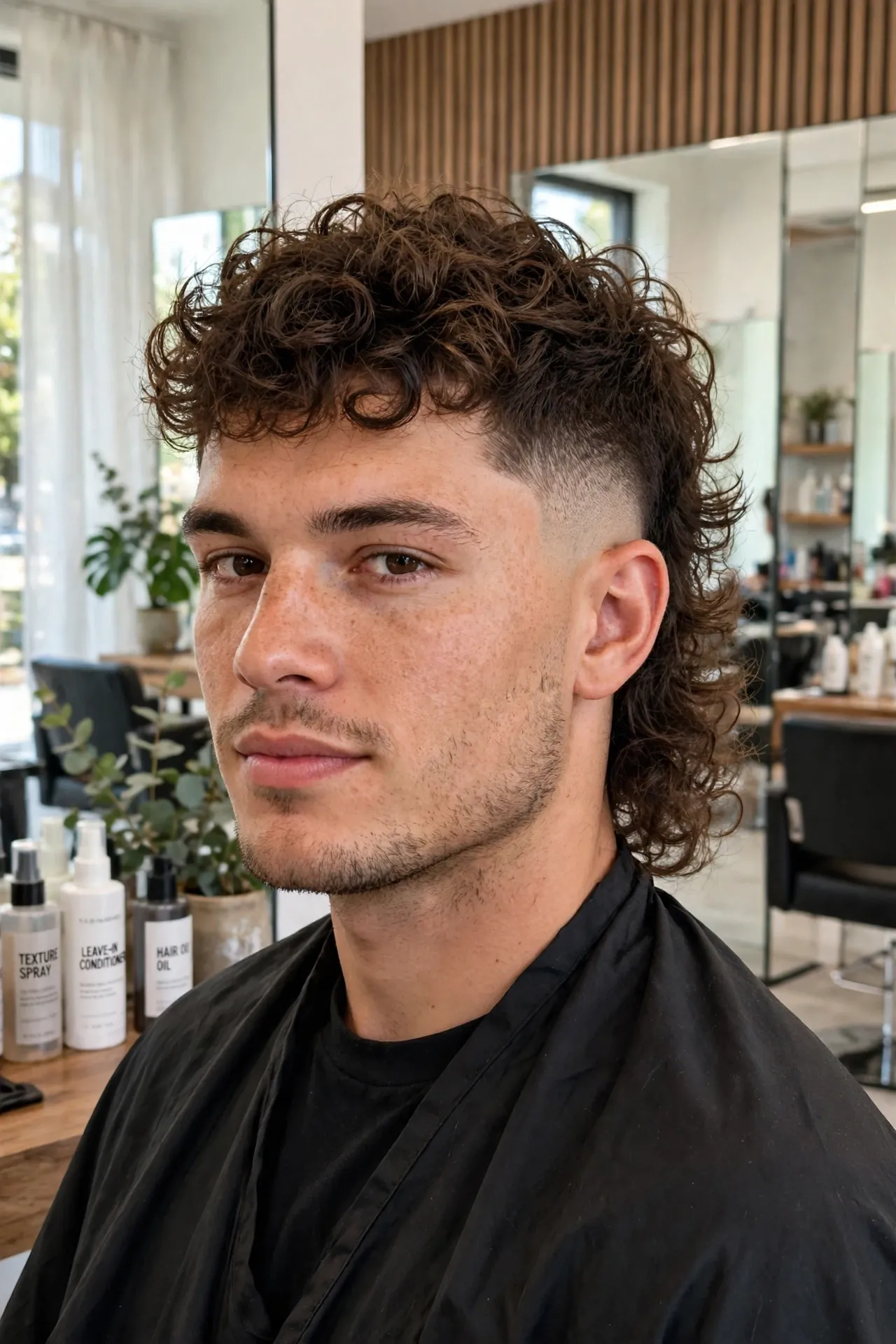
A perm adds curls or waves to straight hair, giving a burst fade mullet extra volume and texture. Permed curls look great with a clean burst fade.
Perms work best on healthy, undamaged hair. A professional stylist will check your hair before perming.
Skip It If Your Hair Is Bleached or Damaged
Perming chemically changes your hair, and doing it on already bleached or damaged hair can cause breakage. Let your hair recover first, or choose a cut that works with your natural texture.
Use a sulphate-free shampoo and curl cream to keep permed curls defined. Avoid washing for a couple of days after the perm.
15
OF 24
Afro Burst Fade Mullet
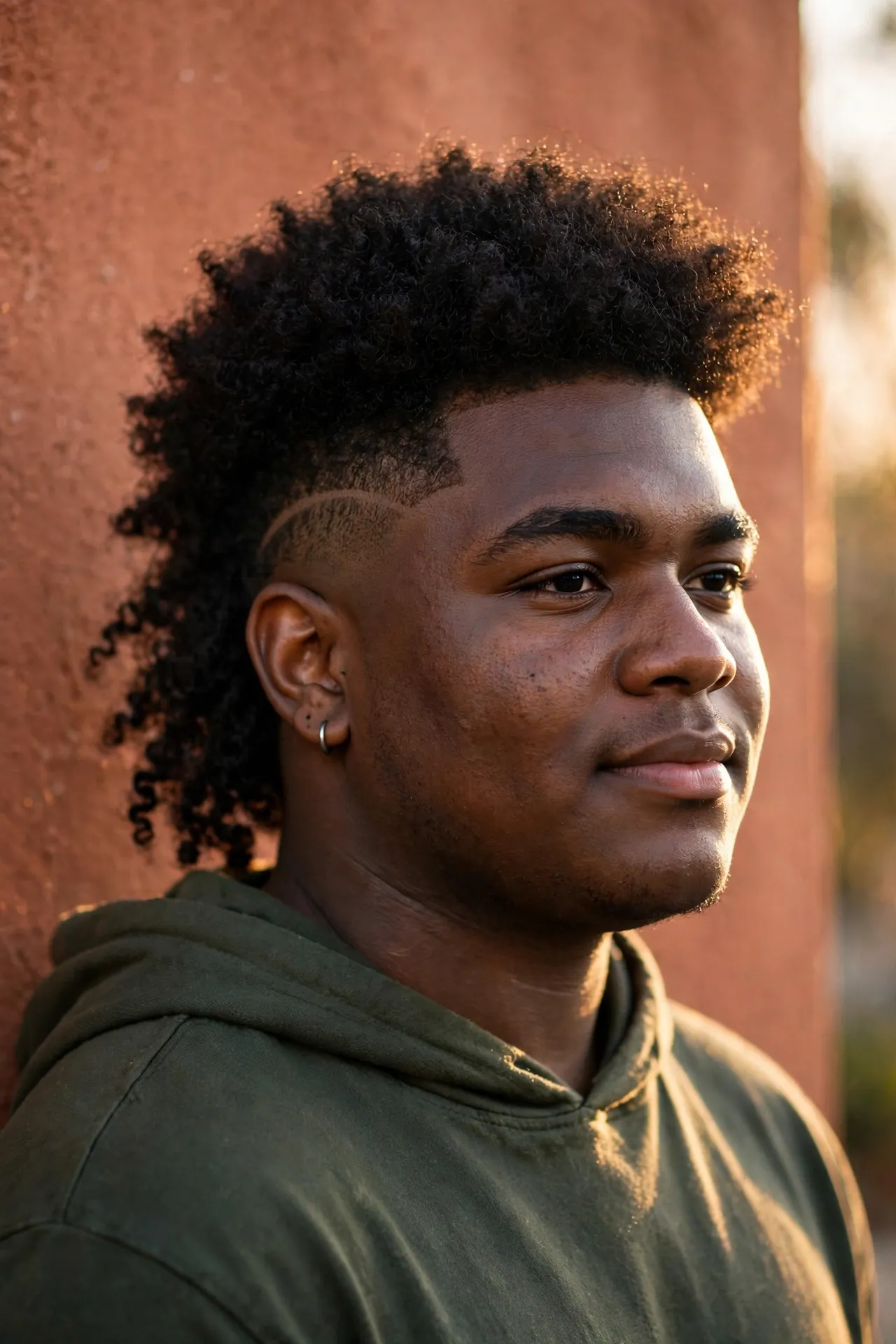
An afro burst fade mullet combines a sharp burst fade with natural afro-textured hair on top and at the back. It’s bold, clean and shows off natural texture.
A sharp line-up and a crisp fade around the ear make the shape look intentional. The back can be picked out for volume or left in natural coils.
💬 Coily Hair Shrinks, So Grow the Back Longer
Tightly coiled hair can shrink to a fraction of its stretched length. Grow the back longer than you think you need, since it will look shorter once it dries.
Moisturise daily with a leave-in conditioner and a light oil. Coily hair dries out quickly.
16
OF 24
Blonde Burst Fade Mullet
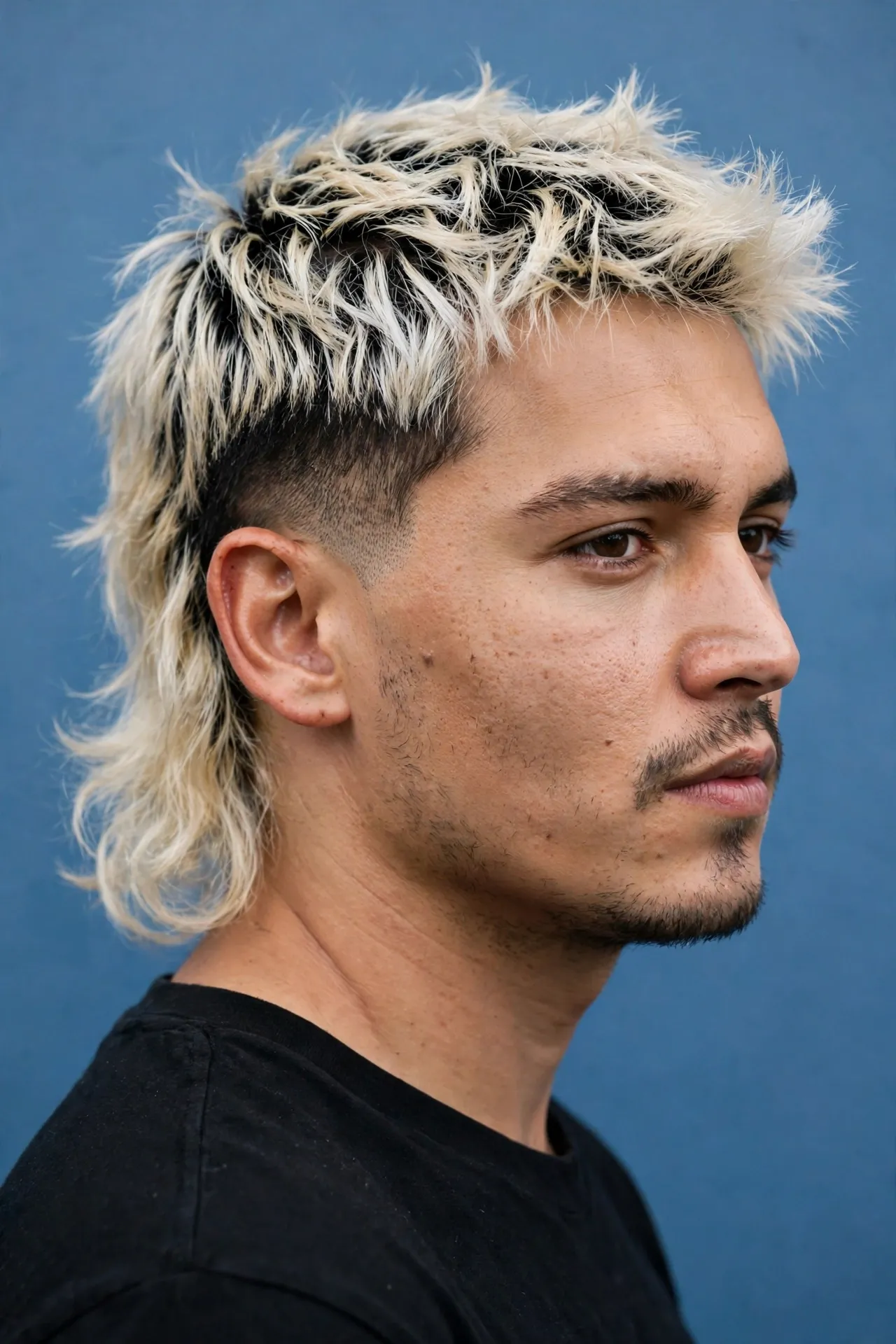
A blonde burst fade mullet adds bold colour to the cut. Bleached blonde on top and at the back contrasts with the darker faded sides.
Darker roots growing in can look intentional, especially with a textured cut. Platinum looks dramatic, while honey blonde is softer.
⚠️ Bleach Dries Out Hair Fast
Bleaching strips moisture and weakens hair, especially on dark or textured hair. Use a purple shampoo to reduce brassiness and a deep conditioner every week.
Have bleaching done by a professional colourist. Home bleach on dark hair often turns orange.
17
OF 24
Burst Fade Mullet for Thick, Coarse Straight Hair
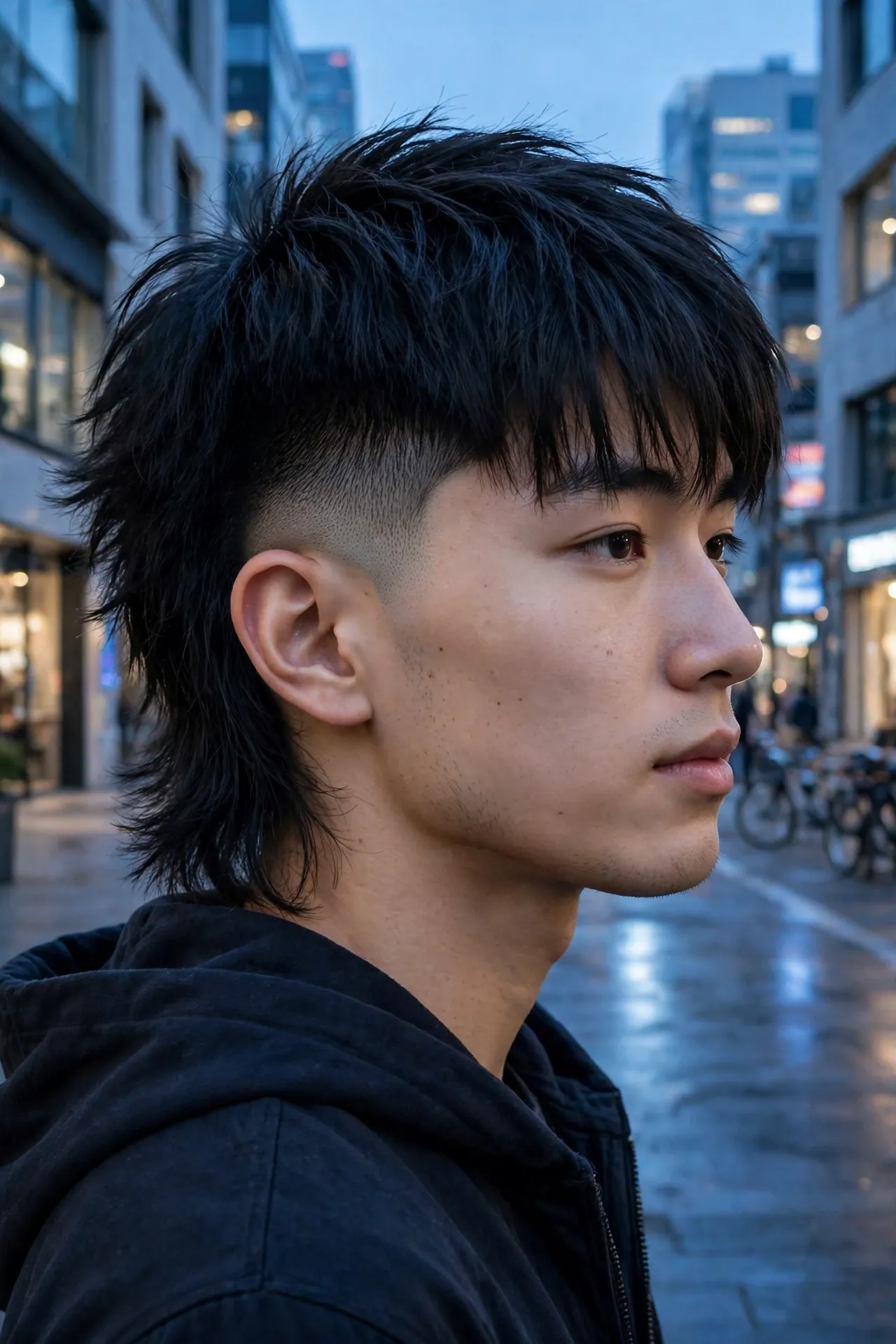
Thick, straight hair can stick out at the sides and look bulky if it isn’t thinned. A burst fade removes bulk around the ear, and texturising on top keeps it light.
The cut depends a lot on thinning and texturising. Thick straight hair cut bluntly can look heavy and helmet-like.
BEFORE:
Thick, straight hair cut bluntly, sticking out at the sides and sitting heavy at the back.
AFTER:
A burst fade around the ear, a texturised, thinned top and a lighter, textured back.
A matte clay adds texture and stops thick hair from lying flat. Blow-drying with a round brush adds shape.
18
OF 24
V-Shaped Burst Fade Mullet
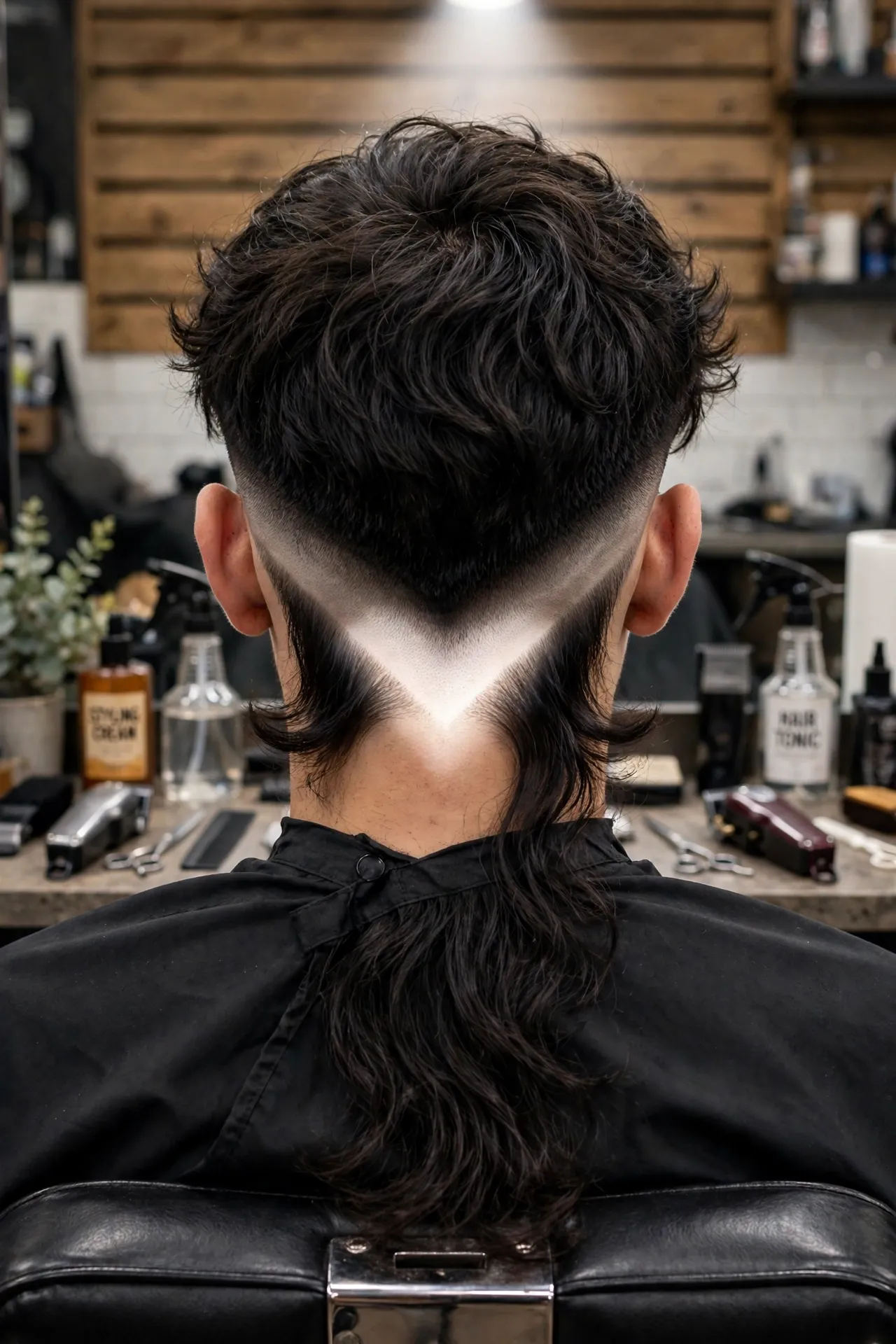
A V-shaped burst fade mullet cuts the back into a pointed V or triangle shape. It looks sharp and sculpted, and it shows off the length at the back.
The V needs regular trims to keep its sharp point. As hair grows, the shape softens.
🎨
Back
sharp V shape
✂️
Fade
burst around ears
📐
Upkeep
trim every 3 weeks
A V shape suits straight and wavy hair best, since curls hide the shape.
19
OF 24
Bulky Textured Burst Fade Mullet
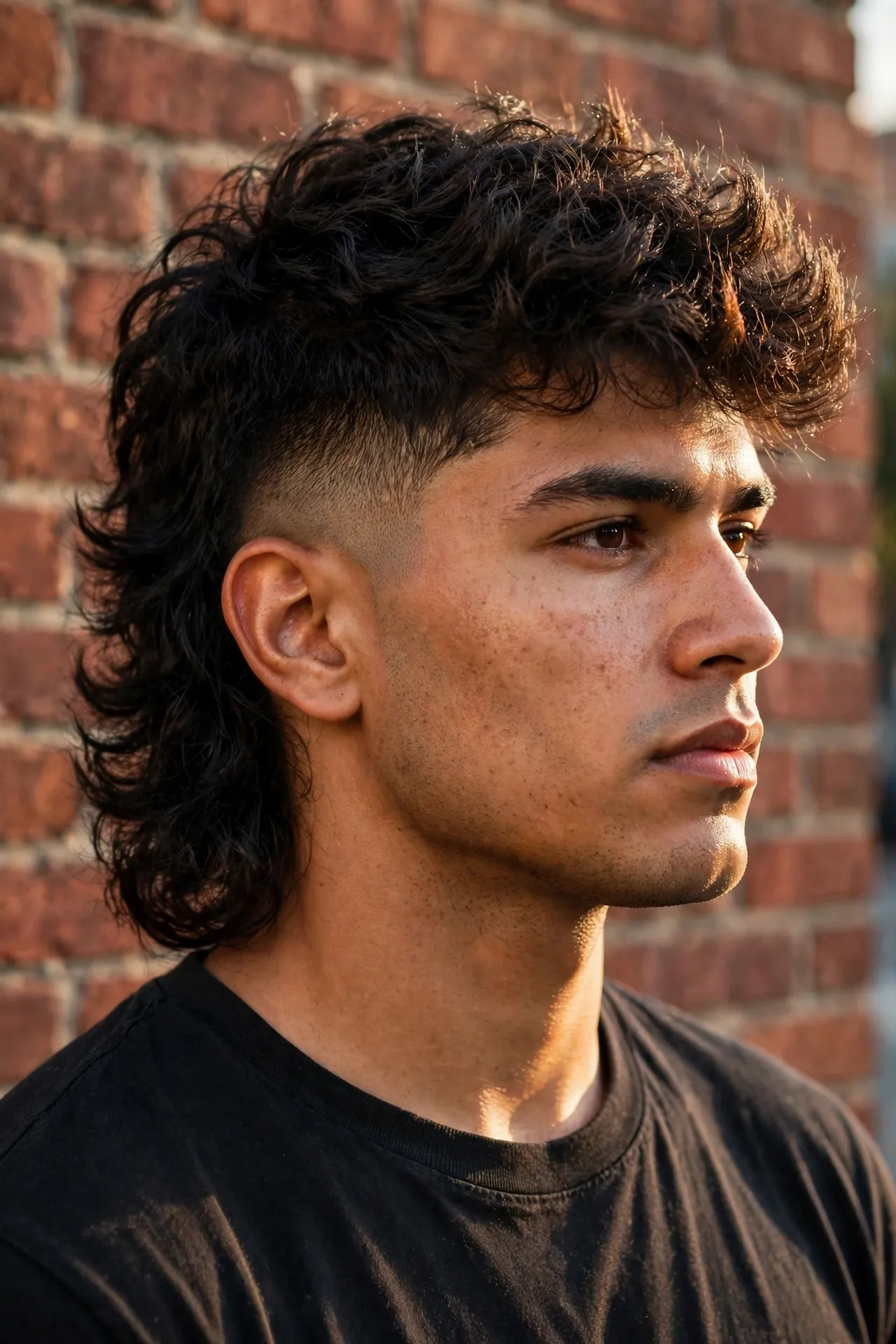
A bulky, textured burst fade mullet has lots of volume on top and at the back. It’s a bold, full look that suits thick hair.
Volume comes from styling as much as the cut. A simple daily routine makes a big difference.
Towel-dry your hair until it’s damp, not wet.
Spray sea salt spray or a texturising spray through the top and back.
Blow-dry the top upwards and the back outwards for volume.
Work a pea-sized amount of matte clay through with your fingers.
Twist and separate a few pieces at the top for texture.
20
OF 24
Burst Fade Mullet for a Receding Hairline
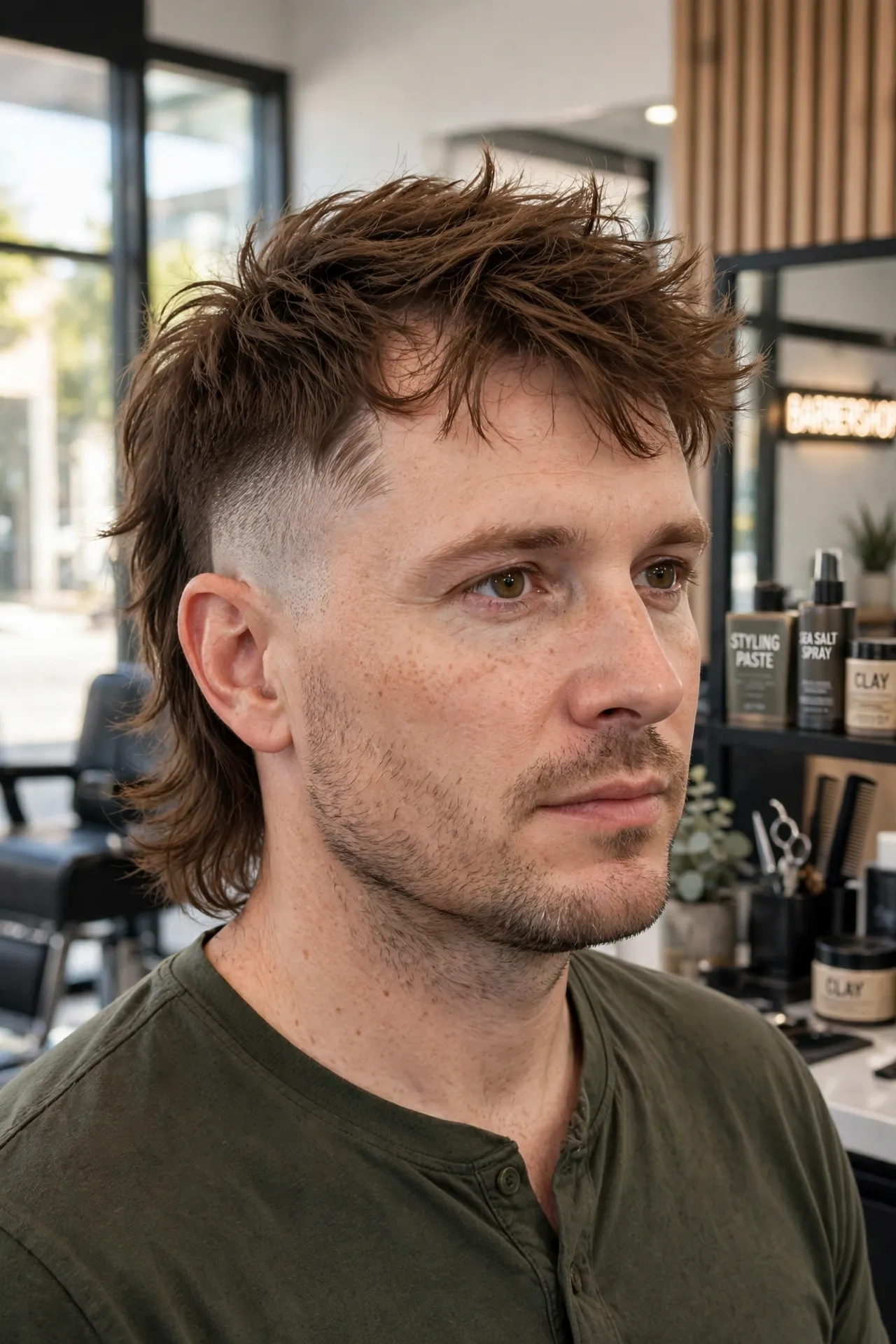
A burst fade mullet can work with a receding hairline if the top is styled forward. A textured, forward fringe hides the temples and draws attention away from the hairline.
A low burst fade keeps the sides short, which makes the top look fuller. Avoid high fades, which highlight receding temples.
💡 Style Forward, Not Back
Slicking the top back exposes the temples and makes a receding hairline more obvious. Push the top forward with a matte paste for a textured fringe instead.
21
OF 24
Cowboy Burst Fade Mullet
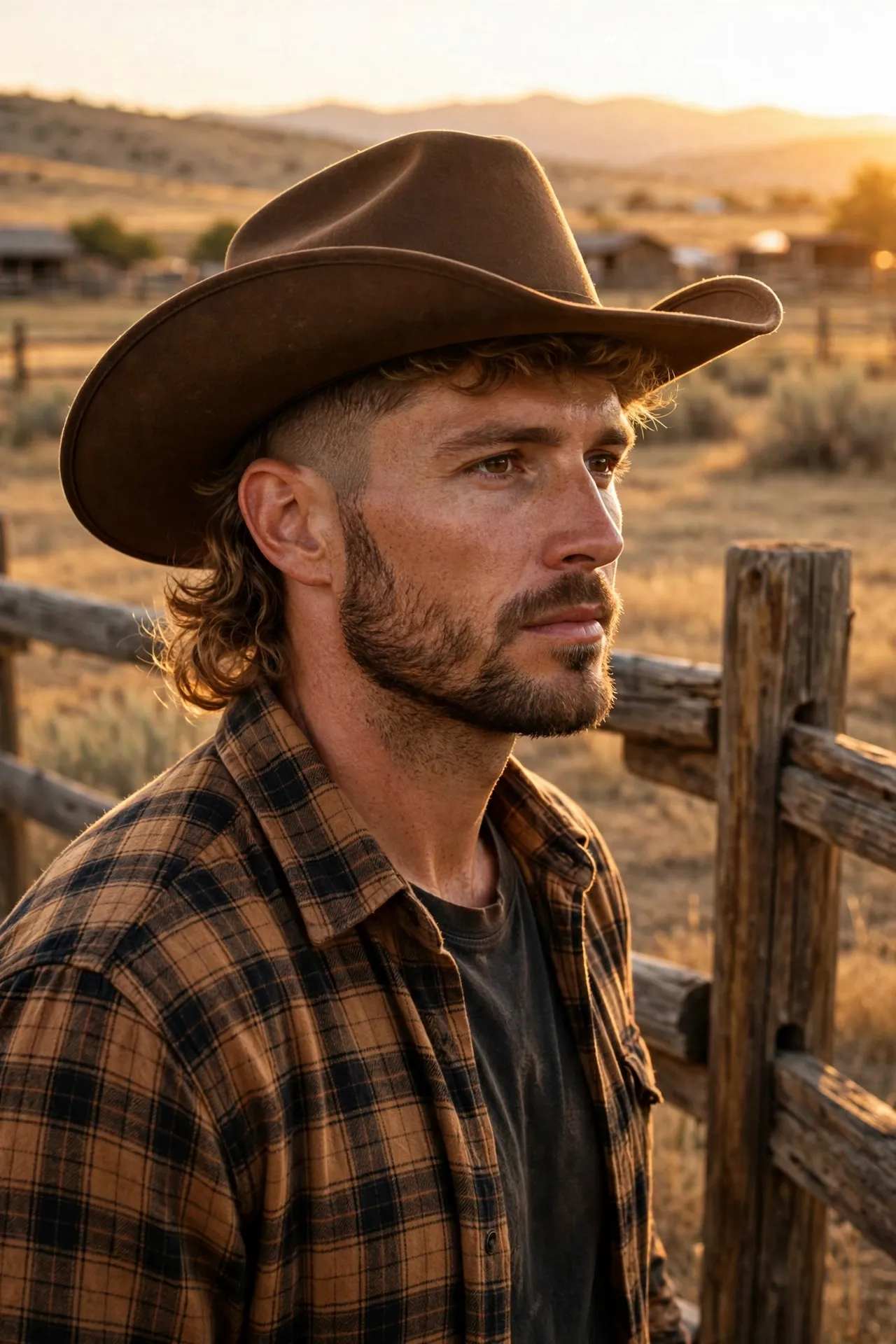
A cowboy burst fade mullet has a slightly longer top, a low burst fade and hair at the back that flips out under a hat. It’s a relaxed, country-inspired look.
The longer back looks great under a cowboy hat or cap. The low burst keeps the sides neat.
Keep styling minimal, since this look should feel natural. A little texture spray is enough.
📅 Wear It For
22
OF 24
Teen Burst Fade Mullet
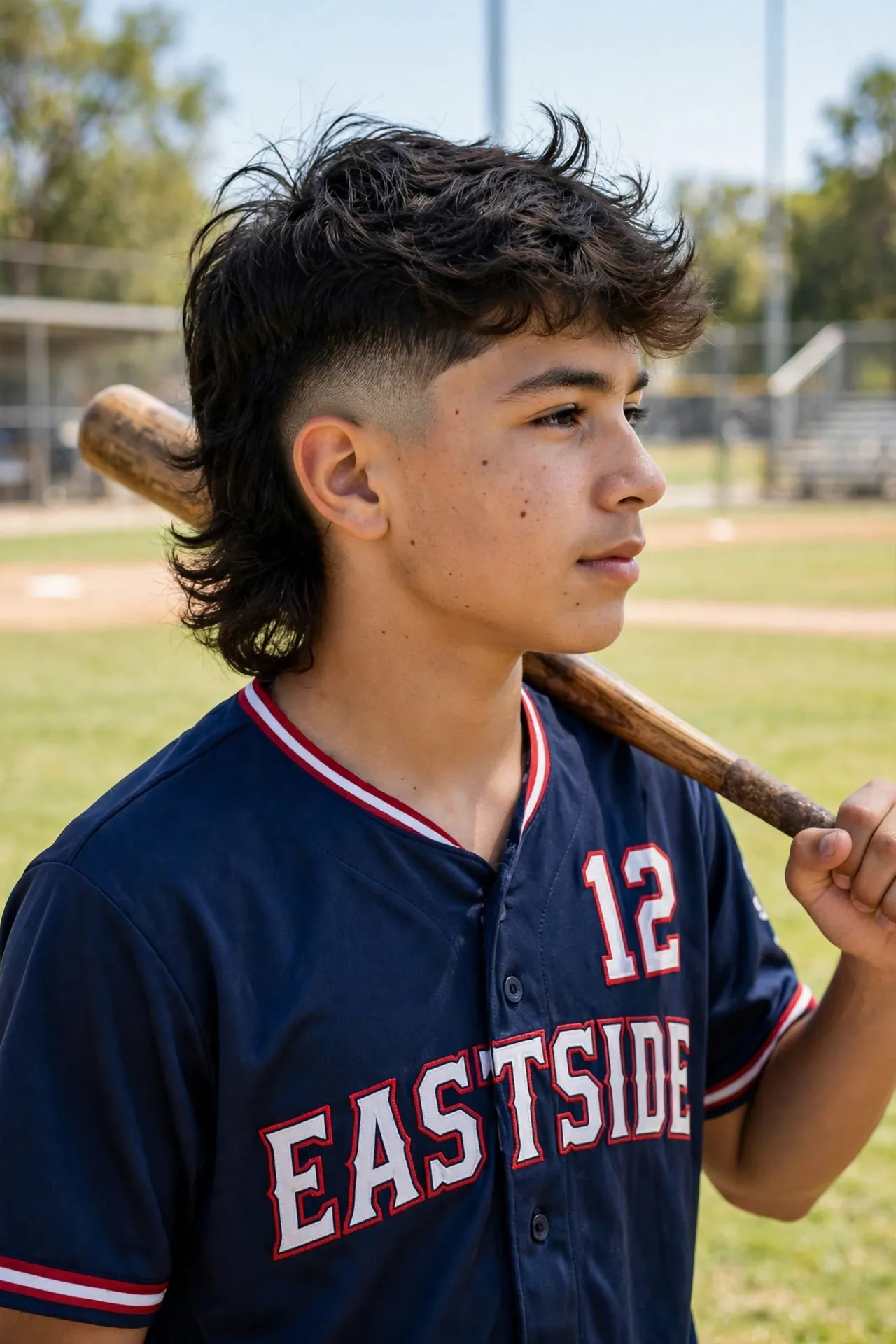
A low burst fade mullet is a popular cut for teens, especially young athletes. It looks sporty and works under caps and helmets.
A low burst is easier to keep tidy for school than a high one. The back can stay short or medium.
📌 Check School Rules on Fades and Designs
Some schools have rules about haircuts, shaved designs or hair touching the collar. Check before getting a design or a long back.
23
OF 24
Kids’ Burst Fade Mullet
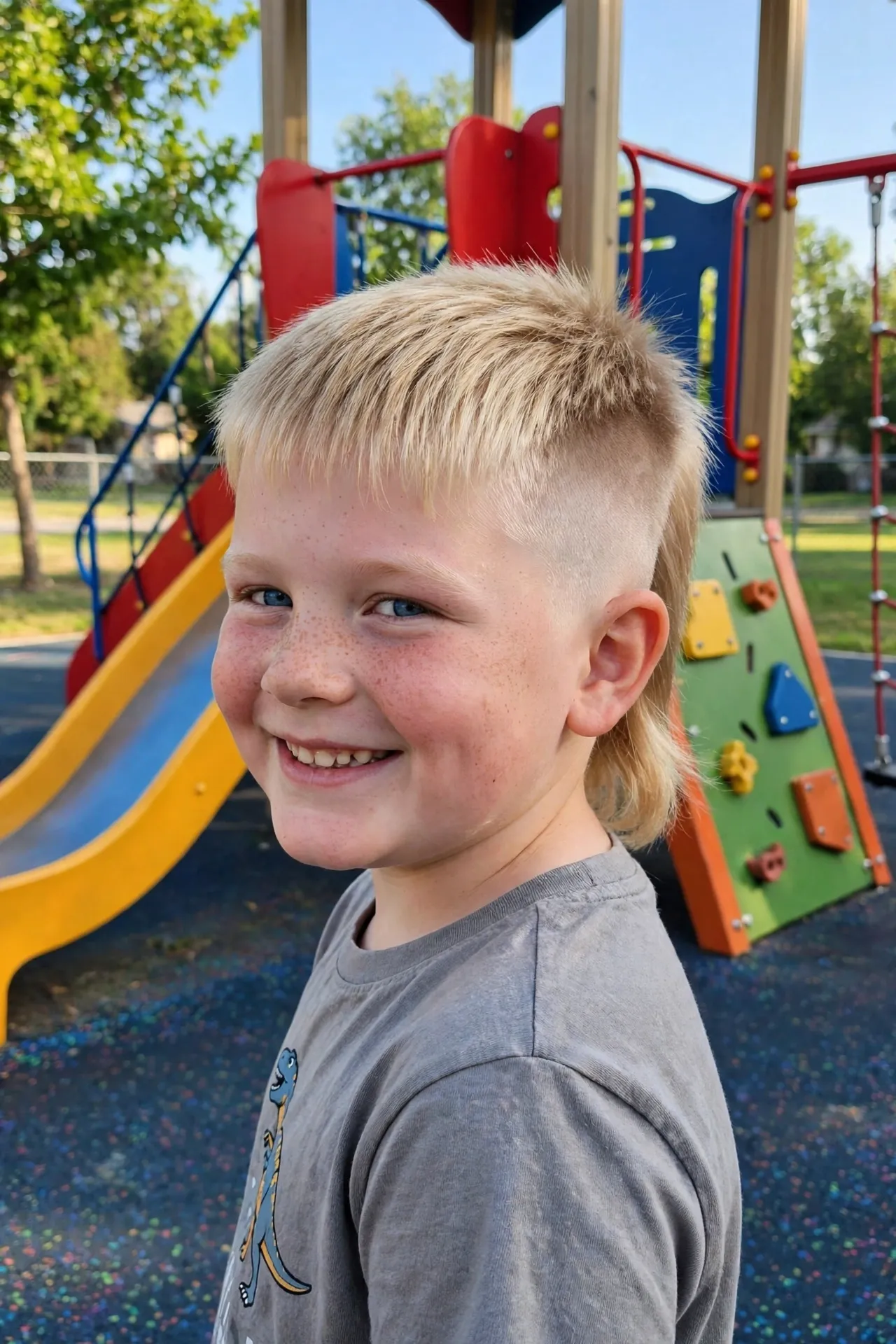
A kids’ burst fade mullet is a fun, trendy cut for boys. A low burst fade keeps it neat for school, and the slightly longer back gives it personality.
Short to medium lengths are easiest for kids to manage. They don’t need much styling.
💡 Keep the Back Short Enough to Stay Tidy
Long hair at the back can tangle and get messy for active kids. A shorter back is easier to wash and comb every day.
24
OF 24
Toddler Burst Fade Mullet

A toddler burst fade mullet, often called a baby mullet, has a soft taper around the ear and a little extra length at the back. It’s cute and practical.
Toddler hair is fine and soft, so the cut should be gentle. Many barbers use scissors rather than clippers on very young children.
⚠️ Little Ears Need Extra Care Near the Clippers
Toddlers wriggle, and clippers close to the ears can nick them. Choose a barber who’s experienced with young children and uses scissors or a careful, low-guard clipper around the ears.
Which burst fade mullet would you try first?
FAQs
What is a burst fade mullet?
A burst fade mullet combines a burst fade, which curves in a half-circle around the ear, with longer hair at the back. The top is usually textured or styled with a fringe.
What’s the difference between a burst fade and a burst fade mullet?
A burst fade is the faded curve around the ear. A burst fade mullet adds longer hair at the back, creating the mullet shape.
How long does hair need to be for a burst fade mullet?
The back should be at least collar length for the mullet shape to show. A medium-length mullet can take around four to six months to grow.
How often do you need to touch up a burst fade mullet?
The fade usually needs a touch-up every two to three weeks. The back and top can go four to six weeks between trims.
Does a burst fade mullet work on curly hair?
Yes. Curly hair adds natural volume and movement. Leave extra length at the back, since curls shrink when dry.
What should I ask my barber for?
Ask for a low or mid burst fade around the ear, a textured top, and longer textured hair at the back. Bring photos of the front, side and back.