Clothes for Men Over 50: Comfort, Fit and Seasonal Outfits

After 50, clothes have a harder job. They need to look sharp, but also feel comfortable through a long day, handle a body that runs warmer or colder than it used to, and work for travel, family events and an office that may have dropped the suit years ago.
This guide is for men in their 50s and beyond who want to look put-together without giving up comfort. It covers what most “over 50” articles skip: fits that are easy to move in, the fabrics that breathe, stretch and resist creases, colours that suit grey hair, outfits for casual, smart casual, business casual and every season, shoes that are kind to your feet, and how to pack for a trip.
Quick answer: The best clothes for men over 50 are comfortable, well-fitting classics in quality fabrics: stretch chinos, dark jeans, oxford and linen shirts, merino knits, an unstructured blazer, an overcoat, and leather sneakers or loafers. Stick to a gently fitted cut, mostly neutral colours, and layers you can add or remove as the temperature changes.
Short on Time? Pick Your Path
Table of Contents
- 01How Clothes Should Work for You After 50
- 02A Fit That’s Comfortable and Still Sharp
- 03Fabrics That Feel Good and Last
- 04Colours for Grey Hair and Every Skin Tone
- 05Clothes for Men Over 50 by Occasion and Season
- 06Comfortable Shoes That Still Look Smart
- 07Packing Clothes for Travel
- 08Mistakes Men Over 50 Make With Clothes
01
OF 08
How Clothes Should Work for You After 50
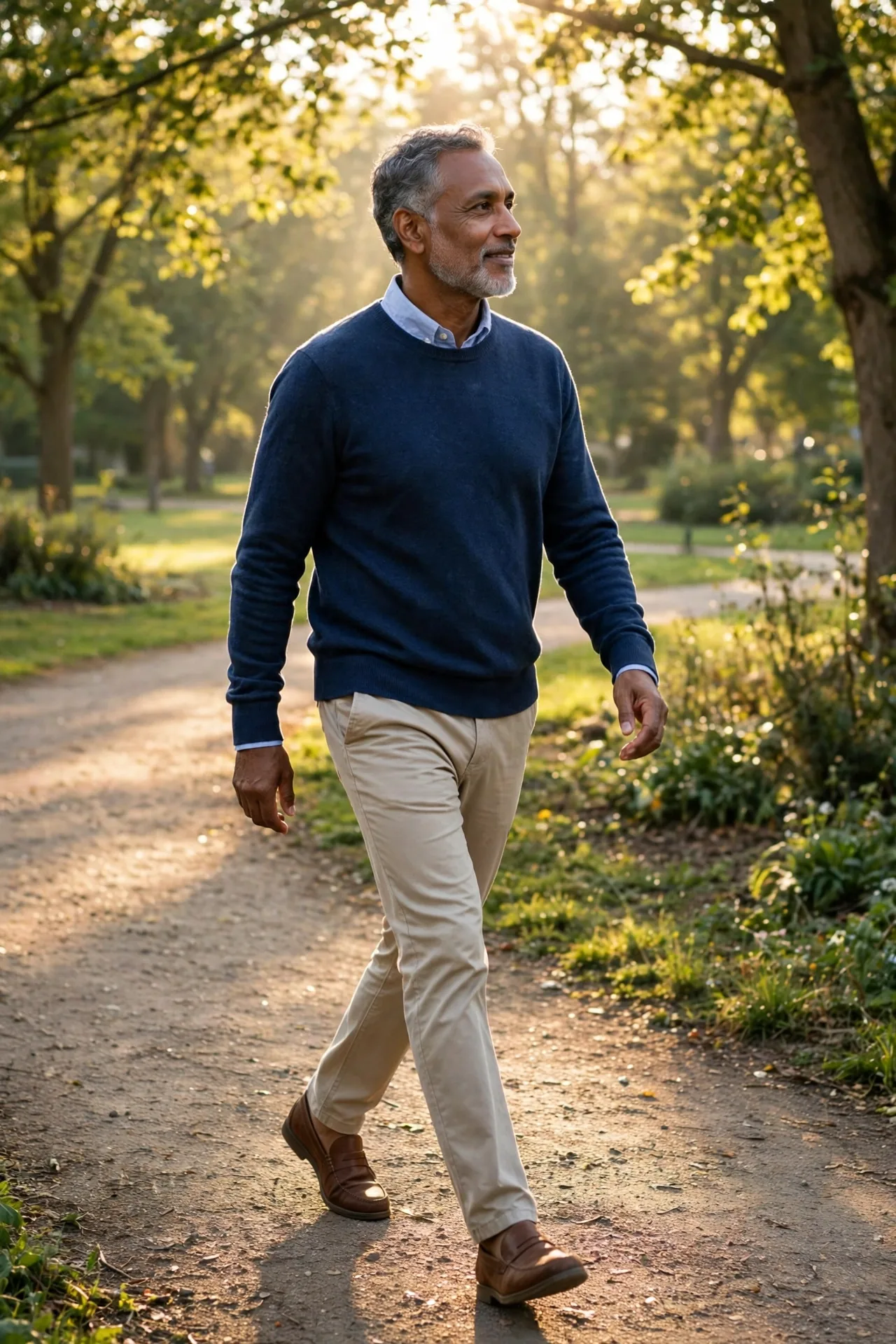
The rules of good style don’t change at 50, but the priorities do. Comfort, ease of movement and temperature control matter as much as how something looks on the hanger.
That doesn’t mean giving in to shapeless clothes. As Andy Poupart puts it on He Spoke Style, “Clothes that fit always look good,” at any age.
🎨
Comfort
stretch, soft fabrics, easy waistbands
✂️
Fit
gently fitted, never skinny or baggy
📐
Layers
add or remove as the temperature changes
Think in three layers: a breathable base like a shirt or tee, a mid-layer like a knit or overshirt, and an outer layer like a jacket or coat. It’s easier to stay comfortable when you can adjust through the day.
02
OF 08
A Fit That’s Comfortable and Still Sharp
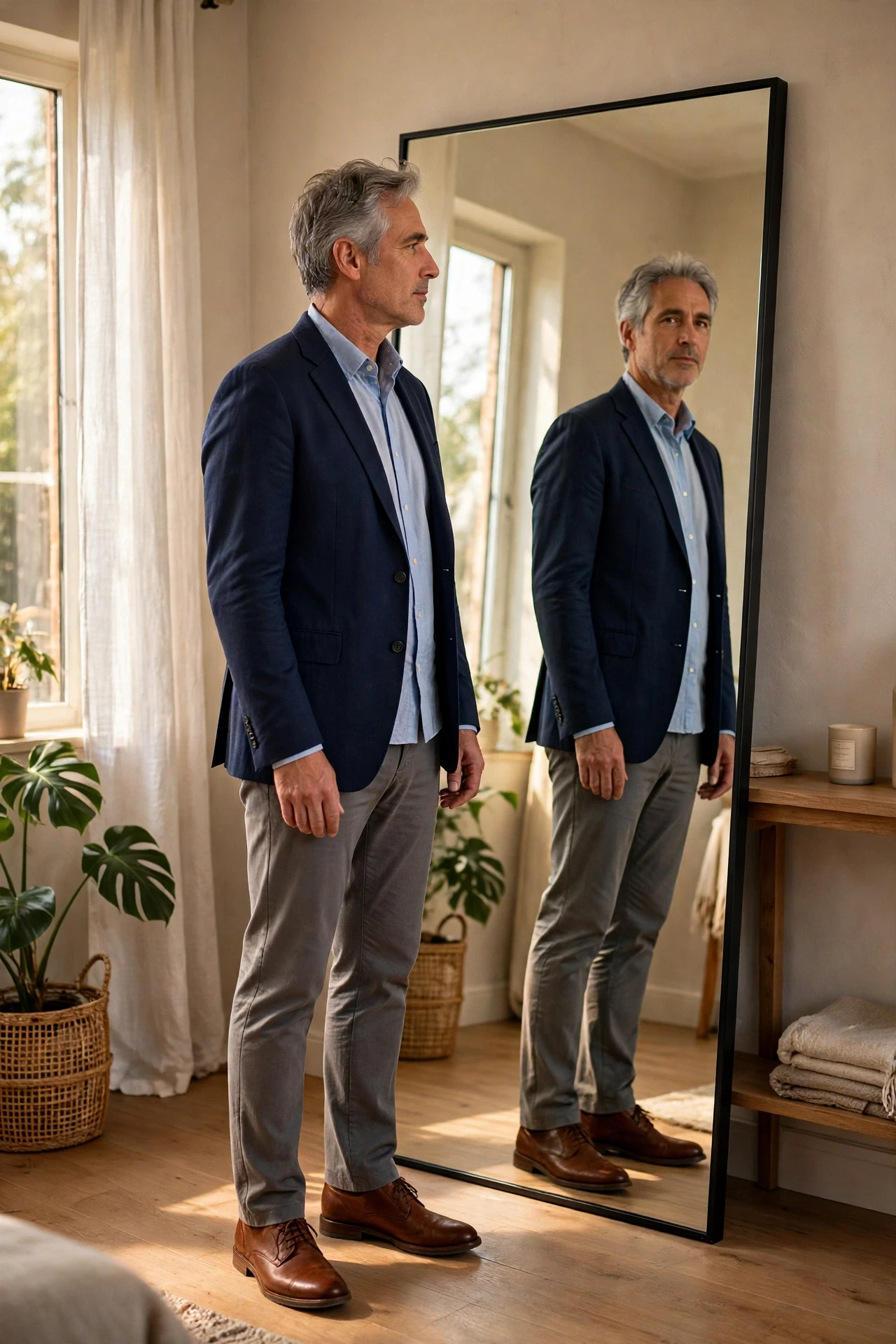
The best fit after 50 sits in the middle: not slim and tight, not loose and baggy. Sharpologist recommends “a middle-of-the-road fit” and avoiding anything skinny, relaxed or oversized.
He Spoke Style is even blunter: “Avoid skinny jeans, or indeed skinny anything.” Tight clothes are uncomfortable when you sit for long periods, and they show every change in your shape.
Choosing Trousers With the Right Rise
Many men over 50 find mid-rise trousers more comfortable than low-rise ones. They sit at the natural waist, don’t dig in when you sit, and keep shirts tucked in.
Stretch cotton, a little elastane, or a hidden elastic waistband adds comfort without looking casual. Check the fit sitting down, not just standing.
Sit down in the trousers and check the waist doesn’t dig in.
Bend and reach; the seat shouldn’t pull tight.
Stand and check the hem just touches your shoes.
Make sure the thighs skim rather than cling.
Try a size up and tailor the waist if the seat is tight.
A tailor can take in a waist cheaply, but can’t add room to a tight seat or thigh. Here’s what the switch looks like.
BEFORE:
Tight, low-rise jeans that dig in when sitting and push the waistband under the stomach.
AFTER:
Mid-rise stretch chinos that sit at the natural waist, stay comfortable seated, and look cleaner and smarter.
03
OF 08
Fabrics That Feel Good and Last
Fabric decides how comfortable a piece is all day. Natural fibres usually breathe better and age more gracefully than cheap synthetics.
Here’s how the most useful fabrics compare.
| Fabric | How It Feels | Best For | Season |
|---|---|---|---|
| Merino wool | Soft, warm, breathable | Knits, base layers, travel | All year |
| Linen | Light, cool, creases easily | Summer shirts and trousers | Summer |
| Stretch cotton | Soft, flexible | Chinos, jeans, shirts | All year |
| Oxford cotton | Sturdy, breathable | Everyday shirts | All year |
| Flannel and corduroy | Warm, soft, textured | Shirts, trousers | Autumn and winter |
| Cashmere | Very soft and warm | Sweaters, scarves | Winter |
If you only upgrade one fabric, make it your knitwear. A good knit sits closest to the face and gets worn more than almost anything else.
📌 Why Merino Earns Its Place
Woolmark says merino’s natural elasticity means travel wrinkles “will quickly smooth back out,” and that it’s highly breathable. That makes merino knits and trousers useful for long days, flights and changing temperatures.
Avoid shiny polyester and very thin fabrics where you can. They trap heat, show every crease and tend to look tired quickly.
04
OF 08
Colours for Grey Hair and Every Skin Tone
A mostly neutral wardrobe makes getting dressed easier and looks polished. Sharpologist suggests that about “80% of your wardrobe consists of neutral, solid colors,” with the rest saved for one statement piece or accessories.
Navy, charcoal, olive, camel, stone and white form a strong base. Then add colour in a knit, a shirt or a scarf, which He Spoke Style encourages: “don’t be afraid to experiment with color.”
Colours That Flatter Grey or White Hair
Grey and white hair look striking with navy, charcoal, burgundy, forest green and cool blues. These deep shades make the grey look deliberate rather than faded.
Very pale beige or washed-out pastels near the face can drain colour from grey hair and lighter skin. Keep paler shades for trousers.
Colours on Deeper Skin Tones
On deeper skin tones, rich colours like burgundy, mustard, rust, cream and crisp white look warm and confident. A white shirt or cream knit gives clean, bright contrast.
Earthy browns and olives also work well, especially in autumn. They look rich without being loud.
05
OF 08
Clothes for Men Over 50 by Occasion and Season
These seven outfits cover casual, smart casual and business casual looks for summer, autumn, winter and travel. Each one is built for comfort as much as style.
Easy Casual Weekend

A quarter-zip merino sweater is warm when zipped and cooler when open, which makes it easy to adjust. Over a plain white tee with dark jeans, it looks tidy without effort.
Choose straight-leg jeans in a dark wash with a little stretch. They look smarter and feel more comfortable than slim, rigid denim.
Smart Casual Lunch
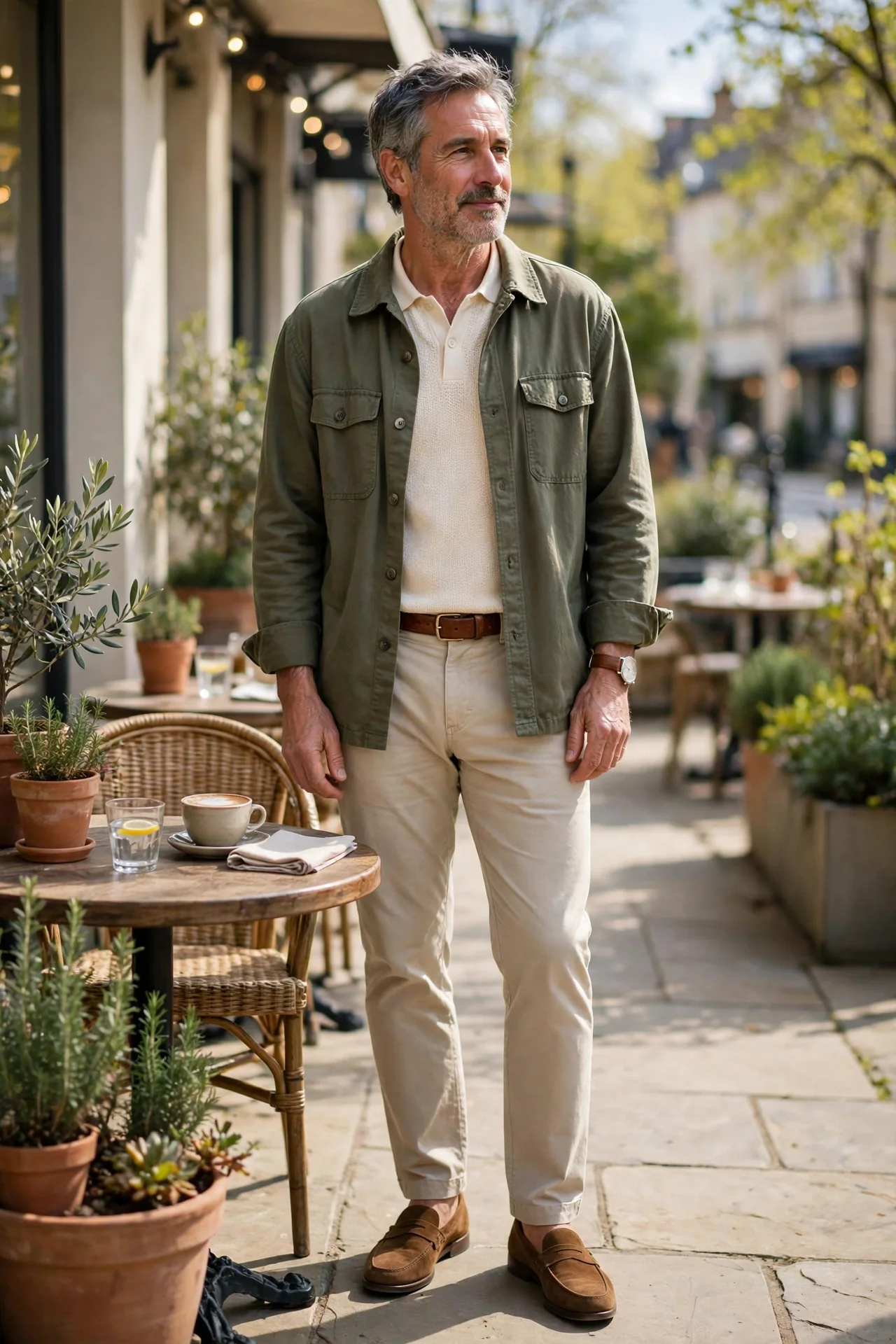
An overshirt over a knit polo sits right between casual and dressy. It’s easy to move in and needs no tie or blazer.
Suede loafers add polish without the stiffness of formal shoes. A watch and a leather belt are enough accessories.
Business Casual Office

An unstructured blazer has softer shoulders and less padding than a suit jacket, so it’s far more comfortable to wear all day. Over a white oxford shirt and grey wool trousers, it’s the safest business casual uniform.
Add a tie for important meetings, and remove it for the rest of the week. Leather derbies or loafers with a cushioned insole make long days easier.
Classy Summer Evening
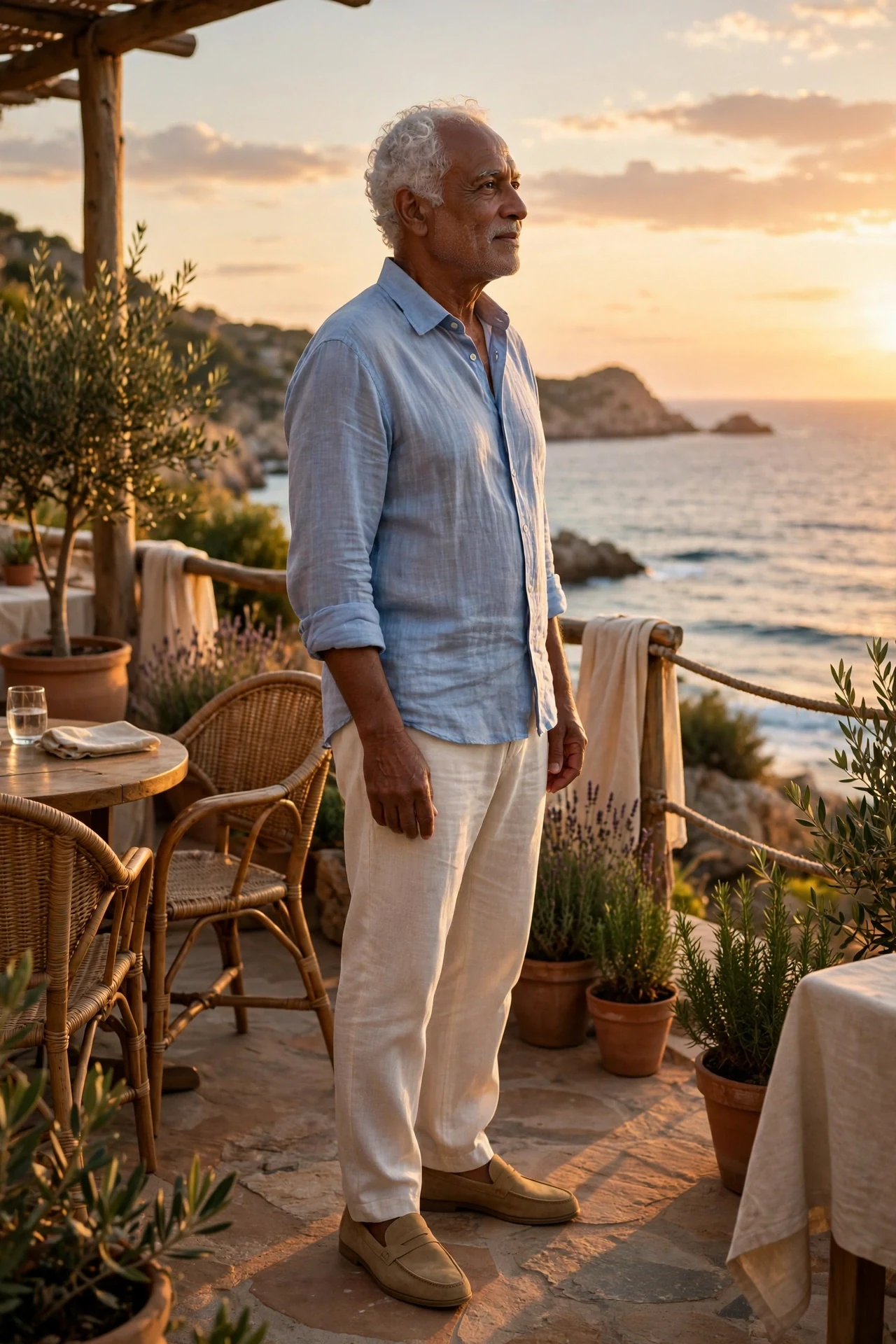
Linen is the coolest fabric for summer and looks effortlessly elegant. A light blue or white linen shirt with cream trousers is classy without being formal.
Accept that linen creases; it’s part of its charm. For fewer creases, choose a linen-cotton blend.
Autumn Layers
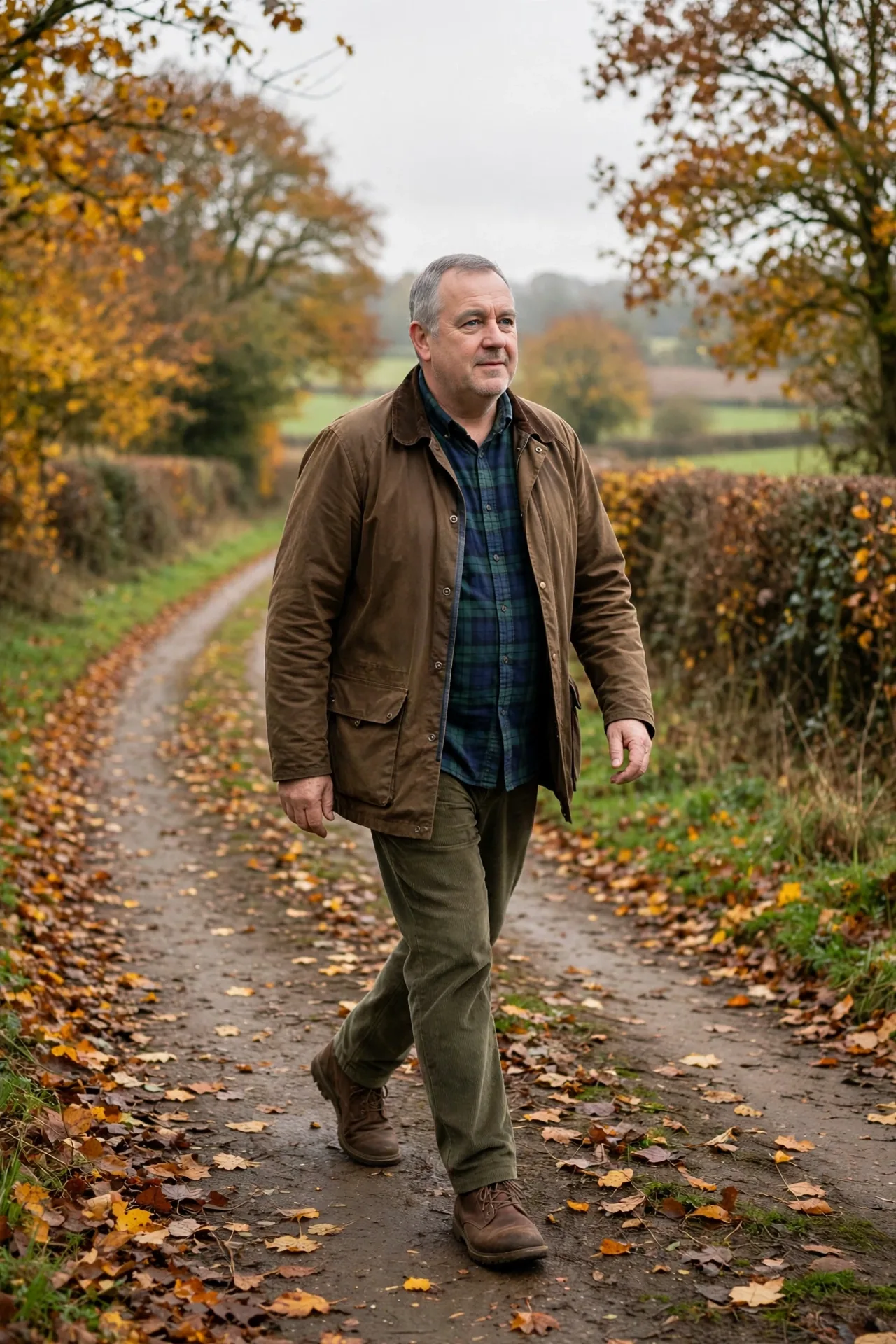
Autumn is the best season for texture: flannel, corduroy, suede and waxed cotton. A field jacket over a flannel shirt with corduroy trousers looks rich and stays warm.
Earthy colours like brown, olive, rust and navy suit the season. Leather boots handle wet ground and finish the look.
Winter Warmth
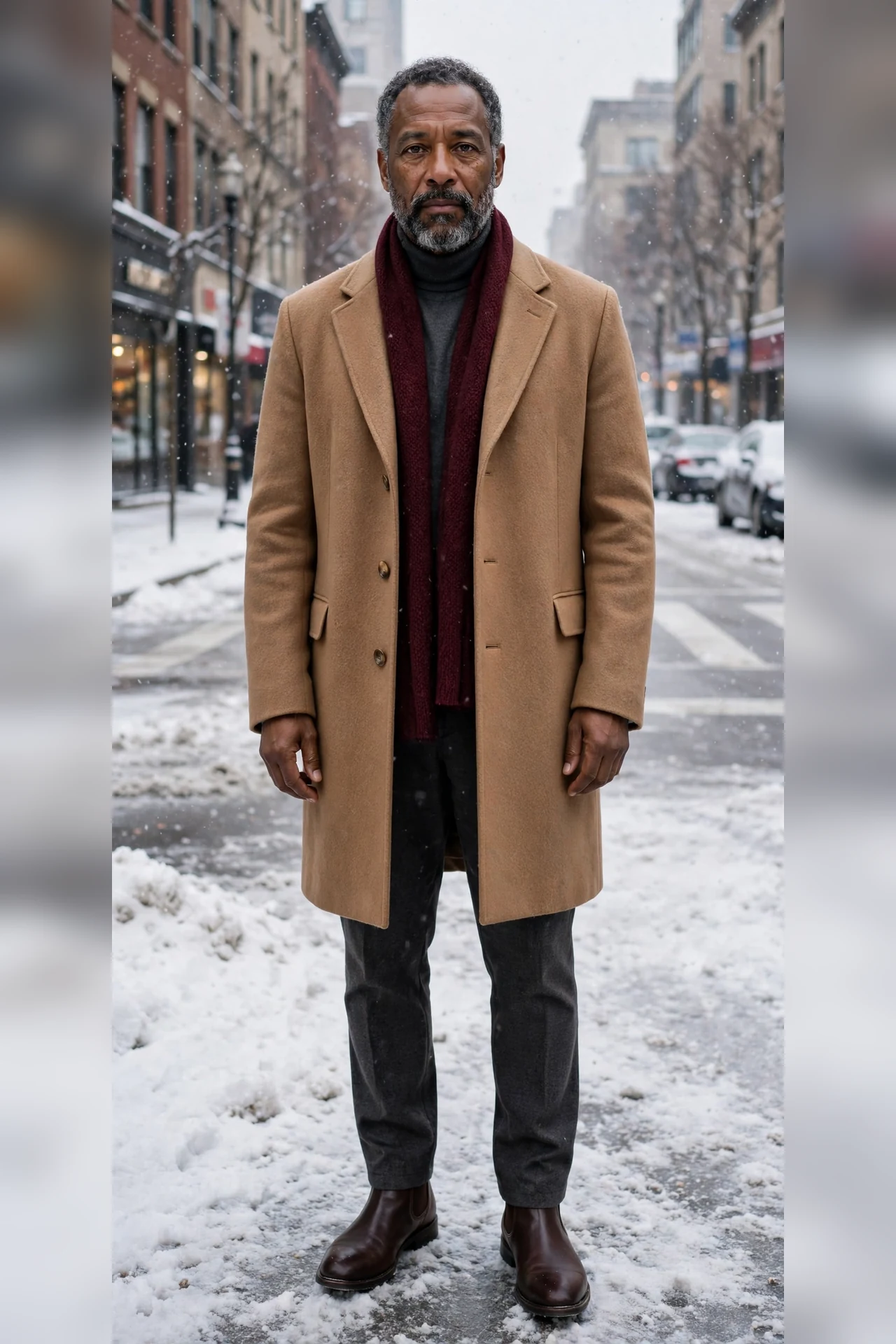
A wool overcoat over a roll-neck sweater is warm, smart and comfortable. The roll-neck keeps the neck warm without a tie.
Flannel trousers are warmer than cotton chinos. Chelsea boots slip on easily, which is useful if bending to tie laces is a nuisance.
Comfortable Travel Day
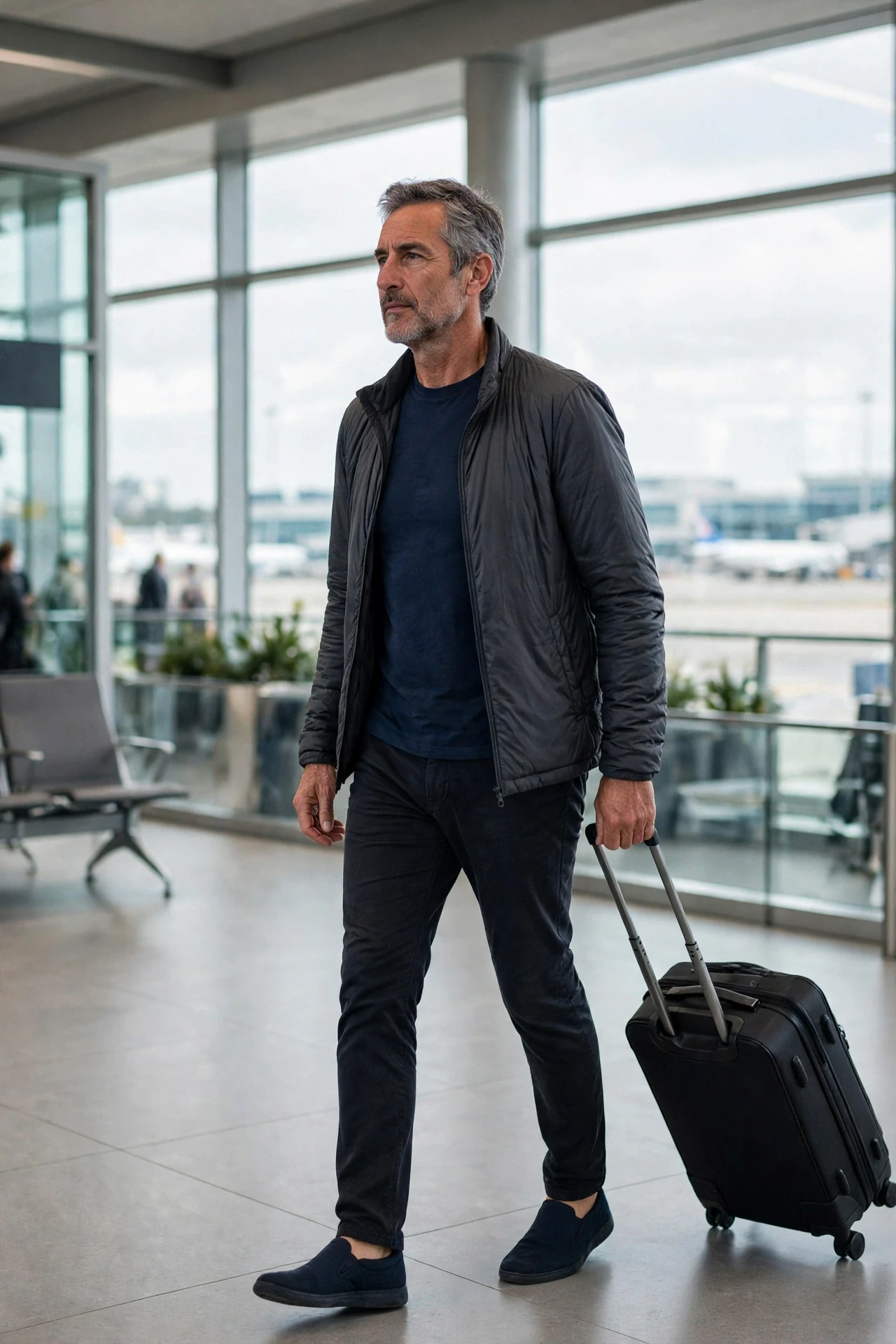
A merino tee, stretch chinos and a light packable jacket stay comfortable on a long flight and still look presentable on arrival. Slip-on shoes make airport security easier.
Layer a knit or the jacket for cold cabins. Dark colours hide spills and creases better than light ones.
06
OF 08
Comfortable Shoes That Still Look Smart
Shoes are where comfort matters most after 50. Sore feet make a sharp outfit miserable.
Sharpologist suggests swapping worn-out running shoes for “a pair of minimalist leather sneakers,” with chukka or Chelsea boots as smarter alternatives. Loafers and suede derbies add polish for dinners and work.
✅ Do This
Choose leather sneakers, loafers or Chelsea boots with a cushioned insole and enough room for your toes.
🚫 Skip This
Don’t wear bulky gym trainers with smart clothes, or stiff, narrow dress shoes that pinch on a long day.
Shop for shoes in the afternoon, when feet are slightly larger, and walk around the shop before you buy.
⚠️ Where Foot Pain Needs More Than New Shoes
If you have ongoing foot, knee or back pain, ask a doctor or podiatrist about supportive insoles. Many smart shoes take a removable insole, so you can add support without changing your style.
Slip-on styles like loafers and Chelsea boots are easier to put on than laced shoes. Keep at least one pair of each in good condition.
07
OF 08
Packing Clothes for Travel
A small, mix-and-match travel wardrobe beats a heavy suitcase. Pick a few pieces in one colour family so everything goes together.
Merino and stretch fabrics are the most useful, because they resist creases and stay comfortable on long days. Woolmark notes that merino trousers “won’t crease like heavier chinos would.”
✅ A Week-Long Trip in One Carry-On
- Two pairs of stretch chinos or travel trousers, one dark and one light
- Three merino or cotton tees and two shirts
- One merino knit or quarter-zip
- One light packable jacket
- Comfortable slip-on sneakers and one smart pair of shoes
Wear your bulkiest pieces, like the jacket and heavier shoes, on the journey. Roll tees and knits, and fold shirts and trousers flat to keep them smooth.
08
OF 08
Mistakes Men Over 50 Make With Clothes
Most mistakes come from treating comfort and style as opposites. With the right fabrics and fit, you don’t have to choose.
Wearing Everything Too Big:
Oversized clothes feel comfortable but add bulk and make you look older. A gently fitted cut in stretch fabric gives the same comfort with a cleaner line.
Another common slip is overdoing accessories. Sharpologist recommends “less is more,” with two or three accessories at most, like a watch, a belt and glasses.
💡 The “Comfortable Means Sloppy” Myth
Myth: Comfortable clothes always look casual or untidy.
Reality: Merino knits, stretch chinos, unstructured blazers and leather sneakers are all comfortable and smart. Fit and fabric matter more than whether something stretches.
Being afraid of colour is a mistake too. A burgundy knit or a forest-green overshirt adds life without looking like you’re trying too hard.
Skip It If You Haven’t Worn It in Two Years
Clothes you’ve been keeping for “one day” usually no longer fit your body or your life. Donate them and make space for pieces you’ll actually wear.
Which outfit will you try first?
FAQs
What clothes look best on men over 50?
Gently fitted classics in quality fabrics, like stretch chinos, dark jeans, oxford shirts, merino knits, an unstructured blazer and leather sneakers or loafers.
What should men over 50 wear casually?
A merino knit or quarter-zip over a tee, dark straight-leg jeans or chinos, and clean leather sneakers or suede loafers.
What should men over 50 wear in summer?
Linen or linen-cotton shirts and trousers, breathable polos, tailored shorts just above the knee, and loafers or leather sneakers.
What is business casual for men over 50?
An unstructured blazer over an oxford shirt, wool trousers or chinos, and leather derbies or loafers, with or without a tie.
What are the best travel clothes for men over 50?
Merino tees and knits, stretch chinos, a light packable jacket and slip-on sneakers, all in colours that mix and match.
Should men over 50 wear skinny jeans?
Usually not. A straight or gently tapered cut with a little stretch is more comfortable and more flattering.