25 Ear Piercings for Men, Mapped Out: From Lobe to Industrial

An ear piercing is one of the smallest changes a man can make to his look, and one of the most noticeable. A single stud can make a plain T-shirt look considered, while a few well-placed hoops along the ear can give a whole outfit an edge.
The difference between a piercing that looks intentional and one that looks random usually comes down to three things: where it sits, what jewelry goes in it, and how well it heals. Below are 25 ear piercings for men, from a simple lobe stud to cartilage, industrial and full ear stacks, with what each one suits, how long it takes to settle, and how to style it once it has.
Short on Time? Pick Your Path
Table of Contents
- 01A Single Lobe Stud in One Ear
- 02Matching Studs in Both Lobes
- 03Diamond Studs in Pierced Lobes
- 04Black Studs in Pierced Lobes
- 05A Small Silver Hoop in the Lobe
- 06Gold Huggie Hoops
- 07Cross Earrings in Pierced Lobes
- 08Double Lobe Piercing
- 09Triple Lobe Stack
- 10Stretched Lobe Piercing
- 11Helix Piercing With a Small Hoop
- 12Double Helix Piercing
- 13Helix Piercing Paired With an Ear Cuff
- 14Conch Piercing With a Hoop
- 15Tragus Piercing
- 16Daith Piercing
- 17Rook Piercing
- 18Industrial Bar Piercing
- 19Lobe and Helix Combo
- 20Curated Ear Stack
- 21K-Pop Style Ear Stack
- 22Punk Ear Piercings With Spikes
- 23Hidden Helix Piercings Under Long Hair
- 24Traditional Gold Ear Piercing for Indian Men
- 25A First Lobe Piercing for Teen Boys
01
OF 25
A Single Lobe Stud in One Ear
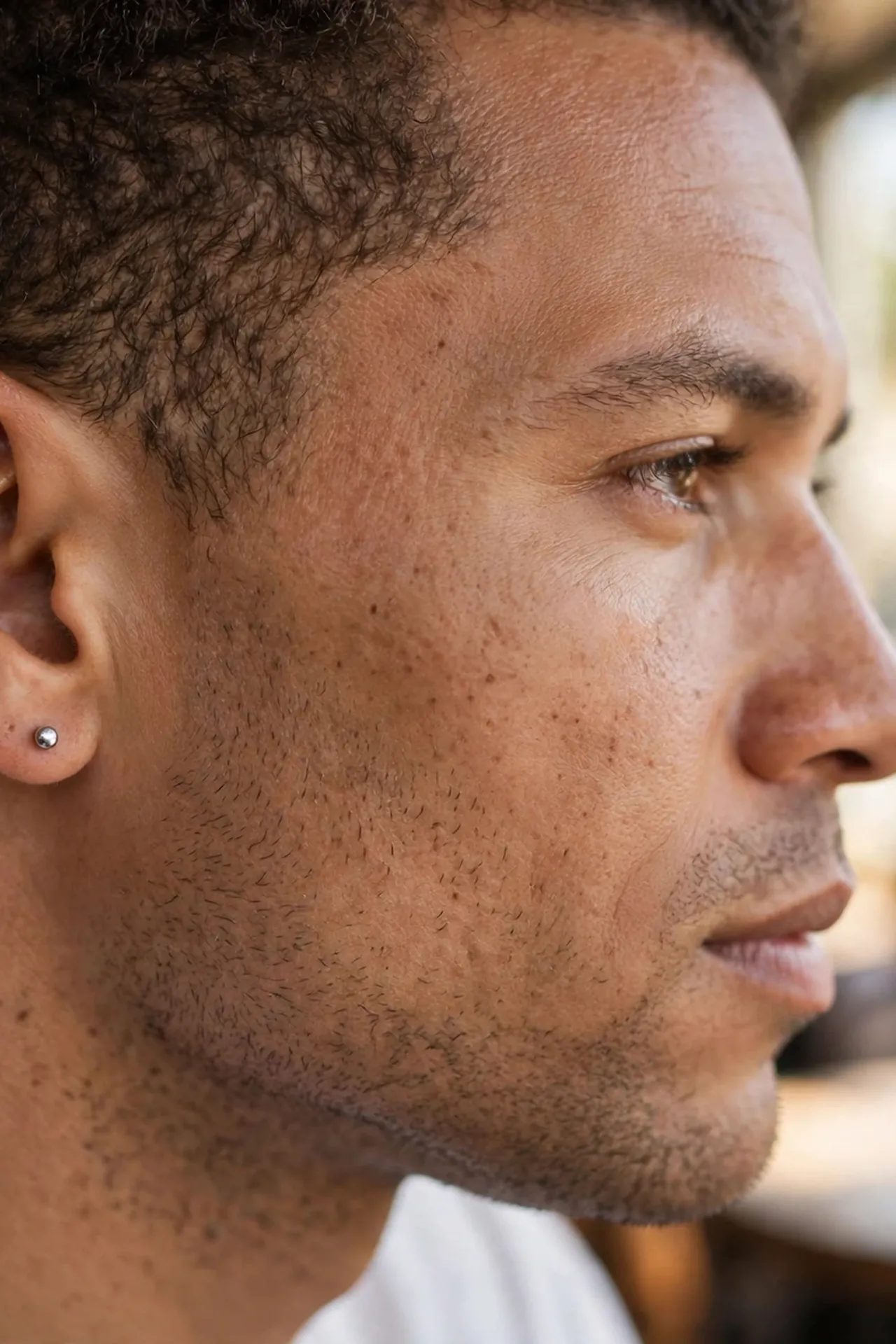
One stud in one lobe is where most men start, and for good reason. It adds a small point of interest without changing how you dress, and it suits almost every face shape and hairstyle.
The lobe is also the most forgiving place to pierce. It’s soft tissue rather than cartilage, so it usually hurts less, heals faster and copes better with the odd knock than any other spot on the ear.
Choosing the First Stud
Start with a flat or round stud between about 3 and 4 mm. That size is noticeable up close but disappears at a distance, which is what makes it work at the office and on the weekend alike.
For the first jewelry, most professional piercers use implant-grade titanium or solid 14k gold. Both are far less likely to cause a reaction than cheap mixed metals, which often contain nickel.
Caring for It While It Heals
A lobe can look fine within a couple of weeks and still be raw inside. Keep the routine simple and consistent until the full healing time has passed.
Spray sterile saline wound wash on the front and back once or twice a day.
Let it air-dry, or pat it with clean paper towel instead of a cloth towel.
Leave the stud in place and don’t twist or turn it.
Sleep on the other side, or use a travel pillow so the ear sits in the hole.
Keep hair products, shampoo and fragrance away from the area.
Go back to your piercer if you see swelling, heat or discharge that gets worse.
If redness spreads, the area feels hot, or you get a fever, see a doctor rather than waiting it out. A piercer can help with irritation, but an infection needs medical care.
💡 The “Right Ear Means Something” Myth
Myth: Piercing your left or right ear sends a message about who you are.
Reality: That idea was passed around decades ago as an informal code, but it carries no fixed meaning today. Most men simply choose the ear that shows on the side they part their hair or face the camera.
It also helps to know what’s normal. The NHS says tenderness, itching, mild redness and a pale, crusty fluid are all common in the first few weeks.
Swelling, heat, pus or feeling unwell are signs of infection, and the NHS advice is to get an urgent GP appointment or call 111. Leave the jewellery in unless a doctor tells you to take it out, because removing it can trap the infection inside.
02
OF 25
Matching Studs in Both Lobes
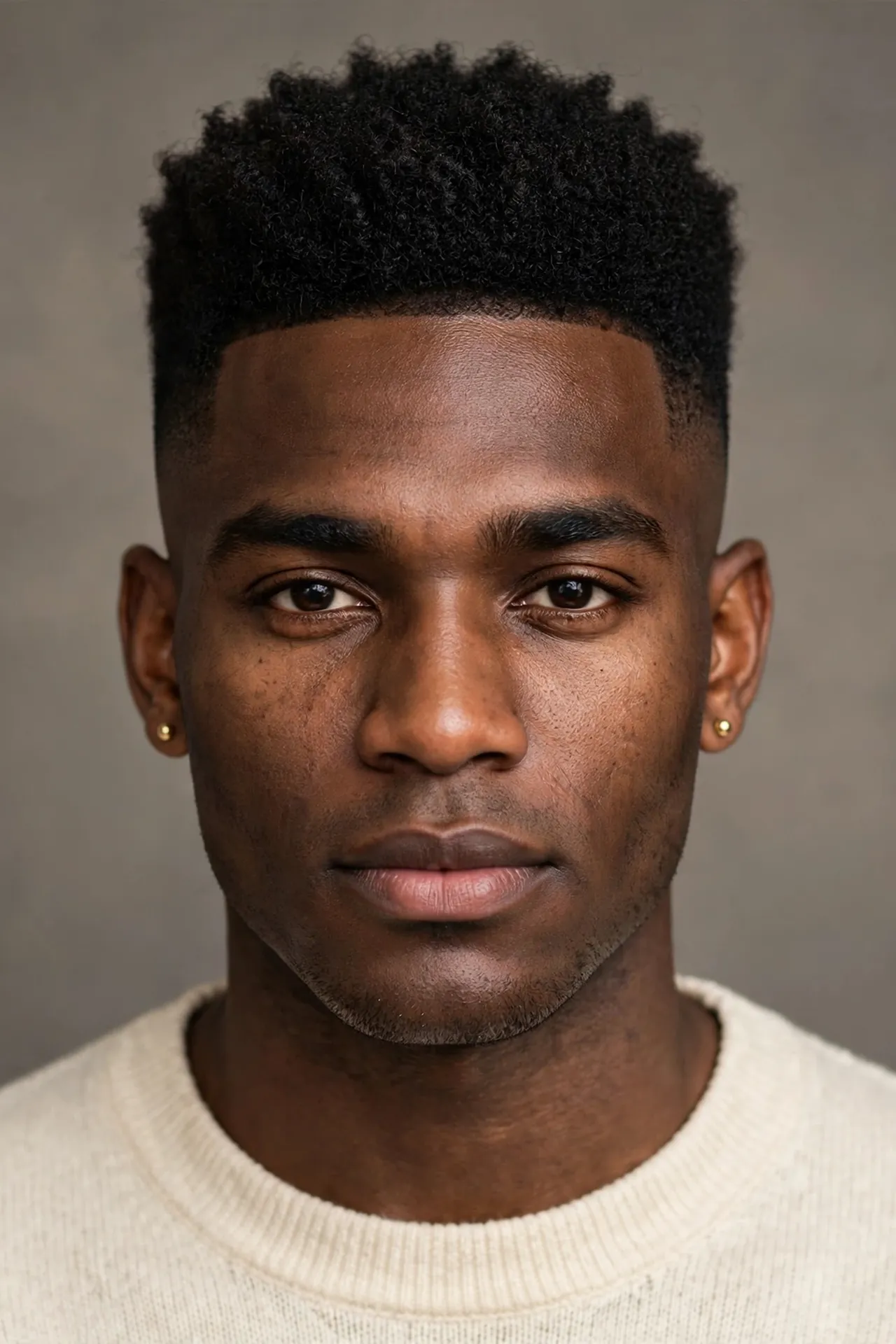
Piercing both ears gives a more finished, deliberate look than a single stud. Because the two sides match, the eye reads it as part of your grooming rather than a statement piece.
It suits men with short hair or a fade especially well, since both ears are on show. It also tends to look smarter in photos, because nothing pulls attention to one side of your face.
The tricky part is symmetry. Most faces and ears aren’t perfectly even, so two holes placed the same distance from the edge of each lobe can still look slightly off when you face a mirror.
💈 Get Both Lobes Marked Before Anyone Pierces
Ask the piercer to mark both spots, then check them in a mirror from the front, not just the side. Move the dots until they look level on your face, because that’s how people will actually see them.
Getting both done in one sitting is usually fine for lobes. It does mean sleeping on your back for a few weeks, so some men prefer to do one side at a time.
03
OF 25
Diamond Studs in Pierced Lobes

A small diamond or clear crystal stud is the most formal earring a man can wear. It catches light without adding colour, so it sits comfortably with a suit, a dress shirt or a dark knit.
This look is common among athletes and musicians, but it works just as well for an everyday office job. The trick is keeping the stone small, around 3 to 5 mm, so it reads as a glint rather than a piece of jewelry.
📅 Wear It For
Real diamonds and lab-grown diamonds look identical to most people. Cubic zirconia is cheaper and still looks clean, though it can turn cloudy over the years and may need replacing.
Whatever stone you choose, look at the setting. A screw-back or threadless post holds better than a cheap butterfly back, which can loosen and drop a stone without you noticing.
04
OF 25
Black Studs in Pierced Lobes

Black studs give a piercing a quieter, edgier feel than silver or gold. They suit dark hair especially well, and they pair naturally with black, grey and navy clothes.
Square and flat round shapes look the most masculine in black. A small black stud also hides easily, so it’s a good choice if you want a piercing that looks cool but doesn’t draw attention.
Where Black Studs Go Cheap:
Most black earrings are steel or brass with a black coating, and cheap coatings chip or wear off within weeks. Once that happens, the silver metal underneath shows through and the stud looks tired.
Choose black jewelry with a hard coating such as PVD from a seller who lists the base metal. And because coatings can flake, save black studs for lobes that have fully healed. A fresh piercing should stay in plain titanium or solid gold.
05
OF 25
A Small Silver Hoop in the Lobe
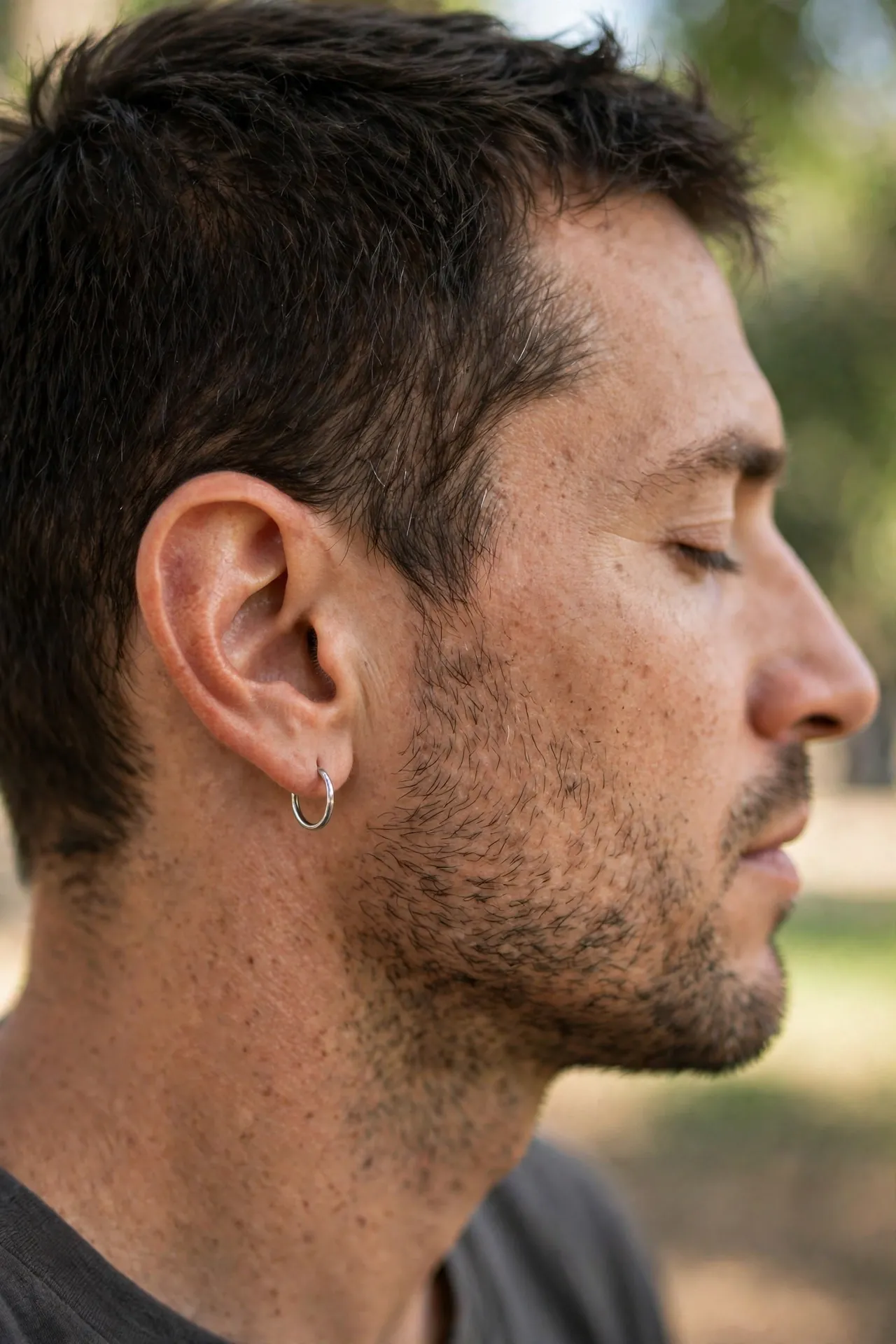
A silver hoop feels more relaxed than a stud. It moves slightly as you turn your head, which gives a plain outfit a little more character.
Small, thin hoops look best on most men. Something around 8 to 10 mm in diameter and 1 to 1.2 mm thick hugs the lobe without hanging, which keeps the look clean rather than dramatic.
⚠️ Why a Fresh Lobe Shouldn’t Get a Hoop
A hoop moves and rotates more than a stud, and that movement irritates a healing hole. Most piercers start with a stud and only switch to a hoop once the lobe has fully settled.
Sterling silver is fine for healed ears, but it can tarnish and leave a grey mark on the skin. Surgical steel or titanium hoops in a silver finish stay cleaner for daily wear.
06
OF 25
Gold Huggie Hoops

Huggies are small, chunky hoops that sit close to the lobe. They look bolder than a thin hoop without hanging down, which makes them one of the easiest hoop styles for men to wear.
Gold suits warm and darker skin tones especially well. It also brings warmth to earthy colours like olive, rust, cream and camel.
📌 Solid Gold vs Gold-Plated
Gold-plated jewelry has a thin gold layer over another metal, and that layer wears through with daily wear. Solid 14k or 18k gold costs more but won’t change colour and is far gentler on sensitive skin.
Because they’re short and secure, huggies also stay put well during sport or sleep. That makes them a practical everyday hoop once your lobes have healed.
📅 Wear It For
07
OF 25
Cross Earrings in Pierced Lobes

A small cross earring is one of the most popular dangle styles for men. It can be a personal or religious symbol, or a style choice that suits streetwear, rock-inspired outfits and darker wardrobes.
It works best as a single piece. Wear the cross in one ear and keep the other plain or bare, so the look stays focused rather than busy.
💬 Keep the Cross Small for Everyday Wear
A cross around 1 to 2 cm long is visible without swinging into your collar or hair. Larger ones look better for nights out or concerts than for everyday wear.
Dangles also catch on scarves, hoods and headphones. Save them for healed lobes, and switch back to a stud when you’re doing sport or sleeping.
08
OF 25
Double Lobe Piercing
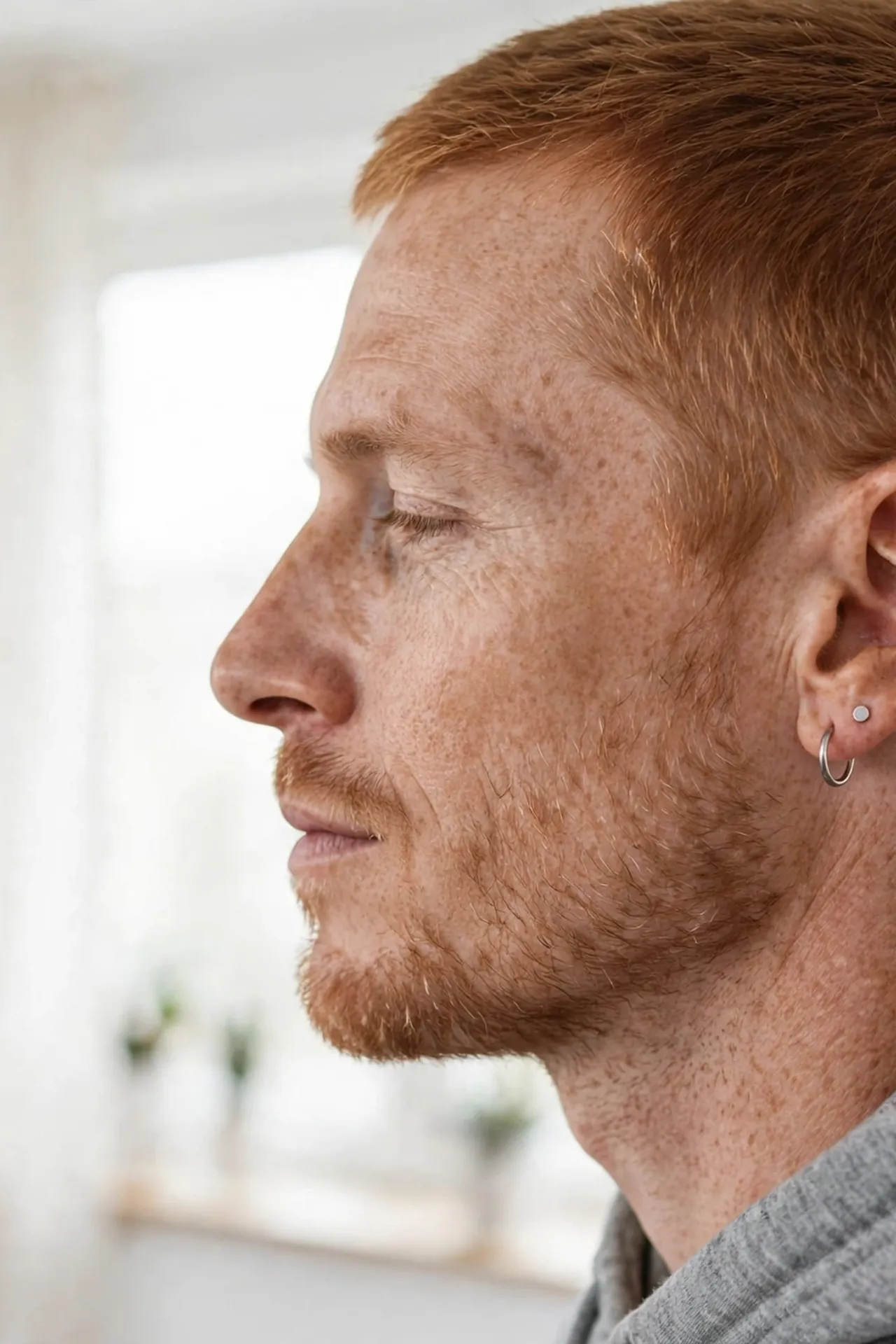
A double lobe piercing adds a second hole above the first. It’s the easiest way to make your ear look more styled while staying entirely in the soft, quick-healing lobe.
The best double lobes use two different sizes, with the bigger piece in the lower hole and a smaller one above. That step-down shape looks planned, while two equal studs can look cramped.
💈 Ask Where the Second Hole Should Sit
Ask the piercer to place the second hole high enough that a small hoop in the first won’t touch it. On a small lobe, that might mean angling it slightly back rather than straight up.
The holes don’t need to be pierced at the same time. Plenty of men add the second one once the first has fully healed, which also gives them time to decide whether they want more.
09
OF 25
Triple Lobe Stack
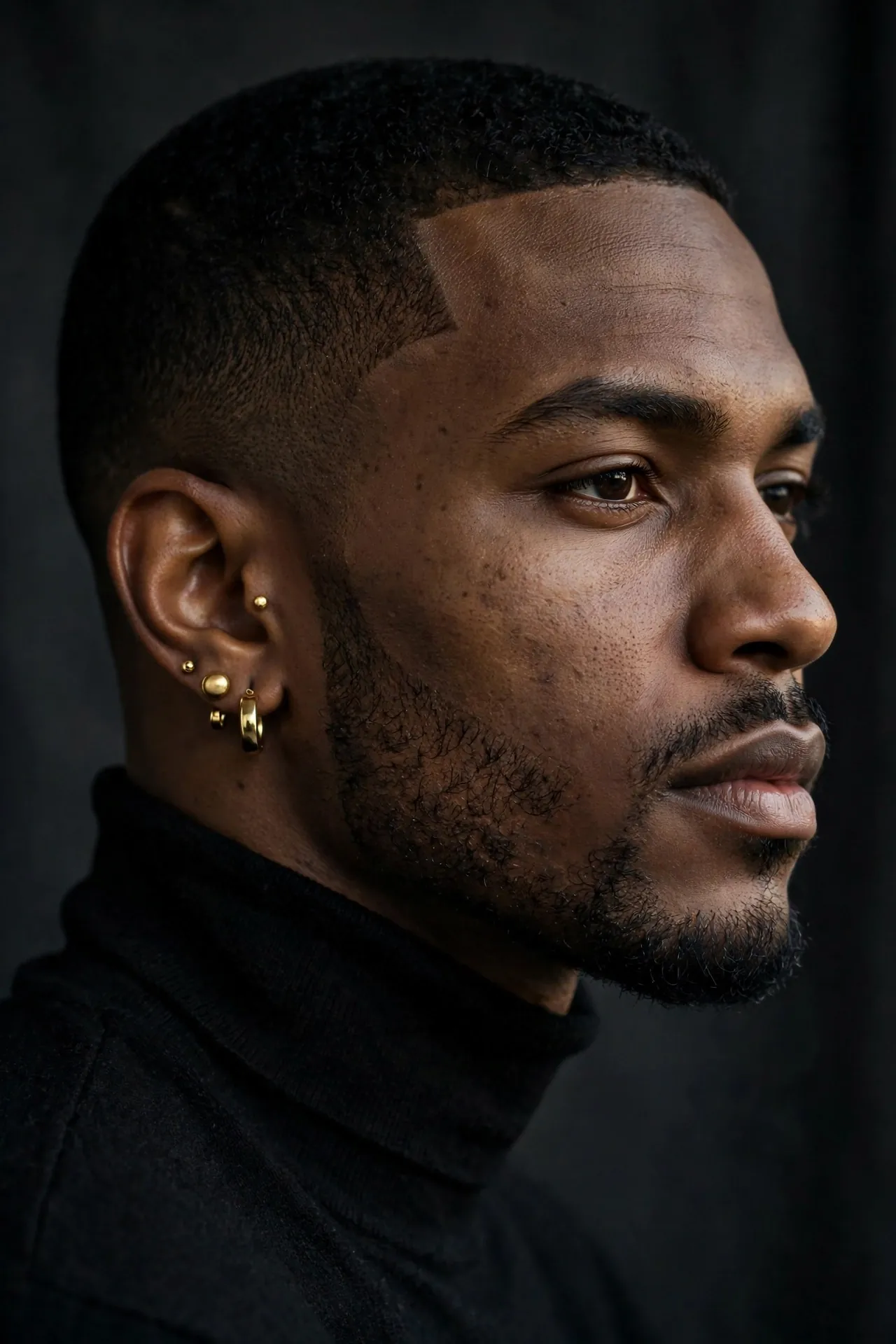
Three lobe piercings let you build a small stack without touching cartilage. On a medium or large lobe, three evenly spaced holes create a neat line that runs up toward the ear.
Graduating the sizes, largest at the bottom and smallest at the top, is what makes three piercings look like one design. The same metal throughout keeps it clean.
🎨
Spacing
about 5–7 mm apart
✂️
Sizes
large to small, bottom up
📐
Metal
one colour throughout
A small lobe may only fit two holes comfortably. If the piercer says a third won’t fit without crowding, that’s worth listening to, since overcrowded holes can stretch into each other over time.
10
OF 25
Stretched Lobe Piercing
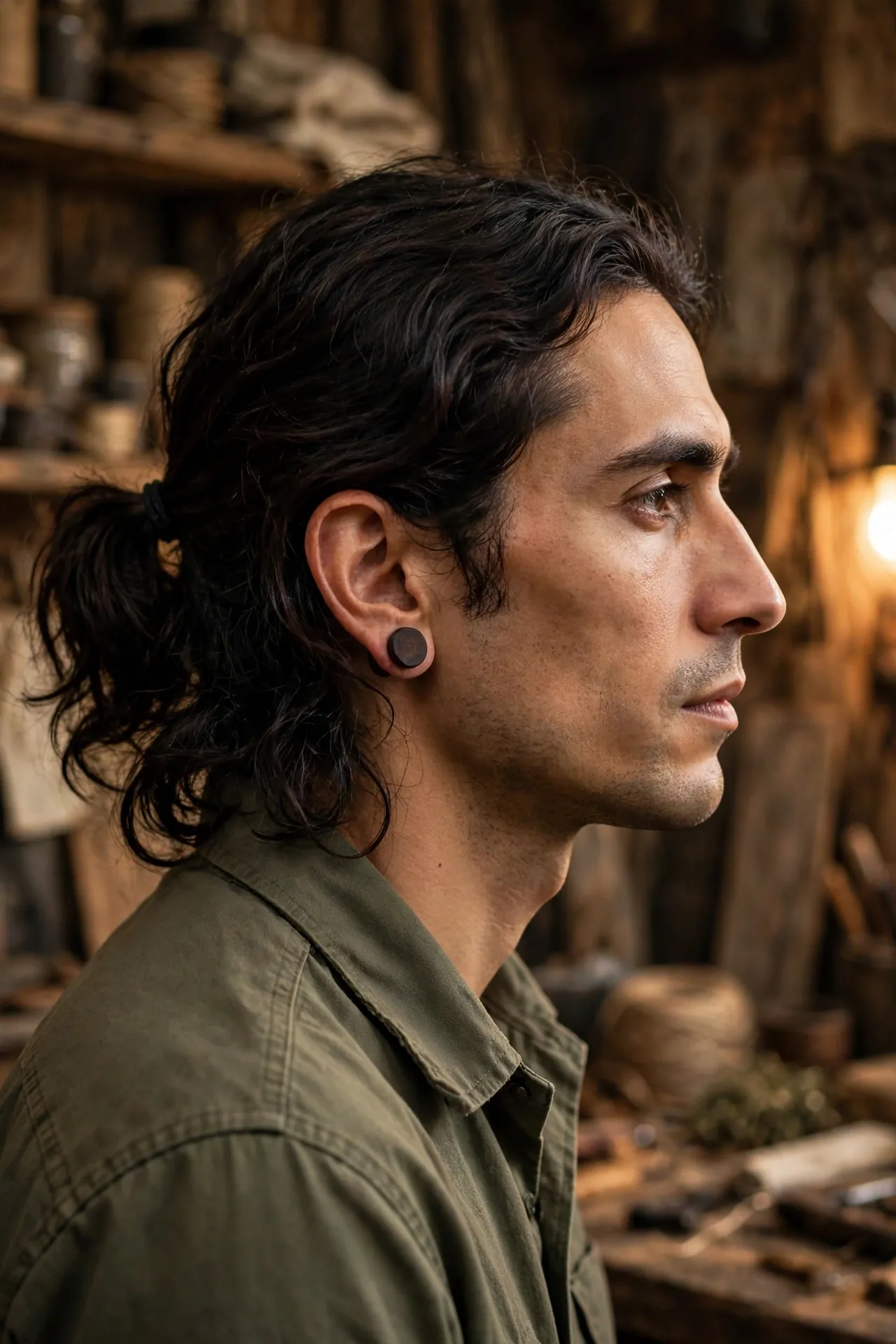
A stretched lobe, also called a gauge, slowly widens a healed piercing to fit a plug or tunnel. Even a modest stretch of 6 to 10 mm changes the look of your ear far more than any stud.
Stretching is done gradually, one small size at a time, with weeks between each step. Rushing it can tear the inside of the hole, which leaves scar tissue and can make the lobe thin and uneven.
How People Wore Stretched Lobes 5,000 Years Ago
Ötzi the Iceman, a man who lived around 5,300 years ago and was found in the Alps in 1991, had stretched earlobes roughly 7 to 11 mm wide. Ear stretching has since appeared across many cultures, from parts of Africa and Asia to South America.
Most people stretch with tapers or by adding a layer of tape to the plug every few weeks. Natural materials like wood and stone are common for healed stretches, while glass and titanium are easier to clean.
📌 Stretching Past a Point May Not Close
Small stretches often shrink back if you take the jewelry out for good. Larger ones may not, and closing them can need minor surgery, so treat anything above about 10 mm as long term.
11
OF 25
Helix Piercing With a Small Hoop
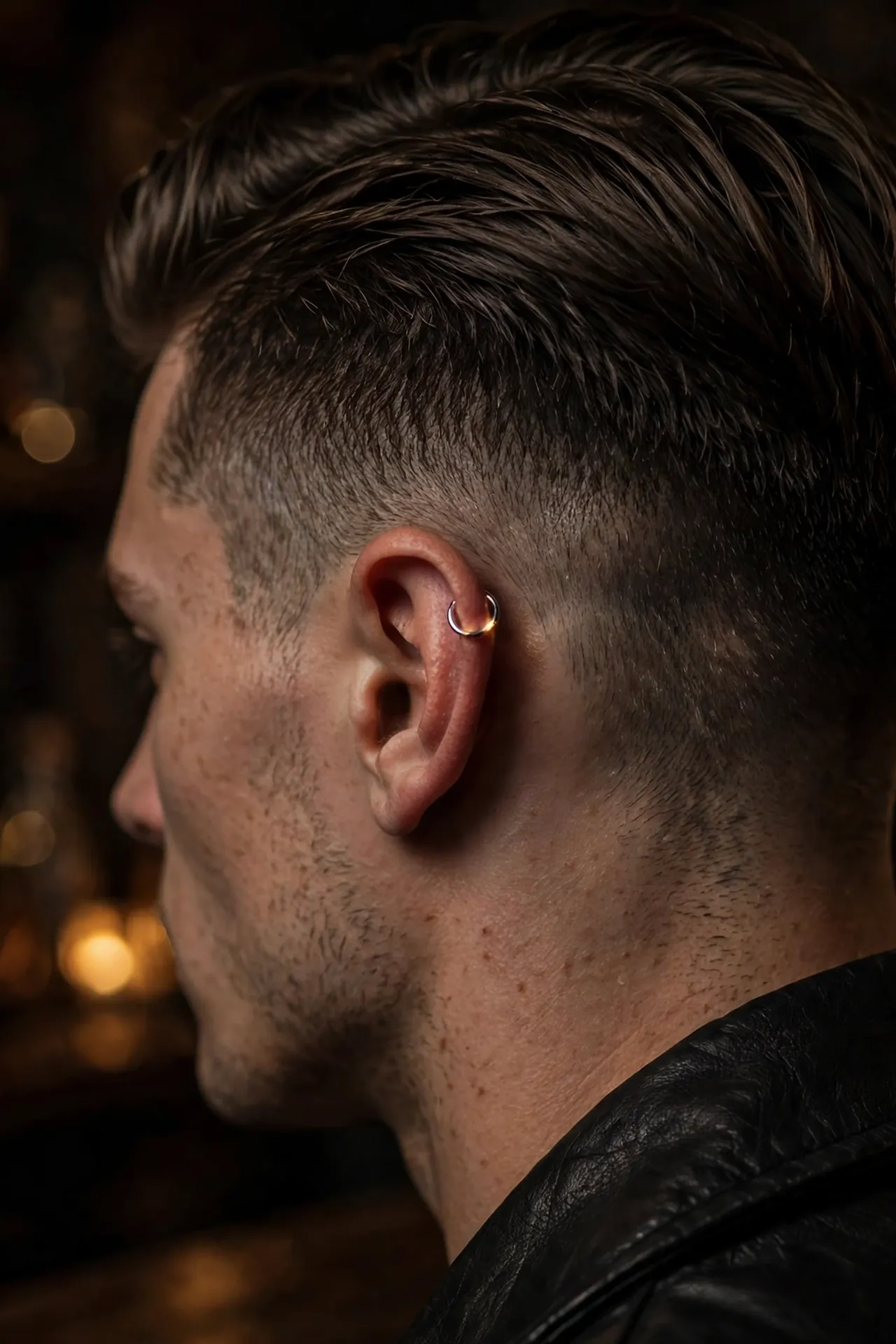
The helix runs along the outer rim of the upper ear. It’s the most popular cartilage piercing for men, because it’s easy to see, suits most ear shapes and looks good with a hoop or a stud.
A small hoop in the helix hugs the rim of the ear, which is what gives it a sharp, rock-inspired look. A stud looks cleaner and is easier to heal, so many piercers start with a stud and switch later.
Lobe and Cartilage Aren’t the Same Job
Cartilage is firmer than the lobe and has less blood flow. That’s why it hurts more, heals more slowly and reacts badly to knocks, tight hats and sleeping on it.
| Placement | Pain (general) | Typical Healing | Good First Jewelry |
|---|---|---|---|
| Lobe | Low | 6–8 weeks or more | Flat stud |
| Helix | Medium | 6–12 months | Flat stud, hoop later |
| Conch | Medium to high | 6–12 months or more | Flat stud |
| Tragus | Medium | 6–12 months | Small flat stud |
| Industrial | High | 9–12 months or more | Straight barbell |
These are general ranges, not promises. Healing depends on your body, the jewelry, how well you look after it and how often it gets knocked.
💡 The “A Gun Is Just Faster” Myth
Myth: A piercing gun is just a quicker way to do the same job.
Reality: Guns push a blunt stud through tissue, which can shatter cartilage and is hard to fully sterilise. Professional piercers use a sterile, single-use needle, especially for anything above the lobe.
Bumps are the cartilage problem people ask about most. The NHS notes that small lumps called granulomas can form around cartilage piercings, and suggests holding a pad soaked in warm water against them once a day.
On Mumsnet, one user described a hard lump that leaked a little fluid and lasted months after a helix piercing. Another had a similar bump that went once she used warm salt-water compresses and the fluid stopped, and a third’s advice was simply to keep it clean, stop fiddling with it, and dry it well after showering.
Piercing studios give much the same aftercare advice: saline spray twice a day, don’t sleep on that side, and don’t twist the jewellery. Cheap nickel jewellery is a common cause of itching, so titanium or surgical steel is the safer choice.
12
OF 25
Double Helix Piercing
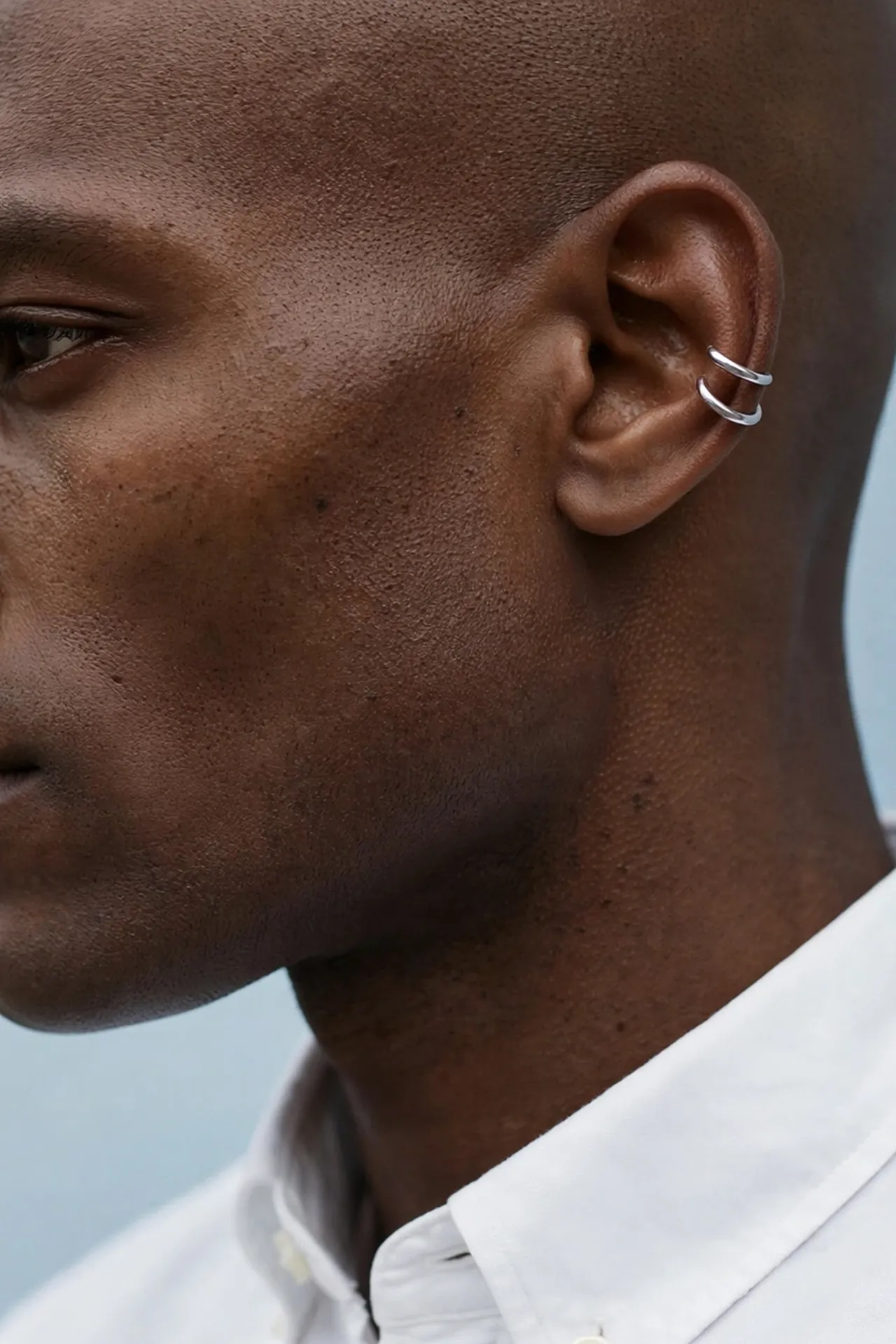
A double helix places two piercings close together along the upper rim. With two small hoops, it looks bolder than a single helix while still keeping a neat line.
Two matching hoops look strong and symmetrical. A hoop below a small stud gives a softer look and is easier to sleep on once healed.
✅ Do This
Ask the piercer to mark both spots and check them in the mirror before any needle goes in.
🚫 Skip This
Placing them so close that the two hoops press against each other.
A triple helix adds a third piercing in the same line. It suits men with a tall, well-defined rim, but it’s worth adding one piercing at a time so each has room to heal.
13
OF 25
Helix Piercing Paired With an Ear Cuff
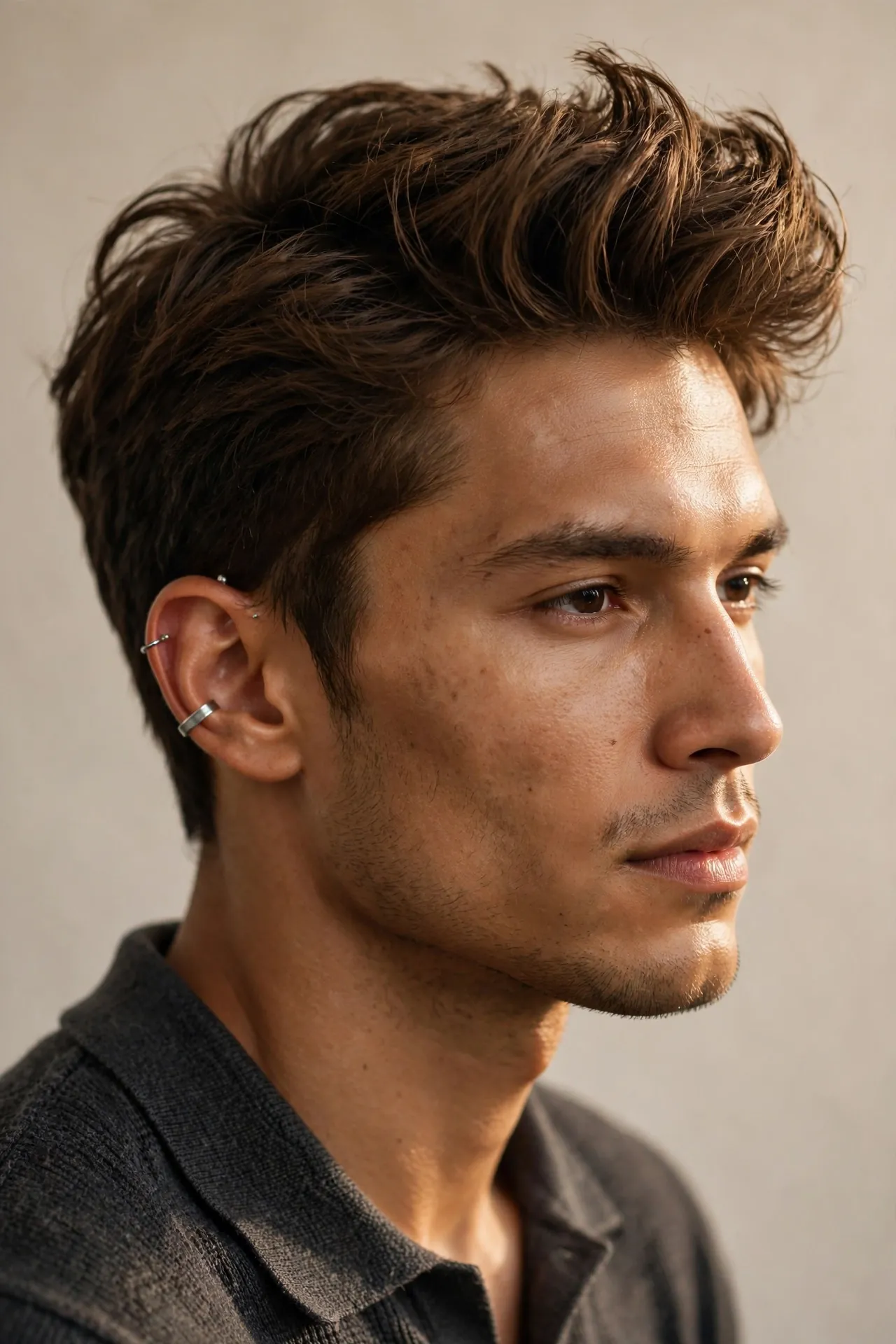
An ear cuff clips around the rim of the ear without a piercing. Paired with a helix stud, it looks like you have more cartilage piercings than you do, which is a smart way to try a fuller look.
Cuffs are also handy for anyone not ready to pierce cartilage, including younger guys. You can test where a helix might look good before making it permanent.
BEFORE:
A heavy, chunky cuff clipped right beside a helix hoop, crowding the rim and pressing on the healing hole.
AFTER:
A slim cuff on the middle of the rim, with a small helix stud above it, leaving space for both.
Keep the cuff away from a healing piercing and take it off for sleep. Pressure from a tight cuff can leave marks and irritate the cartilage underneath.
14
OF 25
Conch Piercing With a Hoop
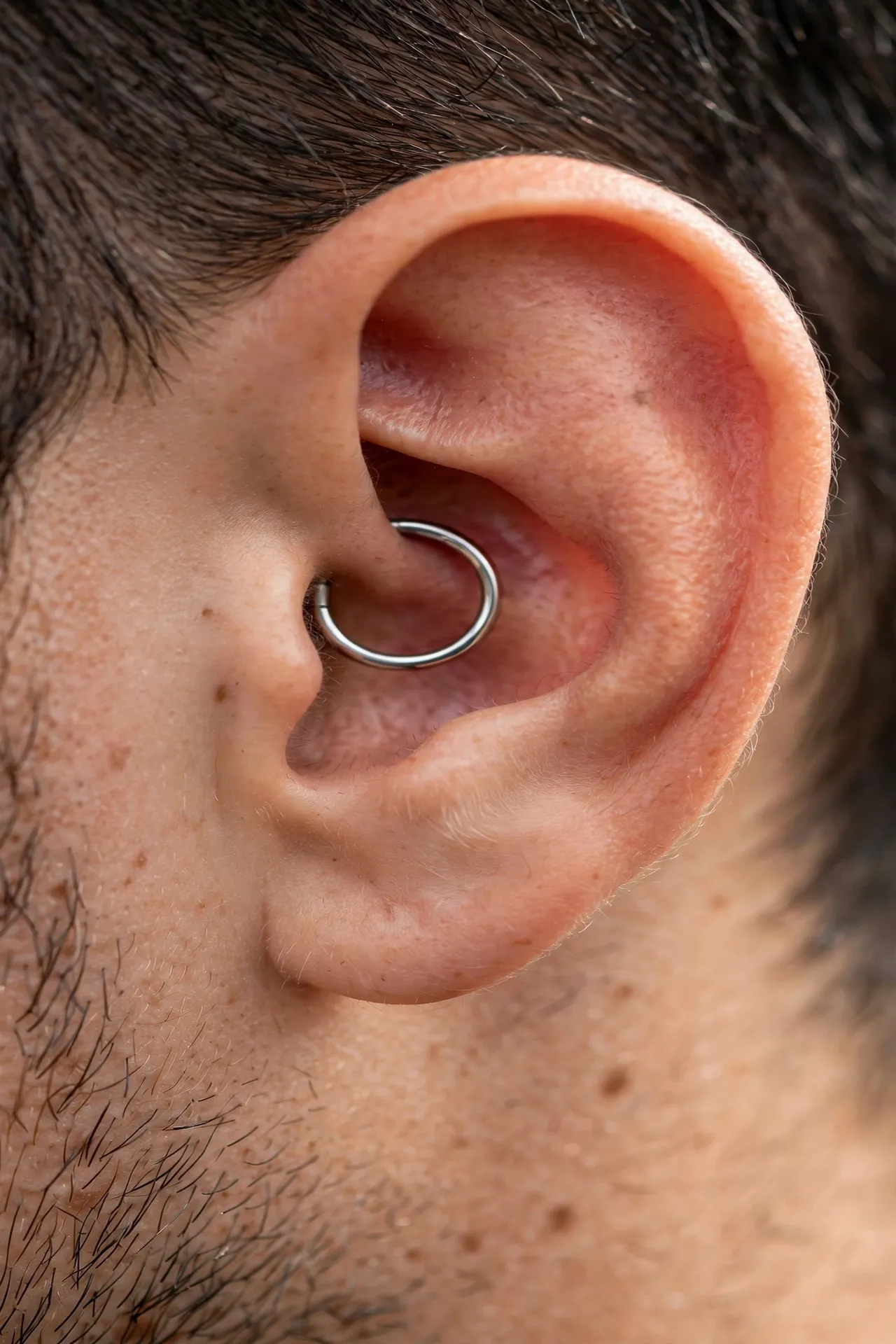
The conch sits in the inner bowl of the ear. With a stud, it looks like a neat dot in the centre of the ear; with a hoop that wraps around the rim, it looks bolder.
A hoop through the conch usually comes later. Most piercers start with a flat stud while it heals and switch to a hoop of about 10 to 12 mm once the tissue has settled.
⚠️ Earbuds and a Healing Conch Don’t Mix
In-ear headphones sit right on top of a conch piercing and press on it every time you wear them. Switch to over-ear headphones, or use the other ear, until it’s fully healed.
The conch suits men who already have a lobe or helix piercing and want something more distinctive. It’s a step up in pain and aftercare, so plan for it during a quieter month.
15
OF 25
Tragus Piercing

The tragus is the small flap of cartilage in front of your ear canal. A tiny stud here is understated, but it looks more unusual than a lobe piercing because fewer men have one.
It suits men who want something different without anything bold. A flat stud of 2 to 3 mm sits close to the skin and doesn’t stick out from the side of your face.
🧴 Saline, Not Alcohol, Around the Tragus
Clean a tragus with sterile saline spray rather than alcohol, peroxide or harsh soap. Those can dry and irritate the skin, which slows healing in a spot that’s already easy to bump.
Like the conch, the tragus doesn’t get along with earbuds while it heals. Phone calls can press on it too, so hold your phone to the other ear for a while.
16
OF 25
Daith Piercing
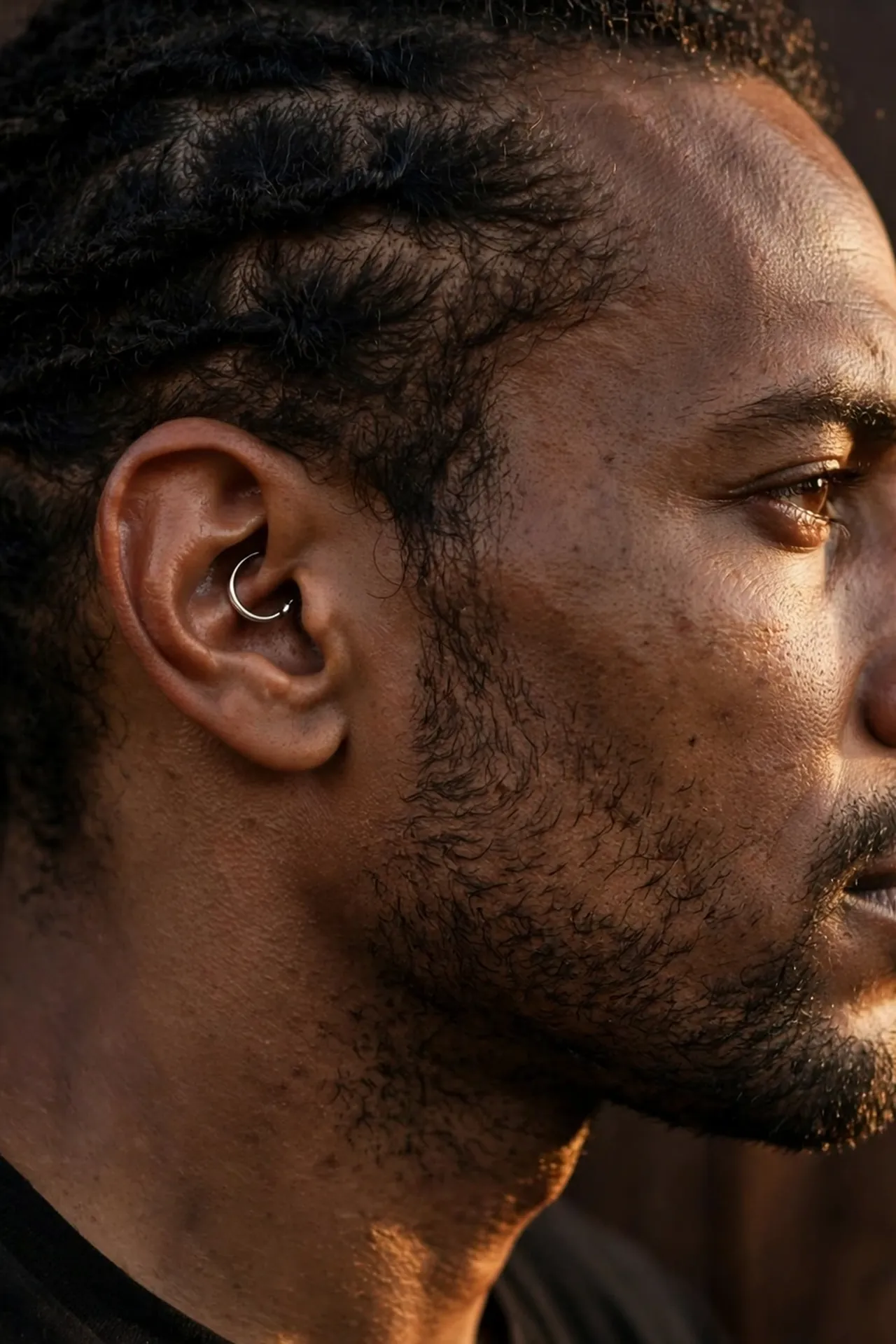
The daith goes through the innermost fold of cartilage, just above the ear canal. A small curved ring here looks neat and tucked in, and it’s mostly visible only from the side.
It needs a fold big enough to pierce comfortably. A piercer can tell you quickly whether your ear suits it, and if it doesn’t, a tragus or conch may give a similar effect.
💡 The Daith-for-Migraines Claim
Myth: A daith piercing helps with migraines.
Reality: There’s no solid clinical evidence that it works. If migraines are why you’re considering one, talk to a doctor first, and get it only if you like the look.
A daith ring can be tricky to change yourself because of its tight, curved angle. Most men leave the swap to their piercer.
17
OF 25
Rook Piercing
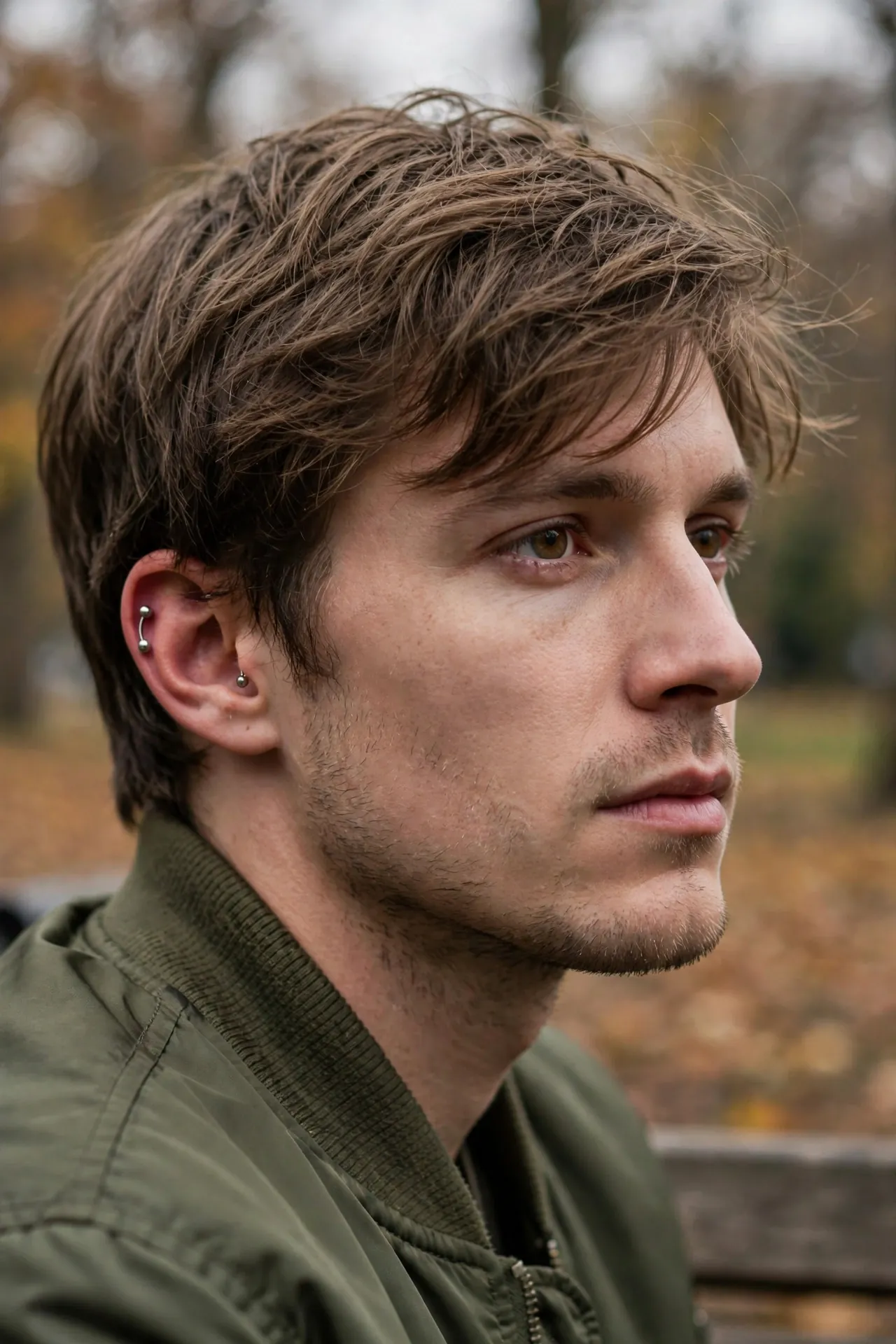
The rook sits in the upper inner ridge of the ear, just above the daith. A small curved barbell here looks crisp and tucked away, adding interest without making the ear look crowded.
It’s one of the slower and more sensitive cartilage piercings to heal. It also tends to swell early on, so the starter jewelry may need to be swapped for a shorter piece after the first few weeks.
Skip the Rook If Your Ridge Is Shallow
The rook depends on a defined ridge of cartilage. On a flatter ear, the jewelry can sit at an odd angle or press against the skin, so let the piercer check your anatomy first.
18
OF 25
Industrial Bar Piercing
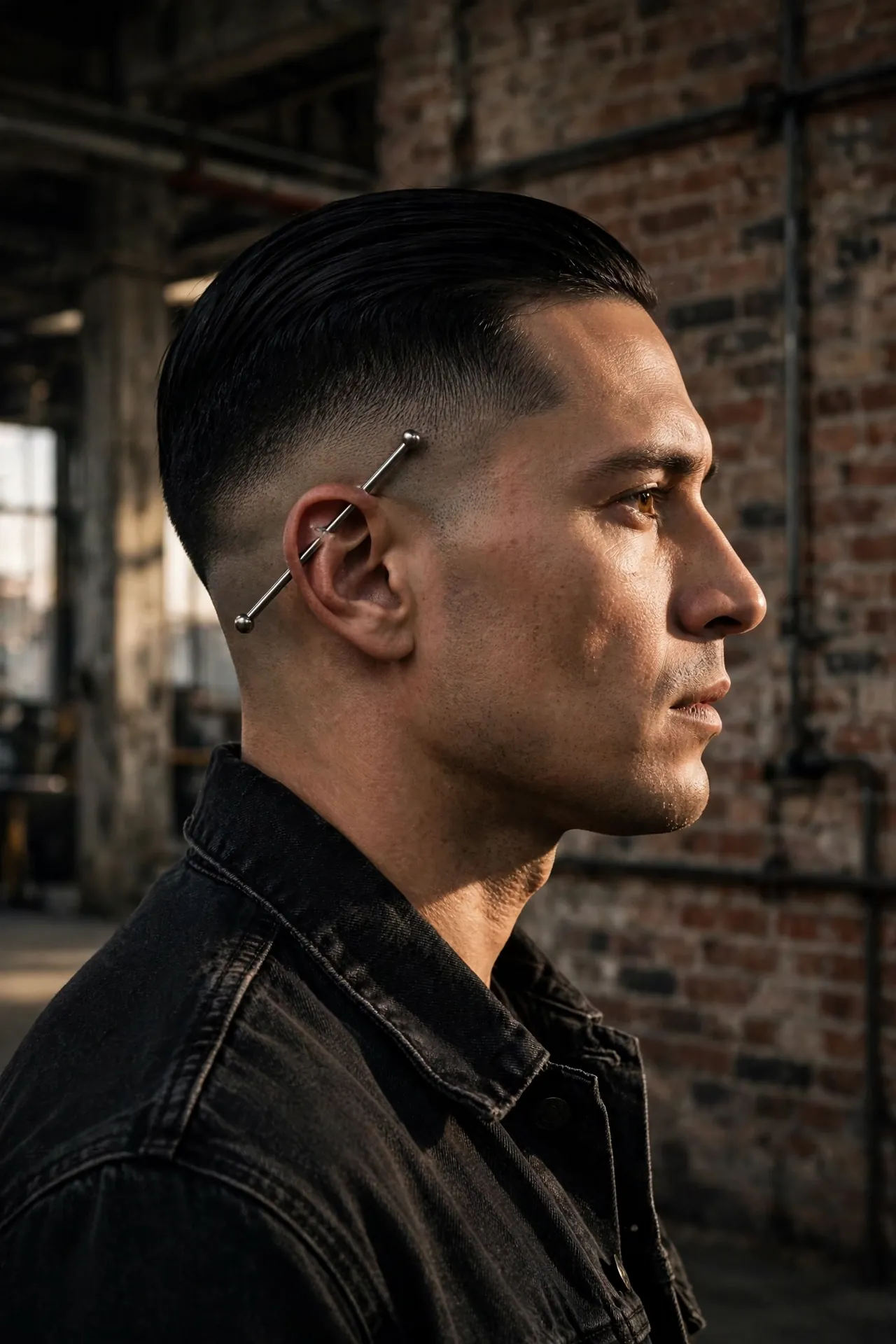
An industrial connects two cartilage piercings with one long straight bar, usually from the front of the upper ear to the back of the rim. It’s one of the boldest ear piercings men can get.
It works best on ears with a well-defined rim and enough space for the bar to sit flat. If the bar pushes against the ear, it can irritate and heal badly.
🎨
Bar length
around 32–38 mm
✂️
Holes
two, joined by one bar
📐
Healing
slower than most
An industrial heals slowly because it’s two cartilage holes held together by one rigid bar. Every knock, hat or pillow moves both holes at once.
⚠️ Why Industrials Get Irritation Bumps
Small bumps around an industrial usually come from pressure or the bar sitting at the wrong angle. A piercer can often fix it with a different length or a more careful placement.
19
OF 25
Lobe and Helix Combo

A lobe piercing with one helix piercing is the most balanced two-piercing combo for men. The two pieces sit at different heights, which draws the eye up along the ear.
It looks best when the two pieces share a metal and differ in shape. A stud in the lobe and a small hoop in the helix, or the other way around, keeps it simple.
Most men get the lobe first, then add the helix once they’re comfortable with aftercare. That way, there’s only one cartilage piercing to heal at a time.
20
OF 25
Curated Ear Stack
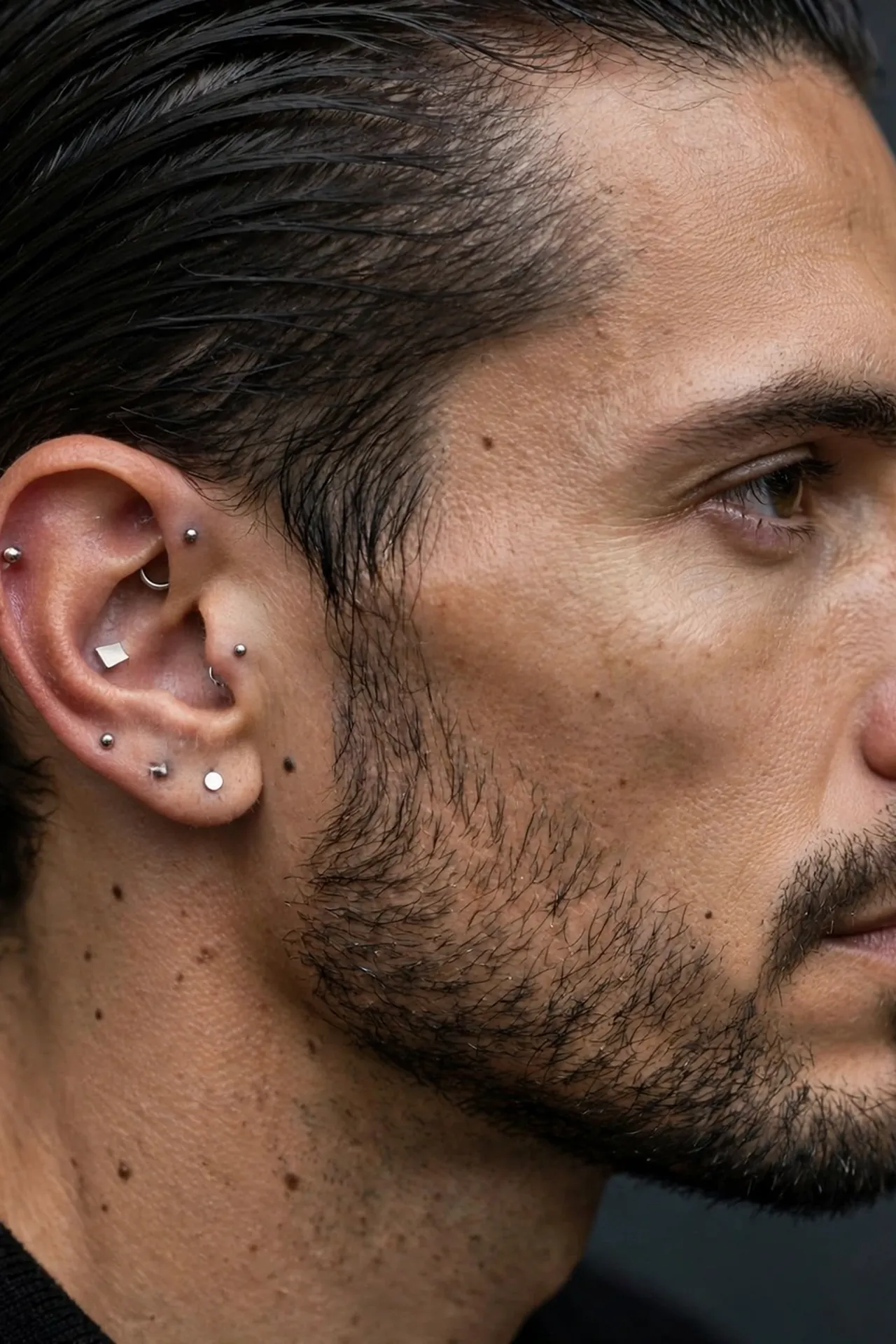
A curated ear stack spreads several piercings across the lobe and cartilage so they read as one design. It’s the most impactful way to wear multiple ear piercings without looking messy.
The best stacks have one or two “anchor” pieces, like a hoop or a bolder stud, and smaller supporting pieces around them. Mixing sizes and shapes keeps the ear interesting rather than cluttered.
Constellation stacks are a popular version, with tiny studs scattered across the cartilage like stars. They suit men who want a stack that looks detailed but stays understated.
✅ Do This
Add one piercing at a time and let each one heal before the next.
🚫 Skip This
Getting four new cartilage piercings in a single session.
Planning the whole ear early helps, even if you add pieces over a year or more. A good piercer can map out where each piece would sit so later ones don’t crowd the first.
21
OF 25
K-Pop Style Ear Stack

The K-pop style ear stack is light and detailed rather than heavy. It usually mixes thin silver hoops, small drop earrings and short chains, often in one ear only.
It suits slimmer faces and soft, layered haircuts, but anyone can wear it if the pieces stay fine and delicate. Chunky jewelry undoes the look.
✅ Copy This K-Pop Ear Stack
- A thin silver hoop in the lower lobe
- A short chain or small drop earring in the second lobe
- A tiny stud or small hoop in the helix
- Silver or white gold throughout, kept fine and light
Drop and chain earrings snag easily on knits and hair. Save them for healed piercings and switch to studs when you’re active.
22
OF 25
Punk Ear Piercings With Spikes

Punk ear piercings lean into hardware: spike studs, black hoops, industrial bars and multiple cartilage piercings. It’s one of the few looks where more is the point.
It pairs naturally with dark clothes, leather and bold hair. On the right person, it looks deliberate and cool rather than random.
✅ Your Punk Ear, Piece by Piece
- A short spike stud in the lobe
- A black or silver hoop in the helix
- An industrial bar across the upper ear, if your anatomy suits it
- A mix of black and silver, rather than gold
Spikes are best kept short, around 5 to 8 mm. Long spikes catch on hoods and pillows, and the post can be pulled at an angle, which irritates the hole.
23
OF 25
Hidden Helix Piercings Under Long Hair
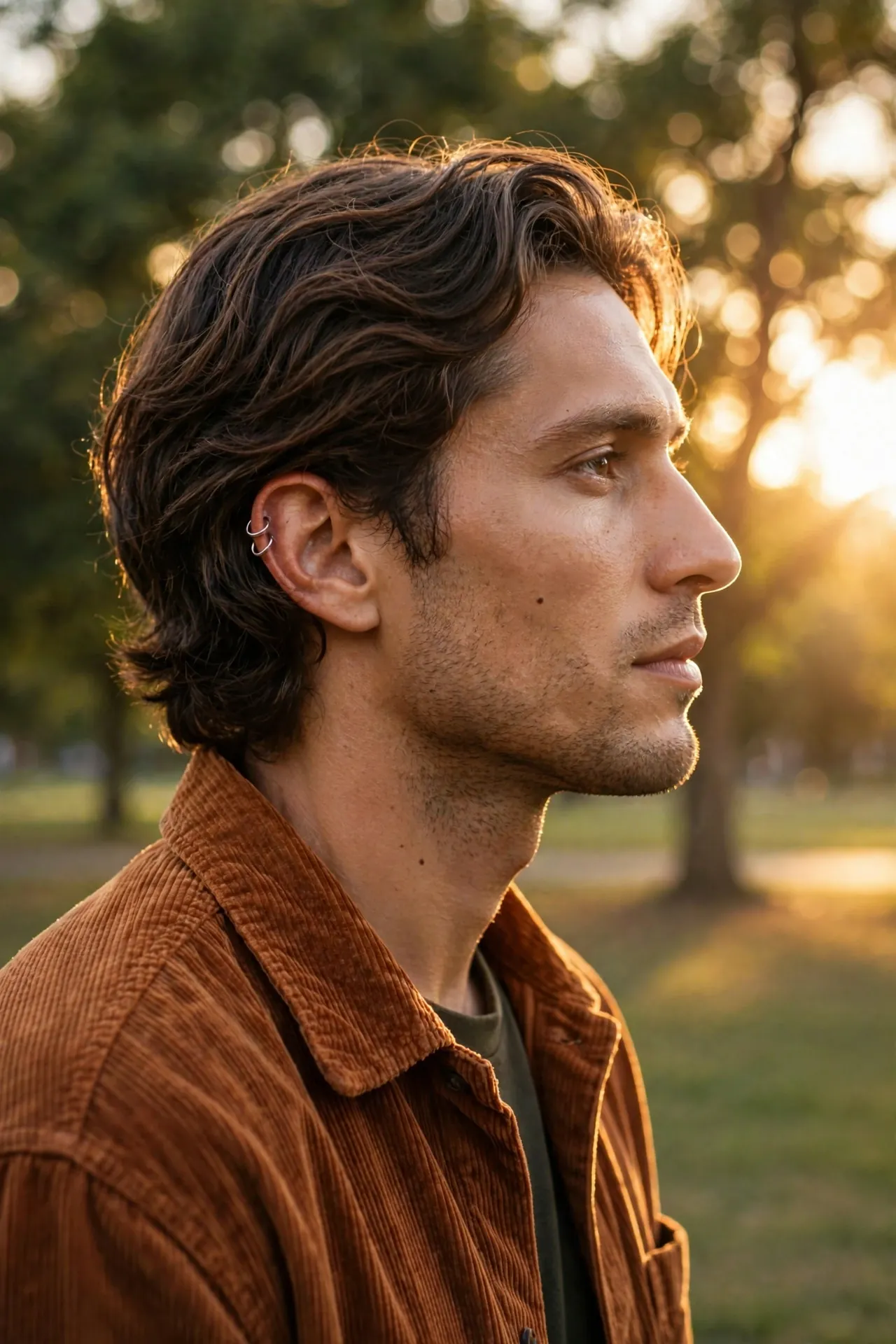
Long hair hides most ear piercings, which can actually be part of the appeal. A pair of small helix hoops shows only when you tuck your hair back, so the look feels personal rather than on show.
Hoops work better than studs here. They’re visible through the hair, and the rounded shape doesn’t catch the way flat studs with sharp edges can.
Keeping Hair Out of a Healing Helix
Long hair and fresh cartilage aren’t a great mix. Hair rubs against the piercing all day, and it can carry shampoo, oil and styling products into the hole.
⚠️ Long Hair Snags Fresh Cartilage
Tie your hair back loosely while a cartilage piercing heals, especially when you sleep. Brush carefully around the ear, since one snag on a fresh helix can set healing back weeks.
24
OF 25
Traditional Gold Ear Piercing for Indian Men

A small gold stud in the lobe is a traditional piercing for many Indian men. It’s often worn for life, starting in childhood, and it pairs naturally with both everyday clothes and festive wear.
Small round studs or tiny hoops in yellow gold are the most common. Some men wear a single stone, while others choose a plain gold design that sits flat against the lobe.
Where the Karnavedha Tradition Comes From
In Hindu tradition, ear piercing is linked to Karnavedha, one of the traditional samskaras, or life-cycle rites. It’s often performed when a child is young, and for many families, it carries religious and cultural meaning rather than just being a style choice.
For men who were pierced as children and let the hole close, re-piercing the same spot is common. A professional piercer can usually tell whether the old track can be reused or needs a fresh hole.
📅 Wear It For
25
OF 25
A First Lobe Piercing for Teen Boys

For teens, a single small stud in the lobe is the most sensible first piercing. It’s the least painful, heals the fastest and is easy to hide or take out later if school or sports rules require it.
A tiny flat stud in titanium or surgical steel is the safest choice. It sits flat, doesn’t catch on sports kit, and is less likely to cause a reaction than cheap fashion jewelry.
📌 Age Rules Depend on Where You Live
Many places require a parent or guardian’s consent for piercings under 16 or 18, and some studios set their own minimum age. A parent coming along also helps with aftercare questions.
Cartilage piercings are better left until later. They take months to heal and need more careful aftercare, which is harder to manage around school sports and busy routines.
Which ear piercing are you planning next?
FAQs
Which ear should guys get pierced?
Either ear is fine, and neither carries a fixed meaning today. Many men choose the side that shows more when they part their hair or face the camera, while others pierce both for balance.
Do ear piercings hurt for men?
Lobe piercings usually feel like a quick pinch. Cartilage piercings, like the helix, conch or industrial, tend to hurt more and stay tender for longer.
How long does an ear piercing take to heal?
Lobes usually heal in around 6 to 8 weeks or more. Cartilage piercings can take 6 to 12 months, and sometimes longer, depending on the placement and aftercare.
What metal is best for a new ear piercing?
Implant-grade titanium and solid 14k or 18k gold are the most common choices for new piercings. They’re far less likely to cause irritation than nickel-containing metals.
Can men wear earrings to work?
Small studs in silver, gold or clear stones are accepted in most workplaces today. Some conservative offices or uniformed jobs still have rules, so check your dress code if you’re unsure.
What age can boys get their ears pierced?
It depends on local laws and the studio’s policy. Many places require parental consent under 16 or 18, and a simple lobe stud is the best choice for a first piercing.